
Brick Walkway Cost: Ultimate 2025 Savings
Understanding What You’ll Pay for a Beautiful Brick Walkway
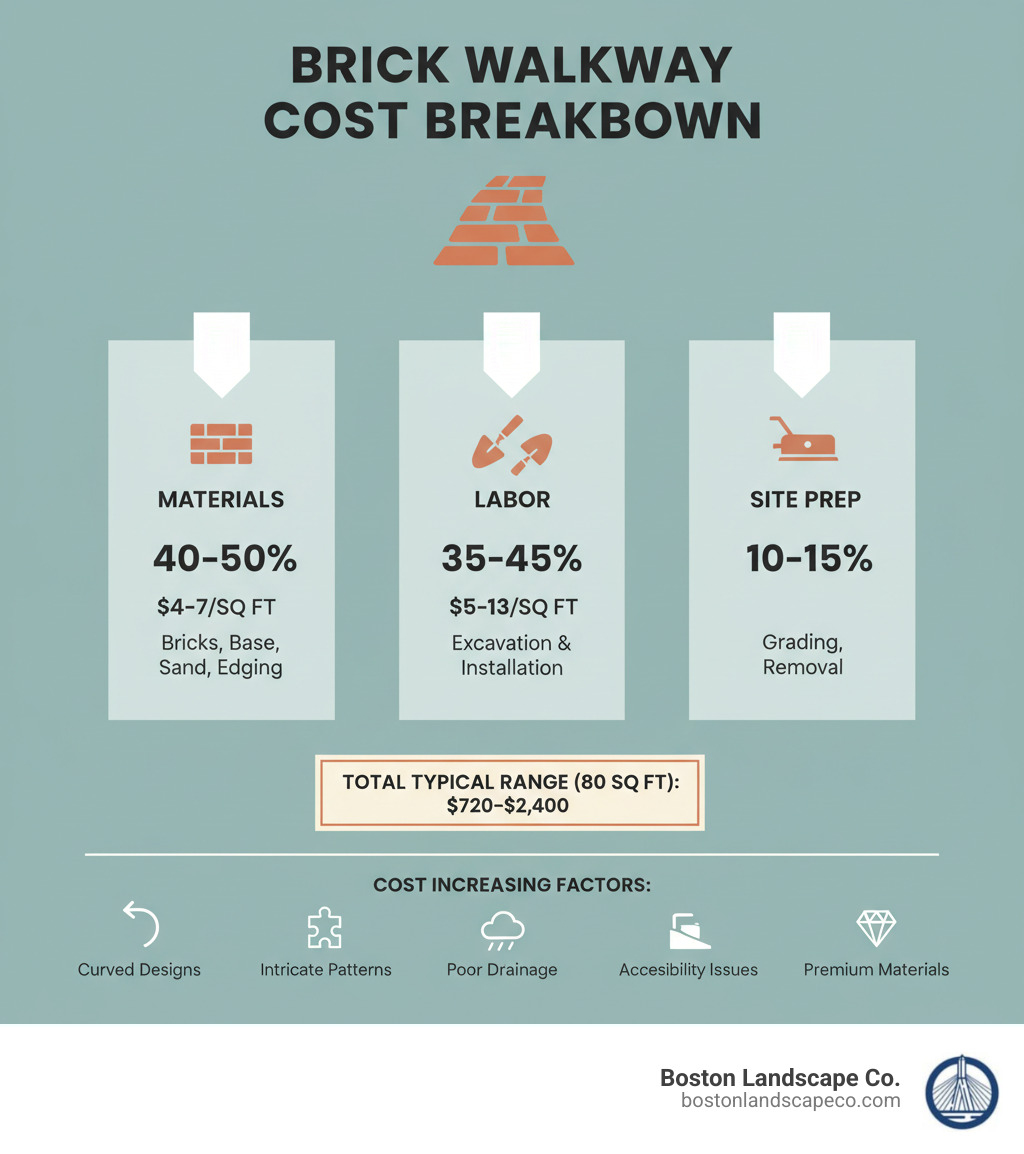
A professionally installed brick walkway cost typically ranges from $9 to $30+ per square foot. For most homeowners in the Greater Boston area, a complete project lands between $2,500 and $8,000. This price includes materials like bricks and gravel ($4-$7/sq ft), skilled labor for installation ($5-$13/sq ft), and necessary site preparation.
Note: These are average costs based on internet data and industry reports, not specific pricing from Boston Landscape Co.
A well-designed brick path is a smart investment, boosting curb appeal and adding lasting value to your home. However, the final cost involves more than just the bricks you see. The real investment is in the proper site prep, base materials, and skilled labor that ensure your walkway remains beautiful for years without settling or cracking.
Spring is the ideal time to plan your walkway. The ground is perfect for excavation, and scheduling now ensures your project is ready for summer entertaining. I’m Steve Schumacher, and with over three decades of hardscaping experience in the Boston area since 1991, I’m here to help you understand every factor that affects your final price.
Explore more about Brick walkway cost:
The Average Brick Walkway Cost Breakdown
Nationally, a professionally installed brick walkway costs between $9 to $30+ per square foot. For a typical 20-by-4-foot path (80 sq ft), this means a range of $720 to $2,400 or more. Here in the Greater Boston area, expect costs to be 10-15% higher due to regional labor and material expenses, putting a realistic budget closer to $16 to $30 per square foot for a quality, professional installation.
These are average costs based on internet data and industry reports, not specific pricing from Boston Landscape Co.
Spring is the perfect season to start these projects. The thawed ground makes for easier excavation, and scheduling is more flexible before the summer rush. For more context on our approach, see our Hardscaping Services.
Understanding Material Costs
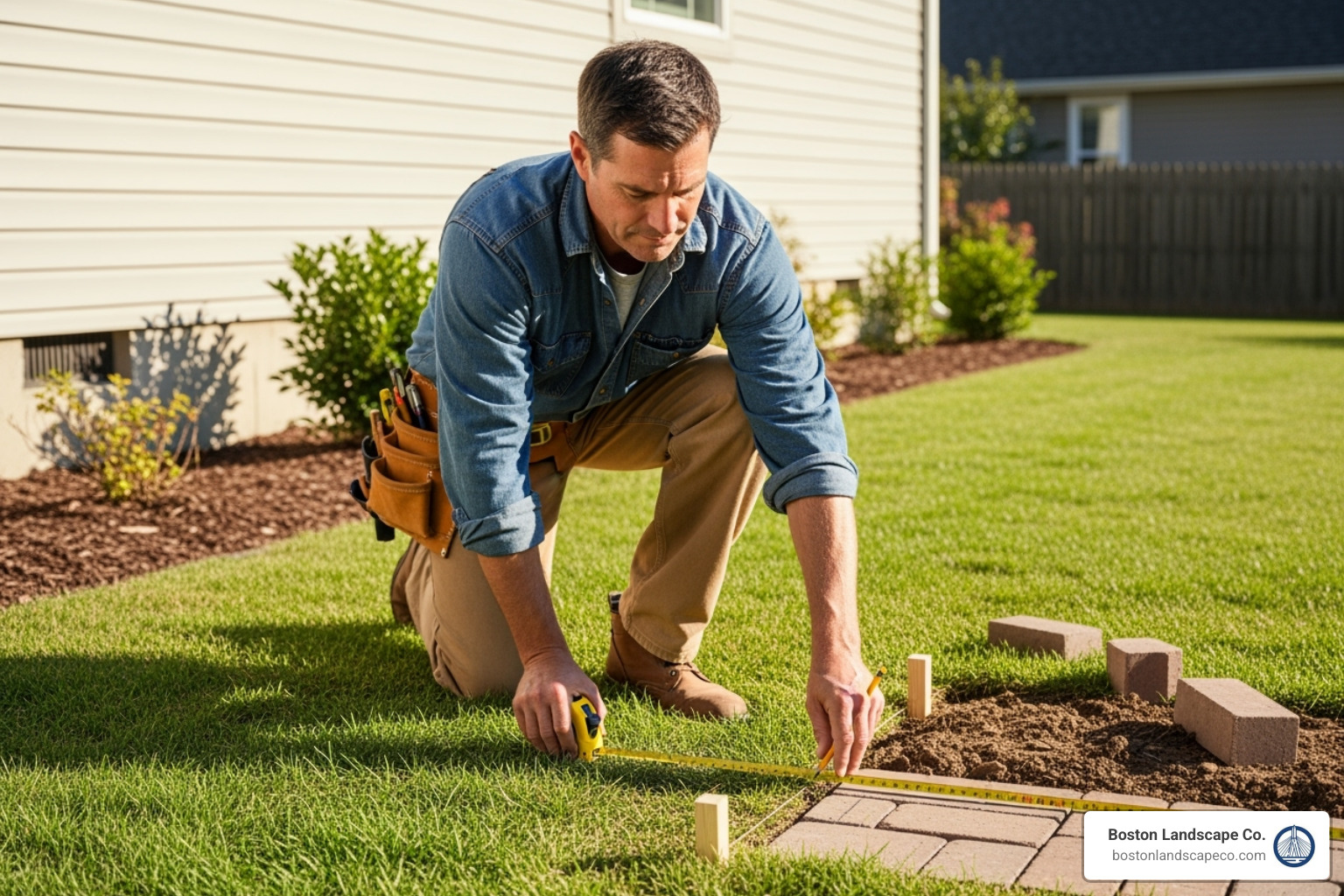
Materials account for 40-50% of your total project cost, but the bricks are only part of the story. What lies beneath is crucial for longevity, especially in New England.
- Bricks: Traditional clay bricks ($2-$6/sq ft) offer a classic look and can last over 100 years. Concrete pavers ($2-$4/sq ft) provide budget flexibility and a uniform shape that can speed up installation. Reclaimed bricks offer unique character but may require more labor to clean and sort.
- Base Materials: A proper foundation is non-negotiable. This includes landscape fabric to block weeds, a deep layer of crushed stone or gravel for drainage and stability, and a layer of leveling sand to create a smooth surface.
- Finishing Touches: Edging restraints are installed along the perimeter to prevent bricks from shifting, and polymeric sand is swept into the joints to lock everything together and deter weeds and ants.
You can find many of these materials at local suppliers, including Home Depot’s concrete and masonry section.
Calculating Labor and Installation Costs
Labor typically represents 35-45% of your total brick walkway cost, reflecting the skill required for a durable installation. Professional installers generally charge $50 to $100 per hour or $6 to $13 per square foot, though rates vary based on experience and project complexity.
These are average rates based on internet data and vary widely.
You’re paying for an expert who understands how to properly excavate, grade for drainage, and build a base that can withstand Massachusetts’ freeze-thaw cycles. A typical residential walkway takes a professional crew two days to a week. Factors like poor site accessibility (requiring materials to be hand-carried) or complex terrain can increase labor time and costs by 15-25%.
Key Factors That Influence Your Final Price
Beyond basic materials and labor, several key factors can significantly impact your final brick walkway cost. Two projects of the same size can have vastly different price tags due to site conditions and design choices.
The Impact of Site Preparation on Your Brick Walkway Cost
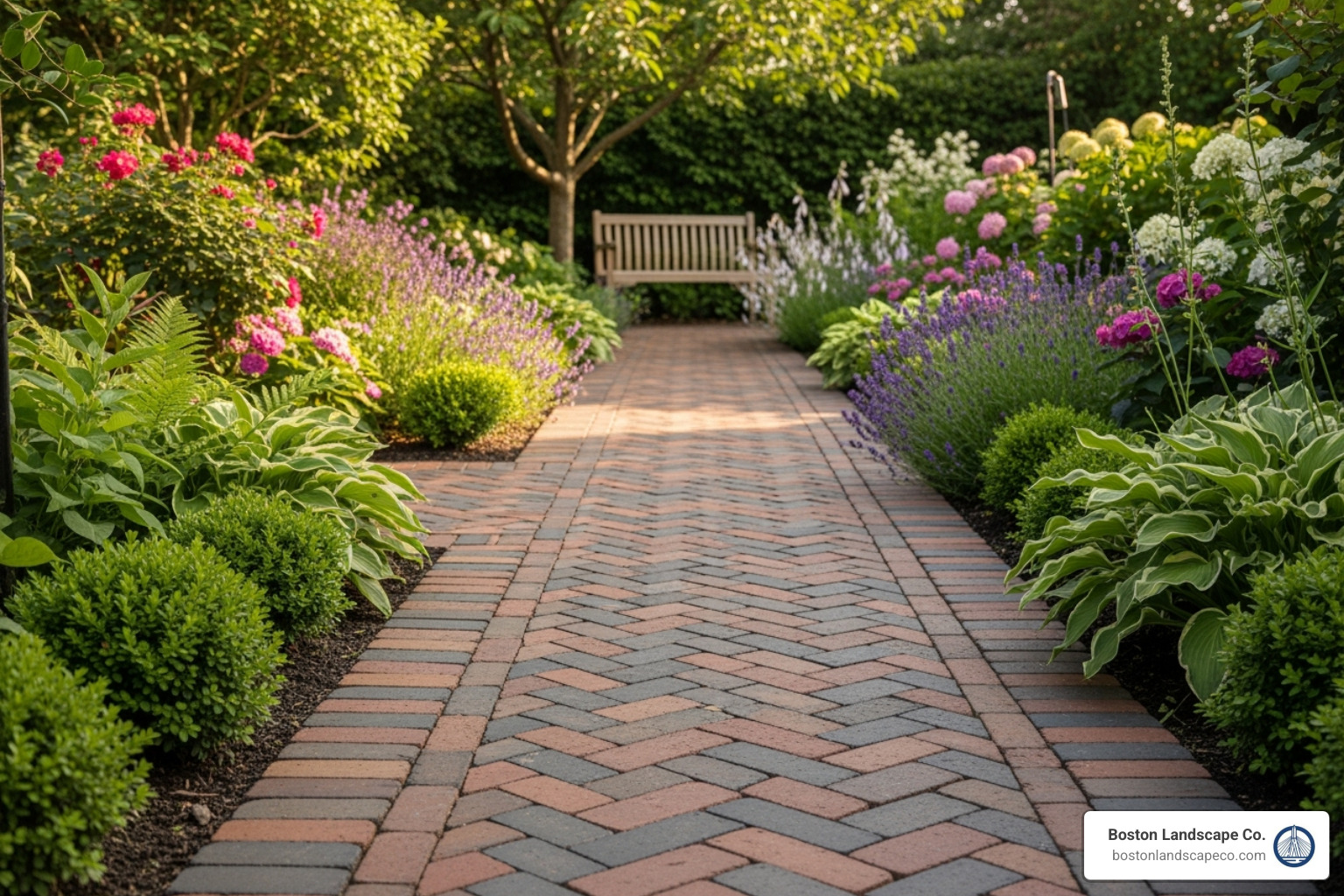
Proper site preparation is the unsung hero of a lasting walkway, accounting for 10-15% of the total cost. This is where professional expertise prevents future problems like settling and heaving.
- Excavation and Grading: We must dig down 6-8 inches to build a stable base. The walkway also needs a slight grade to direct water away from your home’s foundation. This work typically runs $2 to $5 per square foot.
- Removal of Old Surfaces: Tearing out an old concrete path or pavers adds to the cost, usually $0.30 to $0.50 per square foot.
- Soil and Drainage: Massachusetts’ heavy clay soil is prone to frost heave. In areas with poor drainage or challenging soil, we may need to excavate deeper or install solutions like a French drain ($5 to $15 per linear foot), adding to the overall cost but preventing far more expensive repairs later.
How Walkway Design and Size Affect the Brick Walkway Cost
Your design choices directly influence material and labor costs.
- Complexity: Straight paths are the most budget-friendly ($10-$15/sq ft installed). Curved paths require more cutting and precision, pushing costs toward $15 to $25 per square foot. Intricate designs like herringbone or basketweave patterns add another 10-15% to labor costs and require ordering about 15% extra material to account for cuts.
- Size: While a larger total square footage means a higher overall price, the per-square-foot cost may decrease slightly on larger projects. We recommend a width of 48 inches to allow two people to walk side-by-side comfortably, though a standard 36-inch path is also functional.
Additional Features, Improvements, and Permits
Upgrades can improve both the beauty and function of your walkway.
- Lighting and Borders: Built-in, low-voltage lighting adds safety and ambiance, while decorative borders using a contrasting brick can add a custom touch for $2 to $5 per linear foot.
- Steps and Walls: If your property has a slope, you may need brick steps or a complementary Hardscape Retaining Wall to manage the elevation change.
- Permits: Most small residential walkways don’t require a permit, but it’s always best to check with your local town hall. Fees can range from $50 to $200, and a permit is often necessary if the walkway connects to a public sidewalk or impacts impervious surface limits. We can help guide you through this process.
Note: All cost ranges mentioned are average estimates based on internet data and industry reports, not specific pricing from Boston Landscape Co.
Brick Walkways: Value and Comparison
When considering brick walkway cost, it’s important to look beyond the initial price and understand the long-term value. After three decades in this business, I can confidently say that a properly installed brick walkway is one of the most durable and practical investments for a New England home.
This information is to help you understand the material’s benefits, not as a direct comparison or recommendation against other options.
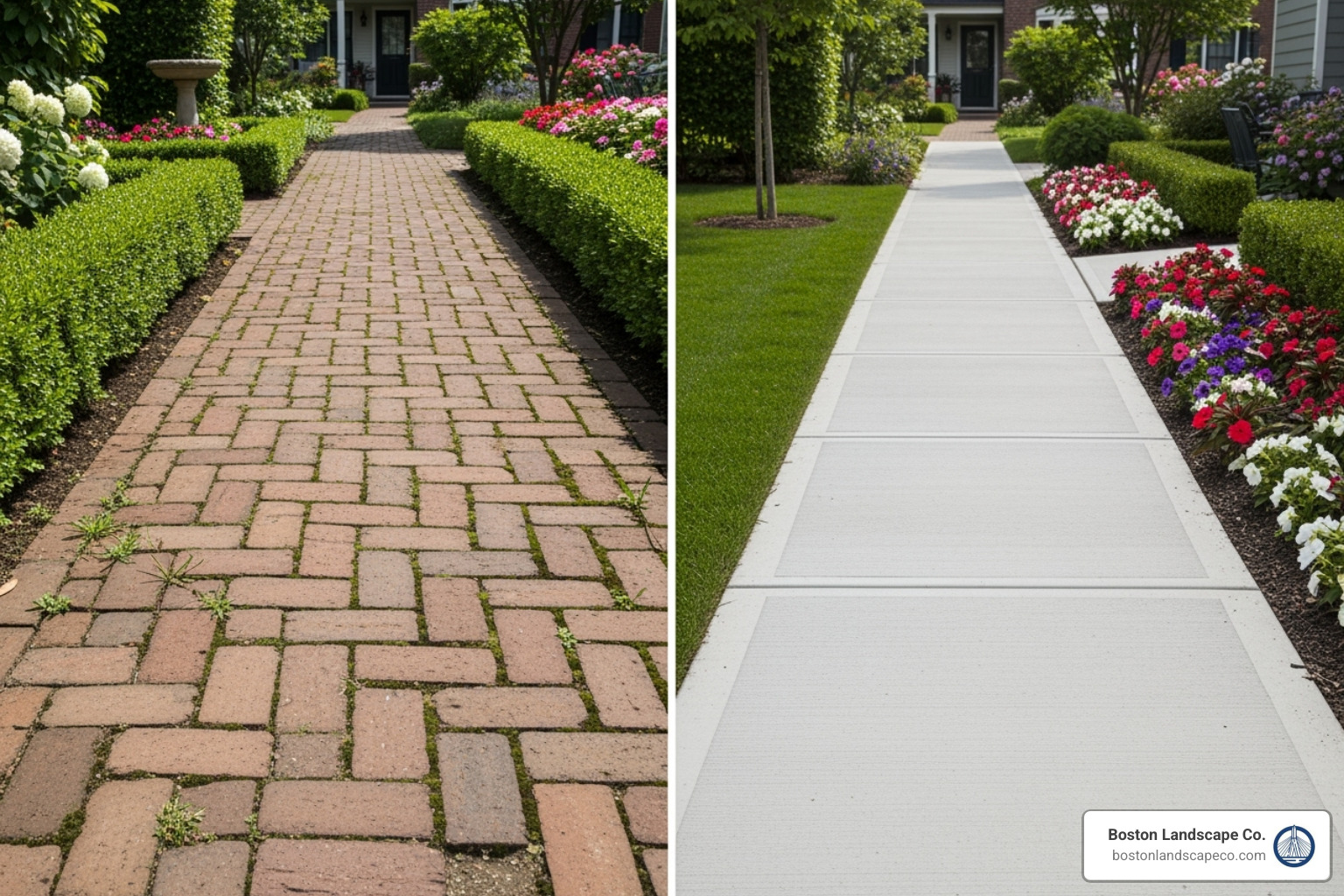
What makes brick pavers so well-suited to our climate is their incredible repairability. Our harsh freeze-thaw cycles can cause ground movement that would crack a solid surface. With a brick walkway, the individual pavers can flex with this movement. If a single brick is ever damaged or pushed up by a tree root, we can simply lift and replace that one unit, leaving the rest of the walkway perfectly intact. This ability to perform targeted, seamless repairs saves significant money over the life of the walkway.
The lifespan of brick pavers—ranging from 25 to over 100 years depending on the material quality and installation—means you are investing in a feature that will welcome guests to your home for generations. This permanence, combined with the timeless aesthetic that complements any architectural style, is why brick walkways consistently improve curb appeal and add lasting value to homes across our Massachusetts communities.
Maximizing Your Investment: DIY, Savings, and Long-Term Value
A quality brick walkway is an investment that pays you back. It creates a welcoming first impression and can return 30-60% of your investment in increased property value. Beyond curb appeal, it provides a clean, stable surface that holds up through decades of Massachusetts weather. For more ideas, see our Backyard Hardscape Design guide.
DIY vs. Hiring a Professional
The biggest temptation of a DIY project is saving on labor, which is 35-45% of the total brick walkway cost. However, this path is fraught with risks. The most common DIY mistake is improper base preparation. Without the right depth, compaction, and drainage, a walkway will quickly settle and heave, creating a tripping hazard. Fixing a failed installation often costs more than hiring a professional in the first place. When you hire an experienced team, you’re paying for a warranty and the peace of mind that comes from knowing the job is done right.
Long-Term Costs and Lifespan
A professionally installed brick walkway can last 25 to 100+ years. Maintenance is minimal, typically involving a power wash every few years and replenishing the joint sand as needed. If a repair is ever necessary, replacing individual bricks is a straightforward process, usually costing between $200 and $1,000. This targeted repairability is a significant advantage, making brick a sound long-term investment.
Smart Ways to Reduce Your Project Cost
Want to keep costs down without sacrificing quality? Here are a few smart strategies:
- Simplify the Design: A straight path with a standard running bond pattern is less labor-intensive and requires fewer material cuts than a curved path with a herringbone pattern.
- Choose Standard Materials: Opt for classic red clay bricks or standard concrete pavers over premium or custom-ordered options.
- Handle Site Clearing: You can save on labor costs by clearing the walkway area of plants, furniture, or other debris before the crew arrives.
- Plan Ahead: Scheduling your project during the shoulder seasons (like early spring) can sometimes offer more pricing flexibility.
Frequently Asked Questions about Brick Walkway Costs
Here are answers to the most common questions I hear from homeowners planning a new walkway.
How many bricks do I need for a walkway?
For standard 4×8-inch bricks, you’ll need 4.5 bricks per square foot. To calculate your total, multiply your walkway’s square footage by 4.5. Then, add 10% to that number to account for cuts and waste. For an 80-square-foot path, you would order about 400 bricks (80 x 4.5 = 360, plus 36 for waste).
How long will a high-quality brick walkway last?
A professionally installed brick walkway can last from 25 to 100+ years. The lifespan depends on three key factors:
- Installation Quality: A deep, compacted base with proper drainage is essential to prevent heaving and settling in New England’s freeze-thaw cycles.
- Material Type: High-quality clay bricks can last over a century, while concrete pavers typically have a lifespan of 25 to 50 years.
- Maintenance: Simple upkeep like cleaning and replenishing joint sand will significantly extend the life of your walkway.
Because they consist of individual units, brick pavers can flex with ground movement, making them exceptionally durable in our climate.
Is a permit required to build a brick walkway?
It depends on your town and the project’s scope. Many small residential walkways do not require a permit. However, you will likely need one if your project:
- Connects to a public sidewalk.
- Is located in a historic district.
- Exceeds your town’s limits for impervious surfaces (areas that don’t absorb water).
Regulations vary widely between towns like Malden, Woburn, and Medford. The safest approach is to call your local building department before starting work. As part of our service, we help clients steer any local permit requirements.
Your Perfect Path Starts with a Plan
By now, you understand that the brick walkway cost is an investment in your home’s future. It’s not just about the price of bricks, but about the skilled preparation and installation that create a beautiful, lasting feature. With a typical professional installation ranging from $9 to $30+ per square foot, you’re paying for a path that will resist New England winters and welcome guests for decades.
You’re now equipped with the knowledge to plan your project effectively, understanding how design, site conditions, and materials will shape your budget. Spring is the perfect time to get started, ensuring your new walkway is ready for a full season of enjoyment.
At Boston Landscape Co., we’ve been installing hardscaping projects in communities like Stoneham and Billerica since 1991. We build walkways designed to handle our region’s specific challenges, from clay soils to freeze-thaw cycles.
The best projects begin with a conversation. We’ll visit your property, listen to your vision, and provide a detailed estimate with no surprises. Ready to create a path that welcomes you home every day? Let’s turn your plan into reality.
Get a professional estimate for your hardscaping project
