
Backyard Hardscape Design: 10 Best Creative Ideas 2025
Changing Your Outdoor Space with Hardscape Design
Backyard hardscape design is the art of incorporating permanent, non-living elements into your outdoor space to create structure, functionality, and visual interest. For homeowners looking to improve their outdoor living areas in 2025, here are the essential components of effective hardscape design:
- Patios & Decks: Create dedicated spaces for dining and entertaining
- Retaining Walls: Add structure and solve elevation challenges
- Walkways & Paths: Improve accessibility and define garden areas
- Water Features: Introduce tranquility with fountains or ponds
- Fire Features: Extend outdoor enjoyment with fire pits or outdoor fireplaces
- Pergolas & Gazebos: Provide shade and architectural interest
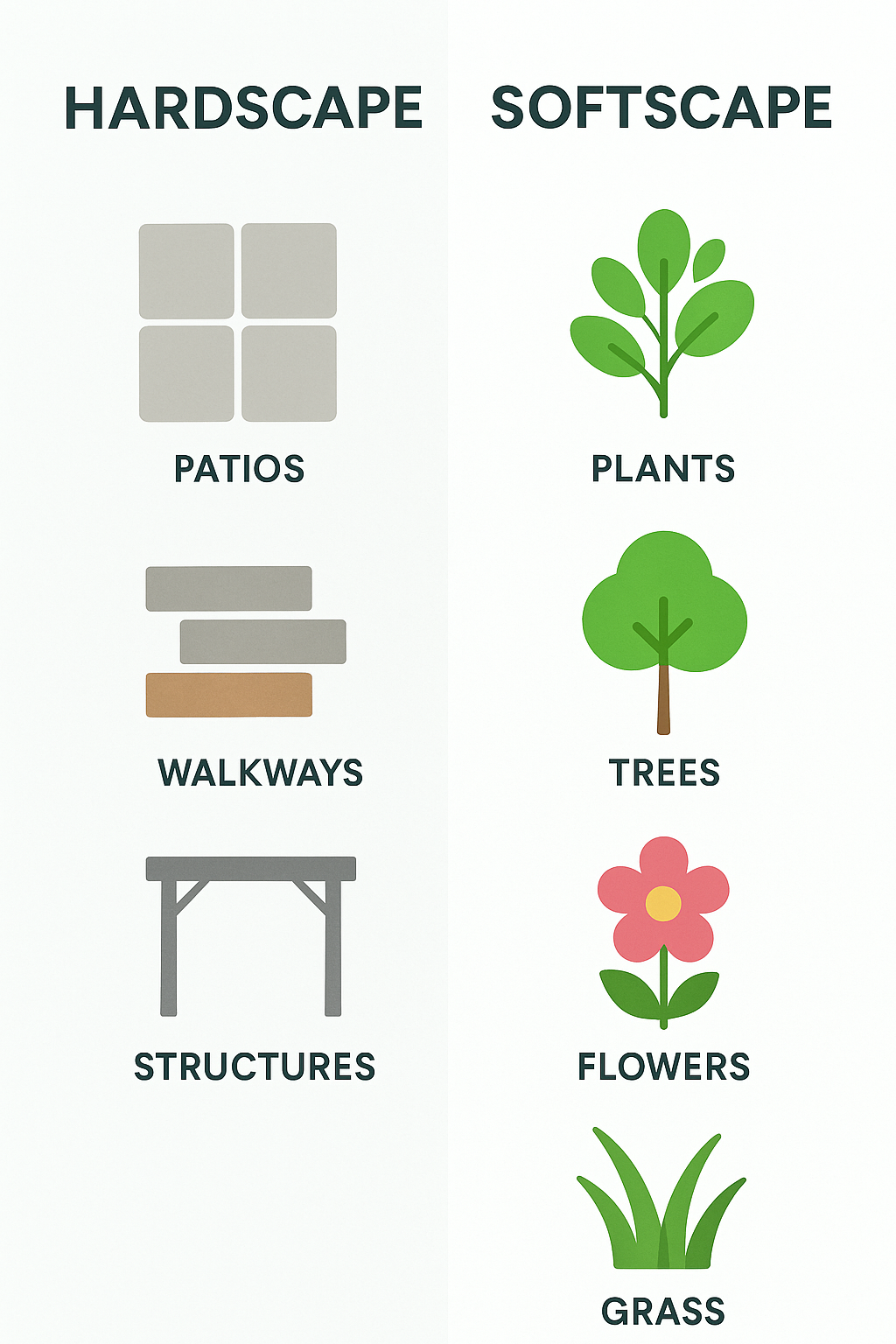
A well-designed hardscape forms the backbone of your outdoor living space, complementing the softscape elements (plants, trees, and grass) while providing durable, low-maintenance areas for relaxation and entertainment.
As the owner of Boston Landscape Co since 1991, I’ve designed and installed countless backyard hardscape designs that transform ordinary yards into extraordinary outdoor retreats, blending both beauty and functionality to meet each client’s unique vision and practical needs.
Understanding Hardscaping: The Backbone of Backyard Design
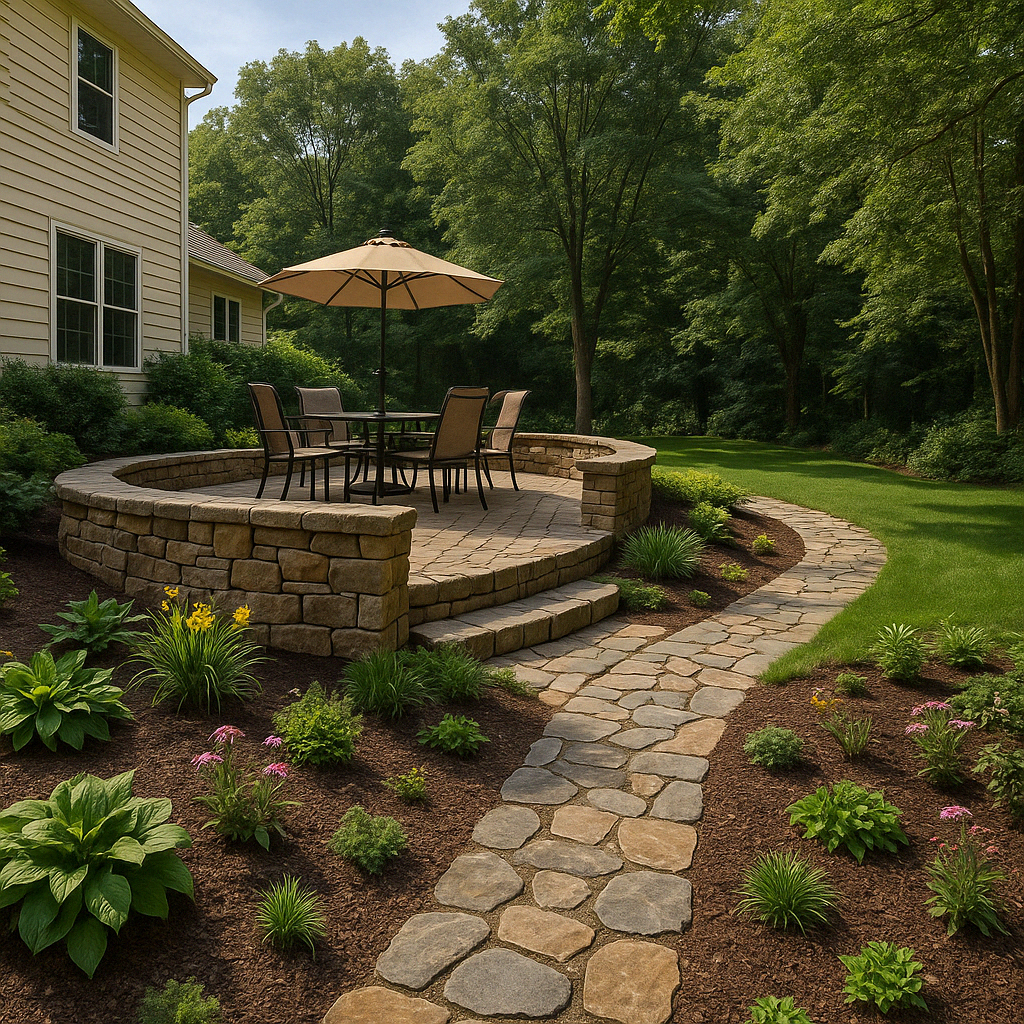
When you step into a well-designed outdoor space, what catches your eye first? Often, it’s those sturdy, permanent elements that give the yard its character and structure. That’s backyard hardscape design at work!
Hardscaping encompasses all the non-living elements in your landscape – those durable features that create the framework for your outdoor living areas. While your flowers, shrubs, and lawn (the softscape) bring color and life, it’s the hardscape elements that provide the bones and muscle of your yard.
As landscape architect Jim Skånberg wisely notes, “Hardscaping brings a more architectural feel to an outdoor space.” This architectural quality transforms ordinary backyards into functional outdoor rooms that extend your living space beyond your home’s walls.
Here in Massachusetts, where we experience all four seasons in their full glory, hardscaping takes on special importance. Those beautiful but challenging freeze-thaw cycles that define our New England winters demand materials and installation techniques that can weather the elements year after year. A poorly installed patio won’t just look bad – it might not survive a single winter!
The Vital Role of Hardscaping in Backyard Design
Your hardscape elements do much more than just look pretty. They’re the workhorses of your landscape, serving multiple essential functions.
First, they create structure and definition, essentially forming the “bones” of your outdoor space. Think of how a well-placed retaining wall can transform a sloping yard into usable terraces, or how a curved walkway naturally guides visitors through your garden.
Hardscaping dramatically improves usability too. Without it, many backyards would be muddy messes after rain or snow, limiting your enjoyment to just the perfect weather days. A thoughtfully designed patio extends your outdoor season by weeks or even months.
There’s also the blessing of reduced maintenance to consider. While your garden beds need regular weeding, watering and pruning, your stone wall or brick patio needs only occasional cleaning to look its best for years.
From a practical standpoint, quality hardscaping offers impressive property value benefits. Industry data from 2025 suggests well-executed backyard hardscape design can yield an ROI as high as 150% – not bad for something that also improves your daily life!
Perhaps most importantly for us New Englanders, hardscaping provides year-round enjoyment. When winter blankets your perennials in snow, your fire pit, stone walls, and sheltered patio areas continue to provide function and beauty through the coldest months.
For our clients in Boston, Bedford, Burlington, and throughout Massachusetts, thoughtful hardscaping creates outdoor spaces that can be enjoyed nearly year-round – a true extension of home.
| Hardscaping | Softscaping |
|---|---|
| Patios, walkways, walls | Trees, shrubs, flowers |
| Permanent, non-living | Living, growing elements |
| Low maintenance | Requires regular care |
| Provides structure | Adds color and texture |
| Immediate impact | Develops over time |
| Weather-resistant | Seasonal changes |
| Increases property value | Improves environmental benefits |
The magic happens when these two elements – hardscape and softscape – work in harmony. A stone patio surrounded by lush plantings. A timber pergola draped with flowering vines. A bubbling water feature nestled among ornamental grasses. These combinations create the outdoor spaces that become your family’s favorite places to gather, entertain, and relax.
Common Types of Backyard Hardscape Structures
When it comes to creating your dream outdoor space in 2025, the variety of hardscape elements available gives you endless possibilities. As we’ve seen while working with homeowners across Boston, Lexington, and Winchester, each backyard hardscape design can be uniquely custom to reflect your lifestyle and complement your home’s architecture. Let’s explore the most popular hardscape structures that can transform your yard.
Pathways and Walkways
There’s something magical about a well-designed path that invites exploration of your outdoor space. Beyond simply connecting different areas, pathways guide visitors through your landscape and protect your lawn and garden beds from foot traffic.
“A well-designed pathway does more than connect points A and B,” as one of our designers at Boston Landscape Co. often says. “It creates a journey through your landscape, revealing different views and experiences along the way.”
Materials range from budget-friendly gravel (typically $1-15 per square foot) to neat natural stone (which can range from $15-135 per square foot). The right choice depends on your budget, style preferences, and how the path will be used.
Patios and Decks
If your home is your castle, then patios and decks are your outdoor throne rooms. These flat surfaces form the heart of most backyard hardscape design plans, creating spaces where families gather, friends connect, and memories are made.
For comfortable dining, we typically recommend patios be at least 10-12 feet in diameter, while conversation areas need about 8-10 feet to feel spacious without losing intimacy. Material costs vary widely, with patios typically running between $7-90 per square foot depending on whether you choose concrete pavers, natural stone, or other materials.
During our New England summers, a well-designed patio becomes the most used “room” in many homes we work with.
Retaining Walls
Some of our most dramatic landscape changes involve retaining walls. These hardworking structures can turn challenging slopes into usable space while adding architectural interest to your yard.
“Retaining walls transform challenging slopes into functional, multi-level outdoor living spaces,” as our project manager who oversees installations throughout the Boston area often points out. Beyond their practical benefits of preventing erosion and managing water runoff, these walls can create visual interest and define different garden rooms within your landscape.
Pergolas and Gazebos
Adding vertical elements to your backyard hardscape design creates dimension and a sense of enclosure that makes outdoor spaces feel more intimate and room-like. Pergolas and gazebos provide partial shade while framing views and defining outdoor living areas.
As landscape designer Kath Meier notes, “A pergola is a great addition to a yard because it creates a destination for entertainment.” In our Massachusetts climate, these structures offer welcome relief from summer sun while adding year-round architectural interest.
Water Features
There’s something universally calming about the sound of moving water. From simple bubbling fountains to elaborate ponds, water features introduce a soothing sensory element that transforms the atmosphere of your outdoor space.
“Water features instantly create a calming atmosphere,” says landscaping expert Kody J. Ketterling. “They give the yard the appeal of running water, provide the sound, and give the look of being in the woods or mountains.”
For many of our clients, adding even a small water feature becomes the defining element that lifts their landscape from nice to truly special.
Fire Pits
In our New England climate where evenings can be cool even in summer, fire pits have become one of our most requested backyard hardscape design elements for 2025. They create natural gathering places that extend your outdoor season well into fall and early spring.
Whether built from natural stone, concrete pavers, or metal, a fire pit instantly becomes the focal point of any outdoor space. There’s something primal about gathering around a fire that brings people together in conversation and creates lasting memories.
Popular Hardscape Materials
The materials you choose for your hardscape elements will significantly impact both the look and longevity of your outdoor space. Natural stone offers timeless appeal and exceptional durability, while concrete pavers provide versatility in countless shapes and colors at moderate price points. Brick complements traditional architectural styles, and wood adds warmth to decks and pergolas. Budget-conscious homeowners might consider gravel or decomposed granite for pathways, while those seeking modern aesthetics often choose porcelain pavers for their sleek appearance and minimal maintenance.
By thoughtfully combining these hardscape elements, we can create outdoor spaces that perfectly balance beauty and functionality, regardless of your property size or budget. The key is selecting the right combination of structures and materials to complement your home and support your outdoor lifestyle.
Enhancing Functionality and Aesthetics with Hardscape Design
When it comes to changing your outdoor space, a thoughtful backyard hardscape design does so much more than just add a patio or walkway. It turns your yard into a true extension of your home—a place where memories are made and everyday living spills outdoors.
Creating Outdoor Living Spaces
I’ve seen how the right hardscaping elements can completely change how families use their outdoor spaces. As our lead designer (who’s worked on countless projects in Stoneham, Billerica, and beyond) loves to say, “Hardscaping isn’t just about making things look pretty—it’s about making your yard part of your home.”
When we sit down with homeowners to plan these outdoor living spaces, we’re thinking about so many practical details: how people will naturally move through the space, whether each area is sized right for its purpose, how to create that smooth transition from indoors to outdoors, and—so important in our New England climate—how to make these spaces usable across as many seasons as possible.
I’m reminded of a project we completed in Winchester last year. The homeowners had a sloped backyard that was basically going unused. We transformed it into a multi-level entertaining paradise with a cooking area right off the house, a mid-level dining patio where they now host weekly family dinners, and a cozy fire pit conversation area at the lowest level. Their backyard hardscape design created distinct zones while maintaining a natural flow that makes sense.
Defining Zones
One of the real magic tricks of good hardscaping is creating “rooms” outdoors without actual walls. By changing up materials, adding slight changes in elevation, or incorporating vertical elements like pergolas, we help define spaces for different activities while keeping everything connected.
As one of our landscape architects often tells clients, “Creating garden rooms makes even smaller spaces feel bigger and more useful.” It’s that sense of findy as you move through the yard that makes a space feel special. A turn in the path reveals a quiet reading nook, or a few steps up leads to a perfect spot for morning coffee.
Integrating Hardscaping with Softscaping
The most beautiful yards are those that strike a perfect balance between hardscape and softscape elements. I completely agree with landscape designer Maria Torres when she says, “The most successful hardscape projects always begin with a detailed plan considering both structural elements and the plantings that will soften them.”
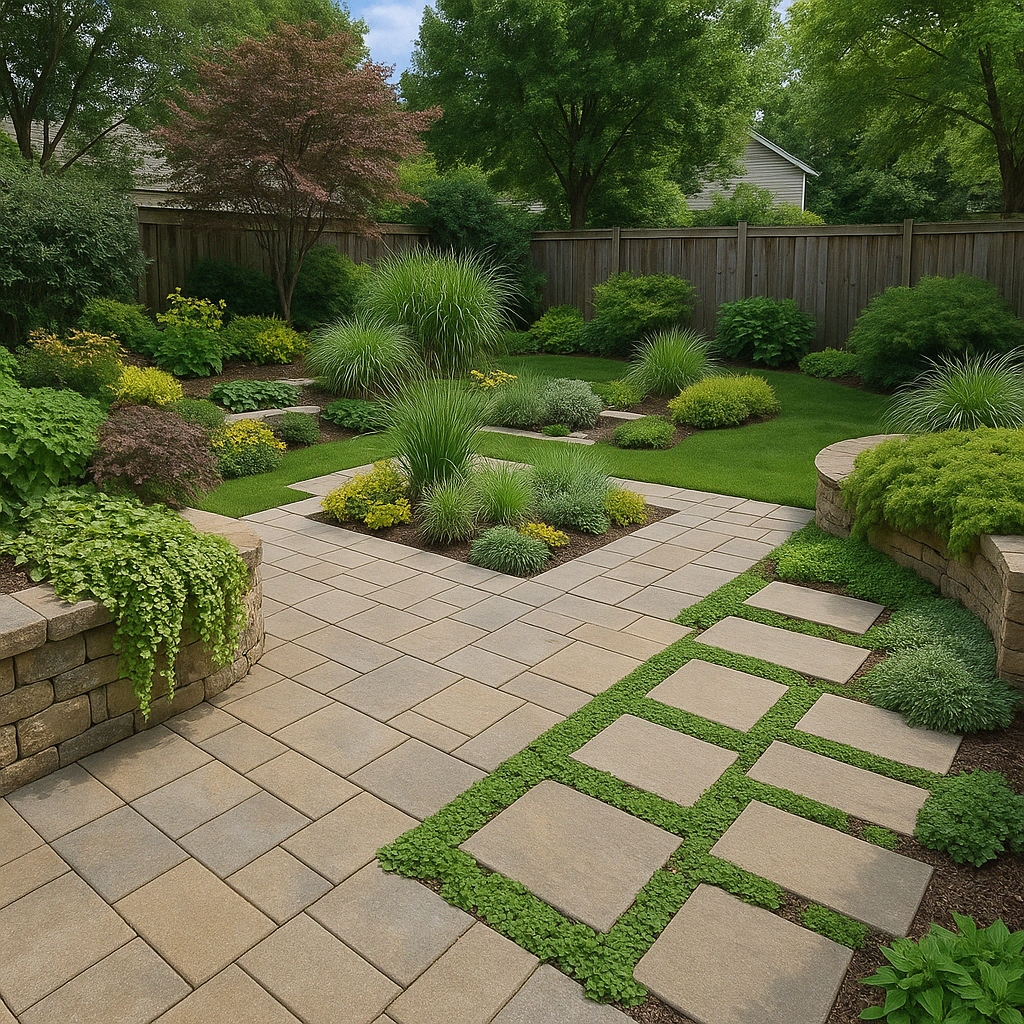
Too much hardscaping can make your yard feel cold or commercial—like a parking lot with chairs. But too many plants without structure often looks messy and becomes hard to maintain. The sweet spot is somewhere in between.
In our Massachusetts projects, we’ve developed some favorite techniques for blending hard and soft elements: creating planting pockets within paver patios where flowers can bring seasonal color; softening the look of retaining walls with cascading plants that spill over the edges; using low-growing groundcovers between stepping stones; strategically placing plants to frame and highlight hardscape features; and building raised planters right into seating walls for convenience and beauty.
Balancing Elements
When we’re planning a backyard hardscape design, we’re constantly thinking about visual weight and how all the pieces work together. This includes making sure every feature is properly sized for the space (nobody wants a tiny patio that can’t fit furniture or one so massive it dominates the yard), selecting materials with complementary colors and textures, creating visual connections between different areas through repeated elements, and establishing clear focal points that draw the eye.
As one design expert perfectly put it, “Hardscaping is the garden construct that makes moving about and being in the garden more comfortable.” That comfort comes from thoughtful balance—when every element feels like it belongs exactly where it is.
“Hardscaping brings a more architectural feel to an outdoor space,” notes architect Jim Skånberg, and I couldn’t agree more. The best designs have an intentional quality that makes them feel both surprising and inevitable at the same time.
Cost-Effective Hardscaping Materials and Solutions
Creating a stunning backyard hardscape design doesn’t have to break the bank. With some thoughtful planning and smart material choices, you can transform your outdoor space beautifully without emptying your wallet.
Affordable Materials: Concrete and Gravel
When budget matters, concrete and gravel are your best friends in the hardscaping world. These workhorses deliver impressive durability and versatility at prices that won’t make you wince.
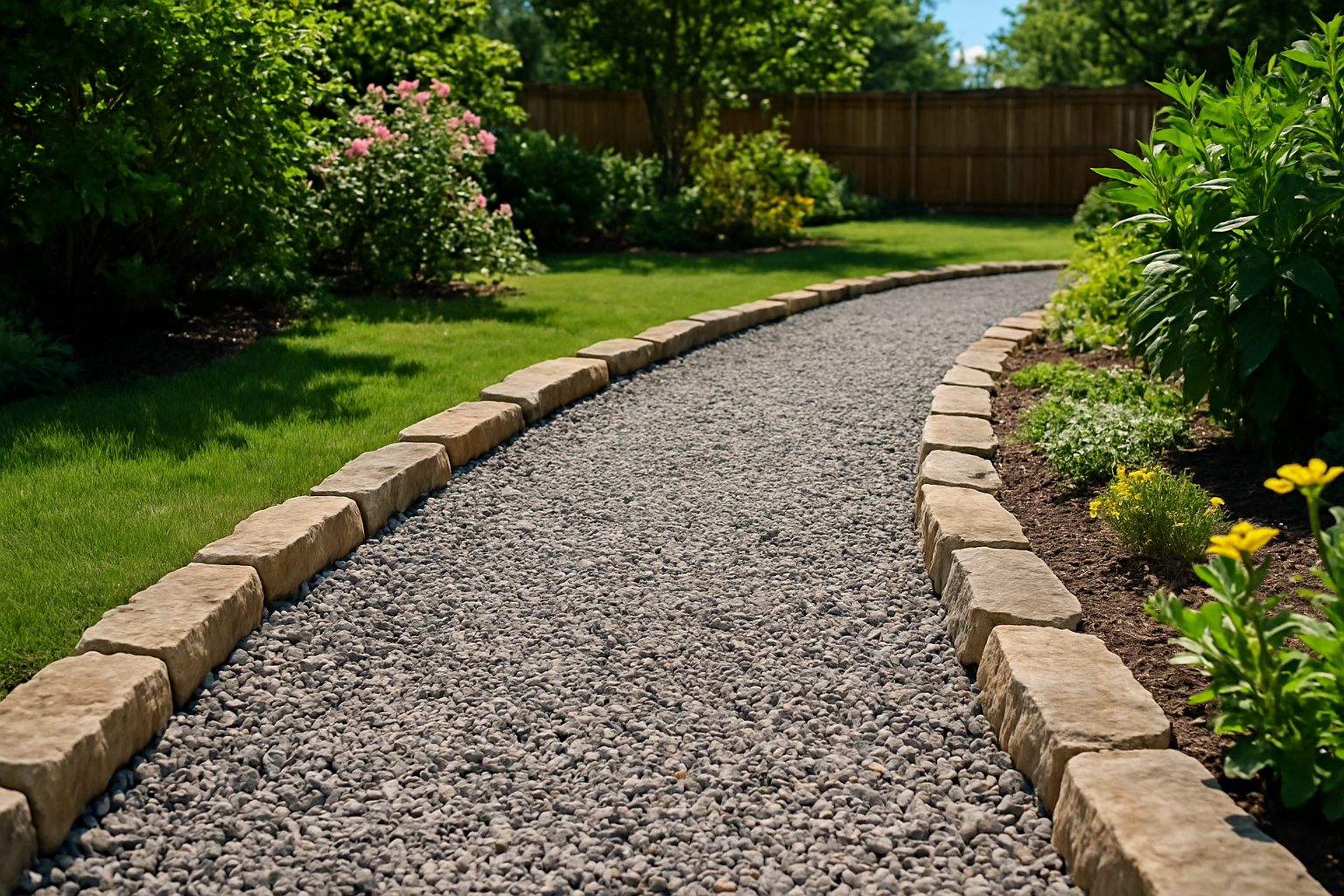
Gravel might be the ultimate budget-friendly option for pathways and driveways. At just $1-15 per square foot, it costs significantly less than pavers or natural stone options. Don’t let the price fool you, though – when properly installed with quality edging and proper compaction, gravel creates a charming, cottage-like aesthetic that can last for years. Plus, that satisfying crunch underfoot adds a sensory element more expensive materials can’t match!
Concrete has come a long way from the bland gray slabs of yesteryear. Today’s decorative concrete techniques can transform this affordable material into something truly special. Basic concrete patios typically start around $6-45 per square foot, while adding decorative elements like stamping or staining might increase costs to $15-90 per square foot – still often less than premium natural stone. I’ve seen beautifully stamped concrete patios that guests assumed were expensive pavers until they learned otherwise!
DIY Options
For homeowners who enjoy rolling up their sleeves, several hardscaping projects are perfectly doable without professional help:
Gravel pathways can be tackled in a weekend with proper planning. The keys are thorough base preparation and sturdy edging to keep everything contained. Simple fire pits using prefabricated kits make for satisfying weekend projects that deliver immediate enjoyment. Stepping stone pathways require minimal specialized tools while adding charm and functionality. Raised planting beds using timbers or concrete blocks create definition and visual interest while being forgiving for DIY enthusiasts.
Just a friendly word of caution from someone who’s seen many DIY projects gone wrong: in our New England climate, proper base preparation and drainage are absolutely critical. The freeze-thaw cycles we experience in Massachusetts can quickly destroy even the most beautiful hardscape if the foundation isn’t right. When in doubt, consult with a professional about these crucial elements, even if you handle the rest yourself.
Budget-Friendly Designs
Smart design strategies can help stretch your hardscaping dollar further in 2025:
Phasing your project makes perfect sense for many homeowners. Rome wasn’t built in a day, and your dream backyard doesn’t need to be either! Start with the elements you’ll use most—perhaps a modest patio—and expand over time as budget allows.
I love the strategy of mixing premium and budget materials for maximum impact. Use those gorgeous bluestone pavers as an accent border or inset “rug” while filling larger areas with more affordable concrete. Visitors’ eyes naturally go to the premium elements, creating the impression of luxury throughout.
Simplifying patterns can significantly reduce both material waste and labor costs. While intricate designs look beautiful in magazines, they require more cuts, create more waste, and demand more installation time. Clean, simple designs often look more contemporary anyway!
One of my favorite projects was for a young family in Medford who dreamed of an extensive entertainment space but had limited funds. Instead of scaling back the entire project, we created a simple concrete patio but added a decorative paver border and an inset “rug” of premium pavers in just the dining area. The result? A spacious patio with high-end touches that fit their budget and exceeded their expectations.
Lastly, don’t overlook the potential of reclaimed materials. Salvaged brick, stone, or wood brings character and history to your space while often costing less than new materials. One client incorporated century-old brick from her grandfather’s demolished factory into her garden pathways—creating not just beautiful hardscaping but a meaningful connection to family history.
For more inspiration on budget-friendly outdoor renovations, check out DIY Backyard Renovations on a Budget for additional ideas and approaches.
Creating a beautiful backyard hardscape design doesn’t require unlimited funds—just creative thinking and smart choices about where to invest for maximum impact. These are average costs based on internet data and not actual costs for Boston Landscape Co. services, which may vary based on specific project requirements.
Balancing Hardscape and Softscape Elements in Your Backyard
Finding that perfect balance between built structures and natural elements is like orchestrating a beautiful dance in your yard. When done right, your backyard hardscape design feels neither like a concrete jungle nor an overgrown wilderness—instead, it becomes a harmonious outdoor haven that feels both designed and natural.
Integration of Plants and Hardscape
I’ve seen countless Massachusetts backyards transformed when hardscape and plants work together rather than competing. Think about that stone patio that feels so much more inviting with ornamental grasses softening its edges, or how a stark retaining wall comes alive when cascading plants spill over its top.
One of my favorite projects was in Burlington last summer, where we created a multi-level patio with built-in planters that varied in height. These planters didn’t just add visual interest—they created homes for colorful perennials that made the space feel alive and welcoming rather than rigid. The family told me they spend twice as much time outdoors now because the space feels so comfortable.
Consider tucking planting pockets into your paved areas where appropriate. Even small breaks in hardscaping can accommodate plants that soften the overall look. For vertical structures like pergolas or privacy walls, climbing plants create a gorgeous living element that changes with the seasons. The change is truly magical when a pergola becomes draped in wisteria or climbing roses!
When transitioning between hardscaped areas and garden beds, try to create gradual shifts rather than abrupt changes. A few strategically placed stepping stones leading from a patio into a garden area creates a more natural flow than a sudden edge.
Harmony Between Elements
Color coordination makes a huge difference in creating harmony. I always advise clients to select hardscape materials that complement both their home’s exterior and their preferred plant palette. That bluestone patio looks stunning against the purple-blues of Russian sage and lavender, while warm-toned pavers pair beautifully with the yellows and oranges of black-eyed Susans and coreopsis.
Texture plays an equally important role. The contrast between smooth stone surfaces and feathery ornamental grasses or spiky perennials creates visual interest that keeps your eye moving through the landscape. In one Woburn project, we paired sleek concrete pavers with the fine texture of Japanese forest grass, creating a stunning textural contrast that made both elements shine.
In most residential settings, a ratio of about 40% hardscape to 60% softscape works beautifully. This balance provides enough structure for functionality while maintaining the natural feel most homeowners desire. Of course, this can vary based on your specific needs—if outdoor entertaining is your priority, you might lean toward more hardscape, while avid gardeners might prefer more planted space.
“Excessive hardscaping can make an outdoor area look impersonal or commercial,” as one design expert puts it. “Conversely, overuse of softscape can result in an unkempt, jungle-like appearance.” Finding that middle ground is where the magic happens.
Backyard Hardscape Design Tips
For our clients in Lexington, Reading, Woburn and beyond, I often share these practical tips for balancing elements:
Always consider your viewing angles—how will your landscape look from inside your home, especially from the windows you use most? A backyard hardscape design should look inviting from both inside and out.
Use hardscape elements to frame special views or plantings. A stone path that leads to a beautiful specimen tree or a pergola that frames a distant view can create magical moments in your landscape.
Don’t forget about repetition! When you echo colors, textures, or forms between your hardscape and plants, you create a sense of cohesion that feels intentional and polished. Perhaps the reddish tones in your brick patio are repeated in your Japanese maple, or the rounded forms of river rock are echoed in globe-shaped boxwoods.
Here in New England, our climate presents unique challenges, but hardscape elements can actually help create protected microclimates. A south-facing stone wall absorbs heat during the day and radiates it at night, potentially extending your growing season for adjacent plants. These thoughtful integrations make your yard more resilient and versatile.
While your patio is complete the day we finish installation, your plants will grow and change over time. Plan for maturity—that cute little spruce won’t stay tiny for long! Anticipating how your landscape will evolve helps maintain the balance between hardscape and softscape for years to come.
As one of our senior designers often says, “The most successful landscapes are those where you can’t immediately distinguish where the design began—with the hardscape or the plantings. They should feel as though they evolved together naturally.”
Want to learn more about the interplay between built and natural elements? Check out this helpful resource on Hardscape Vs. Softscape: What’s the Difference?
Sustainable Hardscaping Practices for Eco-Friendly Backyards
Creating a beautiful outdoor space doesn’t have to come at the expense of our environment. As more Massachusetts homeowners accept eco-conscious living, we’re seeing growing interest in sustainable backyard hardscape design approaches that combine beauty, functionality, and environmental responsibility.
Eco-Friendly Materials
The foundation of any sustainable hardscape project begins with thoughtful material selection. When I meet with clients in Bedford or Burlington who prioritize environmental considerations, I often recommend starting with materials that minimize ecological impact.
Reclaimed and recycled materials bring unique character and history to your space. There’s something special about a patio crafted from century-old brick or a garden wall built with stone from a historic New England building. Beyond their distinctive aesthetic, these materials dramatically reduce resource consumption.
Locally sourced materials make perfect sense for our Massachusetts projects. By selecting granite from New England quarries or pavers manufactured within our region, we significantly cut transportation emissions while supporting local businesses and economies. I’ve found that many clients appreciate this connection to our regional landscape and community.
Pervious concrete and permeable pavers represent one of the most important innovations in sustainable hardscaping. These materials allow water to pass through rather than run off, helping recharge groundwater and reduce flooding issues. For many of our clients in areas like Lexington and Concord with strict stormwater regulations, these materials solve both environmental and compliance challenges.
I remember working with a family in Concord who wanted an eco-friendly solution for their backyard entertainment area. We designed a beautiful patio using permeable pavers installed over a specially engineered base that allows rainwater to filter through naturally. We complemented this with locally quarried granite seating walls that blend perfectly with the New England landscape. Years later, they still comment on how their patio stays puddle-free even after heavy downpours.
Permeable Pavers
Permeable paving deserves special attention in any discussion of sustainable backyard hardscape design. These innovative systems do far more than just look good.
During heavy Massachusetts rainstorms, these pavers can reduce stormwater runoff by up to 100%, allowing water to naturally percolate into the ground rather than overwhelming municipal systems. They effectively recharge groundwater supplies and filter out pollutants as water passes through the various layers beneath.
For practical New Englanders, there’s also the significant benefit of reduced pudding and ice formation during our freeze-thaw cycles. Many of my clients are initially surprised by the 15-30% higher cost compared to conventional paving, but quickly understand the value when they consider reduced drainage infrastructure needs and compliance with increasingly strict local regulations.
Environmental Benefits
The environmental advantages of thoughtful hardscaping extend far beyond material selection. Well-designed hardscapes can actually improve your property’s ecological function.
Water conservation becomes a natural outcome when hardscapes direct rainfall to planted areas. I’ve designed many projects where strategically placed patios and walkways channel water to rain gardens or planting beds, significantly reducing irrigation needs.
Heat reduction matters in urban and suburban settings. By selecting light-colored materials and incorporating partial shading from pergolas or trees, we can lower surface temperatures by 20-30 degrees compared to dark asphalt or concrete. This creates more comfortable outdoor spaces while reducing your property’s contribution to the urban heat island effect.
Wildlife habitat might seem unlikely in a hardscape, but thoughtfully designed water features, walls with small crevices, and integrated plantings can support local birds, beneficial insects, and other wildlife. One Winchester client was delighted to find that the small pond and naturalistic stone wall we installed quickly became home to tree frogs and visiting songbirds.
Chemical reduction happens naturally with well-designed hardscapes by minimizing areas requiring pesticides or other treatments. This creates healthier environments for families, pets, and local ecosystems.
Energy efficiency improvements can be substantial when hardscape elements are strategically positioned. A pergola or tree on your home’s western exposure provides cooling shade in summer, while a well-placed stone wall can block winter winds – both contributing to lower energy bills year-round.
Long-Term Sustainability
True sustainability considers the entire lifecycle of your backyard hardscape design. This long-term perspective is particularly important in New England, where our distinct seasons put outdoor spaces through considerable stress.
Durability becomes a sustainability feature when materials and installation methods are chosen to withstand our challenging climate. A properly installed natural stone patio might cost more initially but can last generations with minimal maintenance – making it ultimately more sustainable than cheaper alternatives requiring frequent replacement.
Adaptability ensures your hardscape can evolve with changing needs. I often design spaces with “good bones” that can be repurposed as family needs change, preventing premature demolition and reconstruction. A play area might later become a meditation garden; a dining patio could transform into an outdoor kitchen.
Maintenance requirements factor significantly into long-term environmental impact. Low-maintenance designs conserve water, reduce chemical use, and minimize the need for power equipment over decades of use. This quiet efficiency adds up to substantial resource conservation.
End-of-life considerations matter too. When designing today’s projects, I consider how materials might be reused or recycled decades from now. Natural stone can be repurposed almost indefinitely, while some manufactured products can be recycled into new materials.
As one sustainability expert noted, “Water efficiency is the Long Beach way of life!” While that reflects California’s reality, here in Massachusetts we’re developing our own regional approach to conservation. More and more, I see clients taking pride in landscapes that not only look beautiful but also contribute positively to our local environment.
At Boston Landscape Co., we believe sustainable hardscaping isn’t just a trend – it’s a better way to build outdoor spaces that last longer, function better, and treads more lightly on the planet we all share.
Innovative Hardscape Ideas for Small Backyards
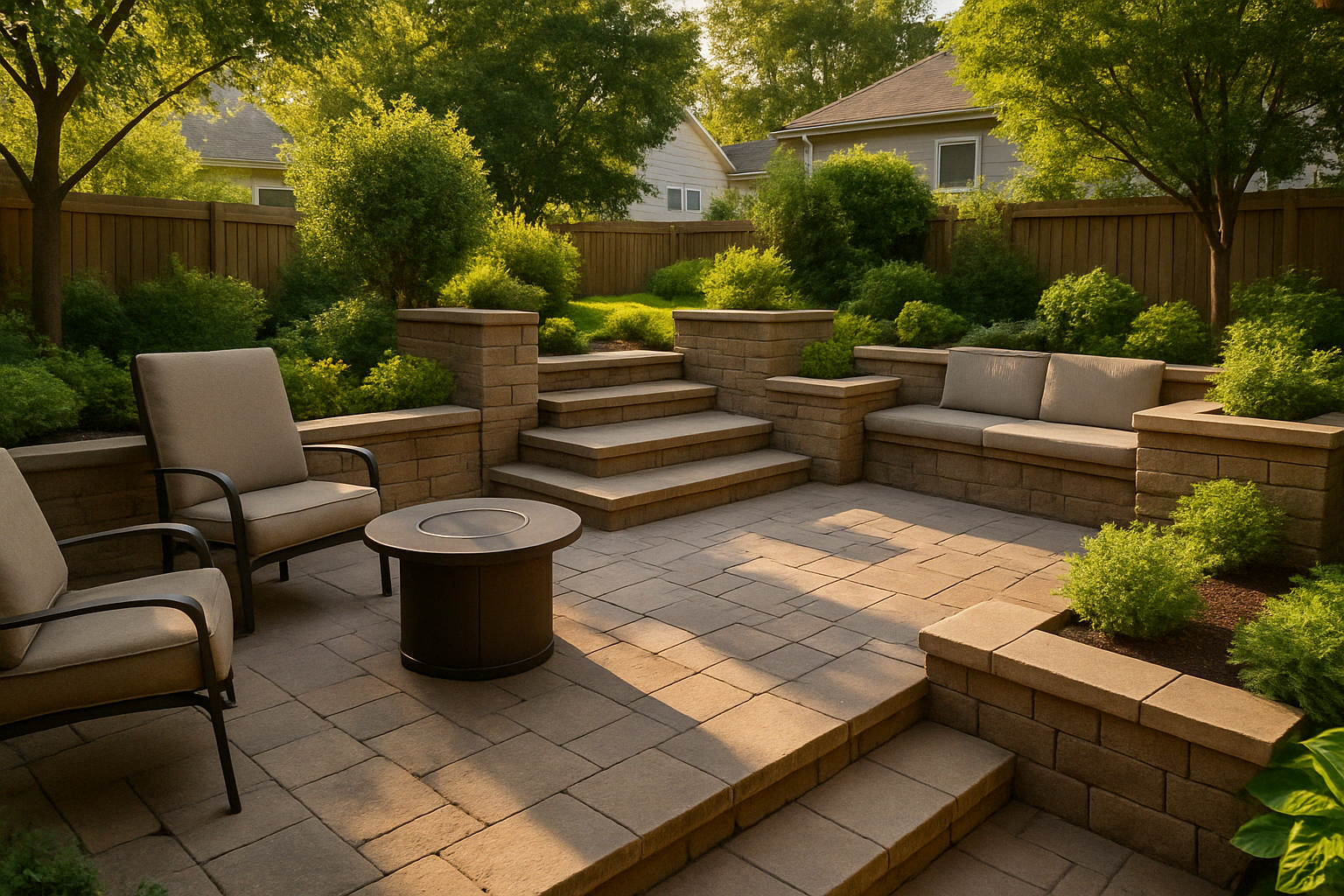
When it comes to small backyards, every inch counts. The good news? Limited space often sparks the most creative backyard hardscape design solutions. In fact, I’ve found that our most innovative projects at Boston Landscape Co. often come from the “how do we make this tiny space amazing?” challenge.
Vertical Gardening
When you can’t spread out, look up! Vertical gardening transforms boring walls and fences into lush, living features that add depth without consuming precious floor space.
I’ll never forget a project we completed in Medford where the homeowner had just 400 square feet to work with. By incorporating a beautiful living wall into their retaining structure, we created a stunning focal point that drew the eye upward. The vertical garden became the star of their outdoor space, housing herbs and flowering plants that would have otherwise consumed a quarter of their usable area.
Tiered planters work wonders too. They create natural visual interest while maximizing growing space. For smaller interventions, wall-mounted containers and trellises for climbing plants can transform a plain fence into a verdant backdrop. As one of our clients jokingly put it, “My garden now has better square footage than my apartment!”
Multifunctional Structures
In tight spaces, single-purpose elements are a luxury you can’t afford. The secret to successful backyard hardscape design in small yards is making every feature pull double or even triple duty.
Seating walls are perhaps my favorite multi-functional hardscape element. A well-designed retaining wall at 18-24 inches high doesn’t just manage elevation changes—it provides casual seating without the need for space-consuming chairs. We recently completed a project in Somerville where built-in bench seating with hidden storage underneath solved the homeowner’s need for both outdoor gathering space and garden supply storage.
Convertible features are another clever solution. Think fire pits with decorative covers that transform into tables, or stepping stones that double as casual seating. In one Winchester home, we created a small water feature that could be easily covered to become an additional entertaining surface when hosting larger gatherings.
Multi-level designs deserve special mention here. By creating even slight elevation changes, you can define distinct areas for different activities without needing physical dividers that eat up space. A step up or down creates a psychological boundary while maintaining an open feel.
Maximizing Space
There are clever design tricks that can make small spaces feel more generous, and they don’t require magic—just thoughtful backyard hardscape design.
Diagonal patterns work wonders. When we lay pavers at a 45-degree angle rather than parallel to property lines, the eye follows these lines outward, creating the illusion of greater width. It’s a simple change with dramatic results.
Continuity is another powerful tool. Using the same flooring material from your indoor space to your patio creates a seamless transition that visually extends your living area. One Burlington client with a tiny yard was amazed at how much larger their space felt when we matched their interior tile with similar outdoor porcelain pavers.
Water features, even slim ones, add depth through reflection. They don’t need to be elaborate—even a small wall fountain can create the impression of greater space while adding a soothing auditory element.
Clean lines prevent visual clutter that can make small spaces feel cramped. As one design expert noted, “In small spaces, simplicity isn’t just preferred—it’s essential.” This doesn’t mean boring—it means intentional design where every element earns its place.
Creative Solutions
Some of our most delightful backyard hardscape design innovations have come from space constraints. In Stoneham, we created a “pocket garden” with tiny insets in a paver patio where aromatic herbs could grow. Guests would brush against them when walking, releasing their fragrance—a sensory experience that required almost no square footage.
Slim water features like water walls take up minimal floor space while providing the ambiance and cooling effect of larger water elements. For one Billerica client, we installed a narrow water channel along the edge of their patio that created a striking visual boundary without consuming valuable entertaining space.
Cantilever decks that appear to float above planted areas create an airy feeling that conventional decks can’t match. By tucking the support structure beneath or to one side, these platforms seem to defy gravity while visually expanding the space.
Modular systems have also proven valuable in tight quarters. Components that can be reconfigured for different uses—like movable planters on casters that define spaces—allow homeowners to adapt their yards for different activities without permanent commitments.
When working with limited space, simplicity creates a sense of calm and order. Your small backyard might not fit everything on your wish list, but with thoughtful backyard hardscape design, it can become a perfectly proportioned outdoor retreat that feels just right for your needs.
Integrating Lighting into Your Hardscape Design
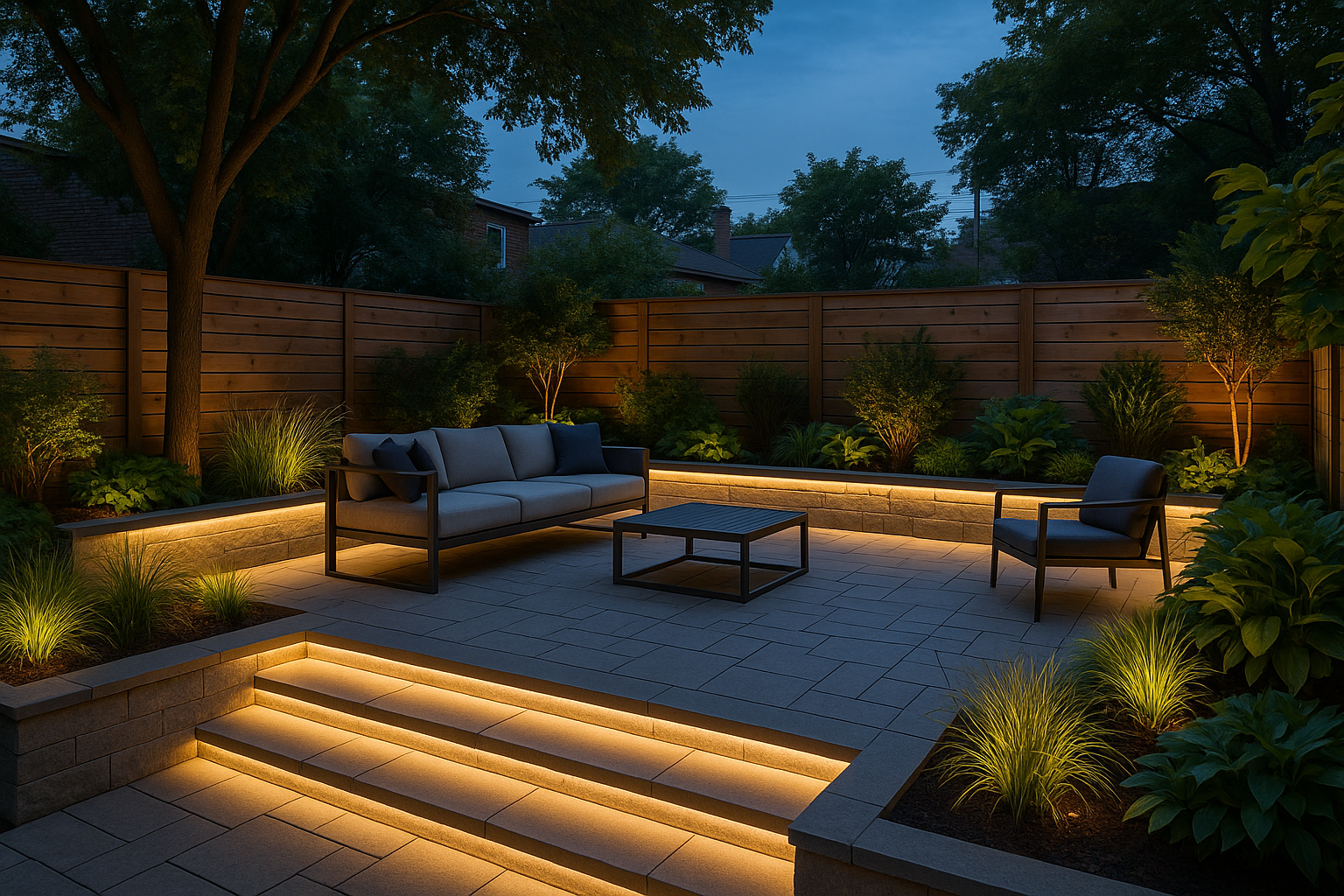
When the sun sets, your backyard story is only half-told. That’s when thoughtfully integrated lighting steps in, changing your backyard hardscape design from merely functional to absolutely enchanting. I’ve seen countless Massachusetts homeowners gasp with delight the first time they see their landscape illuminated at night—it’s truly like finding a whole new outdoor space.
Types of Outdoor Lighting
The lighting palette available to today’s homeowner is remarkably diverse. Path lights gently guide guests along walkways while creating pools of welcoming light. For homes with elevation changes (which are common in our hilly New England towns), step lights prevent awkward stumbles while adding a touch of drama.
For those statement trees or architectural features you’re particularly proud of, uplighting creates stunning dramatic effects by casting light from below. Its counterpart, downlighting (sometimes called moonlighting when placed in trees), creates a more natural, subtle effect that mimics moonlight filtering through branches.
When you want to highlight specific features—perhaps that beautiful stone wall or water feature—spotlights direct attention precisely where you want it. For gathering spaces like patios, string lights create an instant party atmosphere that’s both practical and charming.
If your hardscape includes water elements, underwater lights bring them to life after dark, creating mesmerizing reflections and movement. Perhaps most exciting are the integrated LED systems that can be built directly into steps, walls, and other hardscape elements, creating light that seems to emerge magically from the structures themselves.
“The LED revolution has completely changed what’s possible with outdoor lighting,” explains our lighting specialist at Boston Landscape Co. “Systems that would have required massive wiring and high energy costs ten years ago can now be installed with minimal disruption and run for pennies a night.”
Techniques for Integration
The most sophisticated lighting doesn’t announce itself—it feels like a natural extension of your backyard hardscape design. Recessed lighting tucked into steps, walls, and overhead structures creates illumination without visible fixtures. Similarly, under-cap lighting hidden beneath the caps of walls and pillars washes surfaces with light while concealing the source.
For curved elements or complex shapes, strip lighting with flexible LED technology can follow almost any contour. We often create purposeful niche lighting by designing small recesses specifically to house lighting fixtures, making them appear as intentional design elements rather than afterthoughts.
Many manufacturers now offer integrated fixtures designed as part of specific hardscape elements—for example, paver units with built-in lights or post caps with integrated illumination.
One of my favorite projects in Winchester included a series of low seating walls with lighting tucked underneath. During the day, they’re simply neat walls, but at night, they appear to float on a gentle glow—an effect that still delights the homeowners years later.
Enhancing Ambiance and Safety
Good lighting is the ultimate multitasker in your yard. It dramatically extends usable hours of your outdoor spaces—particularly valuable in our northern climate where daylight hours are precious. It creates mood and atmosphere for evening entertaining, turning ordinary gatherings into memorable events.
From a practical standpoint, lighting improves navigation through your landscape while highlighting design features that might be missed during daylight. It also significantly improves security by eliminating dark corners and potential hiding spots.
For many of our clients in Lexington, Burlington, and surrounding communities, lighting adds seasonal flexibility to outdoor living areas. A well-lit patio can be enjoyed well into fall evenings when darkness comes earlier but temperatures might still be pleasant.
“Lighting is the most cost-effective way to double the enjoyment of your hardscape investment,” notes one of our designers. “When you think about it, most homeowners only get to enjoy their yards during daylight hours on weekends. Add lighting, and suddenly those after-work evening hours become usable outdoor time too.”
Smart Lighting Solutions
Today’s lighting technology offers remarkable control options that were unimaginable just a few years ago. Programmable systems allow you to create different lighting scenes—perhaps bright illumination when entertaining but subtle guidance lighting when relaxing.
Motion sensors add both energy efficiency and security, illuminating areas only when needed. For the playful at heart, color-changing capabilities offer seasonal variations or special event lighting at the touch of a button.
Many systems now offer smartphone control, allowing you to adjust your lighting from anywhere—perfect for turning on the lights before arriving home or shutting them off remotely if you’ve forgotten. Astronomical timers automatically adjust to seasonal daylight changes, so your lighting always comes on at dusk regardless of the time of year.
Perhaps best of all, today’s energy-efficient designs minimize operating costs. A well-designed LED landscape lighting system typically uses less electricity than a single traditional indoor lamp.
For a family in Reading, we recently installed a comprehensive lighting system integrated throughout their backyard hardscape design. The homeowners particularly love the ability to control different zones independently through their phones—bright lighting for the cooking area when grilling, gentle ambient lighting for the dining space, and just enough illumination around the fire pit to steer safely without diminishing the fire’s glow.
Like all elements of your outdoor space, lighting should reflect your personal style and how you actually use your yard. Whether you prefer subtle guidance lighting or dramatic artistic effects, the right lighting design will make your hardscape investments shine—quite literally—long after the sun goes down.
Key Considerations When Planning Your Backyard Hardscape Project
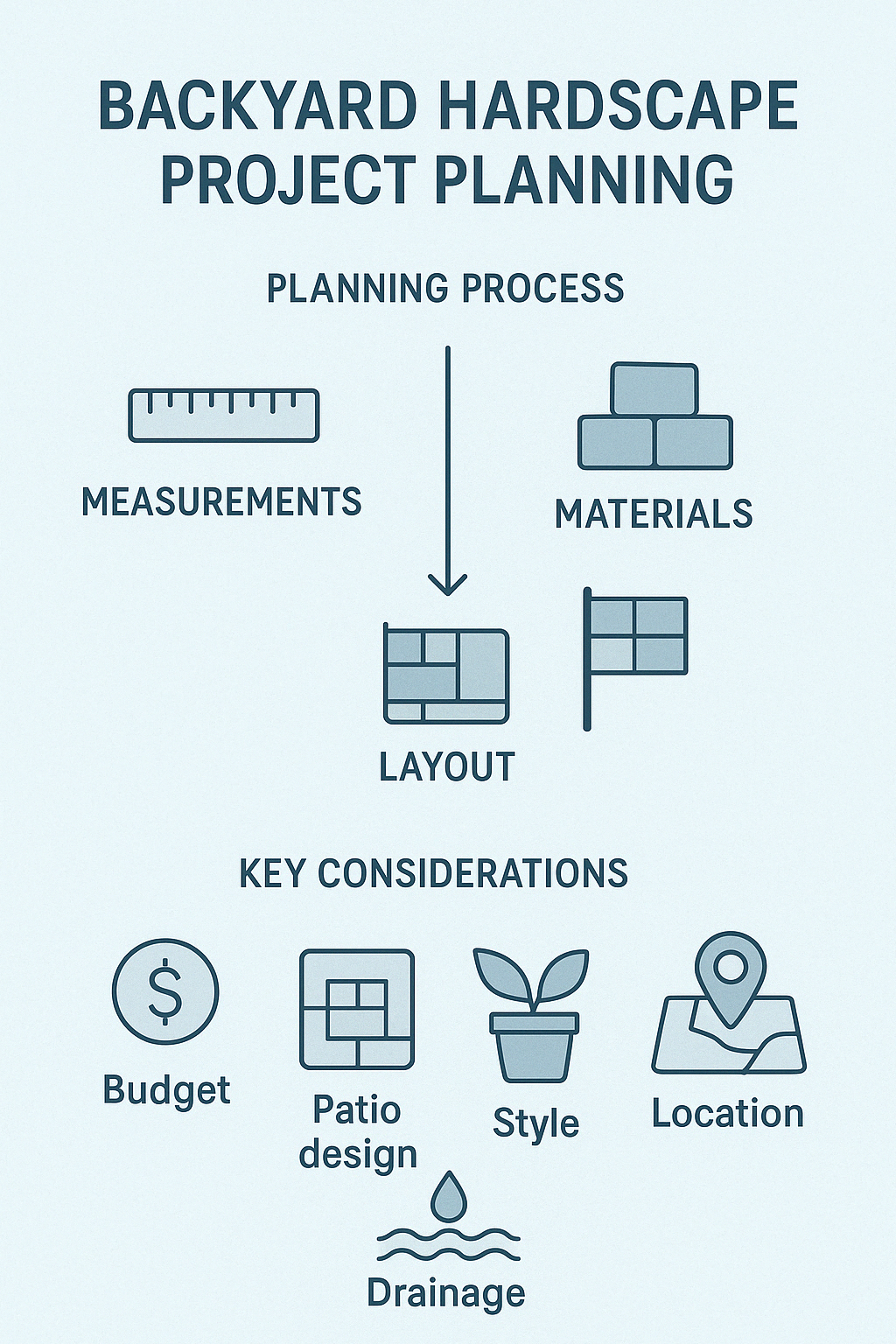
Starting on a backyard hardscape design journey is exciting, but it’s also a significant investment that requires thoughtful planning. After helping hundreds of Massachusetts homeowners transform their outdoor spaces since 1991, I’ve found that the most successful projects always begin with careful consideration of several key factors.
Planning and Budgeting
Before you pick up a shovel or select a single paver, take time to really understand your property. A thorough site assessment reveals crucial information about your yard’s unique characteristics—those slopes that seem minor now can create major drainage issues later if ignored. In our New England climate, proper water management isn’t optional; it’s essential.
When my team meets with clients in communities like Lexington or Concord, we always suggest creating two lists: “must-haves” and “nice-to-haves.” This simple exercise helps prioritize elements when budget decisions need to be made. And speaking of budgets—be realistic about costs. As a general guideline for 2025, comprehensive landscape renovations typically run about 5-10% of your home’s value, with hardscaping elements usually consuming about half of that budget.
“The paper is always the cheapest place to make mistakes,” I often tell our clients. Taking time to develop a detailed plan—even if you implement it in phases over several years—will save you significant money and headaches down the road.
Material Selection
Choosing materials for your backyard hardscape design involves more than just picking what looks nice in a catalog. The perfect paver for a California patio might be a disaster in our Massachusetts freeze-thaw cycles.
When helping a family in Winchester select materials for their new patio last year, we considered not just the beautiful colonial architecture of their home but also how different stones would hold up during winter, whether the surface would be slippery when wet, and how much maintenance they were willing to undertake.
Natural stone like granite and bluestone remains popular throughout Boston’s suburbs not just for its timeless beauty but because it stands up remarkably well to our harsh winters. For more budget-conscious projects, concrete pavers have come a long way in mimicking the look of natural stone while offering excellent durability at a lower price point (typically $10-90 per square foot installed compared to $20-180 for natural stone).
The key is finding materials that balance aesthetics, function, and budget in a way that makes sense for your specific property and lifestyle.
Maintenance Requirements
Every beautiful outdoor space requires some upkeep, but your material choices dramatically impact how much time you’ll spend maintaining your hardscape. During our client consultations in towns like Bedford and Burlington, we’re always transparent about what homeowners can expect long-term.
Natural stone typically requires minimal maintenance beyond occasional cleaning and checking for loose joints—one reason it remains worth the higher upfront investment for many of our clients. Wood decking, while beautiful, demands regular sealing or staining every 1-3 years to maintain its appearance and structural integrity. Concrete pavers fall somewhere in between, occasionally needing joint sand replenishment and periodic cleaning.
For busy families or those looking for low-maintenance options, we often recommend porcelain pavers—a relatively new material offering exceptional durability and virtually no maintenance beyond occasional rinsing. Though more expensive initially (averaging $25-225 per square foot installed), their lifetime value often outweighs the upfront cost.
Hiring Professionals Versus DIY
I’ve seen beautiful DIY hardscape projects and, unfortunately, some disasters that required expensive professional fixes. The honest truth is that some projects are simply better left to experienced professionals, particularly in our challenging New England climate.
Complex tasks like proper base preparation, precise grading for drainage, and structural retaining walls require specialized knowledge and equipment. Getting these elements wrong doesn’t just look bad—it can lead to safety hazards, property damage, and premature failure of your hardscape.
That said, many homeowners successfully tackle simpler projects like basic gravel pathways or stepping stone installations. Others opt for a collaborative approach, having our team handle the technical infrastructure while they take on planting or simpler finishing touches.
“Professional installation often pays for itself through longevity,” as one of our longtime Stoneham clients recently noted after comparing his 15-year-old professionally installed patio to his neighbor’s DIY version that needed complete replacement after just five years.
When weighing the DIY decision, honestly assess your skills, available time, and the complexity of your project. Proper tools and materials are just part of the equation—knowledge of proper techniques specific to our Massachusetts climate is equally important for creating a backyard hardscape design that will stand the test of time.
At Boston Landscape Co., we’re always happy to provide guidance on which aspects of your project might be DIY-friendly and which would benefit from professional expertise. Sometimes the smartest investment is knowing when to call in the pros.
Frequently Asked Questions about Backyard Hardscape Design
How do I balance hardscape and softscape elements in my backyard?
Finding that perfect harmony between built structures and living plants is something many of our clients ask about. In my experience working with Massachusetts homeowners in 2025, a good starting point is roughly 40% hardscape to 60% softscape for most residential properties – though this isn’t a rigid rule by any means!
Your lifestyle should drive this balance. If you love entertaining large groups, you might need more patio space. If gardening is your passion, you’ll want to allocate more room for plants. The key is creating a space that feels neither barren nor overgrown.
When I’m designing a backyard hardscape design for clients in Lexington or Winchester, I always recommend incorporating planting pockets within paved areas and using plants to soften hardscape edges. This integration creates a natural flow between the two elements. I’ve found that vertical features like trellises or pergolas with climbing vines work wonders as “bridge” elements that belong to both worlds.
One client in Bedford had a large patio that felt too stark until we added raised planters along the edges and installed a pergola with climbing hydrangea. These simple additions transformed the space from feeling commercial to feeling cozy and inviting.
What are the most cost-effective hardscaping materials?
I completely understand wanting to create a beautiful outdoor space without breaking the bank! After helping hundreds of Massachusetts homeowners transform their yards, I’ve found several reliable budget-friendly options for 2025.
Gravel and crushed stone are typically your most economical choice, usually ranging from $1-15 per square foot installed. They provide excellent drainage and come in various colors and sizes to match your aesthetic preferences. For a recent project in Medford, we created a charming gravel pathway with simple metal edging that looks far more expensive than it was.
Basic poured concrete is another durable option, typically starting around $6-45 per square foot. Don’t let its simplicity fool you – with techniques like stamping or staining, concrete can take on the appearance of much pricier materials.
Concrete pavers offer a middle ground, starting around $8-60 per square foot installed, with better visual appeal than plain concrete. I often recommend these to clients who want the look of natural stone without the premium price tag.
For those with a bit of creativity, reclaimed materials can be both economical and character-building. One of my favorite projects in Stoneham incorporated old brick from a demolished chimney into a beautiful herringbone patio that tells a story while saving money.
Installation typically costs more than materials, so simpler designs will further reduce your overall investment. And these prices represent average costs based on internet data, not actual costs for Boston Landscape Co. services, which may vary based on specific project requirements.
How can I create different zones in my backyard using hardscaping?
Creating distinct “rooms” in your outdoor space is one of the most satisfying aspects of backyard hardscape design. I’ve helped countless families transform single-use yards into multi-functional retreats, and hardscaping is the key to making this happen.
Material changes work beautifully to signal transitions between areas. For a family in Billerica, we used bluestone for their dining patio, transitioned to a gravel pathway, then to a wood deck surrounding their fire pit. Each material change subtly informed guests they were entering a new zone.
Even slight elevation changes make a powerful statement. Adding just one or two steps up or down creates psychological separation between spaces while maintaining visual connection. This works particularly well on sloped properties – turning a challenging grade into an advantage.
Vertical elements are perhaps my favorite zoning tool. A pergola instantly creates the feeling of an outdoor room without walls. For a client in Burlington, we installed a simple wooden pergola over their conversation area, and the change was remarkable – suddenly the space felt intimate and defined.
Traffic flow is crucial when planning these zones. I always encourage clients to think about how they’ll move through the space. Will you be carrying food from the kitchen to the dining area? Do you need easy access to the garden from the patio? These practical considerations ensure your beautiful zones actually work for your lifestyle.
A recent project in Reading showcases this approach perfectly. We created a cooking zone with an outdoor kitchen directly accessible from the home, a dining area under a pergola at the center of the yard, and a relaxation zone with a fire pit in the rear corner. The spaces feel distinct yet connected, and the family reports using their yard far more than they ever did before.
Conclusion
Backyard hardscape design isn’t just about placing stones and building structures—it’s about creating outdoor spaces where memories are made. Throughout this guide, we’ve seen how thoughtfully designed hardscape elements provide both the practical framework and artistic touches that transform ordinary yards into extraordinary living spaces.
From the patio where you’ll host summer barbecues to the winding pathway that guides visitors through your garden, hardscaping creates structure while solving real-world challenges like drainage, erosion, and uneven terrain. The beauty of hardscaping lies in its ability to blend function with beauty, whether you’re working with a spacious property in Lexington or a cozy urban yard in Somerville.
Here at Boston Landscape Co., we’ve spent over three decades getting our hands dirty creating custom backyard hardscape designs for Massachusetts homeowners. We’ve learned a thing or two about working with New England’s unique climate challenges—from those brutal freeze-thaw cycles to our distinctive soil conditions. This local expertise shapes every project we undertake, regardless of size.
As we move through 2025, the outdoor spaces that truly stand the test of time don’t happen by accident. They emerge from thoughtful planning that considers not just today’s needs but how your family will use the space for years to come. When we strike that perfect balance between hardscape elements and softscaping, when we incorporate sustainable practices that work with nature rather than against it, and when we pay attention to those finishing touches like lighting and material transitions—that’s when magic happens.
Your backyard should be an extension of your home—a place that reflects your personality and accommodates your lifestyle. Whether you’re dreaming of a complete outdoor living space with cooking areas, fire features, and defined entertainment zones, or simply looking to add a few key hardscape elements to your existing landscape, the right design makes all the difference.
Ready to transform your outdoor space? Our team at Boston Landscape Co. brings creativity, craftsmanship, and decades of experience to every project. From that first conversation where we capture your vision through the final installation, we’re committed to creating outdoor spaces that our clients don’t just use—but truly love to live in.
More info about Hardscaping Services Near Me
