A Backyard Deck Doesn’t Have to Break the Bank
Affordable deck ideas are more achievable than most homeowners think. Whether you have $500 or $5,000 to spend, there are smart ways to create a beautiful outdoor space without overspending.
Here are the most effective ways to build or upgrade a deck on a budget:
- Use pressure-treated lumber – the most affordable structural material, costing 2-3x less than composite
- Go ground-level or floating – skip deep footings, stairs, and railings to cut costs significantly
- Keep the shape simple – rectangular decks waste less material and take less time to build
- DIY the labor – a deck that costs $6,000-$8,000 professionally can come in under $900 with DIY effort
- Buy materials off-season – late fall and winter sales can cut lumber costs by up to 50%
- Start small – a $500-$900 budget realistically covers a solid 8×10 or 10×10 ground-level platform
A modest deck adds real value to your property — not just financially, but in how you use your outdoor space every day. And with the right plan, it’s one of the most cost-effective home improvements you can make.
I’m Steve Schumacher, owner of Boston Landscape Co. since 1991, and over the past 30+ years I’ve helped Greater Boston homeowners find affordable deck ideas that fit their yards, budgets, and local building codes. Let’s walk through everything you need to know to make it happen.
Smart Planning for Affordable Deck Ideas
When we sit down with clients in Stoneham or Billerica to discuss a new outdoor project, the first thing we look at isn’t the wood—it’s the plan. Poor planning is the fastest way to blow a budget. To keep things cheap, you need to think like a minimalist.
The most affordable deck ideas almost always start with a simple rectangular or square layout. Why? Because lumber comes in standard lengths (8, 10, 12, and 16 feet). If you design a deck that is 11 feet wide, you’re paying for 12-foot boards and throwing one foot of expensive wood into the scrap pile. By sticking to standard dimensions, you maximize every penny spent at the lumber yard.
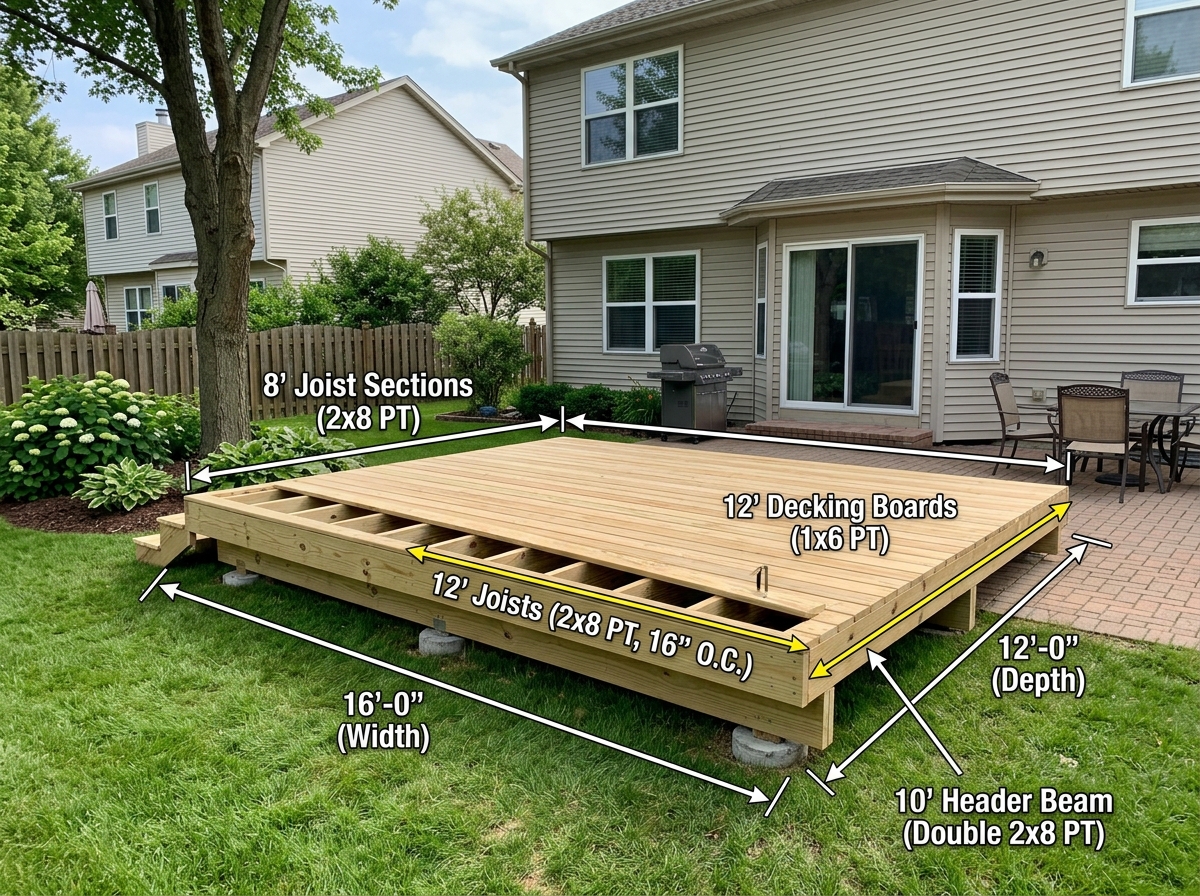
Beyond dimensions, simplicity in shape reduces the number of complex cuts and hardware needed. Curves and multi-angled “architectural” decks require specialized joist framing and significantly more labor. If you are looking for How to Design a Low-Cost Deck, the golden rule is to avoid unnecessary waste.
At Boston Landscape Co., we often integrate these simple structures into a broader residential landscaping plan. Sometimes, a smaller, well-placed deck connected to a stone path or a manicured lawn feels much more expansive and “high-end” than a massive, sprawling wooden platform that eats up your entire budget and yard.
Choosing the Right Materials
Your choice of material is the biggest lever you can pull to control costs. In the North Shore and Greater Boston area, we primarily deal with three categories:
- Pressure-Treated (PT) Lumber: Usually Southern Yellow Pine treated to resist rot and insects. This is the undisputed king of affordable deck ideas. According to 2023 industry reports, PT lumber costs 2-3 times less than composite alternatives. It’s sturdy and, if maintained, can last 15-20 years.
- Douglas Fir: Often used for framing because of its strength-to-weight ratio. While beautiful, it isn’t as naturally rot-resistant as PT wood, so it requires diligent sealing if used for surface boards.
- Composite Decking: Brands like Trex offer incredible longevity (25-30 years) with almost zero maintenance. While the upfront cost is higher, some homeowners find it “affordable” in the long run because they never have to buy stain or spend weekends power washing.
| Material | Average Cost | Lifespan | Maintenance Level |
|---|---|---|---|
| Pressure-Treated Pine | $ (Lowest) | 15-20 Years | High (Stain/Seal every 2 years) |
| Douglas Fir | $$ | 10-15 Years | High (Must be sealed) |
| Composite | $$$ (Highest) | 25-30+ Years | Low (Soap and water) |
Timing Your Project for Savings
If you try to buy lumber in May when every homeowner in Medford and Winchester is suddenly inspired to build, you’re going to pay a premium. We’ve found that the best time to source materials for affordable deck ideas is during the “off-season.”
Late fall and early winter are prime times for lumber sales. Big-box retailers and local suppliers often clear out inventory to make room for snow-related gear. Buying your wood in November or December and storing it in a dry garage can save you a significant percentage on the total material cost. Additionally, if you are looking for professional help, contractors are often more flexible with their schedules (and sometimes their rates) during the colder months when the “spring rush” hasn’t yet hit.
Top 5 Budget-Friendly Deck Styles
Not all decks are created equal, especially when it comes to the foundation. In towns like Concord and Lexington, where the terrain can vary from flat suburban lots to rocky hillsides, choosing the right style is paramount for your wallet.
The most expensive part of a traditional deck is often what you don’t see: the footings. Digging holes below the frost line (which is quite deep here in Massachusetts!), pouring concrete, and installing 4×4 posts adds massive labor and material costs. To save money, look toward ground-level designs. These styles integrate beautifully with our hardscaping services, allowing you to mix wood textures with stone or gravel for a professional look at a fraction of the price.
Floating Decks: The Ultimate Affordable Deck Idea
A floating deck (also known as a free-standing deck) is not attached to your house. Because it isn’t structurally tied to the home, it often doesn’t require the same deep, permanent footings as an elevated deck. Instead, it can sit on “deck blocks”—pre-cast concrete blocks that sit right on the ground or a bed of gravel.
This is the gold standard for the DIY $500 Deck. By keeping the deck under 18 inches off the ground, you can often skip the need for expensive railings and stairs, which can account for up to 30% of a deck’s total cost. Just be sure to use a moisture barrier, like landscape fabric and a layer of gravel, underneath the frame to prevent weeds and rot.
Gravel and Paver Hybrid Decks
If you have a particularly large area to cover but a small budget, don’t try to build a massive wooden deck. Instead, use a hybrid approach. Build a small, high-quality wooden platform for your dining table and surround it with a pea gravel or paver patio for additional seating.
As experienced stone patio contractors, we often recommend this because gravel is incredibly affordable (averaging $1.50-$4 per square foot) and offers excellent drainage. A 10×10 floating deck paired with a 10×10 gravel area gives you 200 square feet of usable space for much less than the cost of a 200-square-foot all-wood deck.
Balancing Your Budget: DIY vs. Professional Installation
The question we hear most often in Woburn and Burlington is: “Should I do this myself?”
The math is compelling. A professional deck installation for a standard 12×12 deck can cost between $6,000 and $8,000. A savvy DIYer using affordable deck ideas and pressure-treated lumber can often build a similar-sized ground-level deck for under $1,000. You are essentially “paying” yourself thousands of dollars for a weekend or two of hard work.
However, there are trade-offs. Structural safety is non-negotiable. If you are building anything elevated, you need to understand load paths, joist spans, and ledger board attachment. For simple ground-level platforms, DIY is a great way to save. For anything that requires a permit or sits more than a few feet off the ground, the expertise of a professional ensures the structure won’t collapse during your next backyard BBQ.
Understanding Real-World Costs
It’s important to be realistic about what things cost today. While you might see “ultra-cheap” projects online, the price of lumber has seen significant volatility in recent years.
Note: Prices listed below are average costs based on online/internet data and are not the actual prices of Boston Landscape Co. Every project is unique based on site prep, local permit fees, and material availability.
- Ultra-Budget (DIY Pallet/Reclaimed Wood): $100 – $500. Best for very small “nook” decks or temporary spaces.
- Basic Ground-Level (10×10 PT Wood): $900 – $2,500. This covers the lumber, deck blocks, and fasteners.
- Professional Entry-Level (10×10 PT Wood): $3,500 – $7,500+. This includes labor, permits, and professional-grade finishing.
Hidden Expenses to Watch For:
- Fasteners: High-quality exterior screws can cost $100+ for a medium deck.
- Tool Rentals: If you don’t own a miter saw or a plate compactor, expect to spend $50-$150 on rentals.
- Delivery Fees: Lumber is heavy; unless you have a large truck, delivery from the yard usually costs $75-$150.
- Sealants: A good UV-resistant stain or sealer adds $50-$100 to the budget but triples the deck’s life.
Creative Finishing Touches: Affordable Deck Ideas for Decor
Once the structure is built, the “affordable” part doesn’t have to stop. You can make a $900 deck look like a $9,000 retreat with the right styling. There are plenty of Small Deck Ideas to Upgrade Your Outdoor Space that rely on creativity rather than a credit card.
At Boston Landscape Co., we believe that landscaping and deck decor should work together. A few well-placed shrubs or a vertical garden can provide more privacy than an expensive wooden screen ever could.
Lighting and Shade on a Dime
You don’t need an electrician to have a well-lit deck. Solar-powered post-cap lights and string lights (often called “Edison bulbs”) provide a warm, high-end ambiance for under $100. For shade, skip the permanent roof or pergola, which can double your construction costs. A simple “shade sail” can be anchored to your house or nearby trees for a modern, airy look that costs less than $50. These are classic Backyard Deck Ideas on a Budget that offer immediate impact.
Built-in Seating and Planters
Furniture can be surprisingly expensive. A decent outdoor sectional can easily cost more than the deck itself! One of our favorite affordable deck ideas is to build “built-in” benches using the leftover scrap wood from your deck boards.
Built-in benches serve two purposes: they provide permanent seating and can act as a safety “railing” on low decks without blocking the view. You can also build simple box planters to flank the corners of your deck. Filling these with native Massachusetts perennials or a small herb garden adds color and life to the space for the cost of a few bags of soil and some seeds.
Frequently Asked Questions about Affordable Deck Ideas
What is the cheapest material to build a deck?
The absolute cheapest material for a long-lasting deck is pressure-treated pine. While you can technically build a deck out of shipping pallets for almost $0, the wood is often not rated for ground contact and may rot within a year or two. For a “real” deck, pressure-treated lumber offers the best balance of low cost and durability.
Do I need a building permit for a small ground-level deck in Massachusetts?
This varies by town—whether you are in Billerica, Stoneham, or Wellesley. Generally, in many Massachusetts municipalities, a “floating” deck that is not attached to the house, is less than 200 square feet, and sits less than 30 inches off the ground may not require a full building permit. However, you should always check with your local building department first. Zoning bylaws regarding “setbacks” (how close you can build to your neighbor’s property line) still apply even if a structural permit isn’t needed.
How can I refresh an old deck without replacing it?
If your current deck is structurally sound but looks terrible, don’t tear it down! For a few hundred dollars, you can give it a “Face-Lift”:
- Power Wash: Rent a power washer to remove years of grime and graying (use 500-600 psi for softwoods like pine).
- Flip the Boards: If the tops of your deck boards are splintered, sometimes you can unscrew them and flip them over to reveal a “fresh” side.
- Solid Stain: Use a “solid” or “opaque” stain. Unlike semi-transparent stains, solid stains act like paint and can hide mismatched boards or old wood grain, making the deck look brand new.
Conclusion
Building a beautiful outdoor retreat doesn’t require a massive inheritance. By focusing on affordable deck ideas like floating designs, pressure-treated lumber, and smart DIY finishing touches, you can transform your backyard into the envy of the neighborhood.
At Boston Landscape Co., we’ve spent decades serving the communities of Stoneham, Billerica, and the surrounding North Shore. We know that a deck is more than just wood and screws—it’s where you’ll host summer birthdays, enjoy your morning coffee, and relax after a long day. Whether you need a simple gravel base to start your project or a full-scale backyard transformation, we bring expert craftsmanship and local knowledge to every job.
Ready to see how we can help you maximize your outdoor space? Request an Estimate today and let’s get started on your dream deck!