
Why Landscape Refresh Mulching and Edging Is Worth Every Penny
Landscape refresh mulching and edging is one of the fastest, most cost-effective ways to transform the look and health of your outdoor space — whether you manage a commercial property in Billerica or a residential yard in Burlington.
Quick answer: What does a landscape refresh with mulching and edging involve?
- Clear and prep — Remove old mulch, weeds, and debris from existing beds
- Redefine edges — Cut clean, crisp borders 3–6 inches deep to separate lawn from beds
- Apply fresh mulch — Spread 2–3 inches of mulch evenly, keeping it away from plant stems and tree trunks
- Maintain — Top off mulch annually and recut edges each season to hold the look
The results go well beyond curb appeal. A properly mulched and edged bed can reduce soil evaporation by up to 70%, lower soil temperatures by 8–13°F during summer heat, and dramatically cut down on weed pressure — all while adding 5–12% to your property’s value.
But there’s a right way and a wrong way to do it. Piling mulch against tree trunks, cutting edges too shallow, or skipping bed prep entirely are mistakes that cost more to fix later than they saved upfront.
I’m Steve Schumacher, owner-operator of Boston Landscape Co. since 1991, and I’ve spent over three decades perfecting landscape refresh mulching and edging for residential and commercial properties across Massachusetts. In this guide, I’ll walk you through exactly what a professional service includes — and why it matters.
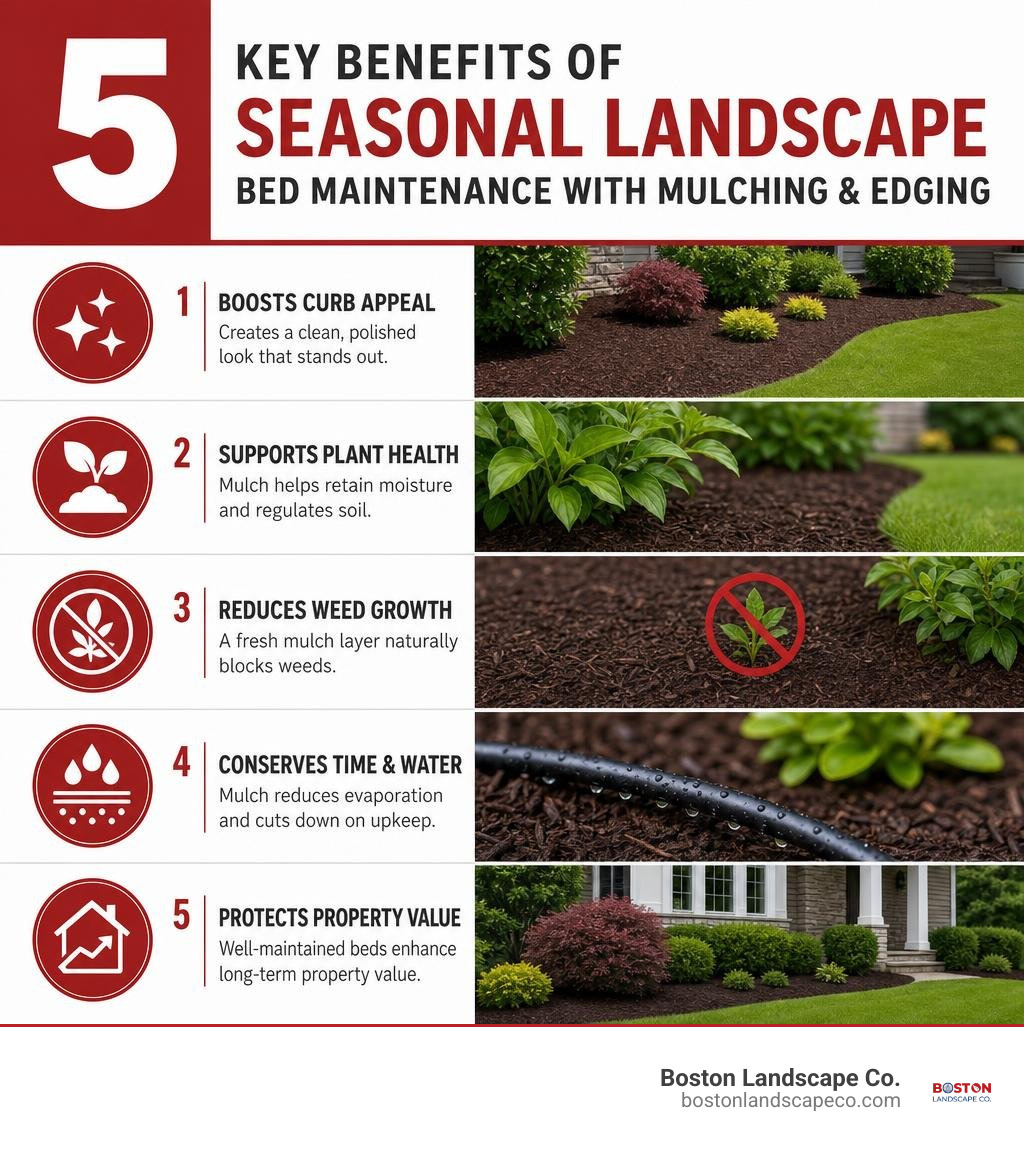
The Anatomy of a Professional Landscape Refresh Mulching and Edging Service
When many property managers or owners think of a yard refresh, they picture a quick trip to the local garden center for a few bags of hardwood mulch. However, there is a vast difference between a basic DIY mulch top-off and a comprehensive, professional bed renovation.
A basic refresh is often just a cosmetic cover-up. It involves dumping new material directly over old, compacted mulch and pulling a few visible weeds. While it might look decent for a week or two, it ignores the underlying health of your soil and root systems.
A professional bed renovation, on the other hand, is a systematic process designed to restore both form and function. We begin by assessing soil compaction, removing weed roots, pruning back encroaching groundcovers, and carefully redefining the structural boundaries of your beds. This architectural rejuvenation is vital for long-term plant health and structural organization. To understand why this structural approach is so critical, read more about Why You Need Expert Mulch Installation and Edging Today.
By combining deep spade edging with premium natural mulches, we create a self-contained ecosystem where your ornamental plantings can thrive. For a deeper look at how these elements work together, check out this Landscape Edging With Natural Mulch: Easy Guide.
Defining the Perfect Edge
The edge is the unsung hero of the modern landscape. Without a clean, physical barrier, turfgrass will aggressively invade your planting beds, sending out underground runners (rhizomes) that choke out delicate perennial root systems.
We specialize in hand-cut, spade-carved edges. Unlike cheap plastic strip edging that cracks during New England’s harsh winter freeze-thaw cycles, a hand-cut edge creates a clean, architectural line that frames your property beautifully.
To achieve maximum effectiveness against grass encroachment, we cut our edges to a precise depth of 3 to 4 inches. This creates a vertical barrier that intercepts grass roots before they can establish a foothold in your planting areas. Whether we are servicing estate lawns in Lexington or commercial complexes in Billerica, this deep, clean line provides a sharp, high-contrast border that lasts all season.
Selecting and Spreading the Right Mulch
Not all mulch is created equal. The type of organic mulch chosen for your property plays a major role in soil chemistry, moisture management, and aesthetic appeal.
- Double-Shredded Hardwood Bark: Excellent for sloped areas in Concord because the interlocking fibers resist washing away during heavy summer rains.
- Premium Cedar Bark: Naturally contains aromatic oils that repel common pests while decomposing slowly over time.
- Pine Bark Mulch: Ideal for acid-loving plantings, such as rhododendrons and azaleas, which are common throughout Wilmington and Chelmsford.
For larger commercial properties, we utilize professional bark blowers. This specialized equipment provides 10% to 20% better coverage than traditional hand-spreading by aerating the mulch as it is applied. This prevents the heavy clumping that suffocates soil. Whether hand-spread around delicate perennials or blown in for vast commercial beds, we maintain a strict 2-to-3-inch depth guideline to ensure optimal soil breathing.
Best Practices for Landscape Refresh Mulching and Edging
A professional landscape refresh mulching and edging service requires a delicate balance of science and craftsmanship. One of the most common questions we hear is whether to use weed barrier fabrics.
While landscape fabric can seem like a quick fix, it often creates long-term maintenance headaches. Over time, weed seeds blow into the decomposing mulch layer on top of the fabric, germinating and sending roots straight through the barrier, making them incredibly difficult to pull. Instead, we recommend using newsprint or cardboard as a biodegradable weed barrier, or applying a commercial-grade pre-emergent herbicide directly to the cleared soil before mulching.
Additionally, ensuring that the soil is properly hydrated before applying mulch is vital. Mulch acts as an insulator; if you apply it over bone-dry soil, it can actually prevent light rainfall from reaching plant roots. We make sure your beds are properly prepped to maintain consistent soil moisture and protect root flares from suffocation.
Key Benefits of Professional Bed Maintenance
Investing in professional bed maintenance is about protecting your living assets. Your trees, shrubs, and perennials represent a significant financial investment, and proper bed care ensures they continue to grow and thrive.
For a complete overview of how these services protect your yard, read about The Importance of Landscape Maintenance for a Beautiful Yard. To help you visualize your options, here is a quick breakdown of organic versus inorganic options:
| Mulch Type | Moisture Retention | Weed Suppression | Soil Enrichment | Longevity | Best Suited For |
|---|---|---|---|---|---|
| Organic (Hardwood/Cedar) | Outstanding | Excellent (blocks light) | High (adds nutrients) | 1–3 Years | Ornamental beds, trees, shrubs |
| Inorganic (Stone/River Rock) | Moderate | Low (weeds grow in dust) | None | Permanent | High-traffic areas, drainage zones |
Preventing Soil Evaporation and Temperature Spikes
During the peak of a hot Massachusetts summer, bare soil can bake under the sun, destroying beneficial soil microbes and stressing plant roots. A professional application of organic mulch acts as a natural climate control system:
- 70% Evaporation Reduction: Keeps the soil damp, reducing your irrigation water needs.
- 8–13 Degree Cooling Effect: Insulates root zones from extreme heat, preventing transplant shock and leaf scorch.
- Erosion Prevention: Keeps heavy summer downpours from washing away valuable topsoil.
Long-Term Weed Suppression and Soil Health
Weeds are opportunists. They require light and open soil to germinate. A consistent 2-to-3-inch layer of mulch acts like a natural bouncer, blocking the sunlight that dormant weed seeds need to wake up.
Furthermore, as organic wood mulch breaks down, it slowly releases vital organic matter back into the soil. This natural decomposition process improves clay soils (common in areas like Burlington) by boosting aeration and drainage, while helping sandy soils retain essential nutrients.
The Step-by-Step Professional Process for a Landscape Refresh
To achieve the immaculate, crisp look that sets professional landscapes apart, we follow a strict multi-step workflow.

This systematic approach ensures that your beds are clean, healthy, and structurally sound before a single shovel of mulch is laid. This process is a key part of our Ultimate Spring Yard Cleanup Guide. We source our premium, locally produced materials from trusted regional suppliers, such as those found through West Concord, MA Landscape Supply | Bulk Mulch, Soil & Stone.
Step 1: Clearing and Prepping the Foundation
We never lay fresh mulch over a messy foundation. Our crews begin by manually extracting deep-rooted weeds and clearing out accumulated leaf litter, twigs, and winter debris.
If the existing mulch layer is compacted, matted, or showing signs of fungal growth, we use landscape rakes to loosen and fluff the material. In cases where the mulch has built up to a depth of over 4 inches, we carefully scrape away the excess to prevent root suffocation. Finally, we apply a balanced pre-emergent weed control to block future weed germination.
Step 2: Redefining the Bed Borders
Once the beds are clear, we establish clean, flowing lines. Using specialized spade shovels or mechanical bed edgers, we cut a clean, vertical 90-degree edge approximately 4 to 6 inches deep along the lawn interface.
We then pull the soil back slightly into the bed to create a shallow, sloping trench. This trench acts as a natural catch basin, trapping mulch and preventing it from washing onto your manicured lawn or driveway during heavy storms.
Step 3: Precision Mulch Application
With the borders cut and the soil prepped, we begin spreading our premium mulch. Our crews are trained to apply the material evenly, maintaining a consistent depth of 2 to 4 inches depending on the specific plant material in the bed.
We pay close attention to delicate annuals and groundcovers, keeping the application lighter (1 to 2 inches) around their tender stems. Most importantly, we ensure that mulch is kept several inches away from tree trunks and shrub bases to prevent moisture trap issues.
Common Mistakes in DIY Landscape Refresh Mulching and Edging
While yard work can be a satisfying weekend project, improper techniques can lead to serious plant health issues.
For a complete checklist of seasonal landscape care, read our guide on Essential Landscape Maintenance Tasks for Every Season.
The Danger of Mulch Volcanoes
The “mulch volcano” is one of the most common and damaging mistakes in landscaping. This occurs when mulch is piled high against the trunk of a tree, resembling a volcano.
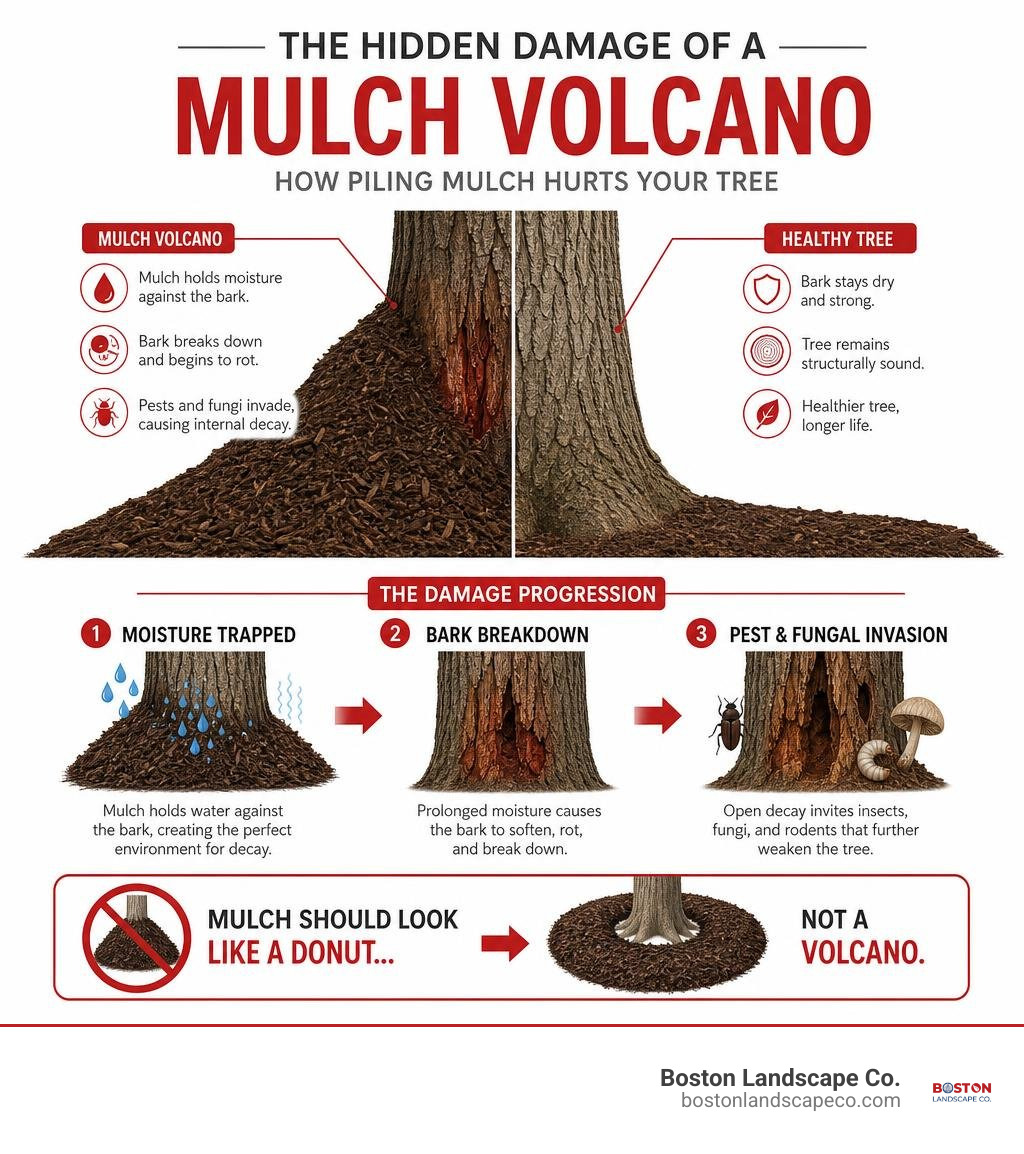
When wet wood chips are held directly against tree bark, they trap moisture, causing the bark to rot. This decay weakens the tree’s structural integrity and creates an open invitation for destructive boring insects, fungi, and rodents that nest in the warm mulch during winter. Always remember: mulch should look like a donut, not a volcano.
Why Shallow Edges Fail
Many DIY enthusiasts make the mistake of simply skimming the surface of the soil with a spade, creating a shallow edge that is less than an inch deep.
Shallow edges fail almost immediately. Turfgrass roots can easily grow over or under the shallow cut, invading your beds within a matter of weeks. Furthermore, without a proper trench, heavy rain will wash your expensive mulch straight onto your lawn or driveway, creating an unsightly mess and requiring constant re-work.
Understanding the Costs of Professional Mulching and Edging
When considering a professional landscape refresh mulching and edging service, it is helpful to understand how projects are estimated.
We price our residential and commercial projects based on the volume of material required (measured in cubic yards) and the total linear footage of the bed borders that need to be hand-cut or redefined. Whether your property is in Billerica, Burlington, or Wilmington, our estimates are clear and detailed.
Average Industry Costs for Landscape Refresh Mulching and Edging
Please note: The pricing ranges listed below are average costs compiled from publicly available online industry data. They do not represent the specific rates of Boston Landscape Co. and are provided strictly for general budgeting purposes.
To account for the wide variability in site conditions, access, and material choices across Massachusetts, we have provided a realistic, broad industry price range:
- Professional Mulch Installation: $80.00 to $750.00+ per cubic yard installed (includes bed preparation, weed clearing, and hand-spreading or blowing).
- Bed Edging Services: $7.50 to $65.50+ per linear foot (depending on whether you require a newly cut edge or a basic redefinition of an existing border).
Factors That Influence Your Project Estimate
No two properties are identical, and several key factors will influence your final project estimate:
- Bed Accessibility: Large, open commercial beds that allow for the use of bark blowers or utility carts are typically more cost-effective to service than small, confined courtyard beds that require manual wheelbarrow transport.
- Preparation Needs: Beds that are heavily overgrown with invasive weeds, packed with old, compacted mulch, or buried under storm debris require additional preparation time before fresh material can be applied.
- Material Selection: Premium, triple-shredded dyed mulches or organic cedar barks generally carry a higher material cost than standard double-shredded utility wood chips.
- Edge Complexity: Intricate, curved bed designs with numerous tight turns around specimen plantings in Lexington require more precise hand-tool work than straight, continuous commercial borders.
Frequently Asked Questions About Bed Maintenance
How often should I refresh my mulch and redefine my bed edges?
For the best results, we recommend an annual spring refresh. Over the course of a year, organic mulch naturally decomposes, losing its vibrant color and weed-suppressing capabilities. Redefining your bed edges should also be done at least once a year—ideally in early spring before turfgrass enters its active growth phase—with light touch-ups in late summer to keep borders looking sharp.
Is it necessary to remove old mulch before applying a new layer?
It is not always necessary, but it depends on the condition of your beds. If the existing mulch is decomposing naturally and is less than 2 inches deep, you can safely apply a fresh layer directly on top.
However, if the old mulch has become heavily compacted, forms a hard crust that repels water, or shows signs of fungal growth, it should be thoroughly loosened or removed. Allowing mulch to build up past 4 inches restricts vital oxygen from reaching plant roots. For professional assistance with soil compaction and bed health, learn more about our Landscape Maintenance Stoneham services.
When is the best time of year to schedule this service in Massachusetts?
In Massachusetts, early spring (late March through May) is the absolute best time to schedule your landscape refresh. This allows us to clear away winter debris, apply pre-emergent weed controls before weed seeds germinate, and establish clean edges before your lawn begins growing rapidly.
The second-best time is early fall (September through October) in Concord, which helps insulate plant root systems before the ground freezes and keeps your property looking clean throughout the winter months.
Conclusion: Landscpae Refresh Mulching Edging
A professional landscape refresh mulching and edging service is more than a cosmetic upgrade; it is an investment in the long-term health, structural beauty, and value of your property. By combining deep, hand-cut spade edges with premium, expertly applied organic mulches, the team at Boston Landscape Co. can transform your outdoor space into a clean, thriving environment.
Whether you manage a sprawling commercial facility or want to elevate your family home, our experienced crews have the specialized equipment and local expertise to deliver outstanding results. We proudly serve residential and commercial properties throughout Bedford, Billerica, Burlington, Chelmsford, Concord, Lexington, and Wilmington.
Ready to give your landscape the professional care it deserves?
Request a free estimate online today to schedule your seasonal landscape refresh consultation!
