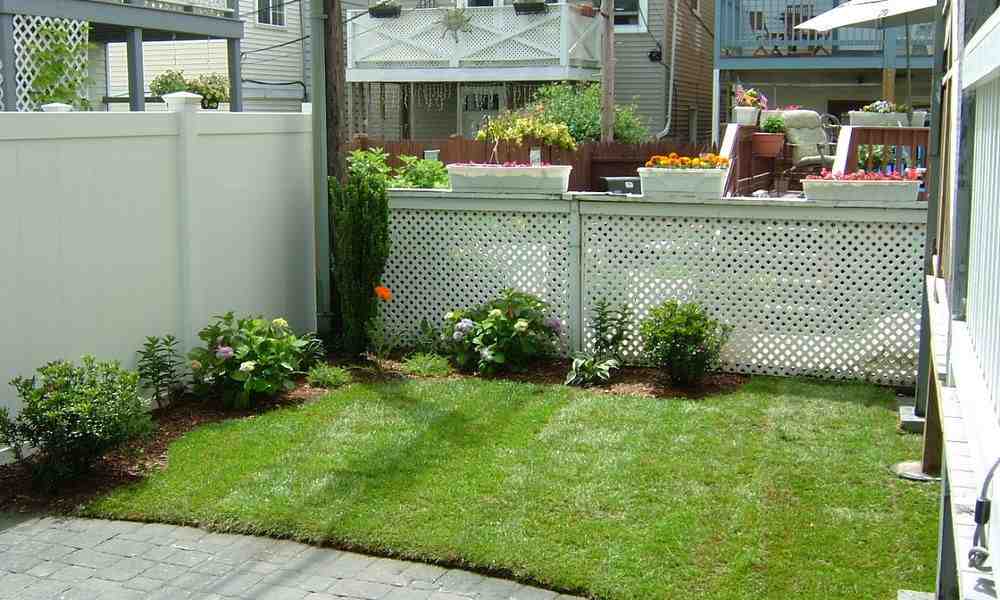
Why Expert Mulch Installation and Edging Makes a Real Difference for Your Property
Expert mulch installation edging transforms an ordinary yard into a clean, healthy, and well-defined landscape — and the difference is visible from the street.
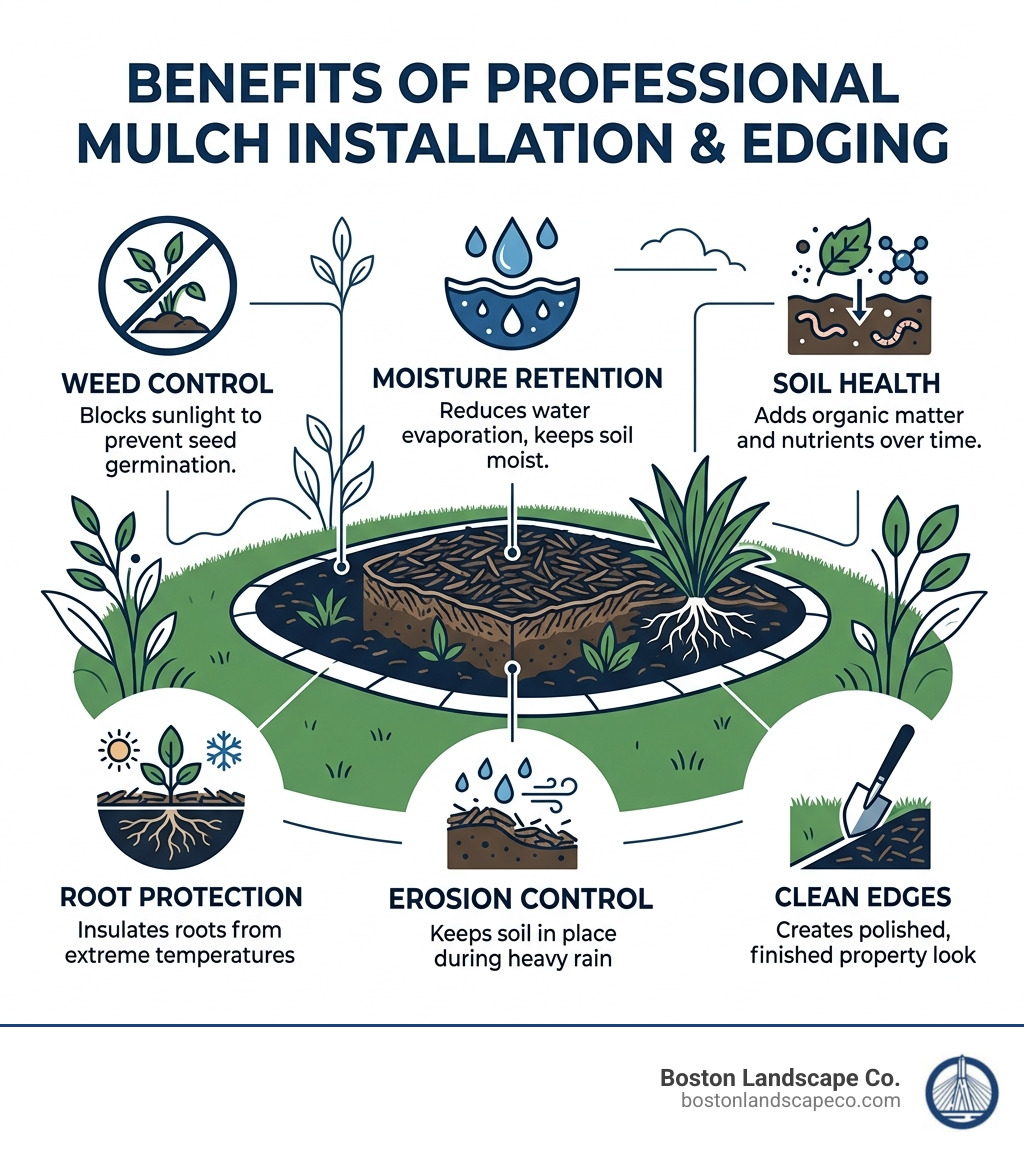
Here’s what professional mulch installation and edging delivers:
- Weed suppression – A properly applied 2-4 inch mulch layer blocks sunlight from weed seeds, dramatically cutting down on unwanted growth
- Moisture retention – Mulch locks in soil moisture, reducing how often you need to water
- Soil health – Organic mulches slowly decompose, feeding your soil with nutrients year-round
- Root protection – Mulch insulates roots from Massachusetts’ harsh temperature swings, both summer heat and winter cold
- Erosion control – Mulch holds soil in place during heavy New England rain events
- Clean, defined edges – Professional edging creates sharp borders between beds and lawn, giving your property a polished, finished look
Many Greater Boston homeowners spend weekends pulling weeds and fighting back encroaching grass — only to see their beds look messy again within weeks. The root cause is almost always the same: mulch applied at the wrong depth, without proper edging, or using the wrong materials for our local climate.
Getting it right from the start saves you time, money, and frustration.
I’m Steve Schumacher, owner of Boston Landscape Co. since 1991, and over more than three decades I’ve delivered expert mulch installation edging across Stoneham, the North Shore, and the Greater Boston area. In this guide, I’ll walk you through everything you need to know to get it done right — or to understand exactly what to expect when you hire a professional.
The Core Benefits of Expert Mulch Installation Edging
When we talk about expert mulch installation edging, we aren’t just talking about making the yard look pretty for a weekend party. We are talking about the fundamental health of your “living” landscape. In Massachusetts, our soil deals with everything from frozen tundra conditions in January to humid, baking heat in July. Mulch acts as the “skin” of your garden, protecting the delicate systems underneath.
One of the most immediate benefits is weed control. By blocking sunlight, a thick layer of mulch prevents dormant weed seeds from germinating. However, it’s not just about blocking light; it’s about creating a physical barrier that makes it harder for wind-blown seeds to find a home in your soil.
Furthermore, mulch is a master of moisture conservation. During a dry spell in Middlesex County, unmulched soil can bake into a hard crust, causing water to run off rather than soak in. Mulch keeps the soil underneath cool and porous, reducing evaporation and ensuring your expensive perennials and shrubs stay hydrated. This is especially critical for young plants whose root systems haven’t yet reached deep into the water table.
Enhancing Soil Health and Plant Vitality
As organic mulches break down, they perform a magic trick: they turn into food. This process of nutrient cycling is vital for long-term plant health. As wood chips or bark decompose, they add organic matter back into the earth, improving the soil structure and making it easier for roots to spread.
This decomposition also encourages earthworm activity. Earthworms are nature’s little aerators; they tunnel through the soil, breaking up compaction and leaving behind nutrient-rich castings. By providing a cool, moist environment under a layer of mulch, you are essentially building an underground workforce that keeps your soil healthy.
However, there is a right way and a wrong way to do this. If mulch is piled too high or against the wrong parts of a plant, it can actually cause harm. To prevent rot and disease, it is essential to keep mulch away from the base of plants and tree trunks. We always recommend leaving a small gap to allow the “flare” of the tree to breathe.

Boosting Property Value with Defined Borders
In the real estate world, we call it “curb appeal,” but in the landscaping world, we call it “definition.” A landscape without edging is like a painting without a frame. Professional edging creates a crisp, 90-degree vertical cut between your lush green grass and your rich, dark mulch beds.
In the North Shore style of landscaping, these clean lines are a hallmark of a well-maintained property. They signal to neighbors and potential buyers that the home is cared for with precision. Beyond aesthetics, these defined borders serve a functional purpose: they prevent turf grass from creeping into your flower beds, saving you hours of hand-weeding later in the season.
Choosing the Right Materials for Your Massachusetts Landscape
Not all mulch is created equal. The “best” mulch depends entirely on your specific goals, your plant types, and the aesthetic you want for your home in towns like Reading or Winchester.
Organic vs. Inorganic Mulch Options
In our region, organic mulches are the gold standard because they contribute to soil health. Here are the most common types we use:
- Shredded Hardwood: This is a versatile, heavy mulch that interlocks, making it resistant to blowing away during New England windstorms. It stays in place on slopes better than most other types.
- Cedar Mulch: Known for its pleasant aroma, cedar also contains natural oils that can deter certain insects. It decomposes slowly, meaning it lasts a bit longer than standard hardwood.
- Hemlock: A premium choice in Massachusetts, hemlock is prized for its rich, natural reddish-brown color that doesn’t fade as quickly as dyed products.
- Dark Pine: This offers a classic, earthy look and is excellent for acid-loving plants like the rhododendrons and azaleas so common in our area.
- Pine Straw: While less common in the North Shore than in the south, pine needles are fantastic for acidifying soil and providing a natural, “woodsy” look.
To learn about organic mulch types in more detail, it’s helpful to understand that because they decompose, they require an annual refresh to keep your garden beds looking their best.
Inorganic options, like river rock, gravel, or rubber mulch, are used for high-traffic areas or spots where you want a permanent look. While they don’t feed the soil, they are excellent for drainage and don’t need to be replaced every year.
| Mulch Type | Longevity | Nutrient Value | Best Use |
|---|---|---|---|
| Shredded Hardwood | 1 Year | High | General garden beds, slopes |
| Cedar | 1-2 Years | Medium | Insect deterrence, aesthetics |
| Hemlock | 1 Year | High | Premium curb appeal |
| River Rock | Permanent | None | Drainage areas, modern designs |
| Rubber | 10+ Years | None | Playgrounds, non-planting zones |
Selecting the Best Edging for Expert Mulch Installation Edging
The “edging” part of expert mulch installation edging is where the professional touch really shines. There are several ways to create that border:
- Natural Spade Edge: This is our favorite. We use a specialized spade or a power edger to cut a clean, 3-inch deep trench. It requires no extra materials and looks the most “natural” and high-end.
- Aluminum or Steel Edging: These provide a permanent, slim profile that prevents grass roots from crossing over. They are incredibly durable and handle the freeze-thaw cycles of Massachusetts winters without popping out of the ground.
- Cobblestone or Brick Pavers: For a more traditional or historic look, especially in towns like Lexington or Concord, stone borders add a timeless elegance.
- Plastic Poly-Edge: A budget-friendly option that is easy to install, though it can sometimes shift during heavy frosts.
The Professional Process: From Bed Prep to the Perfect Edge
When we arrive at a property in Billerica or Stoneham, we don’t just start throwing mulch. A professional job requires significant preparation. If you just put mulch over weeds, the weeds will win every time.
Our process begins with site clearing. We remove fallen sticks, leaves, and debris. Then comes the hard work: weed removal. We pull weeds by the root to ensure they don’t just grow back through the new layer. In some cases, we may apply a pre-emergent weed control to prevent new seeds from taking hold.
Soil cultivation is next. We lightly till the top layer of soil to break up compaction, ensuring that when we water the new mulch, the moisture actually reaches the roots.
Precision Techniques for Expert Mulch Installation Edging
Once the beds are prepped, we move to the edging. We don’t just “mark” the edge; we create a trench. A 90-degree vertical cut on the grass side allows the mulch to sit lower than the lawn, which prevents it from washing away onto your grass during a thunderstorm.
When it comes to spreading, even distribution is the goal. We aim for a consistent depth across the entire bed. If you’re doing this yourself, you can use a mulch calculator to figure out exactly how much you need. Generally, one cubic yard of mulch covers about 100 square feet at a 3-inch depth. That a cubic yard can weigh up to 800 pounds—it’s a lot of heavy lifting!
Avoiding Common Mistakes Like Mulch Volcanoes
One of the most common (and heartbreaking) mistakes we see is the “mulch volcano.” This is when mulch is piled high against the trunk of a tree. While it might look “neat” to some, it’s a death sentence for the tree.
Piling mulch against the bark traps moisture, which leads to rot and fungal diseases. It also encourages “girdling roots,” where the roots grow in a circle around the trunk and eventually choke the tree. To avoid this, we use the “donut method.” We keep the mulch 2-3 inches away from the root flare (the part where the trunk widens at the base), ensuring proper oxygen exchange and moisture regulation.
Timing, Costs, and Maintenance for Long-Term Success
Timing is everything in New England. If you mulch too early, you might trap the cold in the soil, delaying your spring blooms. If you mulch too late, the weeds have already taken over.
When to Schedule Your Installation
The “sweet spot” for mulch installation in Massachusetts is typically from mid-April to early June. This is after the ground has thawed and warmed up, but before the heat of summer sets in. This timing ensures your plants have a moisture-rich environment just as they enter their peak growing phase.
A secondary window opens in the fall, from September to November. Fall mulching is the “unsung hero” of landscaping. It protects your perennials through the winter freeze-thaw cycles and ensures your yard looks great even when the leaves have fallen.
Understanding Investment and Pricing
When considering professional services, it’s helpful to look at internet average costs to get a baseline. Please note that these are general market averages and not the specific rates of Boston Landscape Co.
On average, bulk mulch material can cost anywhere from $45 to $75 per cubic yard depending on the type (hemlock is usually more expensive than basic hardwood). When you add in delivery and professional labor—which includes bed prep, weeding, and precision edging—the total investment typically ranges from $60 to $200+ per cubic yard.
The wide range reflects the complexity of the job. A flat, easy-to-access bed will be on the lower end, while a steep slope or a yard with hundreds of tiny, intricate plantings will require more man-hours. For businesses, our commercial landscaping services often involve larger volumes and specialized equipment to handle expansive properties efficiently.
Frequently Asked Questions about Mulching and Edging
How deep should my mulch be?
For most residential beds, 2 to 4 inches is the ideal depth. If the mulch is too thin (less than 2 inches), sunlight will reach the soil and weeds will sprout. If it’s too thick (more than 4 inches), it can prevent oxygen and water from reaching the plant roots, essentially suffocating them. Fine-textured mulches should stay closer to the 2-inch mark, while coarse wood chips can go a bit deeper.
How often should mulch be replenished?
Organic mulches are designed to decompose, which means they need a refresh. Most homeowners in the North Shore area find that an annual refresh in the spring is best to maintain both the nutrient benefits and the vibrant color. Hemlock and cedar may last a bit longer, but a thin “top-off” every year keeps the curb appeal at its peak.
Can I put new mulch over old mulch?
Yes, you can, but with a caveat. If your existing mulch has broken down into a thin, dark layer, you can rake it to loosen it up and then spread a fresh layer on top. However, if you already have 3 or 4 inches of old, compacted mulch, adding more will cause problems. In that case, it’s better to remove some of the old material first to ensure effective weed control and soil health.
Conclusion
At the end of the day, your landscape is an investment in your home’s value and your own quality of life. Whether you are looking for residential landscaping services to make your backyard a private oasis or need to maintain a professional image for your business, expert mulch installation edging is the foundation of a great-looking property.
At Boston Landscape Co., we’ve spent over 30 years perfecting the art of the perfect edge and the even spread. We know the soil in Medford, the climate in Waltham, and the aesthetic expectations in Wellesley. We don’t just “dump and run”—we treat every bed like it’s our own front yard.
Ready to give your property the finish it deserves? Request a Quote for Expert Mulch Installation Edging today and let our experienced team handle the heavy lifting, so you can just enjoy the view.