Backyard path ideas: Master 4 Steps to Perfect Style
Why the Right Path Transforms Your Outdoor Space
Backyard path ideas range from simple mulch trails to neat flagstone walkways. The most popular options include:
- Gravel & Crushed Stone – $1-$10+ per sq ft installed, easy DIY, low maintenance
- Mulch & Wood Chips – $0.50-$3 per sq ft, simplest install, needs annual refresh
- Stepping Stones – $2-$15+ per sq ft, moderate DIY skill, highly versatile
- Pavers – $8-$25+ per sq ft, intermediate skill, very durable
- Brick – $10-$30+ per sq ft, classic look, lasts 25-100 years
- Flagstone – $15-$50+ per sq ft, premium aesthetic, professional install recommended
(Note: These are national average ranges based on industry data and not actual quotes for Boston Landscape Co. services.)
A well-designed path is more than a way to get from point A to B. It guides visitors through your garden, protects your lawn from wear, and can solve drainage issues. It’s one of the fastest ways to make your yard look intentional and finished.
As we move into late spring here in the Greater Boston area, now is the perfect time to tackle path projects. The ground is workable, and you’ll have all summer to enjoy your new walkway. Whether connecting a deck to a fire pit or creating access to garden beds, the right path adds serious curb appeal.
The beauty of path projects is that you have options for every budget and skill level. A simple gravel path can be a weekend DIY project, while complex flagstone installations become permanent features that increase property value. The foundation work is key: proper planning, ground preparation, and choosing materials that match your aesthetic and maintenance tolerance.
I’m Steve Schumacher, and over three decades with Boston Landscape Co, I’ve installed hundreds of paths. The key is matching your vision to the practical realities of your budget, DIY comfort level, and how the path needs to perform through our New England freeze-thaw cycles.
Glossary for Backyard path ideas:
First Steps: Planning & Preparing Your Perfect Path
The success of your path is 80% determined before you lay a single stone. I’ve seen beautiful flagstone buckle after one winter because of skipped base prep, and simple gravel paths last decades because the foundation was done right.
Start by mapping your path. Grab a garden hose or rope and lay it out on the ground. Walk the route. Does it feel natural? Often, the best backyard path ideas come from paving the routes you already take, visible as worn spots in the grass.
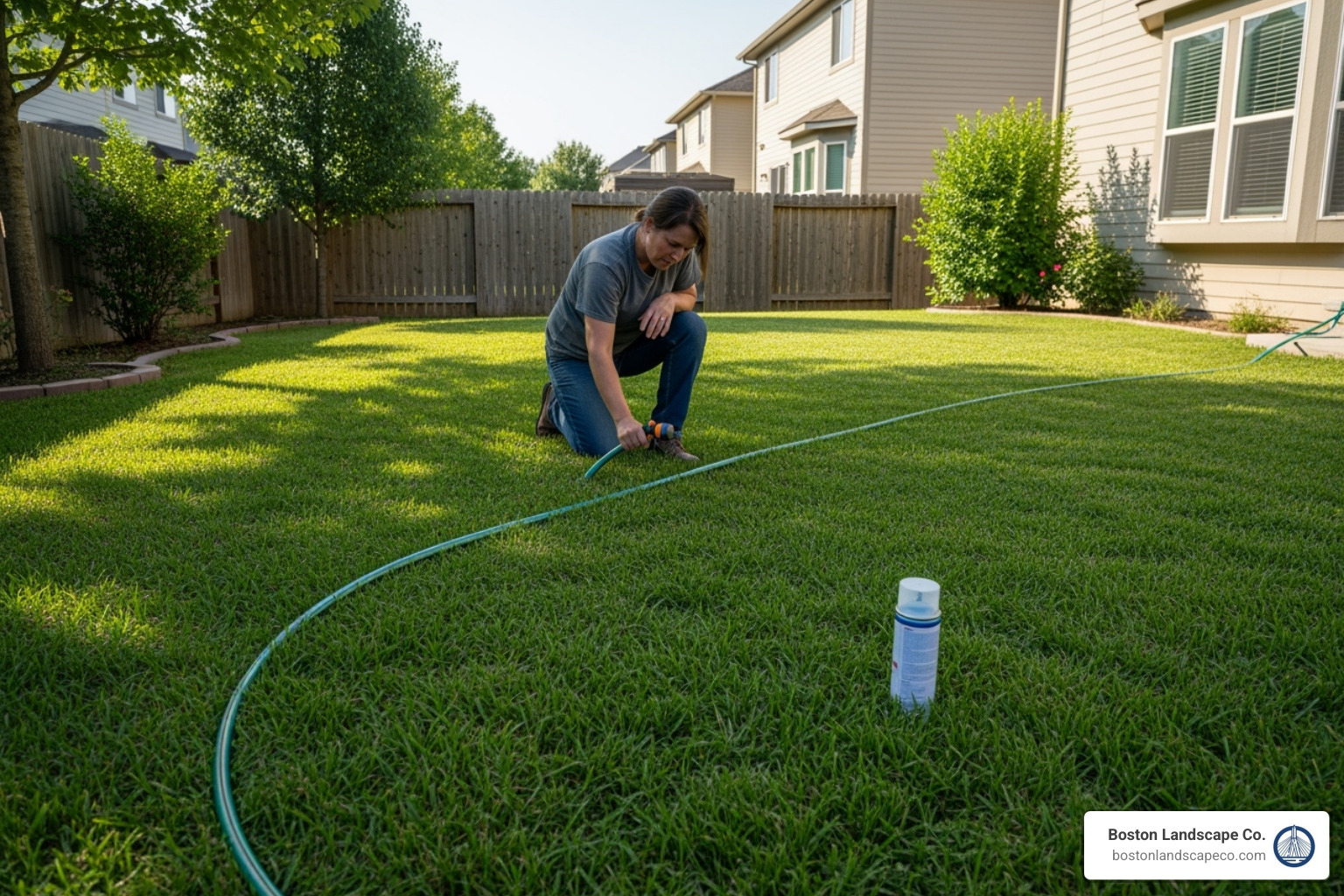
Path width matters. A main walkway should be at least 36 inches wide for comfort, while a secondary garden path can be as narrow as 24 inches. Once you’ve marked your route with spray paint, it’s time for ground preparation.
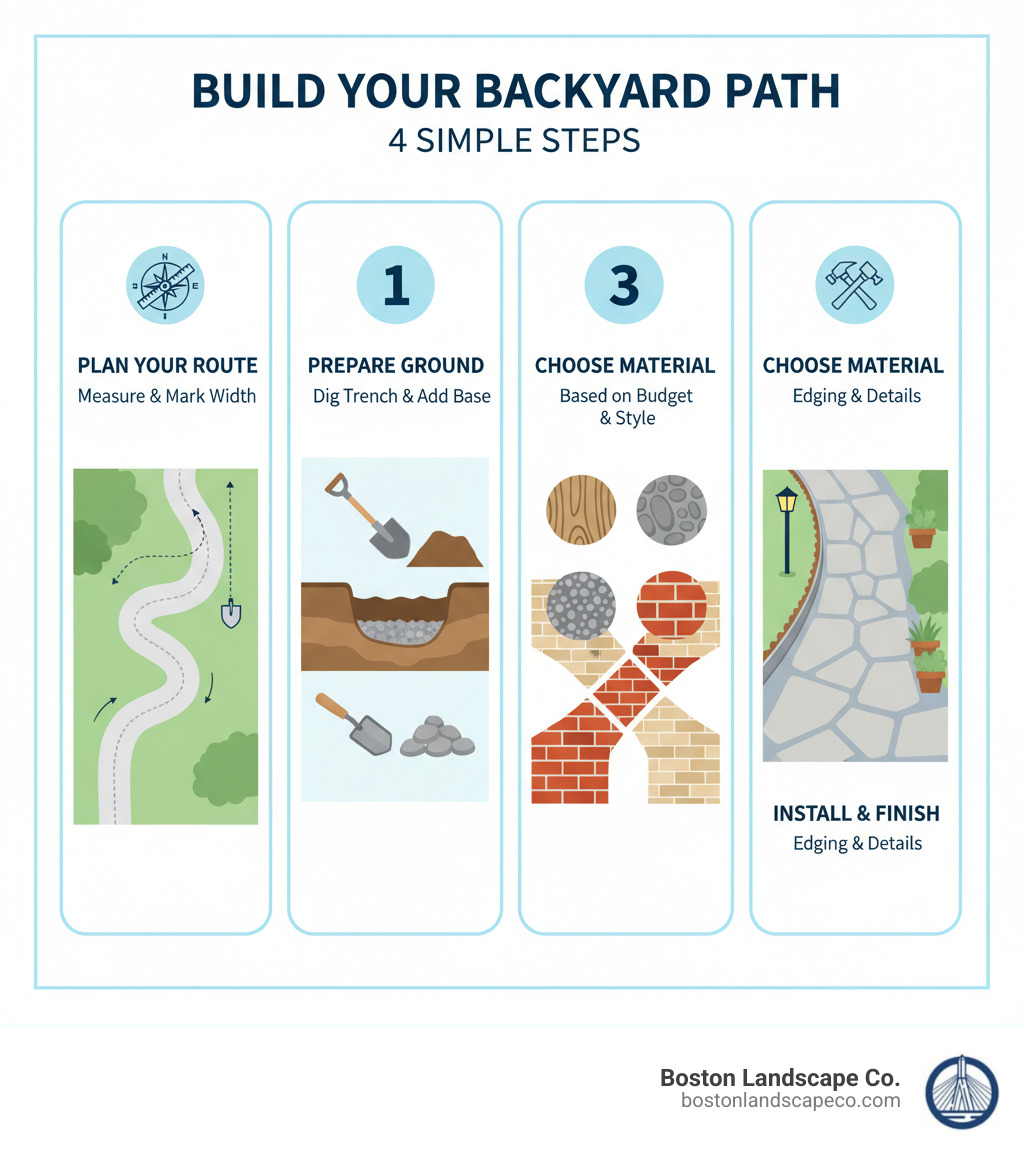
- Clear and Dig: Remove all grass, weeds, and rocks in the path’s footprint. Dig a trench 4 to 6 inches deep, depending on your material. For a brick path, a 4-5 inch deep trench is typical.
- Level and Grade: The ground doesn’t need to be perfectly flat, but it must be consistently graded. Create a slight slope (1-2%) away from structures for drainage. Use a long board and a level to check your work.
- Tamp the Soil: After digging, compact the soil with a hand tamper or a rented plate compactor. This crucial step prevents the path from settling and developing wobbles.
- Add the Base Layer: This is your insurance against frost heave. Lay down 2 to 4 inches of crushed stone or gravel pack. Compact this layer thoroughly as well.
- Lay Landscape Fabric: Before adding your final material, roll out professional-grade landscape fabric to block weeds while allowing water to pass through. Overlap seams and make relief cuts on curves so it lays flat.
Drainage considerations are critical on slopes or in wet areas. This can involve terraced sections or retaining walls. If your project involves significant elevation changes or persistent water issues, the expertise offered through Hardscape Design and Build services can prevent costly mistakes.
The foundation work isn’t glamorous, but it’s what ensures your path will look great for years to come.
Choosing Your Material: A Comparison of Popular Backyard Path Ideas
Choosing your path material shapes your budget, labor, and long-term maintenance. There’s no single “best” material; the ideal choice balances aesthetics, cost, and durability for your specific needs and our New England climate.
Let me break down the most popular options we see in the Boston area:
| Material | Average Cost (per sq ft) | DIY-Friendliness | Maintenance Needs | Best For New England Weather |
|---|---|---|---|---|
| Gravel | $1 – $10+ | Easy | Raking, occasional replenishment, weed control | Good (less frost heave than rigid materials) |
| Mulch | $0.50 – $3 | Very Easy | Annual replenishment, weed control | Fair (can degrade quickly, less stable in wet weather) |
| Stepping Stones | $2 – $15+ | Moderate | Weed control between stones, occasional leveling | Good (individual stones can shift, but easily reset) |
| Pavers | $8 – $25+ | Intermediate | Sweeping, occasional joint sand refresh, weed control | Excellent (durable, interlocked system resists shifting) |
| Brick | $10 – $30+ | Intermediate | Sweeping, occasional joint sand refresh, weed control | Good (can be susceptible to frost heave if base is poor) |
| Flagstone | $15 – $50+ | Moderate/Expert | Sweeping, weed control between stones, occasional leveling | Excellent (natural, durable, can be laid to resist heave) |
(Note: These are national average ranges based on industry data and not actual quotes for Boston Landscape Co. services. The high-end costs can exceed three times the average depending on material quality, site conditions, and installation complexity.)
Gravel & Crushed Stone Paths
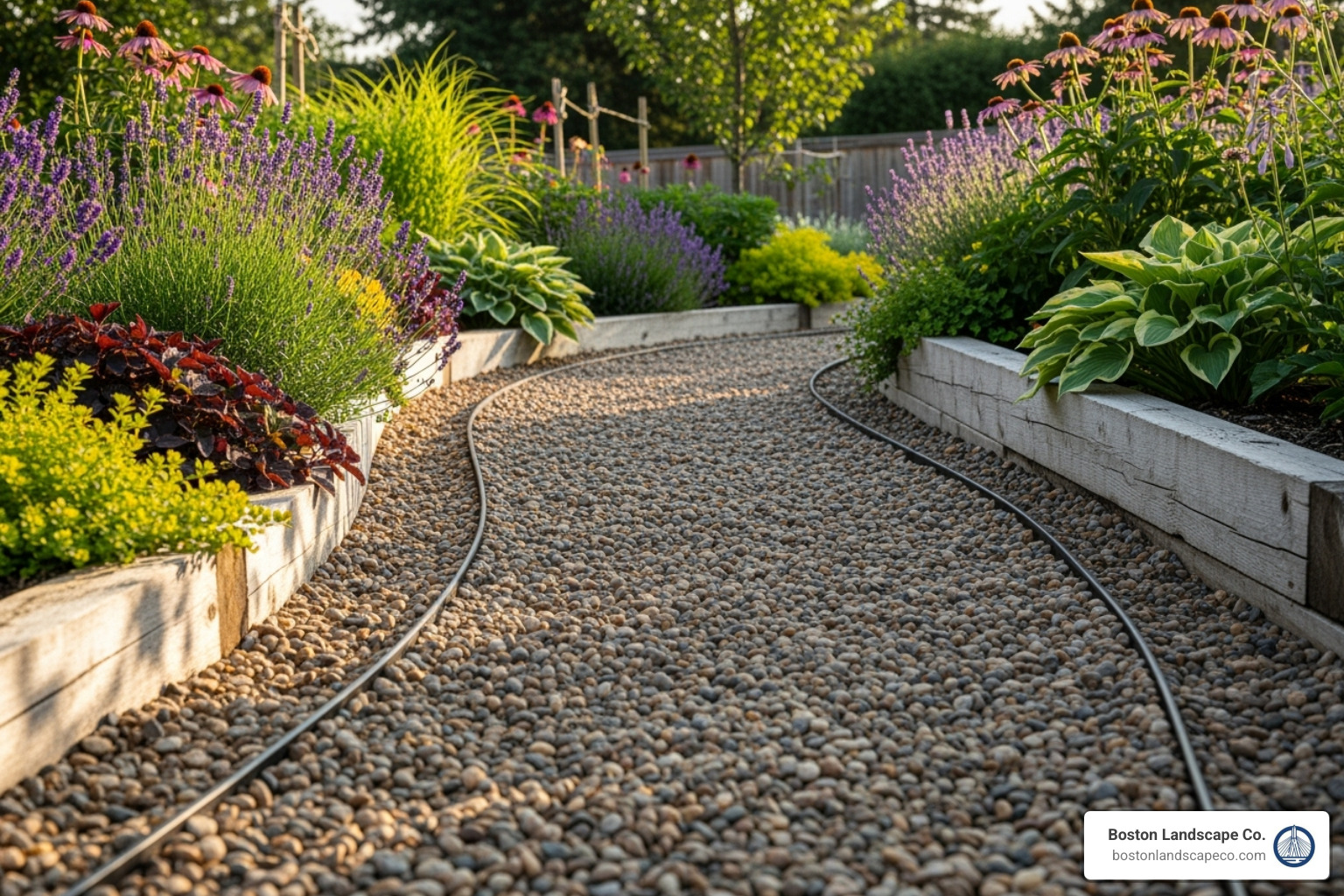
The crunch of gravel underfoot is a classic garden sound. Gravel is popular because it’s forgiving in our freeze-thaw climate, offers excellent drainage, and is easy to install. Pea gravel is affordable and offers a classic look, but can be loose underfoot. Crushed granite has angular edges that lock together for a firmer surface. Decomposed granite (DG) is a premium option that compacts to a firm, natural-looking surface.
The key to a successful gravel path is proper edging (like metal or brick) to contain the material and landscape fabric underneath to control weeds. According to What Are Average Gravel Prices? from Angi, national average costs for installed pea gravel can range from $1 to over $10 per square foot, though these figures aren’t reflective of actual quotes from Boston Landscape Co.
Mulch & Wood Chip Paths
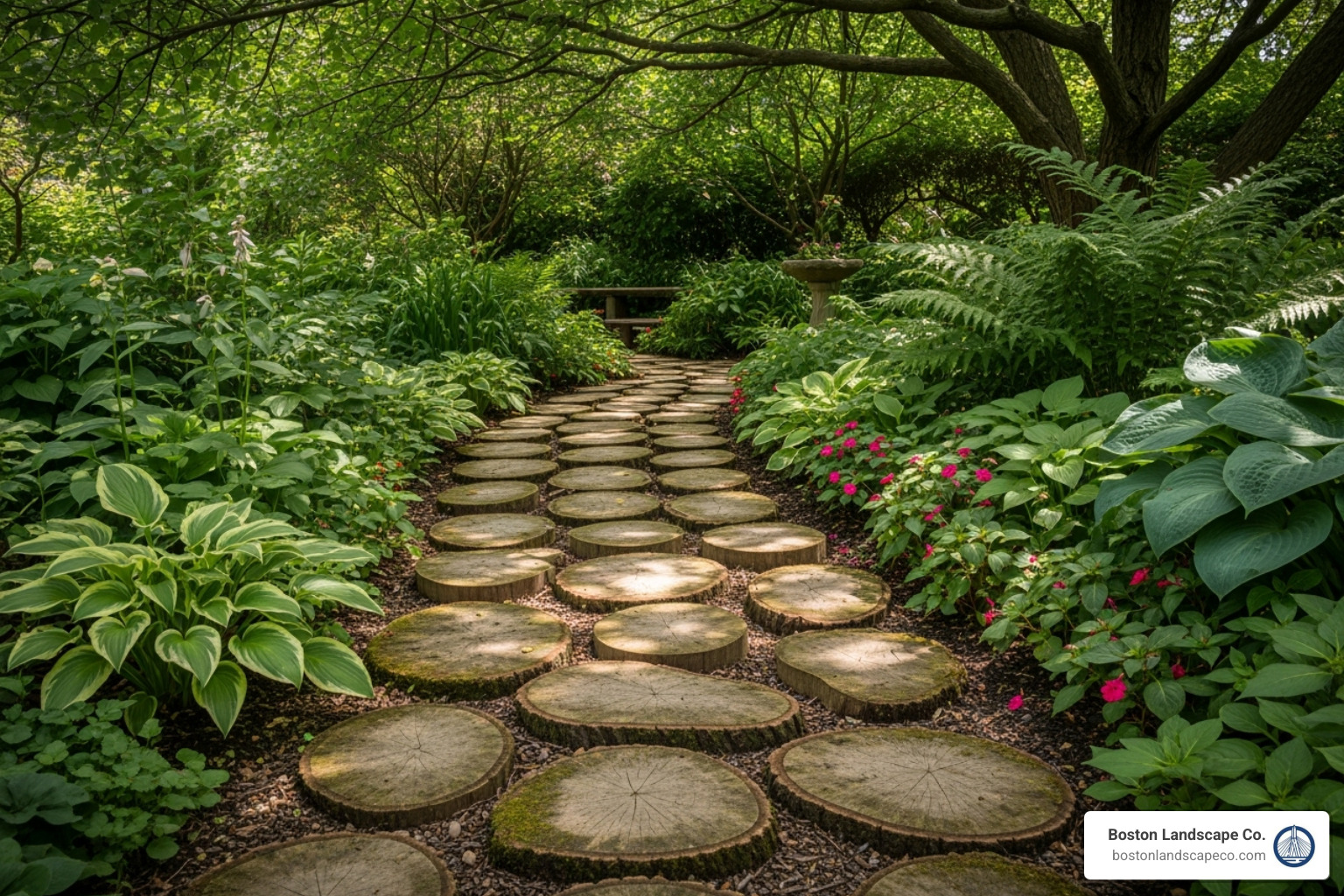
For the most budget-friendly and natural-looking backyard path ideas, mulch and wood chips are ideal. They blend seamlessly into woodland settings and are incredibly easy to install. The downside is that they break down and require an annual top-off. A charming variation is a wood slice path, made by setting thick log rounds into a bed of sand or gravel. As noted in How to Create a Natural Log Pathway, using thicker, sealed slices of rot-resistant wood is crucial for longevity.
Stepping Stone & Paver Paths
For a more substantial and permanent surface, stepping stones and pavers are excellent choices. Stepping stones create an informal path with space for grass or groundcover between them, saving on material costs. Concrete pavers are the workhorses of hardscaping, available in endless styles. Their interlocking system creates a unified, durable surface that resists shifting. Natural stone pavers like bluestone or granite offer best beauty and character but come at a higher cost. The investment pays off in longevity, with a lifespan of 20 to 100 years and minimal maintenance. If you’re considering natural stone, our Stone Patio Contractors can help design and install a lasting solution.
Classic Brick Walkways
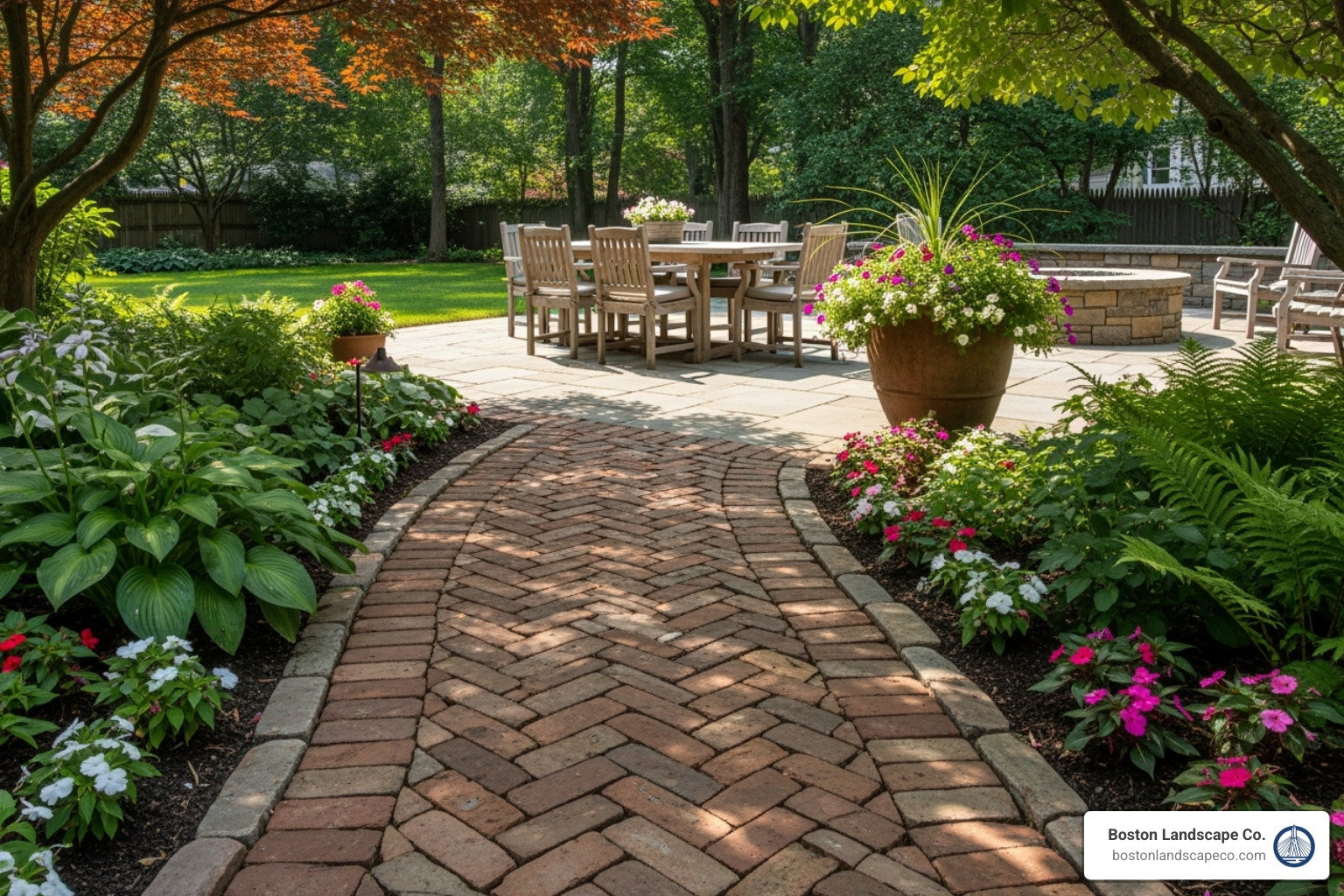
Brick walkways offer a timeless New England charm. Patterns like herringbone, running bond, or basket weave add visual interest. With proper installation, a brick path can last 25 to 100 years. However, installation is complex. A perfectly level and compacted base (typically a 2-inch gravel layer and 1-inch sand layer) is critical to prevent a wavy surface and frost heave. Due to this complexity, many homeowners opt for professional installation. Our Brick Patio Installation team has the expertise to build a brick walkway that endures.
Creative Designs & Advanced Techniques
Once you understand the basics, you can explore more creative backyard path ideas. This is where your path becomes a unique design element, combining functionality with artistry by mixing materials and adding professional finishing touches.
Combining Materials for Unique Backyard Path Ideas
Some of the most striking paths combine different textures and colors. These compositions create visual interest and solve practical problems.
- Flagstone and Gravel: Large flagstones provide stable footing, while gravel fill offers excellent drainage and a satisfying crunch.
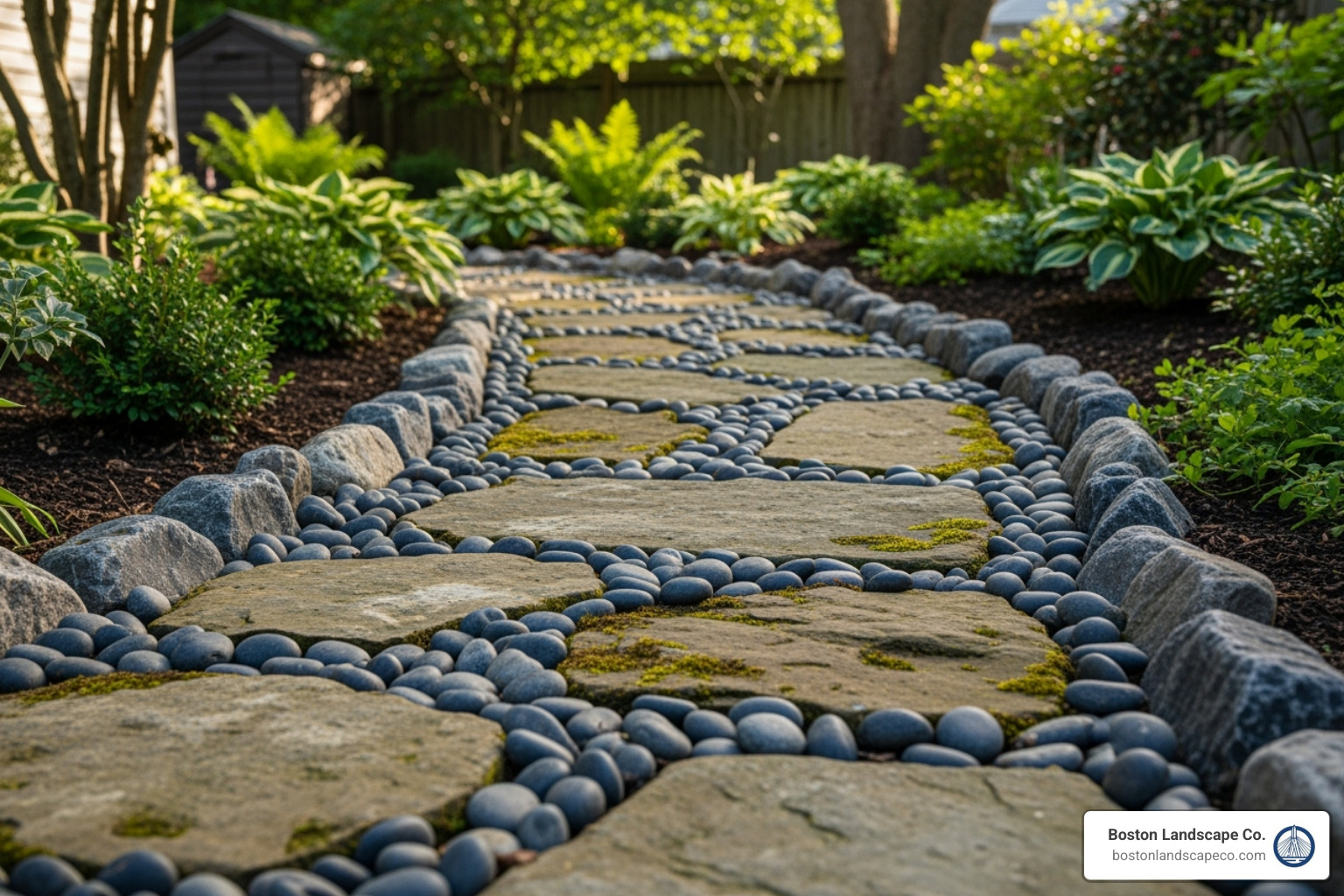
- Pavers and River Rock: The clean lines of modern pavers contrast beautifully with the organic shape of small river rocks in the joints.
- Wood and Stone: In a naturalistic garden, wood slices interspersed with river rock create a whimsical, organic pathway.
- Grass and Pavers: Setting pavers directly into the lawn creates a permeable path that blends seamlessly with the yard, though it requires mowing between the stones.
For inspiration on how professionals integrate diverse elements, see the work of @ianbarkergardens Credit:@ianbarkergardens/ Instagram.
The Finishing Touch: Edging Your Garden Path
Edging is the detail that separates amateur projects from professional-looking installations. It contains loose materials like gravel and mulch, preventing them from migrating into your lawn and garden beds, and gives your path a crisp, defined line.
- Metal Edging: Durable, flexible for curves, and creates a subtle, modern line.
- Brick Edging: Offers a traditional look and can be laid in various patterns.
- Natural Stone Edging: Creates a robust, organic border, perfect for naturalistic settings.
- Plastic Edging: A budget-friendly and flexible option, though less durable than other materials.
Tackling Tricky Terrain: Paths on Slopes and Uneven Ground
Most New England lots have some slope, which requires careful management of water flow and footing.
For steeper slopes, stone steps are the best solution. Proper installation with a solid base is critical to prevent shifting from frost heave. This is an area where professional expertise from our Stone Steps Installation Boston team is invaluable.
On gentler slopes, consider terraced paths with short, level sections separated by small retaining walls. Decomposed granite is also excellent for moderate slopes, as it compacts into a firm surface with good traction.
Drainage is the top priority on any sloped path. The path should have a slight crown to shed water to the sides, and you may need French drains or channels to divert runoff. Any retaining wall over three feet tall requires proper drainage behind it to prevent failure from hydrostatic pressure.
Frequently Asked Questions about Backyard Paths
Here are answers to the most common questions we hear at Boston Landscape Co. about starting a path project.
What is the cheapest way to make a backyard path?
The most budget-friendly backyard path ideas use inexpensive materials and your own labor. Mulch or wood chips are the absolute cheapest, typically costing $0.50 to $3 per square foot for materials (national average). You simply clear the area, lay landscape fabric, and spread the mulch. Gravel paths are a close second, with materials for a simple 10-foot section often costing under $100. The real savings for any path comes from the sweat equity of a DIY installation.
What is the easiest DIY garden path for a beginner?
Mulch paths are the easiest starting point, requiring only clearing, laying fabric, and raking. There are no complex measurements or base layers. Gravel paths are also very beginner-friendly. The process involves digging a shallow trench, laying fabric, and adding a base and top layer of stone. The main challenge is the physical labor, not the technical skill. Both can be completed in an afternoon with basic tools like a shovel and rake.
How do I stop weeds from growing in my garden path?
Preventing weeds is far easier than removing them. A multi-pronged approach is most effective:
- Professional-Grade Landscape Fabric: This is your non-negotiable first line of defense. It goes under your path material to block weeds from below while allowing drainage.
- Proper Base Preparation: A deep, well-compacted base of crushed stone (2-4 inches) creates an inhospitable environment for weed seeds.
- Polymeric Sand: For paver and brick paths, this sand hardens in the joints to form a solid barrier that blocks weeds and ants for years.
- Proper Edging: A crisp metal or stone edge helps prevent soil and seeds from washing onto your path.
- Adequate Depth: For loose materials like gravel, a depth of 2-4 inches (depending on stone size) makes it difficult for seeds to reach soil and take root.
- Regular Maintenance: The final step is to pull any opportunistic weeds when they are small, before they can establish deep roots or go to seed.
Conclusion: Step Up Your Landscape This Season
A well-planned path transforms how you experience your entire outdoor space. We’ve covered backyard path ideas for every budget and skill level, from simple DIY mulch trails to neat flagstone walkways that add lasting value.
The best time to start is now. Late spring in the Boston area offers workable soil and a full summer ahead to enjoy your new path. Installing a path now also protects your lawn from summer foot traffic and solves muddy-shoe problems.
For the DIY enthusiast, foundation work is everything. A properly prepared base is your best defense against New England’s freeze-thaw cycles. For more complex projects involving slopes or drainage, professional expertise can save you from costly repairs down the road.
At Boston Landscape Co., we’ve spent over three decades helping homeowners create outdoor spaces they love. We understand our local climate and soils, and we build hardscapes that last.
Your backyard deserves more than a worn patch of grass. It deserves intentional design and quality craftsmanship. Ready to transform your backyard? Explore our Hardscaping Services Near Me and let’s turn your backyard path ideas into a beautiful reality.