
Stone steps installation Boston: 2025 Flawless Easy
Why Stone Steps Are the Perfect Choice for Boston Homes
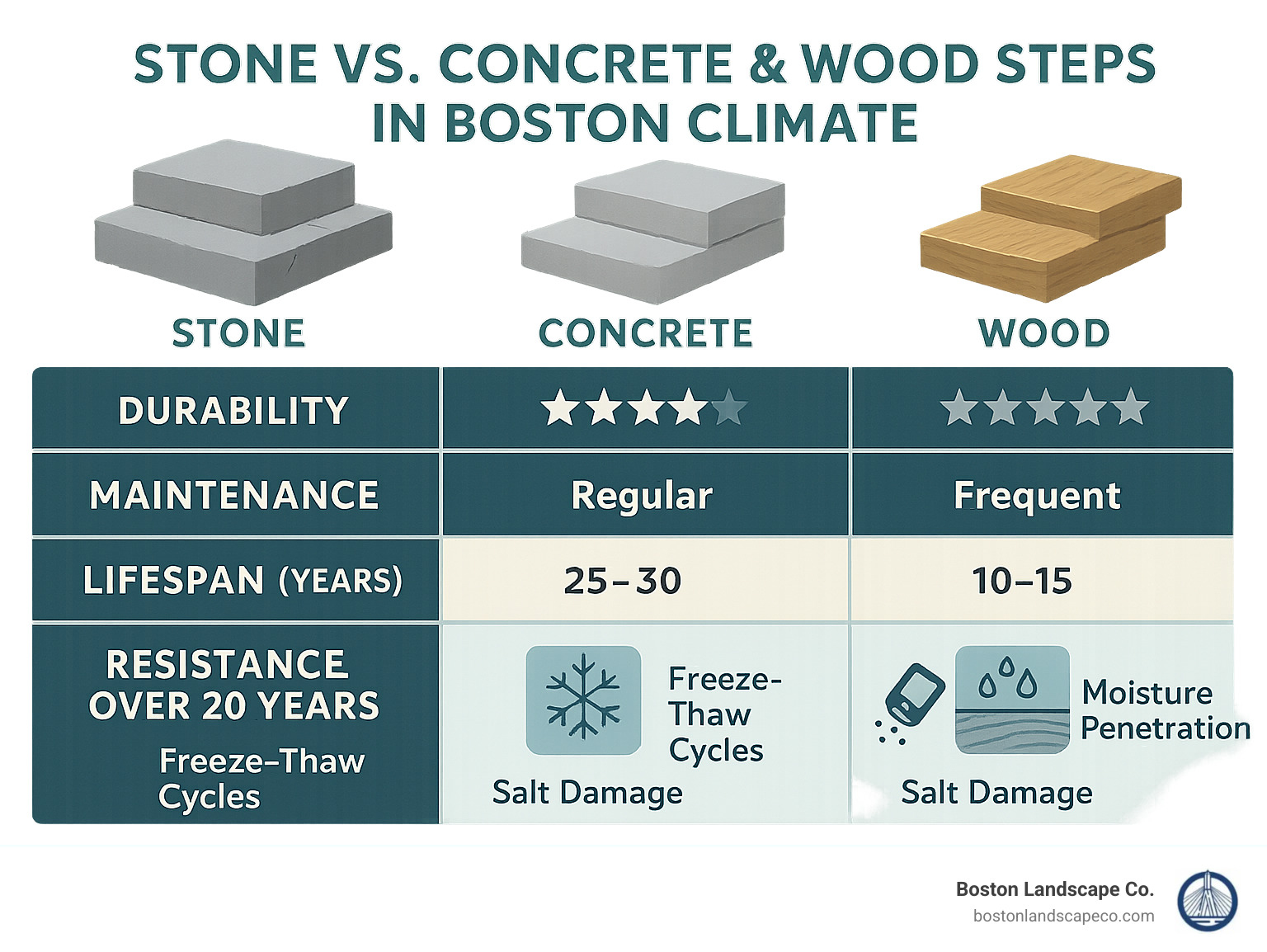
Stone steps installation Boston projects have surged in popularity because natural stone handles New England weather better than concrete or wood. Concrete often cracks under freeze-thaw cycles, and wood rots or warps, but quality stone easily lasts for decades with minimal upkeep while boosting your home’s value.
Quick Answer for Stone Steps Installation Boston:
- Best Materials: Granite, bluestone, and fieldstone suit New England climates
- Average Cost: $4,000–$12,000 for a typical three-step installation (average internet data, not Boston Landscape Co. pricing)
- Installation Time: 1–3 days with a professional crew
- Key Benefits: Freeze-thaw resistance, natural traction, low maintenance, higher resale value
- Foundation Requirements: ~24-inch excavation with a compacted stone base
Industry pros agree: “Granite resists moisture, stays put because of its weight, and its rough texture remains skid-resistant even after years of use.”
Granite steps can weigh 400–1,600 lb each, giving them rock-solid stability. Their natural surface provides excellent traction when wet, and they’re immune to salt damage—vital for Boston winters.
Proper foundation work—excavating below the frost line, adding drainage, and compacting multiple base layers—is essential. Up-front investment is usually offset by increased property value and freedom from frequent repairs.
I’m Steve Schumacher, owner of Boston Landscape Co., and my crew has installed countless stone steps across Greater Boston. We love seeing homeowners enjoy entrances that stay beautiful no matter what our climate dishes out.
Stone steps installation Boston terms you need:
Why Choose Natural Stone Steps for Your Boston Home?
Walking through neighborhoods from Stoneham to Wellesley, the homes that still look sharp after decades usually have stone steps. Here’s why local homeowners keep choosing natural stone.
Built for New England Weather
Freeze-thaw cycles wreak havoc on most materials. Water seeps into concrete or wood, freezes, expands, and creates cracks. Granite and bluestone shed moisture instead of absorbing it, letting them shrug off Boston’s 40–60 annual freeze-thaw cycles.
Salt & Chemical Resistance
Ice-melt products pit concrete and stain metal railings, but quality stone is unaffected. That means fewer costly repairs and no unsightly surface damage.
Timeless Curb Appeal & Property Value
Stone never goes out of style. Whether your house is a historic colonial or a new build, the natural colors and textures of granite or bluestone blend right in. Attractive hardscaping improvements like stone steps often help homes sell faster and for more money.
Safety First
Thermal-finished or natural-cleft stone offers built-in traction. You avoid the slick surfaces common with smooth concrete or painted wood.
Set-It-and-Forget-It Maintenance
Aside from occasional sweeping and an annual check of joints, stone steps need little care. No staining, no sealing unless you want to deepen color, and no annual crack repairs.
For more inspiration, browse our Hardscaping gallery.
Selecting the Right Stone: A Guide for Boston’s Climate
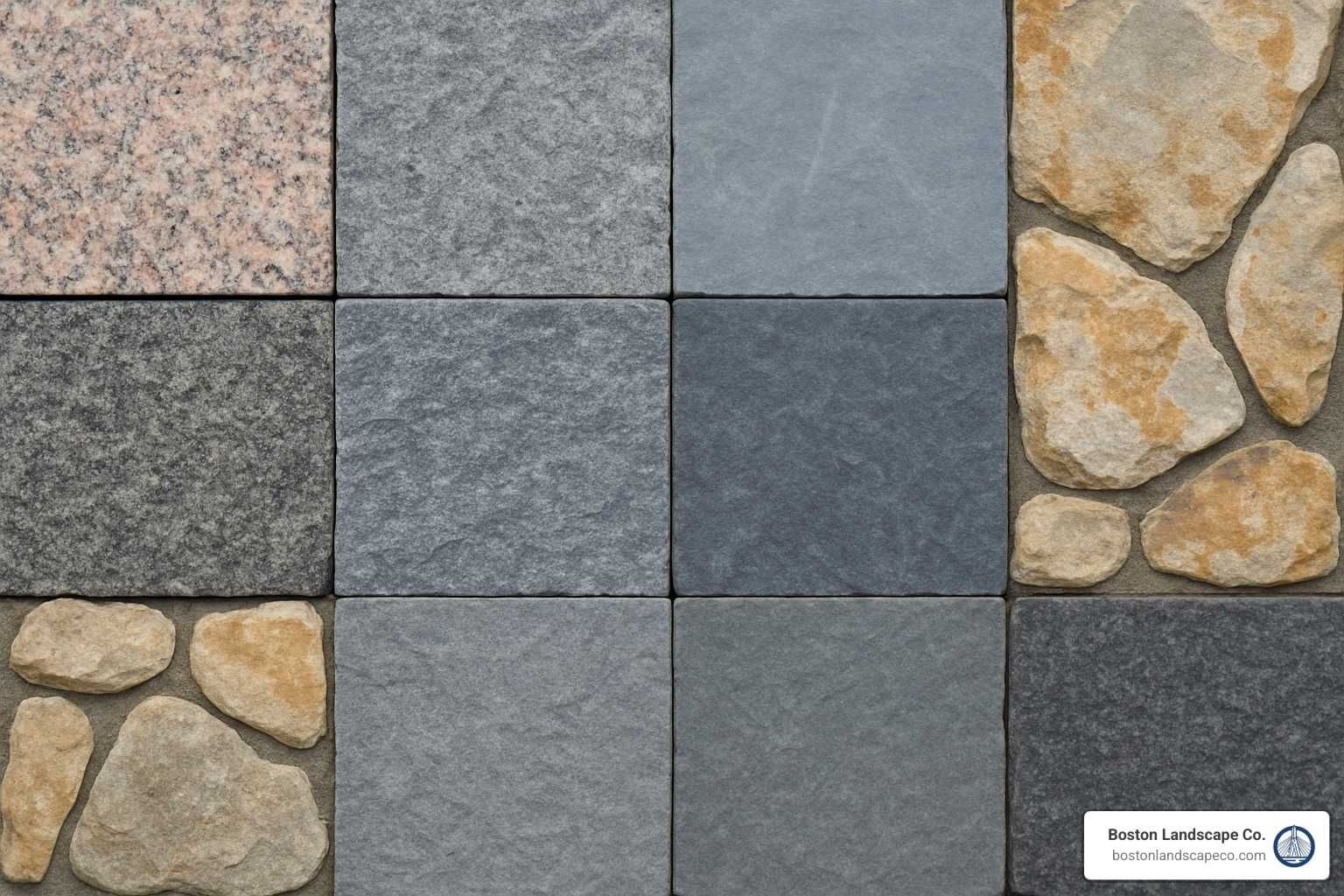
Choosing the right stone for your stone steps installation Boston project is like picking the perfect winter coat – it needs to look great while handling whatever New England throws at it. After decades of installing stone steps throughout the Greater Boston area, I’ve learned that the wrong material choice can turn your investment into a costly mistake.
Your material choice depends on several key factors: local climate demands, aesthetic preferences, and budget considerations. Boston’s unique weather patterns require stones that can handle our notorious freeze-thaw cycles without cracking or deteriorating.
| Stone Type | Durability (Mohs Scale) | Cost Range | Maintenance | Best Use for Boston |
|---|---|---|---|---|
| Granite | 6-7 | $$$ | Very Low | Front entrances, heavy traffic |
| Bluestone | 6-7 | $$ | Low | Patios, walkways, steps |
| Fieldstone | 6-7 | $ | Low | Rustic applications, garden steps |
Granite stands as our top recommendation for Boston area homes. This incredible igneous rock rates 6-7 on the Mohs hardness scale, making it nearly indestructible under normal use. We source our granite from Vermont and New Hampshire quarries, ensuring you get stone that’s already proven itself in similar climates.
What makes granite special is its tight grain structure that naturally resists water absorption. When water can’t penetrate the stone, it can’t freeze and expand to cause cracks. The natural cleft surface provides excellent traction year-round, while the variety of colors – from classic gray to warm brown tones – complements any architectural style.
Bluestone offers an excellent middle ground between beauty and budget. This sedimentary stone has graced New England homes for centuries, which tells you everything about its durability in our climate. The natural blue-gray color works particularly well with colonial and traditional architecture that’s common throughout our service area.
Bluestone’s slightly softer surface compared to granite makes it easier to work with during installation, which can help control labor costs. It handles freeze-thaw cycles beautifully when properly installed and provides good natural traction.
Fieldstone brings rustic charm that’s hard to match with manufactured materials. These naturally weathered stones create an organic look that blends seamlessly with landscape plantings. While fieldstone requires more skill to install due to irregular shapes, the results have a timeless New England character.
Here’s an important warning: avoid limestone for outdoor steps in Boston. Rating only around 3 on the Mohs scale, limestone is simply too soft for our demanding climate. It lacks the durability and non-slip properties you need for safe, long-lasting steps.
For expert guidance on selecting the perfect stone that matches your home’s style and your family’s needs, explore our Stone Walkway Design services. We’ll help you choose materials that will look beautiful and perform flawlessly for decades to come.
The Professional Stone Steps Installation Boston Process: A Step-by-Step Breakdown
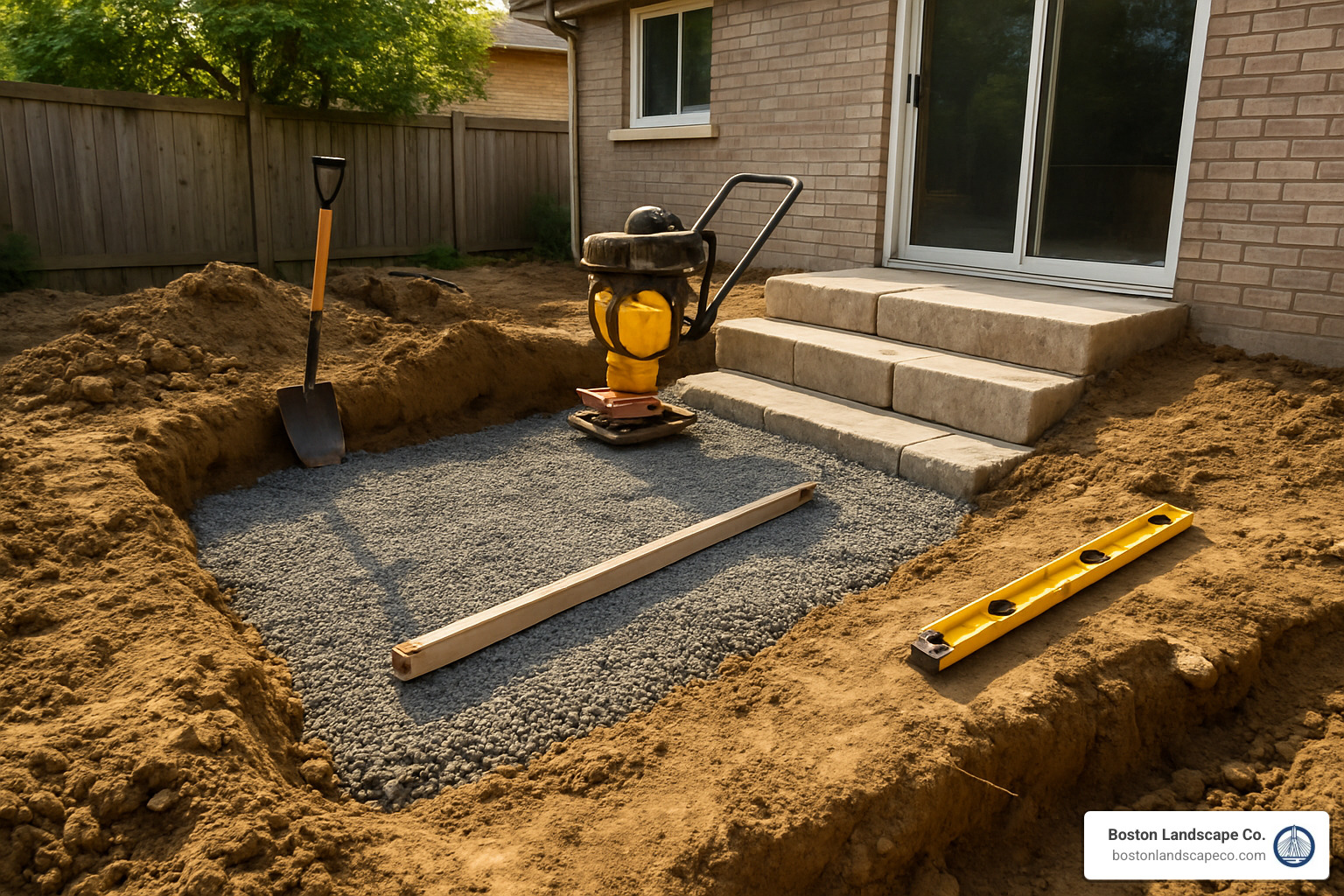
Correct installation is the difference between steps that last 5 years and steps that last 50. Here’s our streamlined four-step approach.
Step 1: Planning & Site Prep
We measure total rise, calculate code-compliant step dimensions (about 7-in rise, 11-in tread), locate utilities, and mark the dig area. Old steps are removed and soils inspected. A typical project requires a 24-in-deep excavation to get below frost.
Step 2: Building the Frost-Proof Foundation
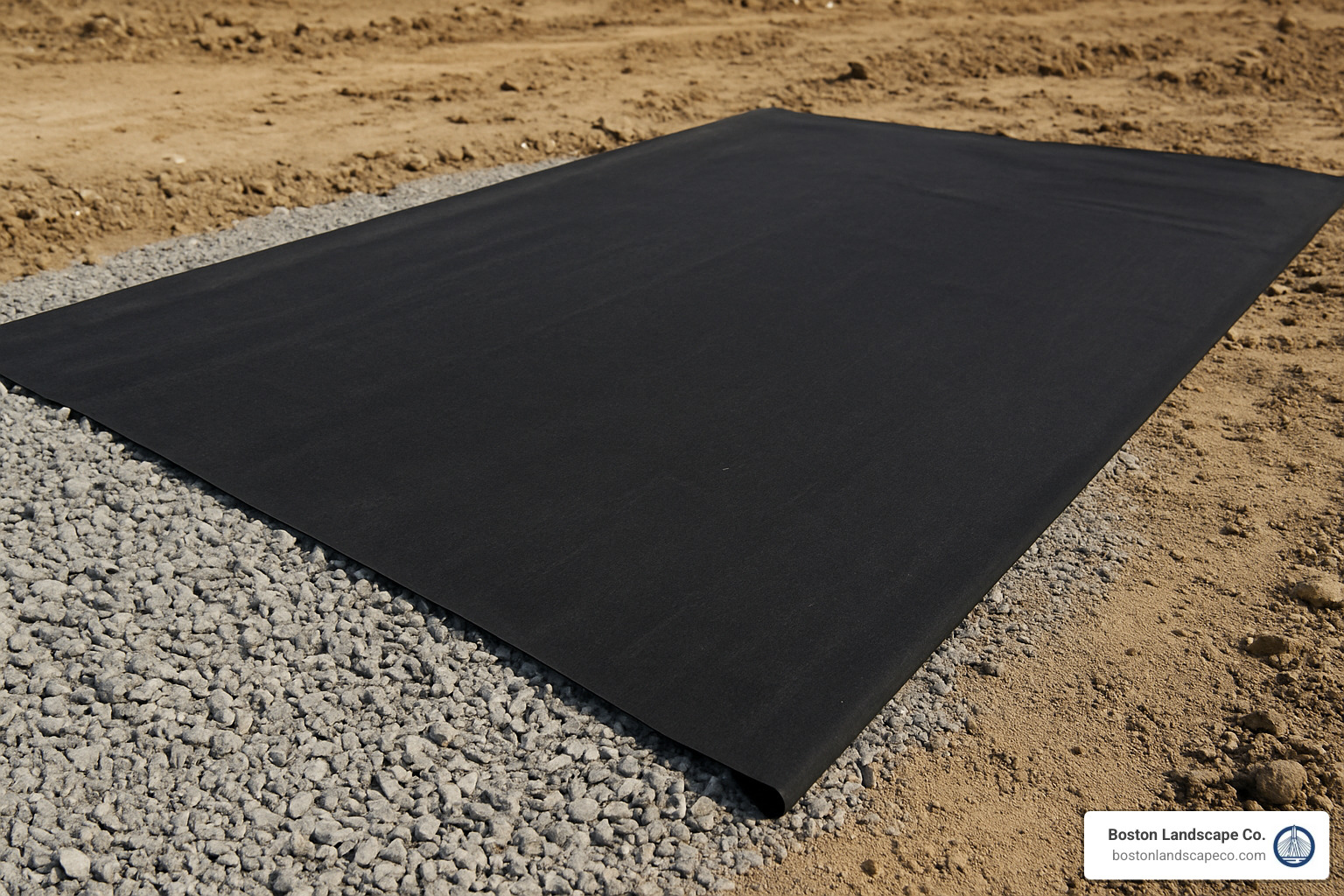
We compact successive 4-in layers of ¾-in crushed stone, cover with landscape fabric, then add 2 in of stone dust pitched slightly forward for drainage. This layered system keeps water moving and prevents frost heave.
Step 3: Setting the Stones
Individual granite treads weigh hundreds of pounds, so forklifts and rollers handle the heavy lifting. Each tread is leveled, aligned, and pinned with rebar to stop lateral movement. We double-check uniform rise and tread depth for safety.
Step 4: Finishing Touches
We backfill, grade for runoff, and, where needed, mortar small joints or install cheek pieces beside foundations. Finally, we connect walkways or patios so your new steps blend seamlessly with surrounding hardscape. See more from our Hardscaping Boston MA team.
Budgeting for Your Project: Understanding Stone Step Installation Costs
Planning your stone steps installation Boston project means understanding the investment involved and the factors that influence your total cost. After three decades in the landscaping business, I’ve learned that transparency about pricing helps homeowners make informed decisions and avoid unwelcome surprises.
What Drives Your Project Cost
Every stone step installation is unique, and several key factors determine your final investment. Material choice makes the biggest difference – premium granite costs significantly more than fieldstone, but it also lasts longer and requires less maintenance over time.
The number of steps directly impacts both material and labor costs. A simple three-step entrance costs much less than a grand staircase with eight or more steps. Landing size also matters – a small 3×5-foot landing requires less excavation and materials than a spacious 6×10-foot entrance platform.
Site complexity can dramatically affect costs. Easy access with good soil conditions keeps prices reasonable. However, if we need to steer tight spaces, deal with rocky soil, or work around utilities, expect additional charges for specialized equipment and extra labor time.
Demolition needs vary widely between projects. Removing simple wooden steps takes a few hours, while breaking up thick concrete steps with integrated foundations requires heavy equipment and disposal fees.
Understanding Average Investment Ranges
Based on industry data, a typical granite stair kit with three 5-foot wide steps and a 3×5-foot landing costs around $4,000 for materials and installation. However, real-world projects range from $3,500 for basic installations up to $12,000 or more for complex projects with premium materials.
These figures represent average costs based on internet research and are not actual Boston Landscape Co. pricing. We provide detailed written estimates for each project based on your specific requirements.
Material Costs Impact Your Budget
Granite commands premium pricing but delivers best durability and timeless appeal. Bluestone offers excellent value with mid-range pricing and proven New England performance. Fieldstone provides the most economical natural stone option while still delivering decades of service.
Installation labor typically represents 50-60% of your total project cost. This reflects the specialized skills, equipment, and time required for proper excavation, foundation preparation, and precise stone placement.
Additional Costs to Consider
Smart budgeting includes potential extras that might arise during your project. Permit fees apply to some installations, though simple step replacements often don’t require permits. Utility line marking is usually free but takes time to arrange.
Soil improvement becomes necessary when we encounter poor drainage or unstable conditions. Sometimes we need to install drainage systems or replace unsuitable soil entirely. Landscape restoration after installation helps integrate your new steps with existing plantings and grading.
For comprehensive hardscaping services that maximize your investment value, explore our Retaining Wall Specialists capabilities.
The key to successful budgeting is getting a detailed written estimate that covers all aspects of your specific project. We take time to assess your site conditions, discuss material options, and explain exactly what’s included in your investment.
Hiring a Pro and Maintaining Your Investment
Choosing the right crew protects both your wallet and your safety.
Picking a Qualified Contractor
Look for a current Massachusetts Home Improvement Contractor license, proof of liability & workers’ comp insurance, and recent local references. A reputable installer provides a written estimate detailing materials, timeline, and cleanup. Avoid anyone requesting full payment upfront or offering prices far below the market average.
Simple Care Tips
- Sweep debris weekly to prevent stains.
- Wash with mild soap and water when needed—skip harsh acids.
- Each spring, inspect joints and confirm drainage still moves water away.
- In winter, use sand for traction and shovel with a plastic blade to avoid chips.
Optional sealers designed for natural stone can improve color, but aren’t required for durability. With these basic habits, your steps should outlast your mortgage.
Need professional help? Our Backyard Hardscape Contractors provide annual inspections and quick repairs so small issues never become big repairs.
Frequently Asked Questions about Stone Step Installation
How long does a typical stone step installation take?
Most stone steps installation Boston projects take between 1-3 days to complete, though the exact timeline depends on several factors. If you’re replacing existing steps on a solid foundation, we can often finish the job in a single day. However, more complex installations requiring extensive excavation, drainage work, or challenging site conditions typically take the full three days.
Weather plays a big role in our scheduling. We won’t install steps during freezing temperatures or heavy rain because these conditions can compromise foundation work and stone setting. Nobody wants their beautiful new granite steps settling or shifting because we rushed the job during poor weather.
If your project requires mortared joints, we’ll need additional time for proper curing before you can use the steps safely. We’d rather take an extra day to do things right than have you dealing with problems later.
Do I need a permit to build stone steps in Boston?
The permit question depends on what you’re doing and where you live. Simple step replacements using your existing foundation usually don’t require permits – you’re just swapping out old materials for beautiful new stone.
However, new construction, height changes, or structural modifications often do require permits. Each municipality has different rules, and what’s allowed in Boston might be different from requirements in Newton, Cambridge, or the other communities we serve throughout the Greater Boston area.
Here’s our advice: always check with your local building department before starting any project. The small time investment upfront can save you major headaches later. Our team has worked with building departments throughout the region and can help guide you through permit requirements and ensure your project meets all local codes.
Are granite steps slippery in the winter?
This is one of the most common concerns we hear, and the good news is that properly finished granite steps actually provide excellent traction, even during Boston’s challenging winters. The secret is in the surface texture.
We use thermal or flamed finishes that create natural slip resistance by giving the granite a slightly rough texture. Natural cleft granite also provides outstanding grip. These textured surfaces actually offer better traction than smooth concrete or sealed wood surfaces, even when wet or icy.
The key is avoiding polished granite surfaces for outdoor steps. While polished granite looks stunning indoors, it can become dangerously slippery when wet. We always recommend textured finishes for outdoor applications – they’re safer and still look beautiful.
For additional winter safety, we suggest using sand instead of salt for extra traction (salt can damage surrounding plants anyway), keeping your steps well-lit, and promptly clearing snow and ice. With proper finishing and basic winter maintenance, your granite steps will provide safe, reliable access to your home year-round.
Conclusion
When you’re standing at your front door looking at cracked concrete steps or rotting wooden stairs, it’s time to consider the lasting solution that stone steps installation Boston provides. After three decades in this business, I can tell you that choosing natural stone isn’t just about fixing a problem – it’s about making an investment that will serve your family for generations.
The numbers speak for themselves. While concrete steps might last 5-10 years before showing serious wear, and wooden steps require constant maintenance just to survive our harsh winters, properly installed granite steps can easily last 50-100 years. That’s potentially a once-in-a-lifetime improvement that keeps paying dividends year after year.
Think about the peace of mind that comes with knowing your family and guests can safely steer your entrance steps, even during those treacherous February ice storms. The natural texture of granite provides reliable traction when smooth concrete becomes a skating rink, and the immunity to salt damage means your steps will look just as good after decades of winter weather.
The financial benefits are equally compelling. Most homeowners see a 100-200% return on their stone step investment through increased property value alone. But the real savings come from never having to replace them again. No more annual staining, no more crack repairs, no more worrying about freeze damage – just beautiful, reliable steps that improve your home’s curb appeal year after year.
Professional installation makes all the difference in achieving these long-term benefits. The 24-inch excavation depth, the carefully compacted base layers, the precise positioning of those 400-1,600 pound granite blocks – these aren’t details you can skip or approximate. They’re the foundation of a system that will perform flawlessly through decades of New England weather.
Here in Stoneham, Billerica, and throughout the Greater Boston area, we’ve helped hundreds of homeowners make this change. There’s something deeply satisfying about watching a family’s reaction when they see their new stone steps for the first time – that moment when they realize their home’s entrance has been completely transformed.
Your home’s entrance is the first thing people notice and the last thing they remember. It sets expectations and creates lasting impressions. When you choose quality stone steps, you’re telling the world that you value craftsmanship, durability, and timeless beauty.
Ready to transform your home’s entrance with beautiful, durable stone steps? Contact our Hardscaping Boston MA experts for a consultation and estimate. We’ll walk you through the stone selection process, discuss design options that complement your home’s architecture, and create a detailed plan that ensures your steps will be everything you envision – and more.
Don’t spend another winter worrying about dangerous, deteriorating steps. Let’s build something beautiful together that will welcome guests and protect your family for decades to come.
