
Artificial Turf for Dog: Ultimate Guide 2025
Why Pet Owners are Switching to Artificial Grass
If you’re a dog owner, you know the struggle with traditional lawns: muddy paws tracked indoors, yellow urine spots, and endless maintenance. Many pet owners are finding a better solution by choosing artificial turf for dog applications. This specialized surfacing creates a cleaner, safer, and more durable outdoor space for your furry friends.
Artificial turf is a popular choice because it eliminates mud, simplifies cleanup, withstands digging, requires minimal maintenance, and provides a non-toxic, pest-free surface that can reduce allergies.
With two-thirds of U.S. households owning a pet, the demand for pet-friendly landscaping is high. We’ve seen countless homeowners in our service areas, including Boston, Bedford, Billerica, and Lexington, find relief from the endless cycle of lawn care. Artificial grass and dogs mix perfectly, allowing your pet to play happily on a lush green lawn, no matter the weather, and then walk inside with clean paws.
Natural grass often can’t keep up with energetic pets, leading to unsightly patches, holes, and a constant battle with pests like fleas and ticks. Artificial turf for dog owners virtually eliminates these concerns, providing a consistently beautiful and inviting space for both pets and their people.
The Pros and Cons of Artificial Grass for Dogs
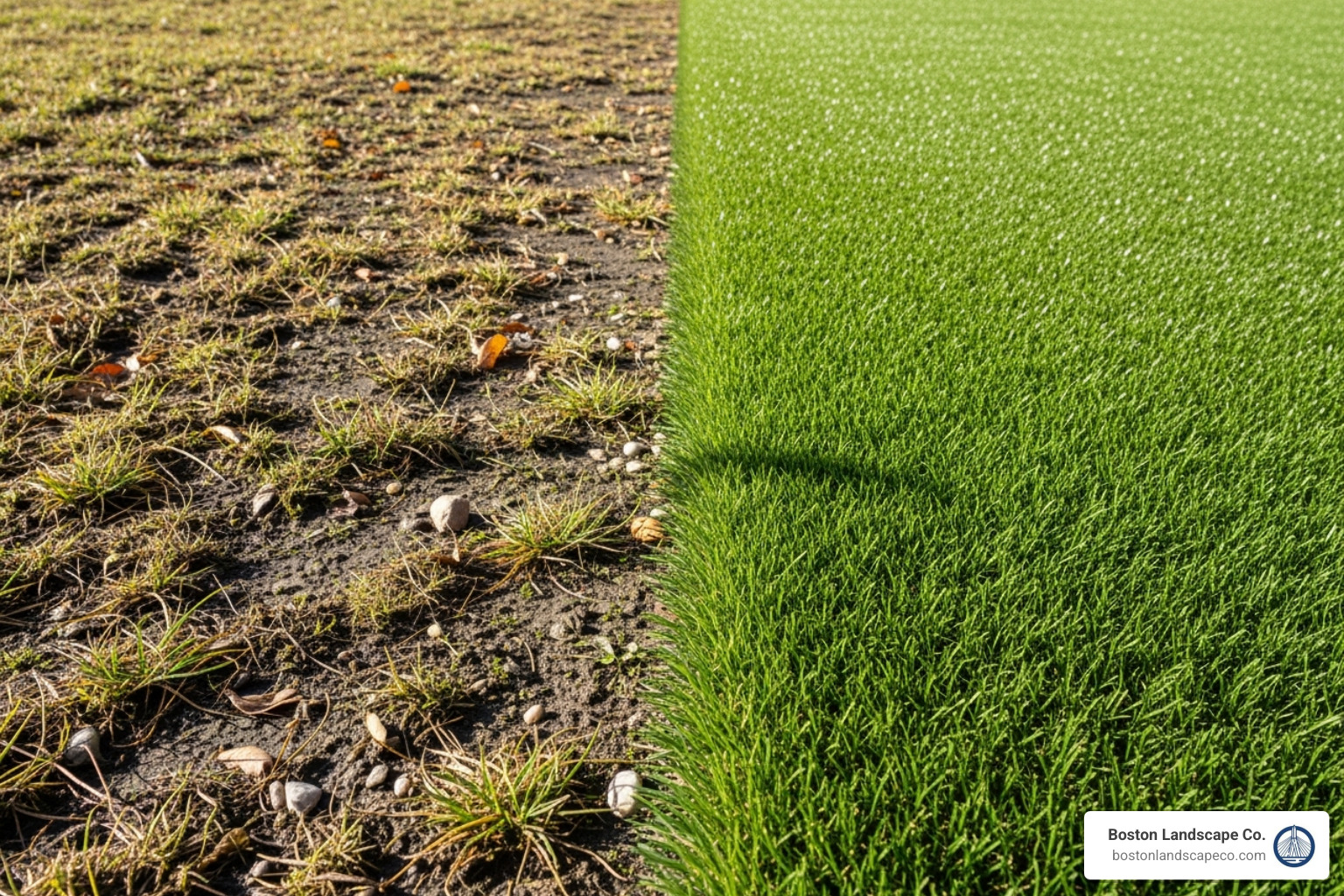
Making a big change to your yard is a major decision. When it comes to artificial turf for dog owners, it’s important to weigh the benefits against the potential drawbacks. Here’s a clear look at what you can expect.
The Benefits for You and Your Furry Friend
- No More Mud or Mess: One of the biggest advantages is the end of muddy paws being tracked through your home. Rain or shine, your dog and your floors stay clean.
- Low Maintenance: Reclaim your weekends from mowing, weeding, and fertilizing. With artificial turf, you can spend less time on yard work and more time playing fetch.
- Eco-Friendly and Cost-Effective: Save a significant amount on your water bills. By eliminating the need for constant irrigation and gas-powered mowers, you are also reducing your carbon footprint.
- Pest Reduction: Artificial grass is not a welcoming environment for fleas, ticks, and other common lawn pests. This creates a healthier space for your pets and can be a great relief for dogs with grass allergies, making it a hypoallergenic solution.
- Always Green and Beautiful: Your lawn will maintain its lush, vibrant green look year-round, without brown spots or patchy areas, boosting your home’s curb appeal.
- Durable and Dig-Proof: Built to withstand heavy use, artificial turf for dog applications can handle all the running and playing your pup can dish out. Its strong construction prevents digging and wear.
- Safe and Non-Toxic: Our artificial grass products are free from harmful substances. Because they don’t require fertilizers or pesticides, you protect your pets from exposure to potentially dangerous chemicals.
Potential Drawbacks to Consider
While the benefits are significant, it’s important to be aware of a few considerations for artificial turf for dog applications:
- High Upfront Cost: The initial investment for professional installation is higher than for traditional sod. However, this cost is often offset over time by savings on water, maintenance, and supplies.
- Heat Retention: Artificial grass can become warm in direct, intense sunlight. This can be managed by choosing lighter-colored turf, using special cooling infills, or lightly hosing down the area on hot days. Providing a shaded spot is also recommended.
- Proper Installation is Key: Professional installation is crucial for ensuring proper drainage. Without it, you could face issues with standing water or lingering odors from pet waste.
- Requires Some Cleaning: To prevent odors, your turf will need regular rinsing, especially in areas your pet uses frequently. Occasional use of specialized turf cleaners will keep your lawn smelling fresh.
Key Factors for Choosing the Best Artificial Turf for Dogs
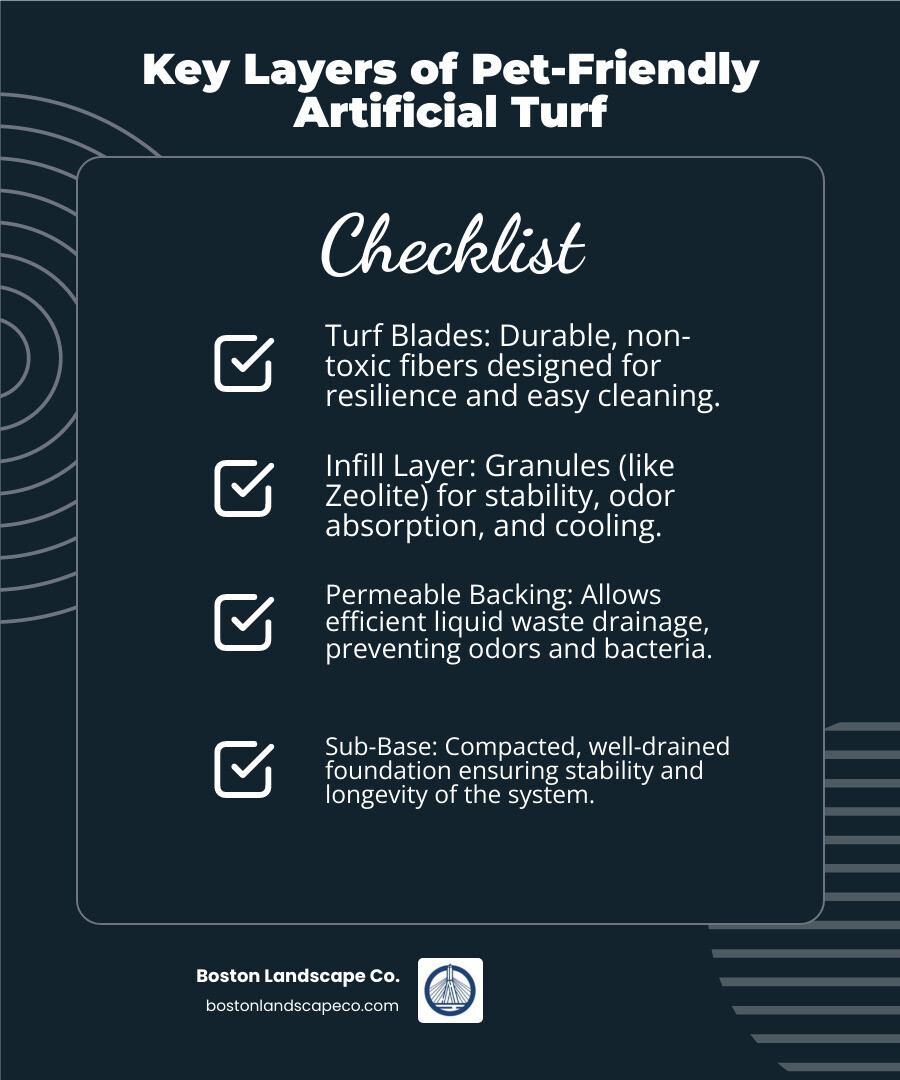
When selecting artificial turf for dog use, the construction and materials are critical. Understanding the key components will help you choose a system that is durable, easy to clean, and comfortable for your pet.
Turf Material and Blade Design
The fibers, or blades, of the turf determine its feel and durability.
- Nylon: This is the strongest and most resilient material, ideal for very active dogs. However, it has a stiffer texture and a higher cost.
- Polyethylene: Offering a great balance of softness and durability, polyethylene is the most popular choice for pet turf. It feels comfortable under paws while standing up to daily use.
- Polypropylene: A budget-friendly option best suited for light-use areas, as it is less durable than nylon or polyethylene.
Look for ribbed or shaped blades (M, W, or Omega shapes) that offer better resilience and resist matting from foot traffic. For easier cleaning, a short pile height between 1 and 1.25 inches is ideal, as it prevents debris and pet waste from getting trapped deep in the fibers. You can learn more about Pile height explained in technical detail.
Backing and Drainage
The backing system is the most critical element for preventing odors in artificial turf for dog installations. Permeability is everything. Urine must drain away quickly and completely.
Standard turf often uses hole-punched backing, which has limited drainage points and can allow urine to pool. For pet applications, fully permeable backing is essential. This technology allows liquid to pass through the entire surface, with drainage rates of 250+ inches per hour. Advanced knitted flow-through backings can drain over 1,400 inches per hour, ensuring no liquid is left behind. We recommend polyurethane backings, which resist degradation from pet urine and offer superior longevity.
The Role of Infill
Infill is the material spread between the grass blades that provides stability, cushioning, and odor control.
- Zeolite: This natural volcanic mineral is our top recommendation for pet turf. Its unique molecular structure traps and neutralizes ammonia from urine, preventing odors before they start.
- Sand Infill: Provides basic weight and blade support but offers no odor-fighting properties.
- Cooling Infills: These specialized products can reduce the turf’s surface temperature by 30-50°F when lightly misted, making the lawn more comfortable on hot days.
- Antimicrobial Infills: Some infills are coated with antimicrobial technology that inhibits the growth of bacteria, mold, and mildew, adding another layer of hygiene.
The right combination of infill transforms your turf into a high-performance system that manages odors, temperature, and cleanliness.
Cleaning and Maintaining Your Pet-Friendly Lawn
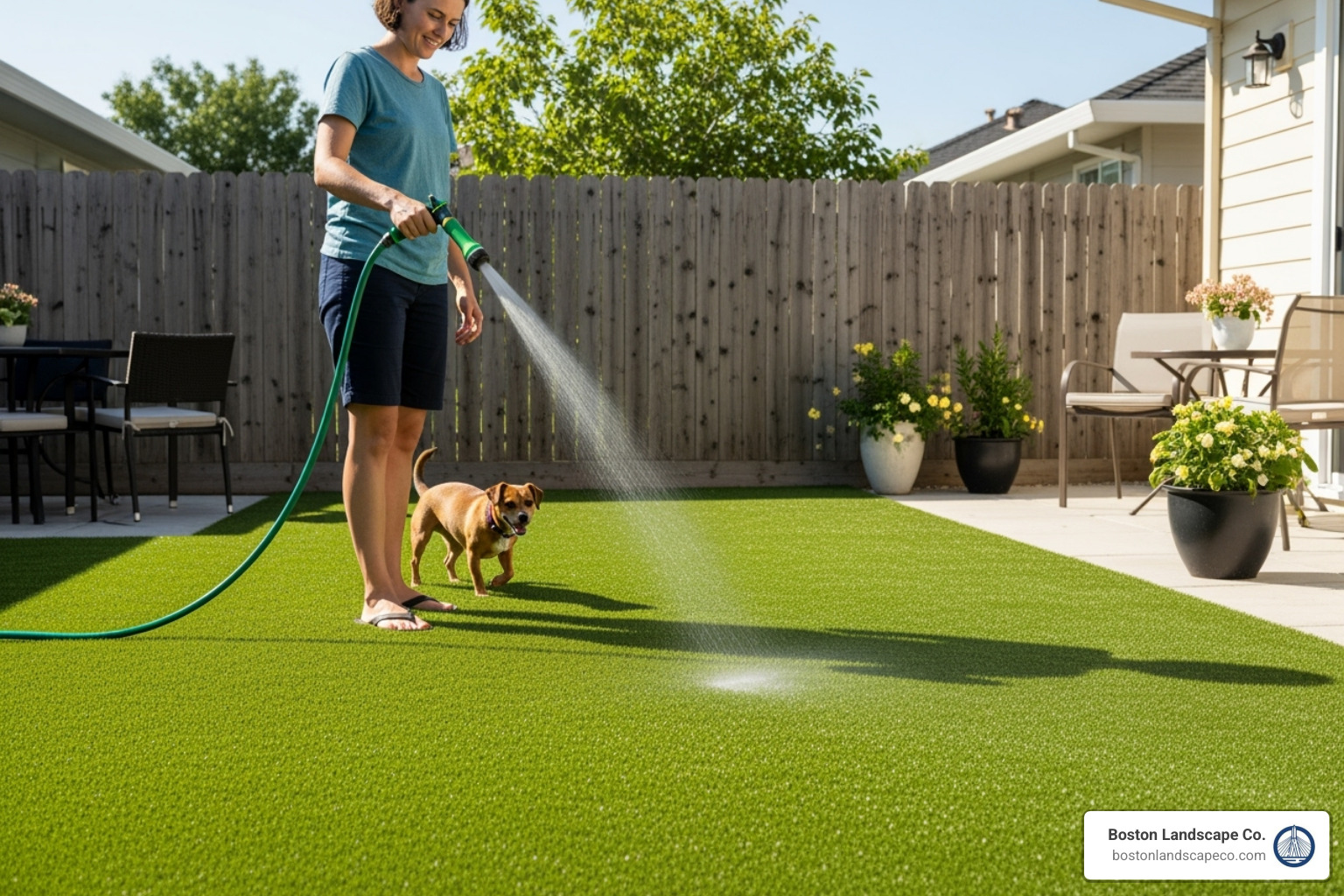
While artificial turf for dog owners is low-maintenance, a simple cleaning routine is essential to keep it looking and smelling fresh. This quick upkeep ensures your pet’s paradise remains hygienic for everyone to enjoy.
Handling Pet Waste and Odors
Dealing with pet waste on artificial grass is straightforward. Scoop solid waste as you normally would. Urine drains through the permeable backing, but to prevent residue and odor buildup, it’s important to rinse the area with a hose once or twice a week.
For stubborn smells, especially in warmer months, enzyme cleaners designed for artificial turf are highly effective. These products don’t just mask odors; they break down the ammonia-causing bacteria. A high-quality artificial turf cleaner is a key tool for pet owners. To keep the grass blades upright and looking fresh, periodically brush the turf with a stiff broom. Avoid harsh chemicals or high-pressure washers, which can damage the turf fibers.
Is artificial turf for dog paws safe?
Yes, modern artificial turf for dog paws is designed with safety as a top priority. Our products are made from non-toxic materials, similar to the plastics used in many household items. Since 2008, reputable manufacturers have followed safety standards, such as those outlined in agreements with the Center for Environmental Health (CEH), to eliminate lead and other harmful substances.
A major safety benefit is that artificial turf requires no harmful chemicals. Unlike natural lawns that often need pesticides and fertilizers, your pet won’t be exposed to these potentially toxic substances. The consistent, cushioned surface is also softer on paws than concrete or rough ground. Finally, turf is hypoallergenic and pest-resistant, reducing your dog’s exposure to allergens and insects like fleas and ticks. A professional installation, like those we offer near Newton, ensures a safe and clean environment for your pet.
Artificial Turf vs. Natural Grass: A Pet Owner’s Comparison
Deciding between artificial turf for dog owners and natural grass involves balancing daily convenience, budget, and your pet’s well-being. Here’s how the two options compare:
| Feature | Artificial Grass | Natural Grass |
|---|---|---|
| Maintenance | Very Low (rinsing, brushing) | High (mowing, watering, weeding, fertilizing) |
| Durability | High (dig-proof, wear-resistant) | Low (prone to digging, brown spots, wear ruts) |
| Upfront Cost | Higher (installation) | Lower (sod/seed cost) |
| Long-Term Cost | Lower (no water/mow/fertilizer bills) | Higher (ongoing maintenance, repairs, water) |
| Cleanliness | Cleaner (no mud, no dirt tracked indoors) | Muddy (especially after rain), dirt tracked indoors |
| Pet Safety | Non-toxic, pest-free, hypoallergenic | Pesticides/fertilizers, fleas/ticks, allergies |
The comparison highlights the significant reduction in workload and the increase in durability and cleanliness with artificial turf. It stands up to playful paws, eliminates muddy footprints, and provides a safer surface free from pests and the chemicals used to control them.
Comparing the costs of artificial turf for dog owners
While the initial investment for artificial turf for dog installation is higher than for sod, it’s important to consider the long-term return.
The cost of professional installation depends on yard size, turf type, and site preparation. Based on general industry data, the price for pet-friendly turf can range from $11 to over $48 per square foot. This wide range reflects differences in product quality and project complexity.
Please note: These are general industry averages based on internet data and are not actual costs for Boston Landscape Co. We provide custom estimates custom to your specific property and needs.
The long-term savings are where artificial turf truly shines. You’ll eliminate costs for watering, mowing, fertilizers, and pesticides. You also won’t have to spend money on reseeding or repairing damage from digging. Many clients find their investment pays for itself in three to five years, making the value of artificial turf for dog owners clear for families in areas like Reading and Waltham.
Frequently Asked Questions about Artificial Turf for Dogs
We understand you have questions about making the switch. Here are the straight answers to the most common concerns we hear from pet owners about artificial turf for dog use.
Can dogs pee and poop on artificial grass?
Yes, absolutely. Artificial turf designed for pets is engineered to handle waste. Urine flows through the highly permeable backing and into the prepared sub-base below, just like rainwater. Solid waste can be scooped up easily, just as you would on a natural lawn. We recommend a quick rinse of the area after picking up solids and hosing down common urination spots once or twice a week to keep everything fresh.
Does artificial grass for dogs get hot?
Artificial turf can get warmer than natural grass in direct sun. However, there are several effective ways to manage the temperature. You can:
- Choose lighter-colored turf, which reflects more sunlight.
- Use a specialized cooling infill that lowers the surface temperature when activated with water.
- Give the turf a quick spray with a garden hose before playtime.
- Ensure there is a shaded area available for your pet to rest.
Will my dog try to dig through or eat the artificial grass?
Most dogs lose the urge to dig because artificial turf doesn’t provide the same satisfying feedback as soil. Professionally installed turf is also extremely durable and resistant to tearing. As for eating the grass, it’s a rare issue. High-quality turf is made from non-toxic materials and doesn’t have the appealing scent or texture of natural grass. The safety of these materials is backed by industry standards, like those from the Center for Environmental Health (CEH). Providing plenty of appropriate chew toys is always a good practice to redirect any chewing behavior.
Create the Perfect Pet Paradise in Your Boston-Area Home
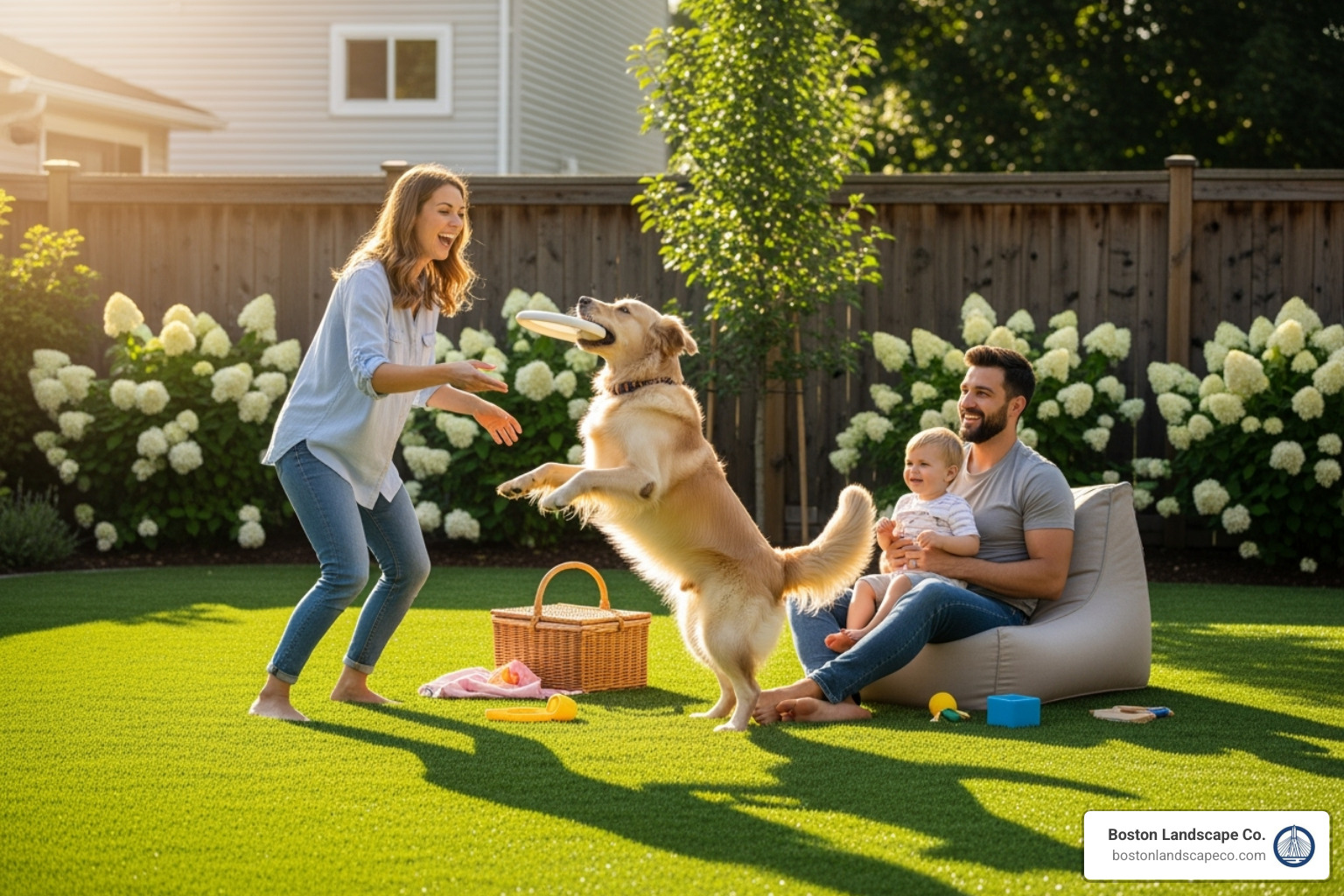
Investing in artificial turf for dog owners is about more than a new lawn—it’s about a cleaner, safer, and more enjoyable lifestyle for your entire family. Imagine a backyard free from muddy paws and endless yard work, where your dog can play on a durable, beautiful green surface year-round.
For homeowners across Massachusetts, from Reading to Somerville, a professional installation is key to ensuring your pet-friendly turf performs flawlessly for years. At Boston Landscape Co., our expertise in site preparation, drainage systems, and turf installation guarantees a perfect result. Our team is ready to help you design and install a hassle-free pet haven in your own backyard.
Get a professional artificial lawn installation
