
Arborist: Smart Tree Care for 2025
Why Professional Tree Care Matters for Your Property
An arborist is a trained professional who specializes in the cultivation, management, and care of individual trees, shrubs, and other woody plants. Here’s what you need to know:
What an Arborist Does:
- Diagnoses and treats tree diseases and pests
- Performs proper pruning to maintain tree health and safety
- Removes hazardous or dead trees safely
- Plants new trees with proper techniques
- Provides tree risk assessments
- Offers emergency storm damage services
Key Qualifications to Look For:
- ISA (International Society of Arboriculture) Certified Arborist
- Proper insurance (liability and worker’s compensation)
- 3+ years of documented experience
- Continuing education requirements
Why Hire a Professional:
- Safety – tree work can be extremely dangerous
- Proper techniques prevent long-term tree damage
- Knowledge of tree biology and disease identification
- Specialized equipment and training
Your trees are more than just landscape features – they’re valuable assets that can increase your property value by thousands of dollars when properly maintained. Professional arborists understand tree biology and use scientific methods to ensure your trees remain healthy, safe, and beautiful for years to come.
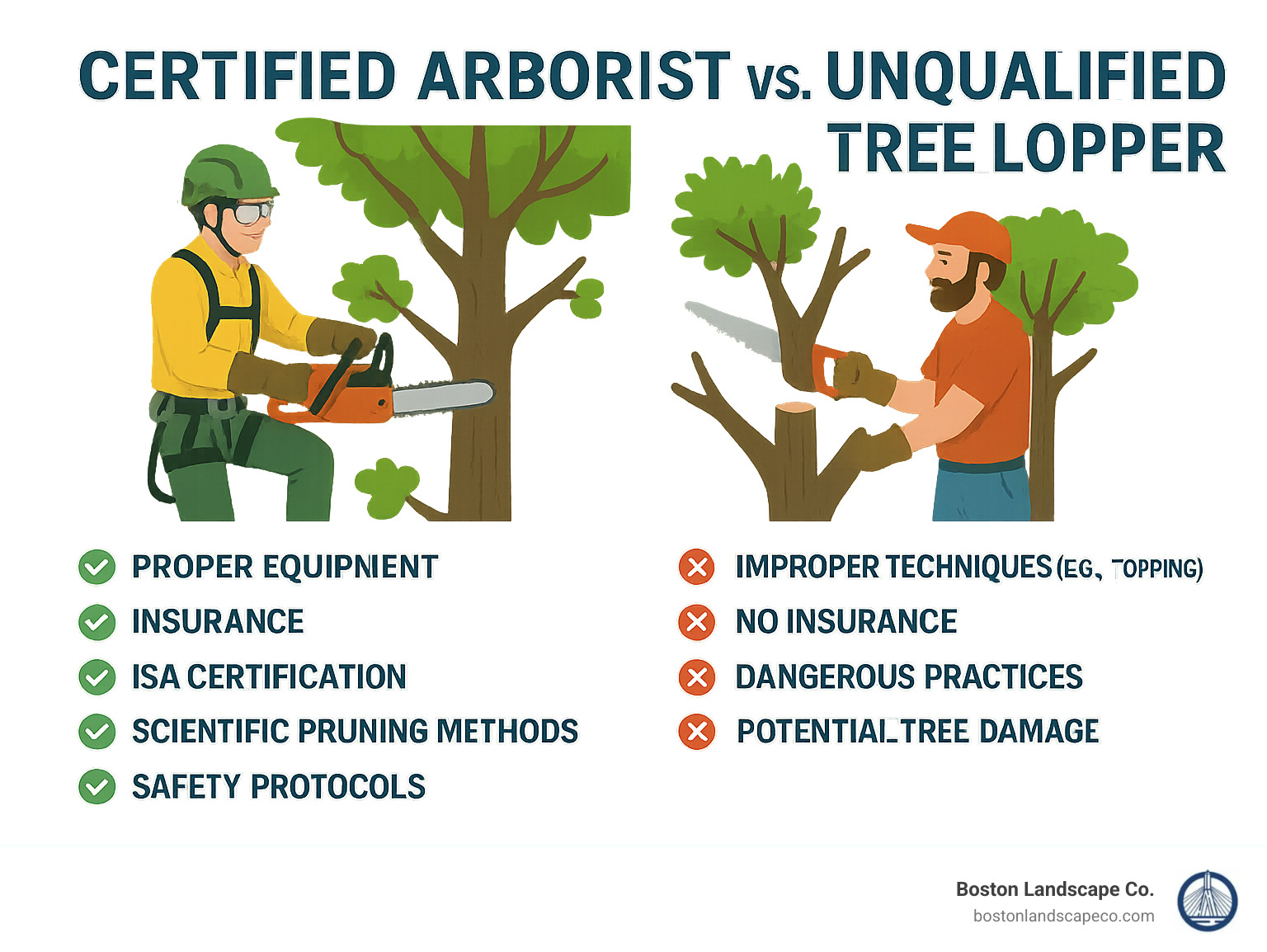
Poor tree care from unqualified “tree loppers” can permanently damage or kill your trees, create safety hazards, and cost you far more in the long run. The difference between a certified arborist and an unqualified tree service can mean the difference between a thriving landscape and expensive tree replacement.
I’m Steve Schumacher, owner-operator of Boston Landscape Co since 1991, and I’ve worked with certified arborist professionals throughout my three decades in the landscaping industry. My experience has shown me how proper tree care protects both property values and family safety.
What is an Arborist and What Do They Do?
When we talk about an arborist, we’re truly diving into tree experts! Imagine a doctor, but for trees. That’s essentially what an arborist is – a highly trained professional specializing in the health and well-being of individual trees, shrubs, and other woody plants. This fascinating field, known as arboriculture, blends scientific study (dendrology) with the art of nurturing plants (horticulture). Unlike someone who manages a whole forest or harvests timber, an arborist focuses intently on the specific needs of each plant in our yards and communities.
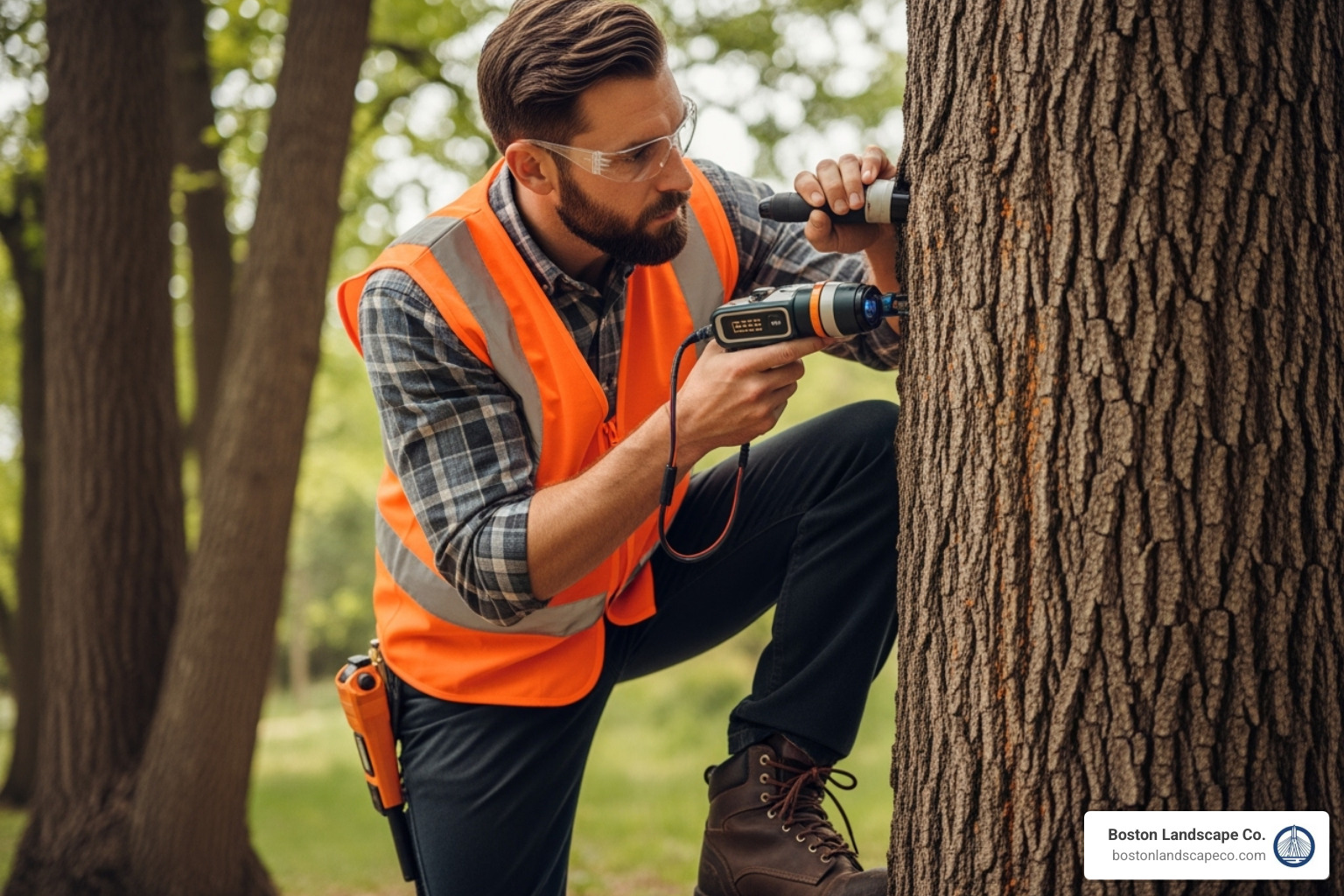
An arborist’s day is never dull! Their work covers a huge range of tasks, all centered around keeping our urban and suburban trees healthy and safe. Most of their time is spent outdoors, which means they’re ready for anything Mother Nature throws their way, from sunny summer days to chilly winter mornings. It’s physically demanding work, requiring strength, agility, and the skill to safely operate specialized equipment. One day, they might be carefully shaping a beloved oak tree in your backyard. The next, they could be figuring out why a beautiful maple is looking sick, or assessing the danger of a tree damaged by a storm.
But it’s not all climbing and chainsaws! A big part of an arborist’s job involves detailed planning, writing reports, talking with clients, and staying up-to-date on the latest safety practices. Sometimes, they even send samples to a lab to pinpoint exactly what’s bothering a tree. It’s a challenging, yet incredibly rewarding, career for anyone who loves trees and being outdoors.
What Services Does a Certified Arborist Provide?
A certified arborist offers a full range of services designed to keep your trees healthy, safe, and thriving for years to come. These aren’t just simple “tree trimming” jobs; they are specialized tasks backed by deep scientific knowledge and hands-on experience.
Here’s a closer look at the key services an arborist provides:
- Pruning: This is so much more than just cutting branches! Proper pruning by an arborist makes trees healthier, stronger, and safer. They use specific techniques like crown raising (removing lower branches), crown reduction (making the tree shorter or narrower), and crown thinning (removing some inside branches to let in more light and air). An arborist knows exactly where to cut to help the tree heal quickly and grow well.
- Tree Removal: While it’s always the last option, sometimes a tree must be removed because it’s dangerous, very sick, or already dead. Arborists use special rigging, ropes, pulleys, and sometimes heavy equipment like cranes to safely take down trees, even in tight spaces, without damaging nearby property. After the tree is down, they often use chippers to turn the brush into mulch.
- Emergency Tree Work: When storms hit, trees can become immediate hazards. Certified arborists are ready to respond quickly to these emergencies, safely removing fallen trees or broken limbs to make your property safe again.
- Planting: An arborist doesn’t just dig a hole and drop in a tree. They help you choose the perfect tree for your yard, considering things like soil type, sunlight, and how much space it needs. They ensure the tree is planted correctly, giving it the best start for a long, healthy life.
- Plant Health Care (PHC): PHC is a complete approach to keeping your trees and shrubs robust and beautiful. It includes a variety of treatments, such as:
- Fertilization: Giving your trees the right nutrients to boost their vitality.
- Pest Management: Finding and treating bug problems and diseases using methods that are kind to the environment.
- Disease Diagnosis: Figuring out what sickness your tree has and recommending the best treatment.
- Cabling and Bracing: Installing supports to strengthen weak branches or trunks, preventing them from breaking and extending the life of valuable trees.
- Monitoring: Regular check-ups to catch any problems early on.
PHC is especially good for younger trees and shrubs, helping them grow strong and stable from the beginning.
- Tree Assessment Services: Arborists perform thorough evaluations to check a tree’s health, its structure, and any potential risks it might pose. This can include detailed tree risk assessments and damage reports. You can learn more about these services here: Tree Assessment Services.
- Stump Grinding: After a tree is removed, the stump is left behind. Arborists use special grinders to remove the stump below ground level, so you can plant new grass or landscaping over the spot.
- Lightning Protection: For very valuable or prominent trees, arborists can install systems to protect them from lightning strikes during storms.
Understanding the Cost of Arborist Services
When you’re thinking about hiring an arborist, it’s helpful to know that prices can vary quite a bit. Just a quick note: the costs we’re talking about here are general averages based on industry data and not the actual prices for Boston Landscape Co. For an exact quote custom to your specific needs, it’s always best to reach out to us directly for a consultation.
A few key things affect the price of arborist services:
- Tree Size: Bigger trees usually mean more time, more specialized equipment (like cranes), and a larger crew, which naturally increases the cost.
- Location and Accessibility: If a tree is hard to get to, close to your house, or on a steep hill, it will be more expensive to work on. This is because it requires extra care and special safety steps.
- Complexity of the Job: A simple trim on a small, easy-to-reach tree will cost less than removing a dangerous tree that’s hanging over your roof. Services like cabling or extensive disease treatments also add to the complexity.
- Equipment Needed: Using heavy machinery, such as cranes for large removals or specialized chippers, will be part of the overall price.
- Type of Service: Different services have different price tags. For example, a basic tree inspection will be less costly than a full tree removal.
You might get an hourly rate for smaller jobs or consultations, but for most tree work, you’ll receive a project-based estimate that covers the entire job.
Based on industry averages, professional arborist services can range widely. For smaller, straightforward jobs like minor pruning or a tree health check, you might expect costs anywhere from $200 to $700. More involved services, such as removing a medium-sized tree, could range from $500 to $2,000. For large, complex tree removals, especially those needing special equipment or working near power lines, costs can exceed $2,500, sometimes even reaching $10,000 or more depending on the size, location, and risk involved. For instance, while leaf removal might average around $350, it can range from $150 to $1,000 depending on your yard size and how many trees you have. Similarly, mulching costs can also vary significantly based on the type and amount needed.
We truly believe that investing in professional arborist services is a smart decision for the long-term health and safety of your property.
Why You Need a Professional Arborist for Your Tree Care Needs
When it comes to the majestic trees gracing your property, choosing a professional arborist is so much more than just ticking a task off your list. It’s truly an investment in the long-term health and beauty of your landscape, the safety of your home and loved ones, and even your peace of mind regarding potential liabilities. While that “cheaper” tree service might wave a tempting price tag, we promise you, the risks involved can far outweigh any initial savings.
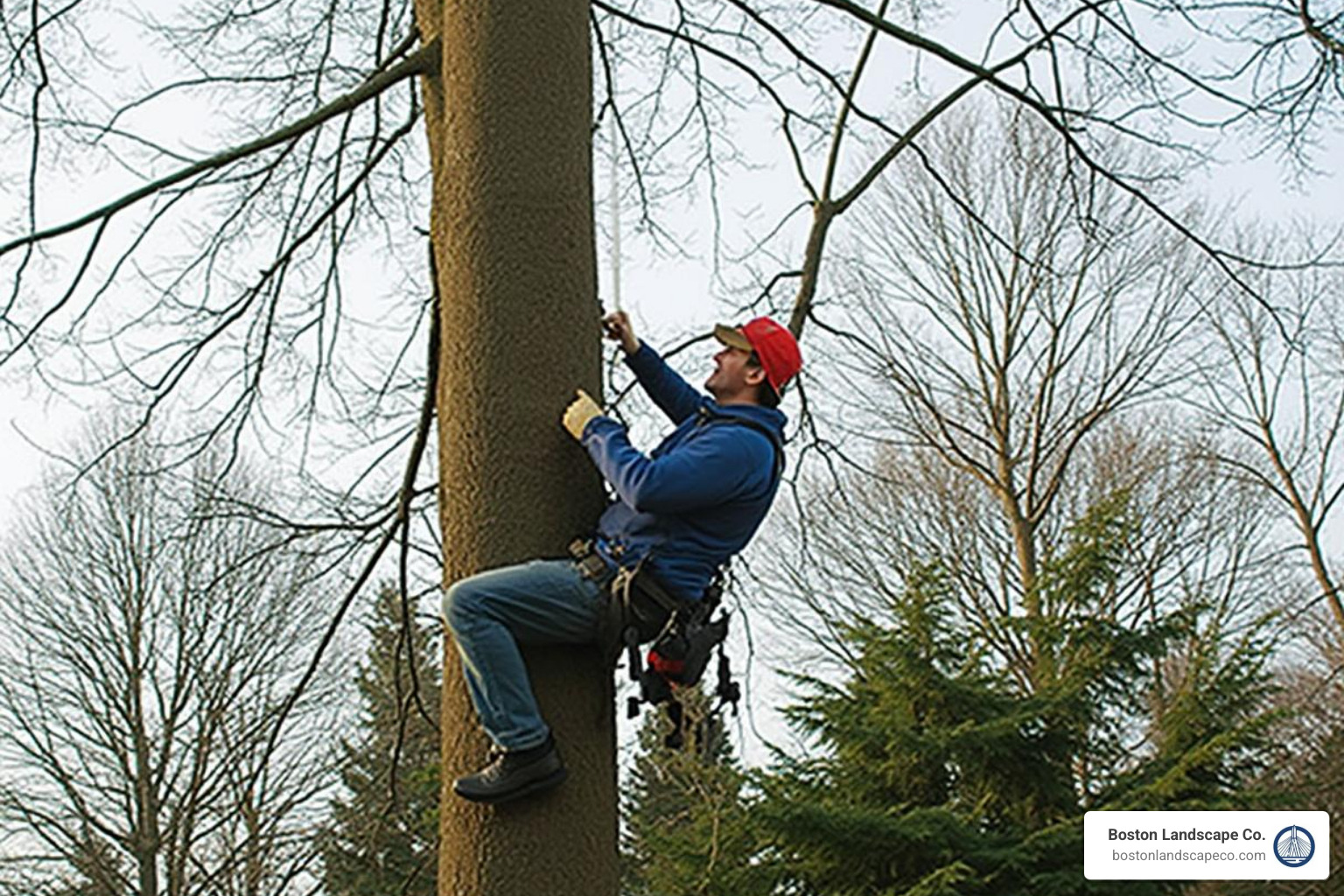
Think of professional tree care as an investment that pays you back. Beautiful, well-kept trees not only make your property look amazing, but they also add significant value – sometimes thousands of dollars! Plus, they can even help lower your energy bills by providing natural shade. On the flip side, trees that aren’t cared for properly can turn into a huge headache. Imagine a storm-damaged branch falling onto your roof, or worse, causing injury. These situations can lead to expensive repairs, or even costly legal battles. An arborist helps prevent these worries.
Let’s be honest: tree work is tough, and it can be incredibly dangerous. Especially when dealing with large trees or complex removals, it’s not a job for amateurs. It demands very specific knowledge, rigorous training, and the right equipment to be done safely. Certified arborists are true experts. They’re masters of proper climbing and intricate rigging techniques. They know how to safely operate powerful chainsaws, noisy chippers, and towering aerial lifts. Most importantly, they live by strict safety rules. They understand the science behind how trees fall, how limbs behave, and exactly how to keep both themselves and your precious property safe.
One of the absolute biggest reasons to bring in a professional arborist is to steer clear of truly damaging practices, like the infamous “tree topping.” If you see someone just chopping off large branches down to stubs, run the other way! This brutal method severely harms the tree, making it grow back weak and unhealthy, and often, it leads to the tree slowly dying. The same goes for “over-thinning” or “hat-racking,” where too much foliage is stripped away. This leaves your tree exposed to stress, diseases, and even falling apart. A real arborist knows that every single cut they make has a specific, thoughtful purpose. They work with the tree’s natural growth, not against it, ensuring its long-term health.
The Dangers of Hiring Unqualified “Tree Loppers”
Have you ever heard the term “tree lopper”? It’s a bit of an old-fashioned phrase, reminding us of a time when tree work was done without much thought for science or safety. Sadly, these risky practices haven’t completely disappeared. If you hire an unqualified “tree lopper” today, you could be setting yourself up for disaster – for your beautiful trees, your precious property, and yes, your wallet too.
Perhaps the most alarming risk is the lack of insurance. Many individuals who call themselves “tree guys” operate without proper liability insurance or worker’s compensation. Think about it: if a giant branch falls on your roof, or heaven forbid, a worker gets hurt on your property, or even your neighbor’s fence gets smashed, you could be on the hook for all those expensive damages. A truly professional arborist, however, will always carry robust, comprehensive insurance. This protects not only their dedicated crew but also your valuable property from any unexpected mishaps.
Then there are the poor pruning techniques – a dead giveaway of unqualified tree work. Remember how we talked about topping? That, along with random, careless cuts and leaving unsightly stubs, causes irreversible damage to your trees. This leaves them weak, wide open to nasty pests and diseases, and often means you’ll have to pay for an expensive removal much sooner than you should. It’s truly like letting someone perform surgery on you who never went to medical school – the results are almost never what you hoped for.
The risk of property damage skyrockets when you hire unqualified services. Without the right rigging and precise removal methods, huge limbs or even entire trees can tumble down without warning. This can flatten homes, smash fences, crush vehicles, or ruin your perfectly manicured landscaping. Trust us, we’ve seen the absolute devastation that improper tree removal can leave behind. It’s heartbreaking.
And finally, the lack of safety protocols with unqualified teams is truly alarming. Tree work is, hands down, one of the most dangerous jobs out there. Unqualified workers frequently cut corners on safety, putting themselves, your family, and your property at extreme risk. They often lack the essential training, proper personal protective equipment (PPE) like helmets and harnesses, and any kind of emergency rescue plan. It’s just not worth the gamble.
Here’s a table summarizing the key differences:
| Feature | Qualified Arborist | Unqualified “Tree Lopper” |
|---|---|---|
| Insurance | Fully insured (liability, worker’s comp) | Often uninsured or underinsured |
| Certification | ISA Certified, TCIA accredited, etc. | No formal certifications |
| Knowledge | Deep understanding of tree biology, pathology, proper pruning cuts, and growth patterns | Limited or no understanding of tree science; often based on outdated practices |
| Techniques Used | Scientific, precise cuts; focuses on tree health and structure; promotes natural healing | Haphazard, indiscriminate cuts like “topping” or “hat-racking”; causes severe tree stress and damage |
| Equipment | Modern, well-maintained, specialized equipment (aerial lifts, chippers, rigging gear, PPE) | Often uses inadequate or unsafe equipment; may lack proper safety gear |
| Safety | Adheres to strict safety standards (ANSI A300, Z133); trained in climbing, rigging, rescue | Poor or non-existent safety protocols; high risk of accidents and injury |
| Outcome | Healthy, structurally sound trees; increased property value; reduced liability; long-term tree vitality | Damaged, unhealthy, or dying trees; potential property damage; increased liability; short-term “fix” leads to long-term problems |
| Code of Ethics | Bound by professional code of ethics (e.g., ISA) | No professional accountability |
The Science of Modern Arboriculture
Modern arboriculture has come a long, long way from just guesswork and “gut feelings.” Today, it’s a sophisticated, science-driven profession! Pioneers like Dr. Alex Shigo, often called the “father” of modern arboriculture, completely changed how we understand trees. He taught us how trees naturally react to injuries and decay. Thanks to his groundbreaking research, we now understand the “branch collar” – that natural swelling at the base of a branch – and why old-school wound dressings (like paints or tars) are usually useless and can even hurt the tree. Trees are amazing; they have their very own clever internal defense systems. A skilled arborist knows how to make pruning cuts that work with these natural abilities, instead of fighting against them.
A professional arborist truly understands these deep scientific principles. They know that every single cut they make has a big impact on a tree’s growth, its overall structure, and its ability to defend itself. Their main goal? To “exploit a tree’s natural ability so it can heal itself.” This means making super precise cuts in exactly the right spot – usually just outside that special “branch collar.” Doing this helps the tree seal off the wound effectively and stop any decay from spreading.
This smart, scientific approach leads directly to truly sustainable tree care practices. It’s not just about making a tree look good for a season or two. It’s about ensuring its robust health and vibrant life for decades into the future. By following these proven principles, arborists help your trees live long, healthy lives. And when your trees thrive, guess what? Our whole environment benefits too!
Want to dive even deeper into the specifics of proper pruning techniques? We highly encourage you to explore resources like More about proper pruning techniques. Understanding the science behind truly effective tree care is fascinating and empowering!
Qualifications, Certifications, and Specializations
Becoming a truly qualified arborist isn’t just about owning a chainsaw; it’s a journey that demands serious dedication. These tree care experts earn their stripes through a blend of hands-on experience, formal education, and rigorous certification processes that ensure they meet high professional standards. It’s not something that happens overnight!
Professional standards in arboriculture are maintained through a commitment to continuous learning and a strong ethical compass. Many certifications require ongoing continuing education units (CEUs). This means your arborist is always brushing up on the newest research, techniques, and safety protocols. This dedication to lifelong learning ensures they’re always at the top of their game. Plus, leading organizations like the ISA have a strict Code of Ethics that certified professionals must follow, guaranteeing integrity, honesty, and competence in their work.
Experience is incredibly important too. For instance, to become an ISA Certified Arborist in the U.S., you need at least three years of documented, verified experience in the tree care industry. This hands-on time perfectly complements their scientific knowledge, allowing them to apply textbook principles effectively in the real world.
The path to becoming an arborist can vary. Some start by working as ground crew, learning the ropes on the job. Others might pursue college degrees in fields like Botany, Forestry, Biology, Environmental Studies, Ecology, Horticulture, or Soil Science. No matter how they begin, the journey to becoming a certified arborist involves dedicated study and plenty of practical application.
Key Certifications to Look For
When you’re searching for an arborist, checking for specific certifications is super important. These credentials tell you that the individual has met certain benchmarks for knowledge and experience, giving you peace of mind.
The most widely recognized and respected certification comes from the International Society of Arboriculture (ISA). The ISA is a global organization active in over 60 countries, setting the bar for arborists worldwide.
- The ISA Certified Arborist credential is the most common and foundational one. It means an individual has a solid understanding of tree care, backed by experience (at least three years) and a comprehensive exam. Certified Arborists must keep learning and follow a strict Code of Ethics to maintain their certification. While this certification shows strong foundational knowledge, it’s a great indicator of competence.
- For those with even more advanced knowledge, there’s the ISA Board Certified Master Arborist, which is the highest level of certification the ISA offers.
- A specialized credential to look for is the ISA Tree Risk Assessment Qualification (TRAQ). This shows an arborist’s ability to identify and assess potential tree risks – a crucial skill for safety.
- You might also hear about ISA Municipal Specialist and ISA Utility Specialist, which are for arborists working in specific public or utility settings.
Other notable groups include the Tree Care Industry Association (TCIA), which offers various credentials and promotes industry best practices. There’s also the American Society of Consulting Arborists (ASCA), offering the Registered Consulting Arborist (RCA) credential for those focused on expert advice rather than physical work.
We always suggest verifying an arborist’s credentials. The ISA provides easy ways to do this, promoting transparency. ISA Certified Arborists are held to a strict ISA Code of Ethics.
Types of Arborist Specializations
The field of arboriculture is quite broad, and many arborists choose to specialize based on their interests or the needs of their clients. It’s like how doctors specialize in different parts of the body!
- A Commercial Arborist typically works for private tree care companies like Boston Landscape Co. They offer services to homeowners and businesses, handling everything from routine pruning and planting to complex tree removals and emergency services. This is likely the type of arborist you’d hire for work on your home or business property.
- A Municipal Arborist, on the other hand, works for cities, towns, or other government groups. They manage public trees in parks, along streets, and in urban green spaces. They play a huge role in planning for urban forests and keeping public trees safe.
- Then there are Consulting Arborists. These experts provide advice without doing the physical tree work themselves. They might help with tree valuations for insurance claims, offer legal testimony in tree-related disputes, write tree preservation reports for construction projects, or even do forensic analysis if a tree fails. The ASCA’s Registered Consulting Arborist (RCA) is a well-known credential in this area.
- Finally, a Utility Arborist specializes in managing vegetation around power lines. This is a highly specialized and often dangerous job, requiring extra training and authorization to work safely near live wires. For instance, in urban settings, they typically maintain a clear distance of at least 10 feet (about 3 meters) from low-voltage power lines. Their work is crucial for preventing power outages and ensuring public safety.
The Arborist’s Role in Environmental Health
An arborist does so much more than just trim branches or remove trees! They play a huge, often unseen, role in keeping our environment healthy and sustainable. Think of them as guardians of our green spaces, especially in busy towns and cities.
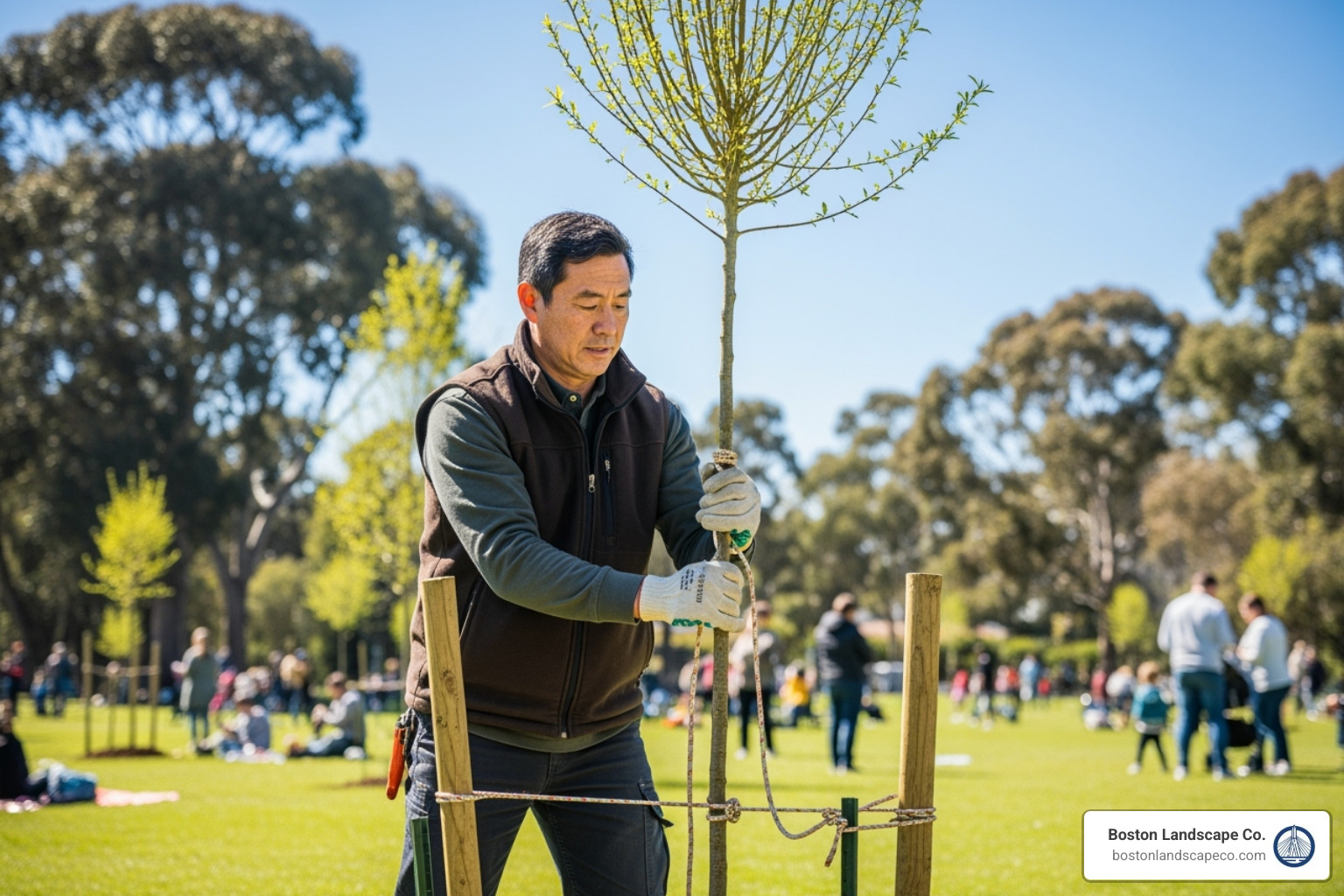
When arborists plant and care for trees in smart ways, they help create a strong urban canopy. This “green roof” over our communities does amazing things for us all. Trees are like giant air filters, soaking up bad stuff like carbon dioxide and pollution, and giving us fresh oxygen. They truly are the “lungs” of our towns!
Healthy trees also protect our water. Their roots help hold the soil in place. This stops dirt and pollutants from washing into our streams and rivers when it rains. Plus, trees offer a cozy home for all sorts of urban wildlife, from chirping birds to helpful insects. They give them shelter, food, and safe places to raise their young.
Did you know trees are also champions against climate change? They pull carbon dioxide out of the air, which helps cool things down. This can even lower your energy bills by shading your home in summer. And don’t forget the soil! Good tree care, like using mulch and proper feeding, keeps the soil healthy. This is super important for all plants and our planet.
Arborists also work hard to get rid of plants that don’t belong here. These “invasive species” can harm our native trees and ecosystems. Our team at Boston Landscape Co. knows how important Invasive Species Removal is for our local environment. We also help homeowners learn simple tips, like these 5 Ways to Prevent Invasive Species.
By focusing on the well-being of each individual tree, arborists make sure these amazing natural helpers keep working for us. They ensure our trees stay strong and healthy for many years to come, benefiting everyone for generations.
How to Hire the Right Professional for Your Trees
Okay, so you’re ready to give your trees the VIP treatment they deserve! Finding the right arborist for your tree care needs is a crucial step in protecting your property and ensuring the long-term health of your trees. It’s not just about picking the first name you find; it’s about making an informed decision that brings peace of mind.
We always recommend taking the time to interview candidates, get clear written estimates, and thoroughly check their credentials. Being aware of any “red flags” can save you a lot of headache and potential damage in the long run. Let’s make sure you pick the perfect tree partner!
Where to Find a Qualified Professional
Thankfully, finding a qualified arborist isn’t like searching for a needle in a haystack. There are some fantastic resources out there to guide you. The International Society of Arboriculture (ISA) offers an excellent online tool to help you locate certified professionals right in your neighborhood. You can use their directory to Find a certified arborist in your area by searching by name or location. It’s a great starting point for peace of mind.
While online directories are super helpful, also consider:
- Local Recommendations: Chat with your neighbors, friends, or even your local garden center. Word-of-mouth from satisfied customers can be a strong indicator of quality service.
- Verifying Credentials Online: Once you have a few names, use the ISA’s “Verify a Credential” tool (it’s often linked right from their “Find an Arborist” page) to confirm their certification status. This is a quick and easy way to make sure they hold the credentials they claim.
That listing in the ISA directory is voluntary, so not every ISA-certified arborist may appear. However, if they are certified, you should always be able to verify their credential through the ISA’s tool.
Key Questions to Ask Before Hiring an Arborist
Once you have a list of potential arborists, a thorough interview process is essential. Think of these questions as your personal checklist to ensure you’re hiring a reputable and qualified professional who will care for your trees safely and effectively:
- Can you provide proof of insurance? This is absolutely non-negotiable. Ask for certificates of both liability insurance (to cover any damage to your property) and worker’s compensation (to cover injuries to their employees). If they don’t have both, please, for your own safety and financial protection, do not hire them.
- Are you ISA Certified, and can I verify your credentials? A legitimate arborist will be proud to share their certification details and guide you on how to verify them online.
- Can you provide a list of references? A reputable company will gladly provide contacts for past clients whom you can call to inquire about their experience and satisfaction.
- Can I get a detailed written estimate? The estimate should clearly outline the exact scope of work, including specific services (e.g., “prune deadwood,” “remove tree to ground level”), the equipment they plan to use, and the total cost. Avoid vague or verbal estimates at all costs.
- How will you adhere to safety standards? Inquire about their safety protocols, their use of personal protective equipment (PPE), and how they plan to protect your property during the work. They should be familiar with and follow industry safety standards (like ANSI A300 and Z133).
- What are your professional affiliations? Membership in respected organizations like the ISA or TCIA demonstrates a commitment to professional development and industry best practices.
By asking these important questions, you’ll be well-equipped to choose a qualified and trustworthy arborist who will care for your trees safely and effectively.
Frequently Asked Questions about Arborist Services
Here at Boston Landscape Co., we often hear some excellent questions from homeowners about their trees and who to call for help. It’s totally understandable! Tree care can feel a bit mysterious, so let’s clear up some of the most common queries we get.
What is the difference between an arborist and a landscaper?
This is a fantastic question, and one we hear often! While both arborists and landscapers work to make your outdoor space beautiful and healthy, they actually have very different specialties.
Think of an arborist as a dedicated “tree doctor.” They’re specialists who focus on the health, safety, and longevity of individual trees and woody plants. This means they have deep, specialized knowledge in areas like tree biology (how trees grow and function), pathology (what diseases affect them), entomology (tree pests), and even structural mechanics (how trees stand and respond to stress). They’re trained to diagnose problems, perform intricate “tree surgery” like complex pruning, and safely remove large trees when necessary.
A landscaper, on the other hand, usually has a broader focus on your entire outdoor environment. This includes designing your garden, taking care of your lawn (mowing, fertilizing), planting flowers, shrubs, and perhaps very young trees, and even installing hardscaping like patios. While we at Boston Landscape Co. offer comprehensive landscaping services to improve your whole yard, we recognize that the specialized, in-depth knowledge and equipment for complex tree work truly belong to a certified arborist.
When should I call an arborist?
It’s always a good idea to call an arborist sooner rather than later if you have any concerns about your trees. Being proactive can save you a lot of trouble (and money!) down the line. Here are some clear signs it’s time to bring in a professional:
- You spot visible damage: Look out for large dead or broken branches, significant cracks in the trunk or major limbs, or areas of decay. These can be real hazards.
- Signs of sickness or pests appear: If you notice leaves changing color unusually, strange growths like fungi on the trunk, wilting leaves, or visible insect infestations, your tree might be in distress.
- Your tree looks unstable: If a tree suddenly starts leaning, especially after a storm, or just appears unstable, it could be at risk of falling. This is a major safety concern.
- Trees are too close for comfort: If branches are growing too close to your home, rubbing against the roof, or getting tangled with power lines (remember that 10-foot rule for safety!), an arborist can address these risks.
- You’re planning new construction: If you’re building near existing trees, an arborist can help you protect those trees from damage during the process.
- After a big storm: Even if a tree looks okay, a professional arborist can assess any hidden damage and identify potential hazards that might not be obvious to the untrained eye.
- Just for a general check-up: It’s smart to have your mature trees assessed periodically, perhaps every few years. This helps you stay ahead of potential issues and keeps your trees healthy and beautiful for years to come.
Basically, if you have any doubts about the health, stability, or safety of your trees, don’t hesitate. A professional arborist is the right person to call for peace of mind.
Can I do my own tree pruning?
For very minor pruning, like snipping off small dead twigs on a young tree that you can easily reach from the ground with hand pruners, sure, a homeowner can often manage that. It’s like giving your plant a little trim!
However, anything beyond these simplest tasks should absolutely be left to a professional arborist. We really can’t stress this enough. Tree work, especially with ladders, chainsaws, or on large, mature trees, is incredibly dangerous. Here’s why it’s not a DIY job:
- Safety Hazards are Real: Working at heights, especially with powerful tools, carries huge risks. Falls, severe cuts, and other serious injuries are far too common for untrained individuals. An arborist has specialized training and equipment to perform this work safely.
- You Could Harm the Tree: Without proper training, it’s easy to make incorrect cuts that can seriously damage a tree. These improper cuts can lead to decay, disease, or weak, unstable growth in the future. An arborist understands the science of how trees respond to pruning and makes cuts that promote healing and long-term health.
- Risk of Property Damage: Large limbs can fall unpredictably if not handled correctly, causing significant damage to your home, fence, car, or other property. It’s truly heartbreaking to see the damage that can result from improper tree removal.
- Electrical Shock Danger: Never, ever attempt to prune trees near power lines. This is a job for a highly specialized utility arborist who has specific training and authorization to work safely around live wires. The risk of electrocution is lethal.
While we understand the desire to tackle tasks yourself, for anything more than the most basic tree care, it’s simply not worth the risk to your safety, your family’s safety, or your property. Professional arborists are trained, equipped, and insured to handle these complex jobs safely and effectively.
Conclusion
So, what have we learned about arborists? It’s clear they’re so much more than just folks who cut down trees. They’re highly trained professionals—you might even call them “tree whisperers”! They dedicate themselves to the science and art of growing, caring for, and managing our precious trees and woody plants. Their deep knowledge helps keep your trees healthy, safe, and living long, vibrant lives. This, in turn, boosts your property’s value and contributes to a healthier environment all around.
Investing in professional arborist services isn’t just a cost; it’s a smart, long-term investment. It’s all about protecting your home, avoiding costly problems, and making sure your trees flourish for years—even generations—to come. And remember, safety always comes first! That means safety for the professionals doing the work, and safety for your precious property.
For our friends and neighbors in Stoneham and Billerica, keeping your property’s trees healthy and safe is a big part of smart landscape management. Here at Boston Landscape Co., we truly get how important it is to have complete solutions for your outdoor spaces. While we offer a wide range of landscaping and property maintenance services, we also know when it’s time to bring in that specialized arborist expertise.
If you’d like a thorough check-up for your trees—to spot any hidden risks or just ensure they’re thriving—consider a professional Tree Hazard Assessment. We’re here to guide you every step of the way, connecting you with the right experts. Our goal? To make sure your outdoor spaces are not just beautiful, but also truly safe and sustainable for the long haul.
