
Wetland Enhancement: 7 Powerful Ways for Amazing Results 2025
Understanding Nature’s Filtration System
Wetland improvement is the process of improving specific functions of an existing wetland ecosystem without increasing its size. Unlike restoration or creation, improvement focuses on boosting particular ecological services like water quality, wildlife habitat, or flood control.
What is Wetland Improvement?
– Definition: Modifying a degraded wetland to improve specific functions
– Not expansion: Does not increase wetland acreage
– Focus areas: Water quality, wildlife habitat, flood retention
– Common techniques: Hydrologic modification, vegetation management, invasive species control
– Typical costs: $300-$300,000+ per acre depending on project complexity
Wetlands are often called “nature’s sponges” because they absorb excess water during floods, filter pollutants, and provide critical habitat for diverse wildlife. When these valuable ecosystems become degraded through human activities or natural processes, improvement projects can help restore their functionality and ecological value.
Improvement differs from restoration in that it doesn’t aim to return a wetland to its historical condition, but rather to improve specific functions that may benefit the surrounding landscape and community. For example, a wetland might be improved to better filter agricultural runoff, provide breeding habitat for amphibians, or increase flood storage capacity.
I’m Steve Schumacher, owner of Boston Landscape Co, with over 30 years of experience implementing wetland improvement projects throughout Massachusetts that balance ecological needs with regulatory requirements. My team specializes in designing sustainable wetland improvements that improve water quality while creating beautiful, functional landscapes.
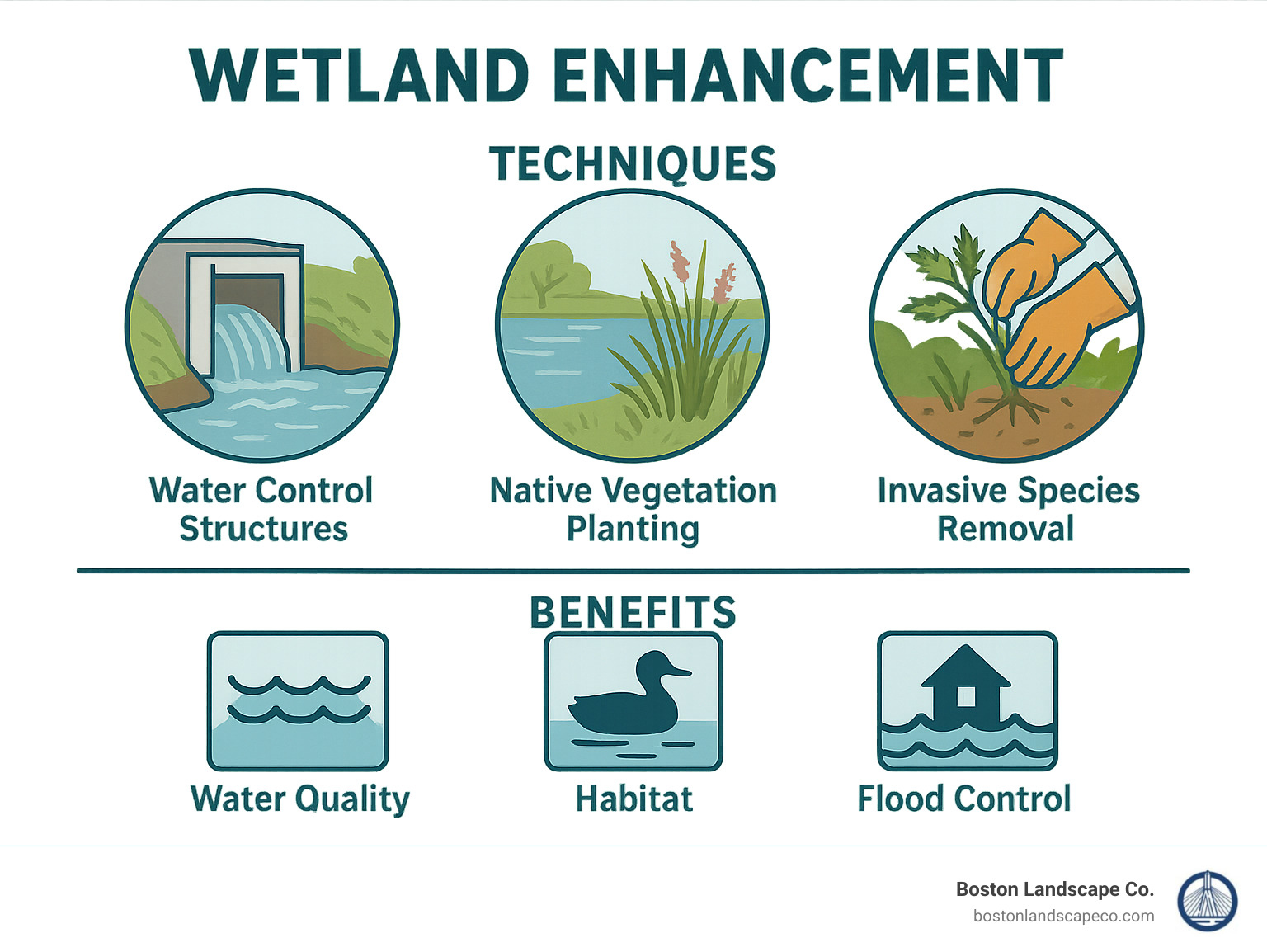
Wetland Improvement terms simplified:
– Ecological Restoration
– Wetland Mitigation
– Constructed Wetlands in the Sustainable Landscape
What Is Wetland Enhancement?
Have you ever seen a wetland that’s a bit… underwhelming? Maybe it’s struggling with invasive plants, or the water isn’t flowing quite right. That’s where wetland improvement comes in – it’s like giving nature a helping hand without completely redesigning the landscape.
Wetland improvement focuses on boosting how well an existing wetland works, not making it bigger. Think of it as upgrading your home’s insulation rather than building an addition. We’re enhancing what’s already there – making the wetland better at filtering water, supporting wildlife, or holding flood waters.
Unlike restoration (which tries to turn back time to historical conditions) or creation (which builds wetlands from scratch), improvement works with what’s already there. The wetland stays the same size, but becomes healthier and more functional.
Wetland Improvement Defined by Leading Agencies
The experts all agree on the core idea of wetland improvement, even if they use slightly different words:
The U.S. Environmental Protection Agency (EPA) describes it as: “The manipulation of the physical, chemical, or biological characteristics of a wetland site to heighten, intensify, or improve specific function(s) or for a purpose such as water quality improvement, flood water retention or wildlife habitat.”
The Natural Resources Conservation Service (NRCS) gets more specific in their Conservation Practice Standard Code 659, calling it “the augmentation of specific site functions or values of degraded wetlands beyond the original natural conditions on a degraded wetland site.”
Meanwhile, the Society for Ecological Restoration takes a broader view, defining ecological improvement as “any activity that improves ecosystem attributes or services, but which falls short of returning the system to its native historical state.”
In simpler terms? We’re making wetlands work better at what they do naturally.
Wetland Improvement vs. Restoration, Creation & Mitigation
These terms might sound similar, but they represent very different approaches to wetland management:
| Approach | Primary Goal | Acreage Impact | Typical Context | Example |
|---|---|---|---|---|
| Improvement | Improve specific functions | No net gain | Existing degraded wetland | Installing water control structures to improve hydroperiod |
| Restoration | Return to historical condition | Net gain possible | Former wetland that was drained | Filling drainage ditches to reestablish hydrology |
| Creation | Establish new wetland | Net gain | Non-wetland site | Excavating upland to create wetland hydrology |
| Mitigation | Compensate for permitted losses | No net loss policy | Regulatory requirement | Creating or restoring wetlands to offset impacts elsewhere |
The tricky part about wetland improvement is balancing different functions. Improving one aspect might affect another – like how adding deeper water for ducks might reduce habitat for certain frogs or plants. That’s why thoughtful planning with clear goals is so important.
At Boston Landscape Co., we understand these nuances and help our clients steer the complex world of wetland management. Every project starts with understanding what your wetland does well now, what it could do better, and how we can help it reach its full potential – all while staying within its existing footprint.
Planning a Wetland Improvement Project
Successful wetland improvement starts with thoughtful planning. I’ve seen how proper preparation makes all the difference between projects that thrive for decades and those that struggle after just a few seasons.

Setting Goals & Selecting the Right Site
Finding the perfect spot for your wetland improvement project is a bit like house hunting – location matters tremendously. At Boston Landscape Co., we look closely at several key factors before making recommendations.
Hydric soils tell us a lot about a site’s potential. These special soils develop under waterlogged conditions and have distinctive colors and textures that signal a site’s natural tendency to support wetland ecosystems. When these soils are intact, your improvement project has a much stronger foundation to build upon.
We also consider the hydrogeomorphic classification – fancy language for “what type of wetland is it?” A riverine wetland along a stream behaves very differently from a depressional wetland in a natural bowl. Each type has unique water sources and patterns that guide our approach.
The watershed context matters enormously. We think about how water moves into and out of your wetland, what’s happening upstream that might affect water quality, and how your improved wetland will benefit downstream areas. A wetland doesn’t exist in isolation – it’s part of a larger water system.
A healthy buffer zone of at least 100 feet around your wetland provides critical protection. Think of this buffer as a wetland’s security system – it filters out pollutants, reduces erosion, and creates habitat for wildlife that might visit the wetland. Wider buffers offer even greater benefits and resilience.
We’ll also identify what’s currently limiting your wetland’s potential. Is it choked with invasive purple loosestrife? Has a drainage ditch altered its natural hydrology? Understanding these degradation factors helps us target our improvement efforts where they’ll make the biggest difference.
Practical matters like ownership boundaries and equipment access might seem mundane, but they can make or break a project. We’ll help steer these considerations to ensure smooth implementation from start to finish.
Step-by-Step Project Roadmap
When you partner with us on a wetland improvement project, here’s the journey we’ll take together:
Our process begins with a thoughtful initial consultation and site visit. This is where we listen to your goals, walk the property together, and begin assessing what’s possible. I love this phase because we often find unexpected opportunities during these early conversations.
Next come baseline surveys where we document exactly what exists today – the plants, the water patterns, the soil conditions, and the wildlife already using the site. This creates our “before” picture that we’ll measure success against.
The regulatory review phase helps us identify which permits we’ll need. Wetlands are protected by various laws, and we’ll steer this complexity for you, determining whether your project needs local Conservation Commission approval, state Department of Environmental Protection permits, or federal Army Corps of Engineers oversight.
During design development, we create detailed plans custom to your specific site and goals. This might include specifications for water control structures, planting plans for native vegetation, or strategies for removing invasive species.
The permitting process can take anywhere from a few weeks to several months depending on project complexity. We’ll prepare the necessary documentation and represent your project through the approval process.
When permits are in hand, we move to construction – the exciting phase where plans become reality. Our experienced crews use specialized equipment designed to minimize disturbance while achieving the desired improvements.
After implementation comes monitoring and adaptive management. We’ll track how your wetland responds to the improvements and make adjustments as needed. Nature doesn’t always follow our exact plans, so this flexibility is crucial for long-term success.
Finally, we’ll establish a long-term stewardship plan to maintain the benefits of your improved wetland for years to come.
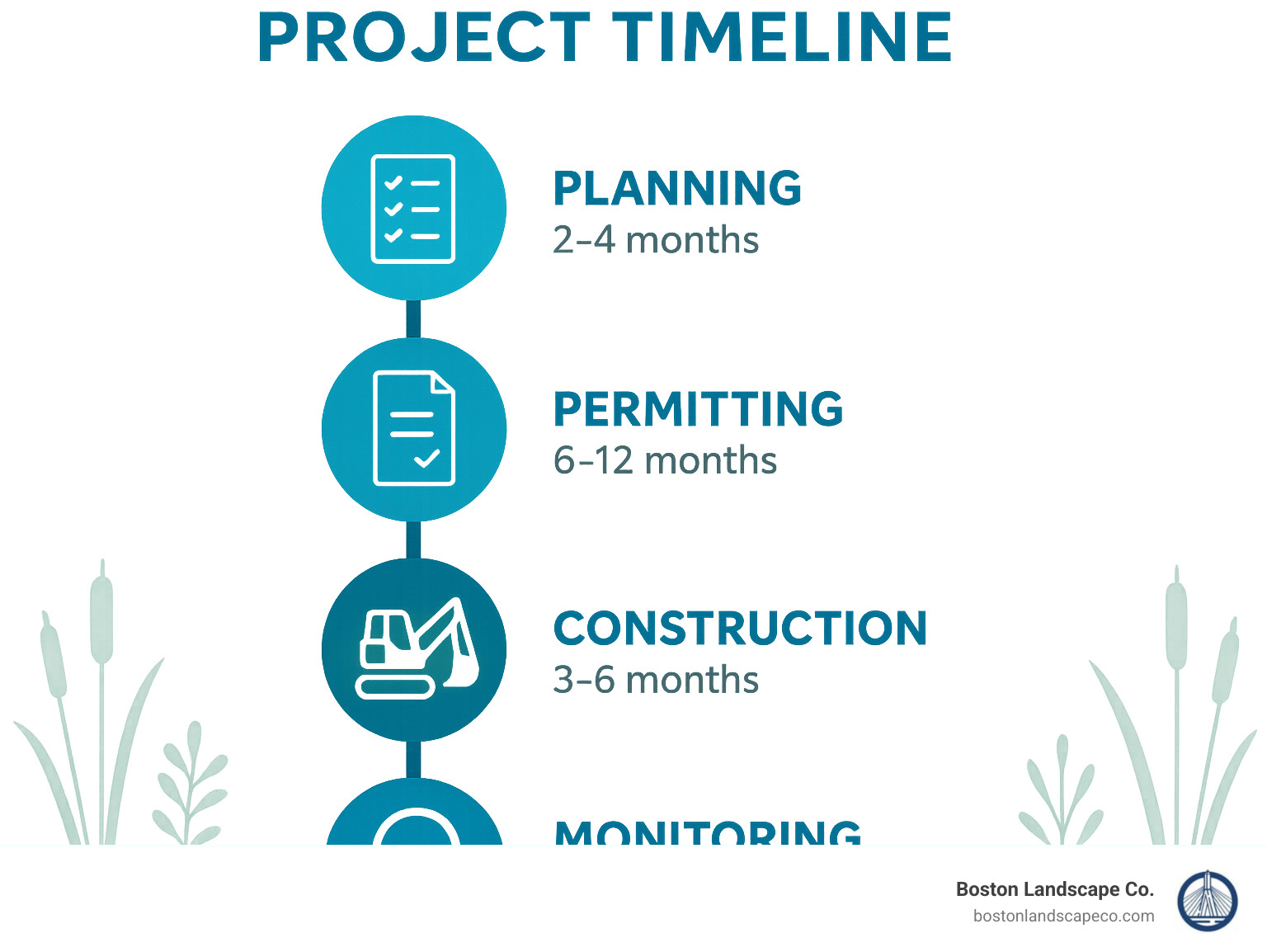
The timeline for wetland improvement varies considerably based on project scope and complexity. Here in Massachusetts, we typically recommend construction during the drier late summer months when soil disturbance will be minimized and breeding wildlife won’t be disrupted. A small project might move from concept to completion in just a few months, while more complex improvements could take a year or more to fully implement.
Patience pays off with wetland projects. These dynamic ecosystems evolve over time, and the most successful improvements work with natural processes rather than fighting against them. At Boston Landscape Co., we’re committed to guiding you through each step of this rewarding journey.
Wetland Improvement Techniques & Best Practices
Implementing wetland improvement isn’t a one-size-fits-all process—it’s more like being a wetland tailor, customizing solutions to fit the unique needs of each site. At Boston Landscape Co., we’ve spent years wading through Massachusetts wetlands (sometimes literally!), refining our approaches to create healthier ecosystems.
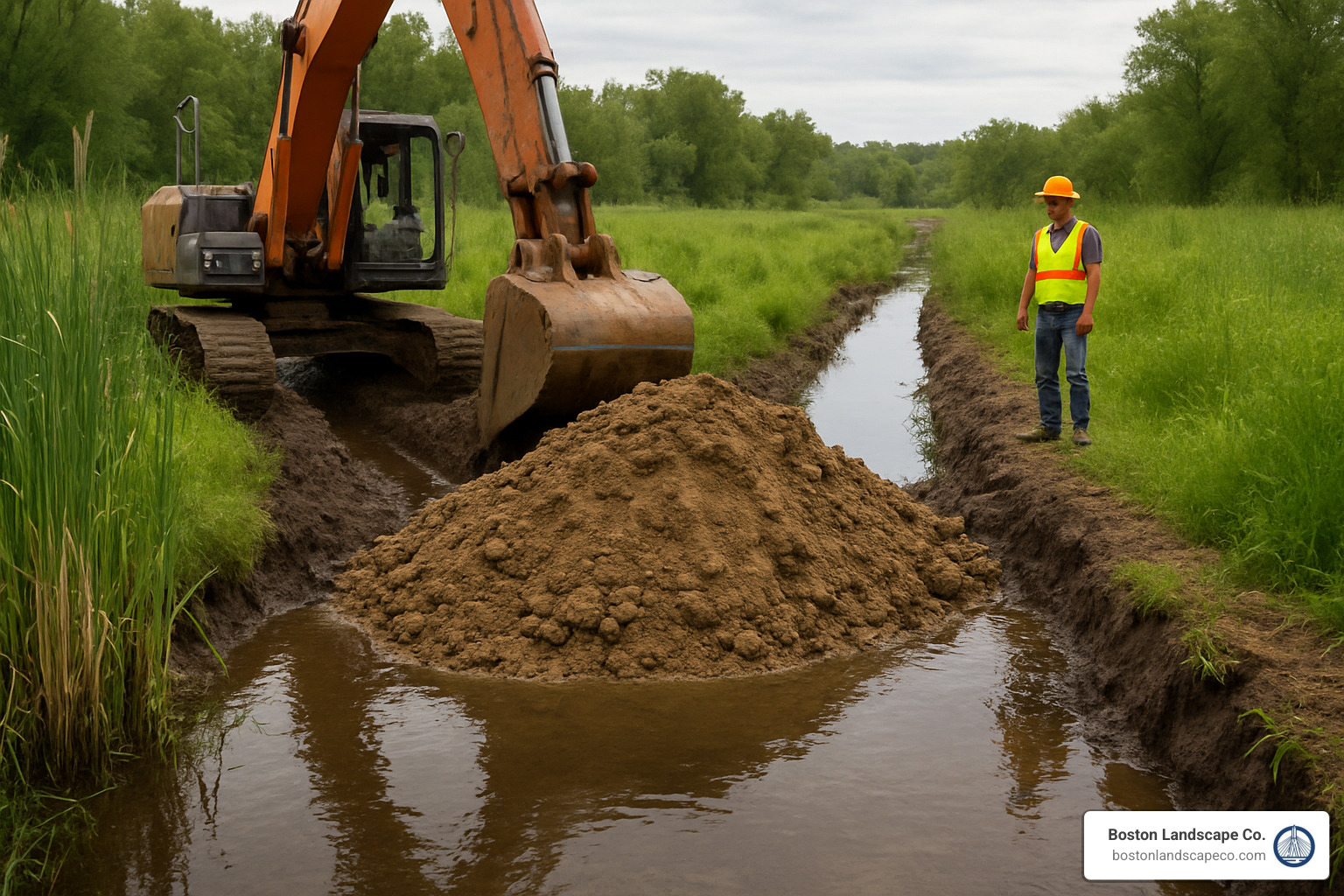
Hydrologic Modification Methods
Water is the lifeblood of wetlands, which is why getting the hydrology right is often our first priority.
Ditch plugs are one of our favorite tools when working with previously drained wetlands. Think of them as strategic dams that block drainage ditches and help restore natural water levels. We build these plugs using clay or similar materials that won’t let water seep through easily. They’re typically 8-10 feet wide at the top with gentle 3:1 side slopes—dimensions that ensure stability while creating the perfect water-holding capacity.
When more precise water control is needed, we install water control structures like risers or stoplogs. These clever devices let us fine-tune water levels with almost surgical precision. They’re particularly valuable when we want to mimic natural seasonal fluctuations that support diverse wildlife communities—lower in summer, higher in spring and fall.
Culvert modifications can work wonders for reconnecting fragmented wetland systems. I remember our work at Woodlawn Beach State Park, where installing appropriately sized culverts dramatically improved water circulation between a coastal wetland and Blasdell Creek. The change was remarkable—fish returned, plants thrived, and the whole system began functioning more naturally.
Safety matters too, which is why we always include emergency spillways at least eight feet wide and positioned 1-2 feet below the top of any berm. This “insurance policy” prevents catastrophic failures during heavy rain events—something our New England weather throws at us with increasing frequency.
We always follow the “good neighbor policy” when modifying hydrology. Nobody wants to solve one problem only to create another for the folks downstream, so proper engineering and watershed understanding are non-negotiable in our work.
Vegetation & Habitat Management
The plants we choose and the habitat features we create determine what wildlife will call our improved wetlands home.
Native seeding and planting forms the foundation of our approach. We’re passionate about using native hydrophytic species from local ecotypes—ideally sourced within 100 miles of the project site. These plants aren’t just pretty; they’re perfectly adapted to local conditions and support local wildlife. For forested wetland projects, we include at least six native tree species to create a diverse, resilient canopy.
Nature loves coarse woody debris, so we do too! Adding logs, stumps, and branches creates microhabitats that support everything from salamanders to songbirds. These woody elements also jump-start soil development by providing carbon sources for decomposers. We typically place 1-2 dead snags or logs per acre—enough to make a difference without creating hazards.
One of the simplest yet most effective techniques we use is creating micro-topography—subtle variations in ground elevation that might only measure a few inches. These small differences create a surprising diversity of hydrologic conditions, supporting a wider range of plant species and wildlife uses than flat terrain ever could.
We never forget about buffers and corridors when improving wetlands. A well-designed upland buffer filters runoff before it reaches the wetland and provides crucial high-ground refuge during flood events. Whenever possible, we also create vegetated corridors linking wetlands to facilitate wildlife movement across the landscape.
Sometimes the best approach is to let nature do some of the work. If a site is within 200 feet of mature woodlands, we often rely partly on natural regeneration, supplemented with strategic plantings. This approach not only reduces costs but often results in a more natural plant community.
Invasive Species Control & Prevention
Invasive species are the bullies of the plant world, and controlling them is often essential for successful wetland improvement.
Mechanical removal works well for certain species, especially when timed to disrupt their life cycle. We might mow phragmites just as it’s flowering, pull water chestnut before it sets seed, or cut and remove glossy buckthorn stems before they can resprout.
When mechanical methods aren’t enough, selective herbicide application becomes a necessary tool. We’re extremely careful with this approach, using targeted applications that minimize impacts on non-target species and water quality. The right herbicide, applied at the right time and in the right way, can be the difference between success and failure in controlling stubborn invasives like purple loosestrife.
Water itself can be a powerful ally through hydrologic management. By adjusting water levels strategically, we can disadvantage some invasive species while favoring natives. For example, maintaining higher water levels during the growing season can help control reed canary grass by flooding it out while many native wetland plants thrive.
For particularly challenging sites, we sometimes use solarization—covering areas with black plastic to kill invasive plants through heat and light deprivation. After the invasives are dead, we quickly replant with natives to prevent reinvasion.
Prevention deserves as much attention as control. We carefully clean our equipment between sites to avoid spreading invasive species and establish regular monitoring protocols to catch new invasions early. For more comprehensive information on managing these troublesome plants, check out our guides on invasive species removal and 5 Ways to Prevent Invasive Species.
Balancing Functions & Avoiding Trade-Offs in Wetland Improvement
Perhaps the trickiest part of wetland improvement is balancing competing functions and needs. It’s a bit like being a referee in a game where all players deserve to win.
Species-specific needs often conflict in wetland management. A perfect example comes from Minnesota, where a study on controlled wetland drawdowns (beneficial for many waterfowl) showed negative impacts on Blanding’s turtles, which need consistent water levels. These trade-offs require careful consideration and sometimes creative compromises.
The tension between flood storage and habitat functions is another common challenge. A wetland optimized for flood control might require periodic drawdowns that temporarily reduce habitat value for fish, amphibians, and aquatic invertebrates. Finding the right balance means understanding both the watershed’s flood dynamics and the life cycles of key wildlife species.
Similarly, wetlands designed primarily for water quality improvement often develop different plant communities than those managed primarily for wildlife diversity. The dense vegetation excellent for filtering pollutants might not provide the structural diversity needed by certain wildlife species.
At Boston Landscape Co., we steer these trade-offs through functional assessment and clear goal-setting. By identifying primary improvement objectives while monitoring potential impacts on non-target functions, we can implement adaptive management if unintended consequences emerge. This balanced approach helps us create wetlands that deliver multiple benefits while avoiding significant functional losses.
For more information on evaluating wetland trade-offs, the EPA’s Wetlands Program Development provides valuable resources and research on balancing multiple wetland functions.
Measuring Success & Long-Term Stewardship
For wetland improvement to truly make a difference, we need to know if our efforts are working and have a plan to keep them working for years to come. It’s like planting a garden – the real success comes not just from putting plants in the ground, but watching them thrive season after season.

Metrics That Matter
When we measure success in wetland projects, we’re looking for signs that nature is responding to our improvements. Think of it as taking the vital signs of the ecosystem.
For water patterns (hydrology metrics), we track whether water depths and seasonal fluctuations match what we designed. A properly functioning wetland should hold water for the right duration – not too long, not too short – creating that perfect “Goldilocks zone” for wetland plants and animals.
Healthy vegetation tells us a lot about wetland health. We aim for at least 80% cover of native wetland plants and keep invasive species below 10%. When we see planted trees and shrubs with survival rates above 80%, we know we’re on the right track. The plant community should look more like a natural symphony rather than a single instrument playing alone.
Wildlife response is perhaps the most rewarding metric. Hearing spring peepers calling in a recently improved wetland or spotting herons wading through the shallows confirms that our work is creating real habitat value. We track presence of target species and signs of successful breeding, like frog egg masses or bird nesting activity.
Soil health might be less visible but it’s equally important. We look for those distinctive hydric soil characteristics developing and measure organic matter building up over time – signs that the wetland is functioning as nature’s filter and carbon sink.
At Boston Landscape Co., we develop custom monitoring plans for each project and typically continue checking in for at least five years. We pay special attention during those first couple of years when the wetland is finding its new balance – like watching a toddler learn to walk.
Funding, Permitting & Technical Assistance
The good news is you don’t have to tackle wetland improvement alone or foot the entire bill yourself. Several programs exist specifically to help landowners improve wetland functions:
The Wetlands Reserve Improvement Partnership (WREP) has been a game-changer for many projects. In just one fiscal year (2010), this USDA program awarded nearly $10 million to protect and improve over 2,400 acres of wetlands nationwide. That’s a lot of improved habitat and cleaner water!
Programs like the Agricultural Conservation Easement Program (ACEP) and Environmental Quality Incentives Program (EQIP) offer both financial assistance and technical know-how to help landowners implement conservation practices, including wetland improvements.
Some states have creative funding mechanisms too. Wisconsin, for example, uses permit surcharge fees to fund wetland projects – essentially reinvesting development impacts into environmental improvements.
As for costs, wetland improvement projects vary tremendously based on complexity. Simple agricultural projects might run under $300 per acre, while complex urban improvements requiring extensive earthwork and invasive species control can exceed $300,000 per acre. These figures represent industry averages based on internet data, not Boston Landscape Co. pricing.
The permitting process can seem daunting, but it’s navigable with the right guidance. In Massachusetts, we work hand-in-hand with local Conservation Commissions under the Wetlands Protection Act. Depending on your project, you might need approvals from:
- Your local Conservation Commission
- State environmental agencies
- The U.S. Army Corps of Engineers (for projects affecting larger waterways)
- Wildlife agencies (if endangered species might be present)
Having guided countless landowners through this process, we’ve learned that early coordination with regulatory agencies saves time and headaches down the road. At Boston Landscape Co., we pride ourselves on making this process as smooth as possible while ensuring all environmental protections remain in place.
The goal of all this monitoring and stewardship isn’t just to check regulatory boxes – it’s to ensure that your improved wetland continues providing valuable ecological services for generations to come.
For more information on wetland funding opportunities, visit the USDA Natural Resources Conservation Service Wetlands Reserve Program website, which provides detailed guidance on available assistance for wetland improvement projects.
Real-World Examples & Inspiration
Nothing brings wetland improvement to life quite like seeing successful projects in action. Let’s explore some inspiring examples that showcase what’s possible when thoughtful planning meets skilled implementation.
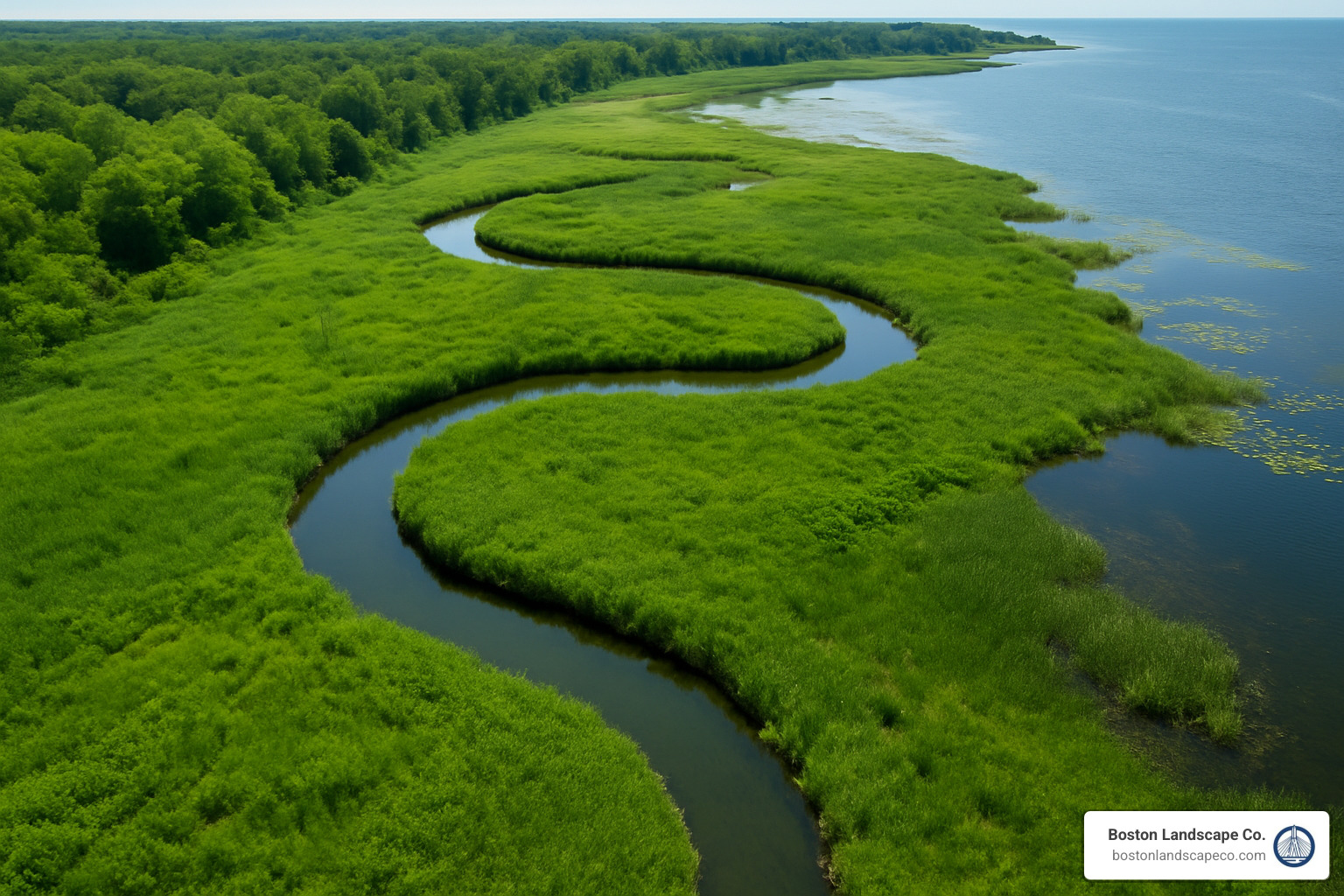
Case Study: Woodlawn Beach Coastal Wetland Improvement
The change at Woodlawn Beach State Park in New York stands as a testament to what’s possible with coastal wetland improvement:
Just imagine a 4-acre oxbow-shaped wetland that once sat disconnected and degraded. Today, it’s a thriving ecosystem thanks to some thoughtful improvements. The magic happened when engineers installed a carefully designed culvert connecting the wetland to Blasdell Creek, instantly improving water circulation throughout the system.
What makes this project special is how it addressed multiple goals simultaneously. The team carefully engineered elevations and contours to maximize the wetland’s natural filtering abilities. Before planting began, they tackled invasive species head-on, creating a clean slate for native plants to thrive.
Perhaps most impressive was their work to protect the rare Wafer Ash tree, demonstrating how wetland improvement can serve conservation goals for specific species. Visitors to Woodlawn Beach now enjoy not just improved water quality, but also educational opportunities to learn about wetland ecosystems in action.
The project shows how thoughtful improvements can transform a struggling wetland into a vibrant community asset that filters pollutants, supports wildlife, and creates beautiful spaces for people to enjoy.
Case Study: Midwest Agricultural WREP Projects
Across America’s heartland, the Wetlands Reserve Improvement Program (WREP) has been quietly changing agricultural landscapes with impressive results:
In Iowa, a $2 million investment is protecting and improving 600 acres of wetlands with a laser focus on water quality. What’s particularly clever about this project is how it integrates compatible grazing practices with wetland goals—showing farmers that improved wetlands can complement rather than compete with agricultural operations.
Along the Wabash River, WREP funding helped create floodplain corridors that connect wetlands and uplands across Indiana and Illinois. By thinking beyond isolated wetland patches to create connected systems, this project dramatically boosted wildlife habitat while enhancing the river’s natural flood storage capacity.
Nebraska’s Rainwater Basin project shows wetland improvement at landscape scale. This critical stopover for migratory birds has been improved through strategic modifications to drainage systems and vegetation management specifically designed to benefit waterfowl.
These agricultural examples highlight an important truth: with the right technical assistance and funding support, farmers and landowners can become powerful partners in wetland conservation while maintaining productive working landscapes.
Integrating Wetland Improvement with Green Infrastructure
The most innovative wetland improvement projects don’t exist in isolation—they’re integrated into broader green infrastructure networks:
In urban settings, improved wetlands work hand-in-hand with bioswales and rain gardens to create comprehensive stormwater systems. Think of it as teamwork: bioswales handle the initial filtration and conveyance, while the wetland component manages larger volumes and provides additional treatment downstream. This integrated approach maximizes benefits while creating beautiful, functional landscapes.
Climate resilience is another compelling reason to improve wetlands as part of green infrastructure networks. As New England faces more frequent intense storms, improved wetlands serve as natural sponges, absorbing floodwaters and reducing erosion. They also create wildlife corridors that allow species to adapt as climate conditions change.
Perhaps most exciting is how urban wetland improvements create outdoor classrooms where communities connect with nature. At Boston Landscape Co., we’ve seen how these projects spark curiosity and environmental stewardship, especially among young people experiencing wetland ecosystems for the first time.
We specialize in creating these integrated systems, where wetland improvement works in concert with other green infrastructure elements. For complementary approaches that improve overall watershed health, check out our page on bioswales that explains how these features can work alongside improved wetlands.
Frequently Asked Questions about Wetland Improvement
What permits are required for a wetland improvement in Massachusetts?
Working in Massachusetts wetlands means navigating several layers of protection – and for good reason! These valuable ecosystems deserve careful oversight. For your wetland improvement project, you’ll typically need:
The process starts with filing a Notice of Intent (NOI) with your local Conservation Commission. This document explains what you plan to do and how you’ll protect wetland resources. After a public hearing, the Commission issues an Order of Conditions that specifies how your work must proceed.
Larger projects may require a Water Quality Certification from MassDEP to ensure your improvements won’t harm water quality. If your wetland connects to navigable waters, you’ll also need approval from the Army Corps of Engineers.
Is your site home to rare plants or animals? If you’re working in priority habitat areas, you’ll need a MESA Review from the Natural Heritage & Endangered Species Program.
Don’t let this list intimidate you! At Boston Landscape Co., we’ve guided countless landowners through this process. While permitting typically takes 3-6 months, our experience helps avoid common pitfalls that could delay your project. We prepare all necessary documentation and represent your project at public hearings, allowing you to focus on the exciting improvements ahead.
How long does it take for improved functions to stabilize?
Nature works on its own timeline, and patience is definitely rewarded in wetland improvement projects. Different wetland functions develop at different rates:
Your wetland’s hydrology typically settles into its new patterns fairly quickly – usually within 1-2 years after construction. This is when you’ll see those water level patterns stabilize according to your design.
Emergent vegetation like cattails and rushes establishes relatively quickly too, typically creating robust communities within 3-4 years. These plants quickly begin filtering water and providing wildlife habitat.
If your project includes shrub communities, expect to wait 5-10 years to see them reach maturity and full functionality. The wait is worthwhile, as these plants provide excellent wildlife cover and food sources.
Forested wetlands require the most patience, with 30+ years needed for full canopy development. However, even young trees begin providing benefits long before they reach maturity.
Some soil functions develop within the first few years, while others, particularly organic soil formation, may take decades or even centuries to fully develop.
We design our improvement projects with this natural timeline in mind, often including a mix of elements that provide both immediate benefits and long-term ecological value. It’s quite rewarding to watch your wetland mature and evolve over the years!
Can limited grazing or haying continue after improvement?
Yes! Contrary to what some might think, wetland improvement doesn’t always mean excluding all human activity. In many cases, especially agricultural settings, limited grazing or haying can coexist beautifully with your improved wetland.
The Wetlands Reserve Improvement Program (WREP) specifically includes provisions allowing landowners to retain grazing rights when the activity supports long-term wetland goals. We’ve helped many landowners develop management plans that benefit both their agricultural operations and their wetlands.
The key is finding the right balance. Timing is crucial – scheduling grazing to avoid sensitive wildlife breeding periods helps protect new populations. Appropriate stocking rates prevent overgrazing while still managing vegetation. Temporary exclusion fencing around particularly sensitive areas provides protection where needed most.
Many of our clients have found success with rotational grazing systems that allow wetland vegetation to recover between grazing periods. We help landowners monitor vegetation response and make adjustments as needed.
At Boston Landscape Co., we believe in practical solutions that work for both landowners and the environment. Your improved wetland can be part of a working landscape that provides multiple benefits – from agricultural production to wildlife habitat to water quality improvement. It’s not an either/or proposition, but rather finding the sweet spot where ecological and agricultural goals align.
Conclusion
Imagine your Massachusetts wetland transformed from a struggling ecosystem to a thriving natural powerhouse. That’s the promise of wetland improvement – enhancing what already exists to work better for both nature and people.
Throughout this guide, we’ve explored how wetland improvement differs from restoration and creation by focusing on boosting specific functions within existing wetland boundaries. Whether improving water filtration capabilities, expanding wildlife habitat, or increasing flood storage capacity, these projects deliver remarkable environmental benefits that extend far beyond the wetland’s edge.
In today’s changing world, improved wetlands serve as critical infrastructure against climate challenges. These improved natural systems absorb increasingly intense storm waters, filter pollutants from our watersheds, provide refuge for wildlife facing habitat loss, and create peaceful natural spaces where communities can connect with the environment.
The beauty of wetland improvement lies in its flexibility. Each project can be custom to your specific site conditions and goals – whether you’re managing a small backyard wetland, overseeing municipal conservation land, or stewarding a larger natural area. The techniques we’ve explored can be scaled and adapted to fit virtually any situation or budget.
At Boston Landscape Co., we find deep satisfaction in guiding New England property owners through the entire wetland improvement journey. From those first exciting conversations about what’s possible, through the sometimes-complex permitting process, to the careful implementation and long-term care of your improved wetland – our team brings decades of experience working with Massachusetts wetlands and navigating the regulatory landscape that protects these sensitive ecosystems.
We believe in creating sustainable solutions that work with nature rather than against it. Our approach combines technical expertise with a genuine appreciation for these special places and the important role they play in our landscape.
Ready to find the potential hiding in your wetland? We serve communities throughout the Boston area, including Bedford, Billerica, Burlington, Carlisle, Concord, Lexington, and beyond. Let’s start a conversation about how wetland improvement could benefit your property and the broader environment.
For more information about our comprehensive approach to wetland management, visit our Wetland Services page. Together, we can improve these valuable ecosystems for generations to come.
