
Why a Smart Irrigation Setup Makes Sense for Waltham Homeowners
Waltham smart irrigation setup is one of the smartest investments you can make for your Greater Boston property. Here’s a quick overview of what you need to know:
- What it is: A smart irrigation system uses weather data, soil sensors, and app-based controls to water your lawn only when needed.
- Why Waltham: Rocky New England soil, harsh winters, and rising water costs make efficient watering especially important here.
- Water savings: Smart controllers can reduce water usage by 15–30%, saving over 7,000 gallons and roughly $430 per year.
- Installation cost: Based on internet data, most homeowners invest between $2,500 and $10,000+ for a professionally installed system. These are average costs found online and not the actual prices of Boston Landscape Co. (prices vary widely by property size and complexity).
- Local rebates: The Littleton Water Department offers a $50 bill credit for qualifying smart controller installations on systems with at least four zones.
- Lifespan: With proper care, pipes and fittings last 20+ years, and heads and valves last 5–25 years.
Traditional sprinkler timers water on a fixed schedule — rain or shine. Smart systems are different. They adapt to real conditions, skipping a watering cycle after rainfall and adjusting for heat and soil moisture automatically. For Waltham properties with varied sun exposure, slopes, and dense plantings, that kind of precision matters.
I’m Steve Schumacher, owner of Boston Landscape Co. since 1991, and over three decades of working on Greater Boston landscapes has shown me how a well-designed Waltham smart irrigation setup can transform both the health of a lawn and the size of a water bill. Let’s walk through everything you need to know to plan, install, and maintain one the right way.
Understanding the Benefits of Smart Watering
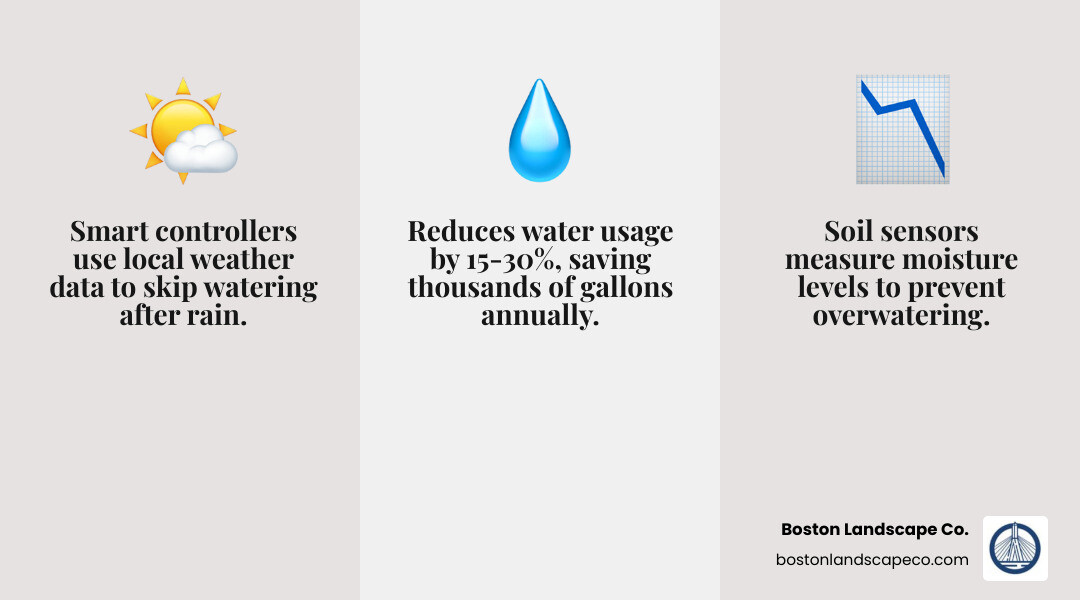
When we talk about a Waltham smart irrigation setup, we aren’t just talking about a fancy timer. We are talking about a system that thinks for itself. In the past, you’d set your sprinklers to run at 5:00 AM every Monday, Wednesday, and Friday. If it poured rain on Tuesday night, your sprinklers would still dutifully soak your already-saturated lawn on Wednesday morning.
Smart systems change the game by using real-time data. They connect to local weather stations via Wi-Fi to understand exactly how much rain has fallen and how much more is expected. This prevents the “watering during a thunderstorm” embarrassment that many of us have seen in our neighborhoods. Beyond just looking better to your neighbors, this technology ensures your irrigation system is working for your plants, not against them.
Key Features of a Waltham Smart Irrigation Setup
If you are looking to upgrade, there are several key features that define a modern automatic sprinkler system.
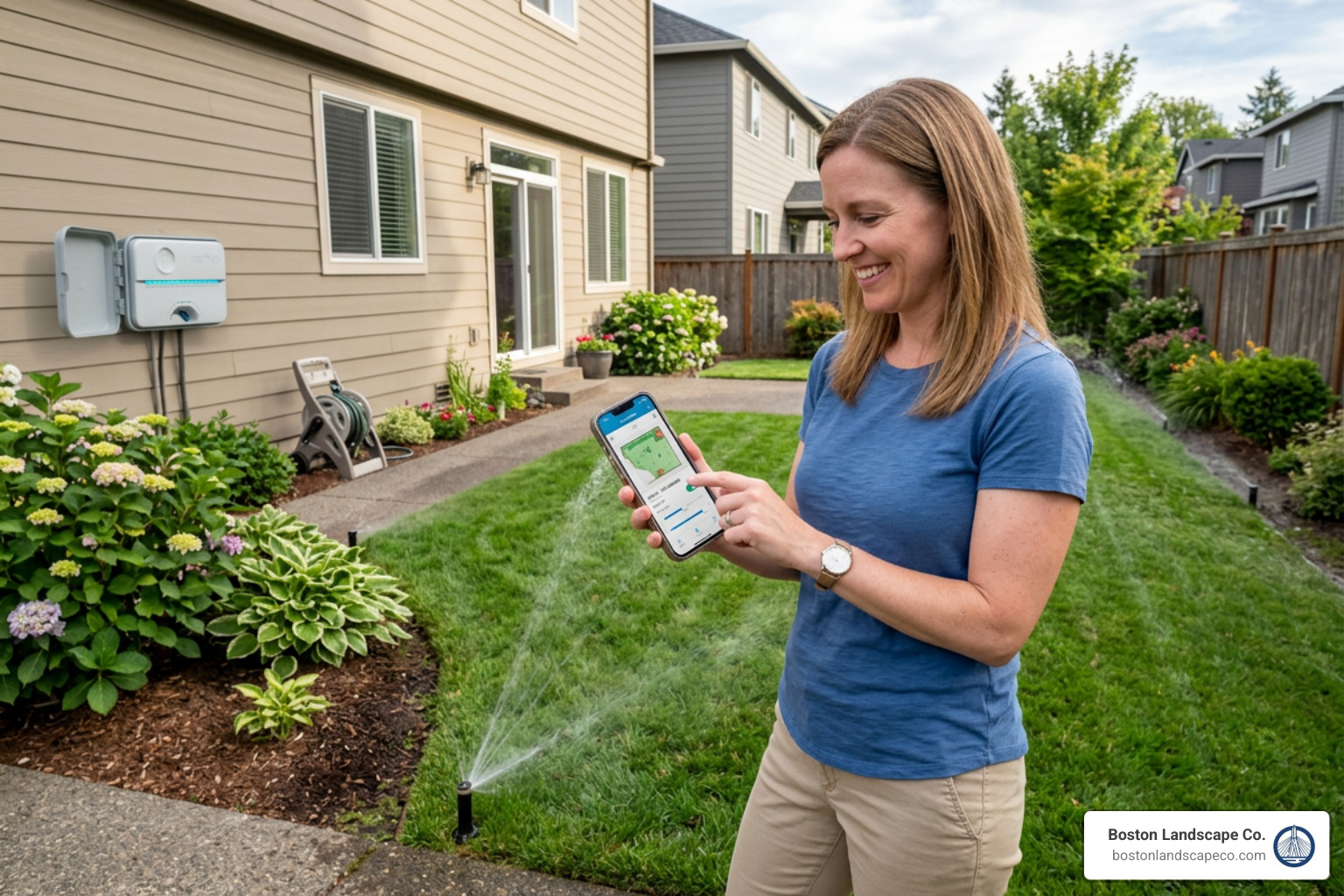
- App Control: Most modern controllers allow you to start, stop, or adjust your zones from your phone. Whether you’re at work or on vacation, you have total control.
- Weather Integration: The controller pulls data from local weather stations. If the forecast calls for a 90% chance of rain, the system skips the next cycle.
- Soil Moisture Sensors: These sensors are buried in the root zone. If the soil is already moist enough, the system won’t run, regardless of what the timer says.
- Flow Monitoring: High-end systems can detect leaks. If a pipe bursts or a head is knocked off by a mower, the system can shut itself down and send you an alert.
In the Waltham area, we frequently see top-tier brands like Hunter (specifically the Hydrawise platform), Rain Bird, and Rachio. According to EPA’s research on smart controllers, these devices can save thousands of gallons of water every year by simply being more efficient.
Optimizing Irrigation Zones for Local Landscapes
Waltham properties are rarely perfectly flat, square boxes. You might have a sunny front lawn, a shaded backyard under mature oaks, and a steep slope with flower beds. A smart setup allows us to optimize “zones” based on these specific needs.
For example, grass and shrubs have very different thirst levels. By using drip irrigation for lawns and garden beds, we can deliver water directly to the roots, reducing evaporation by 30-50% compared to traditional spray heads. We also consider water pressure and sun exposure for each zone to ensure “head-to-head” coverage, meaning every inch of your lawn gets exactly what it needs without creating soggy puddles or dry brown spots.
Smart Home Integration and Water Savings
For the tech-savvy homeowner, many smart controllers now integrate with platforms like Home Assistant or Apple HomeKit. This allows your irrigation to become part of your larger smart home ecosystem. Imagine your outdoor lights turning on when the sprinklers start, or receiving a notification on your smart TV if a leak is detected.
The environmental impact is significant too. Beyond the 15-30% reduction in water usage, smart systems help prevent runoff—which carries fertilizers and pollutants into our local waterways. Even for specialized areas like smart greenhouse irrigation, the ability to monitor temperature and humidity alongside watering ensures a perfect growing environment year-round.
Planning Your Waltham Smart Irrigation Setup
Planning is the most critical stage of any irrigation system install. We start with a comprehensive site assessment. We look at your water pressure (measured in PSI), your flow rate (gallons per minute), and the specific layout of your landscape.
Impact of Rocky Soil and Frost Conditions
Waltham sits on some famously “bony” New England ground. If you’ve ever tried to plant a tree here, you know you’re likely to hit a “Waltham potato” (a large rock) within five inches. This impacts how irrigation systems are installed.
- Trenching Depth: We typically bury lines 8-12 inches deep. This is deep enough to stay protected from aerators and lawn mowers, but shallow enough to be serviceable.
- Rocky Soil Costs: Trenching in rocky soil can be 20-50% more labor-intensive than in sandy areas. We use specialized equipment like vibratory plows or trenchers designed for New England’s tough geology.
- Freeze Protection: Because the ground freezes deep in Massachusetts, the system must be designed so every drop of water can be blown out with compressed air in the fall.
The Installation Process: Permits and Backflow Preventers
You can’t just hook a sprinkler system up to your outdoor faucet and call it a day. In Waltham, municipal codes require a backflow preventer installation. This device ensures that “dirty” irrigation water (which might contain lawn fertilizers or pet waste) can never flow backward into your home’s clean drinking water supply.
The installation process usually involves:
- Permitting: Obtaining the necessary local plumbing permits.
- Plumbing: A licensed professional connects the system to your main water line, usually inside the basement.
- Trenching: Laying the pipe throughout the yard.
- Wiring: Connecting the valves to the smart controller.
- Testing: Walking through every zone to ensure perfect coverage and no leaks.
Costs, Rebates, and Long-Term Value
Investing in a Waltham smart irrigation setup is exactly that—an investment. While the upfront cost is higher than a manual hose and sprinkler, the long-term ROI is impressive.
| Feature | Traditional Timer | Smart Controller |
|---|---|---|
| Control | Manual / Fixed Schedule | App-based / Real-time |
| Weather Adjustments | None (unless manual) | Automatic via Wi-Fi |
| Water Usage | High (often wasteful) | 15-30% lower |
| Annual Savings | $0 | Approx. $430 |
| Resale Value | Moderate | High (approx. 83% ROI) |
Note: Table data based on industry averages and EPA research.
Investment and Rebates for a Waltham Smart Irrigation Setup
Based on internet data and national averages, a new lawn watering system installation typically ranges from $1,600 to $12,000+. For a standard quarter-acre lot in the Waltham area, most homeowners find themselves investing between $2,500 and $8,500+. These figures are average costs found online and do not represent the specific pricing of Boston Landscape Co., as every property has unique challenges (like those rocks we mentioned!) and real-world variability.
To help offset these costs, check with local utilities. For example, the Littleton Water Department has offered $50 rebates for qualified smart controllers on systems with at least four zones. While Waltham’s specific programs vary by year, many Massachusetts communities offer similar incentives to encourage water conservation.
According to strong ROI data from the National Association of Realtors, a professionally installed irrigation system can recover over 80% of its cost when you sell your home. It’s one of the few landscaping upgrades that truly pays for itself.
Longevity and Common Repair Costs
A well-maintained system is built to last. You can expect your PVC or poly pipes to last 20 years or more. Sprinkler heads and valves have a shorter lifespan, typically 5 to 25 years depending on the quality of the components and how often they are serviced.
Common irrigation repairs in Waltham include:
- Broken Heads: Usually caused by lawn mowers or snowplows ($50 – $150).
- Valve Leaks: Often due to debris or age ($150 – $300).
- Controller Issues: Often solved by a simple Wi-Fi reset or software update.
When you factor in the roughly $430 in annual water savings, the system often pays for its own maintenance costs.
Maintenance and Winterizing Your Smart System
In Massachusetts, “winterizing” isn’t optional—it’s a requirement. If water stays in your pipes when the ground freezes, those pipes will burst, leading to a very expensive mess in the spring.
A professional winterization involves hooking up a high-volume air compressor to the system and “blowing out” every zone until only air remains. In the spring, we perform a “startup” service where we check for leaks, clean clogged nozzles, and ensure the smart controller is still synced to the local weather station. Mid-season inspections are also a great idea to ensure your lawn maintenance is on track and your plants are getting the right amount of water as the summer heat ramps up.
DIY vs. Professional Installation
We often get asked: Can you install your own irrigation system?
Technically, yes. You can buy a “sprinkler in a box” kit at a big-box store. However, for a true Waltham smart irrigation setup, the DIY route is fraught with peril. Between the specialized plumbing required for backflow preventers, the electrical work for the controller, and the back-breaking labor of trenching through rocky soil, most homeowners find that a professional installation is worth every penny. Professionals provide warranties, ensure code compliance, and have the heavy machinery needed to get the job done in a day or two rather than three weeks of weekends.
Frequently Asked Questions about Waltham Irrigation
How much money can I save with smart irrigation?
Most Waltham residents see a 15-30% reduction in their water bills. Based on EPA data, this averages out to about $430 per year. Over the life of the system, this can save you thousands of dollars while keeping your landscape healthier.
Do I need a permit for irrigation in Waltham?
Yes. Any time you connect a system to the municipal water supply, a plumbing permit is required to ensure a backflow preventer is correctly installed. This protects the city’s water supply and your family’s health.
How many zones does a typical Waltham yard need?
It depends on the size and complexity. A small yard (under 5,000 sq. ft.) might only need 2-3 zones. A medium yard (5,000-10,000 sq. ft.) usually requires 3-5 zones. Larger properties or those with diverse landscaping (lawns, woods, gardens) often need 6 or more zones to water efficiently.
Conclusion
A Waltham smart irrigation setup is more than just a convenience; it’s a commitment to a healthier lawn and a more sustainable home. By leveraging the latest in weather-sensing technology and professional design, you can stop worrying about brown spots or wasted water and start enjoying a lush, green outdoor space.
At Boston Landscape Co., we’ve been helping homeowners across Waltham, Stoneham, Billerica, and the Greater Boston area since 1991. We understand the unique challenges of New England soil and the importance of a system that can withstand our winters. Whether you are looking for a brand-new installation or want to upgrade your existing system with smart technology, we are here to help.
Ready to take the guesswork out of watering? Request an estimate for your Waltham irrigation project today and let us help you grow a better landscape.
