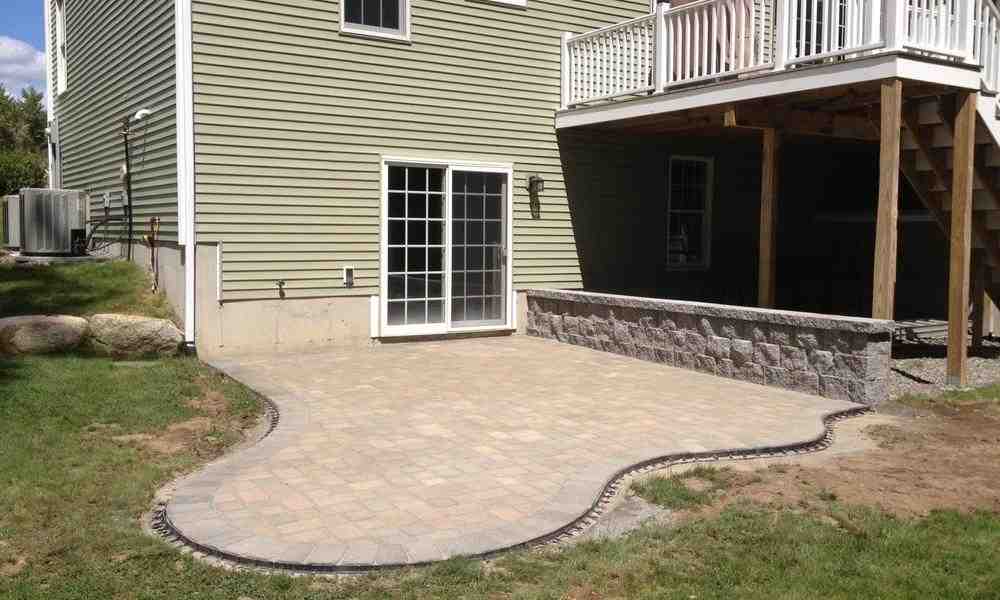
Why a Decorative Retaining Wall Could Be the Best Upgrade for Your Yard
A decorative retaining wall does two jobs at once: it holds back soil on a slope and makes your yard look great. Here’s a quick look at what they offer:
Popular decorative retaining wall options:
| Type | Best For | Lifespan |
|---|---|---|
| Natural stone | Rustic, timeless look | Centuries |
| Modular concrete blocks | Versatile, modern designs | 50-100 years |
| Timber | Warm, natural aesthetic | 10-25 years |
| Gabion (wire + rock) | Industrial, modern style | 30-60 years |
| Brick | Classic, polished finish | 50-100 years |
Whether you’re dealing with a steep slope in your backyard or just want to add visual interest to a flat yard, a decorative retaining wall can solve real problems while boosting your curb appeal significantly.
With over 22,000 retaining wall projects featured on Houzz alone, it’s one of the most popular outdoor upgrades homeowners are making right now — and for good reason.
From creating terraced garden beds to building the perfect backdrop for an outdoor fire pit, the possibilities are wide open. This list covers the best ideas, materials, and practical tips to help you get it right.
I’m Steve Schumacher, owner of Boston Landscape Co. since 1991, and I’ve spent over three decades designing and installing decorative retaining walls for homeowners across the Greater Boston area. Let’s walk through everything you need to know to make a smart, beautiful choice for your property.
The Functional Beauty of a Decorative Retaining Wall
When most people think of a retaining wall, they imagine a boring, gray slab of concrete. But a decorative retaining wall is so much more than a structural necessity. While its main job is to hold back soil and prevent your backyard from sliding into your neighbor’s patio, it also acts as a primary design element that defines the character of your landscape.
In our experience working in towns like Winchester and Lexington, we see many properties with significant elevation changes. A well-designed wall transforms these “problem areas” into usable, flat land. According to the experts at PJCArchitecture, the primary purpose of these walls is to create level areas on a sloped site, which prevents erosion and controls water run-off. This level of control is essential for protecting your home’s foundation and keeping your garden beds from washing away during a classic New England Nor’easter.
Beyond the engineering, there is the undeniable “wow” factor. A decorative retaining wall can be used to frame a flower bed, highlight a specific area of your yard, or even integrate your house’s architecture into the surrounding greenery. If you are looking for more technical details on how these structures are engineered, you can find more information about our retaining wall specialists who handle these complex builds every day.
Creating Multi-Level Terraced Gardens
If your backyard feels like a mountain you have to climb just to mow the lawn, terracing is your best friend. By building a series of shorter decorative retaining walls, we can create a “staircase” of level planting beds. This adds incredible visual depth to your landscape.
Imagine a cascading array of flowers and shrubs, where each level offers a new opportunity for color and texture. You could have a herb garden on the bottom tier for easy access, a row of hydrangeas in the middle for that classic Massachusetts charm, and privacy-providing evergreens on the top. Terraced gardens don’t just look pretty; they make gardening easier on your back and improve water absorption for your plants.
Freestanding Walls vs. Retaining Walls
It is a common mistake to use these terms interchangeably, but they serve very different roles.
- Retaining Walls: These are the heavy lifters. They require structural footings and are designed to resist the lateral pressure of soil on a slope. If you have a hill, you need a retaining wall.
- Freestanding Walls: These are built on flat ground. Their purpose is to divide spaces, create “outdoor rooms,” or provide extra seating. They don’t have soil pushing against them, so they are often more about style and space management.
Understanding the difference is key to a successful project. A retaining wall needs to be built with a slight “setback” (leaning into the hill) to stay stable, while a freestanding wall stands straight up to act as a beautiful boundary or a seat wall for your fire pit area.
Choosing the Best Materials for Your Decorative Retaining Wall
The material you choose will dictate the maintenance, cost, and overall vibe of your yard. In the Greater Boston area, we often look for materials that can handle our harsh winters while still looking elegant.
Natural Stone for a Timeless Decorative Retaining Wall
There is something about natural stone that just feels right in a New England landscape. Whether it’s locally sourced fieldstone or chiseled granite, natural stone walls exude a rustic charm that only gets better with age.
- Pros: Incredible longevity (can last centuries), unique aesthetics, and high durability.
- Cons: Generally more expensive and labor-intensive to install.
Stacked flagstone arrangements or large boulders can create organic boundaries that follow the natural contours of your property. If you want a wall that looks like it has been there since the 1800s, natural stone is the way to go.
Modern Modular Blocks for a Functional Decorative Retaining Wall
For homeowners who prefer a cleaner, more contemporary look, modern concrete block systems are a fantastic choice. These aren’t your grandfather’s cinder blocks. Modern systems like the AB Aztec or Ashlar Tandem offer textures that mimic tumbled, chiseled, or quarried stone.
These segmental blocks are engineered to interlock, providing massive structural support for steep slopes. They are also very versatile, allowing for smooth curves and precise geometric patterns. For those interested in seeing how these modern materials can be styled, you can find more info about hardscaping in Boston MA to see how we blend these modern systems into traditional neighborhoods.
Innovative Ways to Integrate Your Wall with Outdoor Living
A decorative retaining wall shouldn’t just stand alone; it should be the backbone of your outdoor living space. By thinking of your wall as a multi-functional piece of furniture, you can maximize your yard’s potential.
Integrated Seating and Outdoor Kitchens
One of our favorite trends in towns like Concord and Wellesley is the “seat wall.” By adding a smooth bench cap to a wall that is roughly 18 to 24 inches high, you create permanent seating for guests. This is perfect around a fire pit or a patio area where you don’t want to clutter the space with extra chairs.
You can also use these walls to house your outdoor kitchen. A decorative retaining wall can act as the base for stone counters, grills, and prep stations, creating a seamless transition between your cooking area and the rest of the garden.
Enhancing Aesthetics with Lighting and Plants
To really make your wall pop after the sun goes down, integrated lighting is a must. LED strips tucked under the capstones (under-cap lighting) create a soft glow that highlights the texture of the stone and makes your walkways safer.
Plants also play a huge role in “softening” the hard edges of a stone or block wall. We recommend “spillers”—plants that cascade over the edge of the wall.
- Creeping Phlox: Provides a carpet of spring color.
- Creeping Thyme: Smells amazing and is very hardy.
- Bacopa: Creates a dramatic white flower spill.
- Sedum: Perfect for low-maintenance, drought-tolerant spots.
You can even create a “living wall” by planting small succulents or mosses directly into the crevices of a natural stone wall, giving it an established, “secret garden” feel.
Essential Installation Factors for Massachusetts Homeowners
Building a wall in Massachusetts requires a bit more planning than in warmer climates. Between our local building codes and our famous “frost heaves,” you want to make sure the job is done right the first time.
Before you even pick up a shovel, you must call 811 to locate underground utilities. It’s a free service, and it prevents you from accidentally taking out the neighborhood’s internet or hitting a gas line. Also, keep in mind that permits may be required for taller walls. In many of our service areas, like Medford and Somerville, any wall over 3 or 4 feet high usually requires a permit and potentially a structural engineer’s stamp.
Managing Drainage and the New England Frost Line
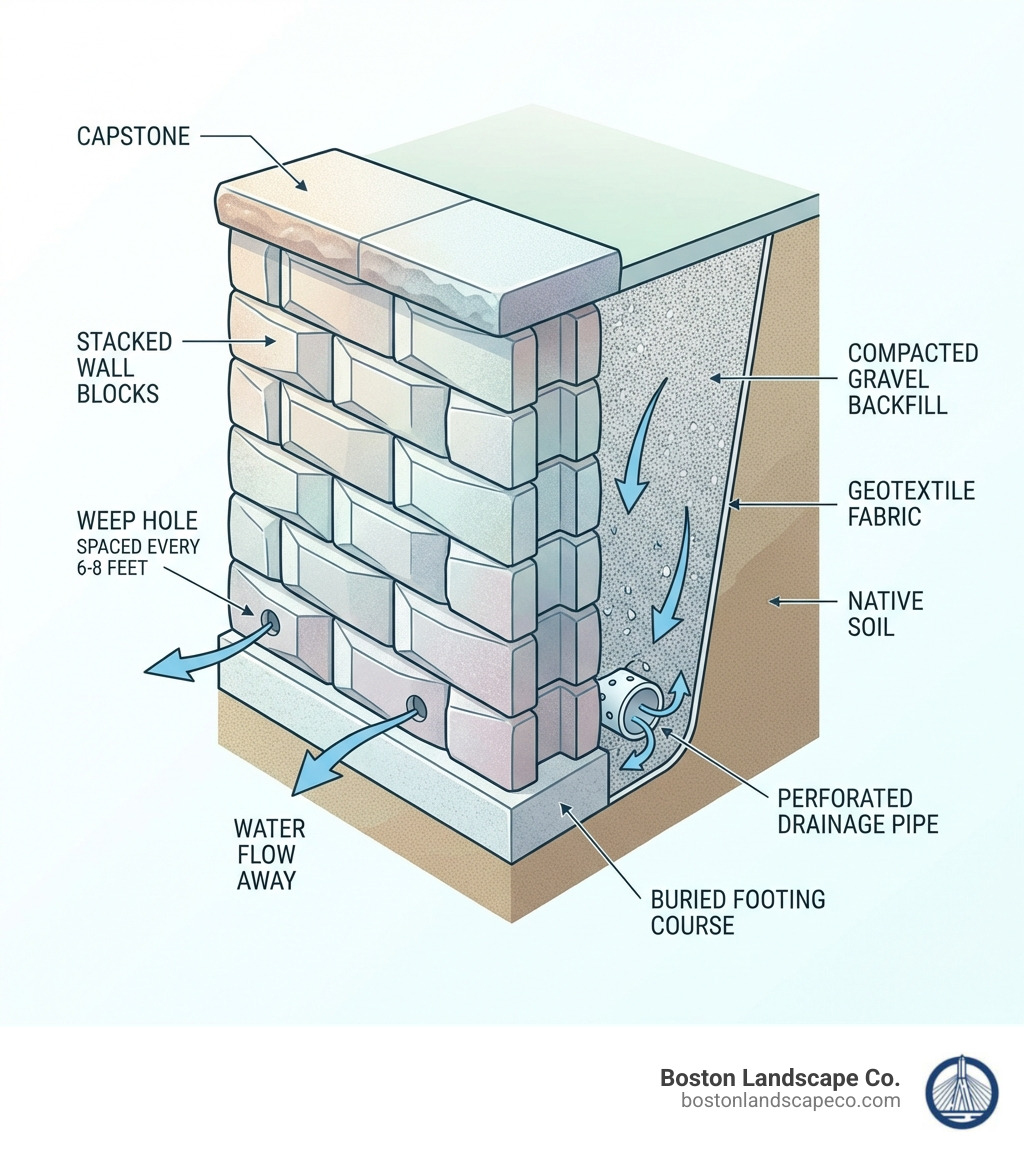
The “silent killer” of retaining walls is water pressure. When soil gets wet, it gets heavy. If that water has nowhere to go, it will eventually push your wall over. To prevent this, we use several key components:
- Gravel Backfill: At least 12 inches of crushed stone behind the wall to allow water to move.
- Perforated Pipe: A “French drain” at the base of the wall to carry water away.
- Weep Holes: Small openings every 6 to 8 feet along the wall face to let trapped moisture escape.
In Massachusetts, we also have to deal with the frost line. If your wall’s foundation (the footing) isn’t set deep enough, the ground freezing and thawing will cause the wall to shift and crack. A solid footing of compacted gravel is the foundation of every stable wall we build.
Understanding the Investment: Costs and Longevity
When planning your project, it’s important to have a realistic idea of the budget. Please note that the following figures are average costs based on online and internet data and do not represent the actual pricing of Boston Landscape Co. Every property is unique, and factors like site access, soil type, and the height of the wall will impact the final quote.
Average Costs for Installation
| Material | Estimated Cost per Sq. Ft. (Installed) |
|---|---|
| Poured Concrete | $15 – $45 |
| Interlocking Blocks | $25 – $75 |
| Natural Stone | $40 – $150+ |
| Timber | $15 – $35 |
As you can see, the range is quite wide. A simple timber wall might be on the lower end, while a complex, multi-level natural stone project in a hard-to-reach backyard could easily reach the higher end of the spectrum. For a professional-looking result that lasts, most homeowners find that investing in quality materials and proper drainage pays off in the long run. To learn more about how we approach these projects, you can check out our guide on hardscape design and build.
Maintenance and Longevity:
- Concrete Blocks: Last 50–100 years. Require very little maintenance, though an occasional power wash keeps them looking new.
- Natural Stone: Can last centuries. May require “re-pointing” (fixing the mortar) if it wasn’t built as a dry-stack wall.
- Timber: Lasts 10–25 years. Even pressure-treated wood will eventually rot in our damp Massachusetts climate.
Frequently Asked Questions about Decorative Retaining Walls
What is the most affordable material for a retaining wall?
Generally, pressure-treated timber or basic interlocking concrete blocks are the most budget-friendly options. Gabion walls (wire baskets filled with rock) are also a surprisingly affordable and modern choice. That while timber is cheaper upfront, it has the shortest lifespan and will need to be replaced much sooner than stone or concrete.
How high can I build a wall without a permit in Massachusetts?
In most Massachusetts towns, you can typically build a wall up to 4 feet high without needing a professional engineering plan or a specific building permit. However, this varies by municipality. Some towns have stricter rules, especially if the wall is near a property line or a wetland. Always check with your local building department in places like Stoneham or Billerica before starting.
How do I maintain my retaining wall for maximum longevity?
The best maintenance is prevention. Regularly check that your weep holes aren’t clogged with dirt or debris. If you have a stone or block wall, look for signs of “efflorescence” (a white, powdery salt buildup), which can be cleaned with a specialized solution. For timber walls, applying a wood preservative every few years can help extend its life against the New England elements.
Conclusion
A decorative retaining wall is one of the few home improvements that offers a perfect balance of function, safety, and sheer beauty. Whether you are looking to reclaim a sloped backyard in Waltham or add a sophisticated entrance to your home in Reading, the right wall can completely transform how you use your outdoor space.
At Boston Landscape Co., we take pride in building structures that are as durable as they are beautiful. From the initial design to the final stone placement, our team is dedicated to creating landscapes that stand the test of time.
Ready to turn that challenging hill into your favorite part of the yard? We would love to help you bring your vision to life. You can learn more about our hardscape design and build services or contact us today for a consultation. Let’s build something great together!