
Retaining wall specialists: 7 Powerful Reasons to Hire Pros 2025
Why Professional Retaining Wall Solutions Matter
When it comes to changing sloped landscapes into functional, beautiful spaces, retaining wall specialists make all the difference. These certified professionals don’t just stack blocks or pour concrete—they bring specialized knowledge in design, engineering, and construction to create walls that stand the test of time while enhancing your property’s value and usability.
As someone who’s spent three decades in the landscaping industry, I’ve personally overseen hundreds of retaining wall installations. What I’ve learned is that these structures do far more than hold back earth—they can completely transform unusable slopes into functional outdoor living spaces, prevent costly erosion damage, manage water flow, and add tremendous visual appeal to your property.
But here’s the reality: retaining walls face enormous pressure from soil and water. A wall that’s even slightly improperly built can fail dramatically, sometimes within just a few years. That’s why professional expertise isn’t just nice to have—it’s essential for long-term stability and safety.
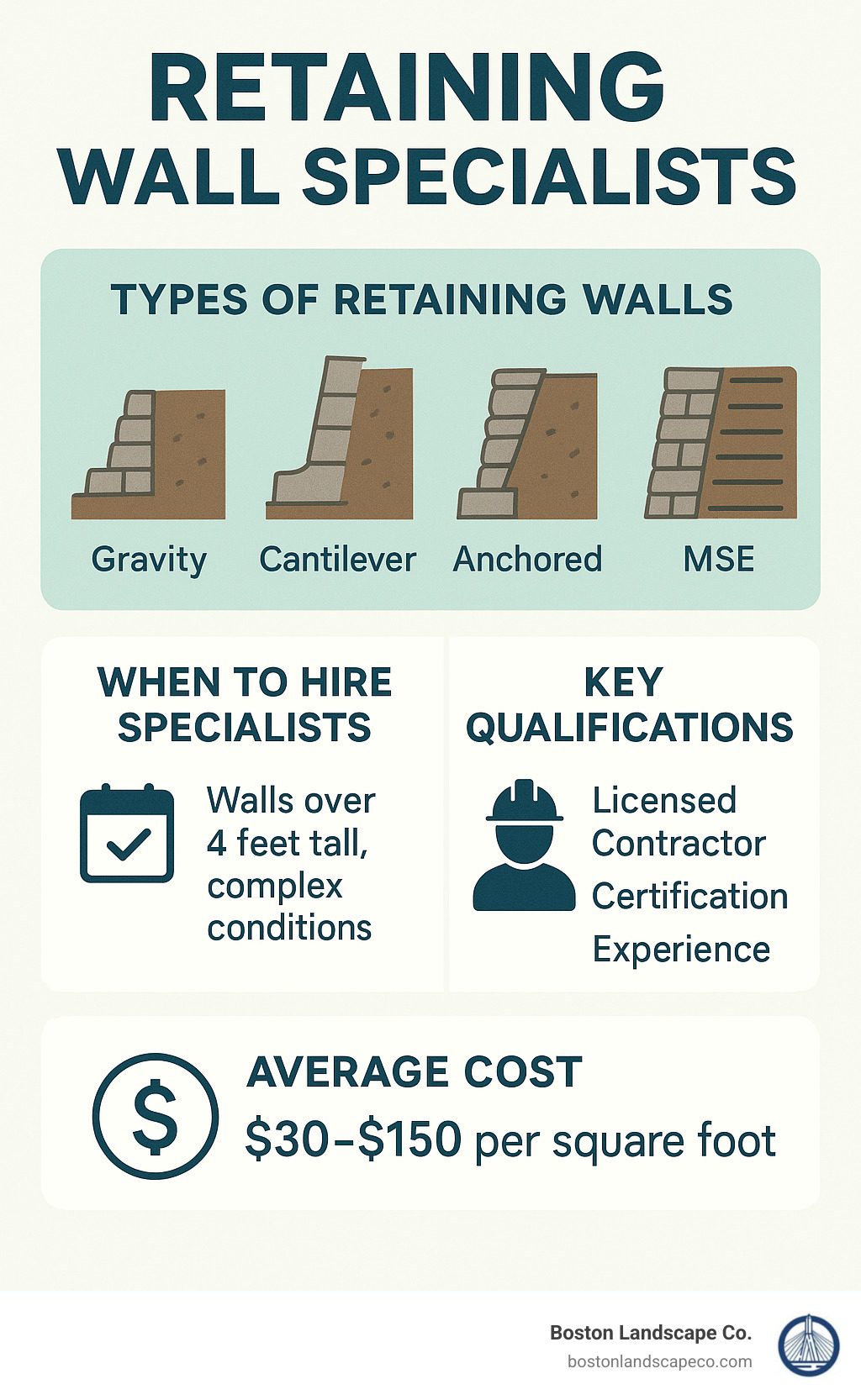
When should you call in the pros? Generally, retaining wall specialists become necessary for walls over 4 feet tall, properties with complex soil conditions, or any situation where structural integrity is critical. The right specialist will bring licensure, specific retaining wall certification, structural engineering knowledge, and a portfolio of successful projects.
While professional installation typically costs between $30-$150 per square foot (depending on materials, height, and complexity), this investment delivers professional design, proper drainage solutions, guaranteed structural integrity, and compliance with local building codes. These average costs are based on internet data and not actual costs for Boston Landscape Co.
When considering your retaining wall project, you might also explore related services that complement your outdoor space change. Retaining wall specialists often work alongside other hardscape professionals to create comprehensive outdoor living solutions that include Hardscape installation, Brick patio installation, or even an Outdoor kitchen design that integrates seamlessly with your new landscape features.
A well-built retaining wall isn’t just functional—it’s an investment in your property that can provide decades of service while enhancing your outdoor living experience in ways you might not have imagined possible.
Retaining Walls 101 & Common Types
Retaining walls are the unsung heroes of landscaping – they hold back earth that would otherwise slide downhill while creating usable space on sloped properties. These structures don’t just solve problems; they create opportunities for beautiful, functional outdoor spaces.
“They don’t call it Texas Hill Country for nothing,” as one specialist puts it. “In our region, landscapes range from completely level to steeply graded.” The same is true throughout Massachusetts, where our varied topography creates both challenges and opportunities for property owners.
How Retaining Walls Work
When you look at a retaining wall, you’re seeing a structure that’s constantly working against powerful natural forces. Every day, it battles two invisible opponents:
Lateral earth pressure pushes horizontally against the wall as soil tries to move to its natural angle. And hydrostatic pressure builds up when water saturates the soil behind the wall, dramatically increasing the force.
A well-designed wall counters these forces through several key elements. It starts with a sturdy base course that distributes weight evenly into the ground. Proper backfill material allows water to drain rather than build up. The engineering accounts for your specific soil conditions, and carefully designed drainage systems prevent water from accumulating behind the wall.
As one retaining wall specialist with over 30 years of experience explains, “The biggest mistake we see is underestimating the forces at work. What looks like ‘just dirt’ can exert thousands of pounds of pressure during wet conditions.”
| Wall Type | Best For | Height Range | Relative Cost | Lifespan |
|---|---|---|---|---|
| Gravity | Shorter walls, decorative | 2-4 ft | $ | 30-50 years |
| Cantilevered | Medium to tall walls | 4-15 ft | $$ | 50-75 years |
| Anchored | Tall walls, poor soil | 8-20+ ft | $$$ | 50-100 years |
| MSE (Mechanically Stabilized Earth) | Commercial, large scale | 5-50+ ft | $$$$ | 75-100+ years |
| Segmental Block | Residential, versatile | 3-12 ft | $$ | 50-100 years |
| Gabion | Erosion control, natural look | 3-15 ft | $$ | 50-100 years |
| Timber | Economical, rustic | 3-6 ft | $ | 20-40 years |
| Stone | Traditional, high-end | 2-8 ft | $$$ | 100+ years |
| Concrete | Modern, customizable | 3-20+ ft | $$-$$$ | 50-100 years |
Popular Materials at a Glance
Walking through a neighborhood in Boston, you’ll notice retaining walls made from various materials, each with its own character and benefits. Let’s explore the most popular options:
Concrete Block Systems have become the workhorse of modern retaining walls. “Concrete block systems date from the 2020s and are engineered for drainage control,” industry experts note. These systems often include interlocking features and are set on a gravel base that allows them to flex slightly with ground movement. They offer consistent appearance with various textures and colors, though some find them looking a bit manufactured. With proper installation, they’ll last 50-100 years, making them ideal for both residential and commercial properties.
Natural Stone walls have a timeless appeal that’s hard to match. One retaining wall specialist notes, “Natural stone makes the most attractive retaining walls of all.” While they require more labor-intensive installation and come with a higher price tag, their century-plus lifespan and ability to increase property value make them worth considering, especially for high-end properties or historic settings. Remember though, stone walls over three feet typically require professional engineering expertise.
Treated Lumber offers warmth and rustic charm at a more budget-friendly price point. These walls are relatively easy to work with but have a shorter lifespan of 20-40 years and require occasional maintenance. Industry standards specify pressure-treated lumber rated UC4B for durable timber retaining walls. As landscape designers point out, “Wood grain and texture provide a warm, familiar aesthetic in rustic landscapes.”
Steel Post & Timber combines the natural look of wood with added strength from steel reinforcement. With a lifespan of 25-50 years, these hybrid walls offer a good middle ground. One retaining wall specialist describes them as “the most cost-effective and flexible solution for garden stability” in many regions, particularly for medium-height walls where a wood appearance is desired.
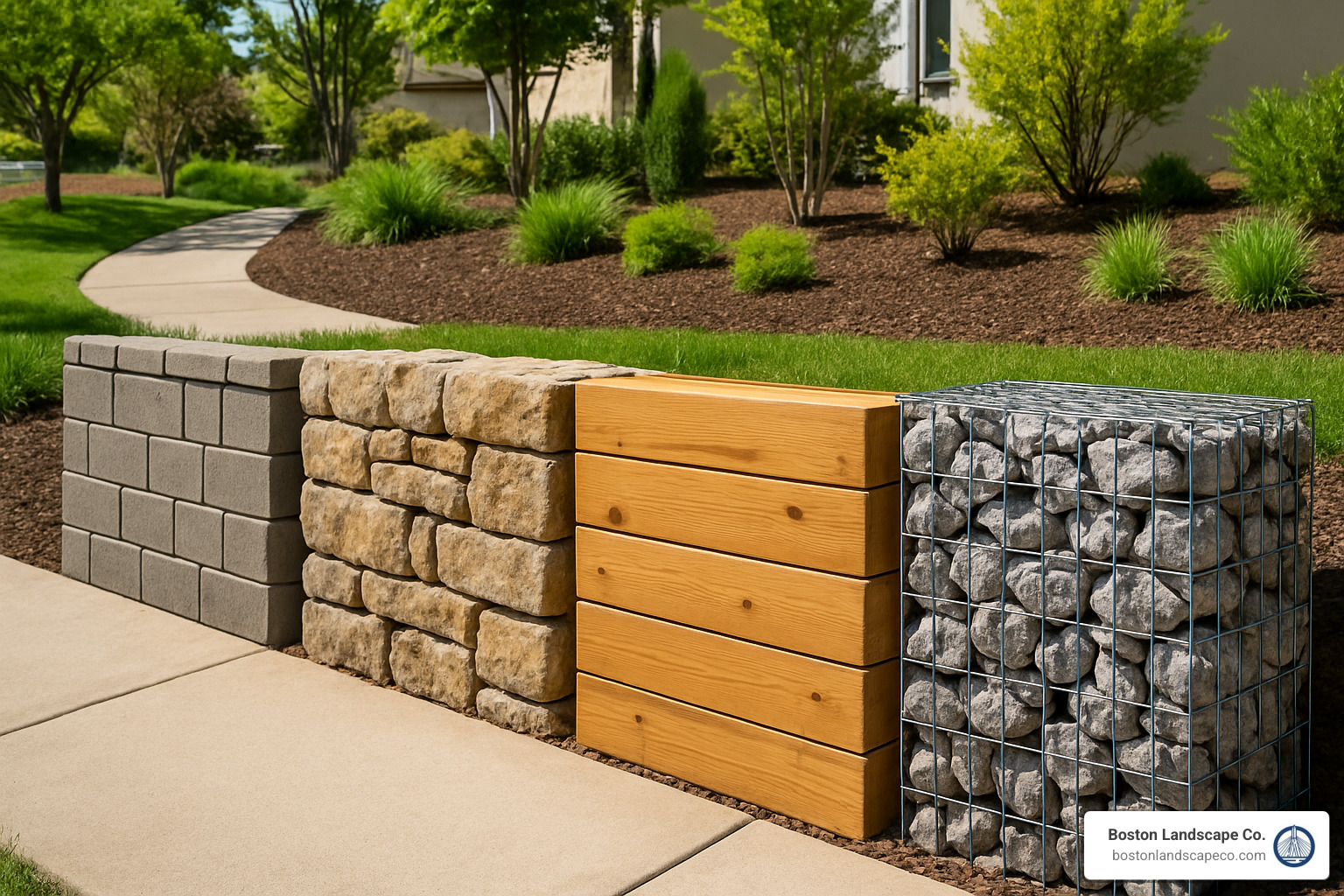
Each material brings its own character to your landscape, and the right choice depends on your property’s needs, your aesthetic preferences, and your budget. At Boston Landscape Co., we help clients steer these options to find the perfect solution for their unique situation.
When to Hire Retaining Wall Specialists & How to Choose
Let’s face it—there’s something satisfying about tackling a DIY project around your home. But when it comes to retaining walls, knowing when to call in the pros can save you headaches, money, and potentially dangerous situations down the road.
Signs You Need Retaining Wall Specialists
Your property might be telling you it’s time to bring in retaining wall specialists. If your wall stands taller than 3-4 feet, you’re definitely in professional territory—most building codes require engineering expertise at this height. Got slopes steeper than 35 degrees? That’s another clear sign, as these create tremendous pressure that requires proper structural design.
Clay-heavy soil or high water tables aren’t just gardening challenges—they’re structural complications that demand expert knowledge. And if you’ve noticed your existing wall starting to bulge, crack, or tilt, that’s your wall literally crying out for professional help.
“I’ve seen too many DIY walls fail after just one heavy rainstorm,” says Kevin Cargill, P.E., a respected retaining wall specialist. “We’re designing these structures to last between 50 and 100 years, depending on soil and groundwater conditions. That long-term perspective requires professional expertise.”
Limited access to your site or walls that need to support structures above (like driveways or patios) are two more situations where calling in the experts isn’t just smart—it’s essential.
Qualifications to Look for in Retaining Wall Specialists
Finding the right retaining wall specialist means looking beyond the lowest bid. Start with the basics: proper state contractor licensing for excavation and hardscape work. Industry certifications matter too—look for National Concrete Masonry Association (NCMA) certification or similar credentials that show specialized training.
Never skip checking for insurance coverage—both liability and worker’s compensation. A reputable specialist will happily provide proof. Strong relationships with structural engineers is another good sign, especially for complex projects.
Experience speaks volumes, so ask to see an extensive portfolio of similar projects. As one industry leader proudly notes, “We have installed over 10,000,000 square feet of walls—including some of the tallest walls in the U.S.” While your project might not be quite so ambitious, this level of experience demonstrates true expertise.
Local knowledge matters tremendously in this field. A specialist familiar with Massachusetts soil conditions and building codes will anticipate challenges specific to our region. Finally, longevity in business—ideally 10+ years—suggests stability and consistent customer satisfaction.
Vetting & Selecting Your Pro
Finding the right match for your retaining wall project takes a bit of homework, but it’s worth the effort. Start by scheduling site visits with at least three qualified companies. This gives you a chance to gauge their professionalism and how well they understand your specific challenges.
Request detailed written bids that clearly outline materials (including type, quantity, and manufacturer), drainage solutions, timeline, warranty terms, and permit handling. Don’t be shy about asking technical questions about their approach—a true professional will welcome the opportunity to demonstrate their expertise.
Take time to review their portfolio of similar projects and actually call those references. One satisfied customer shared this telling feedback: “From design to cleanup… The crew showed up on time as expected everyday. They were friendly, polite and worked very hard.” This kind of consistency speaks volumes about what you can expect.
Remember to verify all certifications and insurance coverage before making your final decision. A legitimate retaining wall specialist will never be offended by these checks—they expect them from informed clients.
At Boston Landscape Co., we’ve built our reputation on delivering this level of service throughout Stoneham, Billerica, and surrounding Massachusetts communities. We understand that a retaining wall is both a functional necessity and a long-term investment in your property.
For more detailed information on retaining wall construction methods, visit our Retaining Wall Construction page or explore the latest research on professional certification.
The Specialist Process: From Site Assessment to Completion
When you hire retaining wall specialists, you’re not just paying for labor and materials – you’re investing in a methodical process refined through years of experience. Let me walk you through what happens behind the scenes when professionals take on your retaining wall project.
Engineering & Structural Integrity
Every successful wall begins with thorough investigation. Your retaining wall specialists will start with a comprehensive site survey, documenting existing grades, property lines, and utility locations. For larger projects, they’ll often recommend soil testing through a geotechnical report to determine exactly what they’re working with.
“A wall is only as good as what you can’t see,” explains one veteran builder with 25 years of experience. “The engineering calculations that determine wall dimensions and reinforcement requirements might seem invisible to homeowners, but they’re what keep your wall standing decade after decade.”
These calculations aren’t arbitrary – they’re based on careful load analysis that considers both static forces (the constant pressure of soil) and dynamic forces (like frost heave or seismic activity). Good retaining wall specialists always build in safety factors, essentially planning for conditions worse than expected.
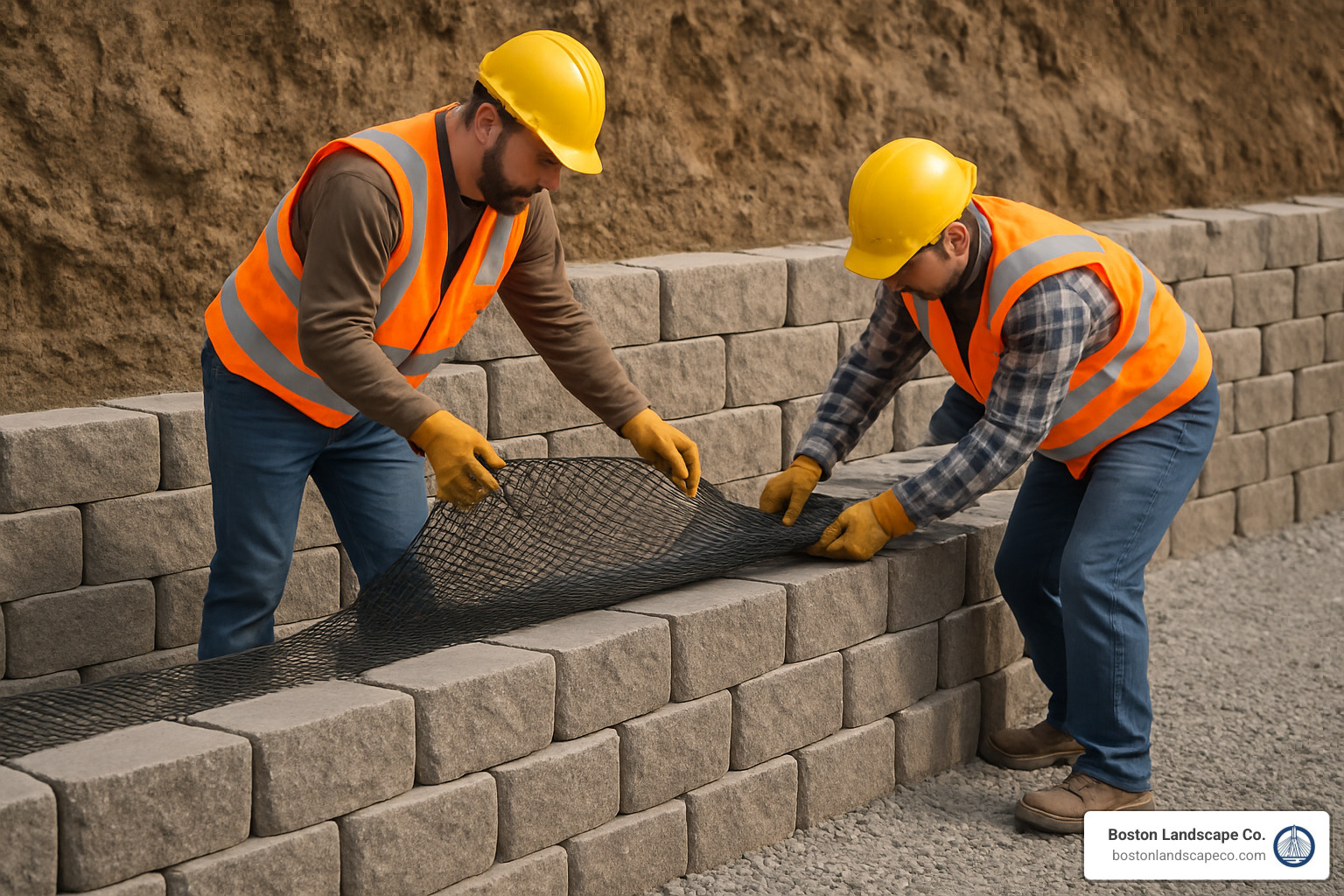
For walls requiring reinforcement, you’ll see professionals installing geogrid material in carefully planned layers. They’ll set the first course of wall material on a compacted base, then lay geogrid perpendicular to the wall at specific intervals. After compacting backfill over the geogrid, they repeat this process as the wall rises. This reinforcement dramatically increases the wall’s strength by creating what engineers call a “unified mass” that distributes pressure more effectively.
Drainage & Water Management Details
If there’s one thing I’ve learned in my years working with retaining wall specialists, it’s that water is both friend and foe to landscaping. For retaining walls, it’s mostly foe.
“Water pressure can topple even the most solidly built wall,” says one specialist who’s repaired countless failed DIY attempts. “That’s why we obsess over drainage details that most homeowners never see.”
These drainage features include weep holes (small openings that allow water to escape), perforated pipe systems that collect and channel water away from the wall, and free-draining gravel backfill that prevents water buildup. Quality retaining wall specialists also install filter fabric to prevent soil from clogging these drainage materials.
I once watched a demonstration where a specialist showed how water pressure could push over a model wall in minutes – then showed how proper drainage kept an identical wall standing indefinitely. It was a powerful reminder that what you don’t see often matters most.
Aesthetic & Landscaping Improvements
Beyond the technical aspects, retaining wall specialists bring artistic vision to transform your property. They can create terraced levels that add visual interest while making sloped areas usable. Many homeowners are surprised to learn how walls can incorporate planting beds, integrated lighting for evening ambiance, or even be designed at the perfect height for casual seating.
“Retaining walls are problem-solvers first, but they should also be beautiful,” explains a designer with Boston Landscape Co. “We’ve built walls that frame garden spaces, create dramatic backdrops for water features, and transform unusable hillsides into favorite family gathering spots.”
The versatility of professional wall design shows in real-world applications: walls that divert water away from vulnerable foundations, terraced gardens that make hillside planting possible, and curved designs that flow with the natural landscape rather than fighting against it.
Professional retaining wall specialists don’t just build walls – they create outdoor spaces that improve your property’s beauty, functionality, and value. The process may take longer than a weekend DIY project, but the results will stand the test of time.
For more inspiration on how retaining walls can improve your outdoor living space, explore our Hardscaping Services Near Me page.
Costs, Permits, Warranties & Maintenance
Let’s talk money—because we all want to know what we’re getting into before starting a project! Understanding the investment for professional retaining wall installation helps set realistic expectations from the start.
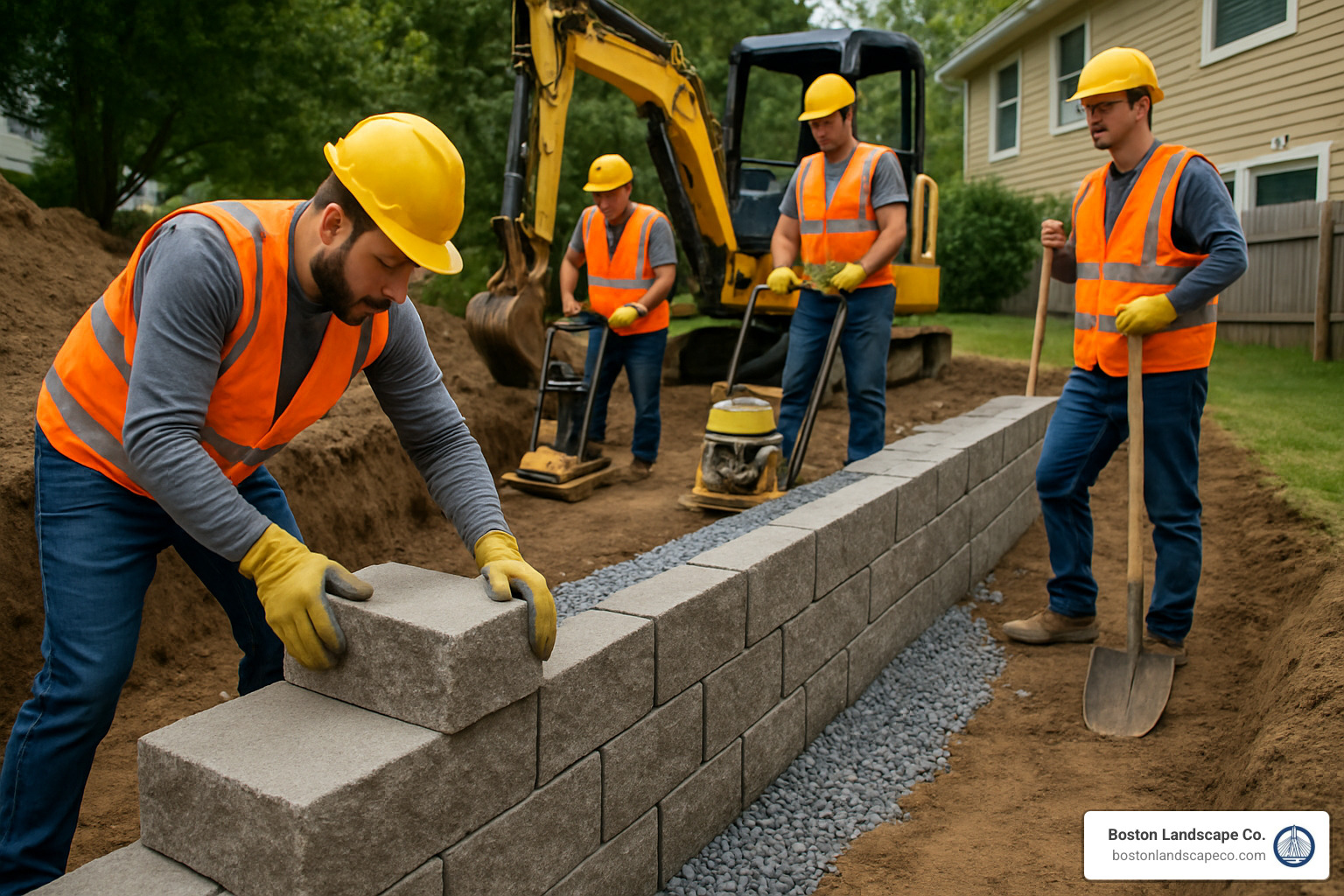
Budget Factors That Influence Price
When it comes to hiring retaining wall specialists, the price tag varies significantly based on your specific situation. Wall height and length are major factors—as you might expect, taller and longer walls need more materials and labor. The materials you choose make a big difference too; natural stone will set you back more than concrete blocks, which cost more than timber options.
“The site itself can dramatically impact your bottom line,” explains Steve from our team. “If your backyard is only accessible through a narrow gate, we may need specialized equipment or more manual labor, which affects the final cost.”
Soil conditions play a crucial role as well. Sandy, well-draining soil is a contractor’s dream, while clay or unstable soil might require additional excavation and reinforcement systems. Those beautiful curves, built-in lighting, or custom caps you’ve been eyeing on Pinterest? They’re gorgeous but will add to your investment.
According to industry data, average costs for professional retaining wall installation range from $30 to $150 per square foot, with premium designs potentially exceeding $300 per square foot. To put that in perspective, a basic 4-foot-high, 20-foot-long wall might cost between $2,400 and $12,000 depending on materials and site conditions. These average costs are based on internet data, not actual costs for Boston Landscape Co.
Engineering fees typically add another $500 to $1,500 for residential projects, while permit fees in Massachusetts towns generally range from $100 to $500.
Permitting & Code Compliance
One of the biggest headaches retaining wall specialists can save you from is navigating the permitting maze. Height thresholds are the first consideration—walls under 3-4 feet often don’t require permits in many towns, but this varies widely throughout Massachusetts.
“I once had a client who built a wall themselves, only to have the town require them to tear it down because they didn’t know about setback requirements,” shares one of our project managers. “That’s an expensive lesson nobody wants to learn firsthand.”
Beyond height, municipalities care about how close your wall sits to property lines, how you’re managing water runoff (a big deal in New England), and whether you have proper structural engineering for taller walls. Most towns require stamped plans from a licensed engineer for walls above certain heights.
At Boston Landscape Co., we’ve worked in communities throughout the region and know the specific requirements in all our service areas, including Boston, Bedford, Billerica, Burlington, and beyond. We handle all that paperwork headache for you—just another benefit of working with experienced professionals.
Long-Term Care Tips
The good news? Properly built retaining walls are remarkably low-maintenance structures. Think of them like good teeth—regular check-ups prevent major problems down the road.
We recommend seasonal inspections, especially after our harsh Massachusetts winters. Look for any shifting, cracking, or bulging—these are early warning signs that something might need attention. Keep those drainage outlets clear of leaves and debris, particularly in fall when foliage can quickly clog systems.
Be vigilant about vegetation control—those cute little tree seedlings that sprout near your wall can become root monsters that crack and shift blocks as they grow. And in our freeze-thaw climate, making sure drainage works properly before winter hits is crucial to preventing damage.
As one delighted customer told us: “We are very happy and can honestly say with confidence that this wall is going to be around forever.” While “forever” might be stretching it a bit, a properly built and maintained wall can indeed become a legacy feature of your property that serves generations.
With professional installation, you can expect a lifespan of 50-100 years for most well-built retaining walls—that’s incredible long-term value for your investment. Some of the stone walls built by early New England settlers are still standing after 200+ years—now that’s craftsmanship!
Whether you’re looking to reclaim unusable yard space, solve erosion issues, or simply add some architectural interest to your landscape, a professionally installed retaining wall delivers both practical function and lasting beauty to your property.
Frequently Asked Questions about Retaining Wall Specialists
How much does it cost to hire retaining wall specialists?
When budgeting for your retaining wall project, you’ll find quite a range of prices depending on your specific needs. Most homeowners can expect to invest between $30 and $150 per square foot for professional installation, though particularly complex or high-end projects might reach $300+ per square foot. These average costs are based on internet data, not actual costs for Boston Landscape Co.
To put this in perspective, if you’re considering a fairly straightforward 4-foot-high, 20-foot-long concrete block wall, you might spend anywhere from $2,400 to $12,000. Opt for the timeless beauty of natural stone with the same dimensions, and your investment could range from $6,000 to $30,000.
Why such a wide range? Well, as one of our clients recently shared, “I was surprised by how many factors affected my final quote.” These factors include the wall’s height and length, your choice of materials, how easily crews can access your site, what’s happening with your soil, drainage needs, any custom touches you desire, and whether engineering approval is required.
How long will a professionally built wall last?
“Will this wall outlast my mortgage?” It’s a fair question we hear often, and the answer is usually a resounding yes! A professionally constructed retaining wall is truly a long-term investment in your property.
Different materials offer different lifespans:
Concrete block walls typically serve you faithfully for 50-100 years, while natural stone walls can literally last for generations—100+ years isn’t uncommon. Timber walls, while more budget-friendly upfront, generally provide 20-40 years of service. Gabion walls (those wire baskets filled with stone) offer impressive durability at 50-100 years.
Industry experts often note that “retaining walls are typically designed to last between 50 and 100 years, depending on soil and groundwater conditions as well as construction techniques.” But here’s the secret most homeowners don’t realize: proper drainage is absolutely crucial to longevity. A modestly priced wall with excellent drainage will outlive an expensive wall where water management was an afterthought.
Do I need a permit for my retaining wall project?
Permit requirements can feel like a maze, but we’ve steerd them countless times throughout Massachusetts communities. Generally speaking:
Walls under 3-4 feet high often don’t require permits, which is good news for many residential projects. Once you go above 4 feet, you’ll typically need both permits and professionally engineered plans. Any wall that affects how water drains on your property usually requires permitting regardless of height.
Location matters too—walls near property lines may face additional restrictions, and walls supporting structures like driveways almost always need official approval.
At Boston Landscape Co., we handle all this paperwork headache for you. As one relieved client put it, “I was dreading the permit process, but they took care of everything.” We’ve built relationships with building departments throughout our service area, so we know exactly what’s needed in Stoneham, Billerica, and all surrounding communities.
Retaining wall specialists like our team don’t just build walls—we build peace of mind by ensuring every aspect of your project is properly approved and documented.
Conclusion
Hiring retaining wall specialists is an investment in both the functionality and aesthetics of your property. A properly designed and constructed retaining wall transforms unusable slopes into valuable space while preventing erosion and managing water flow.
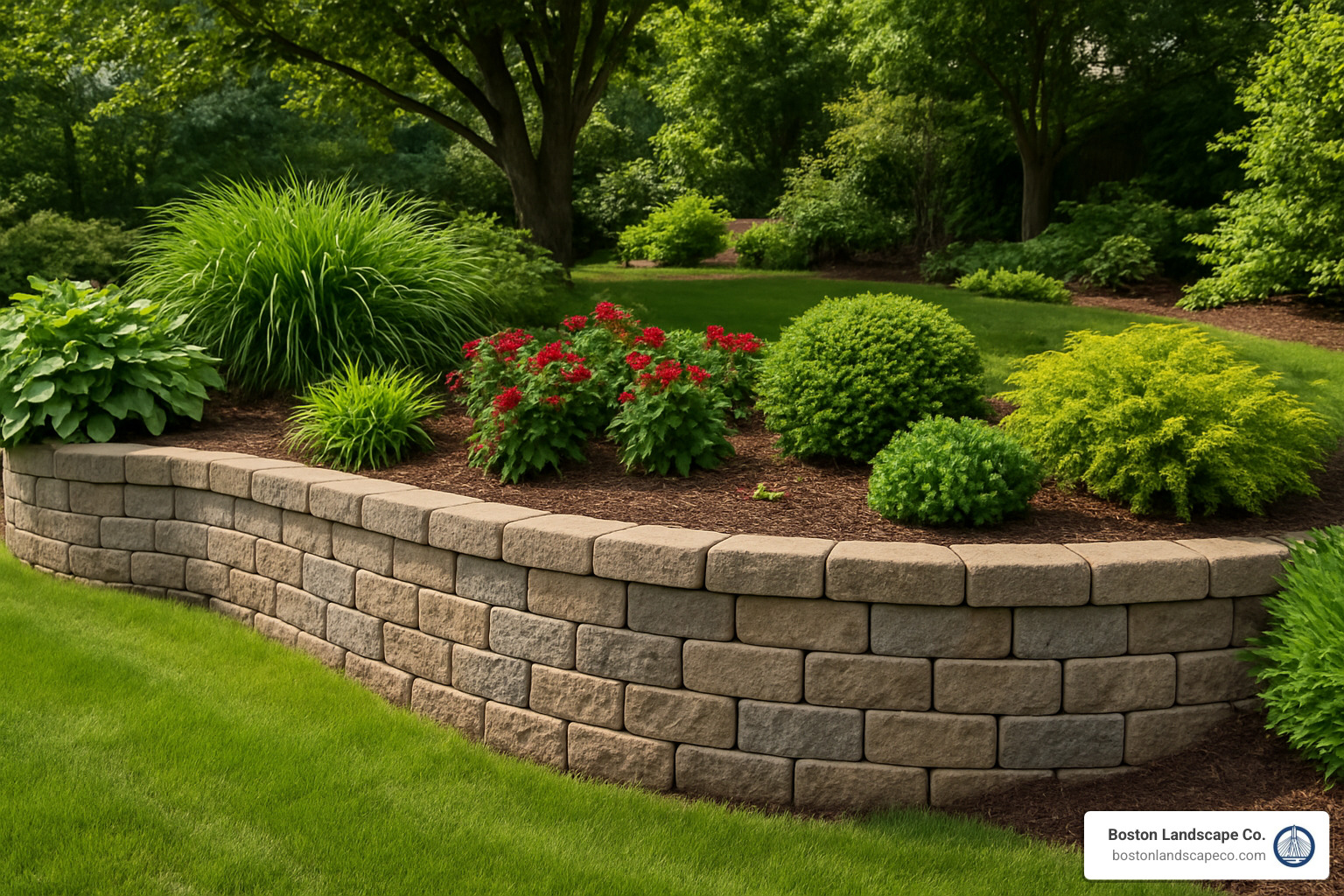
When you work with professionals, you’re not just paying for a wall—you’re investing in peace of mind. The structural integrity of a professionally built wall means it will stand strong through New England’s harsh seasons, from summer downpours to winter’s freeze-thaw cycles. Proper drainage systems prevent the number one cause of wall failure, saving you from costly repairs down the road. And let’s not forget the comfort of knowing your project is fully code-compliant, with all permits and regulations handled expertly.
Beyond the practical benefits, a well-designed retaining wall transforms your landscape. Those slopes that once frustrated your gardening dreams can become stunning terraced gardens. That eroding hillside can turn into a distinctive feature that makes your property stand out. And with warranty protection backing the work, you can enjoy your new outdoor space without worry.
At Boston Landscape Co., our team of retaining wall specialists brings decades of experience to every project. We’ve seen it all—from the clay-heavy soils of Lexington to the rocky terrain of Carlisle. We understand the unique challenges of Massachusetts properties and tailor our solutions accordingly.
“Your retaining wall isn’t just functional—it’s part of your home’s first impression,” as one of our designers often reminds clients. That’s why we take such care with both the engineering and aesthetic details of every wall we build.
From the moment we arrive for your initial consultation until the final plants are nestled alongside your new wall, our focus is on creating a solution that works beautifully with your property’s specific needs. Whether you’re looking to create usable space on a sloped yard, manage problematic drainage, or add a distinctive hardscape feature, our expertise ensures results that are both beautiful and durable.
For more information about our hardscaping services, visit our Hardscaping page or contact us directly to schedule a consultation. Boston Landscape Co.—your local team for expert retaining wall solutions throughout the greater Boston area.
