
Wetland Maintenance: 10 Essential Steps for Thriving Results 2025
Why Wetland Maintenance Creates Thriving Ecosystems
Wetland Maintenance involves regular inspection, vegetation management, and system upkeep to preserve these critical ecosystems that provide flood control, water quality improvement, and wildlife habitat. Here’s what you need to know:
Essential Wetland Maintenance Tasks:
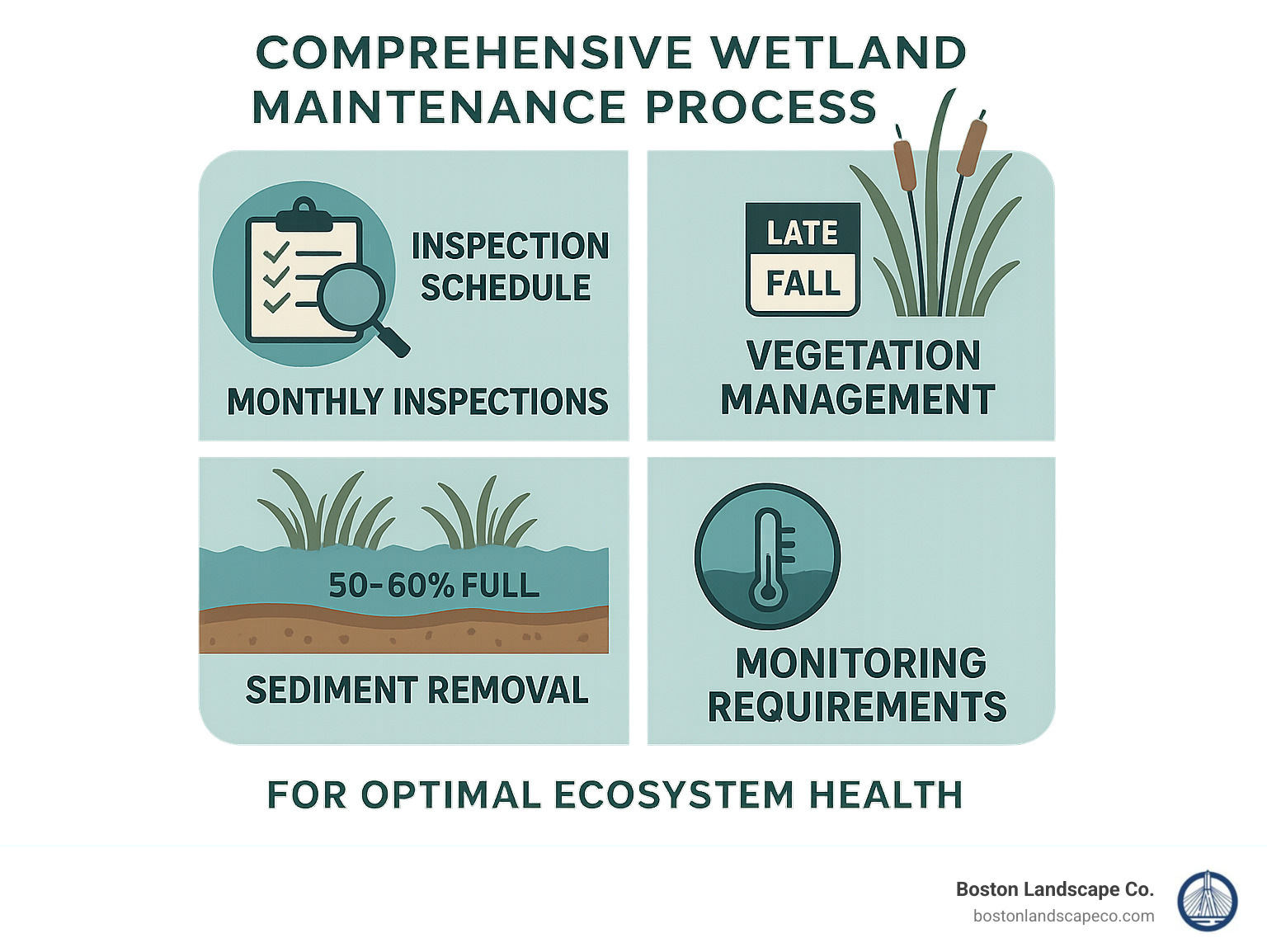
– Monthly inspections – Check water levels, debris, and vegetation health
– Annual vegetation management – Trim plants in late fall, control invasives
– Sediment removal – Dredge forebays when 50-60% full
– Debris clearing – Remove trash and organic matter after storms
– Water level monitoring – Maintain proper depths for ecosystem function
Wetlands are among the most productive ecosystems on Earth, with one acre capable of storing about one million gallons of floodwater. In Massachusetts, these systems require consistent care to maintain their ability to filter pollutants, prevent flooding, and support local wildlife.
Without proper maintenance, wetlands can become clogged with sediment, overrun by invasive species, or lose their water quality benefits entirely. As one EPA study notes: “The push to construct BMPs has been substantially stronger than the push to actively maintain them.”
For Greater Boston homeowners and property managers, understanding wetland maintenance isn’t just about compliance – it’s about protecting valuable infrastructure that can increase property values by up to 30% while providing essential environmental services.
I’m Steve Schumacher, owner-operator of Boston Landscape Co since 1991, and I’ve spent over three decades helping clients maintain healthy wetland systems throughout the region.
Wetland Maintenance vocab explained:
– Ecological Restoration
– Wetland Protection
– Bioswales
Wetland Basics: Types, Functions, and Why Maintenance Matters
Wetlands are nature’s workhorses – incredibly busy ecosystems that never take a break. A wetland is defined by three key features: water at or near the surface during part of the growing season, plants adapted to wet conditions, and hydric soils that formed under saturated conditions.
In Massachusetts, these systems provide extraordinary benefits: control erosion, limit flooding, moderate groundwater levels, clean up nutrients, and buffer coastal areas from storm surges. Research shows that properly maintained wetlands can trap about 80% of total suspended solids from stormwater runoff. Without regular Wetland Maintenance, that efficiency drops significantly.
One acre of healthy wetland can store approximately one million gallons of floodwater – enough to fill about 40 average-sized swimming pools! Scientific research on wetland functions consistently ranks these systems among the most important ecosystems on Earth.
| Wetland Type | Primary Function | Maintenance Focus | Inspection Frequency |
|---|---|---|---|
| Natural Marsh | Wildlife habitat, flood control | Invasive species control, buffer management | Quarterly |
| Constructed Stormwater | Pollutant removal, flood mitigation | Sediment removal, outlet clearing | Monthly |
| Floating Treatment | Water quality improvement | Vegetation harvest, mat positioning | Bi-monthly |
| Retention Ponds | Stormwater management | Debris removal, structural integrity | After major storms |
Natural & Restored Wetlands
Massachusetts hosts fascinating natural wetland types. Palustrine wetlands are non-tidal freshwater marshes – those cattail-filled areas along quiet ponds. Riverine wetlands follow flowing water systems. Vernal pools are seasonal gems that fill with spring snowmelt and dry by midsummer.
Natural wetlands contain hidden seed banks – dormant seeds buried in soil that spring to life when conditions are right. I’ve seen restoration projects where we simply restored proper water levels, and within one growing season, native wetland plants appeared from seeds waiting decades for their chance.
Vernal pools deserve special mention in Massachusetts. These temporary wetlands are critical for amphibians like spotted salamanders and wood frogs. They hold water long enough for tadpoles to develop but dry completely to prevent fish establishment.
Constructed & Floating Wetlands
Constructed wetlands are engineered stormwater management systems designed to maximize pollutant removal from runoff. These shallow marsh systems work through settling and plant uptake – custom-built water treatment facilities that look like natural marshes.
Floating wetlands use buoyant mats that allow plants to grow in water typically too deep for regular marsh plants. An Introduction to Floating Wetlands explains how these systems reduce nutrient concentrations, provide habitat in deep water areas, and allow plant harvesting without disturbing bottom sediments.
Constructed systems provide predictable performance when properly maintained. However, without routine Wetland Maintenance, they can become net pollutant sources rather than valuable assets.
Wetland Maintenance Step-By-Step
Wetland Maintenance is like caring for a living system that works around the clock to protect your property. The secret lies in catching small issues before they become expensive problems.
We organize maintenance by skill level. Level 0 tasks like debris removal can be done by anyone. Level 1 activities like vegetation trimming need basic landscaping experience. Level 2 work requires specialized knowledge, while Level 3 projects demand professional engineers.
Safety always comes first. We never work alone – wetland maintenance requires at least two people. Life jackets aren’t optional when working on floating wetlands.
Routine Wetland Maintenance Tasks
Wetland Maintenance starts with building good inspection habits. We inspect wetlands monthly during growing season (April through October) and quarterly in winter. After storms dropping more than an inch of rain, we do additional checks.
Monthly walkthroughs include checking water levels using staff gauges, clearing debris from trash racks and outlets, and looking for invasive plants. Take photos from the same spots each time – these help track changes and can be invaluable for insurance claims.
Storm aftermath requires immediate attention. Blocked outlets can cause flooding within hours. Hand-weeding invasive species works best when caught early – pull a few small ones today, or fight an army next year.
More info about wetland protection provides additional guidance on maintaining these valuable systems.
Seasonal Wetland Maintenance Schedule
Wetland Maintenance follows nature’s calendar, with each season bringing specific tasks.
Spring (March-May): Conduct comprehensive annual inspections, remove winter debris, assess plant survival rates. Repair any winter damage before growing season.
Summer (June-August): Monitor mosquito populations, conduct water quality testing, maintain clear access paths as vegetation reaches peak growth.
Fall (September-November): Harvest floating wetland plants by cutting shoots above the crown in late fall. Remove accumulated leaf litter from flow paths.
Winter (December-February): Conduct freeze-period inspections to check structural integrity. Plan major maintenance activities for the coming year.
Forebay sediment removal becomes necessary when sediment fills 50-60% of design volume, typically every 2-7 years depending on watershed conditions.
Safe Access & Required Skill Levels
Working safely around wetlands requires respect for both environment and inherent risks. For floating wetlands, we use boats, canoes, or paddleboards to reach treatment mats, always with at least two people.
Skill level classification helps match tasks to capabilities. Volunteers handle debris removal and visual inspections. Experienced staff perform vegetation management. Specialists conduct sediment removal and testing. Professional engineers handle structural evaluations.
Remote television inspection has revolutionized how we examine pipes without confined space entry, often saving thousands in emergency repair costs.
Troubleshooting Common Wetland Maintenance Challenges
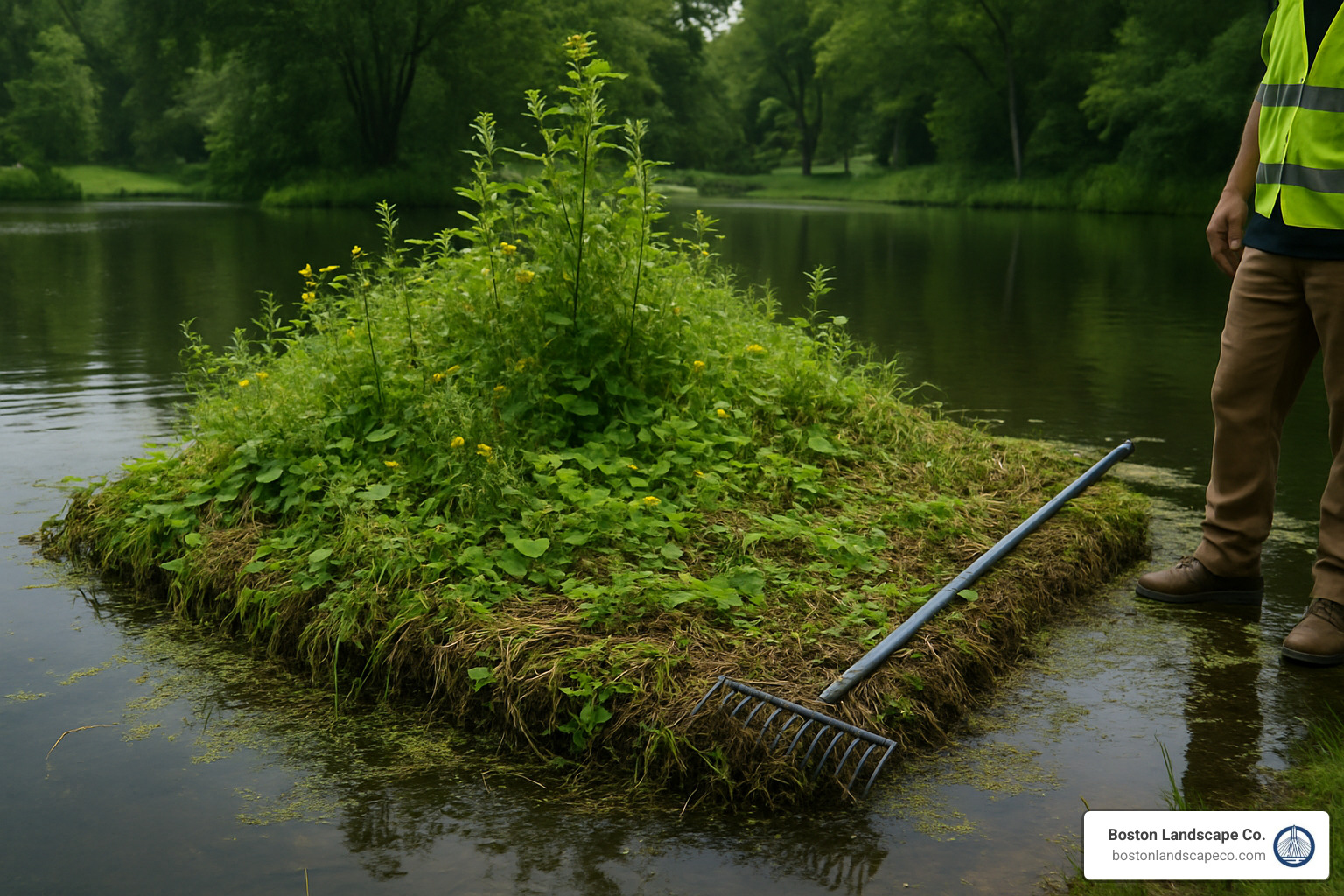
Wetlands don’t always cooperate with our best-laid plans. Most wetland problems follow predictable patterns, and catching them early saves both headaches and money.
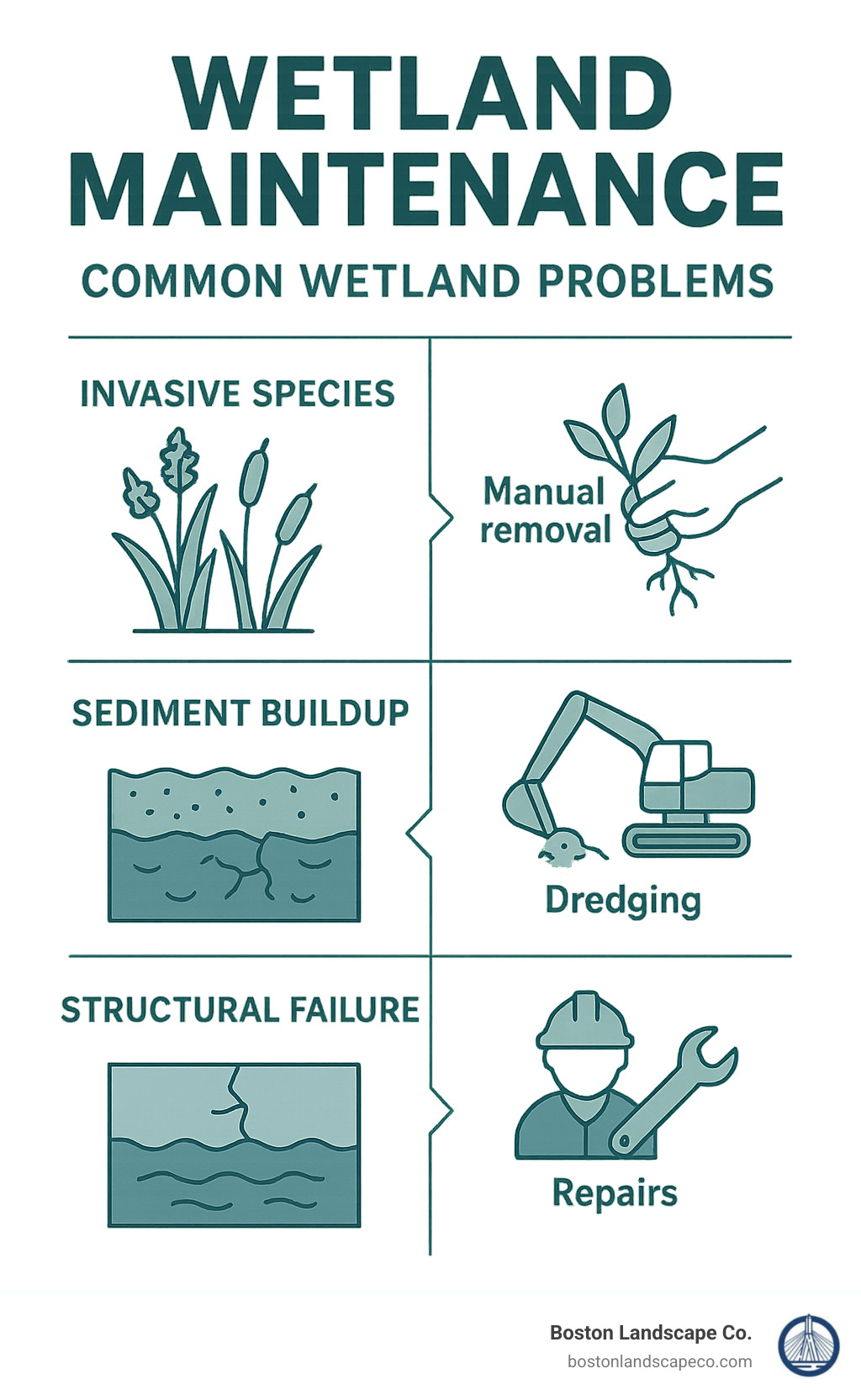
The most common culprits include invasive species taking over, sediment slowly choking out water flow, structural damage from storms, and nuisance animals like beaver and muskrat. The key is staying ahead with regular monitoring and quick action.
Invasive & Nuisance Species Control
In Massachusetts, we constantly battle purple loosestrife, reed canary grass, aggressive cattail growth, and phragmites – plants that can turn your wetland into a monoculture wasteland.
Manual removal works when you catch invasives early. We pull the entire root system and haul plant material away from the wetland. When hand-pulling isn’t realistic, targeted herbicide application becomes necessary using products like glyphosate or imazapyr with surgical precision.
Hydrology manipulation can be your secret weapon. Keeping water depths over three feet continuously can suppress aggressive emergents like cattail and phragmites.
Purple loosestrife requires patience – we combine initial herbicide treatment with diligent follow-up hand-pulling. Reed canary grass involves late-season herbicide application followed by overseeding with competitive native species.
Sediment & Debris Management
Sediment accumulation is inevitable. We monitor levels using permanent markers and surveys to track filling rates.
Dredging becomes necessary when forebay sediment fills 50-60% of design volume, when water depths drop below minimums, or when flow patterns get disrupted.
Sediment from typical stormwater runoff is usually non-hazardous and can be land-applied or disposed of in standard landfills. Nutrient cycling requires removing organic debris like leaves before decomposition releases nutrients back into water.
Structural & Hydrologic Issues
Structural problems can turn functional wetlands into liabilities. We inspect all components annually for cracking, spalling, erosion, and wear that could compromise performance.
Common issues include riser clogging, berm erosion from wave action or burrowing animals, pipe settlement, and emergency spillway blockage. Major repairs often require permits and professional engineering oversight.
Beaver and muskrat activity can cause surprising damage. Beaver dams alter hydrology while muskrat burrowing compromises berms. We manage conflicts through exclusion devices, habitat modification, and when necessary, professional wildlife control.
Monitoring, Legalities, and Improvement Opportunities
Smart Wetland Maintenance involves systematic monitoring that helps optimize maintenance schedules while staying compliant with regulations. Good record-keeping is like insurance for your wetland system.
We establish permanent photo points, install staff gauges for water level tracking, and maintain detailed logs of all activities. Water quality testing reveals system performance through basic parameters like temperature, pH, dissolved oxygen, and turbidity.
Properly maintained wetland systems can qualify for stormwater credits in some Massachusetts communities, significantly offsetting municipal fees. Well-maintained wetlands increase property values while reducing flood insurance premiums.
More info about wetland mitigation explains how proper maintenance supports mitigation requirements.
DIY vs Professional Monitoring
Many basic monitoring tasks are perfect for property owners. DIY monitoring works for monthly visual inspections using checklists, water level measurements with staff gauges, and photo documentation from established points.
Professional monitoring becomes essential for complex systems with regulatory requirements. We conduct annual comprehensive evaluations including water quality testing, bathymetric surveys, and structural integrity assessments.
The sweet spot combines both approaches – property owners handle routine monitoring while professionals provide annual assessments.
Legal & Regulatory Checklist
Massachusetts wetland regulations require understanding which agency has jurisdiction and what activities require permits.
Federal oversight comes through the Clean Water Act requiring Section 404 permits for discharging materials into wetlands. State regulations under the Massachusetts Wetlands Protection Act protect wetlands plus 100-foot buffer zones. Local bylaws frequently add another protection layer.
Permit applications can take 6-12 months to process. Unpermitted work triggers enforcement actions costing far more than proper permits. Always photograph wetlands before and after maintenance activities for documentation.
Enhancing for Future Conditions
Climate change creates opportunities to improve existing systems. Adding floating treatment islands to existing ponds provides immediate water quality benefits. Expanding native plant buffers provides sediment filtration, wildlife habitat, and reduced maintenance.
Retrofitting dry detention ponds to wetland systems dramatically improves pollutant removal while creating wildlife habitat. Most improvement projects qualify for expedited permitting when properly designed.
Frequently Asked Questions about Wetland Maintenance
What is the ideal inspection frequency for a small residential wetland?
For small residential wetlands, I recommend monthly inspections during growing season (April-October), then quarterly checks in winter. After storms dropping more than an inch of rain, inspect within 2-3 days.
Check water levels, remove visible debris, and examine vegetation health. Look for invasive species trying to establish. Take photos from the same spots each time – these help notice gradual changes that might otherwise slip by.
How can I control mosquitoes without harming aquatic life?
Mosquito control is about working with nature. Keep water moving – mosquitoes love stagnant water for laying eggs, so proper circulation makes your wetland less attractive.
Your best allies are existing creatures. Fish, dragonflies, bats, and frogs are natural mosquito predators. For direct action, use products containing Bacillus thuringiensis israelensis (Bti) – biological controls targeting mosquito larvae without harming beneficial species.
Avoid broad-spectrum insecticides that wipe out beneficial insects providing long-term mosquito control.
Do I need a permit to remove sediment from my stormwater wetland in Massachusetts?
Yes, you’ll almost certainly need permits for sediment removal in Massachusetts. You’ll likely need a Notice of Intent under the Massachusetts Wetlands Protection Act, and possibly a federal Section 404 permit.
Plan ahead – the permit process usually takes 2-4 months. Starting work without permits can result in hefty fines and mandatory restoration costing far more than doing things right initially.
Consult with an environmental consultant before starting any sediment removal project. The upfront cost of professional guidance is minimal compared to potential regulatory violation headaches.
Conclusion

Your wetland is more than just a water feature – it’s a hardworking ecosystem that protects your property from flooding, cleans stormwater runoff, and provides habitat for local wildlife. But like any valuable asset, it needs regular care to keep performing at its best.
Wetland Maintenance doesn’t have to be overwhelming. Start with monthly inspections during growing season, clear debris after storms, and watch for invasive species before they take over. The key is catching small problems early, before they become expensive headaches.
Think of it this way: you wouldn’t skip oil changes on your car and expect it to run forever. Wetlands need the same regular attention. Remove sediment when forebays fill up, harvest floating plants before winter, and keep outlets clear so water can flow properly.
I’ve been helping Massachusetts property owners care for their wetlands since 1991, and I’ve seen what happens when maintenance gets skipped. But I’ve also seen how proper care keeps these systems thriving for decades.
Many maintenance tasks are straightforward enough for motivated property owners to handle themselves. Save professional help for structural repairs, sediment removal, and permit applications that require specialized expertise.
Wetlands are investments in your property’s future. They can increase property values by up to 30% while providing flood protection that becomes more valuable as storms intensify. The small effort you put into maintenance today prevents costly repairs tomorrow.
Whether you’re managing a backyard rain garden or commercial stormwater system, the same principles apply: stay observant, act quickly when problems arise, and don’t hesitate to call for help when needed.
Ready to give your wetland the care it deserves? Let’s work together to keep your system healthy and functioning for years to come.
More info about wetland services
