Walkway for garden: Ultimate Ideas 2025
Why Every Garden Deserves a Beautiful Walkway
A walkway for garden spaces serves both practical and aesthetic purposes, changing how you experience your outdoor environment. A well-designed path can solve problems like muddy spring trails and protect emerging perennials, all while adding structure and value to your property.
I’m Steve Schumacher, owner-operator of Boston Landscape Co. since 1991. With over three decades of experience in the Greater Boston area, I know that the best garden paths balance beauty, durability, and budget. The secret to a path that lasts for decades, especially in our New England climate, is proper base preparation and drainage. A solid foundation is critical to withstand our freeze-thaw cycles and seasonal storms.
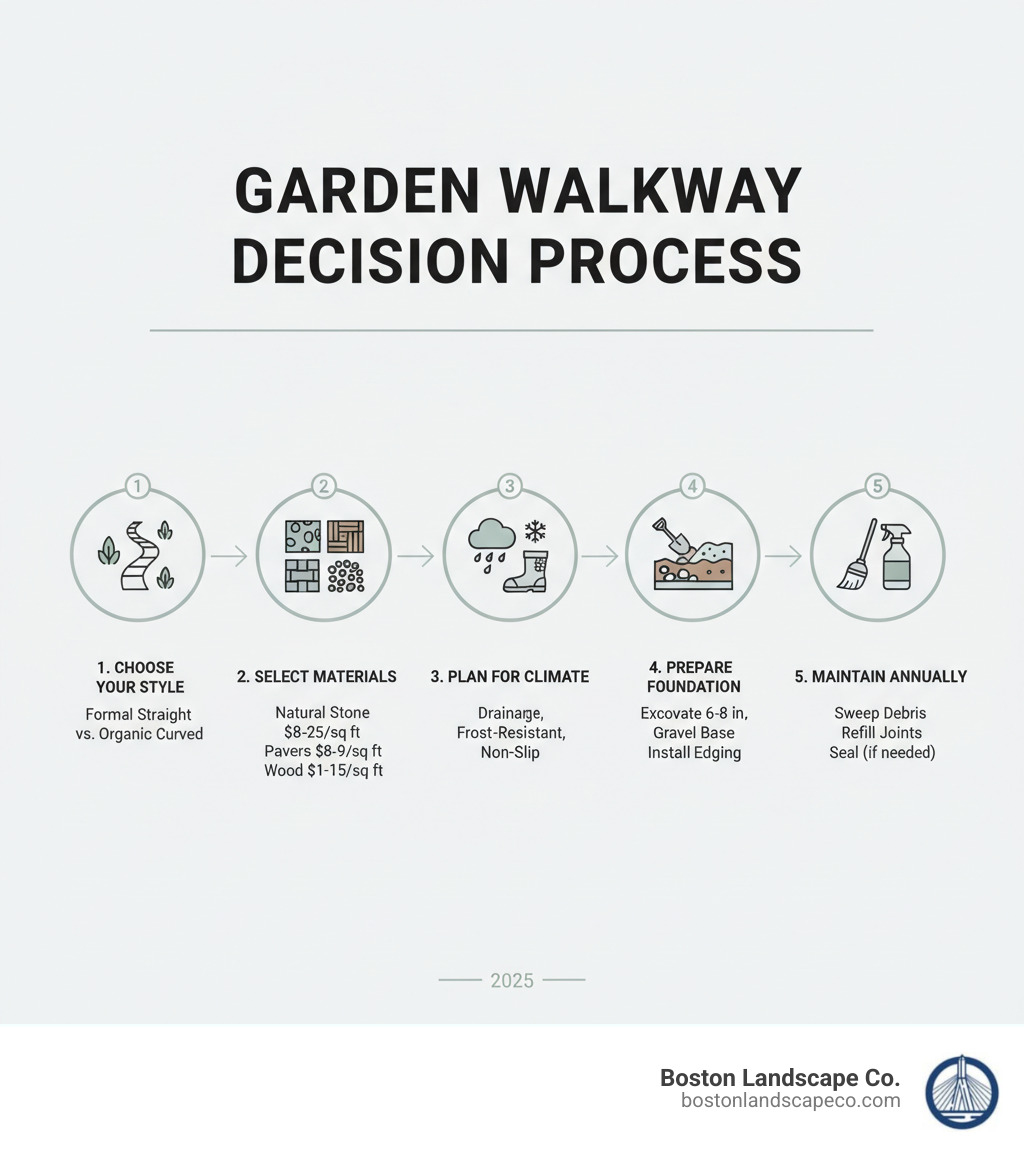
Important Walkway for garden terms:
The Functional & Aesthetic Benefits of a Garden Path
A well-planned walkway for garden is a workhorse that also lifts your landscape’s beauty.
Functional Perks:
- Safe & Easy Access: A stable, non-slip surface provides safe footing and year-round access, even after a heavy New England rain.
- Lawn & Plant Protection: It directs foot traffic, preventing soil compaction and damage to your lawn and delicate flower beds.
- A Cleaner Home: A solid path means no more tracking mud and dirt indoors after a walk through the garden.
Aesthetic Improvements:
- Visual Flow & Structure: A path acts as a visual anchor, guiding the eye and creating distinct outdoor “rooms” for dining or relaxation.
- Texture & Color: Materials like flagstone, brick, or gravel add texture and color that complement your planting schemes.
- A Sense of Journey: A winding path invites exploration, creating a sense of anticipation and revealing new garden vistas with each turn.
The right path turns a simple yard into a captivating outdoor sanctuary. For inspiration, explore our projects in Hardscaping Wellesley, MA and Hardscaping Newton, MA.
A Path for Every Style: Popular Materials for Your Walkway for Garden
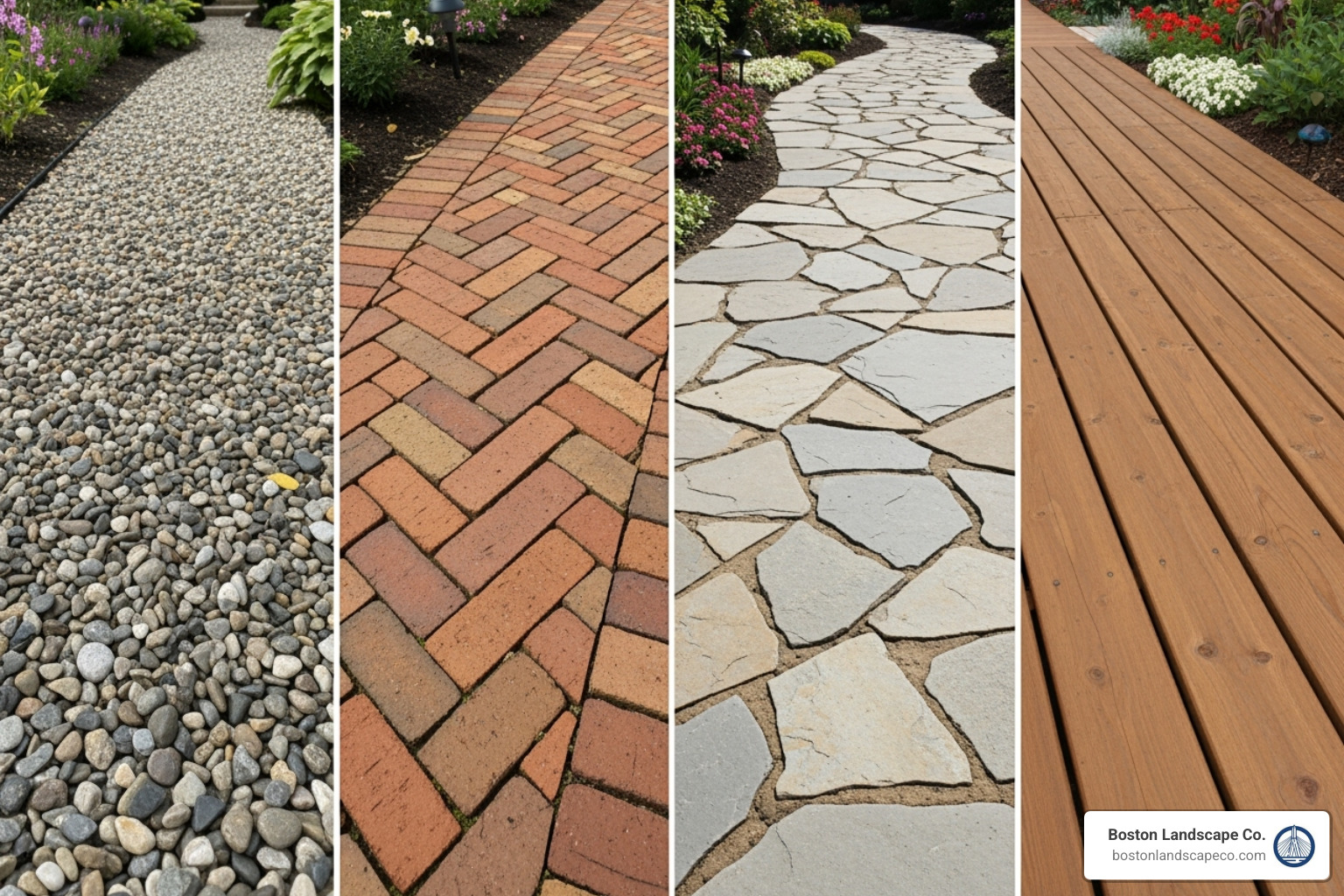
Choosing a material for your walkway for garden involves balancing aesthetics, budget, and New England’s demanding weather. From rustic charm to modern elegance, there’s a perfect option for your garden. Please note, any prices mentioned are national averages based on available online data and do not reflect actual costs from Boston Landscape Co. Costs can vary widely based on material quality, project complexity, and location.
Natural Stone: Timeless and Neat
Natural stone like Flagstone, Fieldstone, or Granite creates a path with a timeless, organic look. Each piece is unique in color and texture.
- Pros: Legendary durability (can last 100+ years), resists freeze-thaw cycles, and has a natural beauty that manufactured materials can’t replicate.
- Cons: Represents a higher investment, typically ranging from $8 to $25+ per square foot installed. Installation requires skilled craftsmanship.
This is a once-in-a-lifetime investment that adds significant value to your property. Our Stone Walkway Design services can help you create something truly special.
| Feature | Natural Stone | Manufactured Pavers |
|---|---|---|
| Cost | Higher (Average $8-$25+ per sq ft installed) | Moderate (Average $8-$25+ per sq ft installed) |
| Durability | Excellent (100+ years), weather-resistant | Excellent (80+ years), engineered for strength |
| Maintenance | Low (sweeping, occasional weed removal) | Low (sweeping, occasional joint sand replenishment) |
| Style Versatility | Organic, rustic, traditional, unique pieces | Uniform, modern, geometric, wide color/shape range |
Pavers: Versatile and Durable
Concrete and brick pavers offer the durability to last generations with the design flexibility to match any architectural style. Modern pavers can mimic natural stone or brick and are engineered for strength and consistency.
- Pros: Interlocking design creates a stable, flexible surface. A huge variety of colors, shapes, and styles are available. Highly cost-effective, with a typical investment of $8 to $25+ per square foot for a surface that can last 80+ years.
- Cons: The look is more uniform than natural stone, which may not suit all garden styles.
Pavers deliver both beauty and performance for any hardscaping need, including our Driveway Paver Installation services.
Loose Materials: The Most Affordable Walkway for a Garden
For an informal, budget-friendly path, loose materials like gravel, pea gravel, mulch, or wood chips are excellent choices. They offer a relaxed, natural aesthetic.
- Pros: Very budget-friendly (roughly $1 to $9 per square foot). Easy for a DIY weekend project. The crunch of gravel underfoot is a classic garden sound.
- Cons: Requires sturdy edging to prevent spreading. Needs occasional replenishment as materials settle or decompose.
For more pricing information, What Are Average Gravel Prices? offers helpful national averages.
Wood and Reclaimed Materials: Rustic and Unique
Reclaimed wood planks, pallet wood, or a boardwalk-style path brings rustic character and a one-of-a-kind feel to your garden. The natural charm and warmth of wood are perfect for cottage or woodland settings.
- Pros: Unique, organic feel with a lot of character. Can be a very low-cost material, especially if using reclaimed pallets.
- Cons: Can be slippery when wet. Requires pressure-treated lumber and regular sealing to prevent rot and last 15-20 years. Untreated wood 건강 contact with soil will decay quickly.
For DIY guidance, resources like How to Build a Wooden Walkway on Ground – Wood Create can be helpful, but professional installation is recommended for longevity in our climate.
Designing Your Dream Path: Layout, Trends, and Style
The design of your walkway for garden is your opportunity to add personality and define how you experience your outdoor space. A path can be a bold, direct invitation or a gentle, meandering one that encourages exploration.
How to Design a Walkway for a Garden That Complements Your Style
A successful path feels like it has always belonged. Here are key design considerations:
- Formal vs. Informal: Formal paths are typically straight and use precise materials like cut stone or brick, complementing classical architecture. Informal paths curve and meander, suiting cottage or farmhouse styles.
- Straight vs. Curved: Straight paths are efficient and create strong visual lines, ideal for modern designs. Curved paths slow the journey, creating a sense of mystery and findy, perfect for revealing a seating area or a beautiful planting around a bend.
- Path Width: Main paths should be at least 36 inches wide to allow for comfortable passage. Secondary, more intimate paths can be narrower, around 24-30 inches.
- Matching Style to Material: A cottage garden loves irregular flagstone with plants spilling over the edges. A modern design calls for large, geometric pavers. A Japanese garden might use carefully placed stepping stones in raked gravel.
Our Hardscape Design and Build team excels at creating paths that perfectly match your home and lifestyle.
Popular Garden Walkway Trends
We’re seeing some exciting trends that make a walkway for garden project both beautiful and smart:
- Oversized Stepping Stones: Dramatic, geometric, or organically shaped stones set with wide gaps filled with moss or thyme for a contemporary look.
- Mixed Materials: Combining materials like brick and river stone adds texture and helps define different garden zones.
- Living Joints: Filling the gaps between pavers with grass or moss softens the hardscape and improves water absorption.
- Dark-Colored Pavers: Charcoal, slate, and deep grey pavers provide a sophisticated foundation that makes plantings pop, especially against autumn leaves or winter snow.
- Integrated Lighting: Low-voltage lights tucked along path edges or within pavers add safety and create a magical evening ambiance.
- Permeable Surfaces: Permeable pavers and gravel allow rainwater to filter naturally into the ground, which is a smart choice for our New England climate.
See how we’ve used these trends in our Hardscaping Boston, MA projects.
From Groundwork to Grand Finale: Building and Maintaining Your Walkway
A solid foundation and simple maintenance are the keys to a long-lasting walkway for garden that can withstand New England’s seasons.
Key Steps for Building a Garden Walkway
Building a durable path involves crucial steps. Taking shortcuts here leads to headaches later, especially after the first winter.
- Planning and Layout: Define the path’s route and materials, marking the area with string or spray paint.
- Excavation: Dig a trench 6 to 8 inches deep, removing all topsoil and roots.
- Base Preparation: Lay and compact a 4-6 inch layer of crushed gravel. This is the most critical step for drainage and preventing heaving.
- Edging: Install metal, plastic, or stone edging to contain loose materials and define the path’s borders.
- Laying Materials: Carefully place your stones, pavers, or other materials, ensuring they are level and properly spaced.
- Filling Joints: Fill gaps between pavers with sand (polymeric sand is best) to lock them in place and deter weeds.
For complex projects, especially those involving a Hardscape Retaining Wall, professional execution is vital.
Choosing Materials for the New England Climate
Our climate demands materials that can handle specific challenges:
- Freeze-Thaw Cycles: A deep, well-drained gravel base is the number one defense against frost heave, which can destroy a poorly built path.
- Drainage: Proper drainage is critical to prevent water from pooling and creating ice hazards. As noted by experts like The Stone Trust, managing water压力 is key to longevity.
- Non-Slip Surfaces: Choose materials with natural texture, like bluestone, brick, or textured pavers, for safe footing in wet or icy conditions.
- Durability: Granite and high-quality concrete pavers are excellent choices that can withstand heavy foot traffic and snow shoveling. Non-porous stones are generally safer in our climate as they absorb less water.
For durable solutions custom to our region, explore our work in Hardscaping North Reading, MA.
How to Incorporate Lighting
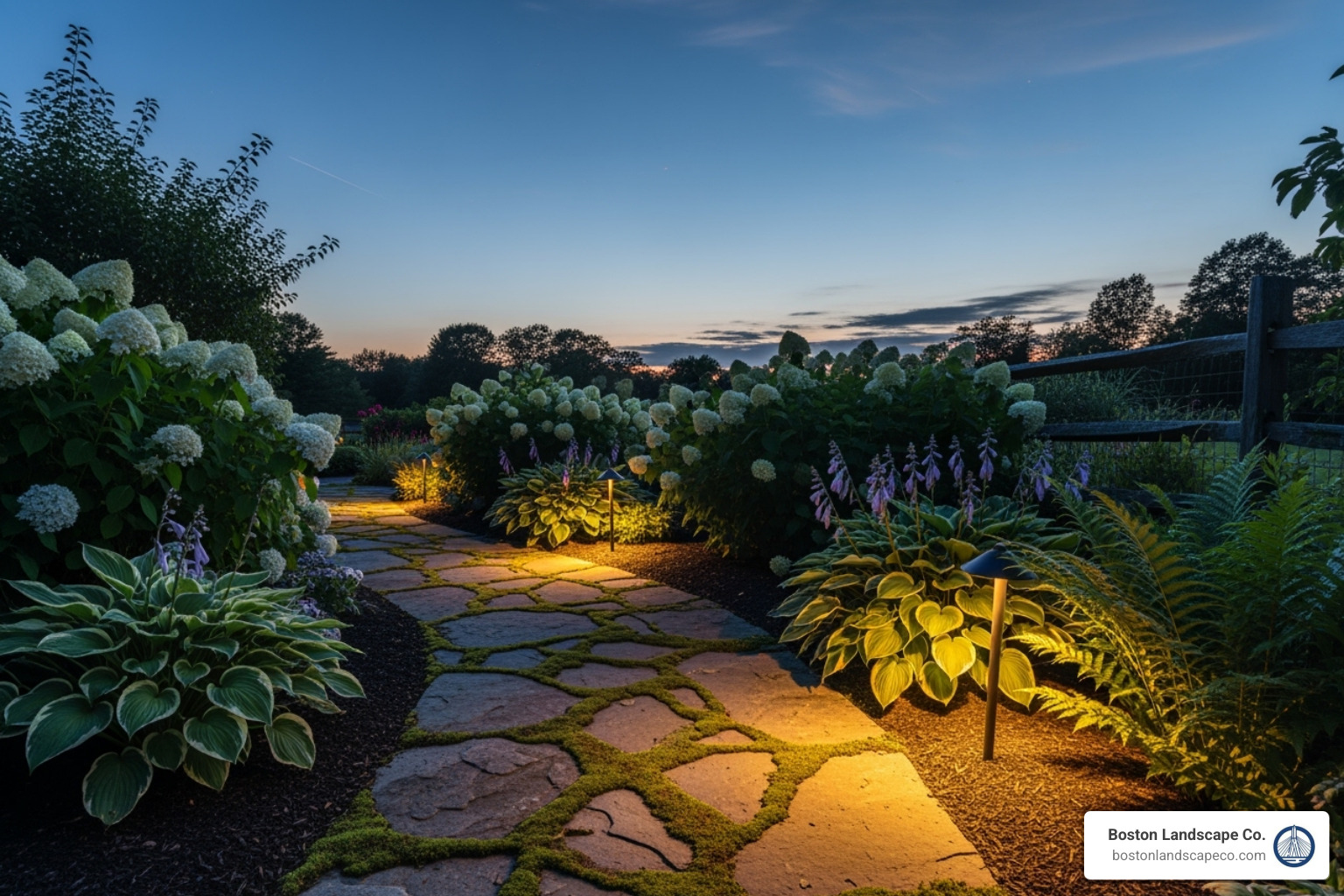
Lighting improves safety and ambiance, extending the enjoyment of your garden into the evening. Low-voltage systems are the professional standard, offering reliable, controlled illumination. Consider uplighting nearby trees or installing in-paver lights for a sleek, modern look. Space lights 8 to 10 feet apart to create overlapping pools of gentle light, not a bright runway.
Maintaining Your Walkway for Longevity
A little routine care keeps your path pristine:
- Regularly sweep away leaves and debris, especially in autumn.
- Pull weeds promptly from any cracks.
- Top up loose materials like gravel or mulch annually in the spring.
- Seal pavers and stone every few years to protect against stains and weather.
- Check for heaving or shifting after winter and address any issues quickly to prevent larger problems.
For professional maintenance, consider our services in areas like Hardscaping Stoneham, MA.
Frequently Asked Questions about Garden Walkways
What is the cheapest material for a garden path?
Loose materials are the most affordable option for a walkway for garden project. Gravel, especially pea gravel, and organic mulches like wood chips offer the lowest initial cost, often running from $1 to $3.15 per square foot for materials. These are also great for DIY installation, which further saves on cost. Just remember to budget for sturdy edging and occasional replenishment.
How do you build a simple garden path?
Building a simple but durable walkway for garden is a great weekend project. Follow these four basic steps:
- Mark the Layout: Use a garden hose or string to outline your path.
- Excavate: Dig a shallow trench, about 4-6 inches deep, and clear it of grass and roots.
- Add a Base: Lay down landscape fabric to block weeds, then add a 2-4 inch layer of compacted crushed gravel for drainage.
- Place Your Material: Install your chosen material, whether it’s gravel, mulch, or stepping stones, and add edging to keep it contained.
Does a small retaining wall along a walkway need drainage?
Yes, absolutely. Proper drainage is crucial for any retaining wall, regardless of its size. Water trapped behind a wall creates hydrostatic pressure, which is intensified by New England’s freeze-thaw cycles. This pressure can cause even small walls to lean, crack, or fail. At a minimum, a layer of crushed gravel should be placed behind the wall, and weep holes should be included at the base to allow water to escape.
Transform Your Garden with the Perfect Path
A thoughtfully designed walkway for garden is the backbone of your landscape, providing structure, beauty, and year-round accessibility. It transforms not just a yard, but how you and your family enjoy your property, from navigating the muddy spring thaw to enjoying a clear path after winter’s first snow.
The perfect garden path is built with expertise. It requires understanding your property, selecting materials that can withstand New England’s weather, and skilled installation to ensure it lasts for decades.
If you’re ready to create a stunning and durable walkway for garden that complements your home, the experts at Boston Landscape Co. can bring your vision to life. We specialize in crafting beautiful, functional hardscapes that improve your property’s value and your enjoyment of it.
Our approach includes:
- Professional design consultation to select the right materials and layout.
- Quality materials sourced for durability in our climate.
- Expert installation using proven techniques for long-term stability.
Ready to take the next step? Explore our hardscaping services to see how we can create the perfect path for your property.