
Walkway Drainage Solutions: Stop Floods Now 2025
Why Your Walkway Needs Better Drainage Right Now
Walkway drainage solutions are essential for preventing water from pooling on your paths and sidewalks, protecting both your property and the people who use it. Here are the most effective solutions at a glance:
Quick Solutions for Walkway Drainage:
- Channel/Trench Drains – Linear drains with grates that capture and redirect surface water.
- French Drains – Subsurface gravel trenches with perforated pipes to manage groundwater.
- Permeable Pavers – Surfaces that allow water to filter through gaps into the ground.
- Grading and Swales – Reshaping the land to slope water away from walkways.
- Catch Basins – Underground chambers that collect and redirect water from problem areas.
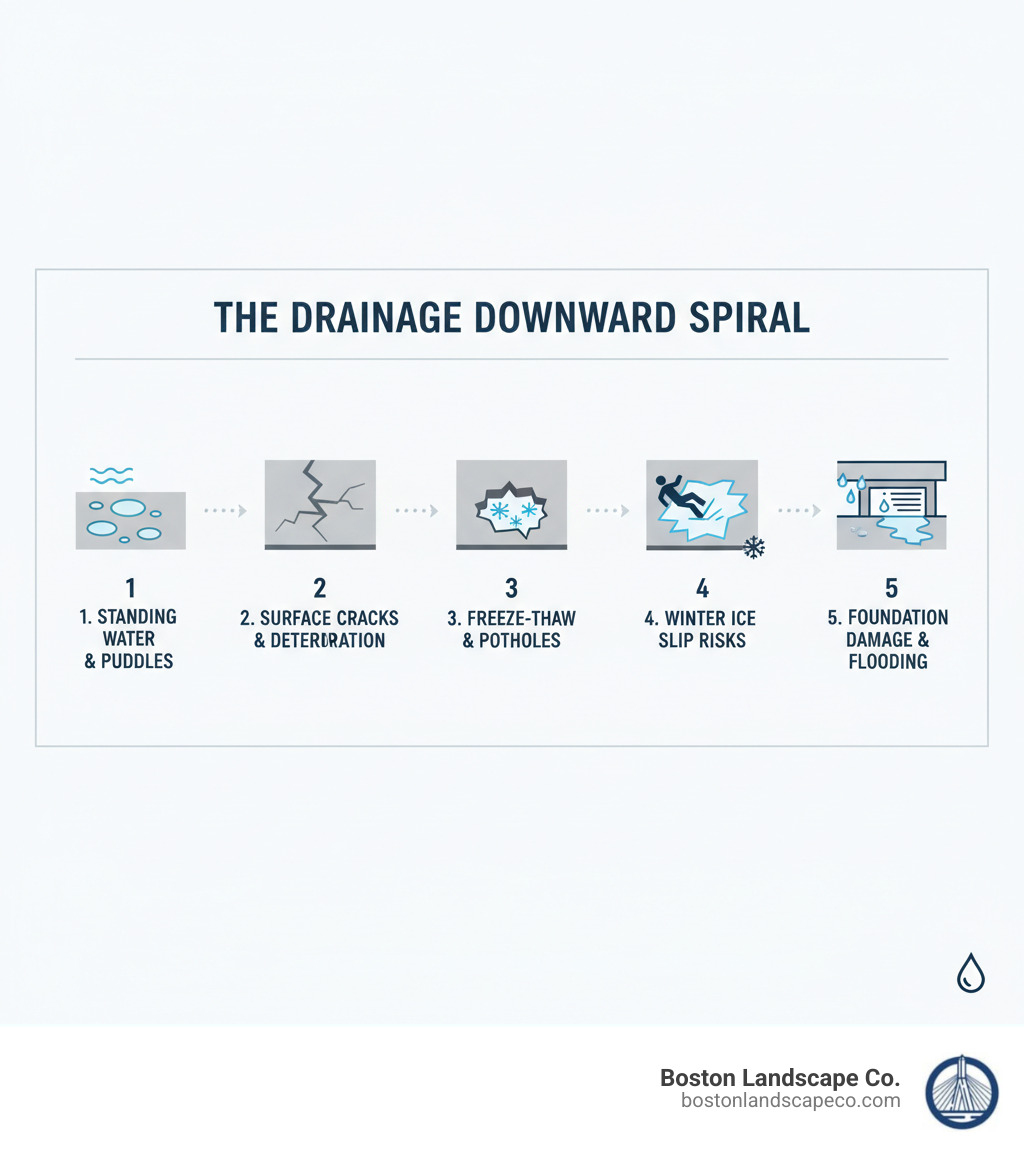
Standing water on walkways is more than an inconvenience; it’s a hazard. Puddles can hide cracks or uneven surfaces, leading to trips and falls. In winter, they become dangerous icy patches. Over time, this water leads to deteriorating surfaces, and the freeze-thaw cycle expands cracks. Worse, water can seep toward your foundation, causing costly structural damage.
As spring brings heavy rainfall, these drainage problems become impossible to ignore. Without proper drainage, you’re setting yourself up for expensive repairs.
I’m Steve Schumacher, owner of Boston Landscape Co. For over three decades, I’ve helped Greater Boston homeowners solve their drainage challenges. Whether it’s a simple grading fix or a complete trench drain installation, we know how the right system protects safety and property value.
Key terms for Walkway drainage solutions:
Why Poor Walkway Drainage is a Problem You Can’t Ignore
When water management fails, your walkway transforms from a helpful feature into a liability. Walkway drainage solutions aren’t just about keeping your feet dry; they’re about protecting your investment and keeping people safe. After three decades of working with homeowners across Stoneham and Billerica, I’ve seen how quickly minor puddles escalate into major headaches, especially during a typical New England spring.
The High Cost of Water Damage
Water is patient, and when it pools on or near your walkway, it starts a slow but steady process of destruction. First, walkway materials begin eroding, and small cracks appear, leading to potholes. These cracks trap more water, accelerating the damage in a vicious cycle.
Below the surface, the trouble gets worse. Seeping water undermines the foundation of your walkway, causing sections to settle unevenly and creating trip hazards. If your walkway is near your house, that water targets your home’s foundation. Saturated soil can lead to basement flooding, wall cracks, and structural repairs that make a new walkway seem like pocket change. We see this constantly in the Greater Boston area after heavy spring rains.
Your landscaping also suffers as runoff washes away topsoil and drowns plants. And let’s not forget that standing water is a breeding ground for mosquitoes and other pests. The good news is that all of this is preventable. Learn more about protecting your property with our residential drainage services.
Safety First: Preventing Slips, Trips, and Falls
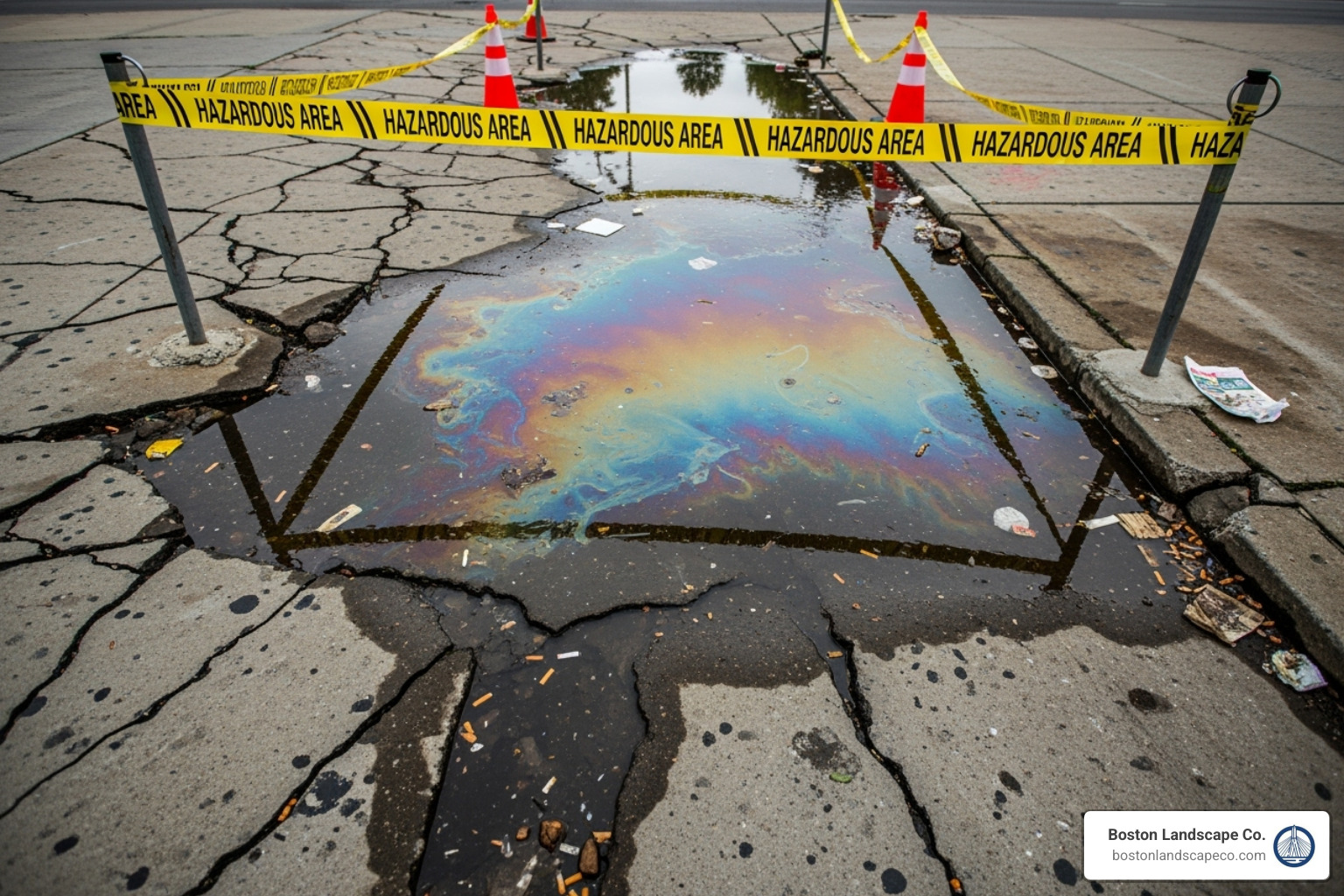
A walkway covered in water is a genuine safety hazard. Puddles can hide cracks, debris, or uneven surfaces that could cause a fall. You can’t see what’s lurking underneath, and neither can your family, guests, or mail carrier.
In winter, these puddles become treacherous ice patches. The freeze-thaw cycle worsens the problem by expanding cracks and creating more damage. By spring, you’re left with surfaces that are both damaged and dangerous.
When people encounter a large puddle, they often step off the path into your landscaping or the street, creating new hazards. For homeowners, there’s also the liability issue to consider. If someone is injured on your property due to poor drainage, you could be held responsible. We ensure our installations meet ADA compliance standards, creating safe, accessible paths for everyone.
Keeping your walkway clear, dry, and safe year-round is achievable with the right walkway drainage solutions.
A Guide to Effective Walkway Drainage Solutions
Solving walkway drainage problems requires choosing the right approach for your property. Some solutions work on the surface, while others tackle groundwater below. At Boston Landscape Co., we’ve installed every type of drainage system across Greater Boston and can help you find the right fit, from a simple grading fix to a robust channel drain.
Effective walkway drainage solutions exist for every budget. Let’s review the most common options. You can also see examples of specialized products like the Parking & Walkway Drain Channel – V DRAINS.
Channel and Trench Drains
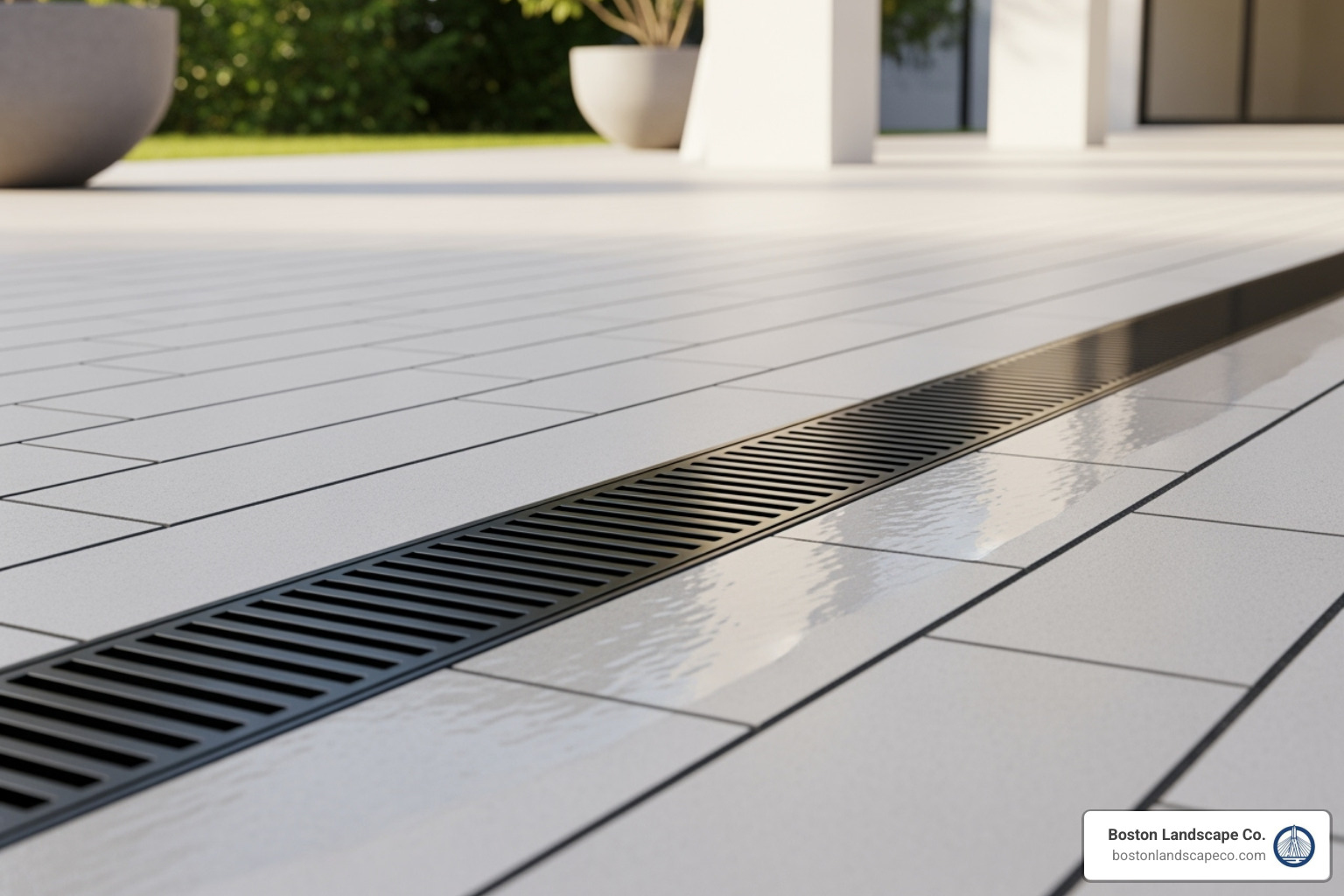
A channel drain is like a long gutter set flush with your walkway. It’s one of the most effective walkway drainage solutions for capturing surface water as it flows across a path, patio edge, or at the base of steps. Water enters through a grate and is carried away through the channel to a safe outlet.
The grate material affects both performance and appearance. Plastic grates are budget-friendly for foot traffic. Galvanized steel offers more durability. Stainless steel provides a sleek, corrosion-resistant look for high-end projects. For areas with vehicle traffic, ductile cast iron provides the necessary strength. Load capacity is also key: Class A drains are for pedestrians, while Class B handles light vehicles.
French Drains
While channel drains manage surface water, French drains work underground to control groundwater. If you have soggy areas next to your walkway, a French drain is often the solution. It consists of a sloped trench filled with gravel and a perforated pipe. Water seeps through the gravel into the pipe and is carried away. We’ve installed countless French drains in Concord and Lexington to solve persistent wet spots. Proper installation, especially getting the slope right, is crucial for the system to function correctly. While DIY guides like How to Install an Outdoor Drainage System exist, professional installation ensures long-term effectiveness.
Permeable Pavers and Gravel
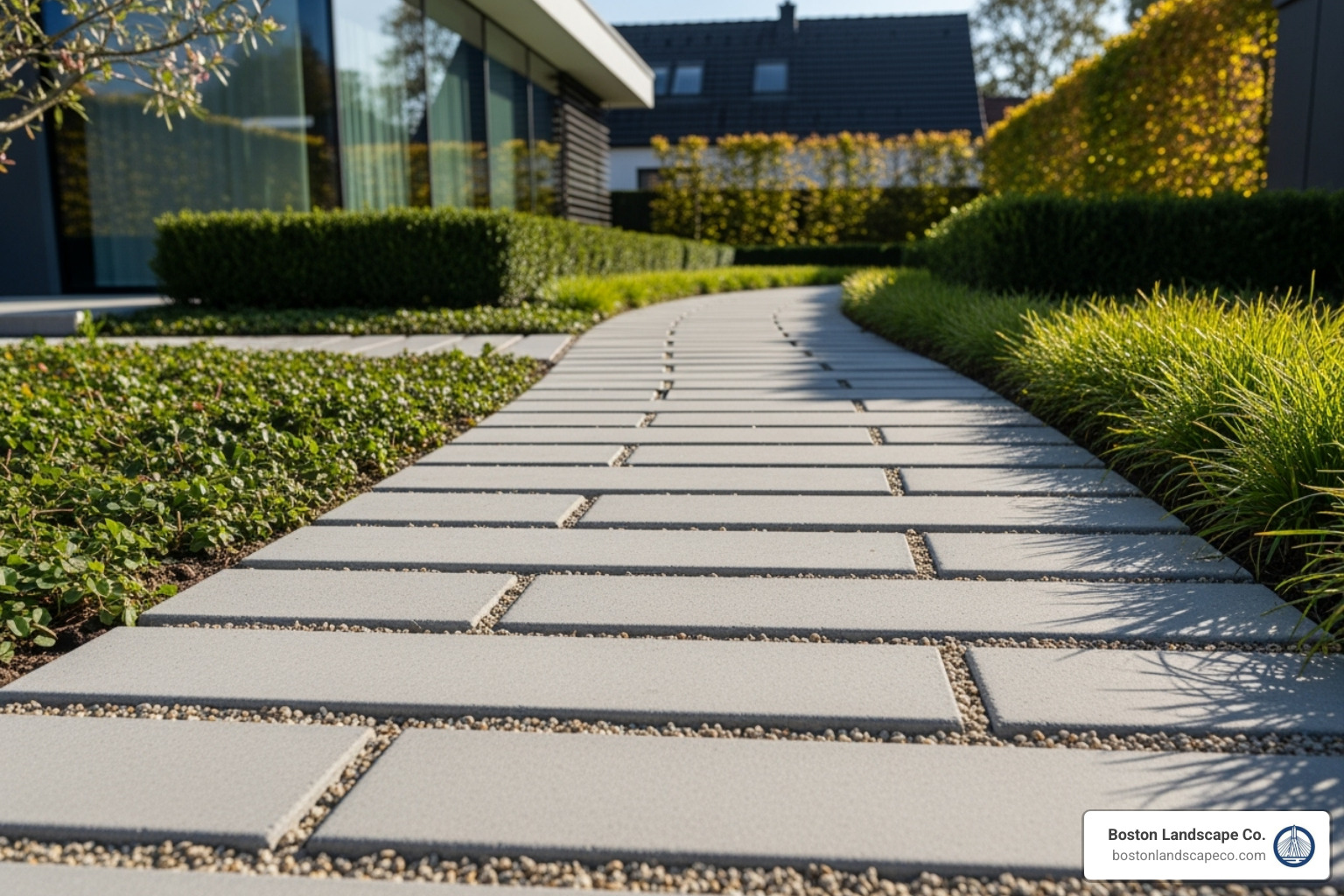
If you’re building a new walkway, permeable pavers offer an eco-friendly drainage solution. Instead of creating runoff, they allow rainwater to filter through small gaps into the ground below, recharging groundwater. They come in many styles and colors, so you don’t have to sacrifice aesthetics for function. Gravel paths work on the same principle, allowing water to drain through. Our Hardscaping Services in Boston often incorporate these natural drainage elements.
Grading and Swales
Sometimes the best solution is simply reshaping your land. Proper grading creates a gentle slope (at least 1%) to direct water away from walkways and foundations. We use dense, clay-like soil that holds its shape, ensuring a lasting fix. A swale, a shallow, grass-covered channel, can guide this water along your yard’s natural contours. For a more decorative look, a dry creek bed uses rocks and stones to serve the same function, handling stormwater while adding a beautiful landscape feature. We love integrating these into Landscape Design projects because they solve drainage problems beautifully.
Designing and Installing Your Drainage System
Effective walkway drainage solutions require careful planning. A system that works is one that’s designed correctly from the start. Whether you’re considering a DIY project or hiring professionals, understanding these key principles will help you avoid costly mistakes.
Key Design Factors to Consider
When we assess a property in Stoneham or Billerica, we look at several critical factors:
- Slope: Water doesn’t flow uphill. Your walkways and the surrounding ground need at least a 1% grade (one inch of drop for every 100 inches) away from structures to keep water moving.
- Load Capacity: A grate for foot traffic will fail under a car. We match the system to its use. Class A grates are for pedestrians; higher classes are needed for driveways or areas where vehicles might cross.
- Materials: New England’s freeze-thaw cycles are brutal. We select materials based on climate durability and expected lifespan. Plastic, polymer concrete, stainless steel, and cast iron each have their place.
- Grate Design: Grates should be safe and complement your design. We recommend heel-proof and ADA-compliant grates for main walkways. Decorative options can improve your hardscape design and build.
- Outlet Connection: A drainage system must lead somewhere. Water needs a destination, whether it’s a storm drain, a dry well, or a rain garden. A proper outlet prevents creating new problems downstream.
Choosing the Right Materials for Your Walkway Drainage Solutions
Understanding drainage materials helps you make smart choices for your budget and needs.
- Plastic (PVC or HDPE): Budget-friendly, lightweight, and corrosion-resistant. Great for DIY projects and standard residential walkways, but can become brittle over time with cold and UV exposure.
- Polymer Concrete: Offers superior durability and chemical resistance (including road salt). A good investment for high-traffic areas.
- Stainless Steel: The top choice for aesthetics and longevity. It won’t rust and provides a clean, modern look for high-end properties.
- Cast Iron: The heavy-duty champion. Essential for driveways or commercial areas that must support vehicle traffic.
We help you choose the right material based on your climate, budget, and how you use the space.
DIY vs. Professional Installation of Walkway Drainage Solutions
Some simple fixes, like extending downspouts or minor regrading, are reasonable DIY projects. However, complex systems are a different story. Achieving a precise slope, using the right soil, and projects involving significant excavation or pipe connections are best left to professionals.
Before you dig, call 811. This free service marks underground utility lines. Hitting a gas, water, or electrical line is dangerous and expensive. If your drainage issues threaten your foundation, don’t gamble with a DIY approach. The risk of structural damage is too high.
Cost is a major factor. Based on internet research from sources like Angi, professional installation costs can vary widely. Channel drains might range from $30 to over $150 per linear foot, and French drains from $10 to $100 per linear foot. These are national averages and not a quote from Boston Landscape Co.; actual costs depend on site conditions, materials, and complexity. Often, the most cost-effective approach is getting it done right the first time.
Frequently Asked Questions about Walkway Drainage
Homeowners across the Greater Boston area often ask about the cost, effectiveness, and installation of drainage systems. Here are answers to the most common questions.
What is the cheapest walkway drainage solution?
The most budget-friendly walkway drainage solutions are often simple DIY fixes for minor issues.
- Extend Downspouts: A plastic extension to carry roof runoff 4-6 feet from your walkway is the cheapest and easiest first step.
- Regrade Small Areas: Using a shovel and some clay-like soil (not topsoil) to create a gentle slope away from a puddle costs little more than your time.
- Simple Gravel Trench: A basic trench filled with crushed stone can help with minor surface water.
For installed systems, plastic channel drains are the most affordable option for pedestrian areas. However, the “cheapest” fix isn’t always the best long-term solution to protect your property.
How do I stop my walkway from flooding?
First, identify the water’s source. The solution depends on the cause of the flooding.
- From Downspouts: If flooding occurs near the house during rain, extend your downspouts or connect them to an underground pipe.
- From a Sloped Yard: If water sheets across the walkway from higher ground, you need to reshape the landscape. A swale, grading, or a French drain parallel to the path can intercept the water.
- On the Walkway Surface: For low spots where water pools, a channel drain installed across the path is the most direct solution to capture and redirect it.
- From Groundwater: If the ground stays soggy long after rain, a French drain is needed to manage subsurface water.
Often, a combination of these approaches is required. Observing your property during a rainstorm is the best way to diagnose the problem.
Can I put a drain in an existing concrete walkway?
Yes, a channel drain can be retrofitted into an existing concrete walkway, but it’s a job best left to professionals. The process involves:
- Saw-cutting a precise trench across the concrete.
- Excavating the concrete and soil.
- Installing the drain channel with the correct slope for proper flow.
- Pouring new concrete to secure the drain and create a seamless, trip-free surface.
An error in slope or concrete work can cause the system to fail. If your walkway is already badly cracked, it may be more cost-effective to replace the section entirely with proper drainage built in from the start.
Secure Your Property with the Right Drainage Solution

No one gets excited about drainage, but effective walkway drainage solutions are the key to a safe, functional, and beautiful outdoor space. The right system provides peace of mind, protecting your property from water damage and your family from slip-and-fall hazards.
We’ve covered solutions from channel drains and French drains to permeable pavers and grading. New England weather is tough, with heavy rains and brutal freeze-thaw cycles. Your drainage system needs to handle it all, year after year. A professional assessment can save you time, money, and future headaches.
At Boston Landscape Co., we’ve solved every imaginable drainage challenge for homeowners in Stoneham, Billerica, and surrounding communities. We design systems that perform flawlessly and protect your investment.
Don’t wait for standing water to cause serious damage. Whether you need a simple fix or a comprehensive overhaul, we’re here to help you find the right solution for your property and budget.
Ready to transform your problem walkways into safe, dry paths? Contact us for professional hardscaping services near you and let’s protect your property the right way.
