
Why Turf Artificial Is Becoming the Go-To Lawn Solution for Greater Boston Homeowners
Turf artificial is a synthetic grass surface made from plastic fibers — typically polyethylene, polypropylene, or nylon — designed to look and feel like natural grass without the ongoing maintenance.
Here are the most popular types and their best uses at a glance:
| Type | Best For | Typical Cost (Material Only)* |
|---|---|---|
| Polyethylene | Residential lawns, pet areas | $2.50–$4.00/sq ft |
| Polypropylene | Low-traffic decorative areas | $2.00–$6.00/sq ft |
| Nylon | Sports fields, high-traffic zones | $5.00–$6.00/sq ft |
*Average costs based on online/internet data. These are not the rates of Boston Landscape Co.
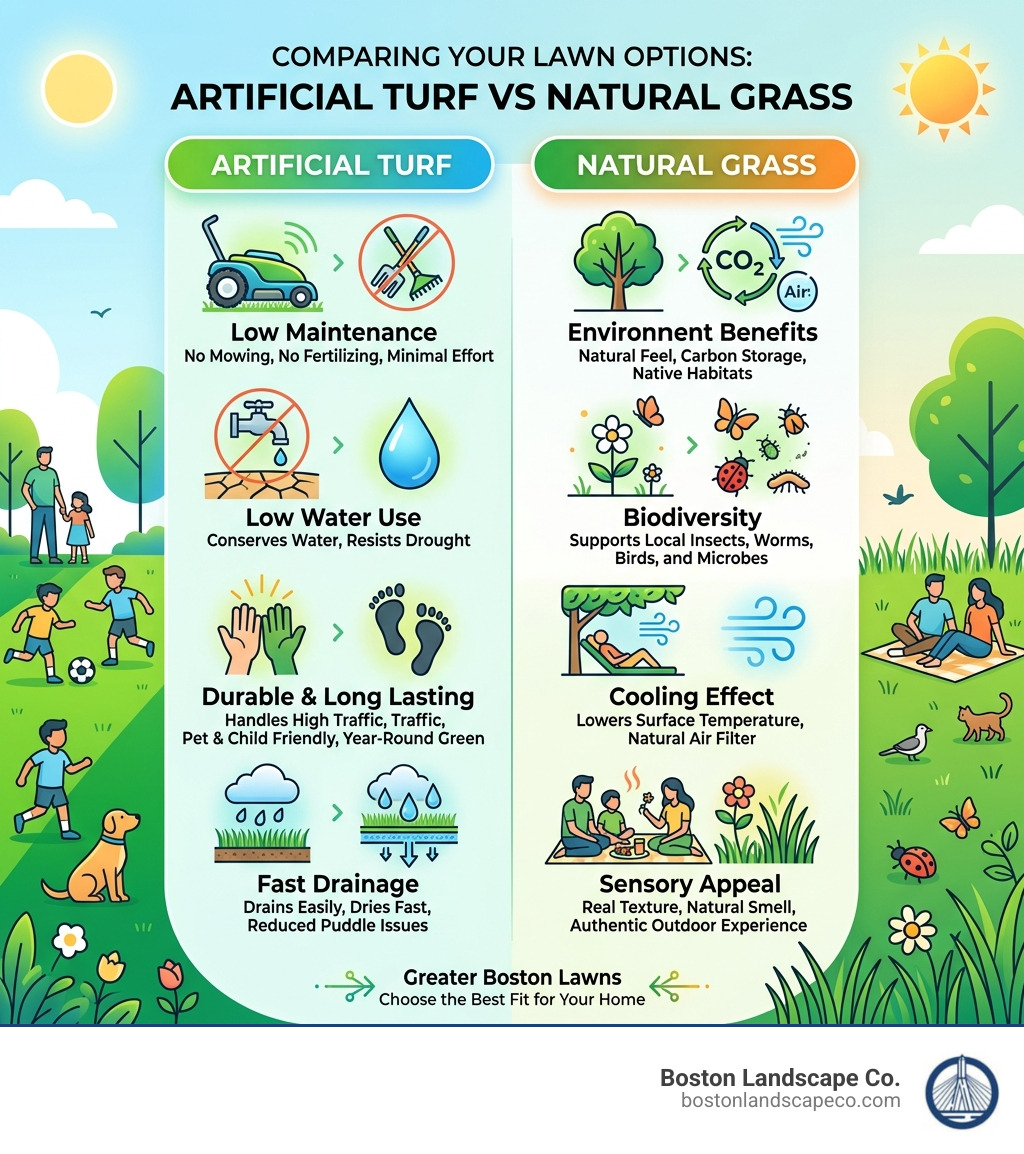
For Massachusetts homeowners, the appeal is straightforward. Natural grass struggles through harsh New England winters, muddy springs, and dry summers. Artificial turf stays green and functional year-round — no mowing, no watering, no fertilizing.
It’s not just for looks either. Modern synthetic grass is built for pets, kids, putting greens, and high-traffic outdoor spaces. Durability and drainage technology have come a long way from the stiff, fake-looking turf of decades past.
I’m Steve Schumacher, owner of Boston Landscape Co. since 1991, and over my 30+ years in landscaping I’ve seen turf artificial go from a niche product to one of the most requested upgrades from homeowners across the Greater Boston area. Let me walk you through the best options we recommend for Massachusetts properties.
Relevant articles related to turf artificial:
Understanding the Benefits of Turf Artificial for Massachusetts Homeowners

When we talk to homeowners in Stoneham or Bedford, the conversation usually starts with a common frustration: the “New England Lawn Struggle.” Between the heavy snow in January and the humid heat of July, keeping a natural lawn looking pristine is a full-time job. Turf artificial changes the game by offering a 65% reduction in long-term maintenance costs compared to natural grass.
For families in our area, the benefits are immediate. You can say goodbye to the Saturday morning ritual of mowing, edging, and weeding. Because synthetic grass doesn’t require watering, you can save up to 70% on your annual outdoor water use—a huge plus during those dry Massachusetts summers. Furthermore, turf artificial is entirely pesticide-free, creating a safer environment for your family and local pollinators.
In communities like Bedford, where Artificial Turf Fields are increasingly common for municipal use, homeowners are seeing how these surfaces handle heavy use without turning into a mud pit. If you’re looking for more info about synthetic lawns in Stoneham, you’ll find that the primary driver is the desire for a year-round green space that actually withstands the local climate.
High-Traffic Turf Artificial for Active Families
If your backyard is the neighborhood hub for touch football or tag, you need a turf that won’t mat down after a single weekend. High-traffic turf artificial is engineered with resilient fibers, often using polyethylene, which balances a soft feel with incredible durability. These products often feature a higher “face weight”—the weight of the turf fibers per square yard—which contributes to a denser, more plush appearance that can handle thousands of footsteps.
For residents in urban settings, such as those seeking more info about artificial grass in Boston, high-traffic turf is essential for small yards or rooftop decks where foot traffic is concentrated in a tiny area. Modern fibers are designed to “spring back” after being stepped on, ensuring your lawn doesn’t look flat or tired.
Specialized Turf Artificial for Pets and Putting Greens
Not all turf is created equal, especially when it comes to our four-legged friends. Pet-specific turf artificial is designed with a highly permeable backing that allows urine to drain through at rates of up to 1,200 inches per hour. Many of these products are infused with antimicrobial technology, like Microban, which inhibits the growth of bacteria and reduces odors by up to 99%. This makes doggie turf a fantastic solution for side yards or dog runs that used to be nothing but mud and yellow spots.
For the golf enthusiasts in Concord or Lexington, specialized putting green turf offers a professional-grade practice surface right in the backyard. These systems, such as those installed by A-Turf®, use a shorter pile height and specific infill to replicate the ball roll of a natural grass green. Whether you’re working on your short game or just want a fun backyard activity, these custom-contoured greens add significant value and enjoyment to your property.
Choosing the Right Material: Polyethylene, Polypropylene, and Nylon
Choosing the right material is the most important decision you’ll make for your project. Each plastic polymer has distinct characteristics that suit different parts of your landscape.
| Feature | Polyethylene | Polypropylene | Nylon |
|---|---|---|---|
| Durability | High | Low to Moderate | Extremely High |
| Feel | Soft & Natural | Stiff/Plastic-like | Coarse |
| Heat Resistance | Moderate | Moderate | High |
| Best Use | Lawns & Pets | Decorative/Low Traffic | Sports & High Traffic |
Polyethylene is the industry standard for residential lawns. It looks the most like real grass and is soft enough for bare feet. Polypropylene is often the most budget-friendly, but it doesn’t hold up as well to heavy foot traffic or high heat. Nylon is the “heavy hitter” of the turf world; it can withstand extreme temperatures and intense wear, making it the top choice for commercial spaces or athletic zones, though it does come with a higher price tag.
Safety is also a top priority for us and our clients. We recommend looking for products like those described as Artificial Grass Made in the USA: Non-Detectable PFAS Levels, which ensure your lawn is free from harmful chemicals. Quality USA-made turf often features UV protection to prevent the vibrant green from fading under the New England sun.
Estimating the Cost of Synthetic Grass Installation
Budgeting for turf artificial involves more than just the price of the grass itself. A successful project requires extensive site preparation, specialized tools, and skilled labor to ensure the surface remains flat and drains properly for decades.
Factors Influencing Your Project Budget
Several variables will dictate the final cost of your installation:
- Project Size: While larger projects cost more overall, they often benefit from bulk material discounts, potentially lowering the cost per square foot.
- Site Preparation: This includes the removal of existing grass (which can cost between $0.88 and $1.84 per sq ft), excavation of 3-4 inches of soil, and capping of existing irrigation heads.
- Accessibility: If our crews have to move materials through tight alleyways in Somerville or up to a rooftop in Boston, labor costs will increase.
- Material Quality: High face-weight turf with antimicrobial backing or heat-reflective technology will sit at the higher end of the price spectrum.
Note: The prices listed here are average costs based on online/internet data and are not the actual prices of Boston Landscape Co. Average professional installation costs typically range from $5.00 to $20.00+ per square foot, though complex sites with steep slopes or intricate curves can push these totals higher. For a more accurate picture of what your specific yard might require, check out more info about artificial grass installation costs.
Professional Installation and Long-Term Durability
A “DIY” turf project might sound tempting, but the secret to a lawn that lasts 15 to 25 years lies beneath the surface. At Boston Landscape Co., we follow a rigorous process to ensure your investment stands the test of time.
The process begins with excavation—removing the top layer of soil to make room for a stable base. We then install a synthetic lawn base, typically consisting of crushed stone or “fines,” which is compacted to create a smooth, porous foundation. A weed barrier is often added to prevent any persistent New England weeds from poking through.
Once the turf is laid and the seams are meticulously joined using industrial-grade adhesive or tape, we add infill. This usually consists of silica sand or coated rubber granules. Infill is crucial because it weighs the turf down, protects the backing from UV rays, and helps the individual blades stay upright. High-quality systems, like those from FieldTurf, emphasize the importance of the right infill for safety and performance. If you’re curious about the nitty-gritty details, we have a full guide on how to install artificial turf.
Frequently Asked Questions about Synthetic Grass
How long does artificial turf last in the New England climate?
High-quality turf artificial systems are built to last between 15 and 25 years. In our region, the main concerns are the freeze-thaw cycles. Because professional installations include a porous stone base, water drains away quickly, preventing the “heaving” that can damage solid surfaces like concrete. UV-resistant coatings also ensure the grass doesn’t become brittle after years of sun exposure.
Is artificial turf safe for pets and children?
Absolutely. Modern synthetic grass is non-toxic and lead-free. For families with children, we can install specialized shock pads underneath the turf to provide fall height protection—perfect for play areas. For pet owners, the antimicrobial properties and superior drainage make it a much more hygienic option than a muddy, bacteria-filled natural lawn.
What maintenance is required for a synthetic lawn?
While you won’t need a mower, you’ll still need to do some light “grooming.” We recommend using a leaf blower to remove debris and occasionally rinsing the turf with a hose to remove dust. For high-traffic areas, a quick brush with a plastic-bristled rake will help “re-bloom” the fibers and keep them standing tall. If you have pets, simply pick up solid waste as you would on natural grass and occasionally use an enzyme cleaner to keep things smelling fresh.
Conclusion
Whether you’re in Stoneham, Billerica, or anywhere in the Greater Boston area, turf artificial offers a practical, beautiful solution for modern property maintenance. It transforms unusable, muddy patches into vibrant, year-round living spaces that add value to your home and time back to your weekends.
At Boston Landscape Co., we pride ourselves on providing comprehensive landscaping and hardscaping services tailored to the unique needs of Massachusetts homeowners. From initial design to the final grain of infill, we’re here to ensure your outdoor space is both functional and stunning.
Ready to make the switch to a maintenance-free lawn? Request an estimate for artificial grass installation today and let’s get your project started!
