
Price to install irrigation system: 2025 Smart Guide
Your Guide to Irrigation System Installation Costs
The price to install irrigation system for a residential property typically ranges from $1,700 to $10,000+, with most homeowners spending between $2,500 and $6,500. Costs are driven by property size, system type, number of zones, and local factors like rocky soil.
Note: These are national average costs based on industry data and are not specific quotes for Boston Landscape Co. services.
As spring warms the Greater Boston area, an automatic irrigation system becomes a smart investment. It conserves water, saves time, and ensures your landscape thrives during dry summer months. A well-designed system offers convenience and lasting value.
I’m Steve Schumacher, and since 1991, I’ve helped Boston-area property owners design and install irrigation systems custom to their landscape’s needs. I’ve learned that the true value lies in a properly designed system that delivers consistent results.
Basic price to install irrigation system terms:
- Lawn watering system installation
- how are irrigation systems installed
- how long does it take to install irrigation system
What is the Average Price to Install an Irrigation System?
For Massachusetts homeowners planning for the growing season, a professional irrigation system is a common consideration. Based on national data, most homeowners invest between $2,500 and $6,500. However, the price to install irrigation system can start around $1,640 for simple projects and exceed $10,000 for large, complex properties.
This range reflects that every landscape is unique. Costs per square foot typically run from $0.20 to $1.00. For a standard quarter-acre yard, this often falls between $0.28 and $0.47 per square foot. Larger properties of a full acre may cost $6,000 to $20,000. These figures are national averages for budgeting purposes; a detailed site assessment determines the final cost.
Key Factors Influencing the Price to Install an Irrigation System
Understanding what drives irrigation costs helps you plan realistically for summer lawn care. The price to install irrigation system depends on solving your property’s unique puzzle.
- Yard Size and Shape: Larger properties require more materials and labor, though the cost per square foot often decreases with size. Irregular shapes with many garden beds or obstacles increase complexity and cost.
- Soil Type: The soil under your lawn significantly impacts the budget. Sandy soil is easy to trench, but the clay common in Boston suburbs is tougher, adding $0.20 to $0.40 per square foot. Rocky New England soil is the most challenging, potentially increasing costs by 20% to 50% due to specialized excavation needs.
- Lawn Slope and Terrain: Flat yards are straightforward. Sloped properties require pressure-compensating heads (adding $0.10 to $0.30 per square foot) to ensure even watering. Steep slopes may need drainage solutions like French drains at $10 to $65 per linear foot.
- Water Source and Pressure: Low water pressure may require a booster pump ($400 to $1,200) or more watering zones. High pressure needs pressure-reducing valves ($100 to $300) to prevent misting and waste. We test this during our site assessment. For more on optimizing water use, visit our Lawn Irrigation page.
- Number of Watering Zones: Customization is key. Sunny lawns, shady areas, and garden beds all need different watering schedules. Most homes need 3 to 5 zones, but diverse landscapes may require more. Each zone adds $500 to $1,000 but ensures every plant gets what it needs.
- System Complexity and Material Quality: A basic timer is cheaper upfront, but smart systems offer long-term savings. Using high-quality pipes, heads, and fittings costs more initially but prevents costly future repairs.
Average Price to Install an Irrigation System by Yard Size
Since property size is a primary cost driver, here’s a typical breakdown based on national industry data:
- Small lawns (under 5,000 sq ft): $1,400 to $4,500 (2-4 zones).
- Medium lawns (1/4 acre, ~10,890 sq ft): $2,200 to $7,000 (4-6 zones). This is a common size in Greater Boston suburbs.
- Large lawns (1/2 acre, ~21,780 sq ft): $4,000 to $12,000+ (6-8+ zones).
- Extra-large lawns (1 acre, ~43,560 sq ft): $7,200 to $20,473 (8-12+ zones).
The per-square-foot cost often decreases on larger properties as fixed costs like permits and design are spread out.
Installation & Component Cost Breakdown
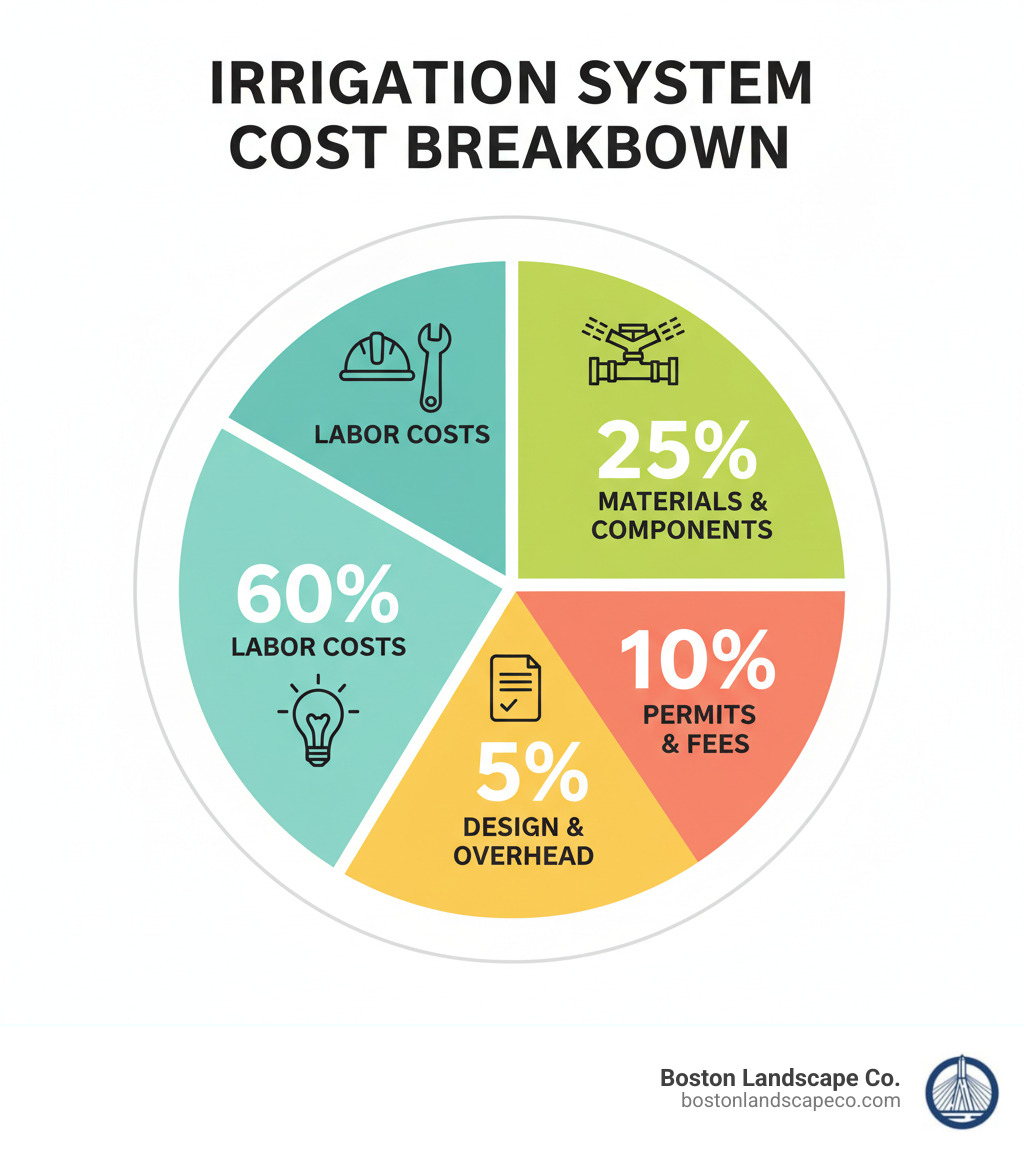
Here’s where your money goes when you tally the total price to install irrigation system:
- Labor Costs: This is the largest expense, at 50% to 60% of the total. Professional rates are $50 to $100 per hour, with a typical installation taking 8 to 16 hours.
- Trenching Costs: For in-ground systems, expect $4 to $12 per linear foot. This is where rocky New England soil can significantly impact the budget.
- Permit Fees: Most Massachusetts towns require a plumbing permit and backflow inspection, costing $50 to $200 total. We handle all permitting paperwork.
- Backflow Preventer: This mandatory safety device costs $250 to $550 and prevents irrigation water from contaminating your drinking water.
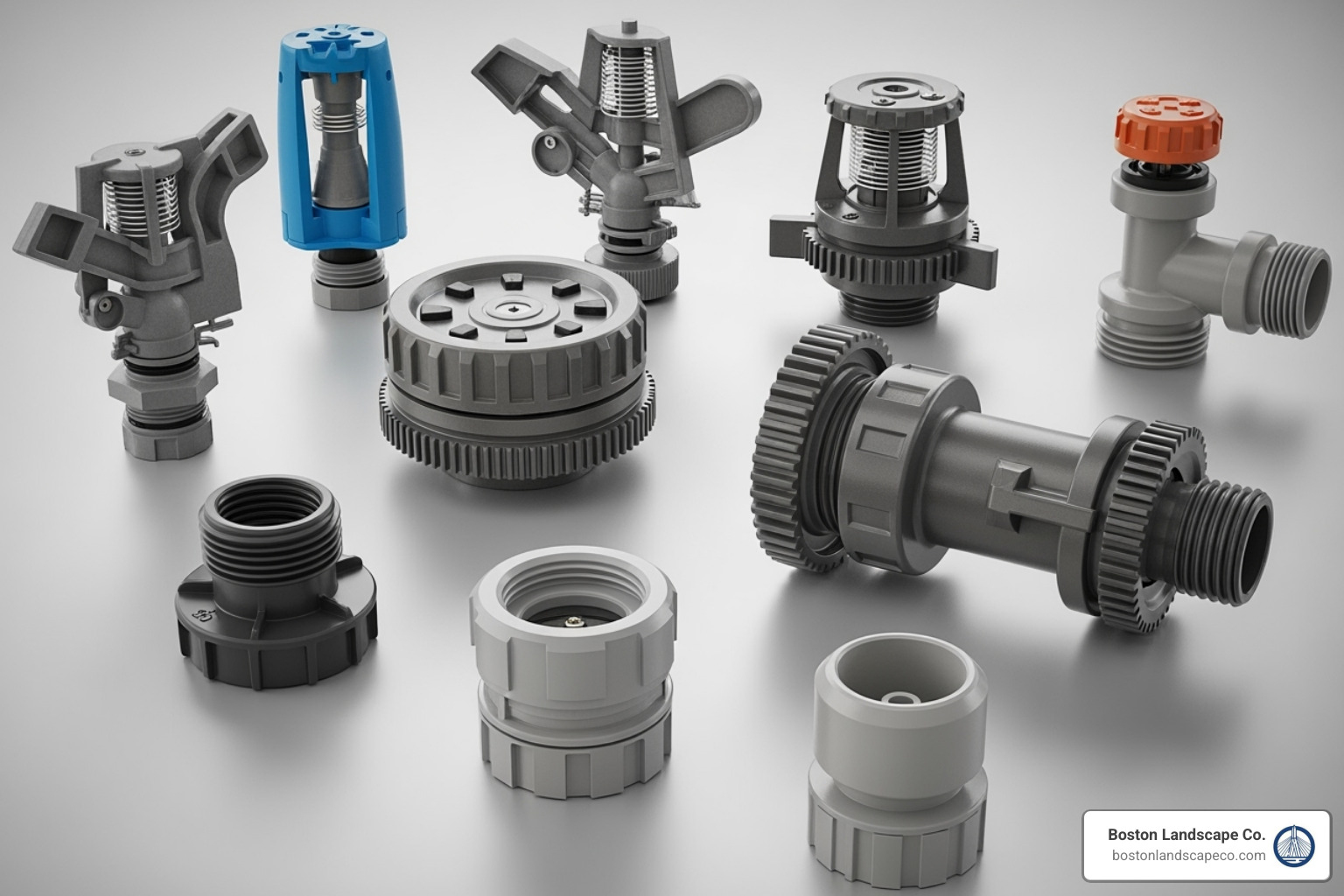
- Sprinkler Heads: Prices vary by type. Pop-up spray heads are $5 to $12 each, while rotary heads for larger areas cost $15 to $25.
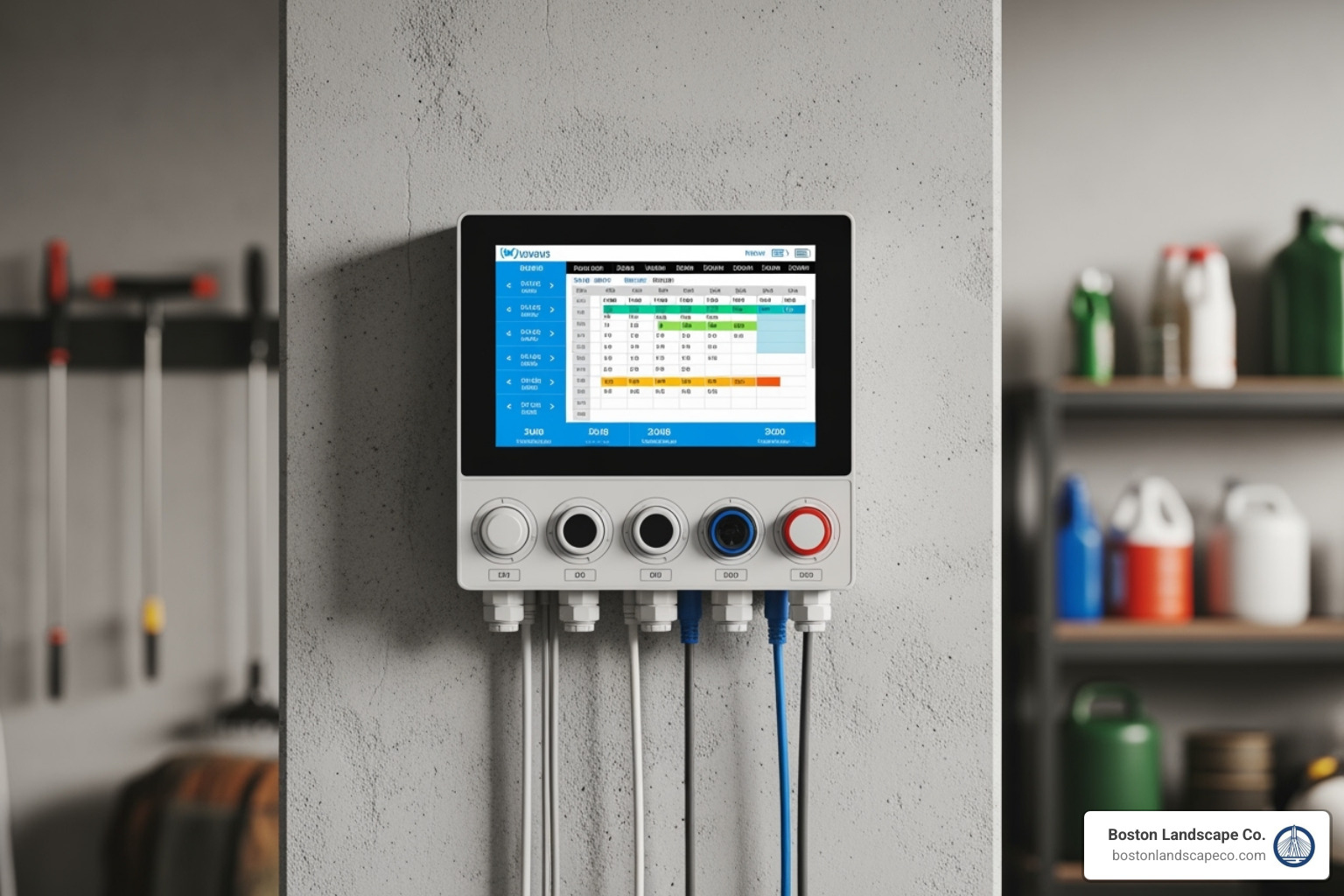
- Controller/Timer: A basic unit starts around $50, but smart controllers with Wi-Fi and weather-sensing capabilities range from $100 to $300.
- New vs. Retrofit Installation: Installing during new construction is cheaper ($0.50 to $0.75 per sq ft) than retrofitting an established landscape ($0.75 to $1.50 per sq ft) due to the need to work around existing plants and repair the lawn.
Efficient designs align with scientific research on outdoor water use from the EPA’s WaterSense program.
Comparing System Types and Long-Term Expenses
As you plan for spring in Massachusetts, it’s time to consider which irrigation system best suits your property. The initial price to install irrigation system is just one part of the equation; long-term efficiency and maintenance are also key. There’s no one-size-fits-all solution, as different landscapes have different needs.
Cost by System Type: Sprinkler vs. Drip Irrigation
Each system type performs best in specific applications, delivering different value for your investment.
- In-ground Sprinkler Systems: The standard for lawns, these systems cost $1,740 to $3,400 for a typical quarter-acre property, based on national averages. They offer excellent automation and coverage with moderate water efficiency and maintenance needs.
- Above-ground Sprinkler Systems: A budget option at $425 to $2,000, these systems require manual operation and are best for small, temporary situations. Water efficiency is low due to a lack of precise control.
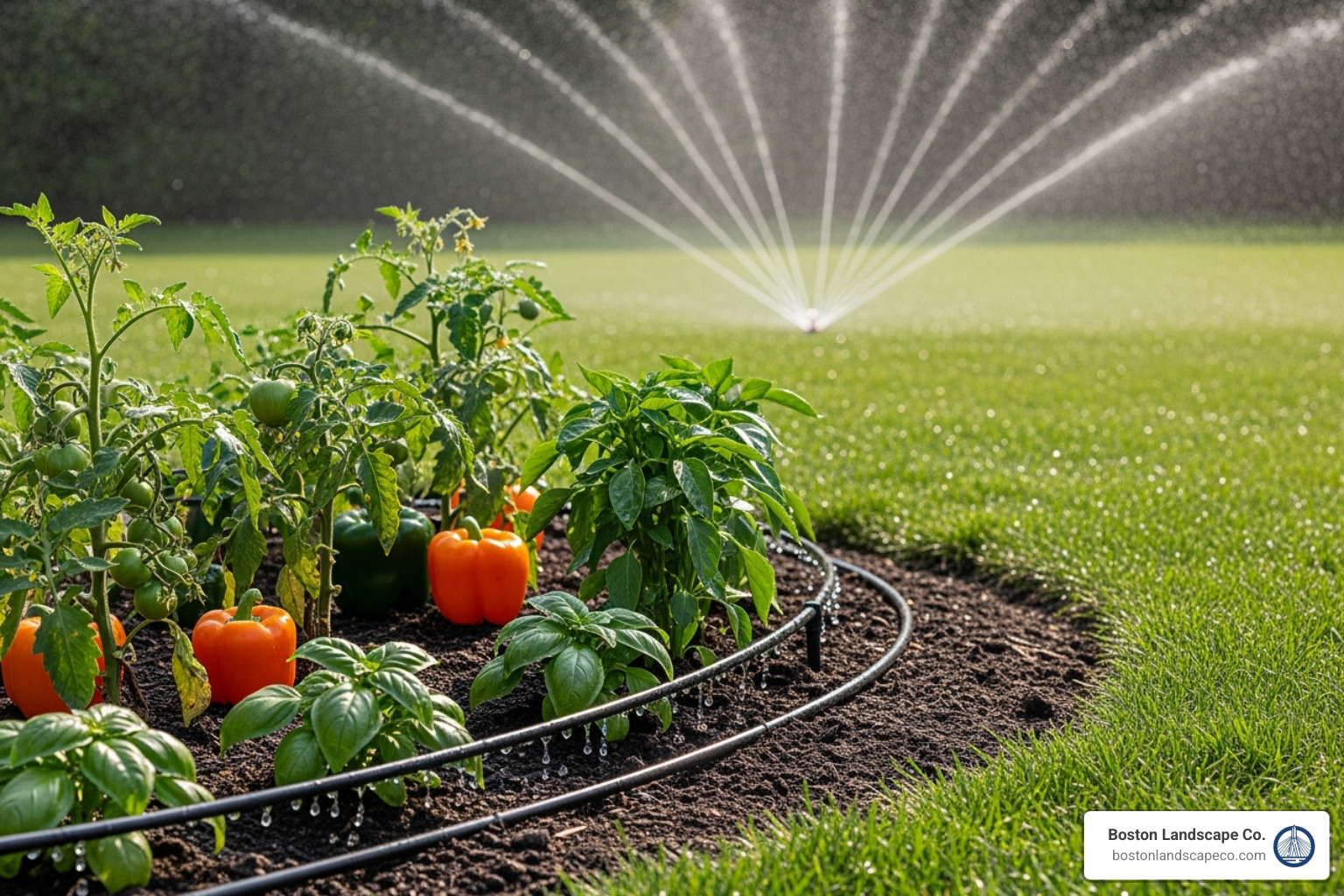
- Drip Irrigation Systems: Ideal for garden beds, trees, and shrubs, drip systems deliver water directly to the roots. A 200-square-foot garden bed might cost $340 to $960. While the per-zone cost is $450 to $1,500, they can reduce water usage by 30-50% compared to sprinklers, making them a smart investment. Learn more in our Drip Irrigation System Installation Guide.
Many homeowners choose a hybrid system, using in-ground sprinklers for lawns and drip irrigation for gardens.
The Impact of Smart Technology
Investing in smart irrigation technology offers significant long-term value. Smart controllers ($100 to $300) use Wi-Fi to connect to local weather data, automatically adjusting watering schedules for rain or heat waves. According to the EPA’s research on smart controllers, these devices can save over 7,000 gallons of water annually, often paying for themselves in 3-5 years.
Weather and soil sensors add more intelligence. Rain sensors ($25 to $75) prevent watering during a storm, while soil moisture sensors ($30 to $350) irrigate only when the ground is actually dry. This technology might add $170 to $530 to the initial price to install irrigation system, but most homeowners see water bill reductions of 15% to 30%.
Ongoing Costs: Maintenance, Repairs, and Winterization
The initial purchase price is just the beginning. Long-term care is essential for keeping your system running smoothly.
- Seasonal Maintenance: Annual packages ($100 to $300) typically bundle spring startup and fall winterization. Spring startup ($75 to $160) involves reactivating the system and checking for issues. Fall winterization ($60 to $120) is non-negotiable in our climate; it uses compressed air to clear water from the pipes to prevent freezing and bursting.
- Common Repairs: Expect occasional repairs. Replacing a broken sprinkler head costs $25 to $90. Pipe leaks can range from $85 to $300+, and valve failures run $130 to $360 per zone.
- Water Utility Costs: An irrigation system can increase your water bill by $50 to $100 per month during peak season. However, a well-designed smart system can be more efficient than manual watering, sometimes keeping bills the same or even lowering them by eliminating waste.
For more on system care, visit our guide on Watering and Irrigation Systems.
Is a Sprinkler System a Good Investment?
As you plan your outdoor projects this spring, you might wonder if the price to install irrigation system is worth it. After three decades in this business, I can say with confidence that a professionally installed system is one of the smartest investments for your property.
DIY vs. Professional Installation
The idea of saving money with a DIY installation is tempting. A DIY kit may cost $150 to $2,500+ in materials and tool rentals, but the real cost is the risk. Common DIY mistakes include hitting utility lines ($500 to $2,000 in repairs), poor zone design leading to wasted water and dead patches, and failing to get proper permits, which can result in fines of $300 to $1,500 in Massachusetts.
Fixing a poorly designed system often costs $2,500 or more. For more on proper installation, see How are Irrigation Systems Installed.
A professional installation for a quarter-acre property typically runs $3,500 to $5,500. While the upfront cost is higher, you’re paying for expertise in hydraulic design, efficient installation, code compliance, and a warranty. Since labor is 50% to 60% of the total price to install irrigation system, the value comes from getting it done right the first time.
Return on Investment: Home Value and Curb Appeal
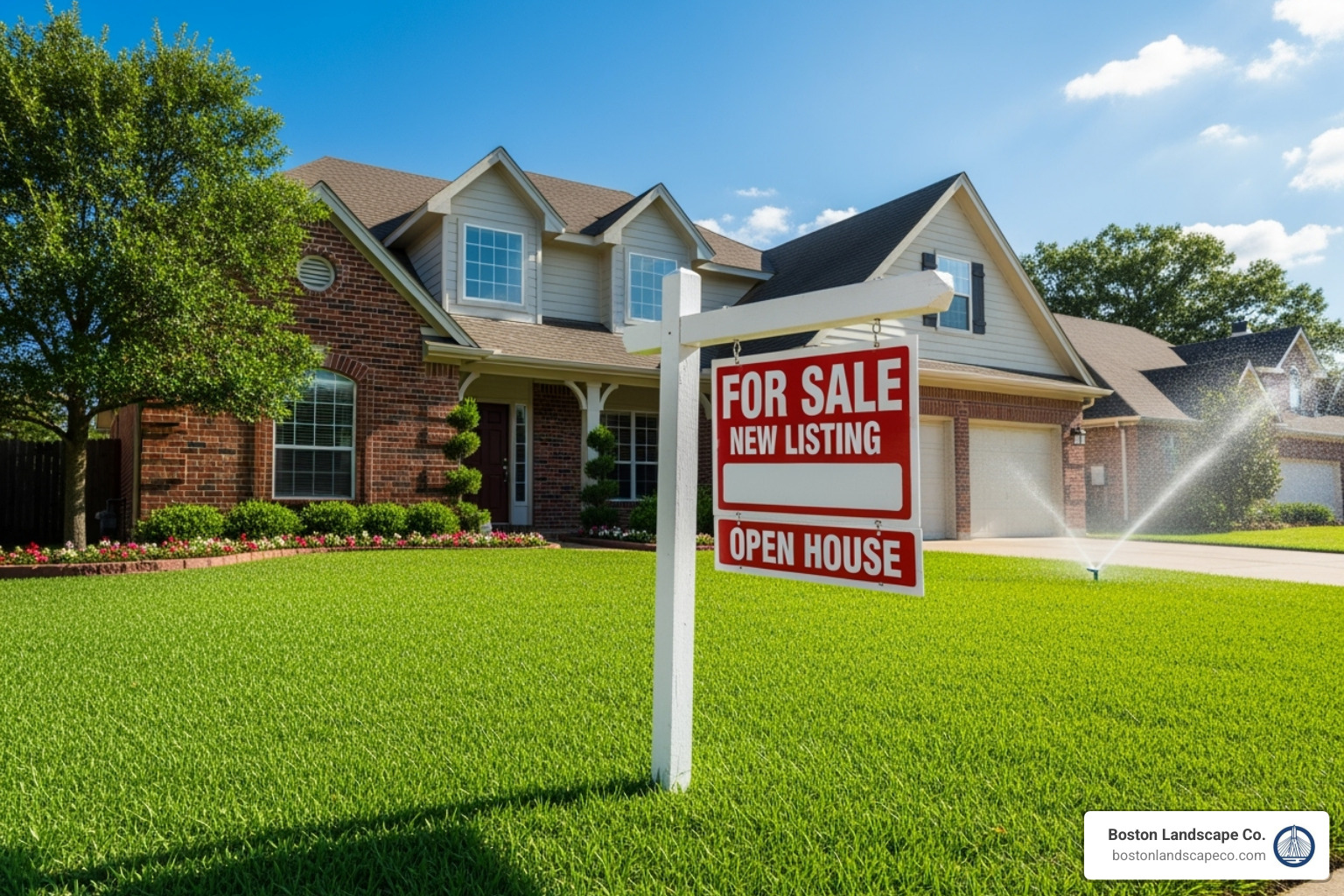
An irrigation system isn’t just an expense; it’s an investment that increases your property’s value. According to strong ROI data from the National Association of Realtors, a system can boost home value by 7% to 15%, with homeowners often recovering 83% to 86% of the cost at resale.
The benefits begin immediately. A lush, green lawn significantly boosts curb appeal, making a powerful first impression. In a competitive real estate market, this can help your home sell faster and for more money.
The time savings are also invaluable. An automatic system frees you from dragging hoses, letting you enjoy your summer evenings. Furthermore, a well-designed smart system often uses less water than manual methods by delivering it precisely when and where it’s needed. While your bill may increase by $50 to $100 per month in peak season, smart controllers can reduce this by 15% to 30%, offsetting the cost compared to inefficient manual watering.
When you consider the increased property value, time savings, and water conservation, the price to install irrigation system is a wise investment in your home and quality of life.
Frequently Asked Questions about Irrigation System Costs
Homeowners in the Greater Boston area often have questions about the price to install irrigation system and what the investment involves. Here are answers to some of the most common concerns as you plan your spring landscape improvements.
How many watering zones do I need for my yard?
There’s no single answer, as the number of zones depends on several factors, not just square footage. A professional assessment is the best way to get an accurate count.
- Yard Size: Smaller yards (<5,000 sq ft) may need 2-3 zones, while larger ones (>10,000 sq ft) often require 5-8+ zones.
- Water Pressure: Low water pressure requires creating more, smaller zones to ensure adequate water flow to all sprinkler heads.
- Plant Needs: Lawns, garden beds, shrubs, and trees have different watering requirements. Grouping similar plants into separate zones (hydrozoning) is critical for plant health.
- Sun vs. Shade: Sunny areas need more water than shaded spots. Separate zones allow for custom watering schedules based on these microclimates.
How much will my water bill increase?
This is a common and valid concern. Most homeowners can expect an increase of $50 to $100 per month during peak summer watering. However, this varies based on your system’s efficiency and local water rates.
Interestingly, if you currently water manually, you might see your bill stay the same or even decrease. An automatic system with smart technology eliminates the inefficiency and waste common with manual watering. By using 15-30% less water than basic systems, a smart controller can significantly offset the cost increase.
Are permits required for sprinkler system installation in Massachusetts?
Yes, most Massachusetts communities require permits for sprinkler system installation. Typically, you’ll need a plumbing permit and a backflow prevention device inspection to ensure the connection to the municipal water supply is safe and protects the public water system from contamination.
Fees generally range from $50 to $200. A professional installer like Boston Landscape Co. handles the entire permitting process, from applications to inspections, ensuring your system is fully compliant with local codes and saving you from potential fines for unpermitted work.
Get a Precise Quote for Your Property
As we’ve explored, the price to install irrigation system is unique to your landscape. While national averages of $2,500 to $6,500 provide a budgeting starting point, your actual cost will depend on factors like our rocky New England soil, your property’s terrain, and the number of zones needed for your specific plantings.
I’ve designed irrigation systems in the Greater Boston area since 1991, and I know that a professional site assessment is invaluable. We don’t just measure square footage; we test water pressure, evaluate soil, analyze sun exposure, and consider how to create the most efficient system for your needs. A well-designed system conserves water, saves you time, and protects your landscape investment.
As spring approaches, now is the perfect time to install an irrigation system before the summer heat arrives. Boston Landscape Co. has served homeowners throughout the Greater Boston area for over three decades. We understand Massachusetts properties and stand behind our work. When you’re ready for a detailed assessment and an accurate quote custom to your property, we’re here to help.
Get a custom irrigation system installation estimate
