
Lawn Sprinkler Installation: 7 Powerful Benefits in 2025
Changing Your Lawn with Automated Irrigation
If you’re looking for lawn sprinkler installation services, here’s what you need to know:
- Average cost: $2,200-$13,800 for a complete system installation
- Installation time: 1-3 days for most residential properties
- Professional vs DIY: Professional installation recommended for in-ground systems
- Key components: Backflow preventer, controller, valves, pipes, and sprinkler heads
- Maintenance needs: Annual spring start-up and fall winterization in New England
Lawn sprinkler installation provides an efficient solution to maintaining a lush, healthy landscape while conserving water and saving time. Gone are the days of dragging hoses across your yard or forgetting to water during hot spells. A properly designed irrigation system delivers precise amounts of water exactly where and when your lawn needs it, reducing waste and promoting deeper root growth.
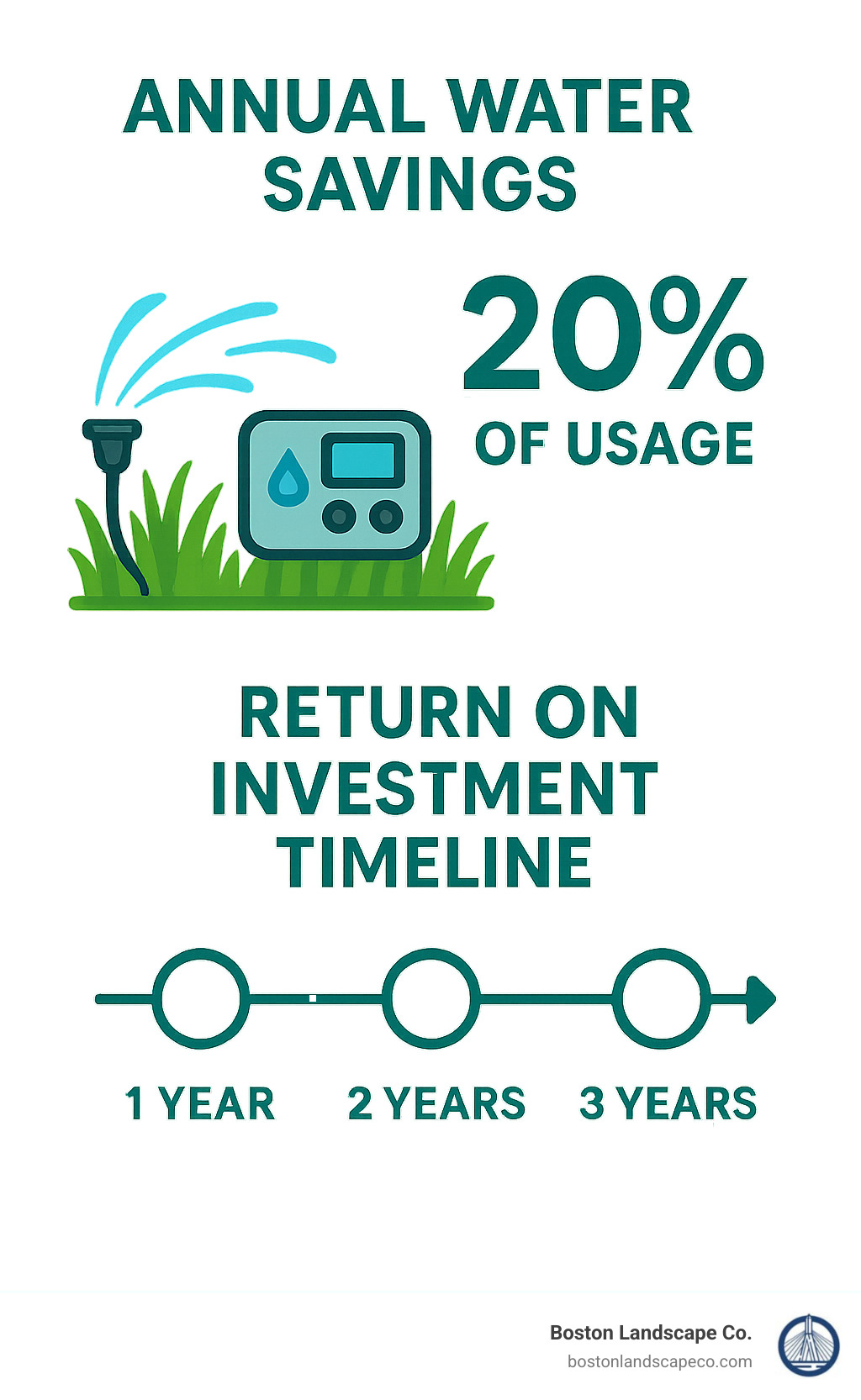
Modern sprinkler systems can be equipped with smart controllers that adjust watering schedules based on weather conditions, soil moisture, and seasonal needs. This technology can save up to 7,000 gallons of water annually—translating to approximately $430 in reduced water bills.
When installed correctly, an irrigation system can add significant value to your property. Professional installations typically recover 83-86% of their cost upon resale, with some studies showing sprinkler systems can increase property values by up to 12%.
I’m Steve Schumacher, owner of Boston Landscape Co, and with over three decades of experience in the landscaping industry, I’ve overseen countless lawn sprinkler installation projects throughout Greater Boston that have transformed parched, patchy lawns into vibrant, healthy landscapes that require minimal maintenance.
How Lawn Sprinkler Systems Work & Why You’ll Love Them
Ever wonder what magic happens beneath your lawn to keep it green and gorgeous? Let me walk you through the fascinating world of sprinkler systems and why they might just be the best investment you’ll make for your yard this year.
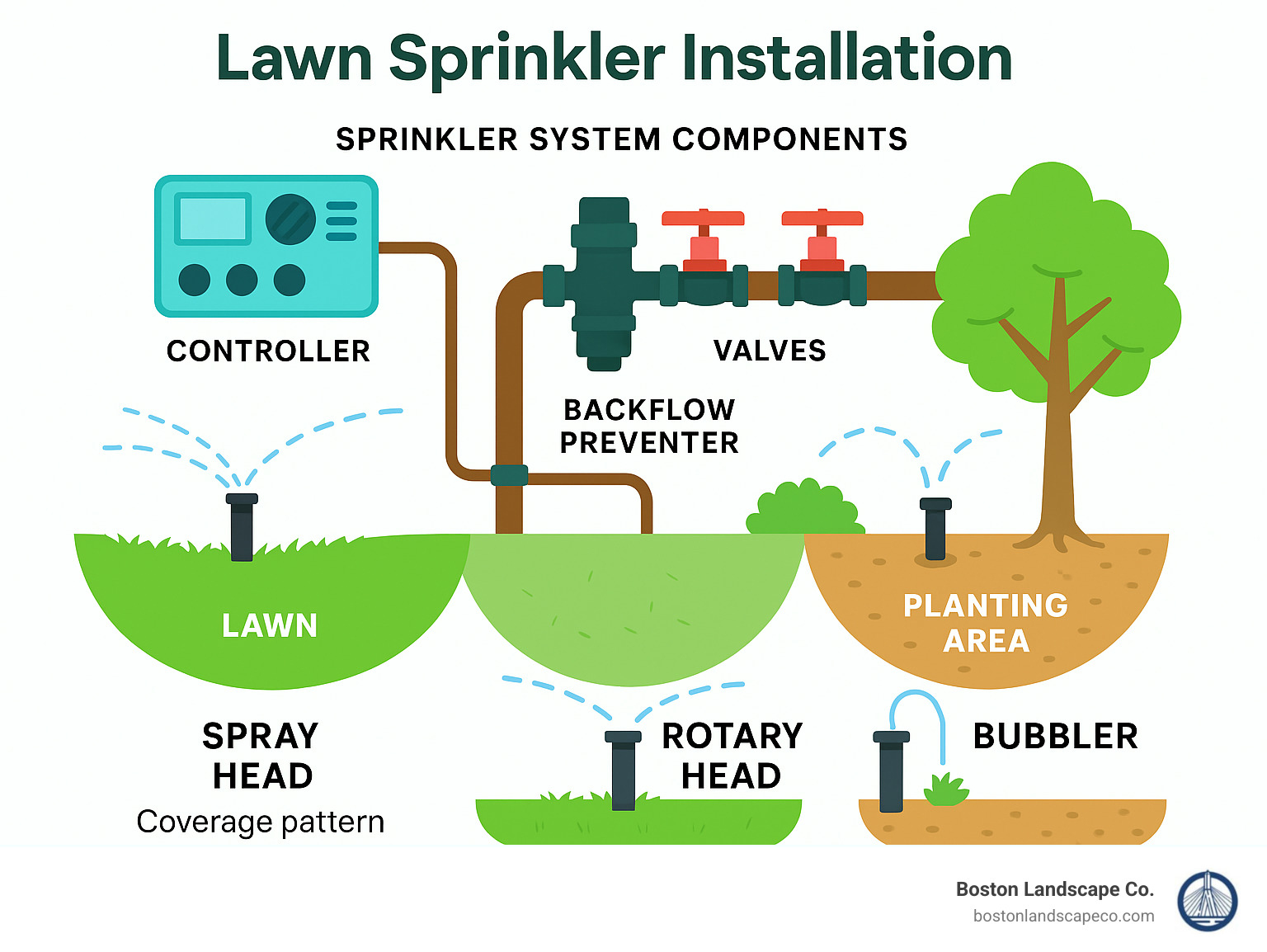
Think of your sprinkler system as having a brain and a body. The controller is definitely the brain—this programmable device decides when your lawn gets watered, for how long, and which areas get attention first. Modern controllers are pretty clever, with some smart versions even checking the weather forecast before deciding whether your lawn needs a drink today.
The valves are like traffic directors, opening and closing to send water exactly where it needs to go. This zone-based approach is brilliant because it means your sun-baked front lawn can get more water than your shady side yard—no more one-size-fits-all watering!
Safety matters too, which is why every proper system includes a backflow preventer. This essential component ensures irrigation water can’t flow backward into your drinking water. It’s not just a good idea—it’s required by Massachusetts building codes for very good reason.
When it comes to the actual watering, different sprinkler heads serve different purposes. Spray heads work wonders in smaller areas with their fixed patterns, while rotary heads are the champions of larger lawns. For your precious garden beds, drip emitters deliver water right to the roots, and bubblers give your trees and shrubs the gentle soaking they crave.
The benefits go way beyond just saving you from dragging hoses around. A professionally installed system improves your soil’s health by providing consistent moisture—no more destructive cycle of bone-dry soil followed by flooding rains. Your lawn develops deeper, stronger roots when it’s watered properly.
The financial upside is impressive too. A quality lawn sprinkler installation can recover up to 86% of its cost when you sell your home, while immediately boosting your property’s curb appeal. Plus, you’ll be doing your part for the environment—smart systems typically use 15-30% less water than manual watering, which matters more each year as water restrictions become increasingly common.
According to scientific research on water-smart irrigation, weather-based controllers significantly reduce water waste by responding to actual conditions rather than rigidly following a preset schedule. Mother Nature doesn’t water on a fixed schedule, and now your lawn doesn’t have to either.
Lawn Sprinkler Installation Basics
Getting a sprinkler system installed right involves some key principles that make all the difference between a patchy, inefficient system and one that keeps your lawn lush for years.
The golden rule of sprinkler design is what pros call head-to-head coverage. This means each sprinkler’s spray should reach all the way to the neighboring sprinklers, creating a perfect overlap. Skip this principle, and you’ll be able to spot the dry patches from your kitchen window.
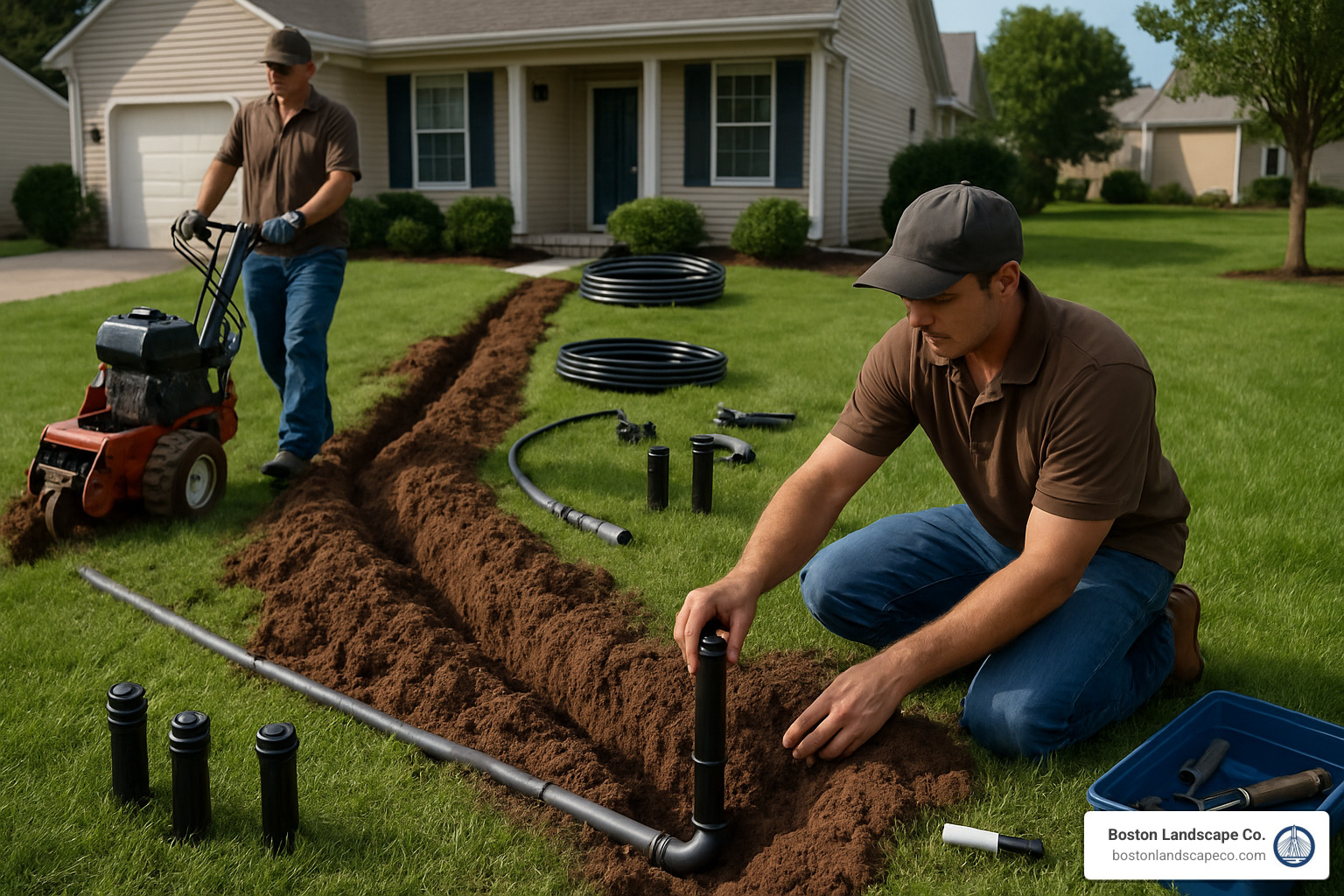
The installation journey begins with trenching—digging channels for the underground pipes. Here in New England, where winter doesn’t mess around, we typically dig these trenches 8-12 inches deep to stay well below the frost line. It’s a bit more work upfront, but it saves you from burst pipes when temperatures plummet.
Before your new system goes live, a thorough system flush pushes water through all the pipes to clear out dirt, debris, and any construction materials that might have snuck in. This simple step prevents countless headaches down the road—nobody wants clogged sprinkler heads right after installation!
The final touches involve connecting everything to your home’s water supply, mounting the controller in an accessible location, and programming a watering schedule custom to your landscape’s specific thirst levels.
Above-Ground vs. In-Ground Systems
When planning your lawn sprinkler installation, one of your first big decisions will be choosing between above-ground and in-ground systems.
Above-ground systems sit on your lawn’s surface and offer a more budget-friendly starting point. With costs typically ranging from $300-$2,000 for an average yard, they’re attractive to DIY enthusiasts and those testing the waters of automatic irrigation. The installation is straightforward—no trenching required—and you can set them up in a weekend.
However, these systems do have drawbacks. They’re visible when not in use, creating potential trip hazards. They’re also more vulnerable to damage from foot traffic, lawn mowers, or curious pets. In our New England climate, you’ll need to disassemble and store the system each fall before freezing temperatures arrive, which can be a hassle.
In-ground systems, while pricier ($2,500-$13,800), offer superior benefits that most homeowners find well worth the investment. These systems disappear completely when not in use, with sprinkler heads that pop up only during watering cycles. They provide more consistent coverage, last significantly longer (15-20+ years with proper maintenance), and add genuine value to your property.
For those of us in Massachusetts, in-ground systems can be designed with smart freeze protection features like automatic drain valves. Alternatively, a professional can perform a “blow-out” each fall, using compressed air to remove all water from the lines before winter sets in.
The choice ultimately depends on your budget, long-term plans for your property, and how much you value convenience and aesthetics. For most homeowners seeking a lasting solution, in-ground systems provide the best combination of performance, longevity, and property improvement.
Lawn Sprinkler Installation Service Roundup – Top Options Near You
When you’re ready to invest in professional lawn sprinkler installation, it’s important to understand what makes a great irrigation service provider. At Boston Landscape Co., we pride ourselves on offering comprehensive irrigation solutions throughout the Greater Boston area, including Bedford, Billerica, Burlington, and surrounding communities.
Professional irrigation services typically include:
- System design: Creating a custom layout based on your property’s specific needs, water pressure, and landscape features
- Professional installation: Proper trenching, pipe installation, and component placement by trained technicians
- System programming: Setting up optimal watering schedules based on your landscape’s requirements
- Quality components: Using commercial-grade materials that last longer than DIY kits
- Code compliance: Ensuring all installations meet local regulations and building codes
- Warranty coverage: Protecting your investment with guarantees on both parts and labor
The difference between amateur and professional installation is particularly evident in system performance and longevity. Professional installers understand the nuances of water pressure, zone design, and head placement that DIY enthusiasts often miss.
For more information about our comprehensive Irrigation System services, visit our dedicated service page.
Full-Service Packages (Spring Start-up to Winterization)
Full-service irrigation packages offer the most comprehensive solution for homeowners who want worry-free lawn care. These turnkey services typically include:
Initial Installation:
* Professional system design and layout
* Complete lawn sprinkler installation with all components
* Smart controller setup and programming
* System testing and adjustments
* Backflow prevention installation and certification
Ongoing Seasonal Service:
* Spring start-up: Reactivating your system after winter dormancy
* Mid-season inspections: Checking for optimal performance and making adjustments
* Fall winterization: Blowing out the system to prevent freeze damage
* Annual backflow testing: Required by many municipalities in Massachusetts
These comprehensive packages ensure your irrigation system performs optimally year after year with minimal effort on your part. For busy homeowners, this hands-off approach provides peace of mind and consistent results.
In the New England climate, proper winterization is particularly crucial. Professional blow-outs use compressed air at carefully controlled pressures (50-100 PSI) to remove all water from the system, preventing costly freeze damage during our harsh winters.
À-la-Carte Upgrades & Add-Ons
Beyond basic lawn sprinkler installation, there are several upgrades that can improve your system’s performance and efficiency:
Drip Irrigation Zones:
Adding dedicated drip zones for garden beds, hanging baskets, or container plants delivers water directly to plant roots, reducing evaporation and water waste. These systems use 30-50% less water than traditional sprinklers and promote healthier plant growth.
Smart Sensors:
* Rain sensors: Automatically suspend watering when it’s raining
* Soil moisture sensors: Measure actual soil moisture and water only when needed
* Freeze sensors: Prevent system operation during freezing conditions
Controller Upgrades:
Retrofitting existing systems with smart timers can transform an older system into a water-saving powerhouse. These controllers connect to WiFi and use local weather data to adjust watering schedules automatically.
Water-Saving Nozzles:
High-efficiency rotating nozzles can replace standard spray heads, reducing water usage by up to 30% while providing better coverage.
These upgrades can be implemented on existing systems or incorporated into new installations, allowing you to customize your irrigation solution to your specific needs and budget.
Choosing the Right Expert
Selecting the right professional for your lawn sprinkler installation is crucial for long-term satisfaction. Here’s what to look for:
Proper Licensing and Insurance:
* Valid contractor’s license appropriate for irrigation work
* Comprehensive liability insurance (minimum $1 million coverage)
* Workers’ compensation insurance for all employees
Warranty Terms:
* Parts warranty (typically 1-5 years depending on components)
* Labor warranty (at least 1 year on installation)
* Service guarantee policies
Experience and References:
* Years in business (look for established companies)
* Portfolio of similar projects in your area
* Customer testimonials and reviews
* Before/after photos of previous installations
Installation Timeline and Process:
* Clear project timeline with defined milestones
* Detailed written estimate and scope of work
* Explanation of the installation process
* Post-installation training on system operation
At Boston Landscape Co., we meet all these criteria and more, with decades of experience serving the Greater Boston area and a team of irrigation specialists dedicated to creating efficient, reliable systems custom to New England’s unique climate challenges.
Average Costs & Home Value Boost (2025 Data)
Understanding the costs associated with lawn sprinkler installation helps you budget appropriately and recognize the value this investment brings to your property. Based on the latest 2025 data, here’s what homeowners can expect:
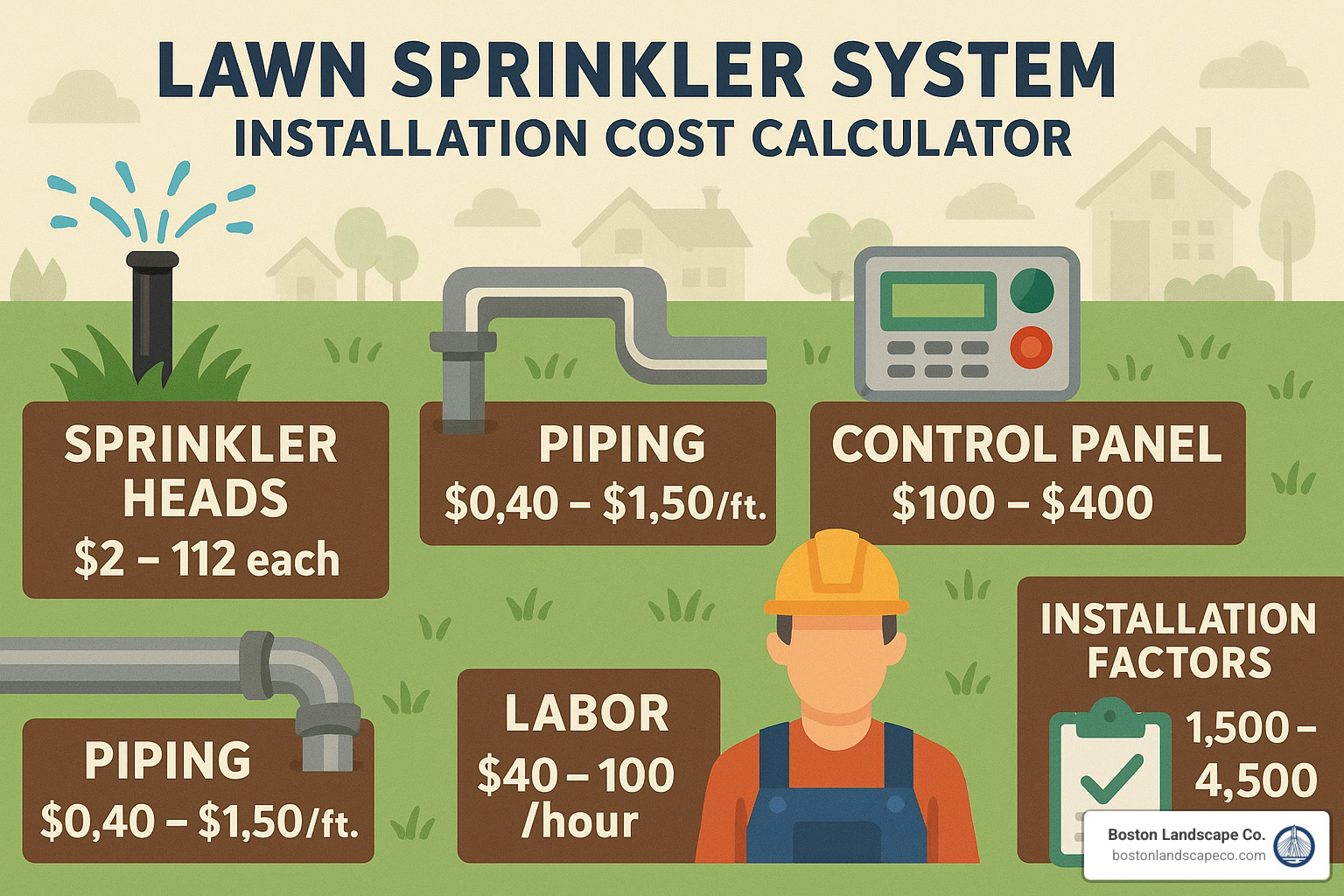
The national average cost for a complete sprinkler system installation ranges from $2,200 to $13,800, with most homeowners spending between $2,500 and $6,500. However, in New England, these costs can be 15-25% higher due to several regional factors:
- Rocky soil conditions that complicate trenching
- Deeper installation requirements due to frost lines
- Shorter installation seasons that affect contractor availability
- Higher labor rates compared to national averages
Most contractors price irrigation systems by zone rather than square footage. Typical zone-based pricing breaks down as follows:
- Basic 1-3 zone system: $1,600-$5,400
- Medium 4-6 zone system: $3,200-$9,000
- Large 7+ zone system: $5,600-$15,000+
Additional costs to consider include:
- Backflow prevention device: $150-$600 plus installation
- Permit fees: $35-$200 depending on municipality
- Smart controller upgrade: $150-$900 depending on features
The good news is that this investment typically recovers 83-86% of its cost upon resale, with studies showing that professional irrigation systems can increase property values by 7-12%. This makes lawn sprinkler installation one of the better landscape investments for improving both enjoyment and resale value.
| System Type | Initial Cost Range | Lifespan | Water Efficiency | Annual Maintenance |
|---|---|---|---|---|
| Above-Ground | $300-$2,000 | 3-5 years | Low-Medium | $50-$150 |
| In-Ground Basic | $2,500-$7,500 | 10-15 years | Medium | $150-$300 |
| In-Ground Smart Hybrid | $4,500-$15,000 | 15-20+ years | High | $200-$400 |
It’s worth noting that adding multiple zones during initial installation often yields bulk discounts, lowering the per-zone cost compared to adding zones later.
What Drives Price Up or Down?
Several key factors influence the cost of lawn sprinkler installation:
Yard Size and Shape:
Larger yards require more materials and labor, but the per-square-foot cost typically decreases as yard size increases due to economies of scale. Irregular shapes with many obstacles can increase installation complexity and cost.
Zone Count:
More zones mean more valves, wiring, and controller capacity, increasing overall system cost. However, proper zoning is essential for efficient watering based on different plant needs and sun exposure.
Terrain and Soil Type:
Sloped yards require special design considerations to prevent runoff and pooling. Rocky or clay soils in New England can increase trenching costs by 20-50% compared to sandy soils.
Pipe Material Choice:
* PVC: Rigid, durable, and commonly used in warmer climates
* Polyethylene: More flexible and freeze-resistant, preferred in New England
* PEX: Premium option with superior durability and freeze resistance
Labor Rates and Seasonality:
Installation during peak season (late spring/early summer) typically commands premium pricing. Off-season installations (fall or early spring) often come with 10-15% discounts.
Smart Technology Integration:
Adding smart controllers, flow sensors, and weather stations increases upfront costs but delivers significant long-term water savings.
By understanding these cost drivers, you can make informed decisions about where to invest and where to economize in your irrigation system design.
How Many Zones Will You Need?
Determining the right number of irrigation zones is crucial for system performance and efficiency. Here’s how to estimate your needs:
Water Pressure Limitations:
Each sprinkler head requires a certain operating pressure (typically 15-30 PSI). Your home’s water supply (usually 40-65 PSI) can only support a limited number of heads per zone. Exceeding this limit results in poor performance and uneven coverage.
Plant Type Groupings:
Different plants have different water requirements. Grouping similar plants in the same zone ensures proper watering:
* Lawn areas (highest water need)
* Shrubs and ornamentals (moderate water need)
* Native plants and drought-tolerant species (lower water need)
Sun Exposure Considerations:
Areas with full sun exposure need more frequent watering than shaded areas. Separating these into different zones improves efficiency.
Slope Mapping:
Sloped areas require special consideration to prevent runoff. These areas often benefit from their own zones with multiple short watering cycles rather than one long cycle.
For a typical quarter-acre property in New England, you can expect to need:
* 2-3 zones for a small yard (under 5,000 sq ft)
* 3-5 zones for a medium yard (5,000-10,000 sq ft)
* 5-7 zones for a larger yard (10,000-15,000 sq ft)
Professional designers use specialized software to map your property and create an optimal zone layout based on these factors and more. This precision design ensures every area receives exactly the water it needs—no more, no less.
DIY vs. Pro Installation, Smart Controllers & Year-Round Care
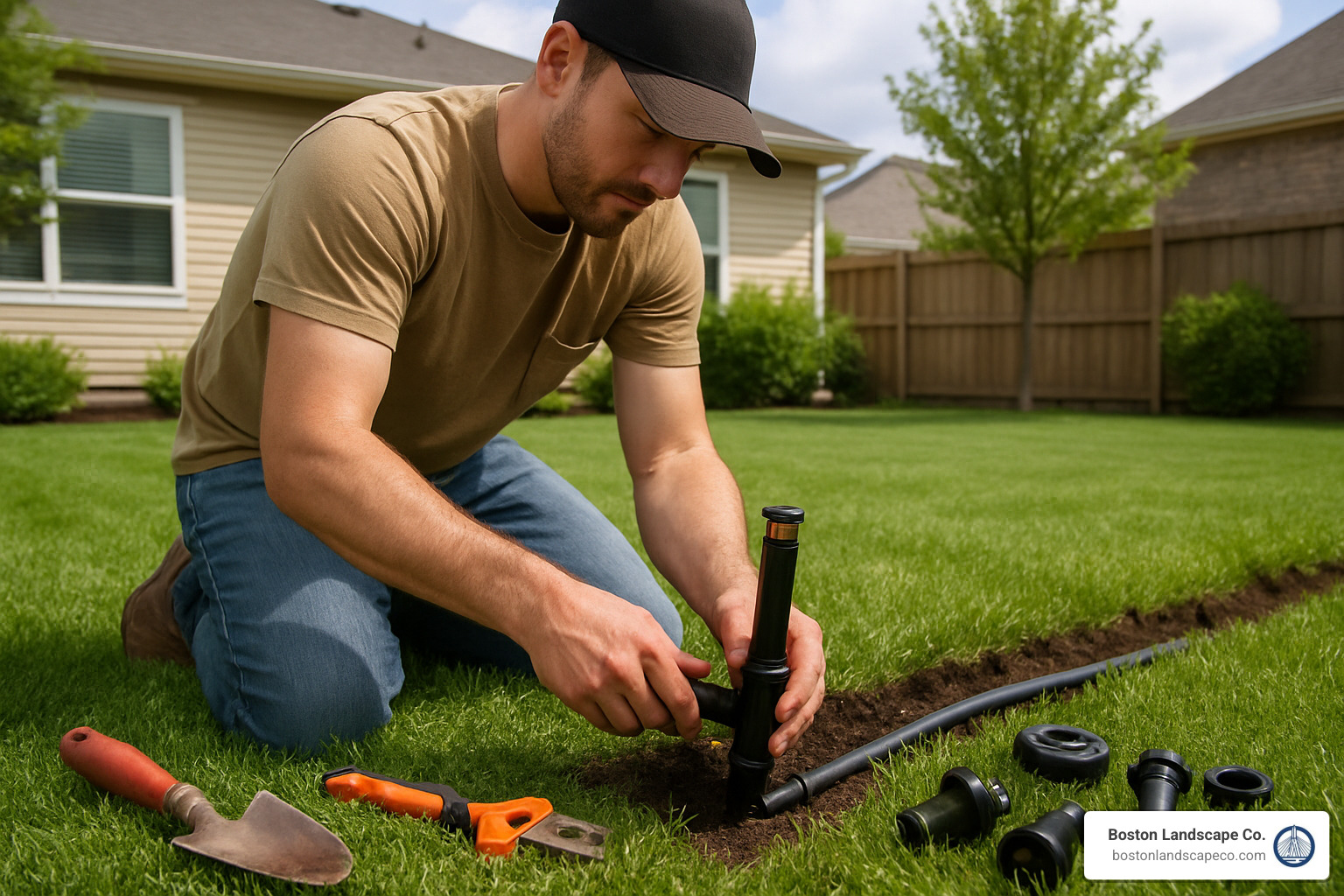
For homeowners considering lawn sprinkler installation, the choice between DIY and professional installation is significant. Let’s examine both approaches:
Professional Installation Benefits:
* Expert design optimized for your specific landscape
* Proper zone planning based on water pressure and plant needs
* Code-compliant backflow prevention installation
* Warranty coverage on parts and labor
* Time savings (typically 1-3 days vs. 1-2 weeks for DIY)
* Access to commercial-grade components
DIY Considerations:
* Significant cost savings on labor (which represents 50-60% of total cost)
* Satisfaction of completing a major home improvement project
* Greater understanding of your system for future maintenance
* More time-intensive and physically demanding
* Risk of errors that could lead to system inefficiency or damage
* Potential voiding of component warranties if not installed correctly
The complexity of in-ground systems makes them challenging for most DIYers. Above-ground systems are more DIY-friendly but offer fewer benefits and shorter lifespans.
For those interested in our comprehensive approach to landscape care beyond irrigation, check out our Full Service Lawn Maintenance offerings.
Lawn Sprinkler Installation for DIY Enthusiasts
If you’re determined to tackle lawn sprinkler installation yourself, here’s what you’ll need to know:
Essential Measurements:
* Water Pressure Test: Use a pressure gauge attached to an outdoor faucet to measure your static pressure (typically 40-70 PSI)
* Flow Rate (GPM): Perform a bucket test by timing how long it takes to fill a 5-gallon bucket, then calculate gallons per minute
Planning Tools:
* Graph paper for mapping your yard (1 inch = 10 feet scale recommended)
* Digital layout software or manufacturer templates
* Sprinkler head performance charts to determine spacing
Required Tools:
* Trenching shovel or rented trenching machine
* Pipe cutter or saw
* Tape measure
* Level
* Pipe wrenches
* Wire strippers (for valve wiring)
Safety Precautions:
* Call 811 before digging to have underground utilities marked
* Wear appropriate safety gear (gloves, eye protection)
* Check local building codes and obtain necessary permits
Trench Depth Guidelines:
* 6-8 inches for warmer climates
* 8-12 inches for New England to account for frost lines
Backflow Prevention:
Most municipalities require a backflow prevention device installed by a licensed professional, even on DIY systems. This is one aspect where professional assistance is strongly recommended regardless of your DIY plans.
The Smart Controller Advantage
One of the most significant advancements in irrigation technology is the smart controller. These devices transform basic sprinkler systems into intelligent water management solutions:
Weather-Based Scheduling:
Smart controllers connect to WiFi and access local weather data to adjust watering schedules automatically. They can:
* Skip watering when rain is predicted
* Increase watering during hot, dry periods
* Reduce watering in cooler, more humid conditions
Water Savings Impact:
* Average savings of 7,000+ gallons annually
* Approximately $430 per year in reduced water bills
* Smart controllers typically pay for themselves within 1-2 years
Rebate Programs:
Many water districts and municipalities offer rebates for installing WaterSense-certified smart controllers, further reducing your investment cost. These rebates can range from $50 to $200 depending on your location.
Integration Capabilities:
Modern smart controllers can integrate with:
* Home automation systems
* Smartphone apps for remote control
* Flow sensors to detect leaks
* Soil moisture sensors for precision watering
Even if you opt for a basic system initially, adding a smart controller later is a relatively simple upgrade that delivers significant benefits.
Seasonal Maintenance Checklist
Proper maintenance is essential for keeping your irrigation system performing efficiently year after year. Here’s a seasonal checklist for New England homeowners:
Spring Start-Up (April-May):
* Inspect and clean the system before first use
* Slowly pressurize the system to prevent water hammer
* Check for leaks or damaged components
* Clean or replace clogged nozzles
* Adjust sprinkler heads for proper coverage
* Update controller programming for spring conditions
Mid-Season Audit (July):
* Check for clogged nozzles or misaligned heads
* Verify valve operation and inspect for leaks
* Adjust controller settings for summer heat
* Trim grass or plants that obstruct sprinkler heads
Fall Winterization (October-November):
* Shut off water supply to the irrigation system
* Blow out all water from pipes using compressed air (50-100 PSI)
* Insulate above-ground components
* Drain and disconnect the backflow preventer if recommended
* Set controller to “rain” or “off” mode for winter
Common Repairs and Costs:
* Replacing sprinkler heads: $15-$75 each
* Fixing underground leaks: $150-$350
* Replacing valves: $125-$250 each
* Controller replacement: $150-$900
* Annual winterization service: $60-$120
Professional maintenance services typically include spring start-up and fall winterization as a package, with costs ranging from $150 to $300 annually. This investment helps prevent costly repairs and extends system lifespan.
Frequently Asked Questions about Lawn Sprinkler Installation
What permits or local regulations apply in Massachusetts?
Getting your lawn sprinkler installation right in Massachusetts means navigating some local regulations first. Most towns and cities require specific permits before you can start digging.
In my years working with Massachusetts homeowners, I’ve found that most municipalities require a plumbing permit for connecting to your home’s water supply. If you’re installing a hardwired controller, you’ll likely need an electrical permit too. These permits typically cost between $35 and $200, depending on where you live.
Perhaps the most important requirement is the backflow preventer. This crucial device stops irrigation water (which might contain fertilizers or other lawn treatments) from flowing backward into your drinking water. Massachusetts is particularly strict about this – most communities require these devices to be installed by licensed professionals and tested annually.
At Boston Landscape Co., we handle all the permitting paperwork as part of our professional installation service. We’ve worked through this process countless times and know exactly what each town requires, saving you the headache of navigating local bureaucracy.
Many Massachusetts communities also have specific watering restrictions, especially during summer months. The good news is that modern smart controllers can be programmed to automatically comply with these restrictions, keeping your lawn healthy while following local regulations.
How much water does a sprinkler system use per month?
Water usage for irrigation varies widely based on several factors, and I often find homeowners are surprised by both how much water their lawns need and how much a smart system can save them.
For a typical quarter-acre property in New England, a traditional sprinkler system might use approximately 2,000-3,000 gallons per week during peak summer months. That translates to roughly 8,000-12,000 gallons monthly during the irrigation season.
By contrast, a smart system can reduce this to about 1,400-2,100 gallons weekly (or 5,600-8,400 gallons monthly) – a significant 30% reduction. Some of our clients with high-efficiency systems report even greater savings, especially when we combine smart controllers with high-efficiency nozzles and proper zone design.
To put this in perspective, the EPA recommends lawns receive about 1-1.5 inches of water weekly. A properly designed lawn sprinkler installation delivers precisely this amount where needed, while manual watering typically results in significant overwatering and runoff.
I’ve had customers show me their water bills before and after installation, and the difference can be striking – especially when upgrading from manual watering to a smart system. The initial investment often pays for itself through water savings alone within a few years.
Does installing a system really add up to 12% to home value?
Yes, a professional lawn sprinkler installation genuinely boosts your property value – and the numbers back this up. I’ve had countless customers tell me their irrigation system was a key selling point when they eventually sold their home.
Real estate studies consistently show that irrigation systems typically recover 83-86% of their installation cost at resale. More impressively, properties with professional irrigation systems can sell for 7-12% more than comparable homes without them. They often sell faster too, reducing your time on the market.
This value increase stems from several factors I see homebuyers consistently prioritize:
First, there’s the undeniable curb appeal. A lush, green lawn makes an immediate positive impression, while a patchy, brown lawn can be an instant turnoff. When potential buyers drive up and see a vibrant landscape, they’re already mentally moving in.
Second, buyers recognize the time-saving aspect. Modern lifestyles are busy, and the thought of not having to drag hoses around the yard is genuinely appealing to most homebuyers.
Third, water conservation features matter more than ever. Smart systems appeal to environmentally conscious buyers who want to maintain a beautiful landscape responsibly.
Finally, an irrigation system protects the investment in landscaping. If a homeowner has invested in beautiful plantings and lawn areas, buyers recognize that an irrigation system helps preserve that investment.
While the value increase tends to be higher in regions with hot, dry summers, even here in variable New England, a quality irrigation system remains a significant selling point that can set your property apart when it’s time to sell.
Conclusion
Lawn sprinkler installation represents one of the most practical investments you can make in your property’s appearance, value, and maintenance efficiency. From reducing your water bills to enhancing your home’s curb appeal, the benefits extend far beyond simple convenience.
As we’ve explored throughout this guide, modern irrigation systems offer sophisticated solutions for every property type and budget. Whether you choose a basic in-ground system or opt for a fully automated smart system, the key to success lies in proper design, quality components, and professional installation.
At Boston Landscape Co., we approach irrigation as part of a comprehensive landscape strategy. Our team of experts designs systems that complement your overall landscape plan, ensuring efficient water use while maintaining the health and beauty of your outdoor spaces.
For homeowners throughout Greater Boston—from Bedford to Wellesley, Stoneham to Winchester—we provide end-to-end irrigation solutions, from initial design consultation through professional installation and ongoing seasonal maintenance.
Our comprehensive approach means you’ll work with one trusted partner throughout your landscape journey, eliminating the coordination headaches that come with multiple contractors. We understand the unique challenges of New England’s climate and soil conditions, designing systems specifically engineered for our region’s needs.
Ready to transform your lawn care routine with a professional irrigation system? Contact Boston Landscape Co. today to schedule a consultation and find how we can help you achieve a lush, healthy landscape with less effort and lower water bills.
For more information about our complete range of landscaping services, including lawn installation offerings, visit our website or call us directly to speak with one of our irrigation specialists.
Investing in professional lawn sprinkler installation isn’t just about convenience—it’s about creating sustainable beauty that improves your property for years to come.
