
Parking Lot Snow Plowing: Ultimate Clear 2025
Why Proactive Snow Management is Non-Negotiable
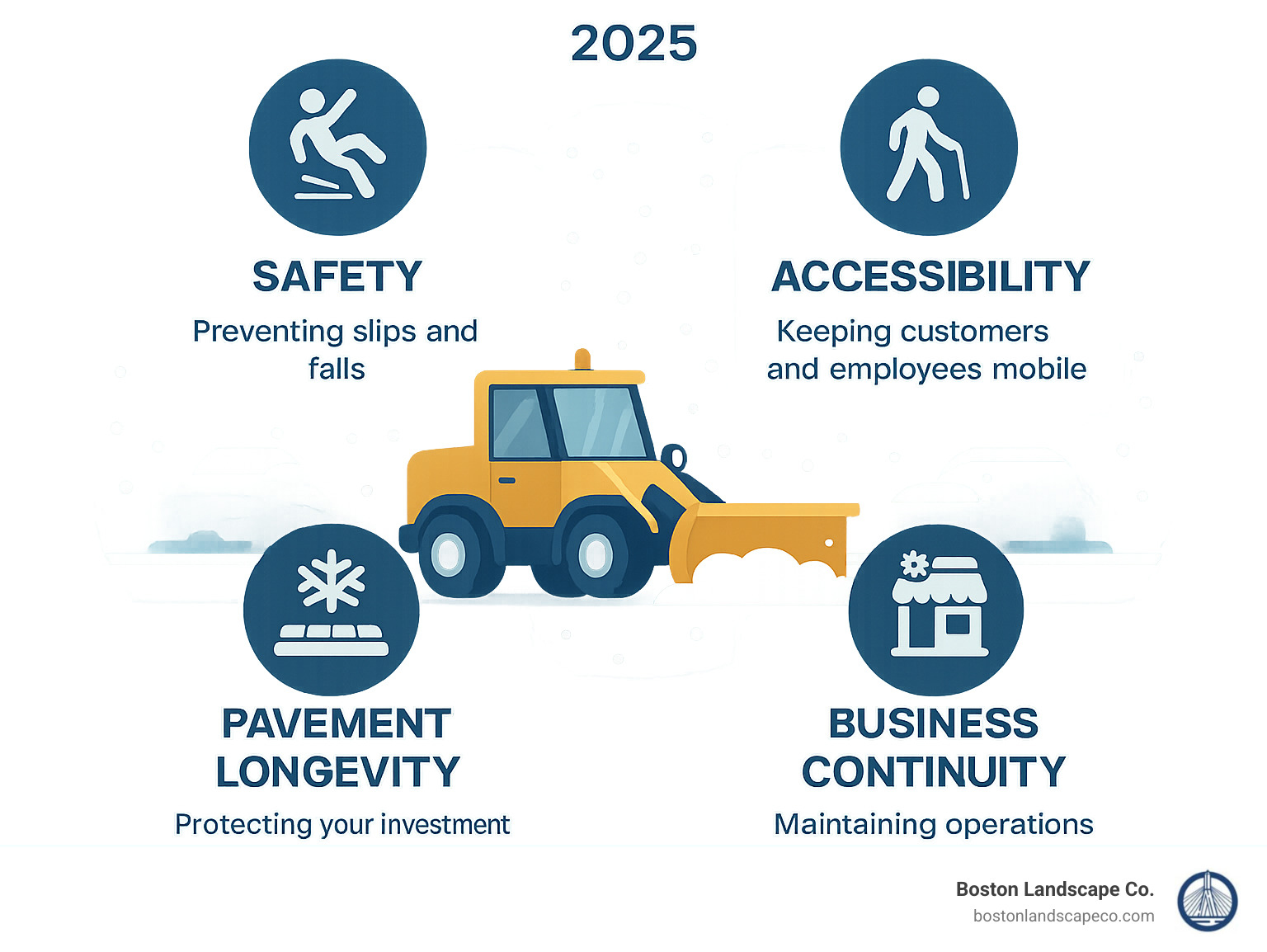
Parking Lot Snow Plowing requires strategic planning to keep your business accessible and safe during winter. Here are the essential techniques every property manager should know:
Key Plowing Techniques:
- Plow with the storm – Clear snow every 2-4 inches rather than waiting for accumulation
- Back drag first – Pull snow away from buildings and entrances before pushing to pile areas
- Use windrows – Plow in straight lines from center to edges for maximum efficiency
- Pile strategically – Stack snow downwind, away from drains and visibility lines
- Apply proper de-icing – Use appropriate salt or alternatives based on temperature and surface type
When snow falls on your commercial property, every hour of delay means reduced customer access, increased liability risks, and potential revenue loss. Effective snow removal goes far beyond just pushing snow around—it requires understanding your site, choosing the right equipment, and following systematic approaches.
Research shows that angle plowing with wings clears about 30 percent more snow per pass than standard methods, while proper storm-timing techniques prevent the dangerous ice buildup that leads to slip-and-fall incidents.
I’m Steve Schumacher of Boston Landscape Co., and with over three decades of experience in the Greater Boston area, I know that the safest properties are those with a comprehensive snow management strategy in place before the first flake falls.
Parking Lot Snow Plowing vocab explained:
- average cost for commercial snow removal
- commercial snow plowing contracts
- commercial snow removal equipment
Pre-Season Prep: Setting the Stage for a Clear Winter

The difference between a smooth winter operation and a chaotic scramble lies in what happens before the first snowflake falls. Successful Parking Lot Snow Plowing starts in the fall with a thorough pre-season assessment to identify potential problems and create detailed action plans.
This preparation involves walking the property to find obstacles that could become hazards when buried under snow, creating a roadmap to keep our crews safe and your property damage-free during a blizzard. For more details, see our guide on Winter Preparedness: Why Your Business Needs Professional Snow Removal.
Site Mapping and Hazard Identification
Every parking lot has hidden dangers that become an obstacle course when covered in snow. We conduct detailed site inspections in the fall to identify and mark these hazards.
- Curbs and speed bumps: These are major troublemakers that can cause thousands in plow or vehicle damage. We mark them with bright, reflective snow stakes.
- Drainage systems: Blocked drains lead to standing water, which freezes into dangerous ice. We mark all catch basins to keep them clear, preventing freeze-thaw damage to pavement.
- Fire hydrants and utility boxes: These must remain clear for emergency access. We create and mark buffer zones around these critical points.
- Landscaping islands: Decorative features can be easily damaged by plows in low visibility. We mark them for protection.
The result is a detailed site map that serves as our crew’s guide, ensuring they know where to push snow and how to operate safely during the worst storms.
Understanding Contracts and Legal Duties
A clear snow removal contract protects both property owners and contractors, eliminating confusion when storms hit.
- Trigger depths are crucial. This is the snowfall amount (typically 1-2 inches) that automatically starts our plowing services. The right depth depends on your traffic, liability concerns, and budget.
- Pricing structures vary. Our breakdown of Commercial Snow Plowing Contracts explains per-push versus seasonal rates to help you choose.
- Legal responsibilities are important. Most municipalities prohibit pushing snow onto public streets or sidewalks, with violations resulting in fines. We ensure all snow disposal follows local ordinances.
- Liability considerations are key. Uncleared lots create slip-and-fall risks. While legal requirements vary by state—some areas like New Jersey have specific rules about commercial landlords’ duties during storms—property owners must maintain reasonably safe conditions. We carry comprehensive liability insurance to protect all parties.
The Ultimate Guide to Parking Lot Snow Plowing Techniques
Effective Parking Lot Snow Plowing is a strategic operation, not just pushing snow around. The secret is plowing with the storm, clearing lots every few inches of accumulation. This prevents snow from compacting into a hard, dangerous layer that is difficult to remove.
Proper plowing patterns and the right Commercial Snow Removal Equipment make all the difference in efficiency. For more details, this step-by-step plowing guide offers excellent insights into professional techniques.
Step 1: The Initial Push and Back Dragging
Every successful operation starts by ensuring customers and employees can safely reach your front door.
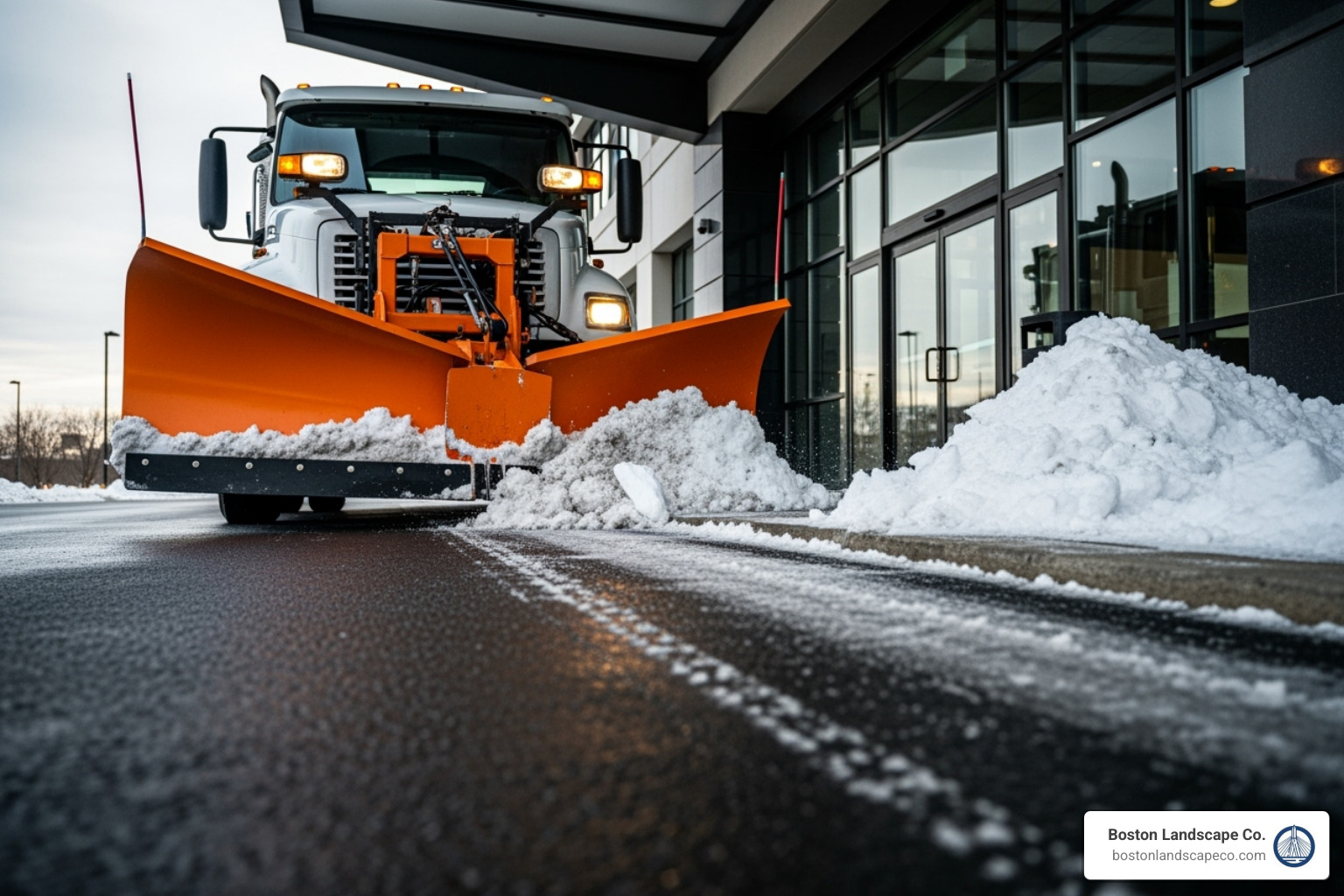
Clearing entrances and loading docks first is our priority. We use a technique called back dragging to pull snow away from the structure, creating an immediate safe zone for foot traffic. This also prevents water damage from melting snow piled against exterior walls.
The back dragging technique involves reversing while the blade scrapes snow away from the building. It’s slower than regular plowing but creates a clear perimeter that makes the rest of the job possible.
Step 2: Clearing the Main Lot with Efficient Windrows
Once the perimeter is clear, we tackle the main lot systematically by plowing in straight lines.
Our preferred method is the center-out approach. We make a clean pass down the middle, then work outward. This windrowing technique creates long, continuous piles of snow that are moved to designated storage areas. For sectioning large lots, we break them into manageable zones to avoid pushing too much snow at once.
Overlapping passes ensure no strips of snow are left behind to turn into ice. The efficiency gains are significant; studies show that angle plowing with wings clears about 30 percent more snow per pass. You can see this technique in action in videos on angle plowing efficiency. This means we clear your property faster, making it accessible sooner.
Step 3: Strategic Snow Piling and Disposal
Where you put the snow is as important as how you clear it. Strategic snow piling requires thinking ahead.
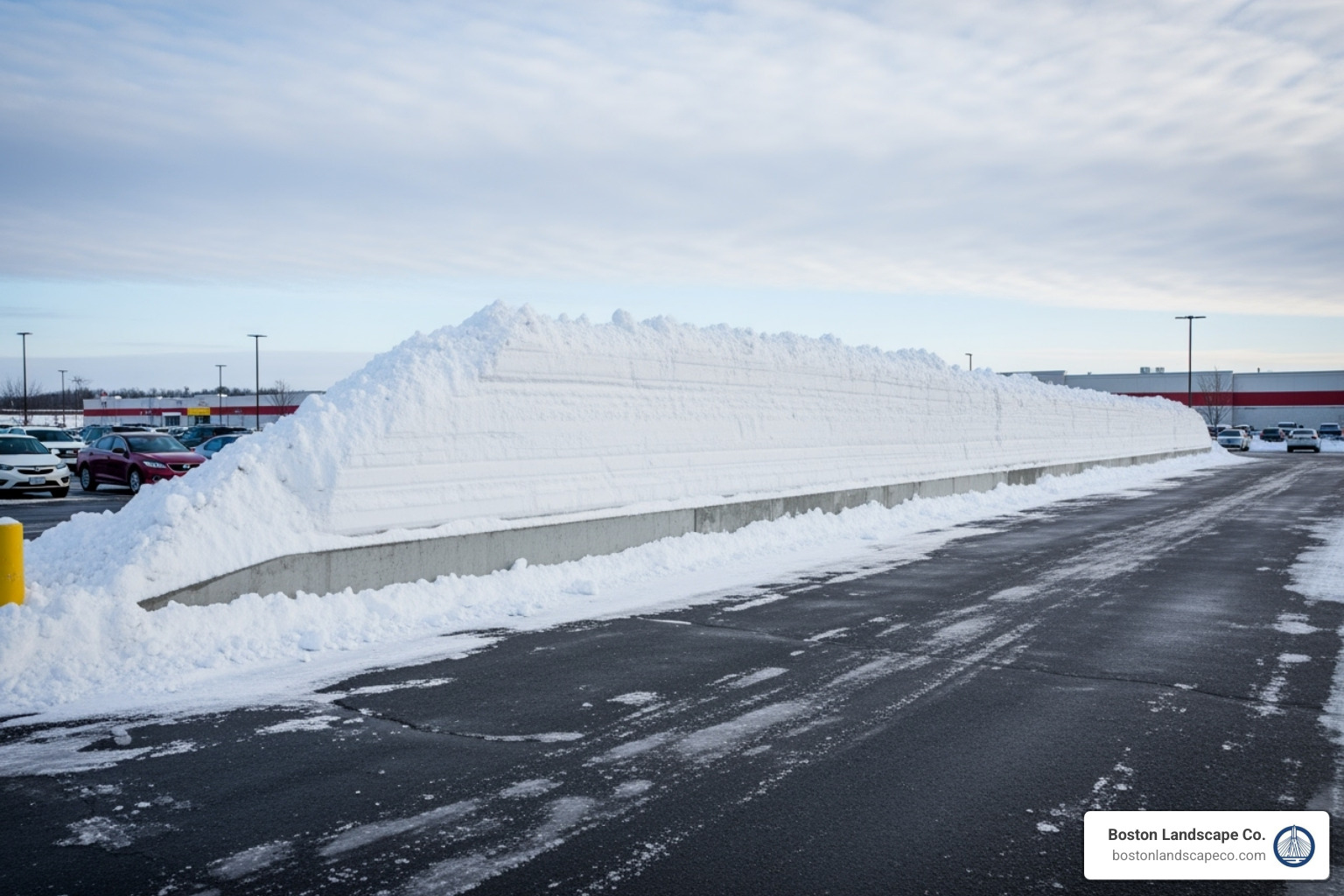
- Designated pile locations are chosen during our pre-season assessment, away from traffic and entrances.
- Piling downwind uses natural snow drifts to help keep cleared areas clean.
- We are fanatical about avoiding drains and hydrants to prevent flooding and ensure emergency access.
- Not blocking visibility at intersections or exits is crucial for safety.
When space runs out, our snow hauling and melting services transport excess snow to approved disposal sites. We never push snow onto public streets, which is illegal and hazardous.
Advanced Considerations for Surfaces, De-Icing, and Damage Prevention
Expert Parking Lot Snow Plowing goes beyond moving snow; it involves protecting your pavement and keeping everyone safe. Winter’s freeze-thaw cycles can turn minor cracks into major headaches, but most damage is preventable with the right approach. For more strategies, see our guide on Winter Maintenance Tips: Keeping Your Commercial Property Safe and Attractive.
Customizing Techniques for Different Surfaces
Every surface requires a different plowing approach. What works on asphalt can destroy a gravel lot.
| Surface Type | Plow Shoe Adjustment | Cutting Edge Type | Special Considerations |
|---|---|---|---|
| Asphalt | Raise/Remove | Steel or Urethane | Scrape close to surface; avoid gouging cracks. |
| Concrete | Raise/Remove | Urethane or Heavy Rubber | Protect from scratching/chipping; avoid studded tires. |
| Gravel | Lower | Steel or Urethane | Raise blade to prevent scraping away gravel. |
| Parking Garages | Urethane/Heavy Rubber | Urethane or Heavy Rubber | No metal blades; protect expansion joints; no roof piling. |
For asphalt and concrete, we adjust plow shoes to scrape close to the pavement, removing all snow and ice without gouging. For gravel lots, we raise the blade slightly to avoid scraping away the gravel itself.
Parking garages require the most specialized care. We use only urethane or heavy rubber cutting edges to protect concrete and traffic coatings. A critical rule is to never pile large amounts of snow on garage roofs, as they are not designed for that structural load.
The Science of De-Icing: Best Practices for Parking Lot Snow Plowing
Once snow is moved, the battle with ice begins. We use two strategies: anti-icing (applying liquid brine before a storm to prevent bonding) and de-icing (melting existing ice after).
The science is based on how salt melts ice by lowering water’s freezing point.
- Rock salt (sodium chloride) is our workhorse, effective down to about 15-20°F.
- Calcium chloride works in colder temperatures (down to -25°F) but is more expensive and corrosive.
- Eco-friendly alternatives like calcium magnesium acetate are available for sensitive areas.
Proper application rates are key. We calibrate our spreaders based on conditions to be effective without wasting material or harming the environment. In extreme cold, we apply sand for immediate traction.
Avoiding Common Plowing Damage
Improper plowing can cause thousands in damage. We take steps to prevent this.
- Protecting curbs requires specialized attachments and careful operation.
- Landscaping protection starts with pre-season marking of all vulnerable elements with reflective stakes.
- Light poles and cart corrals are given a wide berth to avoid accidents in low visibility.
Most importantly, prompt snow removal prevents freeze-thaw damage. When moisture seeps into cracks and freezes, it expands, turning minor flaws into major repairs. Professional clearing protects your pavement investment. For more on this, see our Winter Landscaping Tips for Protecting Your Plants and Property guide.
Hiring a Professional: What to Look for in a Snow Removal Service
Finding the right Parking Lot Snow Plowing partner is about securing a reliable team that keeps your property safe and accessible. A professional service provides peace of mind, allowing you to focus on your business during a storm.
The best companies use weather monitoring technology to prepare in advance and offer 24/7 service, which is essential when storms don’t follow business hours. If you’re searching for a reliable Plow Service Near Me in the Greater Boston area, find a company that treats your property like their own.
Evaluating a Contractor’s Insurance and Equipment
Never hire a contractor without verifying these critical elements:
- Proof of insurance: A legitimate company must carry comprehensive liability coverage. Without it, you could be liable for injuries or damage on your property.
- Equipment fleet: Does the contractor have the right tools for your property? A diverse fleet with plow trucks, skid steers, and specialized equipment is a good sign.
- Backup equipment plans: Professionals have backup trucks and operators to ensure your property is cleared even if equipment breaks down during a storm.
- Staff training and experience: Experienced operators clear lots efficiently without damaging curbs or landscaping. They know how to work safely and adapt to changing weather conditions.
Understanding Commercial Snow Removal Pricing
Understanding common pricing models helps you budget effectively. Most contractors use one of four structures:
- Per-inch contracts: Billed based on snowfall amounts.
- Per-push pricing: A flat rate each time the contractor plows.
- Seasonal flat rates: One price for the entire winter, offering budget predictability.
- Hourly rates: Typically for specialized services like hand-shoveling or snow hauling.
Based on industry data, commercial snow plowing services can range from $75 to $350 per hour for a truck and operator, with flat rates from $200 to over $1,500 per snowfall depending on the property. These are general market ranges and not specific quotes for Boston Landscape Co.
Always clarify what’s included in your contract, such as de-icing agents or snow hauling. For a detailed estimate based on your property’s needs, visit our Commercial Snow Removal Pricing page.
Frequently Asked Questions about Parking Lot Snow Plowing
When it comes to Parking Lot Snow Plowing, property managers often have similar questions. The stakes are high for keeping your business accessible and safe during unpredictable winter weather. Here are answers to some of the most common concerns.
How much does commercial snow plowing cost?
Commercial snow plowing costs vary dramatically based on your parking lot’s size and layout, your location, and the level of service you need. A simple rectangular lot costs less to clear than one with multiple levels or tight corners.
Based on general market data, hourly rates for commercial plowing can range from $100 to over $400 per hour for a truck and operator. Seasonal contracts for larger properties might range from $2,000 to $10,000 or more. However, these are average costs based on internet research and not actual prices for Boston Landscape Co.
Your final cost depends on whether you need services like de-icing and snow hauling, and the type of contract you choose (per-push, per-inch, or seasonal). We provide customized quotes after a thorough site assessment.
Is it illegal to push snow onto a public street or sidewalk?
Yes, absolutely. In virtually every municipality in the Greater Boston area, pushing snow onto public streets or sidewalks is illegal and can result in hefty fines for the property owner or the contractor. This practice creates serious safety hazards for drivers and pedestrians by obstructing traffic and causing ice patches. We always ensure snow is piled legally and safely on your property or hauled to an approved disposal site.
How do you remove snow from between parked cars?
Working around parked vehicles is one of the most challenging parts of our job due to the high risk of damage. The best practice is to clear lots when they are empty.
When we must work around parked cars, we use smaller equipment like walk-behind snow blowers or rely on careful hand shoveling. Our crews move slowly and avoid using aggressive tools like metal shovels near vehicles. Many contracts specify a “safe distance” (usually about three feet) where we won’t operate heavy equipment around cars for liability reasons.
While we do our best, the safest and most effective approach is to coordinate with property managers to minimize parking during snow removal operations.
Conclusion: Ensure Your Business is Winter-Ready
When the next winter storm hits the Boston area, proactive Parking Lot Snow Plowing will separate the businesses that thrive from those that struggle. It’s not just about moving snow; it’s about creating a safe, accessible foundation for your business to succeed all winter.
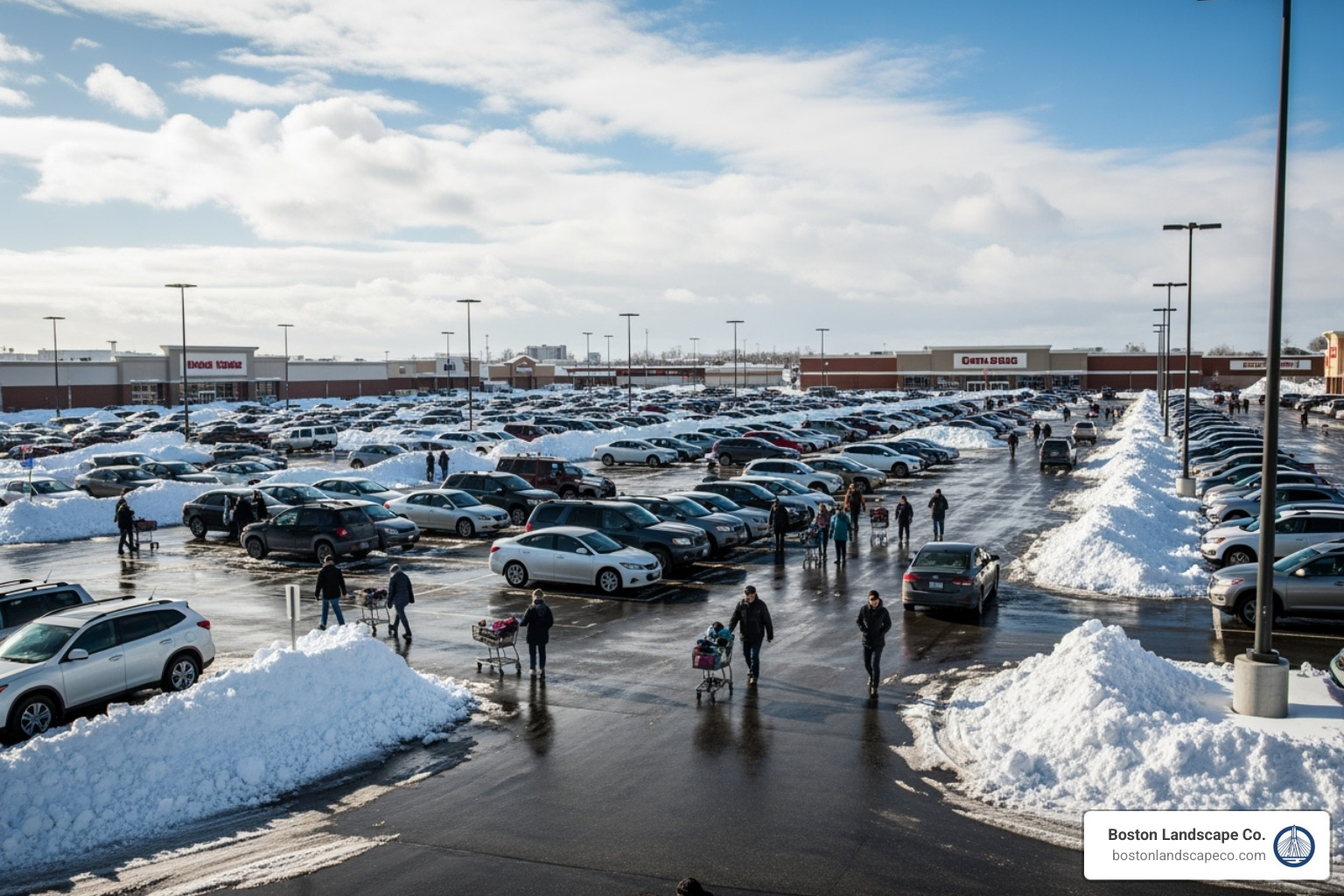
While competitors deal with inaccessible lots and liability risks, your business will operate smoothly. Your customers and employees will appreciate the safe access, and you’ll have peace of mind.
The key takeaways—from pre-season planning and site mapping to strategic snow piling and proper de-icing—all work together to protect your customers’ safety, your property’s integrity, and your business’s reputation. Proper snow removal also prevents the costly freeze-thaw damage that New England winters inflict on pavement, protecting your investment for years to come.
For reliable winter property management in the Boston area, the expert team at Boston Landscape Co. has the equipment and experience to keep your commercial property safe and operational. We understand the unique challenges of Massachusetts winters and are prepared for everything from nor’easters to ice storms.
Don’t wait for the first snowflake. Contact us for professional snow removal services today, and let’s ensure your business keeps moving forward, no matter what winter brings.
