
Landscape Contracting: Top Guide to Success in 2024
Landscape contracting is the art and science that beautifully blend design, construction, and landscape management to create inviting, functional outdoor spaces. For many homeowners and commercial property managers in the Greater Boston area, it’s the key to changing ordinary yards into stunning landscapes that balance aesthetics, functionality, and environmental sustainability. Whether it’s crafting a peaceful garden, installing intricate water features, or ensuring year-round maintenance, landscape contracting covers it all.
Quick Overview of Landscape Contracting:
- Combines design, construction, and ongoing maintenance.
- Involves collaboration with landscape designers, architects, and other specialists.
- Aimed at enhancing the beauty, usability, and safety of outdoor spaces.
My name is Steve Schumacher, with over three decades in the landscaping industry and as the owner of Boston Landscape Co. since 1991, I’ve seen how effective landscape contracting can improve property value and provide lasting satisfaction. Join me as we explore the nuances of creating outstanding outdoor environments.
What is Landscape Contracting?
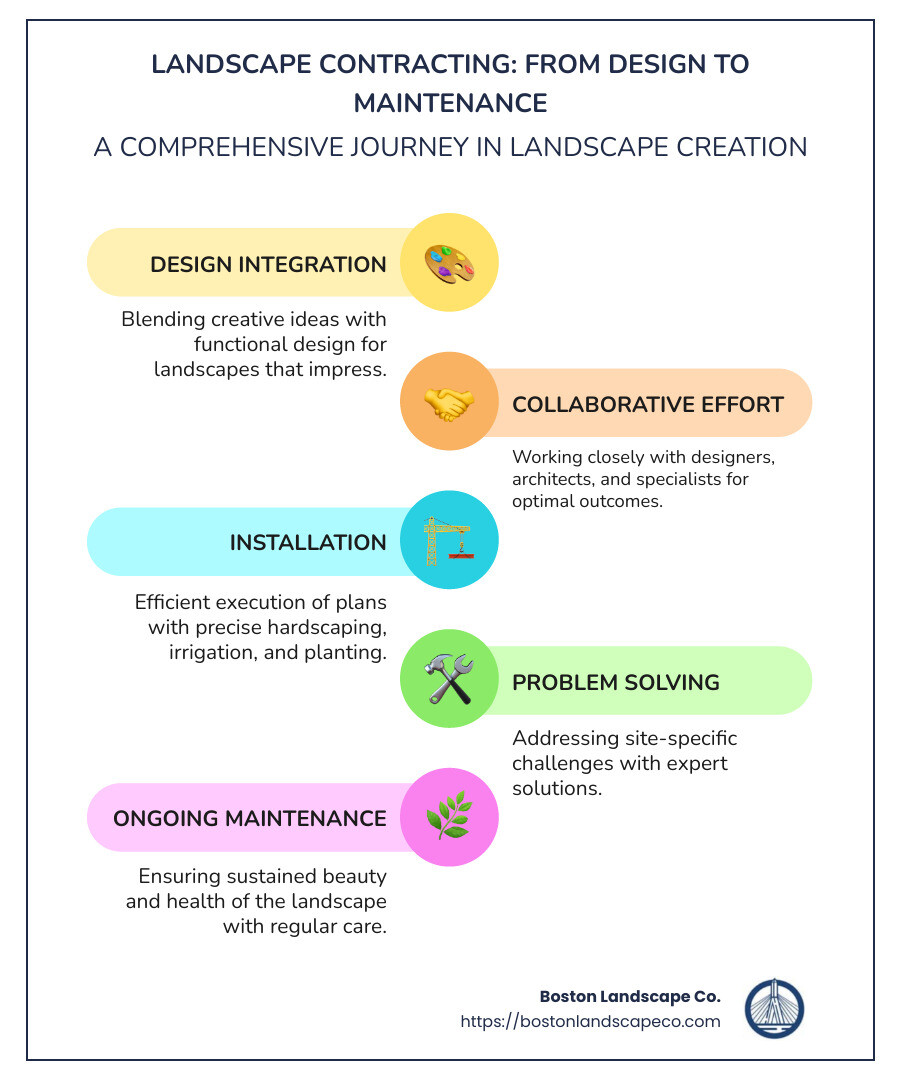
Landscape contracting is a profession that merges the art and science of designing, constructing, and maintaining outdoor spaces. It’s about more than just planting flowers or mowing lawns. It’s a comprehensive process that transforms outdoor areas into functional, beautiful, and sustainable environments.
Definition and Scope
At its core, landscape contracting involves planning and executing landscape and garden projects. This includes everything from the initial design to construction and ongoing maintenance. The goal is to create spaces that are not only visually appealing but also safe and environmentally sustainable.
The scope of landscape contracting is broad and includes:
- Design and Build: Creating unique landscapes custom to client needs.
- Installation: Implementing various elements like plants, water features, and hardscapes.
- Maintenance: Ensuring the health and beauty of the landscape through regular upkeep.
Roles of a Landscape Contractor
A landscape contractor wears many hats. They are not just about the physical work of planting or building but also about planning, problem-solving, and collaboration.
Key roles include:
- Project Manager: Overseeing the entire project from start to finish. This includes coordinating with clients, designers, and other professionals.
- Designer: Creating plans that balance aesthetics with functionality and sustainability.
- Builder: Implementing the designs using a variety of materials and techniques.
- Horticulturist: Ensuring the right plants are used and maintained properly.
- Problem Solver: Addressing challenges such as drainage issues or pest control.
Landscape contractors also work closely with landscape architects, designers, and other specialists to bring a client’s vision to life. They ensure that every element, from the soil to the irrigation system, aligns with the overall design and functionality of the space.
Landscape contracting is about creating outdoor spaces that improve the quality of life for those who use them. Whether it’s a small garden or a large commercial property, the goal is to craft spaces that are both beautiful and functional.
The Landscape Design Process
Creating a stunning landscape begins with a well-thought-out design process. This involves several key stages: initial consultation, site assessment, and the design phase. Each step is crucial in changing a client’s vision into reality.
Initial Consultation
The journey starts with an initial consultation where the landscape contractor meets with the client to discuss their goals and vision. This is a collaborative process where the contractor listens to the client’s ideas and preferences.
During this meeting, budget considerations are also addressed. Understanding the financial scope helps in tailoring the design to meet both aesthetic desires and practical constraints.
The aim here is to customize the landscape vision to align with the client’s lifestyle and needs.
Site Assessment
Once the vision is clear, the next step is a site assessment. This involves evaluating the property’s existing conditions, such as:
- Soil Quality: Understanding the soil type is essential for selecting the right plants and ensuring their healthy growth.
- Sun Exposure: Identifying areas with varying sunlight helps in planning plant placement and choosing vegetation that thrives in those conditions.
- Erosion and Drainage: Assessing potential erosion or drainage issues is crucial. Proper planning can prevent future problems and ensure landscape longevity.
- Property Conditions: Taking note of existing structures or features that may impact the design.
This thorough assessment ensures that the design plan is realistic and sustainable.
Design Phase
With the site assessment complete, the project moves into the design phase. This is where creativity meets practicality.
Blueprints and Mockups: The contractor creates detailed blueprints and mockups to visualize the proposed design. These plans help in refining ideas and making necessary adjustments before any physical work begins.
Design Elements: Incorporating various design elements like hardscapes, water features, and lighting can improve the landscape’s beauty and functionality.
Regulations: Navigating local regulations and permits is also part of this phase. Ensuring compliance with zoning laws and environmental guidelines is essential for a smooth project execution.
The design phase is where the client’s vision starts taking shape, balancing artistic flair with practical solutions. This meticulous planning sets the foundation for a successful landscape change.
From Design to Installation
Once the design phase is complete, the next step is to bring that vision to life. This involves building the plan and moving into the installation phase. These stages are where the rubber meets the road in landscape contracting.
Building the Plan
Implementation is key. With a clear design in hand, the landscape contractor assesses the property one more time to ensure everything is ready for the next steps. This involves a final check of soil conditions, sun exposure, and any existing structures or obstacles.
Customization is crucial at this stage. Every property is unique, so the plan must be custom to fit the specific conditions and needs of the space. This might mean adjusting plant selections or altering hardscape layouts to better suit the environment.
Communication plays a vital role here. The contractor keeps the client informed about progress and any necessary changes. This open dialogue helps in addressing any concerns and ensures that the project stays true to the client’s vision.
Installation Phase
The installation phase is where the design comes to life. This stage involves several key activities:
- Hardscaping: This includes installing pathways, patios, retaining walls, and other structural elements. Skilled craftsmen use high-quality materials to ensure durability and aesthetic appeal.
- Irrigation: An efficient irrigation system is vital for maintaining the health of the landscape. The contractor installs systems that provide the right amount of water to each area, minimizing waste and ensuring lush, healthy vegetation.
- Vegetation: Planting is done with precision. The contractor selects plants that thrive in the local climate and suit the property’s conditions. Proper spacing, depth, and soil amendments are essential for promoting healthy growth.
- Heavy Equipment: Depending on the scope of the project, heavy equipment like excavators or tractors may be used for tasks such as grading land or installing large features.
Problem-solving is an integral part of this phase. Unforeseen challenges can arise, such as unexpected soil conditions or weather changes. The contractor’s expert knowledge and experience are invaluable in navigating these issues efficiently.
The installation phase is where the design truly comes to life, changing a simple outdoor area into a beautiful, functional landscape. This meticulous process sets the stage for ongoing maintenance and care, ensuring the landscape remains vibrant and healthy for years to come.
Maintenance and Upkeep
Once the landscape is installed, ongoing care is essential to keep it looking its best. This involves a combination of horticulture, soil fertilization, pest control, and regular maintenance tasks. Let’s break down these key components.
Horticulture
Horticulture is the science behind plant care. It involves understanding the specific needs of each plant species in your landscape. Proper horticulture practices ensure that plants are healthy, vibrant, and able to thrive in their environment.
- Pruning and Trimming: Regular pruning helps maintain plant shape and encourages new growth. It also prevents diseases by removing dead or infected branches.
- Watering: Consistent watering is crucial. An efficient irrigation system, as installed during the installation phase, provides the necessary hydration without wastage. Watering in the early morning is best to reduce evaporation.
Soil Fertilization
Healthy soil is the foundation of a thriving landscape. Fertilization provides essential nutrients that plants need to grow strong and lush.
- Testing: Regular soil testing helps identify nutrient deficiencies and pH imbalances. This allows for precise fertilization custom to the soil’s needs.
- Application: Fertilizers should be applied according to the season and specific plant requirements. This ensures that nutrients are available when plants need them most.
Pest Control
Pests can wreak havoc on a landscape if not managed properly. Effective pest control involves both prevention and treatment.
- Preventive Measures: Introducing beneficial insects that prey on harmful pests can naturally keep populations in check. Selecting pest-resistant plant varieties also helps.
- Spot Treatment: If pests do appear, targeted treatments with selective herbicides or insecticides can eliminate them without harming beneficial organisms.
Ongoing Care
Regular maintenance keeps the landscape looking its best and prevents small issues from becoming big problems.
- Mowing and Edging: Keeping the lawn neatly mowed and edges clean improves the overall appearance of the landscape.
- Weeding: Regular weeding prevents unwanted plants from overtaking the landscape. This can be done manually or with selective herbicides.
- Seasonal Tasks: Each season brings specific maintenance tasks. In spring, focus on cleanup and fertilization. Summer requires consistent watering and pest management. Fall involves leaf removal and winter preparation.
By following these maintenance and upkeep practices, your landscape will remain a beautiful and functional space for years to come. Next, we’ll explore the benefits of hiring a professional landscape contractor, highlighting how their expertise can lift your outdoor living space.
Benefits of Hiring a Professional Landscape Contractor
When it comes to enhancing your outdoor space, hiring a professional landscape contractor is a game-changer. Let’s explore the key benefits.
Property Value
A well-designed landscape can significantly boost the value of your property. According to a study by Virginia Tech, quality landscaping can increase a home’s value by 5.5% to 12.7%. This means a beautiful garden or a stylish patio isn’t just for aesthetic pleasure—it’s a smart investment. Potential buyers are often willing to pay more for homes with attractive and functional outdoor spaces.
Outdoor Living Space
A professional landscape contractor can transform your yard into a functional outdoor living space. Imagine a cozy patio for family gatherings or a lush garden for relaxation. These spaces extend your living area beyond the walls of your home, providing a perfect setting for relaxation or socializing. With the right design elements, you can enjoy the outdoors in comfort and style.
Professional Expertise
Expertise matters in landscape contracting. Professionals bring a wealth of knowledge to the table, from plant selection to hardscaping techniques. They understand the local climate, soil conditions, and the best plants for your area. This ensures that your landscape not only looks great but also thrives. They also handle complex installations, like irrigation systems, ensuring everything works seamlessly.
Incorporating these elements into your property isn’t just about making it look good—it’s about creating a sustainable, functional space that adds real value. Up next, we’ll dive into some frequently asked questions about landscape contracting, shedding light on industry insights and common queries.
Frequently Asked Questions about Landscape Contracting
What is the meaning of landscape business?
The landscape business is all about designing, installing, and maintaining beautiful outdoor spaces. It combines art and science to create environments that are both functional and visually appealing. Landscape contracting covers everything from planting trees and shrubs to building patios and irrigation systems. It’s a profession that blends creativity with technical skills to improve both residential and commercial properties.
How many landscape contractors are there in the US?
In the United States, the landscape industry is vast and thriving. According to the National Association of Landscape Professionals, there are over 500,000 landscape service businesses across the country. This industry employs more than 1 million people, contributing significantly to the economy by creating jobs and enhancing property values. The demand for professional landscaping services continues to grow as more people recognize the benefits of well-maintained outdoor spaces.
What do you mean by landscaping?
Landscaping refers to the process of modifying the visible features of an area of land. This includes planting trees and flowers, installing water features, and creating pathways and gardens. It’s about changing a plain piece of land into a beautiful, functional space. Landscaping also involves gardening, which is the practice of growing and cultivating plants as part of the landscape. The goal is to create an outdoor environment that is both aesthetically pleasing and sustainable, enhancing the natural beauty of the surroundings.
Conclusion
At Boston Landscape Co., we are committed to changing your outdoor spaces into vibrant, functional environments. Our comprehensive services cover every aspect of landscape contracting, from initial design to installation and maintenance. We understand that each property is unique, and our team tailors solutions to meet your specific needs and vision.
Our expertise in both residential and commercial landscaping ensures that your property not only looks beautiful but also functions seamlessly. Whether it’s through our innovative hardscaping solutions, efficient irrigation systems, or lush plant installations, we focus on enhancing the aesthetic and practical value of your outdoor spaces.
By choosing Boston Landscape Co., you’re not just hiring a service; you’re partnering with a team that values quality, creativity, and customer satisfaction. We take pride in our work and are dedicated to making your landscape a testament to your property’s potential.
Ready to lift your outdoor environment? Explore our services and let us help you create the landscape of your dreams. Together, we can improve your property’s beauty and functionality, making it a welcoming space for years to come.
