
Irrigation for large lawns: Top 3 Systems 2025
Why Large Lawns Need Professional Irrigation Solutions
Irrigation for large lawns requires a strategic system to maintain healthy grass without wasting water or time. Manually moving sprinklers across expansive lawns often leads to uneven coverage, wasted hours, and high water bills. As one homeowner shared, “I usually spend over two hours watering it and moving the sprinklers because they don’t get a large space of the yard.”
A professional irrigation solution offers significant advantages:
- Water Savings: Use 15-30% less water compared to manual methods.
- Time Savings: Automate watering and reclaim 2+ hours per session.
- Healthier Lawn: Ensure consistent coverage to prevent brown spots and overwatering.
- Increased Property Value: Boost curb appeal with a lush, well-maintained landscape.
The best system for your property depends on its size, layout, and your budget. Options range from highly efficient in-ground systems to semi-automated traveling sprinklers and budget-friendly above-ground setups. Smart systems can save an average home nearly 8,800 gallons of water annually.
I’m Steve Schumacher, owner of Boston Landscape Co. since 1991. For over three decades, I’ve designed and installed irrigation for large lawns across the Greater Boston area. My experience shows that the right system not only improves your lawn but also gives you back your weekends.
Relevant articles related to Irrigation for large lawns:
- drip irrigation system installation
- irrigation system backflow preventer installation
- how long does it take to install irrigation system
Step 1: Assess Your Property’s Needs
Proper irrigation for large lawns begins with a detailed property assessment. Skipping this step often leads to dry spots, overwatering, or a complete system redesign. Before choosing sprinkler heads, you must understand your lawn’s unique characteristics, including its size, sun exposure, soil type, and slopes.
Measuring Your Water Supply
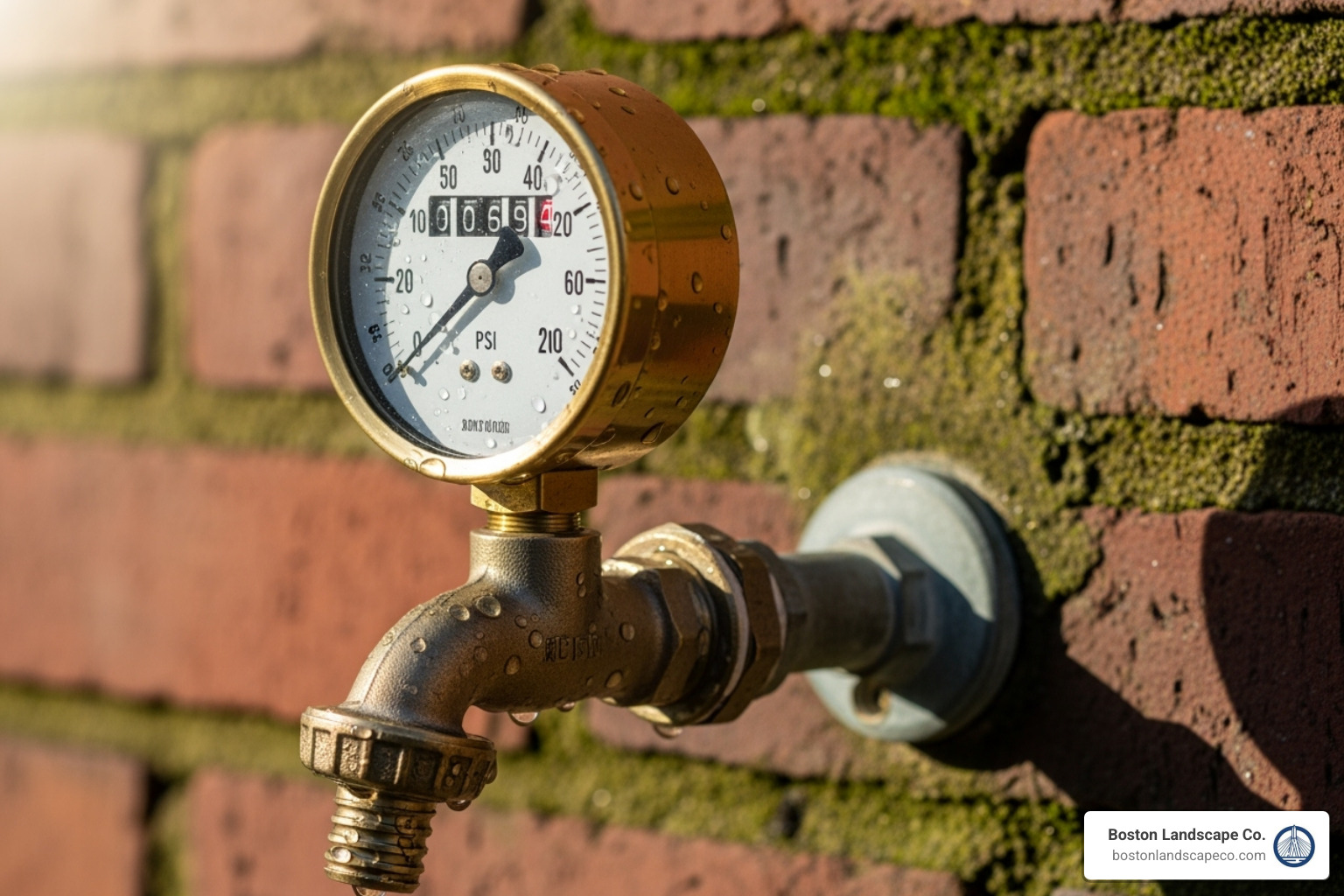
Your system’s design depends on your home’s water pressure (PSI) and flow rate (GPM). While pressure (PSI) is the force of the water, flow rate (GPM) is more critical, as it determines how many sprinkler heads can run at once.
- Check Pressure: Attach a pressure gauge to an outdoor spigot to find your static pressure.
- Measure Flow Rate: Time how long it takes to fill a 5-gallon bucket. Divide 5 by the time in minutes to get your GPM. For more precision, use this flow rate calculator.
Knowing your available GPM is essential, as each sprinkler head has a specific requirement. If you use well water, you must also account for the pump’s capacity and recharge rate. Understanding pump performance curves is key to ensuring your pump can meet the system’s demands.
Mapping Your Lawn
An accurate property map is your blueprint for success. Start by sketching your property to scale, including the house, driveway, walkways, garden beds, and trees. Note any features that could interfere with sprinkler placement.
Next, measure the total square footage of all areas to be irrigated. Document the lawn’s shape, identify full sun versus shade areas, and mark any sloped sections. Different areas have different needs; sunny spots require more water than shady ones, and slopes need special attention to prevent runoff. This map will guide your zone creation and sprinkler selection.
For professional assessment and installation in the Greater Boston area, learn more about our lawn irrigation services.
Comparing System Types for the Irrigation of Large Lawns
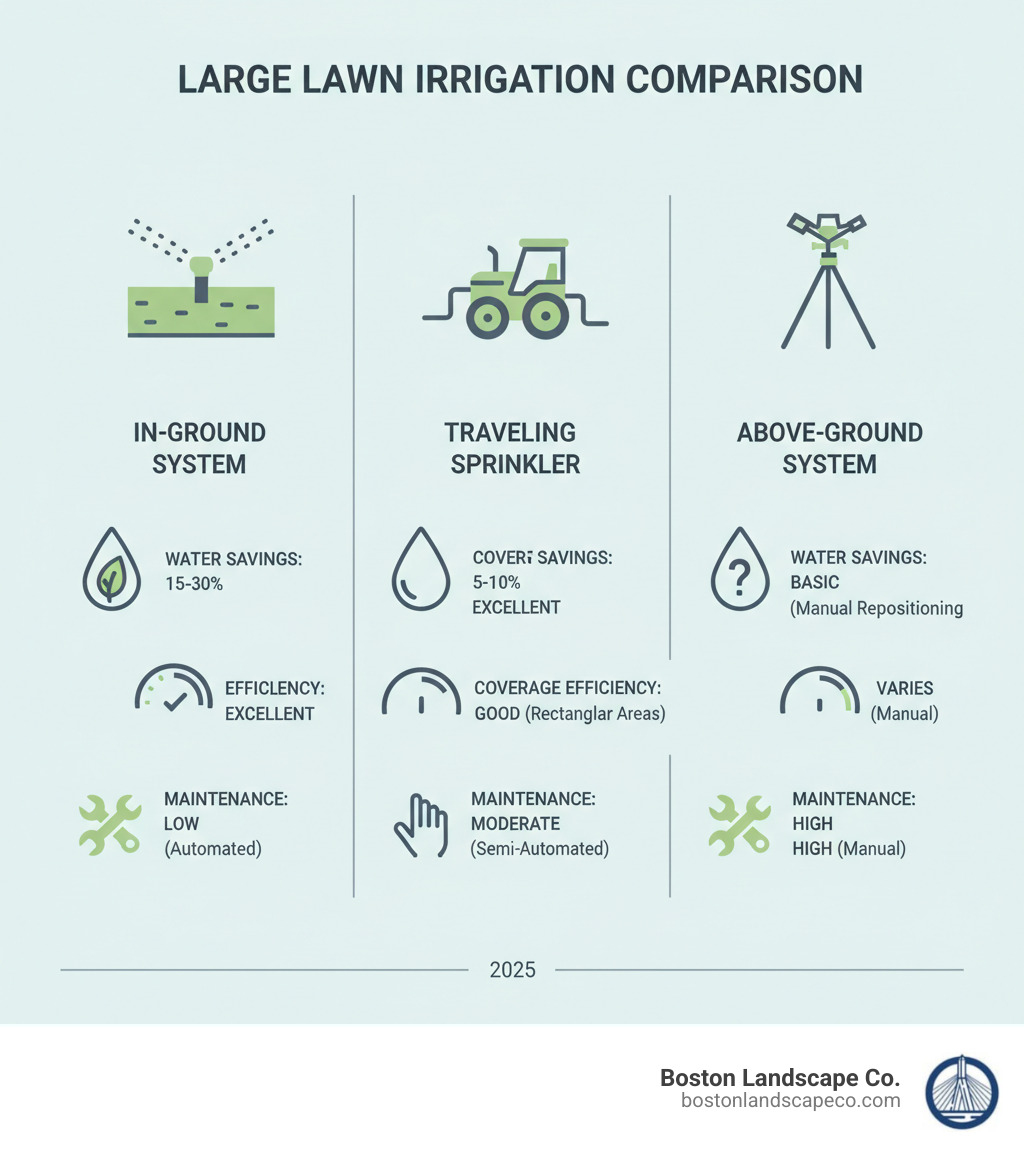
When choosing irrigation for large lawns, you have three main options. Each has pros and cons depending on your budget, property, and willingness to perform manual labor.
| System Type | Initial Cost | Coverage Efficiency | Maintenance | Aesthetics | Water Savings |
|---|---|---|---|---|---|
| In-Ground | High | Excellent | Moderate | Invisible | 15-30% |
| Above-Ground | Low | Variable/Poor | High | Visible (hoses/heads) | 10-15% |
| Traveling | Moderate | Good (linear areas) | Moderate | Visible (moving unit) | Variable |
In-Ground Sprinkler Systems
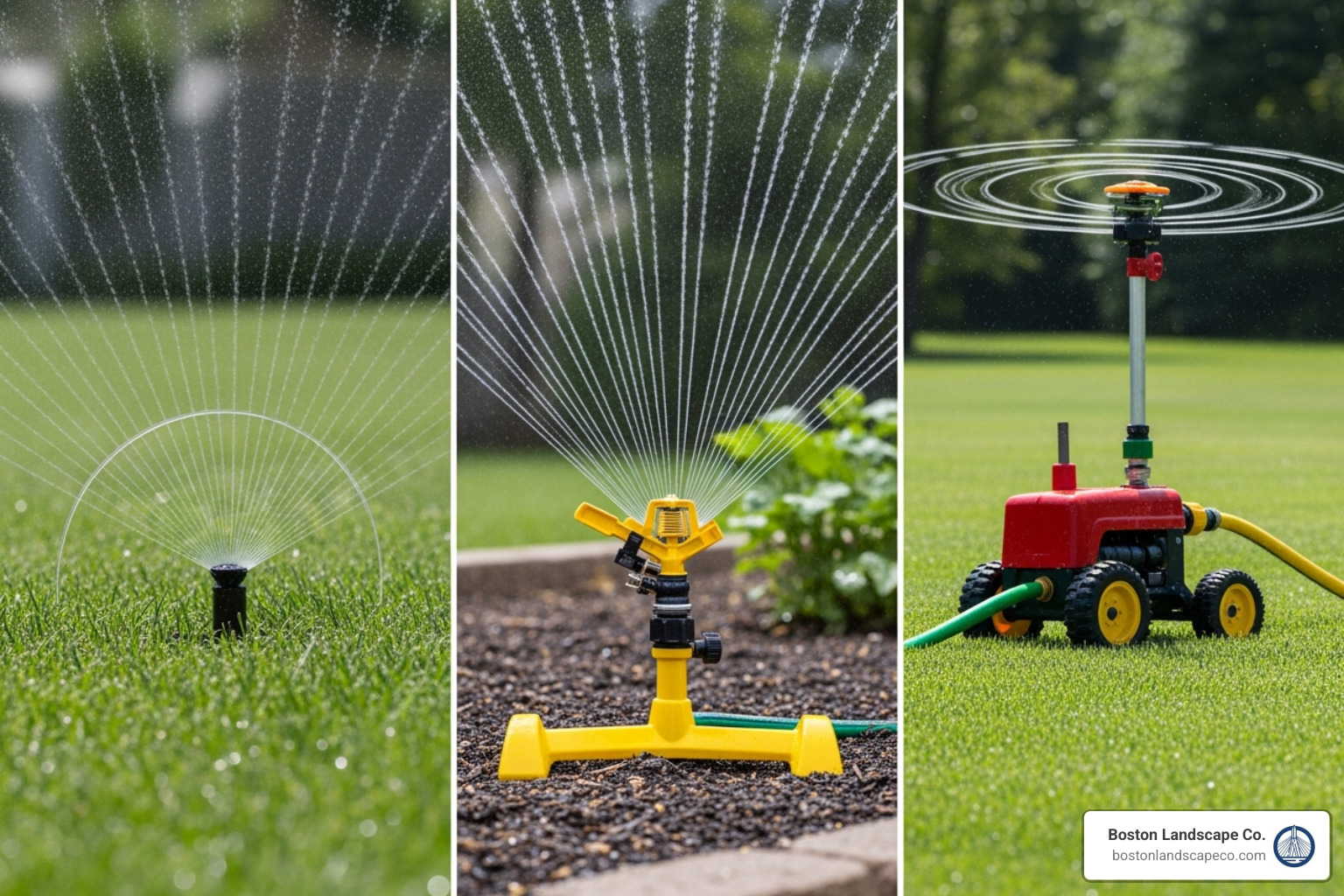
For serious irrigation for large lawns, in-ground systems are the top choice. Their automation and convenience are life-changing, as they water your lawn at optimal times without any effort. These systems are highly efficient, offering 15-30% water savings over manual watering. The pop-up heads retract into the lawn, leaving your yard unobstructed and looking professionally maintained. A well-designed system also increases property value.
The main drawbacks are the higher initial cost and complex installation, which involves trenching, plumbing, and electrical work. It’s not a simple DIY project. To understand the process, see our guide on how are irrigation systems installed?.
Above-Ground Sprinkler Systems
Above-ground systems are popular for their low cost and easy setup. However, for large lawns, the manual effort of moving hoses and sprinklers becomes exhausting. The biggest issue is uneven coverage, which leads to brown spots and soggy patches. They are also less water-efficient due to wind and evaporation, and the visible hoses are unsightly.
While suitable for small areas or temporary use, they are more frustrating than effective for large-scale irrigation. Learn more in our guide to watering and irrigation systems.
Traveling Sprinklers
Traveling sprinklers, or “tractor” units, are a good middle ground for large, open, rectangular lawns. Their semi-automated operation is a major benefit; you lay out the hose, and a unit like the National walking sprinkler pulls itself along. They can cover a large area in a single pass.
However, you still must move the hose for each session, and the unit can get stuck on uneven ground. The hose and sprinkler remain visible during operation. For those wanting more than a basic sprinkler without the cost of an in-ground system, this is a practical compromise for irrigation for large lawns.
Key Components and Effective Design Principles
An irrigation for large lawns system is a network of components working in harmony. Understanding each part helps you appreciate how a professional system achieves superior results.
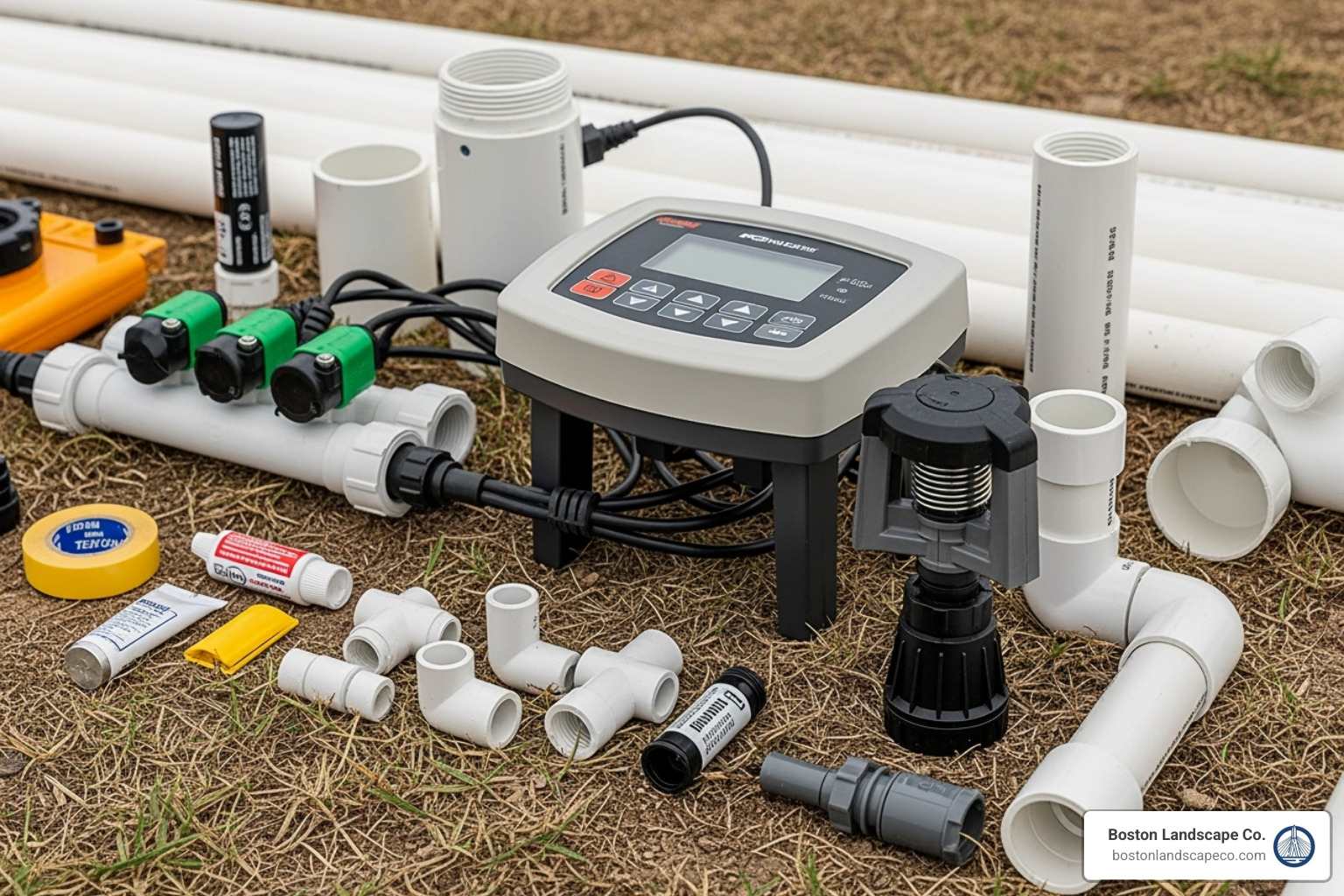
- Backflow Preventer: Protects your home’s drinking water from contamination. Required by code in most areas.
- Mainline & Lateral Lines: The mainline is the primary artery from the water source, while lateral lines branch off to deliver water to sprinkler heads.
- Valves: Act as gates, opening and closing to control water flow to different zones. They are often grouped in a valve manifold for easy access.
- Controller: The system’s brain, allowing you to program watering schedules for each zone.
- Sprinkler Heads: The workhorses that distribute water onto your lawn.
Designing an Effective System for Irrigation for large lawns
Successful irrigation for large lawns depends on uniform coverage. Two principles are key:
- Head-to-Head Coverage: Each sprinkler must be spaced to throw water all the way to the next sprinkler head. This overlap prevents dry spots between heads.
- Matched Precipitation Rates: All sprinklers within a single zone should apply water at the same rate. This ensures even watering, preventing some areas from becoming swampy while others remain dry.
Proper design eliminates dry spots and runoff, saving water and protecting your topsoil. It also helps prevent lawn diseases caused by poor watering.
The Importance of Zoning
Zoning, or creating hydrozones, involves grouping areas with similar watering needs. This is the key to water efficiency.
- Sun vs. Shade Zones: Sunny areas need more water than cool, shaded spots.
- Lawn vs. Garden Bed Zones: Grass has different requirements than flowers or shrubs. Drip irrigation is often used for beds, as explained in our drip irrigation system installation guide.
- Slope Zones: Slopes require shorter, more frequent watering cycles to allow water to soak in rather than run off.
Most homes need 3-7 zones, but large properties often require more to optimize water use.
Choosing the Right Sprinkler Heads
- Rotary Nozzles (Rotors): Ideal for large, open areas. They shoot a single stream of water in a rotating pattern, covering distances of 20-40 feet.
- Impact Sprinklers: Durable and excellent in windy conditions due to their larger water droplets. Known for their classic “tic-tic-tic” sound.
- Spray Heads: Best for smaller, irregular-shaped areas and corners. They produce a fixed, fan-shaped spray.
- Bubblers: Deliver water directly at the base of individual trees or shrubs.
Selecting the right head depends on throw distance, available water supply, and the specific needs of each zone. For technical details, manufacturers provide specification sheets like these Rain Bird installation instructions.
Understanding the Costs and ROI
When considering irrigation for large lawns, it’s important to look at both the upfront cost and the long-term return on investment. While a professional system is a significant initial investment, its long-term benefits in water savings, time savings, and increased property value are substantial.
DIY installation may seem cheaper, but it’s a complex job requiring trenching, plumbing, and electrical skills. Mistakes can lead to costly repairs or an inefficient system. Professional installation ensures the job is done right, saving you money over time and typically recouping about 83% of its cost at resale. For a detailed breakdown, see our guide on irrigation system installation cost.
Cost Considerations for Irrigation for large lawns
Several factors influence the total cost of your system:
- Lawn Size and Complexity: Larger, more complex properties require more materials and labor.
- System Type: In-ground systems have the highest initial cost but the best long-term value.
- Number of Zones: Each zone adds a valve and wiring, increasing complexity and cost.
- Soil Conditions: Rocky or clay-heavy soil makes trenching more difficult and expensive. Average trenching costs are $4-$12 per linear foot but can be much higher in difficult terrain.
- Smart Features: Weather-based controllers and soil sensors add to the upfront cost but deliver significant long-term water savings.
- Permit Fees: Typically range from $50-$200, depending on your municipality.
Note: These are average costs from internet data, not actual costs for Boston Landscape Co., and can range up to 3x higher based on complexity, specific property conditions, and local labor rates.
Leveraging Smart Technology for Savings
Smart technology has revolutionized irrigation for large lawns, turning basic timers into intelligent water management systems.
- Smart Controllers: Connect to local weather data to automatically adjust watering schedules, skipping sessions when it rains.
- Soil Moisture Sensors: Provide real-time data from your lawn, ensuring the system only waters when the soil is actually dry.
- Leak Detection: Monitors water flow and can shut down the system if a leak is detected, preventing waste and damage.
Look for EPA WaterSense labeled products, which are certified to use at least 20% less water. Smart systems can save an average home nearly 8,800 gallons of water annually. As noted by research from Sprinkler School, precise hydration is key to both plant health and conservation.
Year-Round Maintenance and Troubleshooting
Even the best irrigation for large lawns requires regular maintenance to perform efficiently and avoid costly repairs. Preventive care is essential, especially during hot Massachusetts summers.
Best Practices for System Maintenance
Seasonal care keeps your system in top shape:
- Spring Startup: After the ground thaws, we slowly turn on the water, check for winter damage, clean filters, and test each zone. We also reprogram the controller for the new season.
- Summer Inspections: We regularly check for clogged nozzles, leaks (indicated by pooling water), and ensure sprinkler heads aren’t blocked by overgrown grass.
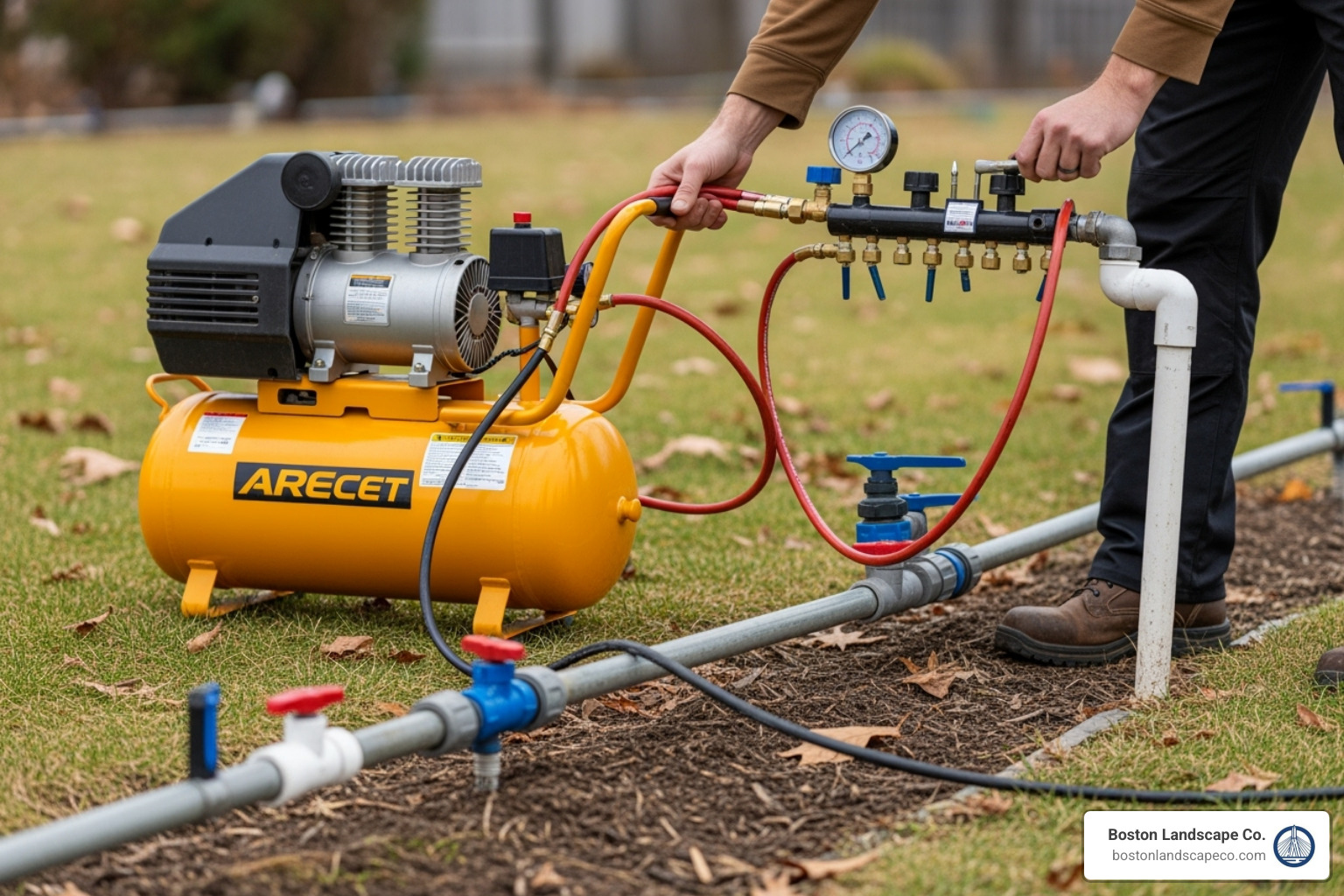
- Fall Winterization: This is critical in our climate. We use an air compressor to “blow out” all water from the pipes to prevent them from freezing and bursting. Skipping this step can lead to thousands of dollars in damage.
Throughout the year, we adjust sprinkler heads for proper coverage and clean filters to maintain pressure.
Common Problems and Solutions
- Dry Spots: Usually caused by misaligned heads, clogged nozzles, or insufficient watering time. The fix is to clean, adjust, or replace heads and modify the schedule.
- Pooling Water: Indicates overwatering, a leak, or poor drainage. We reduce watering times or hunt for and repair leaks.
- Low Pressure: Can be caused by a leak, a blockage, or too many heads on one zone. We check for blockages and ensure zones are properly designed for the available water flow.
- Heads Won’t Pop Up/Retract: Often due to debris, low pressure, or a worn-out head. Cleaning usually works, but replacement may be needed.
- Zones Won’t Turn On/Off: This points to a controller, valve, or electrical issue. We troubleshoot from the controller to the valve to find the source.
Frequently Asked Questions about Irrigation for Large Lawns
Over 30 years of installing irrigation for large lawns in the Greater Boston area, I’ve answered many questions. Here are the most common ones.
How many sprinkler zones do I need for a large lawn?
There’s no single answer. The number of zones depends more on your water flow rate (GPM) than just property size. Your available GPM dictates how many sprinkler heads can run at once. For example, with 15 GPM available, you can run five heads that use 3 GPM each. For a large lawn, this could mean 12-15 zones or more.
We also create separate zones for areas with different needs, such as sunny vs. shady spots, lawns vs. garden beds, and sloped areas. While a typical home may have 3-7 zones, large properties often require 8-15+ to be efficient.
How often should I water a large lawn?
Aim for deep, infrequent watering to encourage strong, deep roots. Most established lawns need about 1 to 1.5 inches of water per week, applied in one or two sessions, not daily sprinkles. This makes your grass more drought-resistant.
The best time to water is early morning (4-6 AM) to minimize evaporation and wind drift. Your specific schedule will depend on grass type, soil, and weather. Smart controllers are excellent for this, as they adjust automatically to conditions.
Can I install an in-ground system myself?
While technically possible, installing an in-ground system is a highly complex DIY project. It requires significant expertise in trenching, plumbing, electrical work, and system design. Design mistakes are costly and can lead to water waste and a damaged lawn.
You must also locate all underground utilities by calling Dig Safe before digging to avoid dangerous and expensive accidents. The required specialized tools can also be costly to rent.
For irrigation for large lawns, the complexity is even greater. Professional installation ensures proper design, efficiency, and compliance with local codes, and it comes with warranties. To learn more about our professional process, see our guide on irrigation system installation. If you’re set on DIY, consider starting with a small, manageable area first.
Conclusion
Choosing the right irrigation for large lawns is a manageable process when broken down into key steps: assessing your property, comparing system types, and focusing on efficient design. A well-designed system can save 15-30% on water costs, reclaim hours of your time, and significantly increase your property value.
More importantly, it provides the satisfaction of a consistently green, healthy lawn without the daily hassle of moving sprinklers. No more brown patches or soggy spots—just a beautiful landscape.
For homeowners across Billerica, Stoneham, and the greater Boston area, a picture-perfect large lawn is achievable. Whether you have slopes, mixed sun and shade, or are simply tired of manual watering, the right solution can transform your outdoor space.
At Boston Landscape Co., we’ve designed and installed custom irrigation systems since 1991. We understand the unique challenges of New England landscapes and create systems that deliver water precisely where and when it’s needed.
Ready to reclaim your weekends and enjoy a beautiful lawn? Request an estimate for your irrigation system installation today! Let’s design the perfect solution for your property.
