
Why Hardscaping Installation Is the Smartest Outdoor Investment You Make
Hardscaping installation is the process of adding permanent, non-living structural elements — like stone patios, walkways, retaining walls, and driveways — to your outdoor space to make it more functional, beautiful, and durable.
Here’s what most Greater Boston homeowners want to know upfront:
| What You Want to Know | Quick Answer |
|---|---|
| What is hardscaping? | Permanent outdoor structures: patios, walls, walkways, driveways |
| Why hire a professional? | Proper base prep, drainage, and frost-line knowledge are critical in MA |
| How long does it take? | Most projects: 2 to 4 weeks depending on scope |
| What does it cost? | Varies widely — see budget section below for ranges |
| Do I need a permit? | Possibly — retaining walls over 4 feet often require one |
A well-planned hardscape does more than look great. It handles foot traffic, guides water away from your home, resists seasonal shifting, and holds up for decades with minimal upkeep. In a climate like Greater Boston’s — where freeze-thaw cycles are a real threat to poorly built outdoor structures — getting the installation right the first time isn’t just smart. It’s essential.
Too many homeowners discover the hard way that a bargain installation becomes an expensive repair job within a few seasons. Settling pavers, cracked retaining walls, and flooded patios are almost always the result of skipped steps during preparation — not the materials themselves.
I’m Steve Schumacher, owner-operator of Boston Landscape Co. since 1991, and over more than three decades I’ve overseen hundreds of hardscaping installations across the Greater Boston area, from simple garden pathways to full outdoor living spaces. I’ll walk you through everything you need to know to plan your project with confidence and avoid the most common — and costly — mistakes.
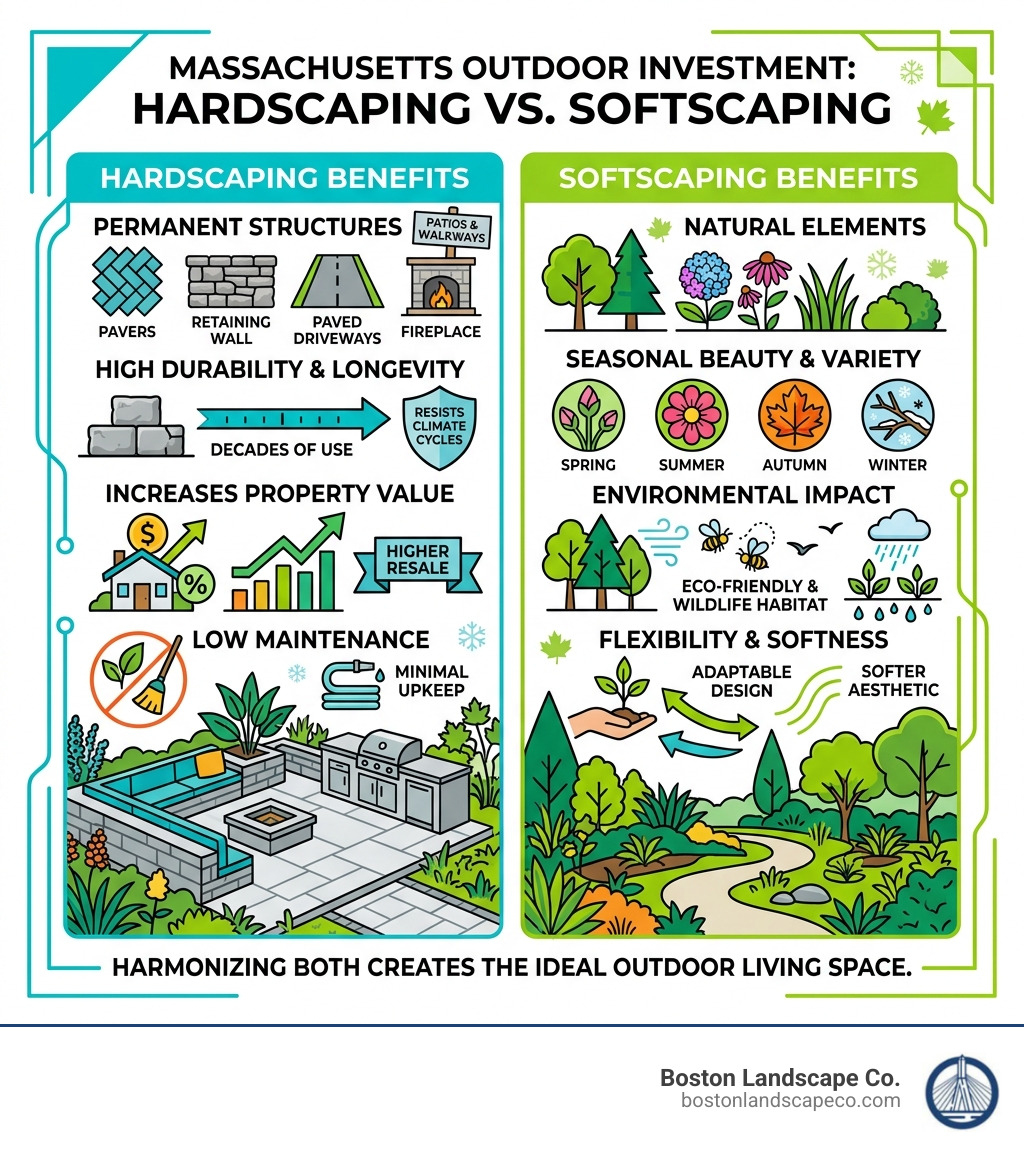
Hardscaping installation terms explained:
Understanding Hardscaping vs. Softscaping for Massachusetts Homes
When we talk about landscaping, we’re really talking about two distinct halves of a whole: hardscape and softscape.
Hardscaping refers to the “hard” stuff—the inorganic elements like stone, brick, concrete, and wood. These are the “bones” of your yard. They provide the structural foundation that allows you to actually live in your outdoor space. Think of it this way: you can’t put a heavy grill or a dining table on a bed of tulips, but you certainly can on a backyard hardscape design.
Softscaping, on the other hand, includes the living, “soft” elements like grass, shrubs, trees, and flowers. While softscaping provides color and texture, hardscaping provides the purpose.
The secret to a stunning property is design harmony. A yard that is 100% stone can feel cold and industrial, while a yard with only plants often lacks a clear place to sit or walk. We aim to blend these elements so that your hardscaping services Boston complement your existing greenery. For instance, a natural fieldstone wall looks even better when softened by creeping thyme or hostas planted along its base.
Planning Your Hardscaping Installation
Planning is where a project is won or lost. In towns like Winchester, Lexington, and Concord, we have to consider more than just aesthetics. We have to look at how the land behaves.
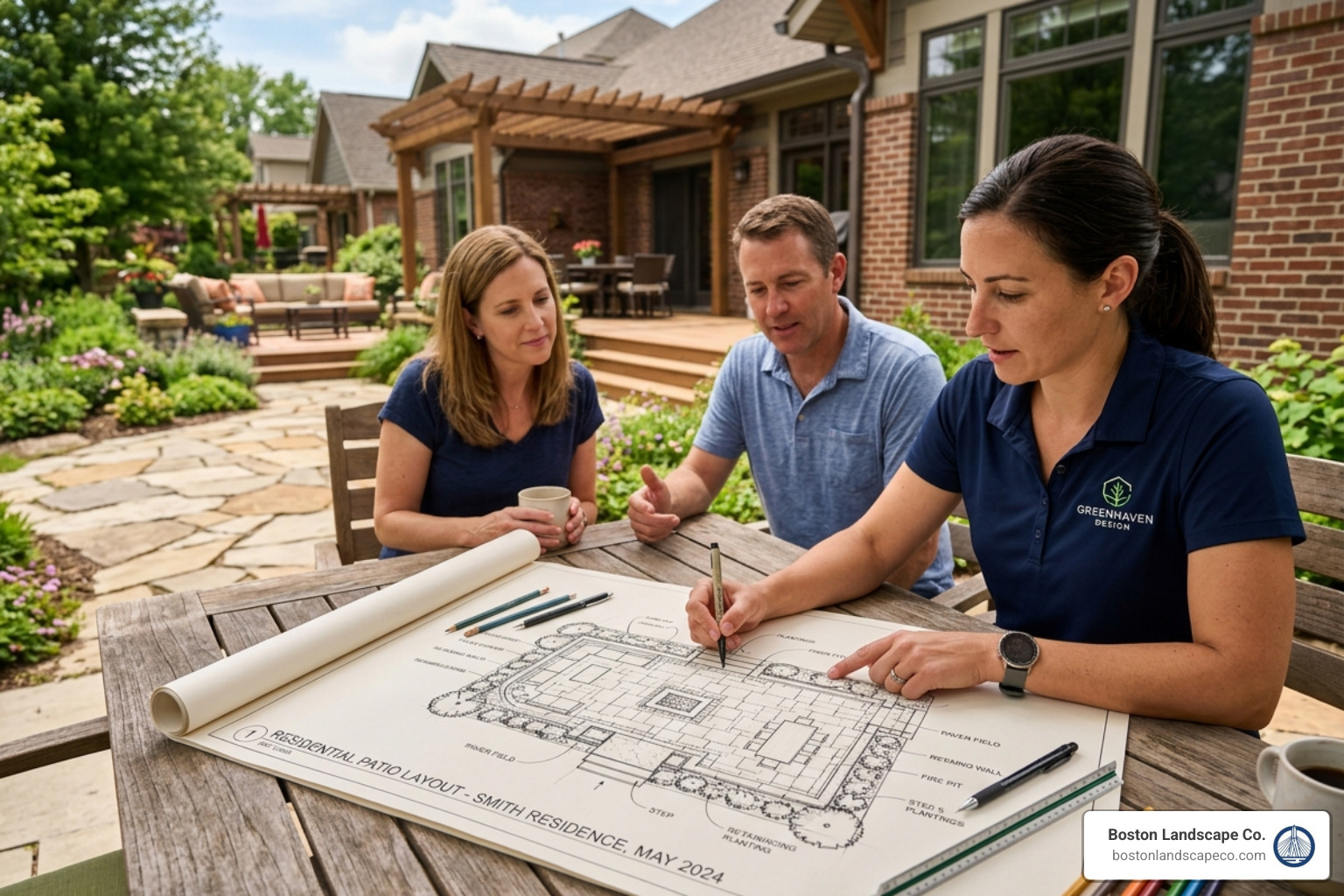
A professional hardscaping installation begins with a thorough site assessment. We look at:
- Soil Type: Is it heavy clay that holds water, or sandy soil that drains quickly?
- Grades and Slopes: Does the land tilt toward your foundation? If so, we need to regrade it.
- Sun Exposure: Darker stones can become incredibly hot in direct July sun, which might influence your material choice.
You also need to navigate the “red tape.” Many towns in our service area, such as Medford and Woburn, have specific rules regarding hardscape installation: planning, preparation, and what to expect. For example, retaining walls over four feet usually require a structural engineer’s stamp and a building permit. If you live in a community with a Homeowners Association (HOA), you’ll likely need their approval on the design and material colors before we break ground.
Finally, we never dig without calling 811. Marking underground utilities—gas, electric, and water lines—is a non-negotiable safety step for every hardscape design and build project.
Budgeting for Your Hardscaping Installation
Budgeting for hardscaping can feel overwhelming because the price ranges are so broad. It is important to remember that these figures are average costs based on national and online data. They are not the specific rates of Boston Landscape Co., but they provide a helpful starting point for your research.
| Project Type | Average Price Range (Internet Data) | Factors Influencing Cost |
|---|---|---|
| Small Paver Patio | $8,000 – $24,000+ | Material choice, site accessibility |
| Walkway | $2,000 – $8,000+ | Length, complexity of curves |
| Retaining Wall | $5,000 – $30,000+ | Height, reinforcement needs, drainage |
| Outdoor Living Space | $30,000 – $100,000+ | Kitchens, fire features, lighting |
When looking for affordable hardscaping near me, the “cheapest” quote often skips the expensive underground work—like the 6-12 inches of compacted gravel required to keep your patio from sinking. Labor is a significant variable; a site that requires hand-digging because a Bobcat can’t fit through the gate will naturally cost more than an open lot.
Choosing Materials for the New England Climate
In Massachusetts, we don’t just build for the summer; we build for the winter. The “freeze-thaw cycle” is our biggest enemy. When water gets under your pavers and freezes, it expands, pushing the stones upward. When it melts, the stones drop back down—often unevenly.
To combat this, we recommend materials that can handle the stress:
- Concrete Pavers: Modern pavers from brands like Techo-Bloc or Belgard are high-density and engineered to resist cracking during deep freezes. They are a popular choice for hardscaping Reading MA.
- Natural Stone (Granite & Fieldstone): Granite is practically indestructible and is a staple for hardscaping Lexington MA. It’s salt-resistant, which is vital if you plan on de-icing your walkways.
- Porcelain Slabs: These are becoming popular for a contemporary look. They are non-porous, meaning they don’t absorb water, making them highly resistant to frost damage.
The Professional Hardscaping Installation Process
If you’ve ever seen a DIY patio that looks like a roller coaster after two years, it’s because the “invisible” work was ignored.

The professional hardscaping installation process follows a strict sequence:
- Excavation: We don’t just scrape the surface. For a standard patio, we often dig 8-12 inches deep to make room for the base.
- Subgrade Compaction: We use heavy plate compactors to solidify the “native” soil before adding anything else.
- Geotextile Fabric: We lay a professional-grade fabric to keep the dirt from mixing with your clean gravel base. This prevents the base from “sinking” into the mud over time.
- Base Lifts: We add crushed stone in “lifts” of 2-3 inches at a time, compacting each layer fully before adding the next. This is a tip often found in hardscape landscaping: prepare for a hardscape installation.
- Bedding Layer: A final one-inch layer of sand or fine chips is screeded to a perfectly level surface.
This level of precision is why many homeowners choose local hardscape contractors rather than attempting a DIY project that requires renting thousands of dollars worth of heavy machinery.
Site Preparation and Drainage in Hardscaping Installation
Water is the most destructive force in hardscaping. If water pools on your patio, it will eventually find its way into the base or, worse, your basement.
Proper hardscape drainage solutions are built into the foundation. We pitch every patio at a slight angle (usually 1 inch of drop for every 4 feet of distance) to ensure water runs away from the house. In areas with heavy runoff, we install subsurface PVC piping or French drains to whisk water to a safe exit point.
For retaining wall construction, drainage is even more critical. Without a gravel “chimney” and a perforated drain pipe behind the wall, water pressure (hydrostatic pressure) will build up behind the stones. This pressure is strong enough to bow or collapse even the thickest concrete wall.
Finishing Touches for Long-Term Stability
Once the stones are laid, the job isn’t done. The finishing touches are what lock everything in place.
- Edge Restraints: We install heavy-duty plastic or concrete edging around the perimeter. This acts like a “frame” for a picture, preventing the pavers from creeping outward over time.
- Polymeric Sand: Unlike regular sand, polymeric sand contains a binder that hardens when misted with water. It prevents weeds from growing in the joints and stops ants from making homes under your stones. This is a standard practice for stone patio contractors.
- Surface Sealing: While not always required, sealing can protect your investment from oil stains and UV fading. It’s particularly helpful for driveway paver installation where cars might drip fluids.
Maximizing Longevity and Property Value
Hardscaping is one of the few home improvements that offers a high Return on Investment (ROI). According to some real estate estimates, a high-quality hardscape can increase property value by up to 20%.
Beyond the numbers, hardscaping simplifies your life. A hardscape retaining wall can turn a useless, steep slope into a flat, usable lawn. For businesses, commercial hardscape projects like walkways and entryways reduce liability by providing safe, level surfaces for customers.
To keep your hardscape looking new:
- Spring Cleaning: Sweep away debris and use a mild detergent to clean off winter grime.
- Joint Maintenance: If you notice the sand in the joints is washing away, top it up with fresh polymeric sand to maintain structural integrity.
- Avoid Metal Shovels: On pavers, use plastic-edged shovels in the winter to avoid scratching the surface.
Frequently Asked Questions about Hardscaping
How long does a typical hardscape project take to complete?
Most residential projects, like a patio or a medium-sized retaining wall, take between two to four weeks. This includes excavation, base preparation, and the actual stone laying. Larger “outdoor rooms” with kitchens and lighting may take longer, especially if we have to coordinate with plumbers or electricians.
Do I need a permit for a retaining wall in Massachusetts?
In many towns like Stoneham and Billerica, walls under 4 feet tall do not require a building permit, but they still must follow local zoning laws regarding “setbacks” from the property line. Always check with your local building department, as rules can vary significantly between neighboring towns.
Why is the frost line important for my patio installation?
The frost line in Massachusetts is the depth to which the ground freezes in winter. For permanent structures like pillars or heavy walls, we must dig footings below this line (often 3-4 feet deep). If we don’t, the ground will “heave” the structure upward every winter, leading to cracks and total structural failure.
Conclusion
A successful hardscaping installation is about more than just picking out a pretty stone. It’s about engineering a space that can withstand the harsh New England elements while providing a beautiful backdrop for your family’s memories. From the initial 811 call to the final sweep of polymeric sand, every step requires precision and local expertise.
At Boston Landscape Co., we take pride in building “over-engineered” foundations because we want your patio to look just as good in twenty years as it does on the day we finish. Whether you are in Burlington, Waltham, or Wellesley, we are here to help you build a space that lasts.
Ready to start your transformation? Trust a local hardscape installation company with over 30 years of experience. Contact us today to discuss your vision.
