
Garden path pavers: Ultimate 2025 Guide
Why Garden Path Pavers Transform Your Outdoor Space
Garden path pavers are the backbone of your outdoor design, turning muddy tracks into welcoming walkways and adding structure to your landscape. Whether guiding guests through spring blooms or creating a route to your vegetable garden, the right path materials make all the difference. A well-designed path is a smart investment that boosts curb appeal and property value.
Quick Comparison: Garden Path Pavers at a Glance
- Concrete Pavers: Most popular, cost-effective ($10-$30 per sq ft), versatile, durable
- Natural Stone (Granite, Bluestone, Flagstone): Premium look, unique, extremely durable, higher cost ($15-$60 per sq ft)
- Brick Pavers: Classic aesthetic, warm tones, moderate cost ($12-$35 per sq ft)
- Stepping Stones: Informal style, DIY-friendly, budget-friendly ($5-$20 per sq ft)
- Gravel/Mulch: Lowest cost ($1-$5 per sq ft), easy installation, requires maintenance
As New England gardens come alive in spring, it’s the perfect time to plan your path project. The mild temperatures and workable soil are ideal for installation, ensuring you can enjoy your new walkway all summer.
I’m Steve Schumacher, owner-operator of Boston Landscape Co. since 1991. My team has installed countless garden path pavers across the Greater Boston area. We understand Massachusetts soil, drainage, and what materials best withstand our tough winters and humid summers, turning undefined spaces into functional, beautiful outdoor features.
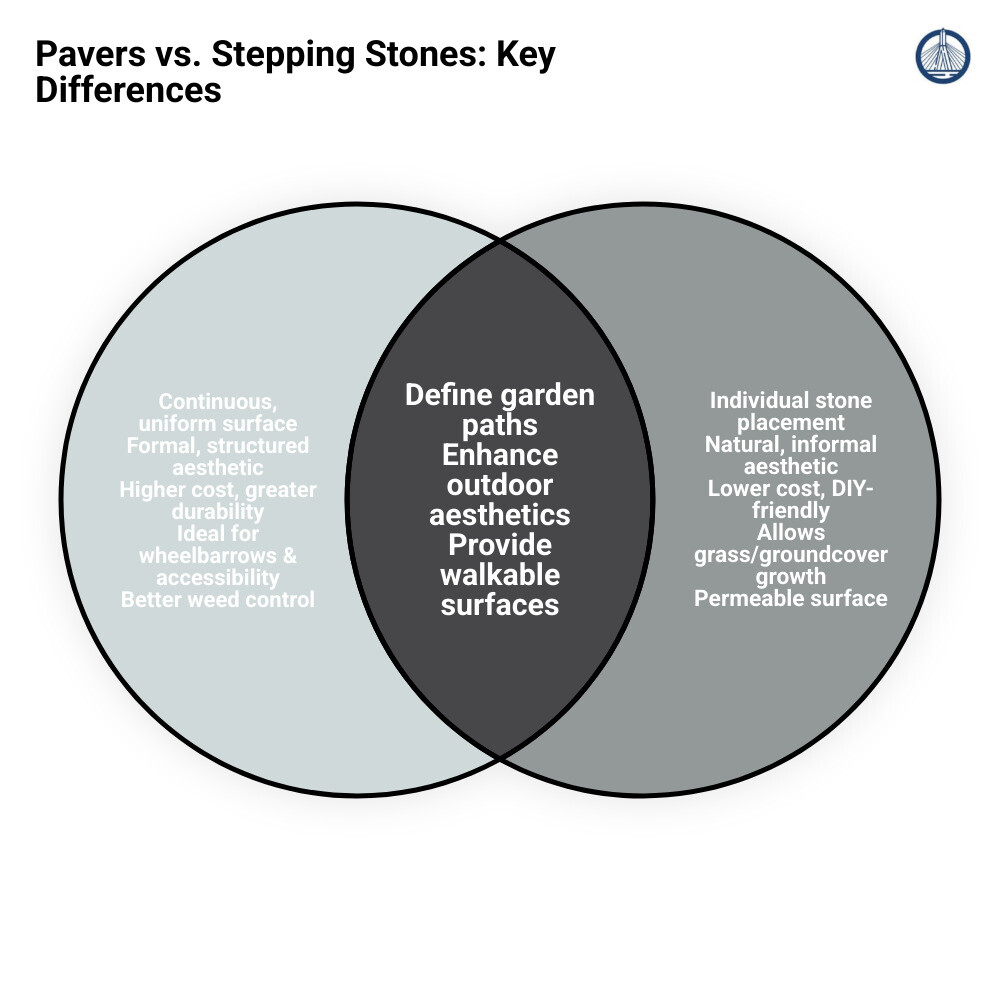
Key terms for Garden path pavers:
Pavers vs. Stepping Stones: Choosing Your Path’s Personality
When planning a garden path, the first choice is between continuous pavers and individual stepping stones. This decision defines your outdoor space’s personality: pavers offer a formal, structured look, while stepping stones create a more informal, natural feel.
Benefits of a Continuous Paver Path
Garden path pavers create a solid, interconnected surface that offers significant advantages for high-traffic areas and polished designs. Their primary benefit is durability. Properly installed pavers distribute weight, resisting the cracking and shifting common after a harsh New England winter. A paver path can last 25 to 100 years with basic maintenance.
The smooth, even surface is both safe and practical, perfect for pushing a wheelbarrow or for comfortable walking. With tight joints filled with polymeric sand, continuous pavers also offer excellent weed control, meaning you spend more time enjoying your garden. Finally, their design versatility is best. We can create intricate patterns like herringbone or sweeping curves, using materials like granite and bluestone to achieve a high-end aesthetic that boosts curb appeal.
If you’re considering a comprehensive outdoor living space, exploring options with stone patio contractors is a great next step.
The Charm of Informal Stepping Stones
Stepping stones offer a relaxed, organic feel, acting as a wandering trail through your landscape. Their signature quality is a natural aesthetic. The gaps between stones allow grass, moss, or groundcover to grow, softening the hardscape and integrating the path into the garden. This is especially beautiful in spring as the greenery fills in.
This design creates a permeable surface, allowing rainwater to soak into the soil and reducing runoff during heavy April showers. Stepping stones are also DIY and budget-friendly. The installation is simpler, requiring less material and labor, making it an accessible project for homeowners. They are perfect for meandering paths through flower beds or connecting different garden “rooms” without overwhelming the natural beauty.
| Feature | Continuous Pavers | Stepping Stones |
|---|---|---|
| Surface | Uniform, interconnected, solid | Individual, spaced, permeable |
| Installation | More complex (base prep, leveling, jointing) | Simpler (lay on ground, adjust spacing) |
| Cost | Higher per square foot (materials & labor) | Lower per square foot (materials & labor) |
| Maintenance | Low (occasional cleaning, re-sanding joints) | Moderate (weed control between stones, leveling) |
| Durability | High (distributes weight, resists shifting) | Moderate (individual stones can shift, sink) |
| Aesthetic | Formal, structured, neat | Informal, natural, whimsical |
| Weed Control | Excellent (tight joints) | Moderate (gaps allow growth) |
| Best Use | Patios, main walkways, driveways, high-traffic | Secondary paths, garden accents, low-traffic areas |
A Foundation of Style: Popular Materials for Garden Path Pavers
Choosing the right material for your garden path pavers is where function meets personality. Your selection determines the path’s look, performance through New England’s seasons, and maintenance needs. Understanding different hardscaping materials is key to making the best choice for your outdoor space.
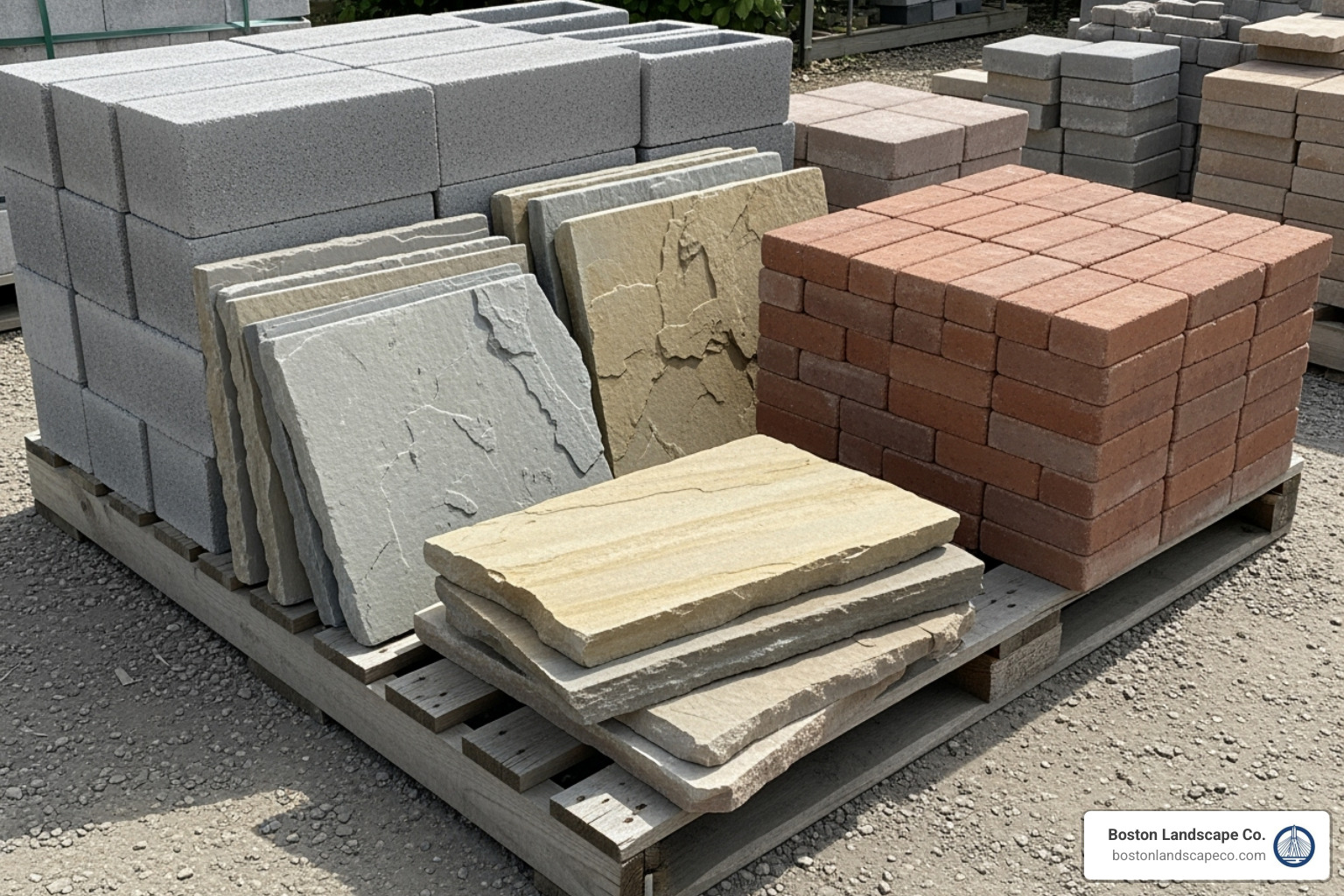
Concrete Pavers: The Versatile Workhorse
Concrete pavers are the market’s most popular choice for good reason. Their primary advantage is versatility and cost-effectiveness. Available in a vast array of shapes, sizes, and colors, they can mimic natural stone or aged brick without the premium price tag. Internet averages suggest installation costs from $10 to $30 per square foot, making them a practical choice that doesn’t sacrifice style. Modern concrete pavers are also engineered for durability, withstanding heavy loads and Massachusetts freeze-thaw cycles for a lifespan of 25 to 100 years. Maintenance is simple, usually just requiring occasional washing and re-sanding.
Natural Stone: Timeless Elegance for Your Garden Path Pavers
For a path with unique character and permanence, natural stone is unparalleled. Each piece is one-of-a-kind, offering an authenticity that manufactured products cannot replicate. While the investment is higher—internet averages range from $15 to $60+ per square foot—these materials can last for centuries.
- Granite: Extremely dense and durable with a sophisticated, speckled look. It’s a workhorse that handles high traffic and harsh weather.
- Bluestone: Offers the classic blue-gray New England aesthetic. It’s durable, naturally slip-resistant, and develops a beautiful patina.
- Flagstone: With its irregular, flat pieces, it’s perfect for creating organic, rustic paths that feel like they grew from the landscape.
- Travertine: Brings warm, earthy tones and a luxurious feel. It stays cooler underfoot, a bonus for summer evenings.
For homeowners considering natural stone, consulting with professionals experienced in brick patio installation and stonework is essential.
Classic Brick and Other Options
- Brick Pavers: Offer a warm, timeless aesthetic that complements any garden. Laid in patterns like herringbone, they add visual interest and old-world charm. Internet averages for installation range from $12 to $35 per square foot.
- Rubber Pavers: Made from recycled tires, they are non-slip and offer excellent shock absorption, ideal for play areas. However, their appearance is less natural and they can fade in the sun.
- Composite Wood Tiles: Provide a wood-deck look without the maintenance. They are easy to install but can get very hot in direct sun, making them better for shaded paths.
From Blueprint to Backyard: Design, Installation, and Cost
This spring is the perfect time to turn your plans for garden path pavers into reality. Understanding key design choices and proper installation is crucial for creating a path that is both beautiful and built to last, whether you DIY or hire a professional.
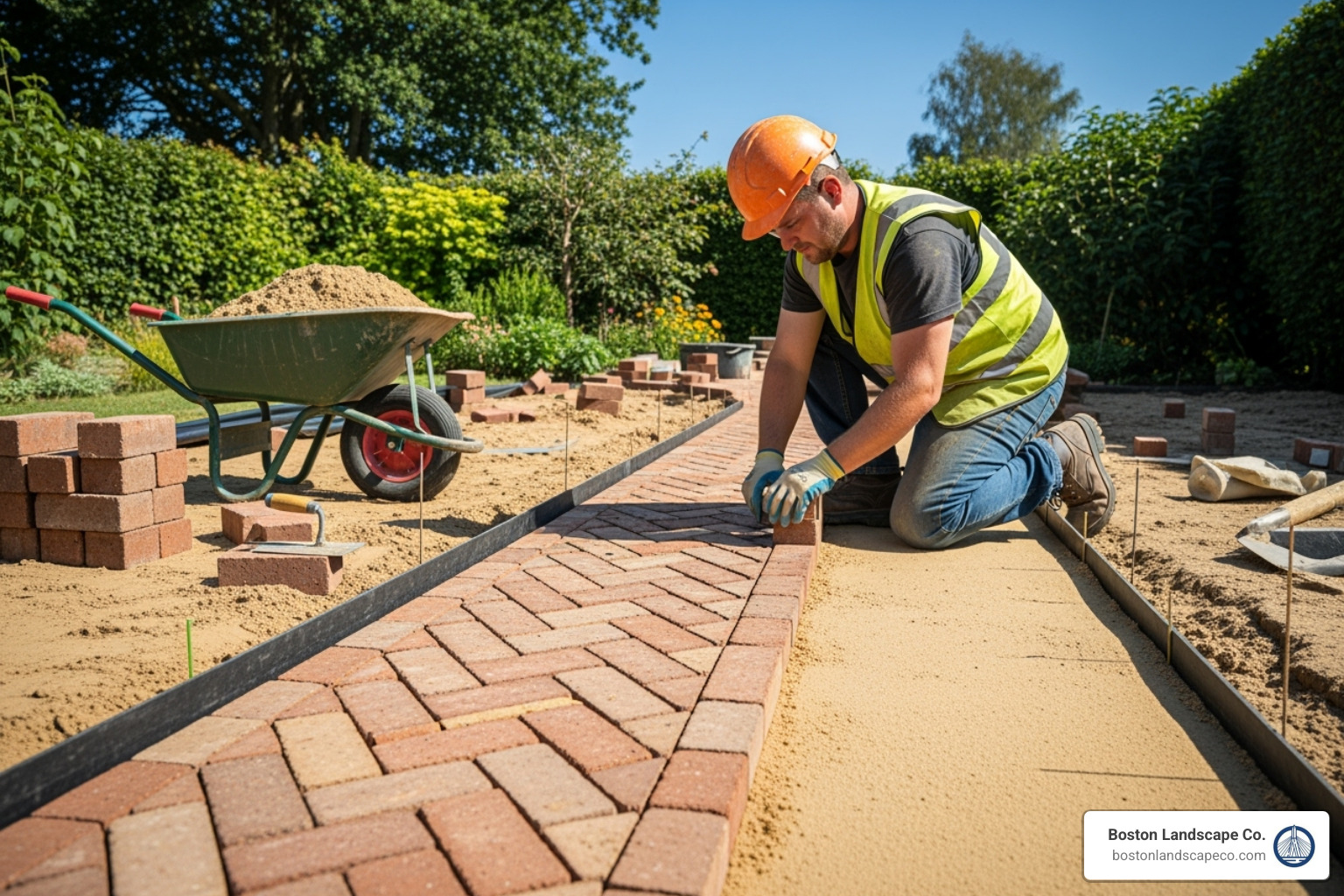
Design Options for Garden Path Pavers
Your path’s design sets the mood for your entire yard. Straight paths create clean, formal lines, while curved paths invite wandering and make gardens feel larger. Width is also critical: main walkways should be at least 48 inches wide to accommodate two people or a wheelbarrow, while secondary paths can be narrower (30-36 inches). The pattern you choose, such as herringbone, basket weave, or running bond, transforms simple pavers into art. You can also mix materials, like bluestone steppers in a gravel bed, for visual interest and budget flexibility. For more ideas, check out creative paving patterns for the garden or our landscape design services in Boston.
Installation and Cost Considerations
Proper installation determines your path’s longevity. The process is critical, especially with New England’s freeze-thaw cycles. It involves:
- Excavation and Grading: Removing soil and creating a slight slope (1-2%) for drainage.
- Base Preparation: Laying and compacting 4-6 inches of crushed stone to prevent winter heaving.
- Bedding Sand: Adding a level layer of sand for the pavers to sit on.
- Laying Pavers and Edging: Placing pavers and installing edge restraints to prevent shifting.
- Jointing: Sweeping polymeric sand into the joints to lock pavers in place and inhibit weeds.
Based on internet averages, installation costs can range from $10 to $60+ per square foot, depending on materials, design, and site complexity. While a DIY approach can save on labor, especially for simple stepping stones (see this Step-by-Step DIY Garden Path guide), a continuous paver path requires precision. Mistakes in base prep can lead to costly repairs. That’s why many homeowners rely on our expert hardscape installation services to ensure a stable, beautiful path that lasts.
Illuminating Your Way: Safety and Lighting for Garden Paths
Proper lighting for your garden path pavers is about more than just safety; it transforms your outdoor space into an enchanting nighttime retreat. A well-lit path extends your garden’s usability beyond daylight hours, creating a welcoming glow and providing peace of mind.
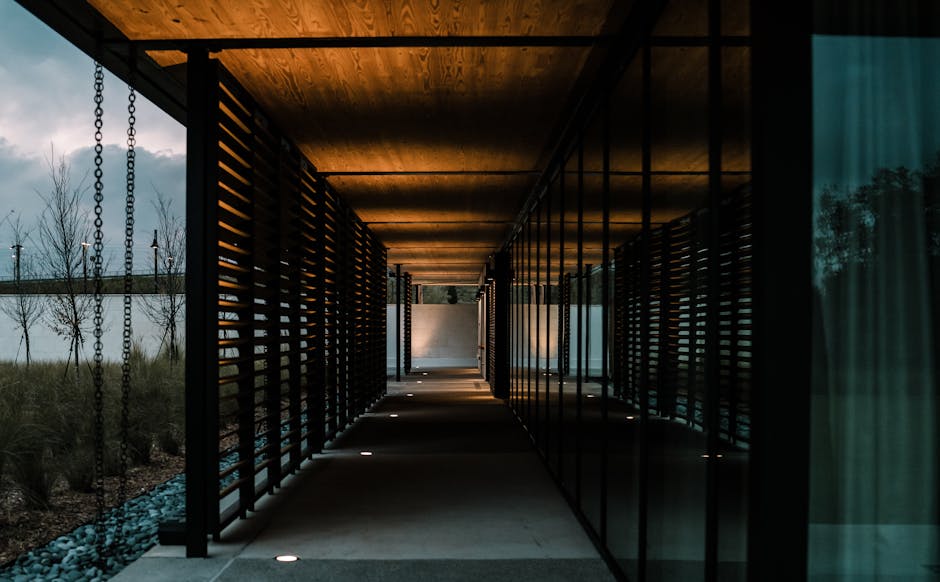
Integrated Lighting Solutions
We focus on creating a gentle, guiding light that improves ambiance. Popular options include:
- Low-Voltage Path Lights: The standard choice, providing a soft, energy-efficient glow to define path edges.
- Recessed Paver Lights: Sit flush with the walking surface for a sleek, modern look with no visible fixtures.
- Solar-Powered Stake Lights: An easy, eco-friendly DIY option that requires no wiring.
- Motion-Sensing Lights: Add security and convenience, activating only when needed.
Low-Maintenance and Unique Ideas
Beyond traditional fixtures, consider innovative ways to keep paths visible. Glow-in-the-dark pavers absorb sunlight and emit a soft glow at night without any wiring or electricity. For loose-fill paths, reflective gravel can naturally brighten the walkway under ambient light.
Lighting is only part of the safety equation. Choosing non-slip surfaces like textured concrete or bluestone is crucial for handling New England’s rain and ice. Finally, the simplest safety measure is to keep paths clear of leaves, snow, and overgrown plants. A well-maintained path is a safe path, year-round.
Frequently Asked Questions about Garden Path Pavers
After three decades of installing garden path pavers in Greater Boston, I’ve heard every question from homeowners. Here are the most common ones.
What is the most durable material for a garden path?
For ultimate durability, natural stone like granite and bluestone are the champions. They are incredibly dense and can last for generations, easily withstanding Massachusetts winters. For a balance of durability and cost, high-density concrete pavers are an excellent choice. They are engineered for our freeze-thaw cycles and can last 25-50 years or more with proper installation.
What is the cheapest way to make a garden path?
If budget is the main concern, loose materials like gravel or wood mulch are the most economical, with internet pricing averages between $1 and $5 per square foot. They are best for informal paths and should be laid over landscape fabric to suppress weeds. For a solid surface on a budget, DIY concrete pavers using molds are a popular option, allowing you to create custom stepping stones for a fraction of the cost of pre-made ones.
How wide should a garden path be?
The path’s function determines its width. Main walkways (e.g., from a driveway to the front door) should be at least 3 to 4 feet wide to allow two people to walk side-by-side or to move a wheelbarrow. Secondary paths to a garden or side gate can be narrower, around 30 to 36 inches. Intimate tertiary paths that wind through flower beds can be as narrow as 18 to 24 inches.
Conclusion
Your garden path is the thread that weaves your outdoor space together. Whether you choose the structured elegance of continuous garden path pavers or the organic charm of stepping stones, the right material—be it versatile concrete, timeless natural stone, or classic brick—will define how you experience your garden for years to come.
This spring is the ideal time to transform muddy tracks into beautiful, functional pathways. An investment in quality pavers pays dividends in curb appeal, property value, and daily enjoyment.
For Boston-area homeowners seeking a professional installation engineered to last through New England’s seasons, Boston Landscape Co. offers over three decades of local expertise. We understand our region’s soil and climate, ensuring your path is not just beautiful but built to last.
Ready to create the garden path you’ve been dreaming about? Explore our hardscaping services and let’s start planning your spring project together.
