
Curved walkway ideas: 7 Stunning Designs
Why Curved Walkways Transform Your Outdoor Space
Curved walkway ideas bring a natural flow and welcoming elegance to any yard. Unlike rigid straight paths, a winding walkway creates visual interest, slows movement, and guides visitors on a gentle journey through your landscape. Here’s what you need to know:
Quick Overview: Top Curved Walkway Ideas
- Classic Stone Paths – Bluestone, flagstone, or granite pavers for timeless elegance
- Modern Modular Pavers – Interlocking concrete pavers in various patterns
- Mixed Materials – Stepping stones with grass, river rock, or gravel
- Natural Fieldstone – Rustic, organic look for cottage-style gardens
- Permeable Options – Eco-friendly pavers that allow water drainage
- Width Matters – Plan for 3-5 feet wide for comfortable passage
- Add Lighting – Low-voltage path lights improve safety and ambiance
Curved walkways do more than connect two points. They soften the hard lines of your home’s architecture, create opportunities to showcase garden beds, and can significantly boost curb appeal. As spring approaches and homeowners plan outdoor projects, a curved walkway offers the perfect chance to reimagine your landscape’s flow.
The gentle arcs of a well-designed path encourage people to slow down and appreciate their surroundings—whether that’s fragrant plantings, a tucked-away bench, or a New England garden coming to life. By following your property’s natural contours, a curved path feels organic rather than imposed.
I’m Steve Schumacher, owner-operator of Boston Landscape Co. For three decades, I’ve designed and installed countless hardscaping projects featuring curved walkway ideas that transform properties across the Greater Boston area. Whether creating a welcoming front entrance or connecting a patio to a backyard retreat, the right walkway design can completely change how you experience your outdoor space.
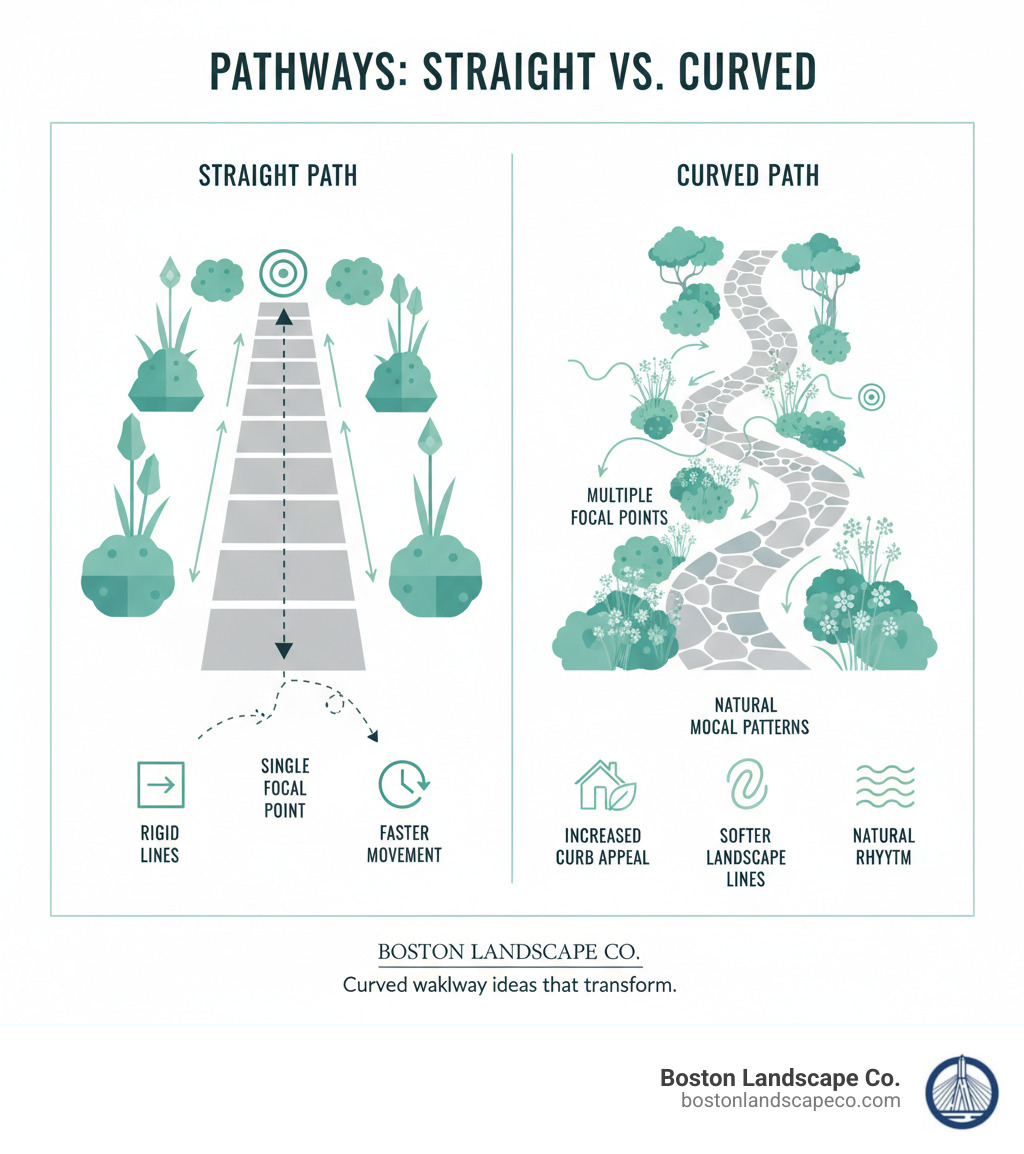
Simple guide to Curved walkway ideas terms:
Why Choose a Curve? The Benefits of a Winding Path
There’s something magical about how curved walkway ideas transform a simple journey into something worth savoring. When planning spring and summer landscaping projects, homeowners are often surprised by how much difference a curve can make. It’s not just about aesthetics; it’s about function.
A winding path creates visual interest that catches the eye and invites exploration. Instead of a predictable straight line, a curved walkway introduces a natural rhythm to your landscape, like a meandering stream. This organic flow slows the pace, encouraging you to notice the details of your garden, from spring leaves to summer perennials. A curved path turns a daily walk into a moment of appreciation.
From a practical standpoint, curves are brilliant for connecting outdoor spaces naturally. A well-designed curve can gracefully steer around a mature tree or flow alongside layered garden beds, working with your landscape rather than fighting it. This thoughtful design makes a statement, signaling care and attention to detail.
The gentle, flowing lines provide a beautiful contrast to the straight edges of your home’s architecture, softening those hard lines and creating visual balance. This improves curb appeal and makes a home feel genuinely welcoming. Properties with thoughtful landscaping and hardscaping consistently command higher values, making a beautiful curved walkway an investment in your property value and your daily quality of life. You’re quite literally creating a journey every time someone approaches your home.
Improved flow, better curb appeal, and a cohesive landscape are what a well-designed curved path delivers. It transforms your outdoor space from separate areas into a connected, livable environment.
If you’re ready to reimagine how your entire property flows together, our Landscape Design services can help you create a cohesive outdoor environment that perfectly complements your home and the way you live.
Inspiring Curved Walkway Ideas by Material
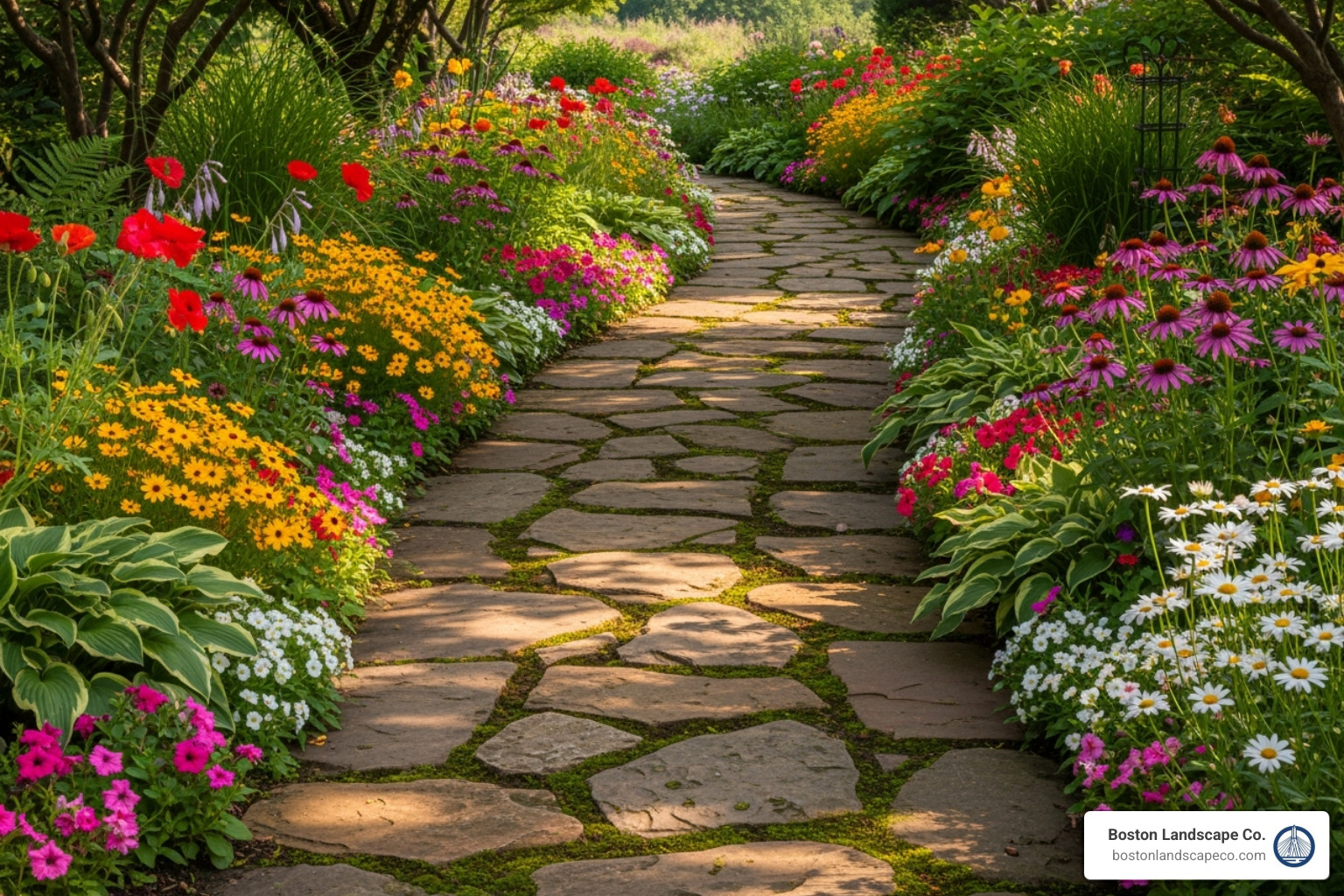
The material you choose defines your walkway’s character. For New England, we need materials that handle our freeze-thaw cycles while looking beautiful. Here are some of the most popular options we install, from timeless stone to modern pavers.
Classic Stone & Paver Walkways
Natural stone walkways are built to last and improve with age. Their durability and beauty make them a smart long-term choice for any property.
- Bluestone: A top choice for its classic blue-gray tones that suit New England gardens. Its natural cleft surface offers great traction, and it can be cut to create smooth, neat curves.
- Flagstone: For a relaxed, cottage-garden feel, these irregularly shaped stones create charming pathways that feel like they’ve been there forever.
- Fieldstone: To achieve a rustic look, fieldstone delivers authentic New England character with its rough-hewn texture and varied shapes.
- Granite Pavers: As a premium option, granite is incredibly dense and durable. It can be precisely cut for perfect curves and is an investment that will last for generations.
- Cobblestone/Belgian Block: These smaller units bring European elegance, are adaptable to curves, and create a remarkably stable surface.
Top 3 Stone Types for New England Weather:
- Bluestone – Handles freeze-thaw cycles exceptionally well.
- Granite – Nearly indestructible and resistant to salt.
- Cobblestone/Belgian Block – Dense and stable in all conditions.
Learn more about our stone installations through our Hardscaping Services.
Modern Paver & Mixed Material Paths
For contemporary designs or more flexibility in color and pattern, manufactured pavers offer a world of curved walkway ideas. Today’s pavers are sophisticated, durable, and versatile.
- Modular & Interlocking Pavers: Designed for easy curves, their uniform dimensions and interlocking edges create smooth arcs with a clean, polished look. They lock together to resist shifting under New England’s challenging conditions.
- Concrete Pavers: Modern concrete pavers convincingly mimic natural stone or even wood at a fraction of the cost, with nearly endless color options to match your home.
- Permeable Pavers: An eco-friendly choice, these allow rainwater to filter into the ground, reducing runoff and benefiting your yard and local waterways.
- Stepping Stones with Grass or River Rock: This approach creates a softer, garden-integrated path that feels less formal. The material between the stones adds texture and helps the walkway blend into the landscape.
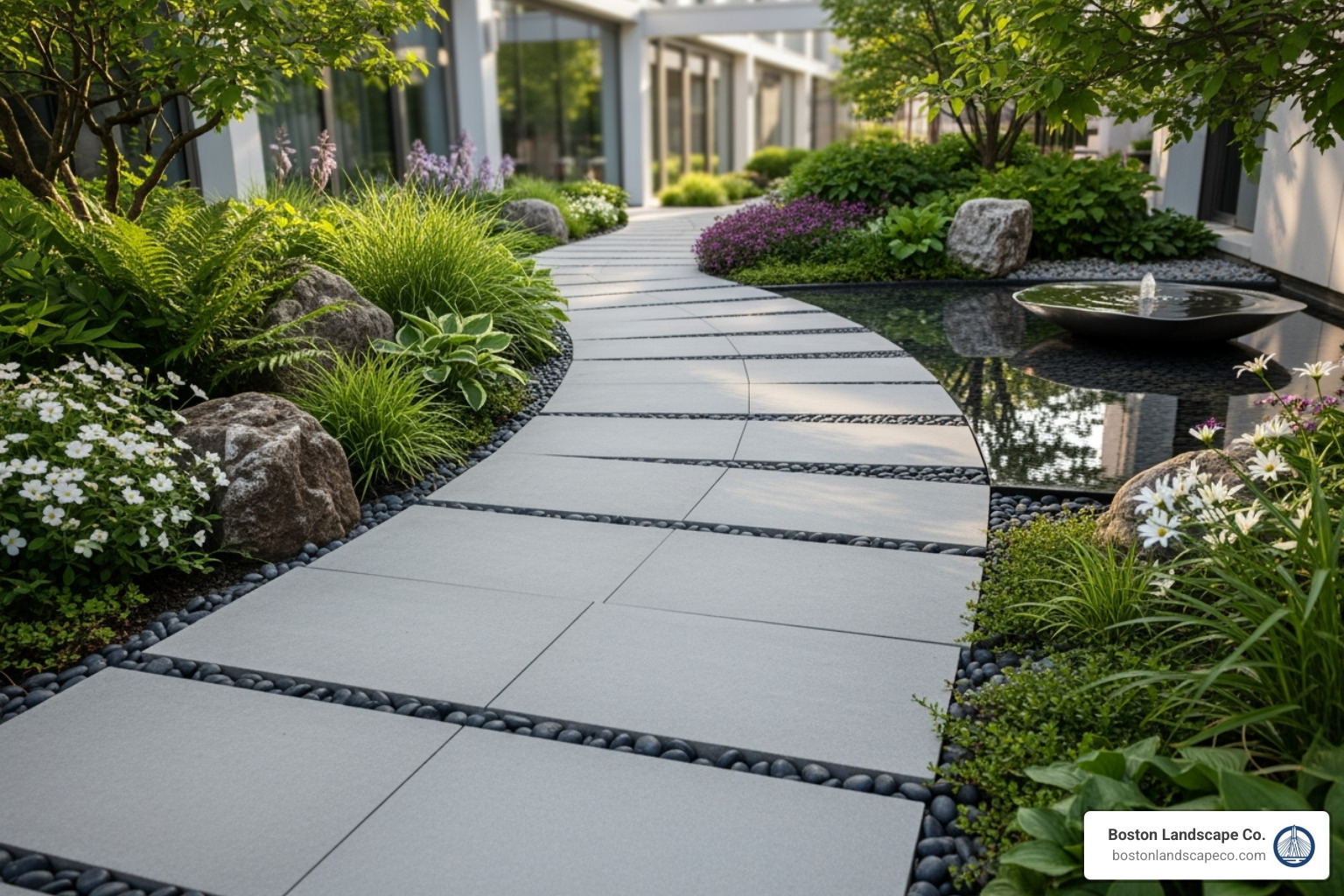
If you’re considering a coordinated look, check out our Driveway Paver Installation services to see how we create seamless transitions throughout your property.
Designing Your Perfect Curve: Key Tips for Success
Creating a great curved walkway is about understanding how people move and how landscape elements work together. As you plan spring and summer outdoor projects, these tips will help you design a path that’s beautiful for years to come.
Essential Design Tips for Your Curved Walkway Ideas
A great curved path should feel like it was always meant to be there. Here are our guiding principles:
- Follow Natural Movement: Your walkway should guide visitors along an intuitive path. Work with gentle slopes and curve around existing features like mature trees. The goal is graceful, sweeping arcs, not tight zigzags.
- Use Focal Points: Every curve should have a reason. It might sweep around to reveal a stunning plant, or draw the eye toward a cozy bench. Designing curves that lead somewhere meaningful creates a sense of journey.
- Width Matters: We recommend at least 3 feet for a single-person path, but 4 to 5 feet feels much more generous. This allows two people to walk side-by-side and accommodates wheelbarrows or strollers.
- Blend with Plantings: A curved path shouldn’t be isolated. Layer garden beds along the edges with shrubs, grasses, and perennials. These plantings soften the hard edges of the stone and create a cohesive design.
For more ideas, see thousands of curved walkway photos for inspiration.
Choosing the Right Paver Patterns for Your Curved Walkway Ideas
The paver pattern you choose affects both the look and stability of your walkway, especially on curves.
The herringbone pattern is our top recommendation for curved paths. Its interlocking design is incredibly stable and resists shifting, even through New England’s freeze-thaw cycles. While it requires more precision to install, the result is a sharp, durable walkway.
A running bond pattern is a simpler design that also works beautifully for gentler curves. It adapts well to gradual arcs with minimal cutting, making it a practical and attractive option.
We often add a soldier course border—laying pavers end-to-end along the edges. This creates a crisp frame and adds structural integrity to the entire installation. Explore more options with our Backyard Hardscape Design services.
Lighting, Borders, and Finishing Touches
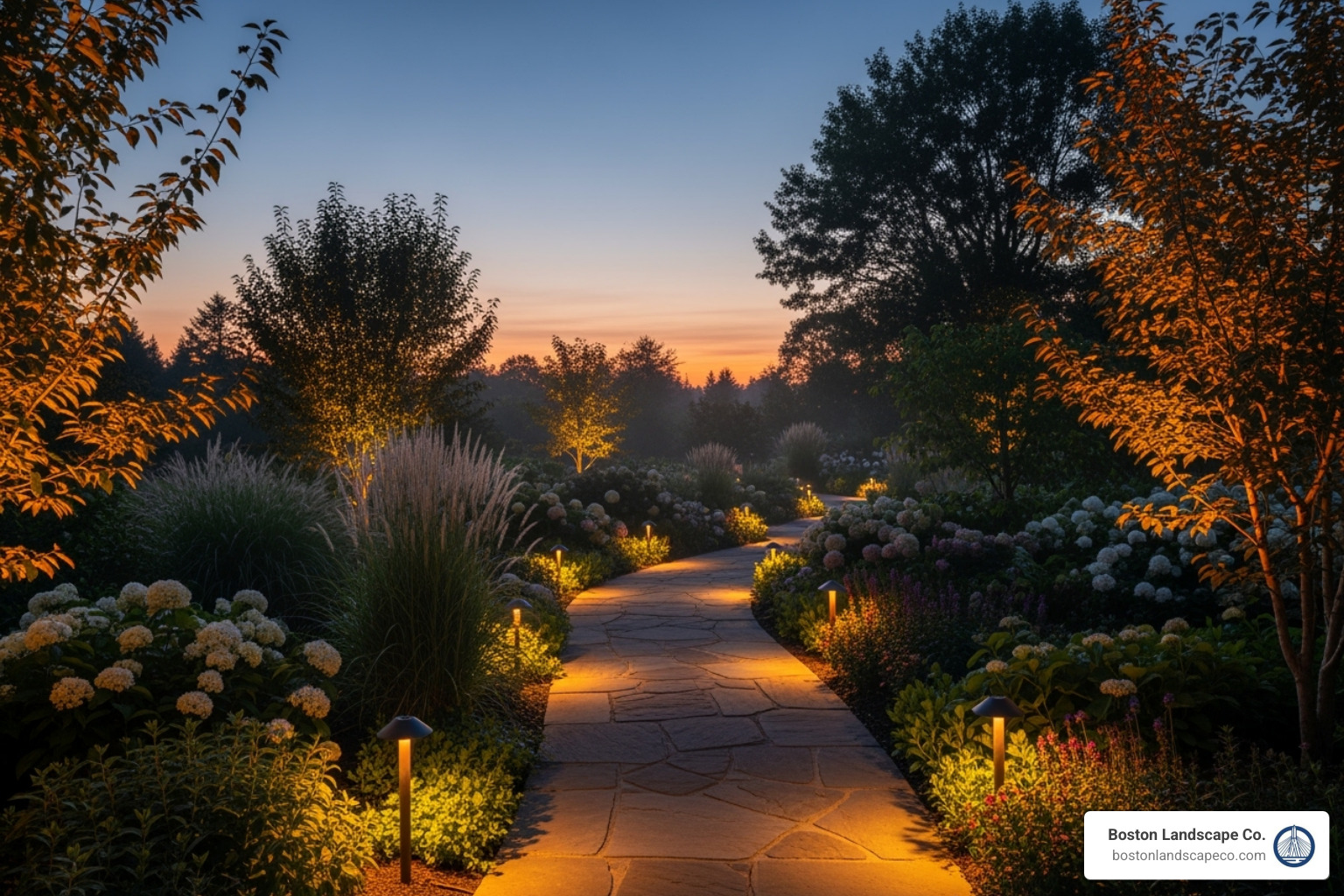
Final touches transform a walkway from functional to magical.
Low-voltage lighting is essential for safety and ambiance after sunset. Path lights cast a warm glow, highlighting plantings and the texture of your pavers, extending your outdoor living hours.
Edge restraints are the unsung heroes that keep your curves sharp. Installed along the perimeter, these plastic or metal strips prevent pavers from shifting outward over time due to foot traffic and ground movement.
For sloped properties, retaining walls as borders offer both function and beauty. A low wall can manage grade changes and create raised planting beds. Plus, properly installed retaining walls require minimal upkeep, adding a durable, attractive feature to your landscape.
Budgeting and Maintaining Your New Walkway
Investing in curved walkway ideas adds lasting value and enjoyment to your home. As you plan for the warmer months, understanding the costs and care involved will help you make confident decisions. For comprehensive planning, explore our Residential Landscaping services.
Understanding the Costs
Curved walkway costs vary based on materials, site conditions, and complexity. Please note: these are average costs based on internet data and not actual costs for Boston Landscape Co., which require a personalized estimate.
Labor costs typically represent the largest portion of the investment. Creating a durable curved walkway requires skilled craftsmanship, from proper excavation to precise paver cutting. Site preparation is also key; poor drainage or steep slopes must be addressed. Finally, project complexity matters—tighter curves and intricate patterns increase labor time.
Here’s a general overview of typical material costs:
| Material Type | Average Cost per Sq. Ft. (Material Only) | Wide Range per Sq. Ft. (Installed) |
|---|---|---|
| Gravel | $1.50 – $4 | $5 – $15+ |
| Concrete | $4 – $8 | $8 – $25+ |
| Pavers (Concrete) | $0.50 – $10 | $8 – $50+ |
| Brick Pavers | $0.50 – $10 | $10 – $60+ |
| Natural Stone (e.g., Bluestone, Flagstone) | $20 – $50 | $20 – $100+ |
The installed cost is much higher because the pavers themselves are only about 20% of the total. The real value is in expert installation—proper base preparation, grading, and craftsmanship that ensures your walkway endures New England winters. Professional installation is an investment in your property’s value and your long-term enjoyment.
Simple Maintenance for Lasting Beauty
Once professionally installed, your walkway is surprisingly simple to maintain.
- Regular Sweeping: Sweep away leaves and debris to prevent staining and weed growth.
- Weed Control: Apply a weed inhibitor periodically. Hand-pull or spot-treat any stubborn weeds that appear.
- Replenish Sand: Every year or two, sweep fresh polymeric sand into the joints and mist with water. This keeps pavers locked together and prevents shifting.
- Seal Pavers: Consider sealing your pavers every 3 to 5 years to protect against UV damage and stains. It also improves their natural color.
- Winter Care: Use a plastic shovel or a snowblower with a plastic guard to avoid scratching pavers. For ice, use calcium-based de-icers or rock salt. Avoid magnesium-based products, which can damage pavers.
Frequently Asked Questions about Curved Walkways
Over three decades of designing walkways in the Greater Boston area, I’ve heard many questions about curved walkway ideas. Here are the most common ones with straightforward answers.
What is the best paver pattern for a curved walkway?
The herringbone pattern is highly recommended for its interlocking design, which provides excellent stability and minimizes shifting on curves. The pavers lock together, resisting movement from foot traffic and freeze-thaw cycles.
A running bond pattern is also a great, simpler choice that adapts well to gentle curves. It’s particularly suited to modular pavers and requires less cutting, making it a practical and attractive option.
Should a front walkway be straight or curved?
This depends on your home’s architecture and landscape style. There’s no single right answer.
- Curved walkways create a more natural, inviting, and graceful entrance. They complement organic shapes in a garden, soften a home’s hard lines, and encourage a slower, more appreciative journey to your door.
- Straight paths are more formal, direct, and symmetrical. They work wonderfully with modern, minimalist, or traditional colonial-style homes where clean lines are part of the design language.
Think about the experience you want to create. Do you prefer a meandering garden path or a direct, formal entrance?
How wide should a curved walkway be?
This is one area where you shouldn’t skimp. While a 3-foot width is the minimum for single-file passage, it can feel cramped.
We typically recommend a 4 to 5-foot width for main walkways. This generous dimension allows two people to walk side-by-side comfortably and feels much more open and welcoming. The extra width also better accommodates wheelchairs, strollers, or garden carts, making it a worthwhile investment in functionality and feel.
Conclusion
As you plan your spring and summer outdoor projects, curved walkway ideas offer one of the most transformative changes you can make. These winding paths create a journey, soften your home’s architectural lines, and blend your landscape into a cohesive, living experience.
The benefits are clear: improved visual interest, a natural flow, and a significant boost to both curb appeal and property value. Whether you prefer the timeless elegance of bluestone or the modern versatility of interlocking pavers, there is a style to match your vision.
However, creating a beautiful and durable curved walkway that can withstand New England’s seasons requires professional expertise. Proper planning, base preparation, drainage, and skilled installation are crucial for a path that won’t settle or shift. This is where experience makes all the difference.
At Boston Landscape Co., we’ve designed and installed countless curved walkways throughout the Greater Boston area. We know how to work with your property’s unique contours and ensure your investment looks stunning for years to come.
Imagine greeting guests on a gently winding path lined with spring flowers or enjoying a slower stroll through your own yard. That’s the lasting beauty a well-designed curved walkway brings. We’d love to help you transform your yard into the welcoming oasis you’ve been imagining.
Get a professional estimate for your hardscaping project today, and let’s start planning your perfect curved walkway together!
