
Cost of Hydro Seed: Ultimate 2025 Guide
Hydroseeding Your Lawn: What Will It Cost?
Understanding the cost of hydro seed is the first step to getting a new, vibrant lawn. Hydroseeding is an efficient method for establishing new grass, especially on large or sloped areas. The process involves spraying a slurry—a mix of grass seed, mulch, fertilizer, and water—onto your soil, which promotes fast germination and healthy growth.
So, what does it cost?
Here’s a quick look at national average hydroseeding costs:
- Per Square Foot: Typically $0.06 to $0.22, but can range from $0.06 up to $0.30 per square foot for smaller or more complex jobs.
- Per Acre: Expect to pay between $2,000 and $8,000 per acre, depending on specific factors.
- Average-Sized Lawn (around 5,000 sq ft): Roughly $1,000.
Please note: These are national average costs based on internet data and not actual quotes from Boston Landscape Co. Prices can vary widely based on your specific project and local conditions.
In this guide, we’ll dive deeper into these numbers, looking at what influences the price and how hydroseeding compares to other lawn installation methods.
As Steve Schumacher, owner-operator of Boston Landscape Co. since 1991, I’ve spent over three decades helping clients achieve their landscaping goals. This guide shares insights from that experience to help you make informed decisions for your property.
Average Hydroseeding Costs by Project Size
The size of your project is a primary factor in the cost of hydro seed. Generally, the larger the area you hydroseed, the lower the cost per square foot—much like buying in bulk.
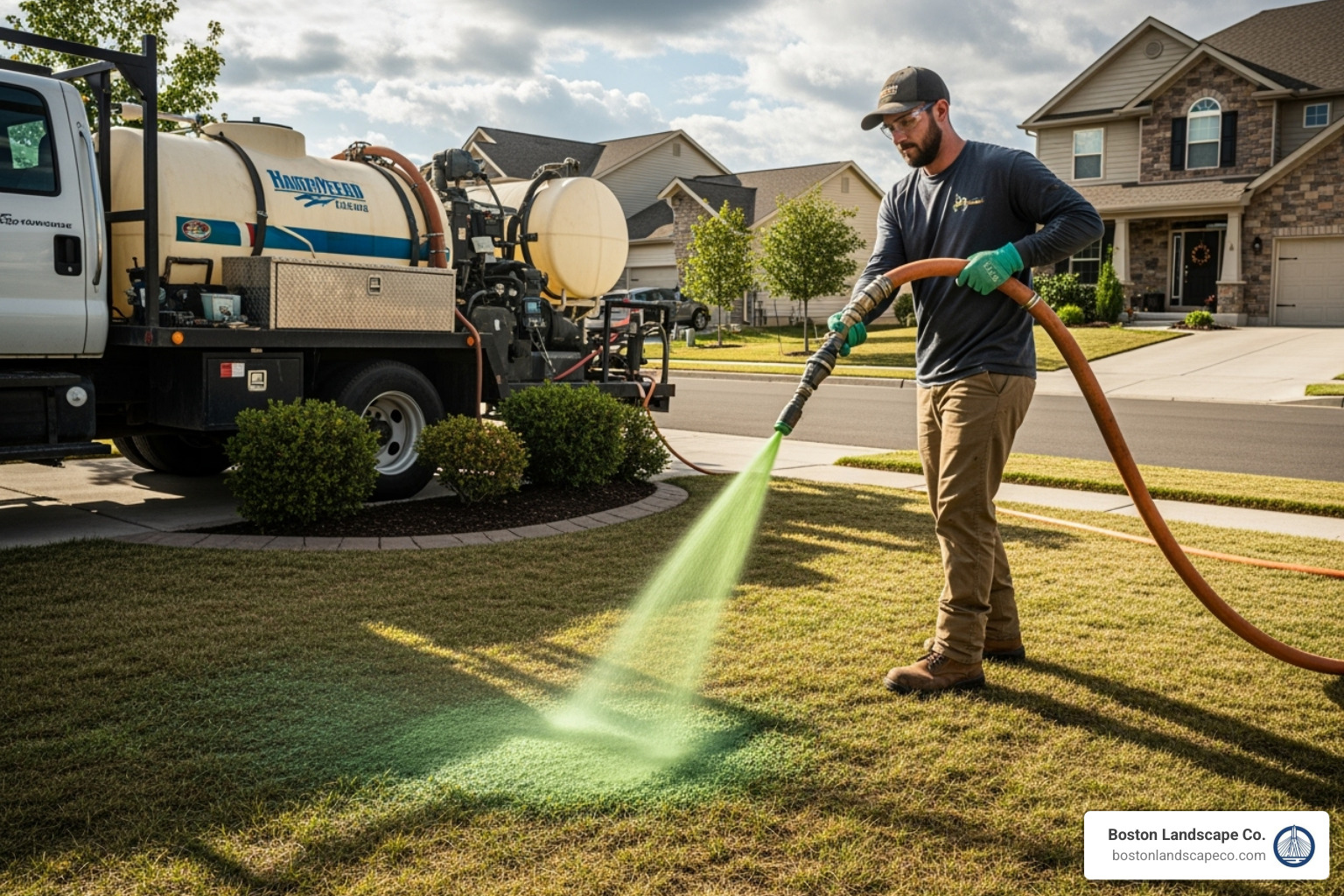
Just a friendly heads-up: all prices discussed here are national averages based on internet data, not actual quotes from Boston Landscape Co. Every lawn is unique. For an accurate quote for your property in the Greater Boston area—including towns like Bedford, Billerica, Burlington, Concord, Lexington, and Woburn—please reach out to us directly.
Let’s break down the average costs:
- Cost per Square Foot: Most projects run $0.06 to $0.22 per square foot. Smaller or more complex jobs can increase the price, potentially up to $0.60 per square foot in some cases.
- Cost per Acre: For larger landscapes of an acre or more, the cost of hydro seed usually falls between $2,000 and $8,700 per acre. Complex projects may reach $10,000 or more per acre.
- Minimum Service Fees: Most hydroseeding companies have a minimum service fee to cover equipment and team mobilization, even for small jobs. These fees typically range from $300 to $500.
This table shows estimated costs for common lawn sizes based on broad national averages. Your actual costs will depend on the unique factors of your project.
| Lawn Size | Estimated Square Footage | Low-End Cost | Average Cost | High-End Cost |
|---|---|---|---|---|
| Small Lawn | 1,000 sq ft | $60 | $150 | $600 |
| Average Lawn | 5,000 sq ft | $400 | $1,000 | $3,000 |
| Quarter-Acre | 10,890 sq ft | $500 | $2,000 | $6,000 |
| Full Acre | 43,560 sq ft | $2,000 | $8,000 | $25,000 |
As you can see, the price per square foot generally decreases as the project size increases, making hydroseeding an efficient and cost-effective choice for large areas.
Key Factors That Influence the Overall Cost of Hydro Seed
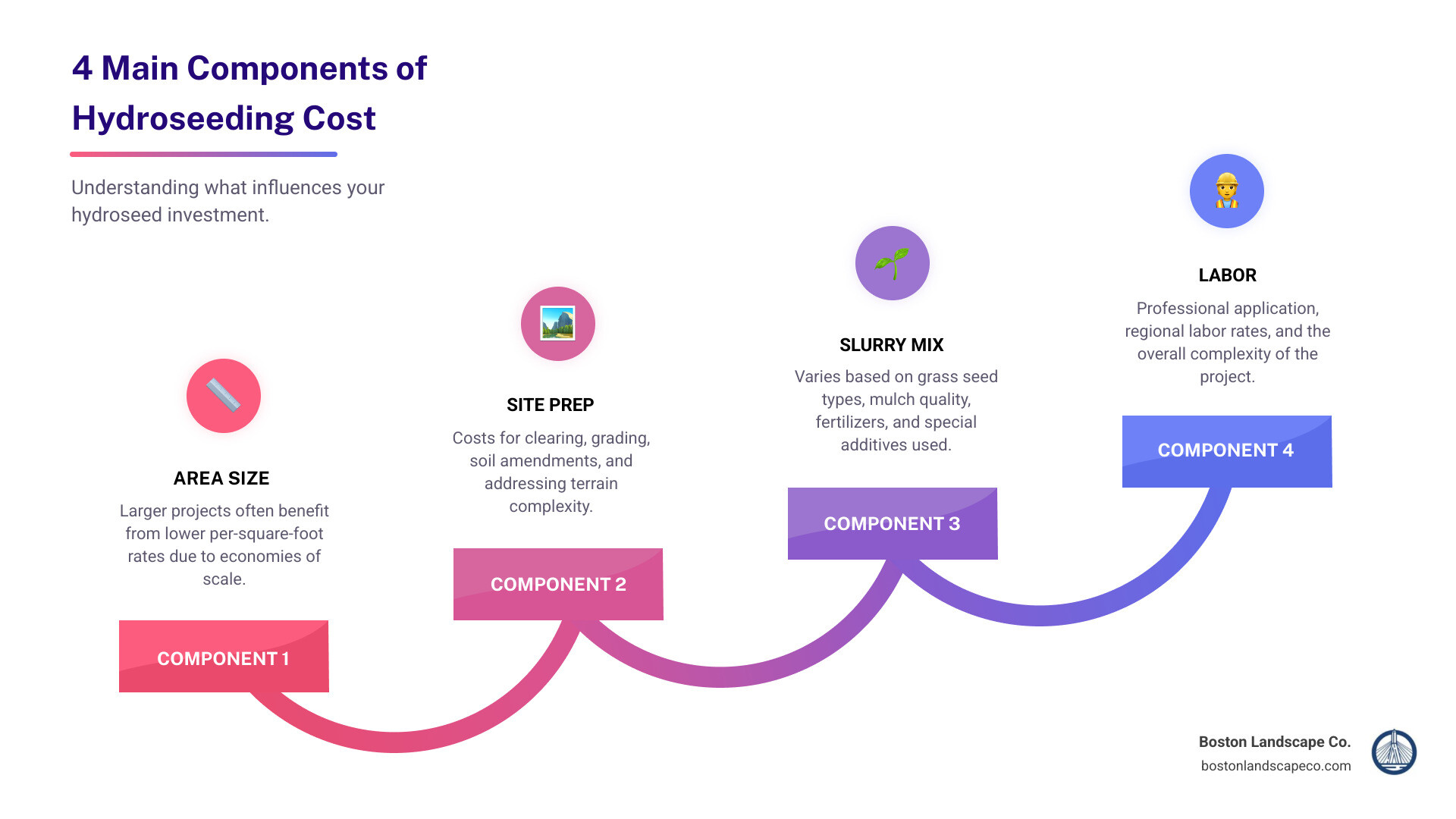
Beyond the base averages, several key factors shape your final cost of hydro seed, from your property’s layout to the specific ingredients in the slurry.
How Lawn Size and Terrain Affect Pricing
As mentioned, economies of scale play a big role. Our equipment is designed for efficiency, so once it’s running, covering more ground is more cost-effective. This is why larger projects have a lower cost of hydro seed per square foot.
Site accessibility is another consideration. If a lawn is difficult for our truck and hoses to reach, it may require more time and manual effort, increasing the overall cost.
Slopes and steep grades are also a factor. While hydroseeding is excellent for erosion control on slopes, these areas often require more material and specialized techniques. A steep grade can double or even triple the cost due to the need for multiple applications or specialized measures.
If your soil is particularly rocky, it may require additional prep work to ensure seeds can establish, which adds to the cost.
Finally, grading and leveling are crucial for proper drainage. If significant earthwork is needed before we can hydroseed, this will be an additional service. Resloping a yard can cost $700 to $2,500 on average. For a functional outdoor space, we also offer hardscaping services.
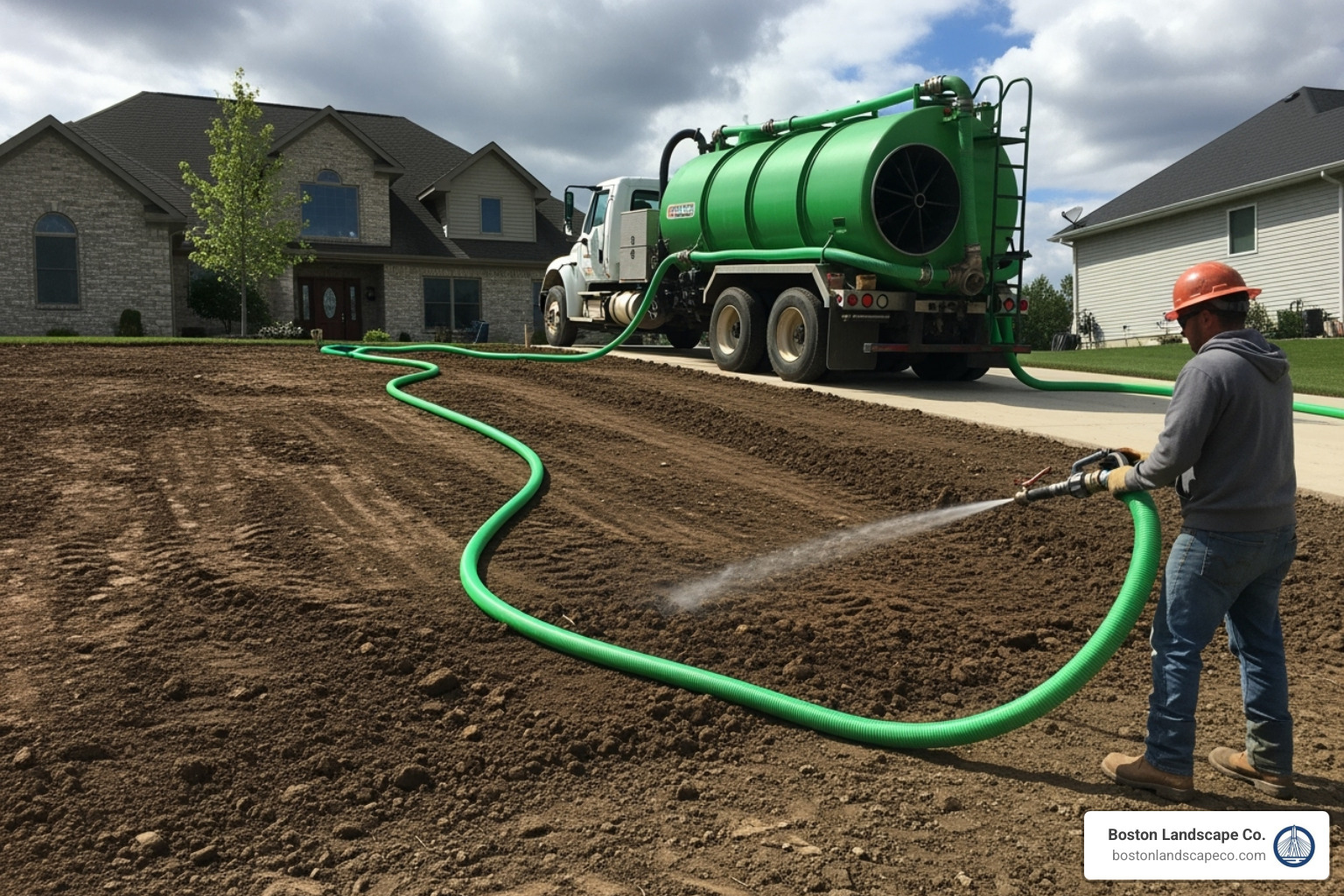
Proper soil preparation is crucial for the success of your hydroseeded lawn, ensuring the best environment for germination.
How Slurry Ingredients Impact the Cost of Hydro Seed
The hydroseeding “slurry” is a carefully mixed cocktail of ingredients that nurtures your new lawn, and its components directly influence the cost of hydro seed.
Mulch types vary in price and performance. Wood fiber mulch is the premium option, offering superior moisture retention and erosion control, especially on slopes. Paper mulch is less costly but also less effective, often used in blends. A blended mulch of wood and paper offers a balance of performance and cost.
Grass seed types also have different price points. Common varieties like Tall Fescue and Bermudagrass are more affordable ($4 to $9 per pound), while specialty varieties like Kentucky Bluegrass cost more ($8 to $14 per pound). Your choice depends on your climate, soil, and desired look.
Additives can give your lawn an extra boost for a few cents more per square foot. These can include Calcium Complex for soil health, Grub Control, Biostimulants for root growth, Fungus Control, a Moisture Retainer, and Weed Control.
A high-quality starter fertilizer is essential for providing the nutrients new seeds need for germination and early growth.
Tackifiers are bonding agents that hold the slurry in place, which is especially important on slopes. For very challenging terrains, we might use a Fiber Reinforced Matrix (FRM) for slopes, which provides superior erosion control.
Labor, Permits, and Other Additional Costs
Several other factors contribute to the overall cost of hydro seed.
Labor costs are a significant component. Average labor rates for hydroseeding professionals can range from $30 to $70 per hour. As a reminder, these are national averages and not actual costs for Boston Landscape Co. Labor rates in the Greater Boston area may be on the higher end of this range.
Regional price variations also exist. The cost can fluctuate based on your geographic location due to local material availability, competition, and wages.
We highly recommend a soil test. This small upfront investment (typically $10 to $100, a national average) can identify nutrient deficiencies or pH imbalances, allowing us to customize the slurry for better results.
Water source availability is key. If water is not readily available on-site, the cost to transport it will be added to the project total.
Finally, some larger projects may have permit requirements. We can help you steer any local regulations to ensure your project proceeds smoothly.
Cost Comparison: Hydroseeding vs. Other Lawn Methods
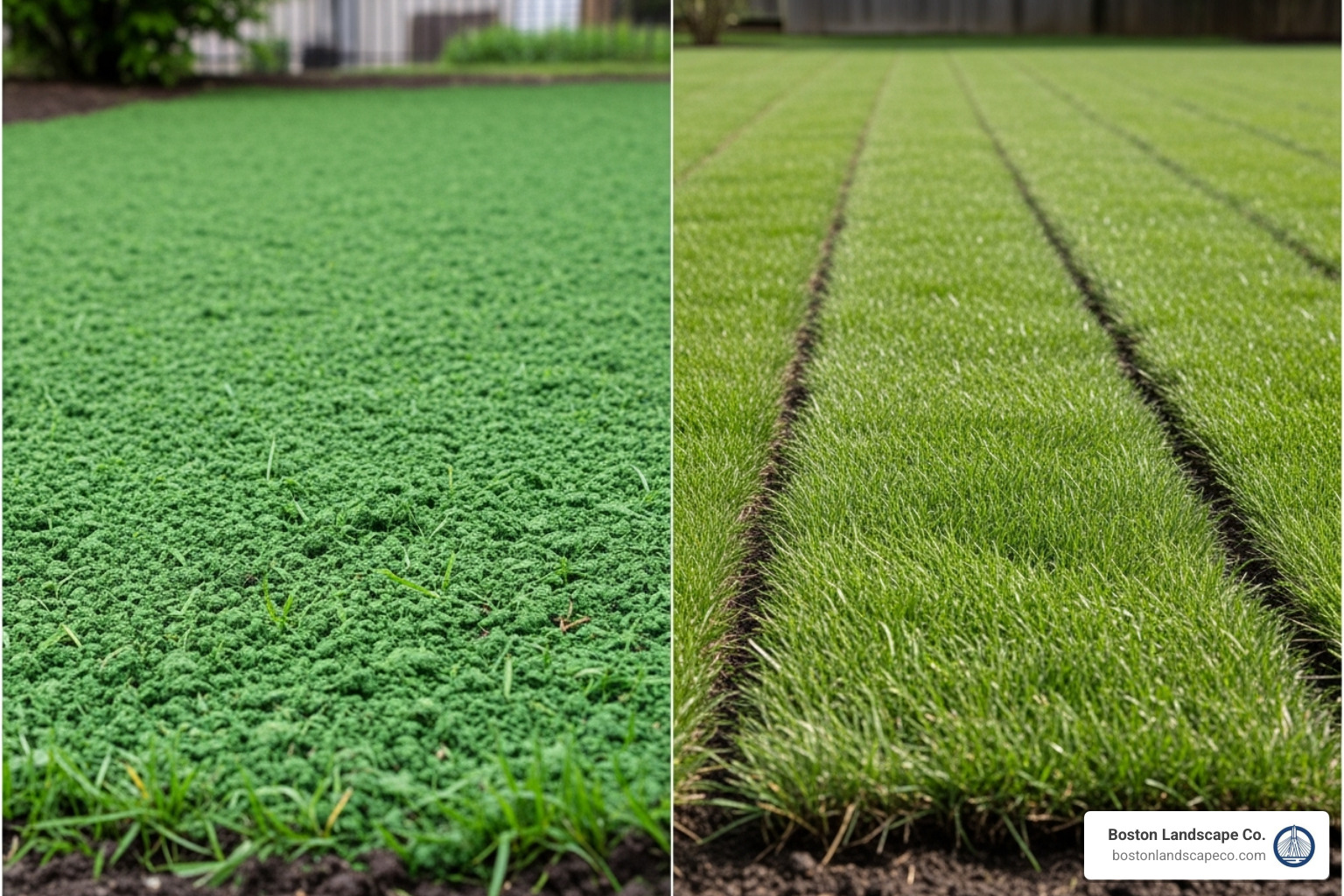
Hydroseeding is a fantastic option, but it’s not the only way to get a lush lawn. Traditional dry seeding and sod are other common methods. Let’s see how they compare in terms of cost and results.
Professional vs. DIY: Comparing the Cost of Hydro Seed
When considering hydroseeding, many homeowners weigh a DIY approach against hiring professionals. This choice affects not only the cost of hydro seed but also the final quality of your lawn.
A professional service like Boston Landscape Co. provides expertise, specialized equipment, and high-quality materials. We handle precise calculations and avoid common pitfalls, ensuring speed, precision, and guaranteed results. While the initial professional cost of hydro seed is higher than DIY, it often provides better value and peace of mind.
DIY hydroseeding requires significant effort. You’ll need to rent equipment ($130 to $500 per day) and purchase all materials separately (seed, mulch, fertilizer), which can cost $398 to $725 for an average yard. Beyond the direct expenses, consider the time investment for prep, application, and cleanup. There’s also a risk of error, such as uneven application or an incorrect mix, which can lead to patchy growth or failure, costing more to fix later. For most homeowners, professional service is the more cost-effective and less stressful solution.
Hydroseeding vs. Sod Installation
If you want an instant lawn, sod is the fastest option, but how does the cost of hydro seed compare?
Sod is significantly more expensive. While hydroseeding averages $0.06 to $0.60 per square foot, sod installation typically costs $0.86 to $3.00 per square foot, and can be even higher. This means sod can be 3 to 9 times more expensive than hydroseeding. An acre of sod might cost $5,000 to $10,000, while hydroseeding an acre is usually $2,000 to $8,700.
In terms of time to usable lawn, sod is ready for light traffic in about 10 days. A hydroseeded lawn needs more time. You’ll see sprouts in 7-14 days, but it will take around 3 months before it’s ready for regular foot traffic.
However, hydroseeding has an advantage in root system health. Seeds germinate directly in your soil, developing deeper, more robust roots from the start. Sod can sometimes struggle to establish deep roots. While sod offers instant curb appeal, hydroseeding is a cost-effective alternative for cultivating a resilient lawn. We offer various lawn installation options to match your needs.
Hydroseeding vs. Traditional Dry Seeding
Traditional dry seeding is often the most budget-friendly option upfront, but it has its drawbacks.
The cost difference is clear: dry seeding is the cheapest method, costing around $0.04 to $0.18 per square foot including labor, which is generally less than the cost of hydro seed.
However, hydroseeding has a much higher and faster germination rate. The protective slurry keeps seeds moist and nourished, helping them sprout quickly. Dry seeding leaves seeds exposed to wind, birds, and inconsistent watering, resulting in lower success and patchy growth.
Hydroseeding also provides superior erosion control. The slurry’s mulch and tackifiers form a mat that adheres to the ground, preventing seed washout on slopes. Dry seeding offers minimal erosion control.
While dry seeding can be labor-intensive, hydroseeding uses a mechanical application that covers large areas quickly and uniformly. This efficiency often makes the cost of hydro seed a more valuable investment for a beautiful, long-lasting lawn.
Frequently Asked Questions About Hydroseeding
We get a lot of questions about hydroseeding, and we’re happy to answer them. Here are some of the most common things people ask.
How long does it take for hydroseed to grow?
While hydroseeding is faster than traditional seeding, a new lawn still requires some patience. Here’s a typical timeline:
- Initial Sprouts: You’ll see the first tiny green shoots in about 7 to 14 days.
- First Mow: The grass is ready for a gentle, high-blade mow when it reaches 3 to 4 inches, usually within 3 to 6 weeks.
- Established Lawn: Keep foot traffic light for at least 30-40 days. It can take several months for the lawn to become fully established with deep, strong roots.
When is the best time of year to hydroseed?
Timing is crucial for a successful lawn. The best times to hydroseed are early fall and spring. These seasons offer mild temperatures (ideally 65°F to 85°F) and natural moisture, which are perfect for seed germination.
Hydroseeding in the summer is possible but requires diligent watering to combat the heat and evaporation. Seeds sown in late fall or winter will lie dormant until temperatures warm up in the spring. We can help you determine the best time for your project in the Massachusetts climate.
Can you hydroseed over an existing, patchy lawn?
This is a common question, but hydroseeding directly over an existing lawn is not recommended for the best results.
For seeds to germinate properly, they need direct contact with the soil. Old grass and thatch act as a barrier, preventing the slurry from reaching the ground. Additionally, your new grass would have to compete with existing weeds for nutrients, water, and sunlight.
For a successful outcome, proper preparation is key. This usually involves removing the old grass and weeds and preparing the soil to create a healthy base for your new lawn to flourish.
Conclusion: Is Hydroseeding the Right Investment for You?
We’ve explored how the cost of hydro seed is a flexible figure, influenced by your project’s size, terrain, material quality, and labor. We’ve also compared it against other lawn installation methods to provide a complete overview.
So, is hydroseeding the right choice for your dream lawn? We believe it’s a fantastic option.
Hydroseeding stands out as a smart and efficient way to get a beautiful, healthy lawn:
- It’s Cost-Effective: Especially for larger areas, hydroseeding is often more affordable than laying sod.
- It’s Versatile: It’s an excellent solution for sloped or tricky terrain, helping prevent erosion while establishing grass.
- It Builds Strong Roots: Seeds grow directly in your soil, developing deeper, healthier root systems for a more resilient lawn.
- It Gives You Uniform Growth: The process provides a consistent layer of seeds and nutrients, leading to a dense, evenly green turf.
Whether you need to cover a residential backyard or a large commercial space in the Greater Boston area—from Lexington to Reading, Malden to Somerville—hydroseeding offers a winning combination of speed, quality, and value.
Here at Boston Landscape Co., with our locations in Stoneham and Billerica, Massachusetts, we are passionate about changing outdoor spaces. We handle every hydroseeding project with precision, using the right materials and techniques for results that last.
Ready to see how hydroseeding can transform your property? For a professional assessment and a detailed quote for our hydroseeding services, please don’t hesitate to contact us today. Let’s make your outdoor space a lush, green haven together!
