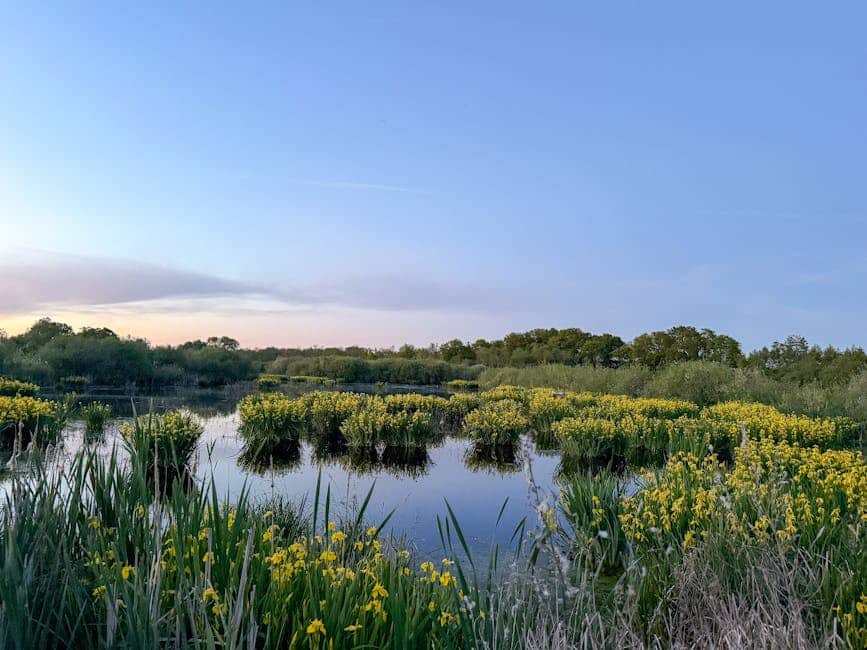
Compensatory Mitigation: 5 Powerful Success Tips for 2025
Understanding the Three Steps of Environmental Protection
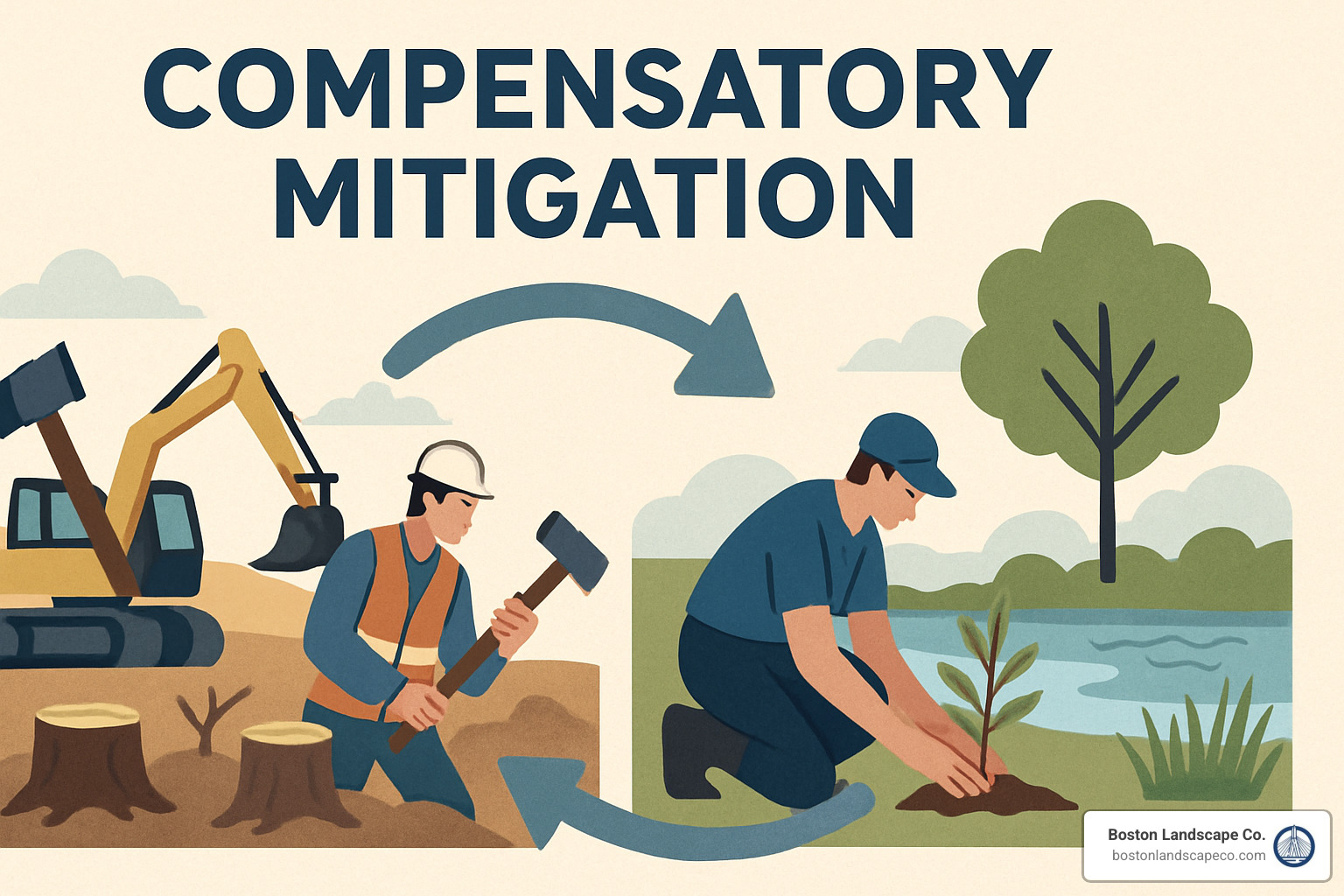
Compensatory mitigation is the process of restoring, enhancing, establishing, or preserving natural resources to offset unavoidable environmental impacts from development or infrastructure projects. It’s the third and final step in the environmental protection sequence required under federal law.
Quick Answer: What is Compensatory Mitigation?
Compensatory mitigation has three key components:
- Purpose: To offset unavoidable adverse impacts to wetlands, streams, and other aquatic resources
- When Required: After all appropriate avoidance and minimization measures have been applied
- Methods: Restoration, establishment (creation), improvement, or preservation of aquatic resources
- Mechanisms: Mitigation banks (preferred), in-lieu fee programs, or permittee-responsible mitigation
The objective of compensatory mitigation under the Clean Water Act is to maintain the “no net loss” of wetland functions and values while allowing necessary development to proceed. This approach recognizes that while we need to build roads, homes, and businesses, we must also protect our valuable natural resources.
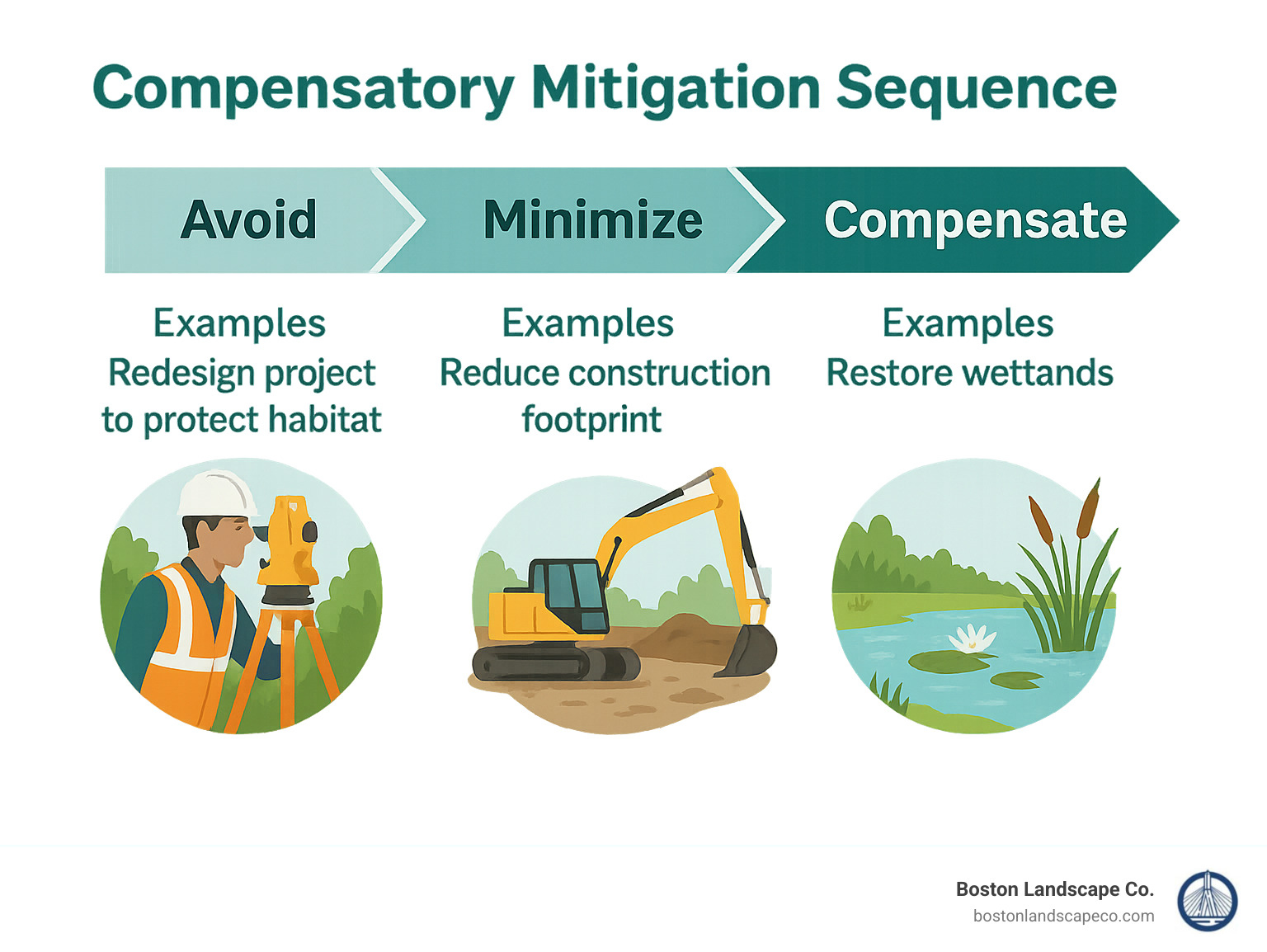
When a developer, homeowner, or business needs to impact wetlands or streams, they must first try to avoid these impacts completely. If impacts can’t be avoided, they must be minimized. Only after these steps are taken does compensatory mitigation come into play to address any remaining unavoidable impacts.
Each year in the United States, the Army Corps of Engineers authorizes approximately 100,000 projects that affect aquatic resources, requiring about 49,000 acres of compensatory mitigation to offset roughly 22,000 acres of permitted impacts.
I’m Steve Schumacher, and throughout my three decades in the landscaping industry, I’ve helped numerous clients steer compensatory mitigation requirements while developing properties in environmentally sensitive areas. With Boston Landscape Co’s expertise in site restoration and ecological improvement, we understand how to balance development needs with regulatory compliance.
Important Compensatory Mitigation terms:
Compensatory Mitigation 101: What, Why & When It’s Required
The Clean Water Act of 1972 wasn’t just another piece of environmental legislation—it fundamentally changed how we protect America’s waters. Section 404 specifically addresses the discharge of dredged or fill material into our waterways and wetlands, laying the groundwork for what we now know as compensatory mitigation.
Remember 1990? While many of us were listening to Madonna or watching Home Alone, something equally significant was happening: the EPA and Army Corps of Engineers signed a Memorandum of Agreement establishing the now-famous mitigation sequence—avoid, minimize, and compensate. This three-step approach has guided wetland protection ever since.
Fast forward to 2008, when the Compensatory Mitigation Rule brought much-needed clarity and consistency to the process nationwide. This rule expanded the Section 404(b)(1) Guidelines, creating comprehensive standards for all compensation mechanisms—think of it as the “rulebook” that everyone now follows.
For more detailed information about wetland regulations under the Clean Water Act, you can visit the EPA wetland regulatory authority page for current federal guidance.
What Is Compensatory Mitigation?
When I explain compensatory mitigation to clients, I describe it as making environmental amends. It’s the actions we take to offset unavoidable impacts to wetlands, streams, and other aquatic resources when permits are issued under Clean Water Act Section 404 or similar state regulations.
There are four main approaches, each with its own strengths:
Restoration is like giving nature a second chance—returning degraded wetlands to their former glory by removing drainage tiles, filling ditches, or replanting native vegetation. The Army Corps of Engineers prefers this method because it typically shows the best results and highest ecological benefits.
Establishment (or creation) is more ambitious—developing brand-new wetlands where none existed before. This might involve careful excavation of upland areas and introducing the right wetland plants.
Improvement focuses on enhancing existing wetlands—perhaps removing invasive species or boosting water quality. While this doesn’t create new wetland area, it can dramatically increase the ecosystem services provided.
Preservation is about protection—securing high-quality wetlands from future development through conservation easements. This approach usually only gets the green light when these resources face genuine threats.
Why Do We Need Compensatory Mitigation?
Wetlands and streams aren’t just pretty features on the landscape—they’re hard-working ecosystems that provide incredible benefits. They filter our water, control flooding, recharge groundwater, support wildlife, store carbon, prevent erosion, and offer places for recreation.
Despite these benefits, America has lost over half its original wetlands to development and farming. That’s why compensatory mitigation matters—it helps ensure we don’t keep losing ground.
I’ve seen how compensatory mitigation creates a workable balance between development needs and environmental protection. It allows necessary projects to move forward while ensuring we maintain our natural resources. It’s not about stopping progress—it’s about making progress sustainable.
With climate change bringing more extreme weather, these natural systems also provide crucial resilience. A healthy wetland can absorb excess water during heavy rainfall events and provide moisture during drought conditions—nature’s own insurance policy.
Federal & State Triggers You Should Know
Several situations can trigger the need for compensatory mitigation:
Clean Water Act Section 404 Permits are the most common reason—required whenever you discharge dredged or fill material into U.S. waters. If you’re planning to build in or near wetlands, this will likely apply to you.
Rivers and Harbors Act Section 10 Permits come into play for work in, over, or under navigable waters—think building a dock or bridge.
Many states, including Massachusetts, have their own wetland protection laws that may be even stricter than federal requirements. And don’t forget to check local wetland bylaws—many municipalities have additional requirements for activities near wetlands.
When evaluating permit applications, the Corps of Engineers uses the Section 404(b)(1) Guidelines as their compass. These guidelines ensure that there’s no practical alternative with less environmental impact, the project doesn’t violate other environmental laws, all reasonable steps have been taken to minimize impacts, and compensatory mitigation offsets unavoidable impacts.
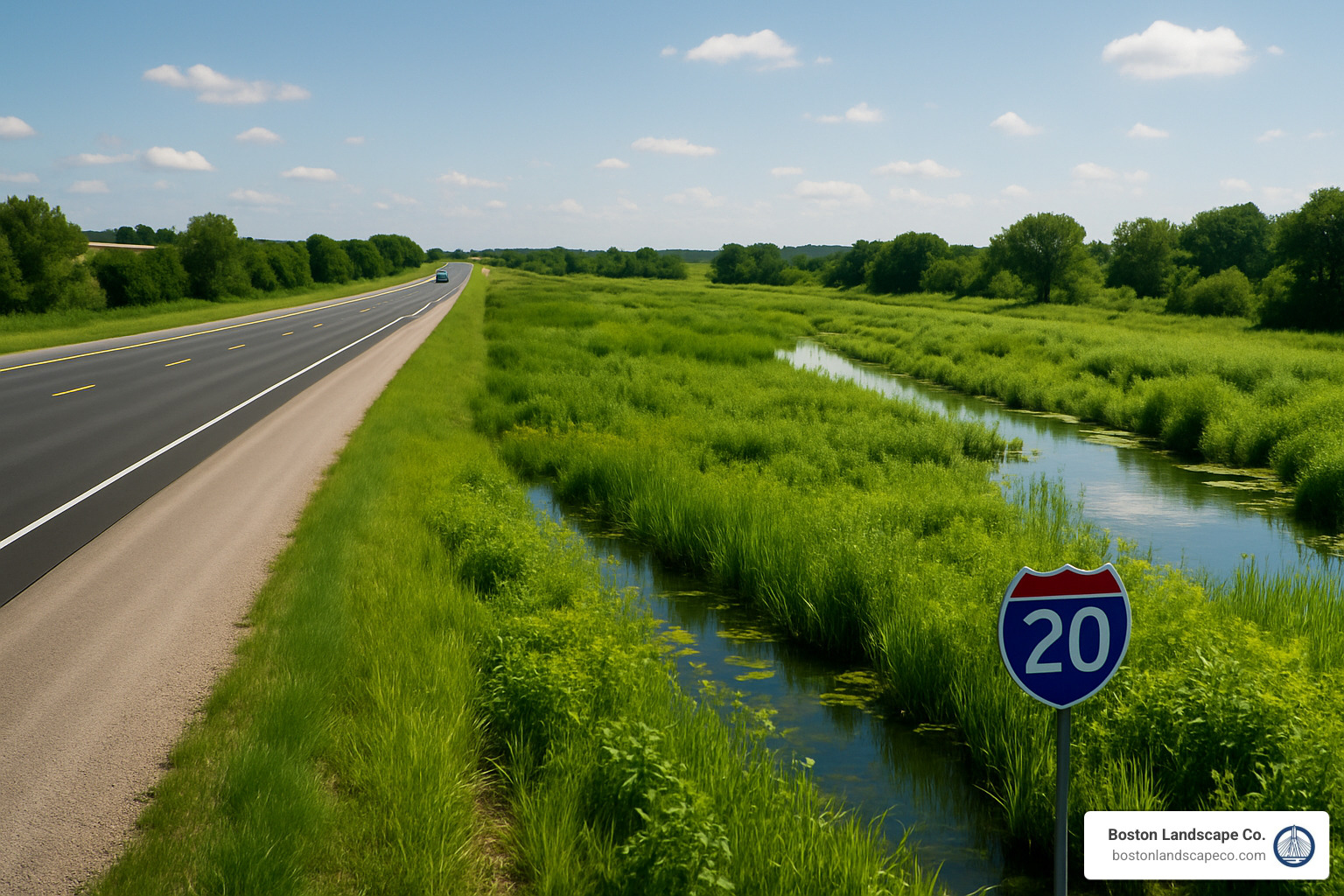
For highway projects, the numbers tell an interesting story. The Federal Highway Administration reports that in 34 states, projects with federal funding replaced wetland acres at an average ratio of 3.3:1. This actually resulted in a net gain of 1,586 acres of wetlands—proving that development and environmental stewardship can coexist.
Offset Options Demystified: Banks, In-Lieu Fee & Permittee-Responsible
When you’re facing Compensatory Mitigation requirements, you’ll need to choose from three main paths forward. Think of it like choosing between hiring a professional, joining a community project, or doing the work yourself. Since the 2008 Compensatory Mitigation Rule, regulators have made their preferences crystal clear:
- Mitigation Banks (their favorite)
- In-Lieu Fee Programs (their second choice)
- Permittee-Responsible Mitigation (their last resort)
Why this hierarchy? It’s simple – third-party options (banks and in-lieu fees) typically deliver better ecological results, face fewer failures, and shift the responsibility from you to mitigation specialists. Let’s explore each option to help you make the right choice for your project.
Mitigation Banking—Speed & Certainty
Mitigation banks are like the “ready-made” solution of the mitigation world. Picture a dedicated site where experts have already restored or created wetlands specifically to offset impacts elsewhere. Here’s how they work in practice:
A private company or organization identifies suitable land, proposes a restoration plan, and after regulatory approval, implements their ecological improvements. As the site meets specific milestones, regulators award “credits” that developers like you can purchase to satisfy your mitigation requirements.
“Mitigation banks provide performance-based credits tied to measurable ecological outcomes, making them our preferred option,” explains one Corps regulator I’ve worked with for years.
The beauty of banks is in their simplicity for you as a permittee. You buy the credits, and you’re done – compliance achieved, liability transferred. The bank sponsor worries about meeting performance standards, monitoring, and long-term management. Plus, these larger-scale projects often create more meaningful ecological improvements than smaller, scattered efforts.
Each bank has a defined “service area” – think of it as the bank’s territory where its credits can be used. This ensures your mitigation stays within the watershed where your impact occurs, maintaining nature’s balance in that system.
For more details about wetland mitigation approaches, visit our wetland mitigation page.
In-Lieu Fee Programs—Pooling Resources
If mitigation banks aren’t available in your area, in-lieu fee programs offer the next best option. These programs function somewhat like a community fund for environmental restoration. You pay a fee to a sponsor (usually a government agency or non-profit), and they pool these contributions to create larger mitigation projects.
Here in Massachusetts, the Department of Environmental Protection manages PIESCES, an in-lieu fee program that steps in when bank credits aren’t on the market.
The appeal is straightforward – you make your payment and walk away, while experts handle the planning, implementation, and monitoring. These programs can strategically place projects where they’ll do the most good for the watershed, often achieving more significant environmental benefits than scattered smaller projects could.
The main drawback? Timing. Unlike banks where mitigation is already underway or completed, in-lieu fee programs collect funds first, then implement projects. This creates a lag between your impact and the actual compensation. Recognizing this issue, the 2008 Rule required existing programs to meet stricter standards similar to banks.
Permittee-Responsible Mitigation—DIY Route
The third option puts you in the driver’s seat. With permittee-responsible mitigation, you handle everything – designing, implementing, and maintaining your own mitigation project. You can place this mitigation on-site (right where your impact occurs) or off-site (elsewhere in the watershed).
While this approach gives you complete control, it also hands you all the responsibility. You’ll need to develop a mitigation plan that meets regulatory standards, implement it correctly, monitor it (typically for five years or more), and ensure its long-term success. You’ll also need to provide financial guarantees to back up your commitments.
Regulators tend to be less enthusiastic about this option because history shows these projects have lower success rates. They’re often smaller, more fragmented, and harder to monitor across many different sites. The long-term management arrangements can be shaky too.
However, when appropriate bank or in-lieu fee credits aren’t available in your area, this might be your only path forward.
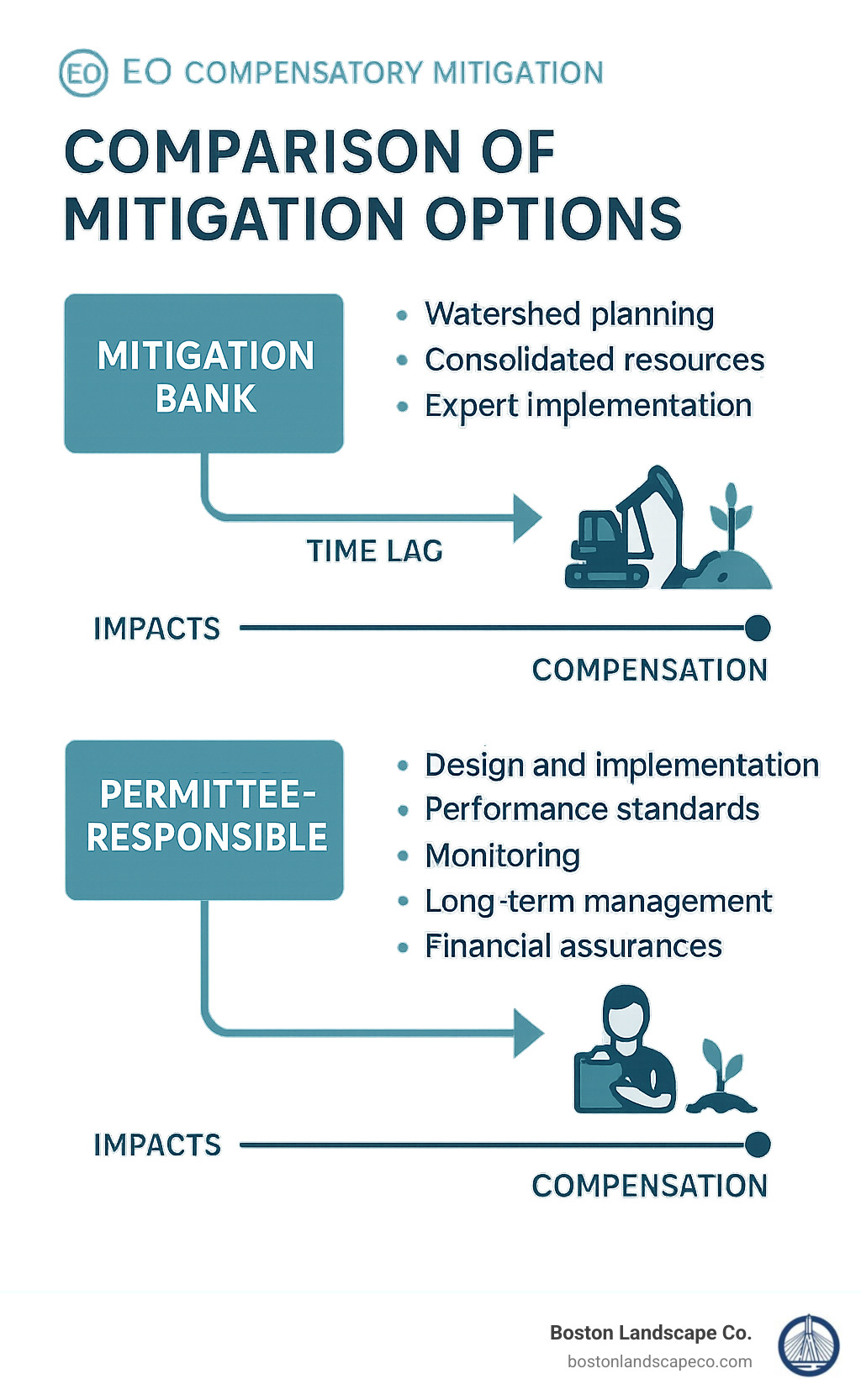
The choice between these three options involves weighing factors like risk, timing, cost, and whether you want to transfer liability to someone else. In my experience at Boston Landscape Co., we’ve seen the best outcomes when clients carefully match their mitigation approach to their project’s specific needs and constraints – with professional guidance to steer the complex regulatory waters.
Designing a Successful Mitigation Plan: Ratios, Watershed Approach, Oversight & Future Trends
Creating an effective compensatory mitigation plan isn’t just about checking boxes—it’s about crafting a solution that truly works for both the environment and your project needs. When I help clients steer this process, I always emphasize that the 2008 Compensatory Mitigation Rule gives us a clear roadmap with twelve essential elements to address, from objectives and site selection to monitoring requirements and financial assurances.
Let’s explore what makes mitigation plans successful in the real world, beyond just meeting regulatory requirements.
Applying the Watershed Approach
Think of a watershed as nature’s neighborhood—everything’s connected. The watershed approach moves beyond simple acre-for-acre replacement to consider how your mitigation can best support the entire ecological community.
The 2008 Rule defines this as “an analytical process for making compensatory mitigation decisions that support the sustainability or improvement of aquatic resources in a watershed.” In plain English? It’s about putting mitigation where it makes the most ecological sense.
When we evaluate potential mitigation sites, we’re looking at the big picture: landscape position (finding spots that provide maximum environmental benefits), connectivity (creating natural highways between existing habitats), and addressing specific watershed needs.
For instance, if your watershed struggles with water quality, we might focus on restoring wetlands that naturally filter pollutants. If habitat fragmentation is the issue, we’ll prioritize connecting isolated natural areas to give wildlife the room they need.
Modern watershed planning leverages powerful tools like Geographic Information Systems (GIS), existing watershed management plans, and historical ecological data to make smart decisions. This approach isn’t just good ecology—it often leads to more cost-effective mitigation solutions too.
Want to learn more about how constructed wetlands fit into watershed management? Visit our page on constructed wetlands in the sustainable landscape.
Setting Ratios & Success Criteria
“How much mitigation do I need?” This is often the first question clients ask me. The answer lies in compensation ratios, which determine how much mitigation is required relative to your impact area.
Most people are surprised to learn that ratios typically exceed 1:1 (one acre of mitigation for one acre of impact). Why? Because we need to account for:
- The time lag between your impact and when the replacement site becomes fully functional
- The inherent risk of mitigation failure (nature doesn’t always cooperate with our plans)
- Quality differences between what’s lost and what’s created
- The type of mitigation you’re doing (restoration is valued differently than preservation)
The Corps requires a minimum 1:1 ratio as a starting point, but in practice, I’ve seen ratios range from 2:1 to 10:1 depending on the factors above. The Federal Highway Administration reports that highway projects typically replace wetland acres at an average ratio of 3.3:1.
If you’re considering preservation-only mitigation, expect higher ratios—often 10:1 or more—since you’re not creating new wetland area or functions.
As for success criteria, they must be objective, verifiable, and function-based. Think of these as the ecological vital signs that prove your mitigation is healthy. Common performance standards include vegetation criteria (what’s growing and how much), hydrologic measurements (water patterns), soil characteristics, and wildlife use.
Most projects require at least five years of monitoring, with longer periods for slow-developers like forested wetlands. This isn’t just bureaucratic red tape—it’s about ensuring lasting ecological benefits.
Who Oversees & Approves Your Plan?
Navigating the approval process for compensatory mitigation involves working with several agencies, but the U.S. Army Corps of Engineers takes the lead in reviewing and approving plans, with the EPA providing oversight.
For mitigation banks and in-lieu fee programs, an Interagency Review Team (IRT) reviews proposals. Think of the IRT as a panel of environmental experts from agencies like the EPA, Fish and Wildlife Service, NOAA Fisheries (for tidal projects), state environmental departments, and sometimes local agencies.
While this might sound intimidating, in my experience, early coordination with these agencies leads to smoother approvals. The Corps District Engineer makes the final call after considering input from the IRT and public comments.
For individual permits with permittee-responsible mitigation, the process is somewhat simpler—the Corps reviews your mitigation plan as part of your overall permit application.
If you’re curious about available mitigation banks or in-lieu fee programs, the Regulatory In-lieu fee and Bank Information Tracking System (RIBITS) offers public access to information about service areas, credit availability, and contact information. It’s a tremendously helpful resource when evaluating your options.
Future Directions & Opportunities
The world of compensatory mitigation is constantly evolving, creating new opportunities and approaches. Several exciting trends are reshaping how we approach mitigation:
Climate resilience has become a central consideration in mitigation design. Smart projects now account for changing precipitation patterns, temperature shifts, and sea-level rise to ensure long-term sustainability.
Advanced ecological assessment tools are allowing for more precise measurement of ecosystem functions. This means more accurate mitigation requirements and better ecological outcomes.
Many mitigation projects now generate multiple environmental benefits. A single well-designed wetland restoration might simultaneously provide habitat, sequester carbon, and improve water quality—potentially creating additional value streams.

Technology is changing how we monitor and assess mitigation sites. Drones capture detailed imagery, remote sensing tracks vegetation health, and environmental DNA sampling detects wildlife presence without disturbing habitats. These advances make monitoring more efficient and accurate.
The economic significance of compensatory mitigation is substantial—approximately $2.9 billion flows through mitigation projects annually nationwide. This creates opportunities for landowners, entrepreneurs, and communities to participate in ecological restoration while generating economic benefits.
Agencies are also working to streamline processes while maintaining ecological integrity, making mitigation more accessible and efficient for everyone involved.
Frequently Asked Questions about Compensatory Mitigation
Do I always have to provide compensatory mitigation?
Not necessarily. Think of Compensatory mitigation as the last resort in a three-step process, not the automatic first response.
First, you should try to completely avoid impacting wetlands and waterways in your project design. If that’s impossible, your next step is minimizing those impacts as much as you possibly can. Only after you’ve genuinely exhausted these first two steps does compensatory mitigation come into play.
Many smaller projects or those that have been carefully designed from the start may avoid wetland impacts entirely, eliminating the need for mitigation. Others might have such minimal impacts that regulatory agencies determine compensation isn’t necessary.
I’ve seen this when working with clients who adjusted their building footprints or driveway alignments early in the design process. These smart planning moves saved them significant time and money down the road.
“Compensatory mitigation is like the environmental version of making amends,” as one Corps regulator told me. “We first want you to avoid harm, then reduce any unavoidable harm, and only then do we ask you to make up for what couldn’t be prevented.”
How do I calculate how many credits I need?
Determining your credit needs isn’t just a simple formula—it’s more like following a recipe with several ingredients that need to be balanced just right. Here’s what goes into the mix:
The size of your impact is your starting point—measured in acres for wetlands or linear feet for streams. But the quality of what you’re impacting matters tremendously too. Disturbing a pristine vernal pool with rare salamanders will require more compensation than affecting a degraded roadside ditch.
The type of impact also weighs heavily—permanent impacts require more mitigation than temporary ones. And your location within the watershed plays a crucial role too, as some areas may be particularly sensitive or important for watershed health.
While the Corps makes the final determination, here’s a practical approach to estimate your needs:
- Measure your impact area precisely
- Apply the compensation ratio appropriate to your situation (these typically range from 1:1 to 10:1)
- Multiply these figures to get your basic requirement
- Be prepared for adjustments based on functional assessments
For instance, if your commercial development will permanently impact 0.75 acres of forested wetland, and the local Corps district typically requires a 3:1 ratio for this wetland type, you’d need approximately 2.25 acres of compensation (or the equivalent in credits).
For Massachusetts projects, I always recommend consulting with MassDEP early in the process for guidance specific to your location and circumstances.
What is the difference between mitigation ratio and credit ratio?
This distinction confuses even seasoned developers, so don’t worry if it seems puzzling at first.
Mitigation ratio refers to the quantity of environmental compensation needed relative to your impact. If you have a 2:1 ratio, you need to provide twice as much mitigation as the area you’re impacting. This concept applies regardless of which mitigation method you choose.
Credit ratio, on the other hand, is specific to mitigation banks and in-lieu fee programs. It’s the conversion factor between actual mitigation area and the credits generated. High-quality restoration might generate more credits per acre, while preservation typically generates fewer.
Here’s a real-world example I often share with clients: Imagine you’re impacting half an acre of wetland, and the Corps determines you need a 3:1 ratio. This means you need 1.5 acres worth of mitigation. If you’re buying from a bank where the credit ratio is 1 credit = 0.75 acres of restoration, you’d need to purchase 2 credits to satisfy your requirement.
The key takeaway? When working with mitigation banks, focus on how many credits you need, not acres. The bank has already handled the conversion between physical restoration and credit values in their banking instrument.
Understanding these distinctions can save you considerable time and prevent costly misunderstandings during the permitting process. At Boston Landscape Co., we’ve guided many clients through this complex terrain, helping them meet their regulatory obligations while keeping their projects on track.
Conclusion
Navigating compensatory mitigation might seem overwhelming at first glance, but with the right approach, it becomes much more manageable. Throughout my years helping clients with environmental compliance, I’ve seen how breaking this process into clear steps makes all the difference.
The journey through compensatory mitigation begins with respecting the sequence that environmental regulations have established for a reason. Always start by avoiding impacts wherever possible—this is both the simplest and most effective approach. When impacts can’t be completely avoided, focus on minimizing them through thoughtful project design and construction methods. Only after these two crucial steps should you turn to compensation for truly unavoidable impacts.
When it comes to fulfilling your compensation requirements, remember the established hierarchy. Mitigation banks offer the most straightforward path with immediate compliance and reduced risk—they should be your first consideration if available in your service area. If bank credits aren’t available, in-lieu fee programs provide another valuable option that pools resources for larger conservation efforts. Permittee-responsible mitigation should typically be your final option, though it may be necessary in some circumstances.
Taking a watershed approach lifts your mitigation from mere regulatory compliance to meaningful ecological contribution. Rather than thinking only about replacing acres, consider how your mitigation can address specific watershed needs, improve connectivity between habitats, or improve water quality where it’s most needed.
Successful mitigation doesn’t end when the plants go in the ground—it requires ongoing attention. Build robust monitoring protocols into your plan, prepare for adaptive management when things don’t go exactly as expected (they rarely do!), and develop solid long-term stewardship arrangements to ensure lasting benefits.
One piece of advice I always emphasize: engage early with regulators. A preliminary meeting with the Corps of Engineers and other relevant agencies can save countless headaches down the road. These professionals can help identify potential issues and guide your approach before you’ve invested heavily in a particular direction.
The ultimate goal extends beyond simply checking a regulatory box. Effective compensatory mitigation contributes to maintaining the chemical, physical, and biological integrity of our nation’s waters. When done thoughtfully, these projects create valuable wetlands and streams that provide crucial ecosystem services for generations to come.
At Boston Landscape Co., we’ve guided numerous clients through the complexities of environmental regulations. Our team brings the expertise needed to help you steer compensatory mitigation requirements with confidence—from initial site assessment through planning, implementation, and long-term monitoring.
For more information about how we can assist with your wetland-related needs, please visit our wetland services page or reach out to our team directly.
By understanding and effectively implementing compensatory mitigation, we all contribute to protecting and restoring our valuable aquatic resources while allowing necessary development to proceed in an environmentally responsible way. That’s an outcome everyone can feel good about.