
Autumn Landscaping Ideas: Top 3 Gorgeous Tips
Why Fall is the Perfect Season for Landscaping Success
Autumn landscaping ideas transform your outdoor space into a stunning seasonal showcase while preparing your property for the months ahead. Fall offers the ideal combination of cooler temperatures, increased soil moisture, and reduced plant stress – making it the prime time for both planting and preparing your landscape.
Quick Fall Landscaping Essentials:
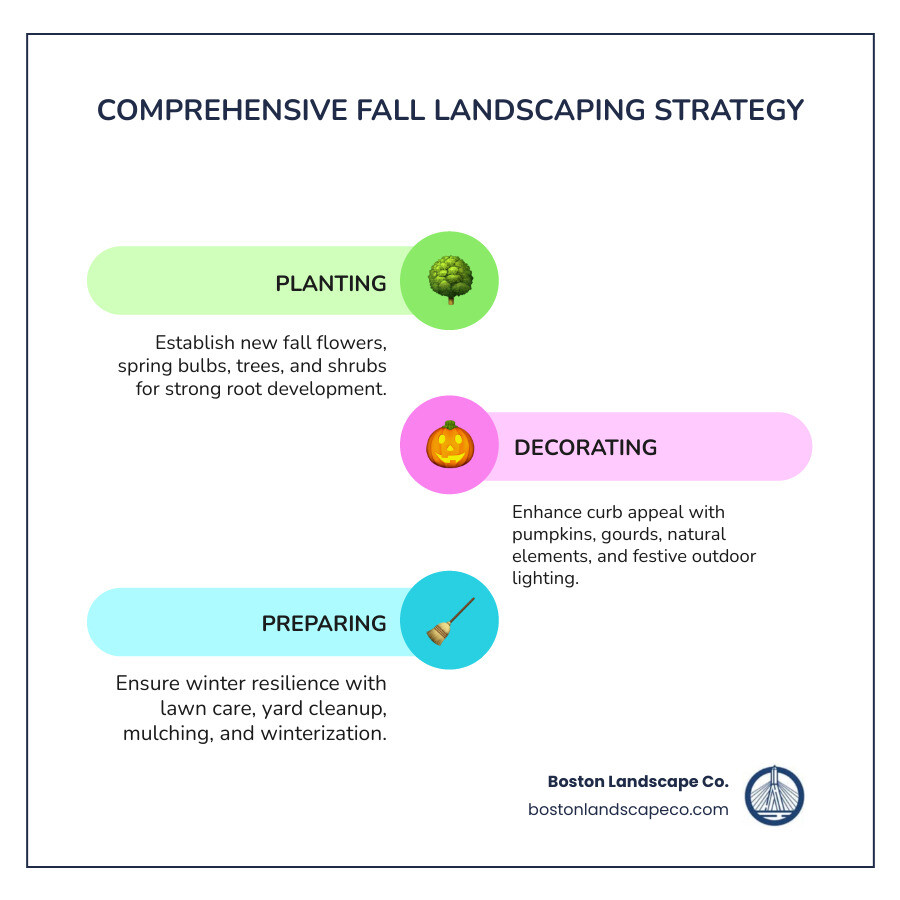
- Plant for Spring Color: Tulips, daffodils, and crocus bulbs planted now bloom beautifully next year
- Add Fall Interest: Chrysanthemums, asters, and ornamental kale provide vibrant autumn colors
- Create Cozy Spaces: Fire pits, string lights, and weather-resistant seating extend outdoor living
- Decorate Naturally: Pumpkins, gourds, hay bales, and fall wreaths improve curb appeal
- Prepare for Winter: Lawn aeration, leaf removal, and mulching protect plants and promote healthy spring growth
As temperatures cool, plants focus on root development instead of top growth. This makes fall the best time to establish new plantings that will thrive in spring.
Fall landscaping can boost your home’s market value by up to 15% while creating an inviting atmosphere for autumn entertaining and holiday gatherings.
I’m Steve Schumacher. With over three decades of landscaping experience in the Greater Boston area, I’ve helped countless homeowners implement effective autumn landscaping ideas that improve both beauty and functionality. My team at Boston Landscape Co specializes in creating stunning fall landscapes that prepare properties for winter success while maximizing seasonal appeal.
Planting for a Vibrant Fall Palette
As New England’s landscape turns to red, orange, and gold, it’s time to do more than just admire the view. Fall is a prime opportunity to improve your garden. It’s the ideal time to plant perennials, shrubs, and trees, as cooler temperatures help them establish roots without summer’s heat stress. The warmer, easier-to-dig soil allows plants to develop strong root systems before winter, ensuring robust spring growth.
Best Plants for Fall Color and Texture
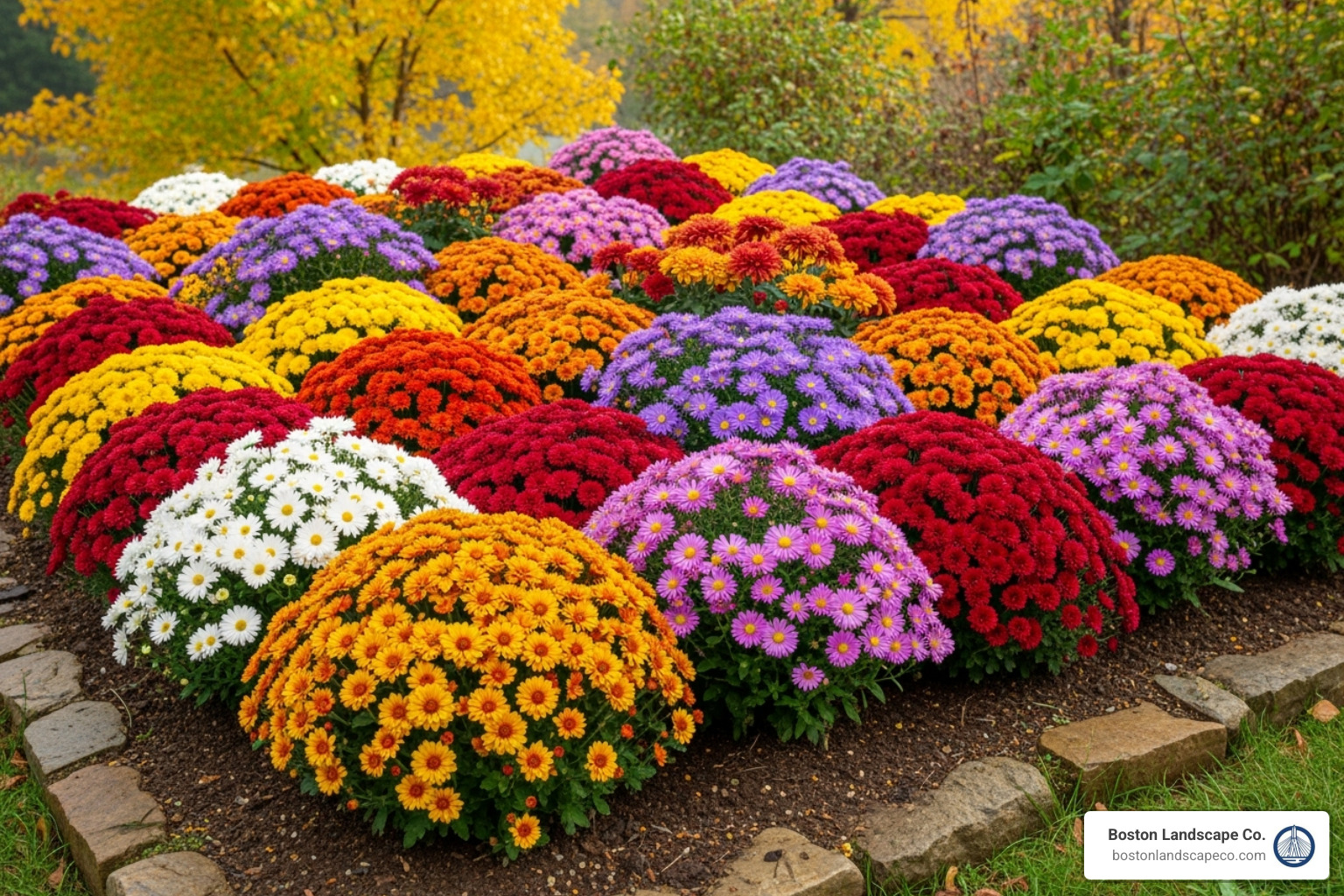
To maximize the visual impact of your autumn garden, we recommend incorporating plants that truly shine during this season. Chrysanthemums, with their wide array of colors and bloom shapes, are a classic choice for instant fall cheer. Asters are another easy-to-grow fall bloomer that provides a burst of color. Sedum, such as ‘Autumn Joy’, offers color and interest during the summer-to-fall transition, with its sturdy pink or reddish flower heads.
For unique textures and shapes, consider ornamental kale and pansies, which thrive in cooler temperatures. Goldenrod and Black-Eyed Susan can extend color into late fall. Beyond annuals and perennials, trees and shrubs are essential for significant fall color. As landscape architect Janice Parker notes, “Fall is a wonderful time to plant evergreen trees, as well as deciduous ornamental trees and shrubs.” She specifically recommends:
- Japanese Maples: Especially the cut leaf weepers, known for their stunning foliage.
- Sargent Crabapples: Offering beautiful fruit and fall color.
- Weeping Cherries: Providing graceful structure and seasonal interest.
Ornamental grasses also add dramatic texture and movement to the fall garden, catching the light beautifully. For more inspiration on extending your garden’s beauty into the colder months, check out these 28 Fall Garden Ideas & Tips.
Planting Bulbs and Perennials for Spring
Fall planting isn’t just for immediate beauty; it’s about planning for a glorious spring display. With the soil still warm, bulbs and perennials have time to establish roots before the ground freezes. This crucial root development ensures they emerge strong and vibrant when spring arrives.
We love planting a variety of spring-flowering bulbs in autumn for a spectacular show. Think about mass plantings of:
- Tulips: For classic, bold color.
- Daffodils: Cheerful harbingers of spring.
- Crocus: Early bloomers that signal the end of winter.
- Alliums: Dramatic, globe-like flowers that add architectural interest.
Fall is also an excellent time to divide crowded tuberous plants like Irises and Daylilies. Dividing them every few years refreshs the plants, encourages more abundant blooms, and can even expand your garden’s footprint. If you’re looking to integrate new plantings into a cohesive vision for your entire property, our team can help you plan and execute your dream landscape. Find how our landscape design services can transform your outdoor space: More info about landscape design services.
Designing Cozy Outdoor Living Spaces
Autumn evenings, with their crisp air and golden light, invite us to linger outdoors. Fall is the perfect time to create a cozy outdoor oasis and extend your outdoor living season well into November, from hosting a harvest dinner to savoring a quiet evening with hot cider.
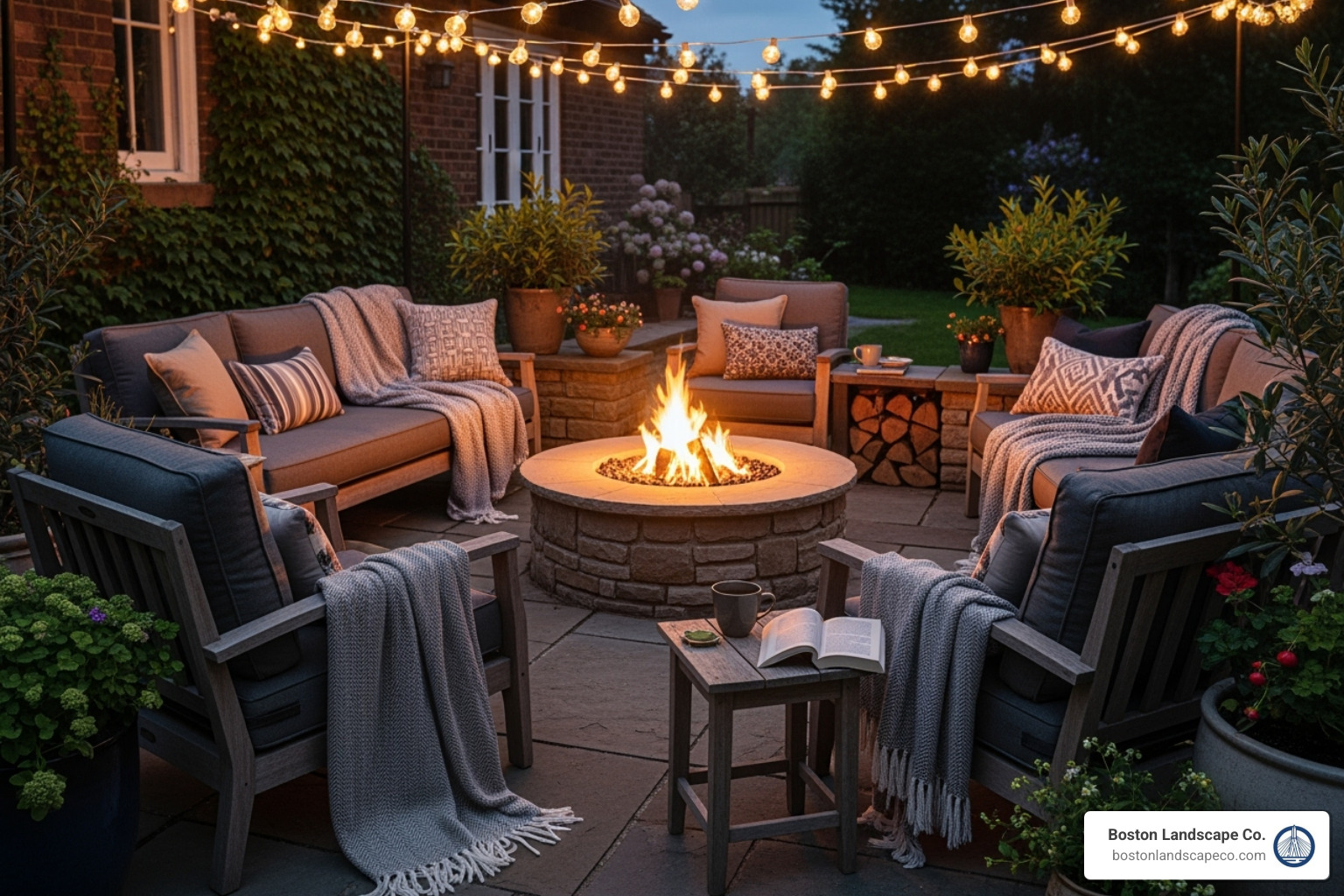
Successful fall entertaining requires functional, inviting spaces. As temperatures drop, you need elements that provide warmth, define gathering spots, and create an atmosphere that encourages people to stay outside in the cooler weather.
Incorporate Hardscaping for Warmth and Function
Hardscaping elements bring warmth and structure to your autumn landscape. These permanent features are the backbone of your outdoor living areas, creating natural gathering spots and defining the space.
Fire pits and outdoor fireplaces are game-changers for fall entertaining. Gathering around a flame makes any space feel cozy and welcoming. The warmth extends your outdoor time.
Stone pathways do more than just look beautiful – they’re essential for safety as fall brings damp leaves and earlier darkness. A well-designed flagstone pathway guides guests safely through your autumn landscape while adding visual interest and structure to your overall design.
For homes with sloped yards, retaining walls can create terraced garden beds or lifted seating areas that add both function and visual drama. Patios serve as the foundation for all your outdoor activities, creating a solid, level surface that feels like an extension of your indoor living space.
These hardscaping elements work together to create defined spaces that feel intentional and inviting. Learn more about how we can improve your outdoor living with expertly crafted hardscaping: More info about hardscaping services.
Improve Ambiance with Strategic Lighting
As daylight hours shrink and darkness arrives earlier each evening, strategic lighting becomes your secret weapon for creating magical outdoor spaces. The right lighting doesn’t just illuminate – it transforms your yard into an enchanting autumn retreat that beckons you outside even after sunset.
String lights and fairy lights draped along fences, wrapped around tree trunks, or suspended over seating areas create an instantly magical atmosphere.
Lanterns with LED candles bring that cozy, flickering ambiance without the worry of open flames. Place them on tables, along steps, or grouped together on the ground to create pools of warm light that invite people to gather and linger.
Safety becomes especially important as autumn progresses, which is where path lights shine. These fixtures illuminate walkways and steps, ensuring everyone can steer your outdoor spaces safely as dusk settles earlier each evening.
Accent lights on trees and other landscape features add depth and drama to your fall garden. Uplighting a beautiful maple or highlighting the texture of a stone wall creates visual interest that makes your entire landscape feel more sophisticated and intentional.
Making Seating Areas Cozy and Inviting
Details make seating areas inviting in cool weather.
Weather-resistant furniture forms the foundation, but it’s the layers of comfort that make the magic happen. Plush cushions in rich autumn colors and outdoor rugs that define seating areas and add warmth underfoot transform any basic furniture into an inviting retreat.
Here’s where the real charm comes in: warm blankets and throws in a beautiful basket nearby. This simple touch shows thoughtfulness and gives everyone permission to get cozy.
For those special harvest dining experiences, consider harvest-themed tableware in earthy tones and natural textures. Think rustic chargers, warm-toned linens, and seasonal centerpieces that celebrate autumn’s bounty. These details create memorable outdoor dining experiences that your guests will talk about long after the evening ends.
The goal is creating spaces where comfort meets beauty, where function serves atmosphere, and where your autumn landscaping ideas come together to make every evening outdoors feel like a special occasion.
Decorating with Nature’s Bounty
There’s something magical about stepping into your yard and finding everything you need for beautiful fall decorations already waiting for you. Autumn landscaping ideas don’t have to come from the garden center – some of the most stunning seasonal displays use what nature provides right in your own backyard.

After three decades of helping New England homeowners create stunning fall displays, I’ve learned that the best decorations often tell a story. They connect your home to the season in a way that feels natural and welcoming, not forced or overdone.
Creative Decor: DIY Autumn Landscaping Ideas
Pumpkins and gourds are the undisputed champions of fall decorating, and for good reason. They’re affordable, versatile, and instantly transform any space into an autumn wonderland. I love arranging them in odd-numbered clusters near your front door or lining them along garden pathways for a warm welcome.
Don’t be afraid to get creative with your pumpkin displays. Stack different sizes to create height and visual interest, or try carving them with unique designs that reflect your family’s personality.
Corn stalks add that perfect rustic touch when tied to porch columns or fence posts. They bring vertical interest and create a natural backdrop for your other decorations. Just remember to secure them well – autumn winds in Massachusetts can be stronger than you’d expect!
Hay bales work beautifully as natural pedestals for pumpkin displays or even as casual outdoor seating for fall gatherings. Here’s a pro tip: if you’re placing hay bales directly on your lawn, put a tarp underneath them. Otherwise, you might find some unpleasant surprises in your grass come spring.
Creating fall wreaths is one of my favorite DIY projects to recommend to homeowners. Using a simple grapevine or wire frame, you can craft something truly unique with materials like bittersweet, dried oranges, colorful berries, and fresh herbs from your garden. The result is always more personal and meaningful than anything you’d find in a store.
Don’t overlook the treasures already scattered around your yard. Fallen leaves and pinecones make wonderful natural decorations when gathered thoughtfully. Fill clear glass containers with colorful leaves, scatter pinecones around container plantings, or use them to create rustic centerpieces for outdoor dining.
Elevating Your Yard with Containers and DIY Projects
Container gardening in fall opens up endless possibilities for adding seasonal color exactly where you need it most. Whether you’re working with a small front porch or a sprawling patio, containers let you create impact in just the right spots.
Fall container recipes work best when you combine plants with different textures and growing habits. I often recommend pairing sturdy succulents like echeveria with cheerful pansies and violas. The succulents provide structure and interesting texture, while the pansies add those bright fall colors that make people smile. As an added bonus, you can bring the succulents indoors when winter arrives for beautiful houseplant displays.
Chrysanthemums remain the classic choice for fall containers, and there’s good reason they’re so popular. They bloom reliably in cooler weather and come in every fall color you could want. Pair them with ornamental kale for interesting leaf textures, or add small ornamental grasses for movement and height.
One of my absolute favorite container ideas is what we call “mumpkins” – mums planted in pumpkins. Simply hollow out a large, flat-bottomed pumpkin, drill a drainage hole in the bottom, and nestle a potted chrysanthemum inside. It’s an instant showstopper that perfectly captures the spirit of the season.
DIY fall signs and word blocks add that personal touch that makes your home feel uniquely yours. Create rustic wooden signs with autumn greetings, or arrange letter blocks to spell out words like “grateful” or “harvest.” These small details show that you’ve put thought and care into your seasonal display.
The beauty of natural fall decorating is that it doesn’t require perfection – it requires heart. When you use materials from your own yard and add your personal creative touch, you create something that truly reflects your family and your connection to the season.
For even more inspiration on changing your front yard this autumn, explore these Creative Front Yard Fall Decorating Ideas.
Essential Autumn Landscaping Ideas for Cleanup and Winter Prep
While fall brings stunning beauty to New England, it’s also time to prepare for winter. These autumn landscaping ideas are an investment in next year’s garden. As This Old House landscape contractor Roger Cook notes, fall is the “prime time to prep your yard for the next growing season.”
The work you do now, from lawn care to protecting plants, sets the stage for a vibrant spring.
Fall Lawn Care and Maintenance
Your lawn is like a marathon runner getting ready for a long winter rest. The care you provide now determines how well it performs when it wakes up in spring.
Lawn aeration is your first priority if you notice water pooling after rain or if the soil feels rock-hard underfoot. This process creates thousands of small holes that let water, air, and nutrients reach the grass roots where they’re needed most.
Overseeding works beautifully in fall because cooler temperatures and natural moisture help new grass seeds settle in without the stress of summer heat. The timing couldn’t be better – those new seedlings have months to establish strong roots before facing their first real test.
Fertilizing for winter resilience might seem counterintuitive, but grass roots keep growing until soil temperatures drop to around 40 degrees. A high-phosphorus fertilizer (something like a 12-25-12 mix) encourages deep root development, creating a stronger foundation that helps your grass fight off winter diseases and stress.
For your final mowing of the season, cut the grass to about 1 inches. This shorter height prevents disease problems and makes it much harder for fallen leaves to smother the blades.
If lawn care feels overwhelming, our team can handle everything from aeration to fertilization: More info about lawn maintenance services.
Yard Cleanup and Preparing Garden Beds
Leaf removal might feel like fighting a losing battle some days, but it’s crucial for lawn health. While those gorgeous autumn leaves look beautiful scattered across your yard, a thick layer will smother your grass and create cozy winter homes for pests and diseases you don’t want hanging around.
You don’t have to bag every single leaf. Garden and landscape designer Amber Freda puts it perfectly: “People always think they should rake and bag up their fall leaves, but fall leaves are nature’s mulch.” Using leaves as mulch around your plants or adding them to a compost pile transforms what seems like yard waste into next year’s “black gold” – nutrient-rich compost that will make your garden thrive.
Removing spent annuals might feel a bit sad, but those tired plants can harbor overwintering pests and diseases. Pull them out now, and you’ll start next season with a clean slate.
Cutting back perennials serves multiple purposes. It redirects the plant’s energy down to the roots where it’s needed for winter survival, removes potential hiding spots for insects and diseases, and keeps your garden beds looking tidy through the dormant season.
For homeowners who prefer to spend their weekends enjoying the fall weather rather than raking leaves, we offer comprehensive cleanup services: More info about fall cleanup services.
Protecting Plants for the Winter Transition
As winter approaches, a few thoughtful steps can mean the difference between plants that merely survive and those that thrive come spring. For a complete guide to fall preparation tasks, check out this helpful Fall Landscaping Checklist.
Applying mulch is like tucking your plants in with a warm blanket. A 2- to 4-inch layer around young plants – applied after a light frost but before the ground freezes – works wonders. The mulch insulates roots from wild temperature swings, retains moisture in the soil, prevents erosion, and keeps weeds at bay. Just remember to keep it a few inches away from stems and trunks to prevent rot problems.
Winterizing irrigation systems might not sound exciting, but it prevents expensive headaches. Standing water in drip lines or sprinkler systems becomes ice bombs when temperatures drop, cracking pipes and fittings. Roger Cook emphasizes the importance of shutting off water supplies and blowing out all lines with an air compressor – it’s much easier than replacing an entire system come spring.
Cleaning and storing garden tools properly ensures they’ll be ready for action when gardening fever strikes again. Clean off all dirt and debris, sharpen blades, oil metal parts to prevent rust, and either drain fuel from gas-powered equipment or add fuel stabilizer. Your tools work hard for you all season – a little end-of-season care keeps them performing their best.
For detailed guidance on protecting your entire landscape through New England’s challenging winters, explore our comprehensive resource: More info about winter landscaping tips.
Frequently Asked Questions about Fall Landscaping
After helping hundreds of homeowners with their autumn landscaping ideas over the years, I’ve noticed the same questions come up again and again. Let me share some practical answers that will help you tackle your fall yard work with confidence.
What is the fastest way to clean up fall leaves?
The best approach really depends on the size of your property and what equipment you have available. For larger yards, I always recommend a leaf blower – it’s incredibly efficient and saves your back from hours of raking. If you have a riding mower, a lawn sweeper attachment is fantastic because it picks up leaves, acorns, and other debris in one pass.
For smaller properties, the old-fashioned method still works great: rake leaves directly onto a large tarp. This makes it super easy to drag everything to your compost pile or to the curb for pickup. You’ll be amazed how much faster this is than trying to stuff leaves into bags.
Here’s a trick many homeowners don’t know about: if the leaf layer isn’t too thick, you can use a mulching mower to chop them up right into your lawn. The shredded leaves actually provide nutrients to your grass and eliminate the need for collection entirely. It’s like getting free fertilizer!
How much does professional fall yard cleanup cost?
This is probably the question I get asked most often, and honestly, the answer varies quite a bit. The cost of professional yard cleanup services depends on several factors: your yard size, how many leaves have fallen, and exactly what services you need.
Based on general online data, basic leaf removal might range from $200 to $600 for most properties. However, if you want a more comprehensive cleanup that includes gutter cleaning, cutting back perennials, and hauling away all the debris, you’re looking at $500 to over $1,500 or more. These are average estimates based on internet data and not actual costs for Boston Landscape Co.
The truth is, every property is different. A small suburban lot with a few mature trees will cost much less than a large property with dozens of oaks and maples. We always recommend getting a personalized estimate for your specific needs – it’s the only way to get an accurate picture of what your cleanup will actually cost.
Should I leave acorns on my lawn?
I get this question every fall, especially from homeowners with large oak trees. The short answer is no – you really shouldn’t leave acorns scattered across your lawn, even though it might seem easier.
Here’s why acorns can cause problems: a thick layer will smother your grass, preventing sunlight and air from reaching the blades. This can seriously hurt your lawn’s health heading into winter. Acorns also attract unwanted visitors like squirrels and mice, who love to bury and dig them up, creating little holes all over your yard.
But here’s the biggest issue: those acorns will sprout into oak seedlings come spring. While baby oak trees might sound charming, they create a bumpy, uneven lawn surface that’s difficult and potentially dangerous to mow. Plus, you’ll spend next summer pulling up dozens of unwanted tree sprouts.
Removing acorns helps maintain a healthy, tidy lawn and sets you up for better grass growth next year. Trust me, spending a little time cleaning them up now will save you headaches later.
Conclusion
Fall is the golden season for autumn landscaping ideas. Cooler temperatures and increased moisture create ideal conditions for planting, while timely cleanup and winter prep set your yard up for success. Plant for instant fall color and spring blooms, create cozy outdoor living spaces, decorate with natural elements, and button up your property before hard freezes.
Here in Massachusetts, preparation is essential. Our team at Boston Landscape Co. brings three decades of local expertise to design, build, and maintain landscapes that thrive through New England winters.
Ready to transform your fall landscape? Get help with your fall yard cleanup and see how professional expertise can lift your outdoor space.
