
Artificial Grass Installation: 2025 Complete Guide
Why Choose a Synthetic Lawn?
Artificial Grass Installation involves preparing the ground, building a stable base, laying the turf, securing it, and applying infill. It’s a popular choice for homeowners and commercial property managers for many reasons.
Here’s a quick overview of the key steps for artificial grass installation:
- Prepare the site by removing existing grass and leveling the area.
- Build a solid, well-draining base using crushed stone and sand.
- Lay out the artificial grass rolls, ensuring consistent direction.
- Secure the turf in place, typically with nails and seaming tape.
- Spread infill material to help the grass blades stand upright.
It provides a beautiful, green lawn year-round with minimal care, saving water and eliminating mowing. It’s also a safe surface for kids and pets.
As one user noted, “Who would’ve thought that you needed help installing grass? Nowadays, artificial grass is the way to go for yards, patios, even gyms.” This shows how common and useful it has become.
I’m Steve Schumacher, owner-operator of Boston Landscape Co. since 1991. With over three decades in landscaping, I’ve seen how expert Artificial Grass Installation can transform outdoor spaces.
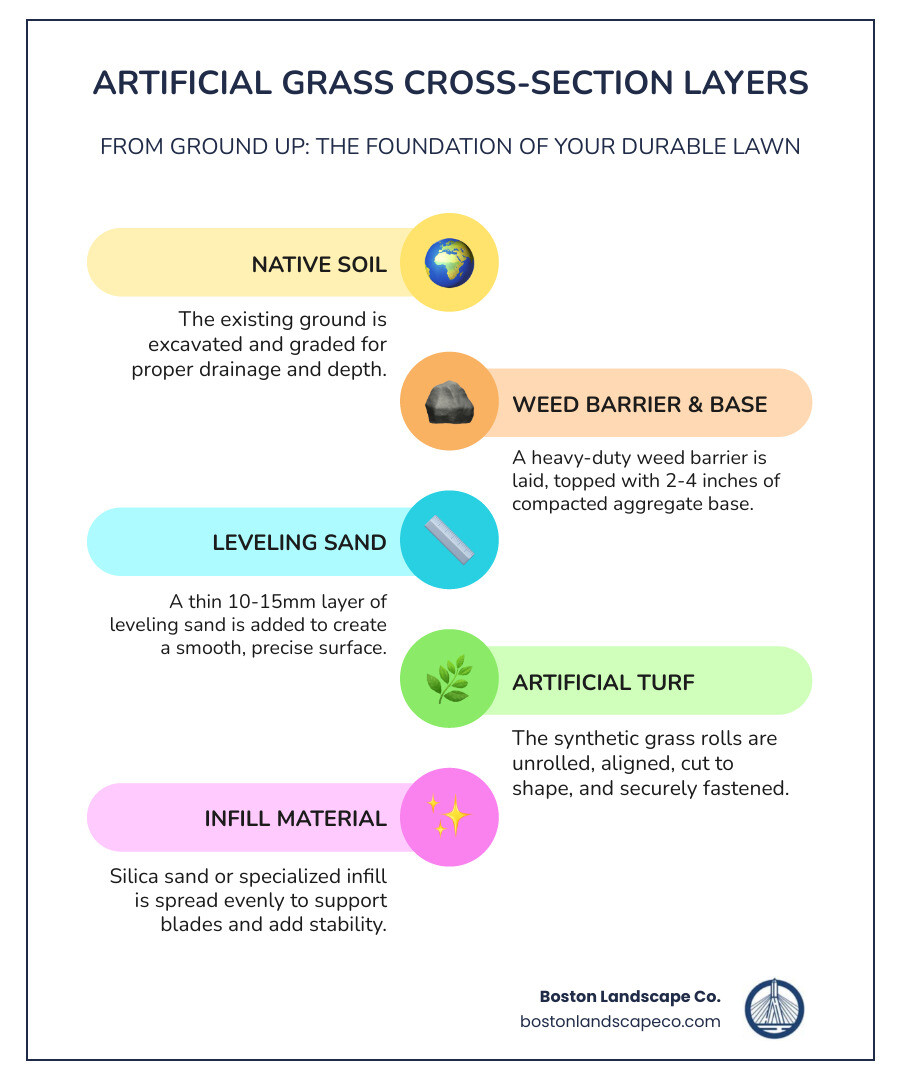
Artificial Grass Installation basics:
Understanding the Investment: Artificial Grass Installation Costs and Materials
Changing your yard with a synthetic lawn is an exciting project. Understanding the costs involved, from materials to labor, will help you budget wisely for your dream lawn.
DIY vs. Professional Costs
When it comes to Artificial Grass Installation, you have two main paths: DIY or professional hire, each with distinct costs and benefits.
The DIY route saves on labor costs and offers the satisfaction of personal accomplishment, but it requires significant time and effort. DIY material costs typically range from $7 to $10 per square foot, covering the turf (starting around $4 per square foot), base materials, and infill.
On the other hand, professional Artificial Grass Installation has a higher upfront cost but provides expert knowledge, efficiency, and often a warranty, saving you time and physical labor. As of 2023-2024, professional installation averages around $13 per square foot, but prices can range from $8.50 to $45 per square foot depending on job size and complexity.
The following table shows average national costs based on internet data. Please note: these are general estimates, not actual costs for Boston Landscape Co., as prices vary by location, turf type, and project complexity.
| Project Size (sq. ft.) | Average DIY Cost (per sq. ft.) | Average Professional Cost (per sq. ft.) | Total Average Professional Cost (example for largest size in range) |
|---|---|---|---|
| < 400 | $7 – $10 | $17 – $45 | $6,800 – $18,000 (for 400 sq. ft.) |
| 400 – 700 | $7 – $10 | $14 – $17 | $7,350 – $8,800 (for 500 sq. ft.) |
| 700 – 900 | $7 – $10 | $12 – $14 | $8,400 – $12,600 (for 900 sq. ft.) |
| 900 – 2,000 | $7 – $10 | $9.50 – $12 | $11,400 – $24,000 (for 2,000 sq. ft.) |
| 2,000+ | $7 – $10 | $9 | $18,000+ (for 2,000 sq. ft.) |
Final prices are influenced by factors like local material delivery fees (an extra $50-$100) and the rising costs of supplies like nails.
Essential Tools for the Job
Whether you’re going DIY or just curious about what the pros use, having the right tools is essential for a successful Artificial Grass Installation.

For a successful DIY project, you’ll need a mix of basic hand tools and perhaps a few specialized power tools. Key items include a shovel, wheelbarrow, and a grading rake for preparing the base. For the turf, a sharp utility knife with extra blades and a tape measure are crucial. To compact the base, a hand tamper is necessary, though a rented plate compactor is highly recommended for larger areas. For finishing, you’ll need a stiff-bristle broom or power broom, a hammer, carpet scissors, a drop spreader for infill, and a garden hose. A lawn roller and carpet stretcher can also be helpful for achieving smooth, professional results with your hand tools.
Gathering Your Materials
Choosing the right materials is critical for a durable and attractive Artificial Grass Installation that lasts for years.
- Artificial grass: Available in various styles, with rolls typically 13 or 15 feet wide. Plan for 10-20% extra material for cuts and shaping.
- Seam tape and adhesive: Essential for joining turf pieces. Turf tape is often preferred for a strong bond.
- Heavy-duty weed barrier: This geo-textile fabric is highly recommended to prevent weeds from growing through the turf.
- Aggregate base: A layer of crushed stone, gravel, or decomposed granite (like Type 1 Aggregate or Class II Road Base) provides essential stability and drainage.
- Leveling sand: A thin layer of sharp sand or granite dust is laid over the aggregate to create a smooth, level surface.
- Infill: Materials like silica sand or specialized options (Zeolite, Envirofill) are spread over the turf (approx. 1-2 lbs per sq. ft.) to help blades stand upright, add weight, and provide cushioning. Pet-friendly infills offer odor control and antimicrobial properties.
- Galvanized 6 inch nails: Used to secure the turf perimeter and seams. Bender boards are an optional addition for creating clean, defined edges.
The Complete DIY Artificial Grass Installation Guide
This section provides a detailed walkthrough of the Artificial Grass Installation process. Proper base preparation is the most critical factor for a long-lasting, professional-looking result.
Step 1: Preparing the Site and Base
A well-prepared base ensures proper drainage and a smooth surface, preventing future issues like bumps or sagging.

- Excavation: Remove existing sod and organic material to a depth of 2-4 inches. Before digging, call 811 to identify underground utilities.
- Clear Debris: Thoroughly clear the area of all roots, rocks, and other obstacles.
- Grade for Drainage: Create a slight slope of 1-2% to ensure proper water runoff and prevent puddles. Use a rake and level to check for high or low spots.
- Install Edging (Optional): If not adjacent to a hardscape, install bender boards around the perimeter to create a clean edge and contain base materials.
- Lay and Compact Aggregate Base: Spread a 2-4 inch layer of aggregate (3-5 inches for pet areas). Lightly wet the aggregate and use a plate compactor to compact it to 80-90% density. Repeat until the base is solid and even to prevent future shifting and wrinkles.
- Add Leveling Layer: Spread a thin (0.5-1 inch) layer of sharp sand or granite dust over the compacted aggregate. Rake it smooth and compact it again to create a perfectly level surface.
- Lay Weed Barrier: Roll out the heavy-duty weed barrier fabric over the compacted base, overlapping the edges by a few inches. Secure it with landscape staples every few feet to prevent weed growth.
For a detailed visual guide on this crucial phase, check out our insights on Installation Of Artificial Turf.
Step 2: Laying the Turf
With the base prepared, it’s time to lay the turf. This step requires precision, especially when using multiple pieces.
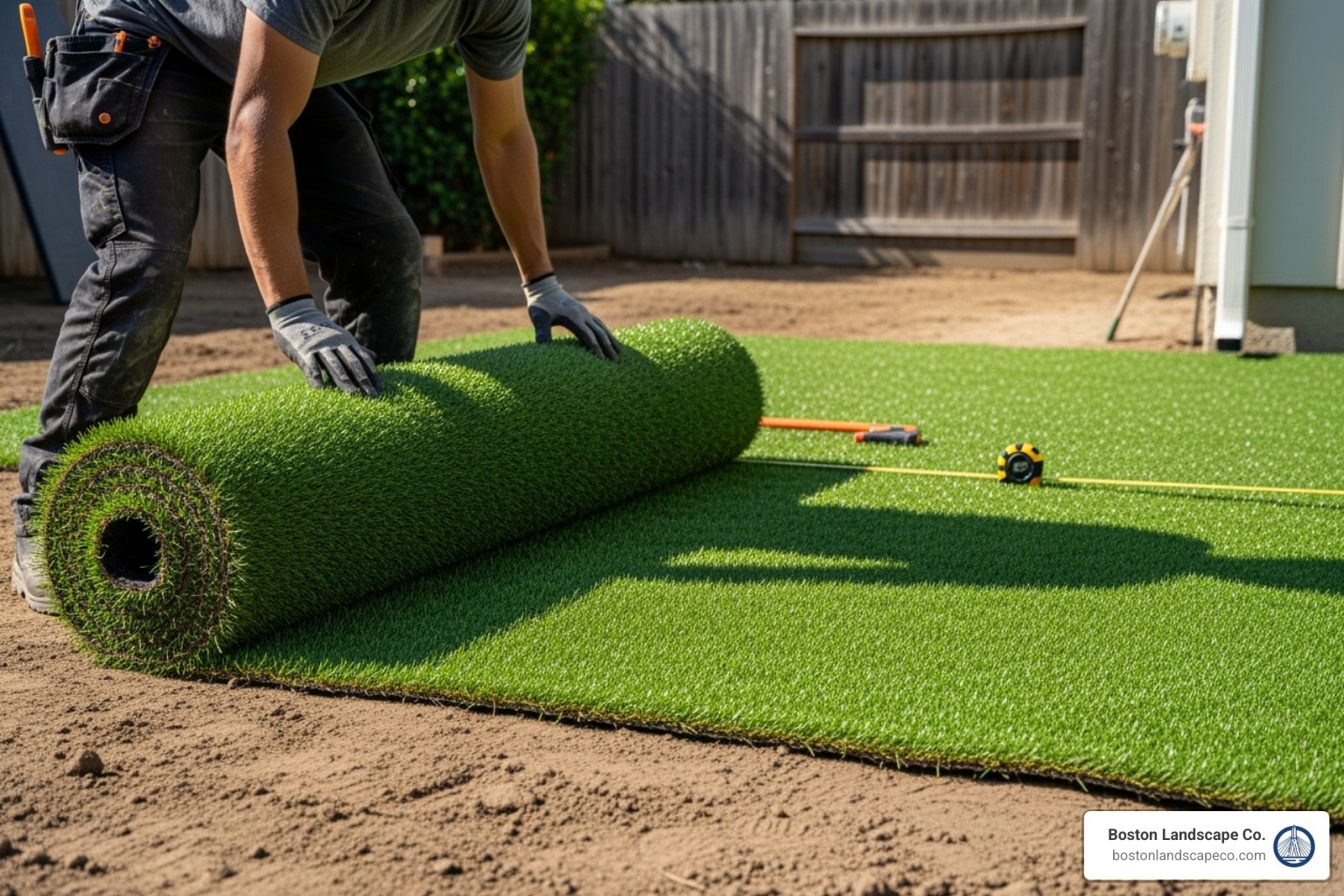
- Roll Out the Turf: Unroll the artificial grass and let it sit in the sun for 1-3 hours. This helps it relax and flatten, making it easier to work with.
- Align Grain Direction: All turf pieces must be laid with the grain (the direction the blades lean) facing the same way for a uniform look. Point the grain towards the main viewing area for the best appearance.
- Make Relief Cuts: For curves and irregular shapes, make small relief cuts on the turf’s backing to help it lay flat.
- Trim Edges: Trim excess turf around the perimeter. Always cut from the back of the turf to follow the stitch lines and avoid cutting the grass blades.
Step 3: Seaming and Securing the Turf
Proper seaming creates the appearance of a single, seamless lawn. Precision here ensures an invisible join.
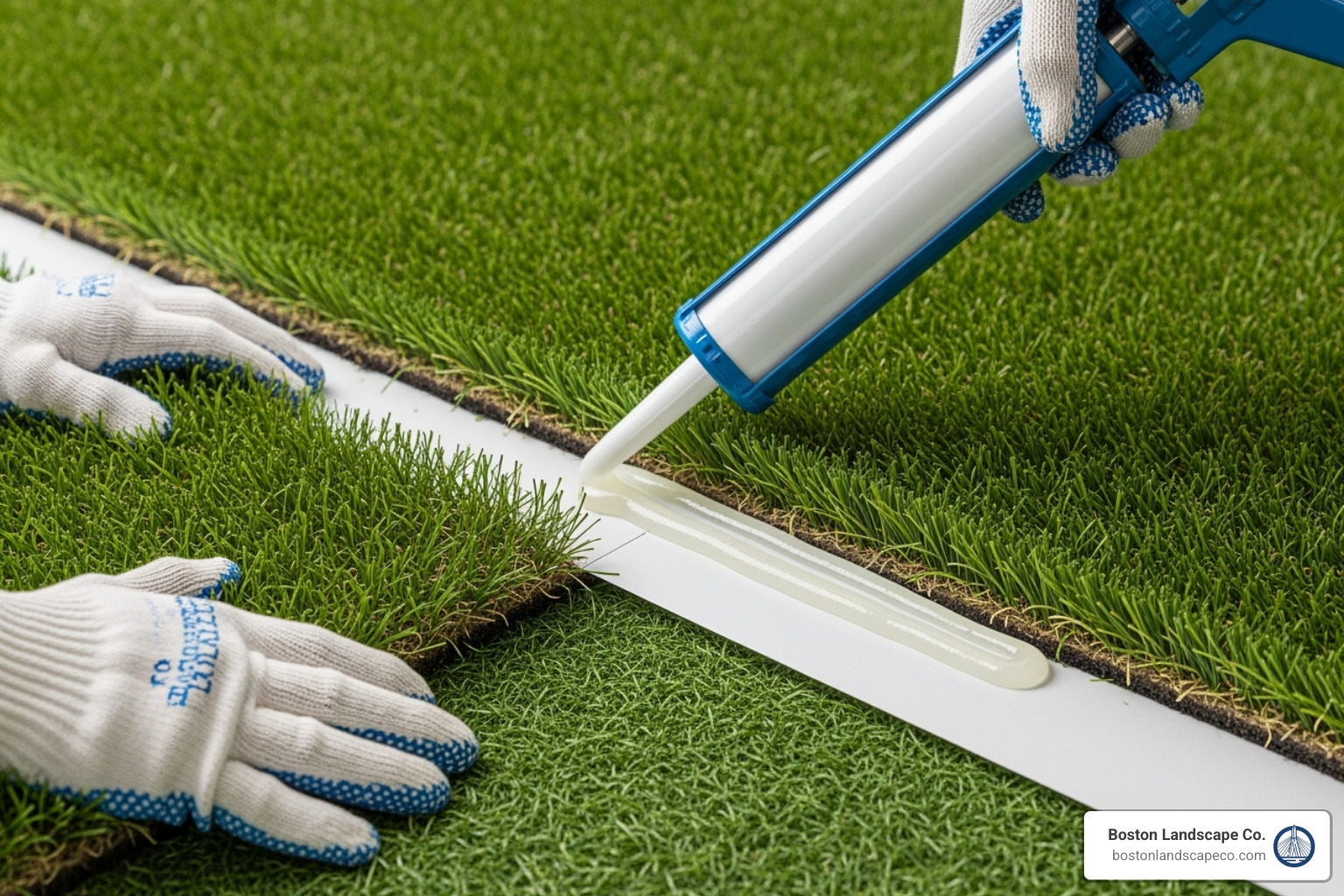
- Align Seams: Trim the factory edges off the turf pieces to ensure a tight seam. Align the pieces with a 1-2mm gap to allow for thermal expansion.
- Apply Seam Tape: Fold back the turf edges and place seam tape centered underneath the join. Apply an even layer of artificial grass adhesive to the tape.
- Join Seams: Carefully press the two turf edges together over the adhesive, avoiding trapping any grass blades. Place heavy objects on the seam for at least 45 minutes to ensure a strong bond.
- Secure the Perimeter: Use 6-inch galvanized nails or landscape staples every 6-8 inches around the perimeter and every 2 feet in the interior. Separate the grass blades and drive nails through the backing until the head is just below the surface, being careful not to create dips.
For more detailed instructions on seamless installation, check out our Fake Grass Installation guide.
Step 4: Applying and Working in the Infill
The final step, adding infill, is crucial for the turf’s performance, appearance, and longevity.
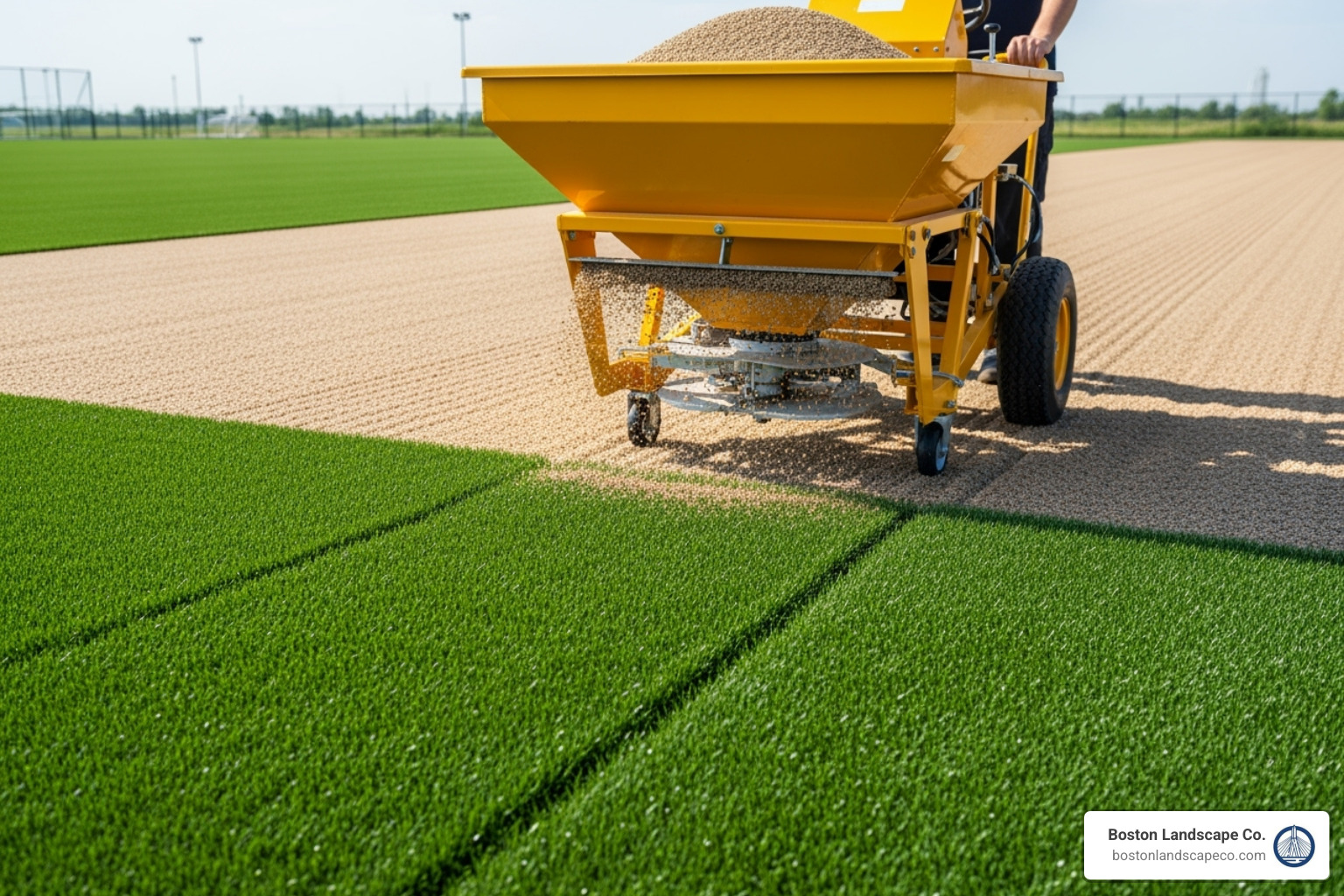
- Choose Your Infill Type: You have several options:
- Silica Sand: A cost-effective option that adds weight and supports grass blades. Use specialized turf sand only.
- Durafill/Envirofill/ZeoFill: Specialized, antimicrobial infills ideal for pet areas as they control odor and bacteria.
- Crumb Rubber: Provides cushioning and is often used in sports applications.
- Spread Infill: Use a drop spreader to apply 1-2 pounds of infill per square foot, depending on the turf’s pile height. A 100-pound bag typically covers about 60 square feet.
- Brush Infill into Fibers: Use a stiff-bristle or power broom to work the infill deep into the base of the turf. Brush against the grain to help the blades stand upright and give your lawn a lush, natural look.
Post-Installation: Maintenance and Special Considerations
Congratulations on completing your Artificial Grass Installation. While artificial grass is low-maintenance, a little routine care will ensure it stays beautiful for years to come.
How to Maintain Your Artificial Grass
Maintaining artificial grass is simple and requires just a few key habits. Rinse the turf weekly with a garden hose to wash away dust and pollen. Use a leaf blower or stiff broom to remove larger debris like leaves and twigs.
In high-traffic areas, grass fibers may flatten. To fix this, brush the turf against the grain with a stiff-bristle broom about once a month to keep the blades upright.
For spills, use a solution of mild household detergent and warm water. Blot the spill and rinse the area with cold water. Avoid harsh chemicals like bleach, which can damage the turf. Find more tips in our guide on Artificial Grass Turf.
Special Considerations for Pets
Artificial grass is great for pets, providing a soft, mud-free play area. A few extra steps will keep it clean and odor-free.
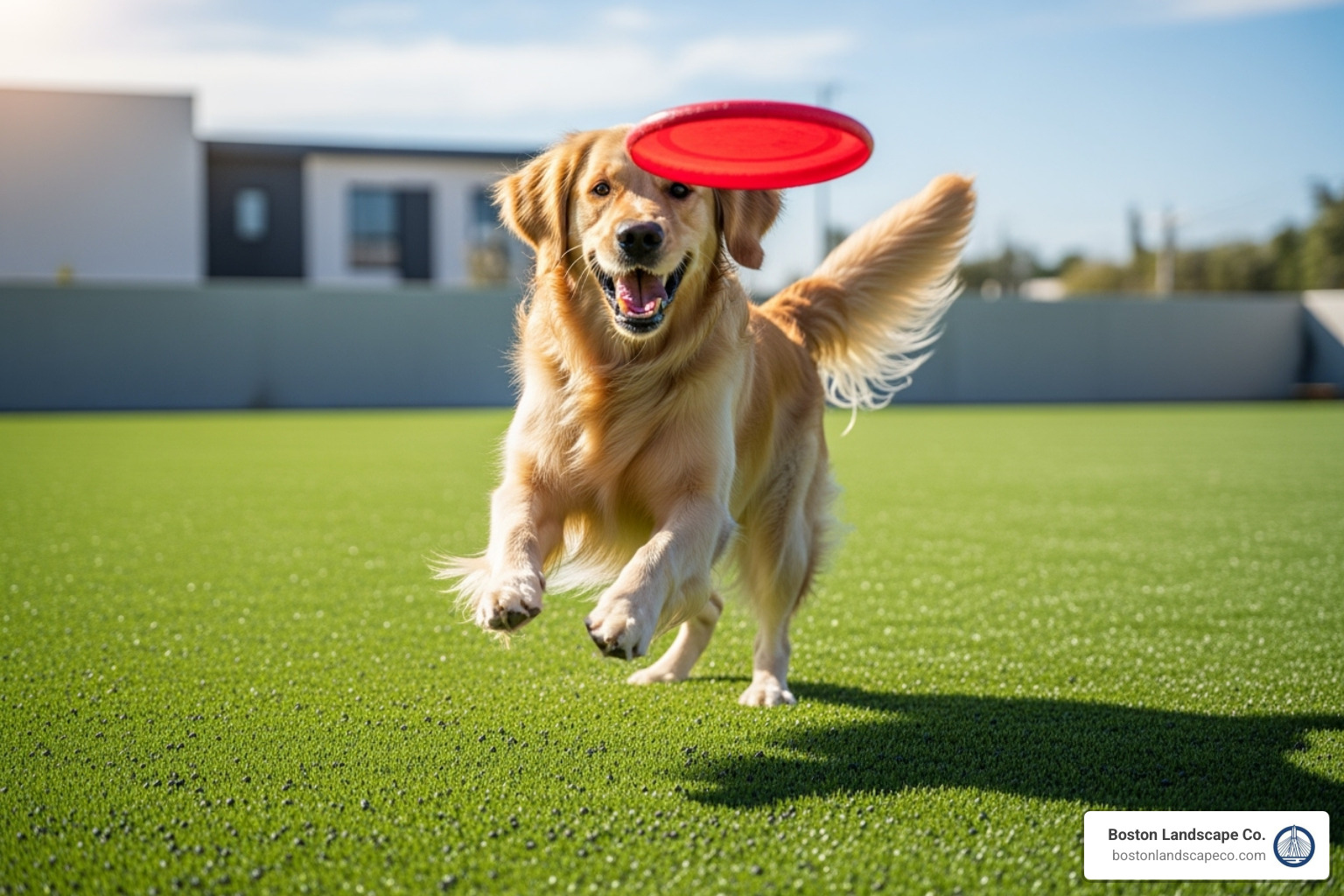
Choose pet-friendly turf with a highly permeable backing for better drainage. Use a specialized odor-control infill like ZeoFill or Envirofill to neutralize ammonia from pet urine and control odors effectively.
Rinse the turf regularly with a garden hose to wash away liquid waste. For solid waste, scoop and dispose of it, then rinse the area. For lingering odors, use baking soda or a specialized enzymatic cleaner.
Ready to create the perfect outdoor space for your beloved pets? Learn more about our Artificial Grass For Pet solutions.
Common Challenges and Solutions
It’s helpful to know how to handle a few potential challenges with artificial grass.
- Heat build-up: Turf can get hot in direct sunlight, with surface temperatures sometimes exceeding 160°F. A quick spray from a garden hose will cool it down instantly. Using a light-colored sand infill can also help mitigate heat.
- Weeds at the edges: While a weed barrier is effective, some weeds may appear at the perimeter. Check the edges regularly and remove any weeds promptly. Proper edging installation also helps prevent this.
- Proper drainage: Puddles after rain may indicate improper base grading or compaction. This highlights the importance of correct site preparation to ensure adequate drainage.
- Melting from reflective windows: Highly reflective windows can concentrate sunlight and melt turf fibers. To prevent this, apply a non-reflective film to the exterior of the windows.
Frequently Asked Questions about Artificial Grass Installation
It’s natural to have questions about Artificial Grass Installation. Here are answers to some of the most common ones.
Can you lay artificial grass directly on top of soil or existing grass?
No, this is strongly advised against. Laying turf directly on soil or grass leads to an uneven surface, bumps, poor drainage, and potential mold growth. A proper installation requires excavating the area and installing a stable aggregate base, as detailed in our guide.
How long does artificial grass last and is it safe?
High-quality, properly installed artificial grass can last 15-25 years or more, depending on the product and maintenance. Modern turf is non-toxic, made from pet-friendly and kid-friendly materials like nylon or plastic. Extensive testing has found “no liftd health risks” associated with its use. Boston Landscape Co. prioritizes safety in all our installations for families in areas like Boston, MA, and Winchester, MA.
What are the most common uses for artificial grass?
Artificial grass is incredibly versatile. Popular applications include:
- Pet areas: A clean, mud-free space for pets.
- Poolside surrounds: A soft, non-slip, clean surface.
- Balconies and rooftops: Transforms urban spaces into green retreats.
- Home putting greens: For practicing golf at home.
- Kids’ play areas: A soft, safe, low-maintenance surface.
- Commercial properties: Improves curb appeal while reducing water use and maintenance.
Boston Landscape Co. can help you select the perfect Artificial Grass Installation solution for your needs in Billerica, MA, Waltham, MA, and our other service areas.
Enjoy Your Picture-Perfect Lawn
Completing a DIY Artificial Grass Installation is a rewarding project that transforms your yard into a beautiful, low-maintenance oasis. By following these steps, you can achieve a professional-looking lawn and save significant time, water, and effort for years to come.
However, a large-scale DIY project can be overwhelming, from base preparation to handling heavy equipment. If you prefer to avoid the hassle, you don’t have to do it alone.
The experts at Boston Landscape Co. are here to help. With over three decades of experience since 1991, we’ve transformed landscapes in communities like Stoneham, MA, Burlington, MA, and Concord, MA. We specialize in comprehensive landscaping solutions to make your outdoor dreams a reality.
If you’d rather let the pros handle it, explore our synthetic artificial lawns services. We’ll ensure a flawless, professional installation so you can relax and enjoy your beautiful new lawn.
