
Artificial Turf: Top 5 Reasons It’s the Best in 2025
Artificial turf is changing the way homeowners and businesses approach landscaping. It offers a blend of benefits that cater to both aesthetic desires and practical needs:
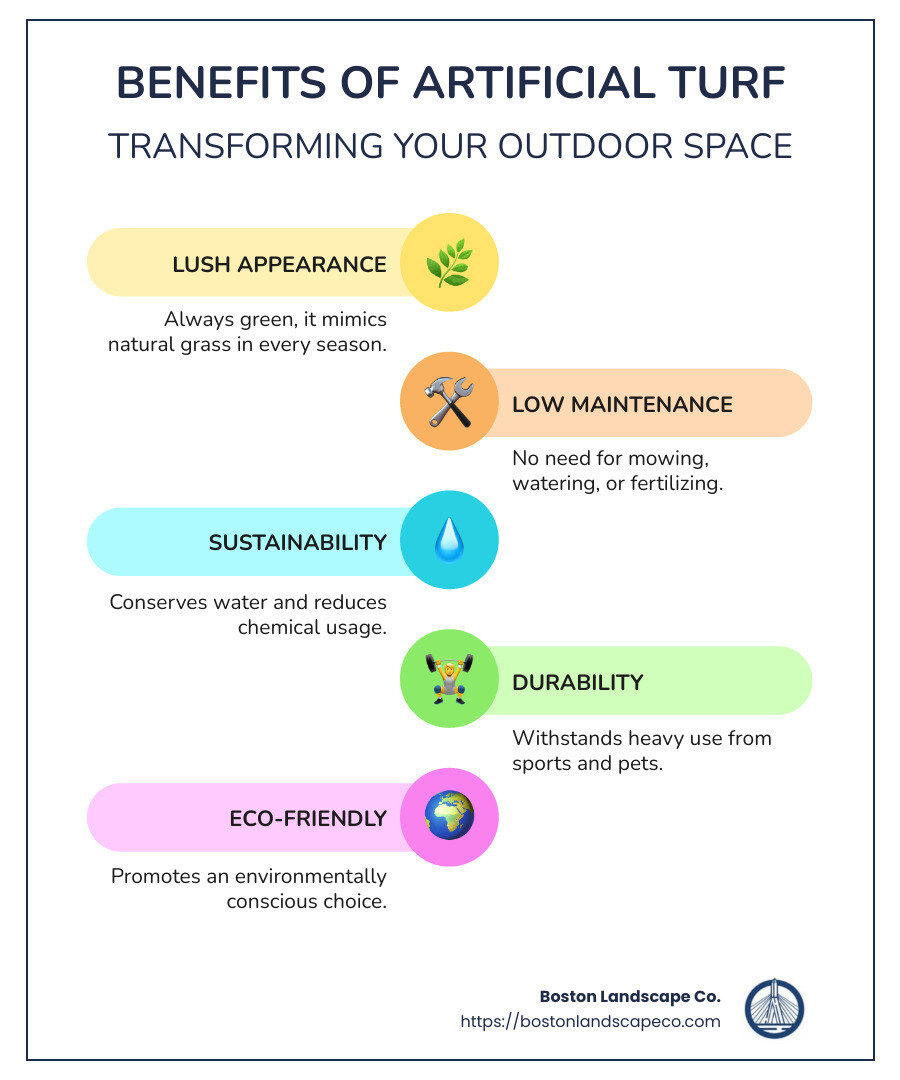
- Lush Appearance: Always green, regardless of weather conditions, mimicking natural grass impeccably.
- Low Maintenance: No mowing, watering, or fertilizing, saving time and resources.
- Sustainability: Conserves water and reduces chemical use, promoting an eco-friendly environment.
- Durability: Withstands heavy use, whether from sports, pets, or foot traffic, with long-lasting performance.
Switching to artificial turf is not just about improving your garden’s appearance; it’s a smart choice for anyone looking to improve the beauty and functionality of their outdoor space while being environmentally conscious.
As your guide, I’m Steve Schumacher with over 30 years of experience in landscaping, committed to excellence at Boston Landscape Co. My expertise includes changing outdoor spaces with high-quality artificial turf solutions, ensuring aesthetic appeal and practical benefits. Next, let’s uncover more about artificial turf and how it could be the perfect fit for your landscaping needs.
Easy artificial turf word list:
– artificial grass cost
– how to install artificial lawn turf
– replace lawn with artificial turf
Understanding Artificial Turf
Artificial turf is more than just a substitute for natural grass; it’s a carefully crafted product designed to meet diverse landscaping needs. Let’s break down its core components and manufacturing process to understand what makes it so effective.
Materials
The two most common materials used in artificial turf are polyethylene and nylon. Each has unique properties that make them suitable for different applications.
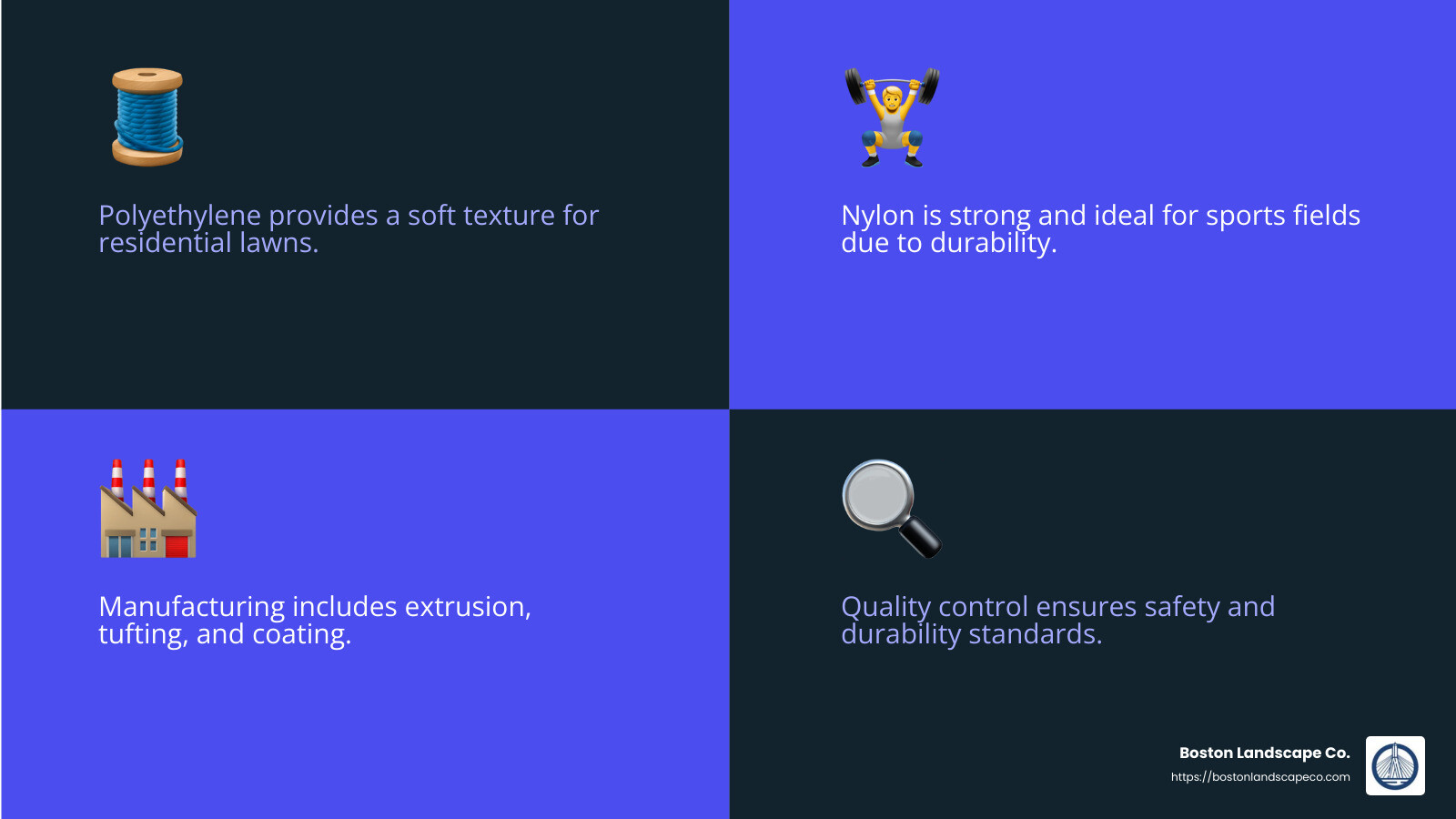
- Polyethylene: This material is widely favored for its soft texture and realistic appearance. It’s ideal for residential lawns and playgrounds because it feels pleasant underfoot while maintaining a natural look. Polyethylene also offers good durability, making it a popular choice for many homeowners.
- Nylon: Known for its exceptional strength and ability to withstand heavy foot traffic and high temperatures, nylon is often used in commercial settings or sports fields. While it is more expensive than polyethylene, its durability and resilience make it a worthwhile investment for areas that require robust performance.
Manufacturing
The manufacturing process of artificial turf involves several steps to ensure quality and durability. Here’s a simplified look at how it’s made:
- Extrusion: The raw materials are melted and extruded into fibers. These fibers are then cooled and cut to the desired length.
- Tufting: The fibers are stitched into a backing material, creating the turf’s pile. This is similar to the process used in carpet manufacturing.
- Coating: A secondary backing is applied to add stability and durability. This often includes a layer of latex or polyurethane.
- Quality Control: Each batch of artificial turf undergoes rigorous testing to ensure it meets industry standards for safety, durability, and appearance.
Why Choose These Materials?
The choice between polyethylene and nylon often depends on your specific needs:
- For a soft, natural feel: Opt for polyethylene. It’s perfect for areas where comfort is a priority, such as residential lawns or playgrounds.
- For high durability and heat resistance: Choose nylon. It’s suitable for sports fields or commercial landscapes where the turf will face intense use and environmental stress.
By understanding the materials and manufacturing process of artificial turf, you can make an informed decision that aligns with your landscaping goals. Whether you’re prioritizing comfort, durability, or aesthetics, there’s an artificial turf option custom to your needs.
Next, we’ll explore the numerous benefits of choosing artificial turf for your landscaping projects.
Benefits of Choosing Artificial Turf for Landscaping
When it comes to changing your outdoor spaces, artificial turf offers several advantages that make it an excellent choice for homeowners and businesses alike. Let’s explore some of the key benefits.
Low Maintenance
One of the biggest perks of artificial turf is its low maintenance nature. Unlike natural grass, which requires regular mowing, watering, and fertilizing, synthetic turf stays lush and green with minimal effort. A simple occasional rinse is usually enough to keep it clean and fresh. This means more time to enjoy your yard and less time spent on upkeep.
Cost-Effective
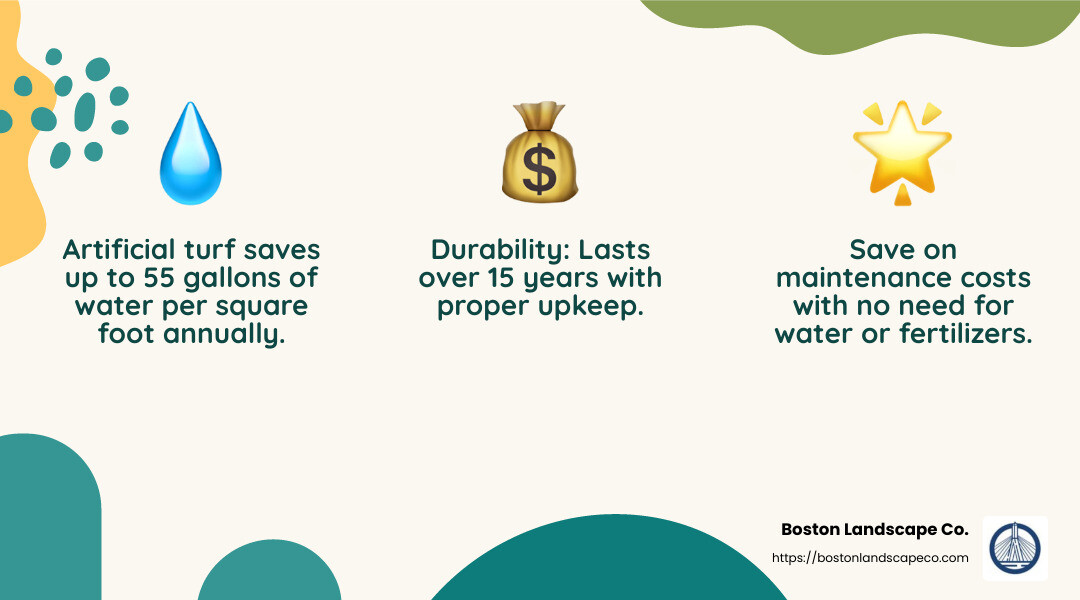
While the initial installation cost of artificial turf may be higher than laying natural grass, it pays off in the long run. You save on water bills, as synthetic grass doesn’t need watering. Plus, there’s no need to purchase fertilizers, pesticides, or pay for mowing services. Over time, these savings add up, making artificial turf a smart financial decision.
Durability
Artificial turf is built to last. High-quality products can withstand heavy foot traffic, making them ideal for play areas, sports fields, or pet-friendly spaces. With proper care, artificial turf can last between 10 to 20 years, ensuring you get the most out of your investment. It’s designed to resist wear and tear, maintaining its vibrant appearance through the years.
Weather Resistant
Unlike natural grass, which can struggle in extreme weather conditions, artificial turf remains resilient. It doesn’t dry out in the heat or become muddy in the rain. This makes it a reliable option for those living in areas with unpredictable weather patterns. Whether it’s scorching sun or heavy downpours, your lawn will look pristine year-round.
In summary, artificial turf offers a combination of low maintenance, cost-effectiveness, durability, and weather resistance. These benefits make it a compelling option for anyone looking to improve their outdoor spaces without the hassle of traditional lawn care.
Next, we’ll guide you through the installation process to ensure your artificial turf project is a success.
How to Install Artificial Turf
Installing artificial turf can transform your outdoor space into a beautiful, low-maintenance oasis. Here’s a step-by-step guide to help you through the installation process.
Preparation
The first step is to prepare the area where you’ll install the turf. Remove any existing grass, rocks, and debris. Make sure the soil is well-drained and loose. You might need to add compost or organic matter to improve soil structure if necessary.
Tip: Conduct a soil test to check nutrient levels and pH balance. This helps in making any needed soil amendments.
Cutting
Once the site is prepared, roll out the artificial turf over the area. Ensure all the grass blades face the same direction for a natural look. Use a sharp utility knife to cut the turf to fit your space. Precision is key, so take your time to avoid gaps or overlaps.
Seaming
For larger areas requiring multiple pieces of turf, seaming is essential. Use 4 to 6 inches of indoor-outdoor carpet seaming tape or 6-inch landscape staples to join the pieces. Secure the edges with 6-inch galvanized nails placed ½ to 1 inch from the edge and every 4 to 6 inches along the perimeter.
Note: Seaming can be tricky. If you’re not confident, consider hiring a professional to ensure a seamless look.
Infill
Infill materials help keep the turf blades upright and protect your lawn. Common infill options include silica sand, rubber, or cork. Use a drop spreader to apply the infill at about 2 pounds per square foot. Finish by using a push broom to work the infill into the turf, brushing against the grain for a natural appearance.
Pro Tip: Choose a safe infill material. Avoid crumb rubber due to health concerns and opt for alternatives like ceramic-coated sand.
Installation Costs
Upfront Cost: Installing artificial turf has a higher initial cost compared to natural grass. This includes the cost of materials, site preparation, and installation.
Lifetime Cost: Over time, artificial turf is cost-effective. You save on water, fertilizers, and mowing costs. Plus, its durability means fewer replacements and repairs.
Installation on Different Surfaces
Dirt: For dirt surfaces, ensure proper site preparation. Remove any debris and level the ground before laying the turf.
Existing Lawn: Remove the existing grass completely. This prevents any growth that might disrupt the turf installation.
Concrete: Installing turf over concrete is possible. Ensure the surface is clean and level. You might need a padding layer for comfort and drainage.
By following these steps, you can achieve a professional-looking installation that improves your outdoor space’s beauty and functionality. Next, we’ll address common concerns and solutions with artificial turf to ensure you make the most of your investment.
Common Concerns and Solutions with Artificial Turf
Is Artificial Turf Safe?
Safety is a top concern for many when considering artificial turf. The good news is that modern artificial turf is designed with safety in mind. Many products are made from non-toxic materials and are free from harmful pesticides. This makes them a safer option for families and pets compared to natural grass treated with chemicals.
Research has shown that while there are some concerns about the materials used in artificial turf, particularly the infill, the risks are often negligible. For instance, a 2017 study argued that the benefits of regular physical activity on synthetic fields outweigh potential health risks. However, it’s always wise to choose products that use safe infill materials, like ceramic-coated sand, over crumb rubber to minimize any health risks.
How Hot Does Artificial Turf Get?
One common question is how hot artificial turf can get, especially in the summer. It’s true that synthetic turf can absorb and retain heat more than natural grass. On a hot day, the surface can become quite warm, which might be uncomfortable for bare feet or paws.
To address this, manufacturers are developing cooling techniques. Some turf products now incorporate heat-reflective materials or use lighter colors to reduce heat absorption. Another effective strategy is to regularly hose down the turf to cool it off.
Non-Biodegradability
A key environmental concern with artificial turf is its non-biodegradable nature. Unlike natural grass, synthetic turf doesn’t decompose, which means it will eventually end up in a landfill. However, some advancements are being made in recycling technologies. Certain types of artificial turf can be recycled into new turf or other products, which helps mitigate its environmental impact.
When considering artificial turf for your landscaping needs, it’s important to weigh both the benefits and these common concerns. With the right choices and proper care, artificial turf can be a safe, practical, and environmentally conscious option for your outdoor spaces.
Next, we’ll compare artificial turf and natural grass to help you decide which is best for your needs.
Comparing Artificial Turf and Natural Grass
When deciding between artificial turf and natural grass, it’s crucial to understand how they compare in terms of appearance, feel, maintenance, longevity, cost, and environmental impact.
Appearance and Feel
Artificial Turf: Modern artificial turf is designed to look just like natural grass. It stays green and lush all year round, without any dry patches or discoloration. Many homeowners appreciate its consistent appearance, which can improve the curb appeal of their property.
Natural Grass: While natural grass offers a classic look and a soft, cushiony feel underfoot, it can be prone to unsightly brown patches and weeds. Maintaining its lush appearance requires regular care.
Maintenance and Longevity
Artificial Turf: One of the biggest advantages of artificial turf is its low maintenance. There’s no need for mowing, watering, or fertilizing. A simple hose down now and then keeps it clean. Plus, it’s durable and can last between 10 to 20 years with proper care.
Natural Grass: Natural grass demands regular upkeep, including mowing, watering, and fertilizing. This can be time-consuming and costly. It also needs seasonal replanting, which can add to the maintenance burden.
Cost Comparison
Initial Investment
Artificial Turf: The initial cost of installing artificial turf is generally higher. It can range from $2.50 to $4.00 per square foot, depending on the quality and installation complexity.
Natural Grass: Natural grass is cheaper to install initially. However, the costs can add up over time due to maintenance needs.
Long-term Savings
Artificial Turf: Over time, artificial turf can save money. You’ll spend less on water bills, lawn care services, and maintenance equipment. Its long lifespan means fewer replacements, making it a cost-effective choice in the long run.
Natural Grass: While natural grass has a lower upfront cost, the ongoing expenses for water, fertilizers, and maintenance can accumulate over the years.
Environmental Impact
Water Savings: Artificial turf is a water-saving hero. It requires no watering, which is a major advantage in areas with water restrictions or drought conditions. This can significantly reduce your household water usage.
Pesticide-Free: Unlike natural grass, artificial turf doesn’t need pesticides or herbicides. This means fewer chemicals in your outdoor space, making it a safer environment for your family and pets.
In sum, choosing between artificial turf and natural grass depends on your priorities. If you value low maintenance and long-term savings, artificial turf might be your best bet. Up next, we’ll dive into some frequently asked questions about artificial turf to help you make an informed decision.
Frequently Asked Questions about Artificial Turf
What is the Difference Between Artificial Turf and Artificial Grass?
Artificial Turf and Artificial Grass are terms often used interchangeably, but they do have distinct uses.
- Artificial Turf is commonly used in sports settings, like football or soccer fields. It is designed to withstand heavy foot traffic and provide a consistent playing surface. Its durability and performance make it ideal for high-impact activities.
- Artificial Grass is more often used in residential or commercial landscaping. It focuses on aesthetics, providing a lush, green look for lawns and gardens. It’s perfect for those who want a beautiful yard without the hassle of constant maintenance.
Both types share the same core benefits: low maintenance, water conservation, and year-round greenery.
Can Artificial Turf Be Recycled?
Recycling artificial turf is a growing field with promising developments.
- Current Technologies: Some manufacturers are starting to offer recycling programs where old turf can be repurposed or broken down into raw materials for new products. However, these initiatives are still in the early stages and not universally available.
- Future Possibilities: Advances in recycling technology hold potential for more widespread reuse of artificial turf materials. This could make artificial turf even more sustainable, reducing its environmental impact over its lifecycle.
While recycling options are limited today, the industry is moving towards more eco-friendly solutions.
How Long Does Artificial Turf Last?
The lifespan of artificial turf is one of its standout features.
- Durability: High-quality artificial turf can last between 10 to 20 years, depending on the level of use and maintenance. It’s designed to withstand weather elements, heavy foot traffic, and even pets.
- Warranty: Many manufacturers offer warranties ranging from 10 to 15 years, giving you peace of mind about your investment. These warranties typically cover defects in materials and workmanship, ensuring that your turf remains in top condition for years.
With its robust durability and long warranty periods, artificial turf is a reliable and cost-effective landscaping option.
Up next, we’ll explore more about the installation process and what you need to know to get started with your artificial turf project.
Conclusion
At Boston Landscape Co., we believe in changing outdoor spaces into beautiful, functional areas that improve your lifestyle. With our expertise in artificial turf installations, we can help you achieve a stunning, low-maintenance landscape that suits your needs perfectly.
Artificial turf offers a range of benefits that make it an excellent choice for both residential and commercial properties. It’s easy to maintain, cost-effective over time, and incredibly durable. Whether you’re looking to create a lush backyard oasis or a practical play area for your kids and pets, artificial turf provides a versatile solution.
Our team at Boston Landscape Co. is dedicated to delivering high-quality landscaping services custom to your specific requirements. We use top-of-the-line materials and the latest techniques to ensure that your turf not only looks great but also stands up to the test of time. From initial consultation to installation and beyond, we’re here to support you every step of the way.
If you’re ready to improve your outdoor space with the beauty and functionality of artificial turf, we invite you to learn more about our services. Visit our Synthetic Lawns Service Page for more information and to get started on your project today.
Together, let’s create a greener, more beautiful Boston, one lawn at a time.
