
Backyard drainage solutions: Conquer 4 woes
Why Standing Water is Ruining Your Property (And How to Fix It)
Backyard drainage solutions can transform a soggy, unusable yard into a beautiful outdoor space your family will love. Whether you’re dealing with puddles after every rainstorm or water creeping toward your foundation, the right drainage approach can solve these problems for good.
Quick Solutions for Common Drainage Problems:
- Surface water pooling → Install French drains, catch basins, or improve grading
- Foundation water issues → Extend downspouts, create positive slope away from house
- Soggy lawn areas → Add swales, rain gardens, or aerate compacted soil
- Runoff from hard surfaces → Use permeable pavers or trench drains
- Basement moisture → Combine exterior drainage with proper waterproofing
Standing water in your yard isn’t just an eyesore – it’s a threat to your property’s value and your family’s health. Poor yard drainage creates the perfect breeding ground for mosquitoes and can lead to expensive foundation damage over time. As one landscaping expert noted, “Poor grading is the top cause of flooding or pooling in yards.”
The good news? Most drainage problems have straightforward solutions. Simple fixes like cleaning gutters and extending downspouts can solve minor issues, while more serious problems might need professional systems like French drains or dry wells.
I’m Steve Schumacher of Boston Landscape Co. Since 1991, I’ve been solving backyard drainage solutions for Boston-area homeowners. I’ve seen every water problem imaginable and know how to fix them.
Simple guide to backyard drainage solutions terms:
- residential landscape grading
- residential landscape design and build services
- full-service residential landscape contractor
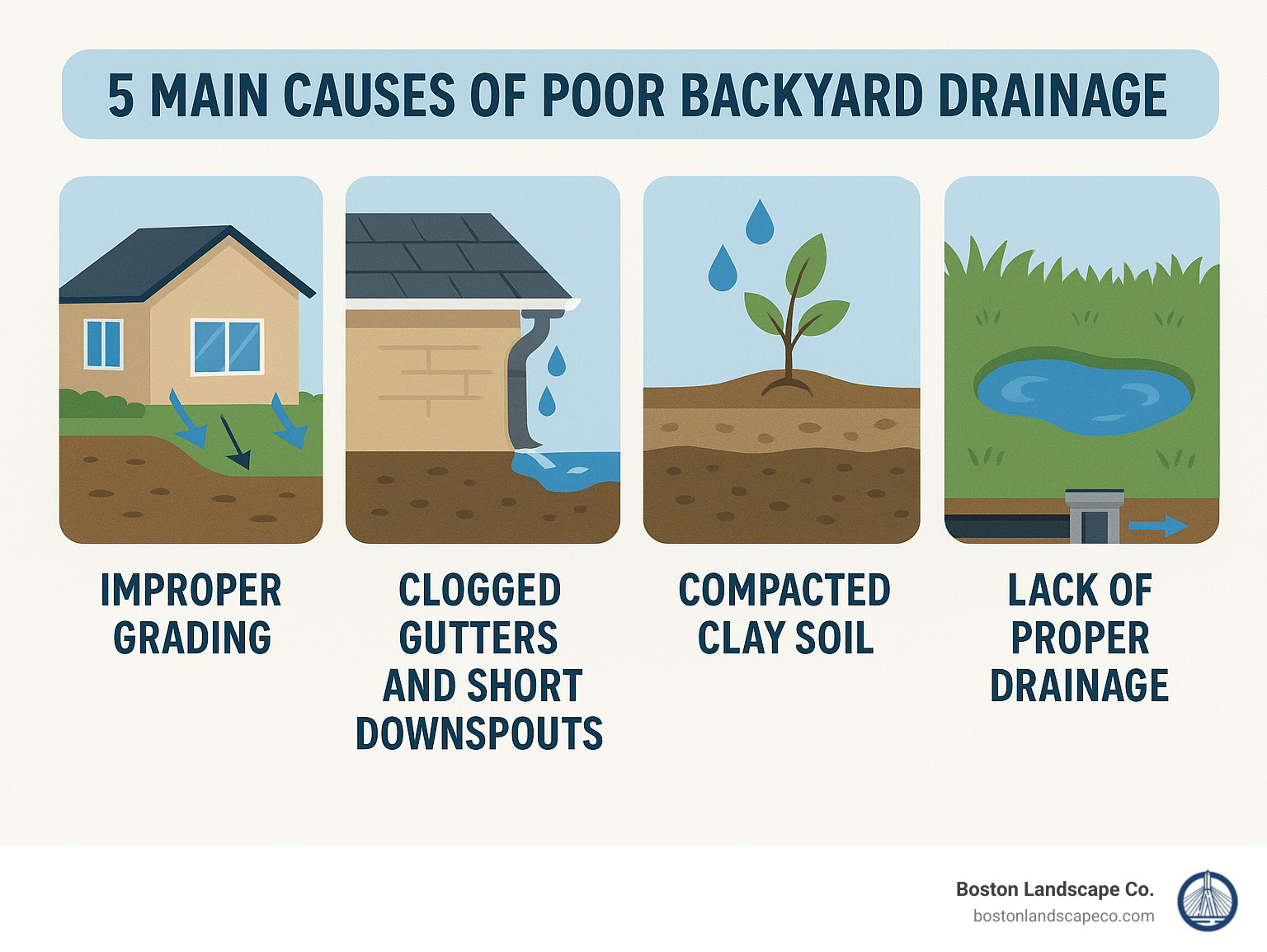
First, Pinpoint the Problem: Signs and Causes of Poor Drainage
Before diving into backyard drainage solutions, you need to play detective. Understanding the warning signs and root causes is your first step toward fixing drainage problems for good.
Your yard is usually honest about its problems; you just need to know what to look for. Sometimes it’s obvious puddles, other times it’s a subtle squishy corner.
Common Signs Your Yard Has a Drainage Issue
The most obvious red flag is puddles that stick around for more than a few hours after rain. Standing water the day after a storm means you have a drainage issue.
Other signs include spongy or marshy spots that stay soggy for days, indicating water isn’t moving through the soil. These wet areas often kill grass, leaving bare patches in your lawn.
Keep an eye out for soil erosion, especially on slopes where dirt is washing away. Also, notice water stains or discoloration on your foundation—that’s water pooling exactly where you don’t want it.
Serious warning signs include basement leaks, water seepage, or a musty smell in your basement or crawlspace. These all point to poor exterior drainage, as water that can’t drain outside finds its way in.
Gutter overflow during storms dumps water directly next to your foundation. Also, persistent mosquito problems are a sign, as standing water is their breeding ground.
Top Causes of Backyard Water Problems
Once you’ve spotted the signs, it’s time to figure out the cause. Poor grading is the biggest culprit—if your yard slopes toward your house, you’re directing rainwater straight to your foundation.
Compacted soil is another major troublemaker, especially around newer homes where construction equipment has compressed the earth. Clay soil has the same problem naturally—it doesn’t let water soak through.
Your downspouts might be working against you if they’re dumping roof water right next to your foundation. Your roof collects hundreds of gallons during a storm, and if that’s all dumped in one spot, you’re creating your own flood zone.
Large impermeable surfaces like concrete patios and asphalt driveways force water to run off, overwhelming other areas. Sometimes there’s a natural clay layer or hardpan beneath your topsoil that blocks water from moving downward.
Sometimes the problem isn’t even yours—runoff from uphill neighbors can turn their drainage issues into your headache. Less commonly, some properties deal with natural underground springs.
Identifying the combination of factors affecting your yard is key to choosing the right backyard drainage solutions. For comprehensive drainage planning that integrates with your landscape design, check out our hardscaping services.
Easy Wins: Simple DIY Fixes for Better Drainage
Many water problems can be solved with simple, affordable weekend DIY projects. These first-aid fixes can often solve the issue or buy you time for bigger solutions.
Starting with these wins helps you understand your property’s water flow, which is useful if you need professional help later.
The Power of Gutters and Downspouts
Your gutters are unsung heroes of home protection. I’ve seen expensive foundation repairs that a simple downspout extension could have prevented.
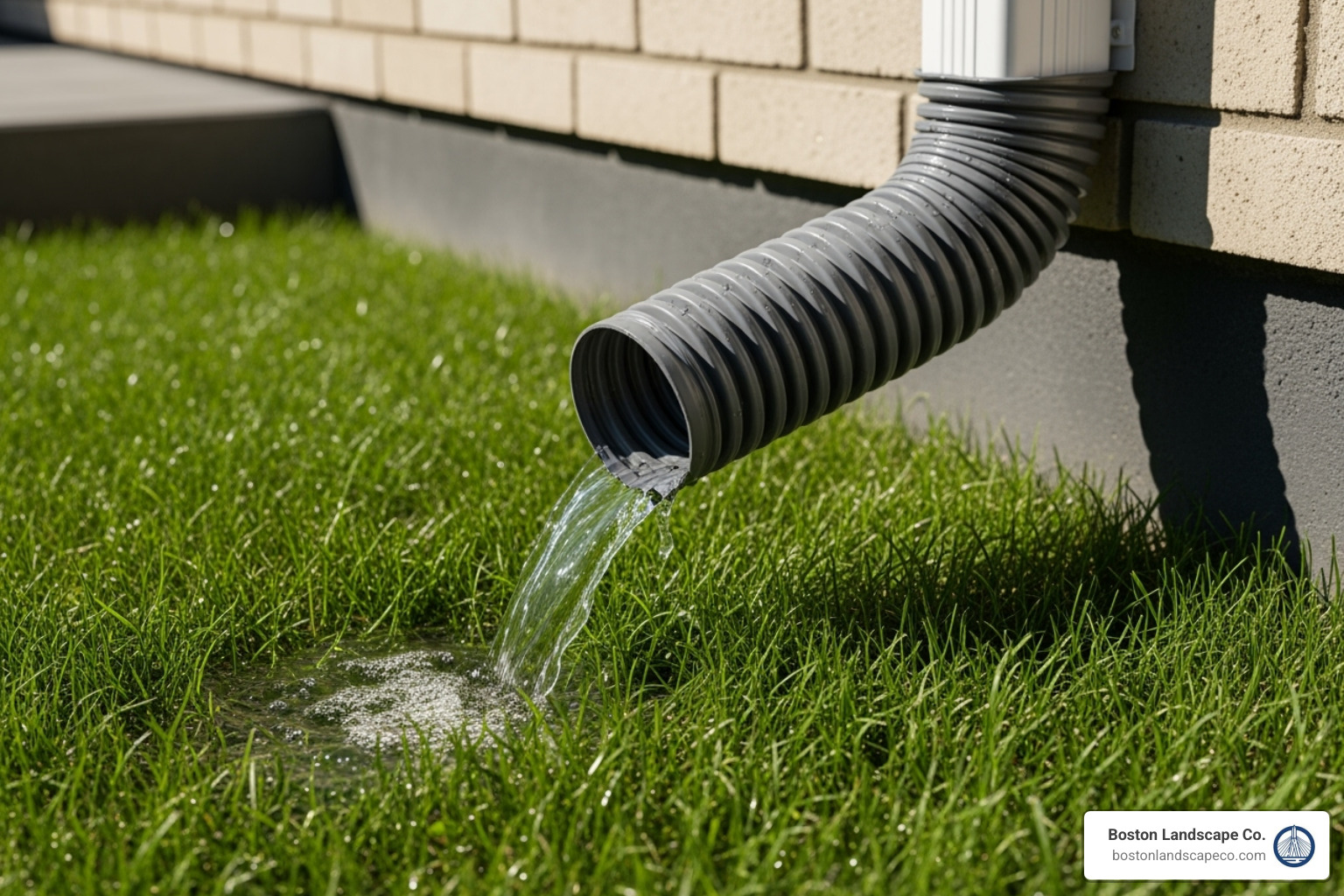
Clean gutters twice a year—this is essential insurance for your home. Clogged gutters become waterfalls during storms, dumping hundreds of gallons right where you don’t want it.
Downspout extensions are a secret weapon against foundation water damage. Most downspouts dump water too close to the house. Extending them 4-6 feet away is one of the most effective drainage fixes.
You have options: flexible roll-out extensions work well, while buried drain pipes create a cleaner look. Splash blocks under the downspout exit help spread the water and prevent erosion.
The key is directing water to a safe runoff area—somewhere it can naturally drain away without becoming your neighbor’s problem.
Correcting Your Yard’s Slope (Grading)
Poor grading causes more drainage headaches than anything else combined. The good news is that basic regrading for small areas is often a manageable DIY project.
Your yard should slope away from your house like a gentle hill. We’re looking for a minimum 2-3 inch drop over every 10 feet moving away from your foundation. That’s enough to send water on its way.
When adding soil to fix slopes or fill low spots, use clay-like soil rather than topsoil. For grading, you want soil that packs down and stays put, creating a stable surface that sheds water.
Lawn aeration can work miracles on compacted soil. Renting an aerator for a weekend can transform your yard by letting water, air, and nutrients reach the roots.
For persistently soggy spots, amending the soil with compost and sand can improve drainage naturally by giving your soil better “breathing room.”
Sometimes a good cleanup reveals drainage issues. Clearing debris or old landscaping fabric can restore natural water flow. For help getting your yard ready, our Yard Clean Ups services can give you a fresh start.
Working with Nature: Landscaping and Hardscaping Solutions
The best drainage solutions often work with nature. These approaches create beautiful, functional landscapes that solve water problems and add value to your property, often looking better than traditional fixes.
How a Swale Can Redirect Water Flow
A swale is a shallow, sloped channel that guides water where you want it to go.
A vegetated swale (or bioswale) blends into your landscape. Planted with grass or other plants, it redirects water naturally, slows runoff, and filters pollutants.
We’ve installed swales that prevent erosion on sloped properties, turning destructive runoff into an attractive landscape feature that guides water safely away.
For creative ideas on incorporating water features into your landscape design, explore our Ideas: Landscape Wetlands in Backyard.
Using a Rain Garden to Absorb Excess Water
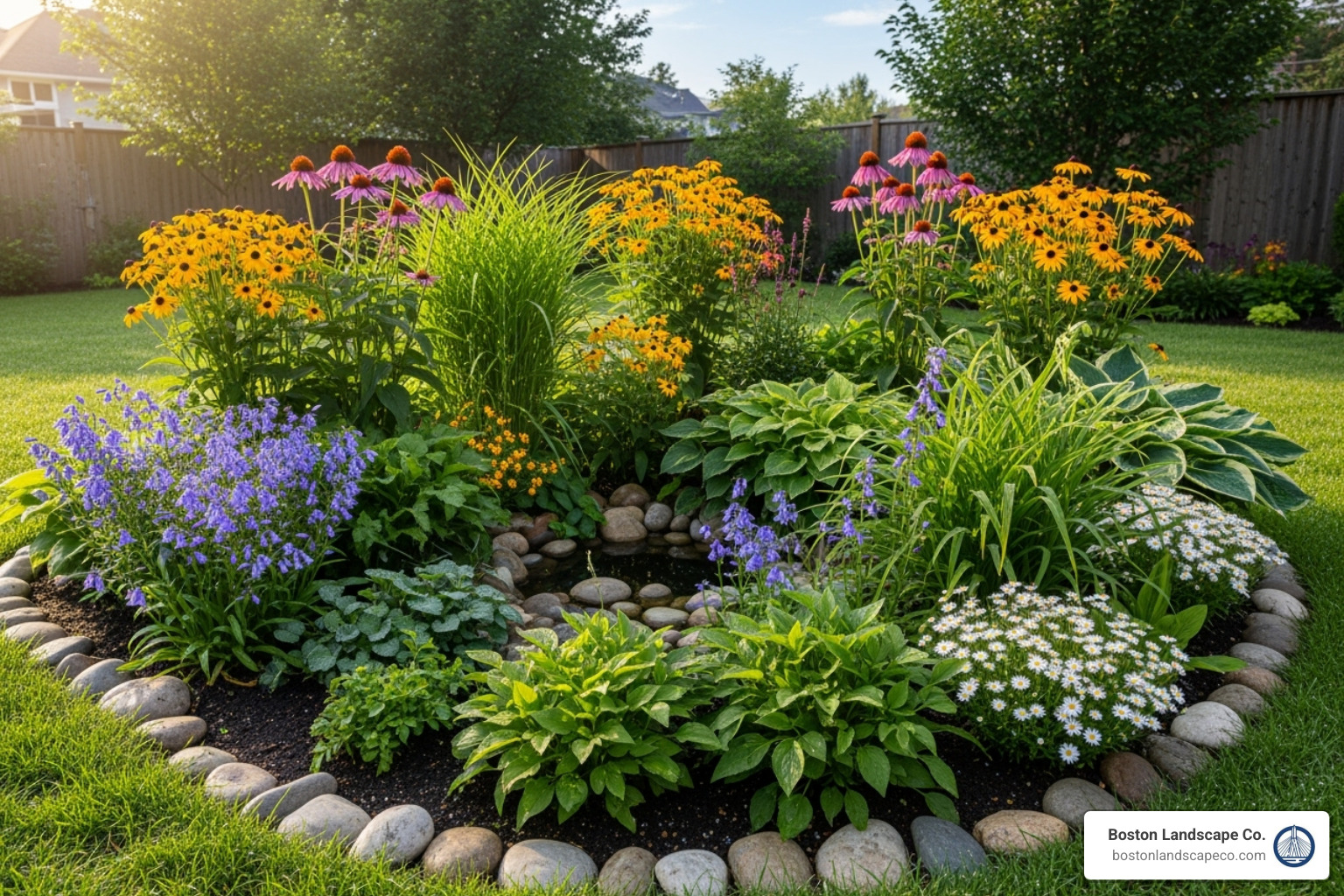
Rain gardens are a beautiful drainage solution. They are shallow depressions filled with colorful native plants that thrive in both wet and dry conditions. Rainwater collects and slowly soaks into the ground, away from your foundation.
Below ground, water filters through the soil and plant roots, cleaning itself and recharging groundwater. Above ground, you have a stunning garden that attracts pollinators like butterflies and bees.
Rain gardens are particularly effective at reducing standing water from roof runoff and hard surfaces. We size them to handle more water than they’ll normally receive to manage surprise downpours.
To dive deeper into this eco-friendly solution, check out our detailed guide: What is a Rain Garden?.
The Benefits of Permeable Pavers
Permeable pavers look like regular patio stones but have small gaps that allow water to seep directly through to a gravel base below.
Unlike traditional concrete, permeable pavers let water infiltrate on-site, which reduces runoff and helps recharge groundwater.
We love using these for patios and walkways where homeowners want durable hardscaping without new drainage headaches. The variety of styles means you don’t have to sacrifice aesthetics for functionality. They’re also ideal for high-traffic areas where you need a stable surface that won’t turn muddy.
If you’re exploring other innovative surface options, you might also be interested in our Artificial Grass Installation Near Me services.
| Solution | Cost (DIY/Professional) | Maintenance | Best Use Case |
|---|---|---|---|
| Rain Garden | Low to Moderate | Occasional weeding, plant care | Absorbing roof/driveway runoff, aesthetic improvement |
| Swale | Low to Moderate | Mowing (if grassy), occasional debris removal | Redirecting surface water, preventing erosion on slopes |
| Permeable Pavers | Moderate to High (Professional) | Occasional sweeping, refilling joint material | P patios, walkways, driveways to reduce runoff |
Heavy-Duty Help: An In-Depth Look at Engineered Backyard Drainage Solutions
When simple fixes aren’t enough, it’s time for engineered backyard drainage solutions. These are for serious water problems that threaten your foundation, flood your basement, or create a swampy yard.
Before we dive into installation, a crucial safety reminder: always call 811 before you dig. This free service marks underground utility lines, preventing dangerous and expensive accidents. Hitting a utility line is a surprise you want to avoid.
How a French Drain Works and How to Install It
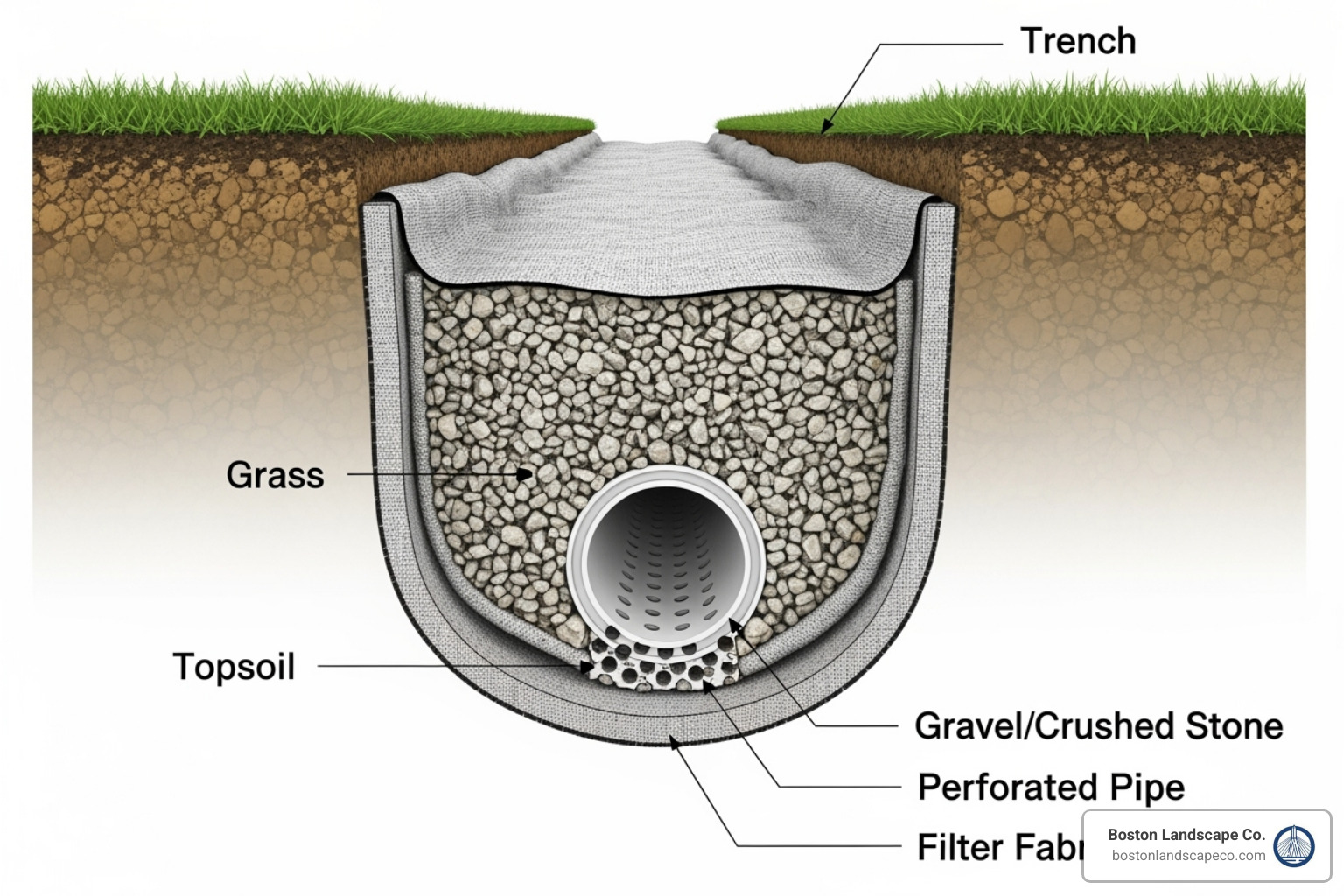
A French drain is an underground highway for water: a buried trench with gravel and a perforated pipe. It’s highly effective at redirecting surface and groundwater away from your home.
Water follows the path of least resistance into the gravel trench and perforated pipe. The pipe then carries the water to a safe discharge point, like a storm drain, a dry well, or a lower area of your property.
French drains are particularly brilliant for protecting foundations. They intercept groundwater that would otherwise build up around your basement walls, creating pressure that can lead to cracks and leaks.
The installation requires serious digging. You’ll need a trench, typically 6-12 inches wide and 18-36 inches deep, with a consistent downward slope of at least 1 inch for every 10 feet.
Professionals debate whether the perforated pipe holes should face up or down. Some say down prevents silt from clogging the holes. At Boston Landscape Co., we’ve found that holes facing down works better long-term.
Another debate is about filter fabric. While some use it to wrap the pipe, many experts now argue it clogs over time, reducing effectiveness. They recommend filling the trench with washed gravel instead, which acts as a natural filter.
For professional installation and expert guidance, check out our French Drain Installation Services. We also offer comprehensive Lawn Care Service to restore your yard after major drainage work.
Using Catch Basins and Dry Wells
Catch basins are grated drains that sit at ground level in low spots to collect surface water before it can pool. Water flows into the grate, drops into a basin that traps debris, and is then channeled away through underground pipes.
Dry wells work as the perfect partner to catch basins. A dry well is an underground, perforated chamber that slowly releases collected water into the surrounding soil. This keeps water on your property rather than overwhelming municipal storm systems.
This combination is effective for roof runoff. Connecting downspouts to a catch basin that feeds a dry well handles large volumes of water during storms and then gradually disperses it into the ground.
These engineered systems require professional installation and proper sizing. For specialized water management solutions, including ecological approaches, explore our Wetland Services.
Frequently Asked Questions About Yard Drainage
After three decades of solving backyard drainage solutions for Boston-area homeowners, I’ve heard just about every drainage question you can imagine. Here are the most common ones.
What’s the difference between a French drain and a trench drain?
This is a common question. Both involve trenches, but they solve different problems.
A French drain is a subsurface system for groundwater. It’s a buried, gravel-filled trench with a perforated pipe to redirect water from a soggy lawn or protect a basement. It’s invisible once installed.
A trench drain handles surface water. It’s a visible grated channel on patios or driveways that quickly removes runoff during heavy rain.
Think of it this way: if your problem is a constantly wet, spongy lawn, you probably need a French drain. If water sheets across your driveway and floods your garage, a trench drain is your friend.
How much do backyard drainage solutions cost?
This is always the million-dollar question. The truth is, backyard drainage solutions can range from pocket change to a significant investment.
Simple DIY fixes like extending downspouts can cost less than $50. Renting an aerator usually runs just a few hundred dollars.
Professional drainage systems are where costs vary dramatically. A basic French drain might start around $2,000, but complex systems can run $10,000 or more. Extensive projects with multiple catch basins, long French drain runs, and sophisticated grading can reach $25,000 or higher for large properties with serious water issues.
Permeable paver installations typically range from $10 to $30+ per square foot, depending on materials and site complexity.
These are average costs based on internet data and not actual costs for Boston Landscape Co. Every property is unique, so for a custom quote custom to your specific situation, please contact us.
The key thing to remember? Ignoring drainage problems almost always costs more in the long run. Foundation damage can cost $50,000+ to fix, which could have been prevented with a $5,000 drainage system.
When should I call a professional for my drainage problem?
While DIY solutions are great, some situations require professional help. Here’s when you should call:
If your DIY attempts aren’t working, it’s time for experts. What looks like a simple issue could be a complex problem involving underground springs or multiple water sources.
Anything involving your foundation is serious. Water in your basement, crawlspace moisture, or foundation cracks are not DIY projects. These issues can threaten your home’s structural integrity and require professional attention.
Complex grading work is trickier than it looks. Getting slopes right requires understanding how water moves across your entire property, and you don’t want to direct water onto your neighbor’s land.
Engineered systems like French drains or dry wells require excavation, proper sizing, and understanding soil conditions. You must call 811 before digging to mark utility lines; hitting one can be catastrophic.
The bottom line? If water is threatening your home’s structure, if the problem worsens despite your efforts, or if you’re looking at major excavation, professional expertise pays for itself.
Take Back Your Yard from Water Woes
Here’s the reality: ignoring drainage issues is costly. A minor puddle can escalate into thousands in foundation repairs, dead landscaping, and an unusable backyard.
Too many homeowners delay fixing drainage, but water always wins. Poor drainage leads to dead grass, mosquitoes, and eventually, serious foundation damage.
The good news? You now have a roadmap to transform your soggy nightmare into an outdoor oasis. Whether it’s a simple downspout extension or a comprehensive French drain system, there’s a solution for your situation and budget.
A healthy landscape starts with proper drainage. When water moves correctly, your grass stays green, your foundation stays dry, and your outdoor space becomes usable year-round. A dry yard is a usable yard—a place for kids to play and for you to enjoy your investment.
At Boston Landscape Co., we’ve been solving drainage headaches for Massachusetts homeowners since 1991. We understand our local soils, our freeze-thaw cycles, and how to design solutions that work with your landscape.
Every property is unique, so we don’t use one-size-fits-all solutions. Protect your home’s foundation and reclaim your outdoor space with backyard drainage solutions designed for your specific property and needs.
Ready to say goodbye to standing water for good? For a comprehensive assessment of your property’s needs and to design the perfect drainage strategy for your home, explore our Residential Landscape Architects services. Let’s work together to turn your water woes into a beautiful, functional yard you’ll love.
