
What is a Rain Garden? Top Benefits & How to Build
Find the Benefits of Rain Gardens
If you’re wondering what is a rain garden, here’s a quick overview: A rain garden is a shallow, planted depression designed to absorb rainwater runoff from rooftops, driveways, and other hard surfaces. These gardens filter pollutants and allow water to seep into the ground, reducing flooding and improving water quality.
- Purpose: Rain gardens manage stormwater runoff, decrease pollutants, and reduce the risk of flooding.
- Benefits:
- Environmental: Filters pollutants and recharges groundwater.
- Aesthetic: Beautifies the landscape with colorful, diverse plants.
- Wildlife: Provides habitat for pollinators and beneficial insects.
I’m Steve Schumacher, and I’ve spent over 30 years in the landscaping industry, specializing in sustainable solutions like rain gardens. My team at Boston Landscape Co. has helped countless homeowners and property managers create beautiful, functional, and eco-friendly outdoor spaces.
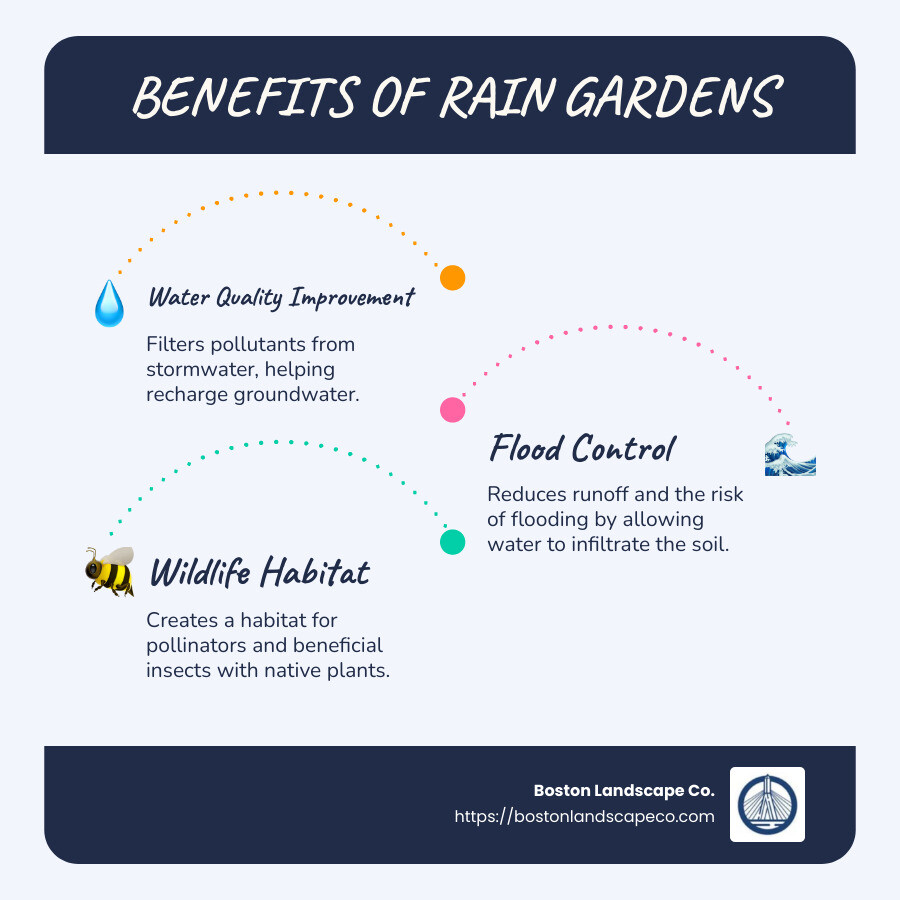
What is a rain garden word guide:
– Wetland Landscaping Services
– allowable wetlands landscaping
– constructed wetlands in the sustainable landscape
What is a Rain Garden?
How Does a Rain Garden Work?
A rain garden is a shallow, planted depression designed to capture and infiltrate rainwater runoff from impervious surfaces like rooftops, driveways, and walkways. By doing so, it helps to filter pollutants, reduce flooding, and recharge groundwater.
Key Components of a Rain Garden
- Small Depression: The garden is lower than the surrounding ground, allowing water to pool and slowly infiltrate.
- Native Plants: These plants are adapted to local climate conditions and are more resilient to varying moisture levels. They also support local wildlife, including pollinators like bees and butterflies.
- Soil Layers: The garden includes layers of soil, sand, and organic matter to facilitate water infiltration and pollutant filtration.
Water Infiltration
When it rains, water from impervious surfaces flows into the rain garden. The garden is designed to hold this water temporarily, allowing it to slowly seep into the ground. This process is known as water infiltration.
Pollutant Filtration
As water filters through the soil layers, pollutants such as fertilizers, pesticides, and motor oil are trapped and broken down by soil microbes and plant roots. This natural filtration system significantly improves water quality.
Groundwater Recharge
By allowing water to infiltrate rather than run off, rain gardens help to recharge groundwater supplies. This is crucial for maintaining the health of local water bodies and reducing the risk of flash flooding.
Native Vegetation
Using native plants in a rain garden is essential for its success. These plants are well-suited to local conditions and require less maintenance. They can thrive in both wet and dry periods, making them ideal for the fluctuating conditions of a rain garden.
- Example Plants: Black-Eyed Susan, Joe-Pye Weed, and Swamp Milkweed are excellent choices for rain gardens in many regions.
By incorporating these elements, a rain garden becomes an effective tool for managing stormwater, reducing pollutants, and enhancing the beauty and biodiversity of your landscape.
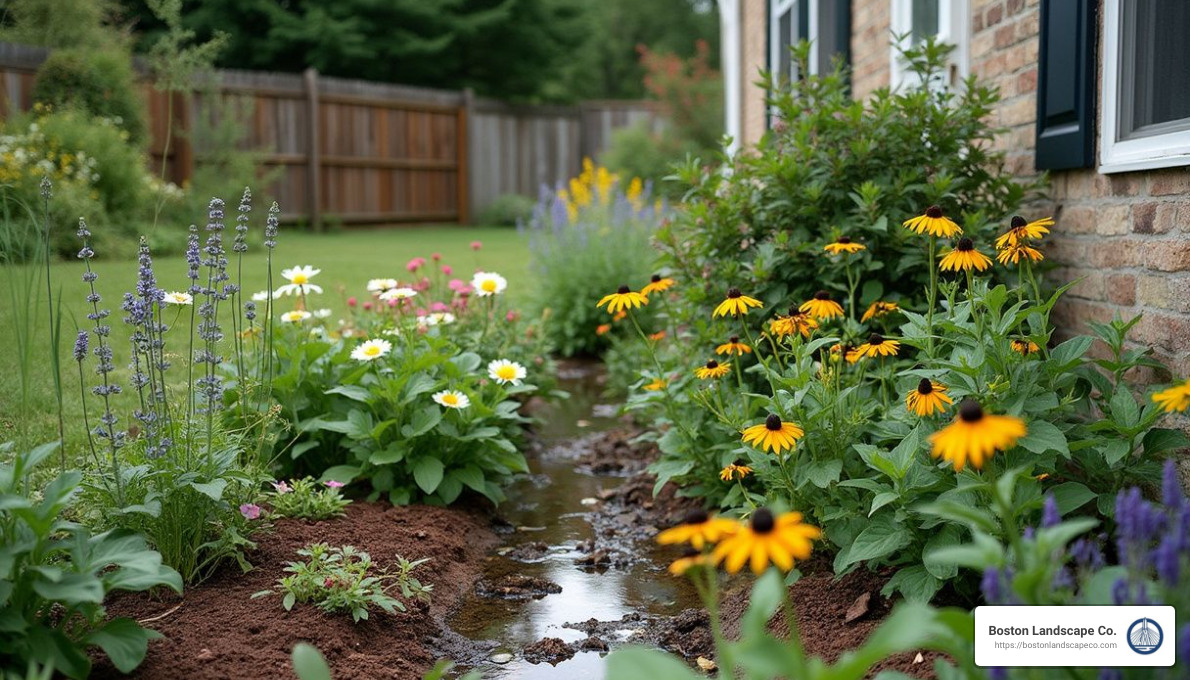
Now that you understand how a rain garden works, let’s dive into the numerous benefits they offer.
Benefits of Rain Gardens
Rain gardens offer a variety of benefits that go beyond just managing stormwater. Let’s explore how they contribute to water quality improvement, flood control, aesthetic appeal, wildlife habitat, and low maintenance.
Water Quality Improvement
One of the most significant benefits of a rain garden is its ability to improve water quality. As stormwater runoff flows into the garden, it carries pollutants like fertilizers, pesticides, and motor oil. The soil and plant roots in the rain garden act as a natural filter, trapping these pollutants and breaking them down. This process helps prevent harmful substances from reaching our streams and lakes.
Flood Control
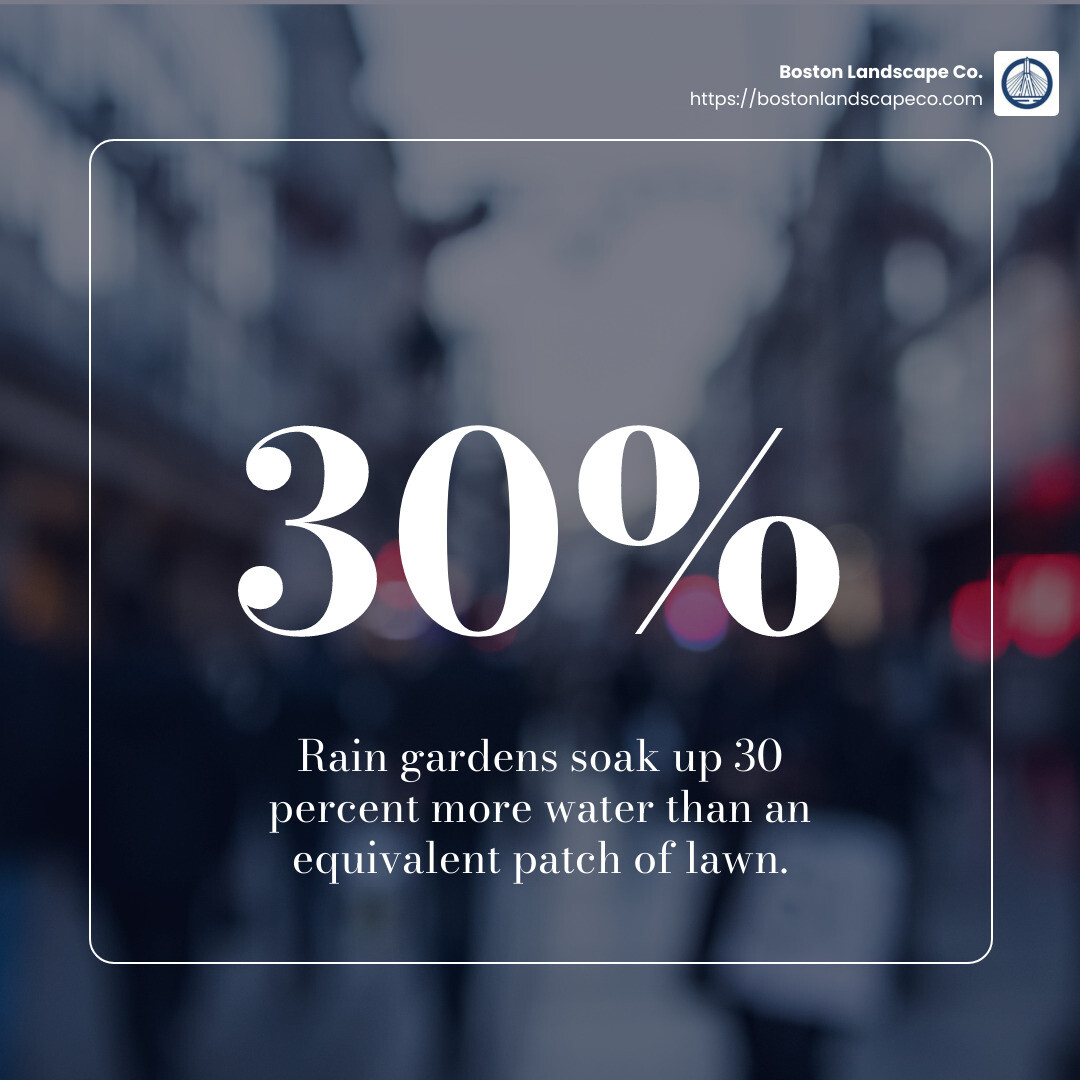
Rain gardens also play a crucial role in flood control. By capturing and holding rainwater, they reduce the volume of runoff that can cause flash flooding. The water is slowly absorbed into the ground, which helps to mitigate the risk of property damage due to flooding. This is especially important in urban areas with a lot of impervious surfaces like roads and rooftops.
Aesthetic Appeal
Beyond their functional benefits, rain gardens add aesthetic value to any landscape. They can be designed with a variety of native plants that offer different colors, shapes, and bloom times, creating a visually appealing garden that changes with the seasons. This not only improves the beauty of your yard but also increases property value.
Wildlife Habitat
Rain gardens provide a habitat for local wildlife, including birds, butterflies, and beneficial insects. The native plants used in rain gardens are often rich in nectar and pollen, making them an excellent resource for pollinators. By creating a rain garden, you are contributing to the local ecosystem and supporting biodiversity.
Low Maintenance
Once established, rain gardens require relatively low maintenance compared to traditional lawns. Native plants are adapted to local conditions and need less water and fertilizer. Regular weeding and occasional watering during dry spells are usually sufficient to keep the garden thriving. This makes rain gardens an attractive option for homeowners looking to reduce their yard maintenance efforts.
Next, we’ll guide you through the process of building your own rain garden, from selecting the right location to choosing suitable plants.
How to Build a Rain Garden
Step-by-Step Guide
Building a rain garden might seem daunting, but breaking it down into steps makes it manageable. Here’s how to get started:
Location Selection
Choose a spot at least 10 feet away from your house to avoid water damage. Avoid areas over septic systems or consistently wet spots. Ideal locations include areas that collect runoff from roofs, driveways, or walkways.
Soil Testing
To ensure your rain garden will drain properly, conduct a ribbon soil test and an infiltration test. For the ribbon test, take a soil sample, wet it, and try to form a ribbon. If it forms a ribbon greater than 2 inches, you have highly clayey soil, which is not suitable. For the infiltration test, dig a hole, fill it with water, and see how fast it drains. It should infiltrate at least one-half inch per hour.
Design and Size
The size of your rain garden depends on the area you are draining. Use a garden hose or string to outline the shape. Oval shapes work best. The depth typically ranges from 6 to 12 inches. The larger the area you need to drain, the larger and deeper your garden should be.
Digging
Remove the turf and dig to your desired depth, ensuring the bottom is level. On sloped sites, you’ll need to dig more on the uphill side to create a flat bottom and use the extra soil to build a berm on the downhill side.
Overflow Pathway
Create an overflow pathway to handle heavy rains. This could be a small trench or simply a lower edge on one side of your garden to direct excess water away from your home.
Soil Amendments
Refill the depression with a mixture of native soil and compost or decayed leaves to improve drainage. This is crucial if you have clayey soil. Aim for a soil composition that allows water to infiltrate but still supports plant growth.
Plant Selection
Choose native plants that can handle both wet and dry conditions. Perennials, shrubs, and wildflowers are excellent choices. Avoid invasive species. Place plants that prefer drier conditions on the berm and those that tolerate wet conditions in the center.
Optional Rain Gutter Connection
For added efficiency, you can connect your rain gutters directly to your rain garden using a downspout extender. This ensures that runoff from your roof is directed into the garden.
Suitable Plants for Rain Gardens
When selecting plants, consider these categories:
- Native Plants: These are well-adapted to local conditions and support local wildlife.
- Perennials: Plants that come back year after year, reducing the need for replanting.
- Shrubs: Provide structure and year-round interest.
- Wildflowers: Add color and attract pollinators.
Examples of suitable plants include:
– Blue Flag Iris (Iris versicolor)
– Swamp Milkweed (Asclepias incarnata)
– Redosier Dogwood (Cornus sericea)
– Black-eyed Susan (Rudbeckia hirta)
Avoid invasive species like Purple Loosestrife (Lythrum salicaria) and Japanese Knotweed (Fallopia japonica), as they can outcompete native plants and disrupt local ecosystems.
Next, we’ll discuss how to maintain your rain garden to ensure it thrives year after year.
Maintenance of Rain Gardens
Maintaining a rain garden is simpler than you might think. With a bit of regular attention, your rain garden will thrive and continue to manage stormwater effectively. Here’s what you need to know:
Watering
In the first 2-3 months, water your rain garden once per week to help the plants establish their root systems. Deep watering is better than daily, shallow watering. Once the plants are established, you only need to water during heat waves or long dry spells.
Weeding
Weed your rain garden regularly, especially in the first year. Native plants will eventually outcompete most weeds, but early maintenance is crucial to give them a good start.
Pruning
Prune your plants as you would in any garden. This helps maintain their shape and encourages healthy growth. Remove dead or diseased plant parts to keep the garden looking neat and vibrant.
Erosion Control
After heavy rain, check for signs of erosion or gullies. If you notice any, add more plants, river rocks, or mulch to stabilize the soil. This will help prevent further erosion and keep your rain garden functioning well.
Plant Adjustment
Don’t be afraid to move plants around. If some plants seem to struggle in certain areas, try relocating them to spots that are either wetter or drier, depending on their needs. This flexibility ensures that each plant thrives in the best possible environment.
By following these simple maintenance tips, your rain garden will not only look beautiful but also continue to effectively manage stormwater and support local wildlife.
Next, we’ll cover common challenges you might face and how to overcome them.
Common Challenges and Solutions
Building and maintaining a rain garden can come with its own set of challenges. But don’t worry, with a little know-how, you can tackle these issues effectively. Here are some common challenges and their solutions:
Space Limitations
Challenge: Not everyone has a large yard to work with, which can make it difficult to find a suitable spot for a rain garden.
Solution: Even small spaces can accommodate a rain garden. Consider creating a smaller rain garden or using containers with native plants to capture runoff. You can also use vertical gardening techniques to maximize space.
Initial Maintenance
Challenge: The first year of maintaining a rain garden can be labor-intensive. Regular watering, weeding, and plant care are crucial during this period.
Solution: Set up a schedule for watering and weeding. Deep watering once a week is better than daily, shallow watering. As for weeding, native plants will eventually outcompete most weeds, making future maintenance easier.
Small Size
Challenge: A smaller rain garden might not handle all the runoff from your property, especially during heavy rains.
Solution: Use multiple small rain gardens strategically placed around your property. This can help distribute the runoff more evenly and prevent any one area from becoming overwhelmed.
Heavy Clay Soil
Challenge: Heavy clay soil can make it difficult for water to infiltrate, leading to standing water and poor plant growth.
Solution: Conduct a ribbon soil test to determine your soil type. If you have heavy clay soil, mix in soil amendments like peat moss or compost to improve drainage. You might also consider installing an underdrain system to help excess water escape.
Standing Water
Challenge: Standing water in your rain garden can cause plant roots to rot and create a breeding ground for mosquitoes.
Solution: Ensure your garden has proper drainage. If standing water persists, add more organic matter to improve soil structure and consider regrading the garden to improve water flow. Also, choose plants that thrive in wet conditions to help absorb excess water.
By addressing these common challenges, you can ensure your rain garden is both beautiful and functional. Next, we’ll dive into some frequently asked questions about rain gardens.
Frequently Asked Questions about Rain Gardens
What is the point of a rain garden?
A rain garden is designed to capture stormwater, reduce pollution, and help with flood control. When it rains, water runs off roofs, driveways, and other surfaces, picking up pollutants like fertilizers, pesticides, and motor oil. Instead of this polluted water flowing directly into streams and lakes, a rain garden captures and filters it. The garden’s plants and soil layers trap these pollutants, improving water quality.
Additionally, rain gardens help reduce flooding by allowing water to infiltrate the ground slowly. This helps recharge groundwater and reduces the volume of water that can overwhelm storm drains during heavy rains.
What are the disadvantages of a rain garden?
While rain gardens offer many benefits, they do come with some challenges:
- Space Requirements: Not every yard has enough space for a rain garden. However, even small spaces can accommodate a mini rain garden or container garden.
- Initial Maintenance: The first year can be labor-intensive. You’ll need to water, weed, and care for the plants regularly until they are established.
- Limited Runoff Treatment: A single rain garden may not handle all the runoff from a large property, especially during heavy rains. Multiple smaller gardens might be needed to manage all the water effectively.
What is the difference between a rain garden and a regular garden?
Soil Alteration: Rain gardens require specific soil layers to help with water infiltration and pollutant filtration. This often means adding compost or other soil amendments to improve drainage, especially in areas with heavy clay soil.
Water Infiltration: Unlike regular gardens, rain gardens are designed to handle large amounts of water. They are typically placed in low-lying areas where water naturally collects.
Native Plants: Rain gardens use native plants that are adapted to local conditions. These plants can handle both wet and dry periods, making them ideal for managing stormwater. Native plants also support local wildlife and pollinators.
In summary, rain gardens are specialized gardens that capture and filter stormwater, helping to reduce pollution and flooding while enhancing the beauty of your landscape. They require some initial effort and space considerations but offer significant environmental benefits.
Conclusion
Rain gardens are a powerful tool for managing stormwater runoff, improving water quality, and enhancing the beauty of our landscapes. By capturing and filtering rainwater, they play a crucial role in reducing pollution and preventing flooding. They also support local wildlife by providing habitats for native plants and animals.
At Boston Landscape Co., we specialize in creating and maintaining rain gardens that are both functional and beautiful. Our expertise in wetland landscaping services ensures that your rain garden will be designed to meet local environmental standards and provide long-term benefits to your property and community.
By incorporating rain gardens into your landscape, you contribute to a healthier environment and a more resilient community. These gardens not only address stormwater issues but also add aesthetic value to your property, making them a win-win solution for homeowners and businesses alike.
If you’re ready to transform your outdoor space with a rain garden, contact us today to get started. Let’s work together to create a greener, more sustainable future for our community.
