
Parking Lot Snow: Top 3 Tips to Avoid Towing
Mastering Parking During Winter Weather
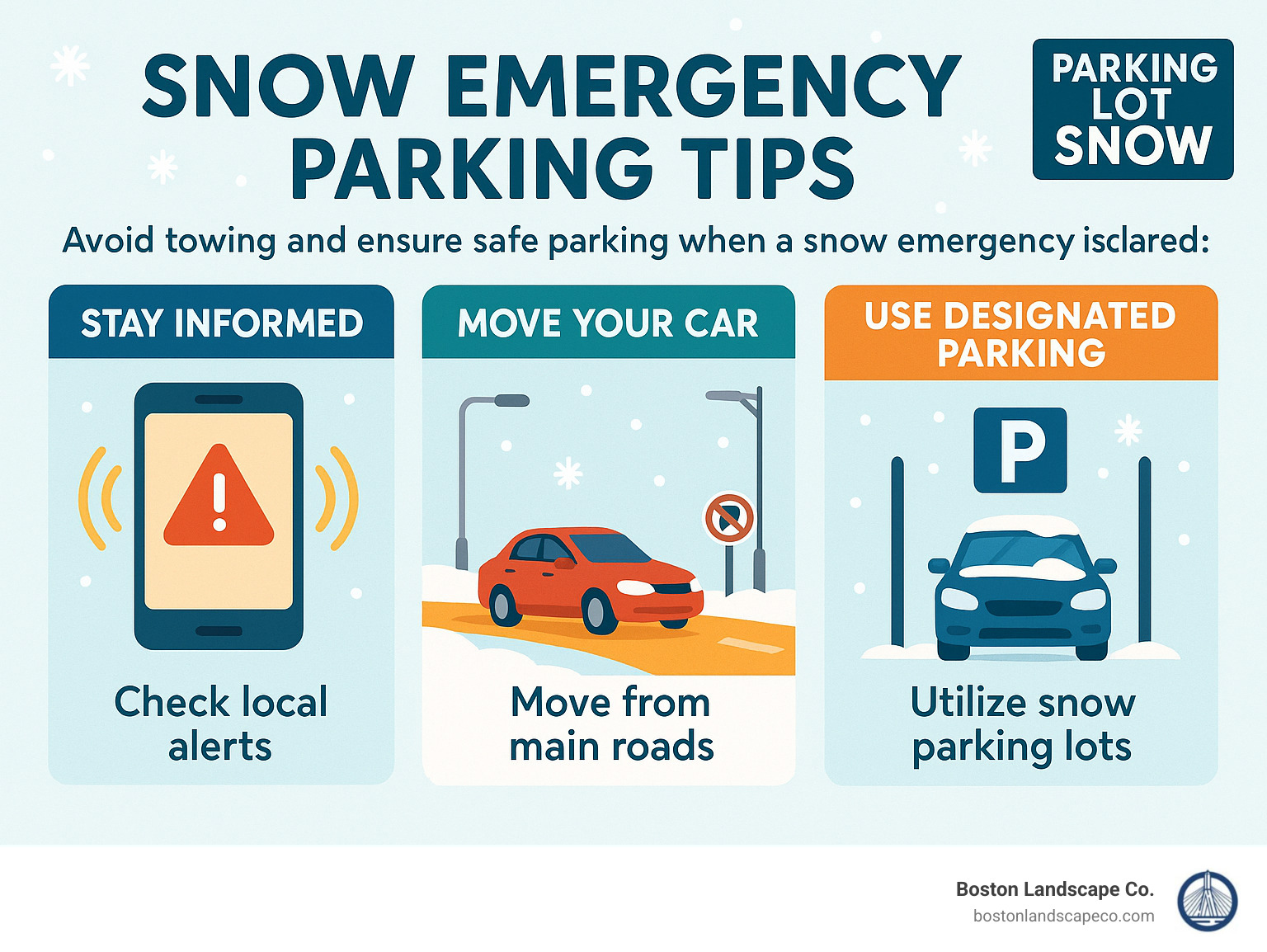
When winter blankets Greater Boston in white, navigating parking lot snow can quickly turn from a scenic view to a stressful chore. To keep your vehicle safe and avoid getting towed or fined during a snow emergency, remember these crucial steps:
- Stay Informed: Watch local city websites, news, and social media for snow emergency announcements and parking bans.
- Move Your Car: Get your vehicle off main roads, emergency routes, and areas marked for snow removal right away.
- Use Designated Parking: Find and use official snow emergency parking lots or approved side streets. Make sure your car doesn’t block snow plows or important access points.
Understanding how to park safely and legally during a snow emergency is about more than just avoiding fines. It’s about helping our communities stay clear and accessible for everyone. This guide will help you prepare for winter’s unique challenges, whether you’re a homeowner or manage a commercial property.
With over three decades of experience in landscaping, I’m Steve Schumacher, owner-operator of Boston Landscape Co. Since 1991, we’ve provided top-tier services, including comprehensive parking lot snow and ice management to keep properties safe and accessible all winter long.
Parking lot snow terms simplified:
- commercial snow removal equipment
- commercial snow plowing contracts
- average cost for commercial snow removal
Understanding Snow Emergencies and Parking Rules
When a snow emergency is called, it’s not just a friendly suggestion – it’s a rule! Think of it as a signal from your town to help keep everyone safe and our streets clear. Cities and towns put these rules in place to make sure snow plows can do their important job without obstacles. This means special parking restrictions come into play.
If you park in the wrong spot, you might find yourself in a towing zone, which can lead to tickets and fines. Our main roads, like those big arteries, are always the first to get cleared. A parked car there can really get in the way and slow everything down. It’s all about making sure emergency vehicles can get through and everyday life can keep moving, even in a big storm. You know how crazy things can get when the snow flies – it’s like some folks forget all about parking manners! But truly, it’s not just about avoiding a ticket; it’s about helping our community stay safe and accessible.
Snow Emergency Parking in Boston
How to Find Local Snow Emergency Information
Want to avoid a snowy headache? Staying informed is your best defense! We suggest a few simple ways to get the latest snow emergency news:
First, always check your city’s official website. It’s the most trustworthy spot for updates on snow emergencies, parking bans, and where you can park. For example, Boston’s city website is a great resource for real-time info.
Next, keep an eye on local news channels. They often provide detailed coverage on TV, their websites, or even through their apps.
Don’t forget to sign up for emergency alerts from your town or city. Many places offer text or email notifications that come straight to your phone. Super handy! Also, follow your town’s official social media accounts. They often post quick updates and instructions there.
Finally, and this is a big one: know your designated parking lots before the snow starts falling. Finding out where to go ahead of time can save you a lot of stress when the flakes are flying!
FAQs on where to park during a storm
The Risks of Ignoring Parking Bans
Think it’s okay to just leave your car during a parking ban? Think again! Ignoring these rules comes with some pretty big downsides.
First off, prepare for a hefty bill. You’ll get hit with towing fees and impound lot costs – these can easily add up to a few hundred dollars. And that’s before you even pay the fine for the parking ticket itself!
But it’s not just about your wallet. There’s a serious public safety hazard involved. Your car, parked in the wrong spot, can directly block snow plows. This stops them from clearing roads, which means emergency vehicles might have a harder time getting where they need to go. It makes things more dangerous for everyone – drivers, walkers, you name it. We’ve all seen how wild things get in a snowy parking lot snow scenario, especially when visibility drops. It can feel like the “wild west” out there! So, please, move your car. It helps keep our roads safe for all.
Navigating a Snowy Parking Lot: A Driver’s Guide
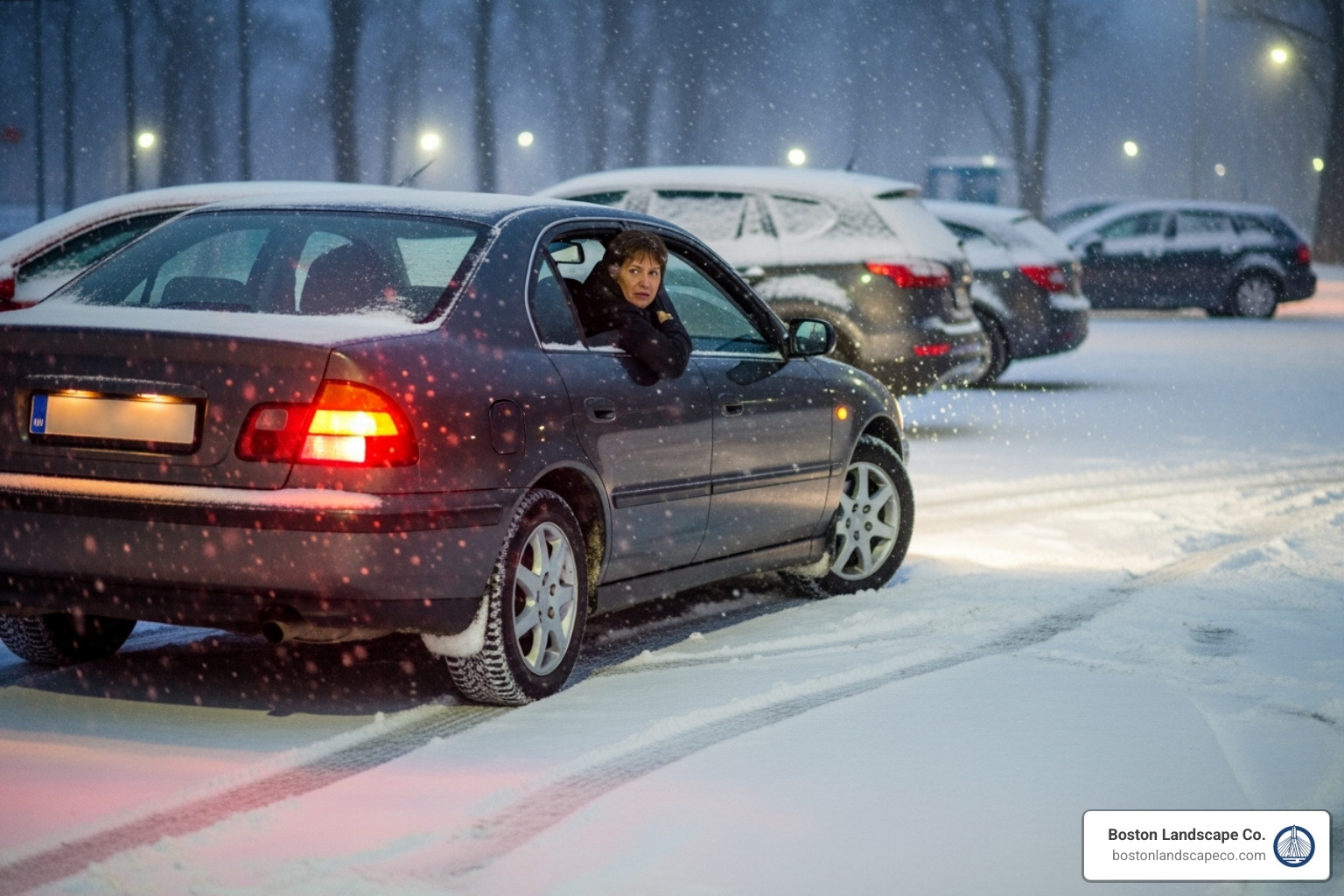
Picture this: you’ve just arrived at the grocery store after a snowstorm, and the parking lot looks like a winter obstacle course. Parking lot snow transforms even familiar spaces into challenging terrain where reduced visibility makes it tough to see where you’re going, and obscured parking lines turn the lot into a free-for-all.
What makes things worse? Those poorly parked cars scattered at odd angles because their drivers couldn’t see the lines either. Add hidden curbs and icy patches to the mix, and suddenly that quick shopping trip feels like navigating a minefield. The biggest concern isn’t just your car – it’s pedestrian safety and the very real slip and fall risk that comes with walking across uneven, icy surfaces.
Identifying Safe vs. Unsafe Parking Spots
When you’re circling a snowy lot looking for a safe spot, think like a snow plow operator. Parking near entrances is usually your best bet because these high-traffic areas get cleared and salted first. Store managers know customers need safe access, so these spots typically receive priority attention.
Avoiding large snow piles might seem obvious, but here’s why it really matters: those towering white mountains aren’t just inconvenient – they’re melt-and-refreeze factories that create slippery conditions. Plus, try backing out next to a six-foot snow pile when you can barely see over your own roof!
Staying clear of drainage areas is crucial because snow piled over storm drains becomes a ticking time bomb. When that snow melts, you could return to find your car sitting in a mini lake or surrounded by treacherous ice patches. Looking for freshly plowed sections gives you the cleanest, safest parking surface available.
One thing many drivers don’t think about? Avoiding spots under heavy, snow-laden tree branches. Mother Nature doesn’t always hold onto that extra weight, and a branch full of wet snow can cause serious damage to your vehicle.
The Hidden Dangers of Parking Lot Snow
Parking lot snow is sneaky – it hides dangers you’d normally spot right away. Black ice formation is probably the scariest because it’s nearly invisible, especially in shaded areas where snow melts during the day and refreezes at night. You think you’re walking on safe pavement, but you’re actually on an ice rink.
Obscured parking lines create chaos that goes beyond just crooked parking. When drivers can’t see boundaries, they park wherever seems reasonable, which reduces available spaces and creates narrow passages that are tough to steer. It’s like trying to solve a puzzle where someone moved all the pieces.
Buried fire hydrants represent a serious safety hazard that most people don’t consider. These bright red lifelines can disappear completely under snow, making them useless in an emergency. Speed bumps hidden by snow are another common culprit behind unexpected vehicle damage – that innocent-looking flat surface might hide a jarring surprise.
There’s also potential for vehicle damage from plows when cars are parked in areas that haven’t been clearly designated. Professional plow operators are skilled and careful, but even the best can’t work around vehicles that shouldn’t be there in the first place.
Why Professional Snow Removal is Essential for Your Business
Behind the Scenes: How Parking Lot Snow is Professionally Managed
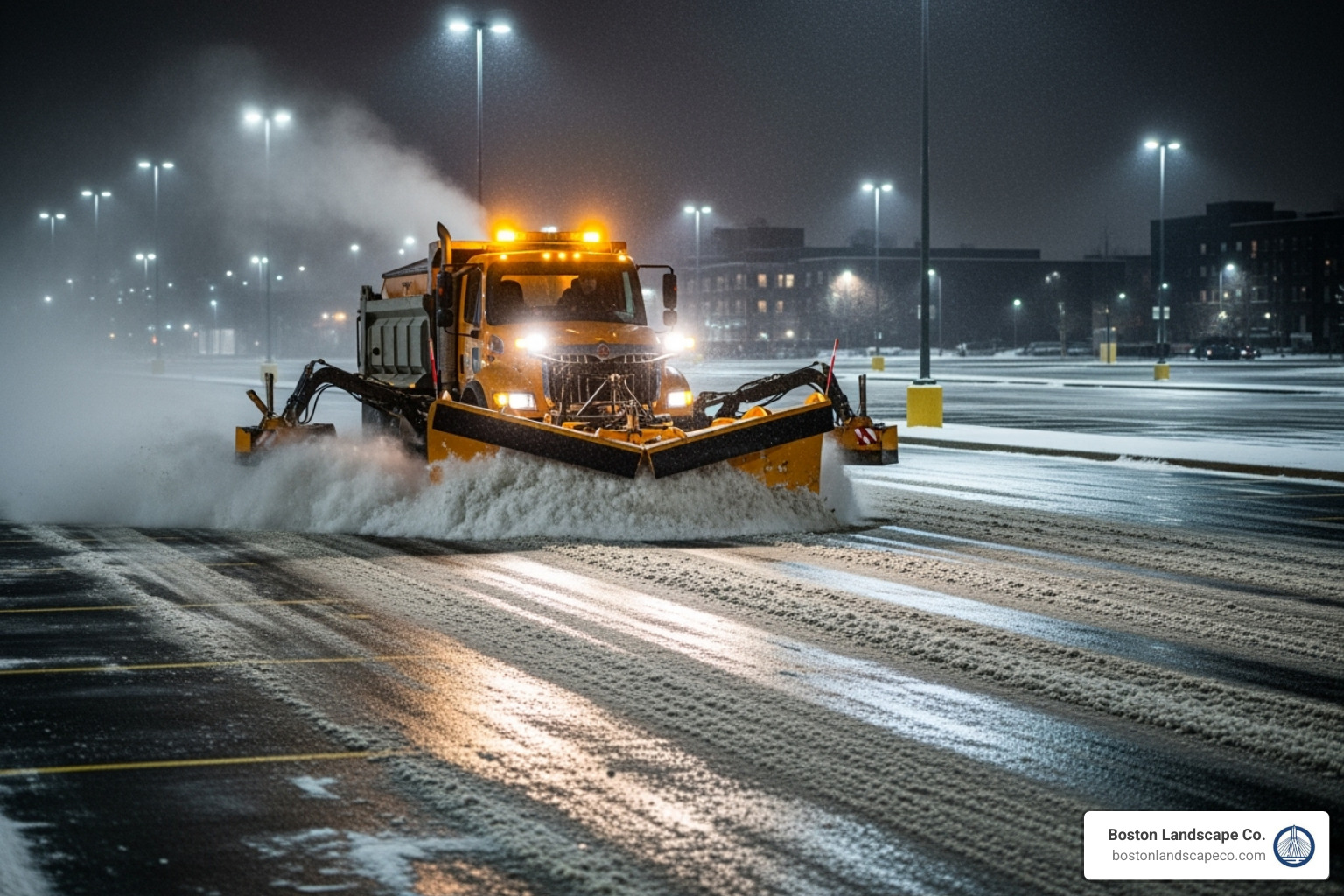
For businesses and property managers, professional parking lot snow management isn’t just a nice-to-have; it’s absolutely essential. It’s about keeping your business running smoothly, even when winter storms hit. It’s also a big part of reducing risk and protecting everyone who visits your property.
When the snow starts falling, our professional teams spring into action. We use specialized equipment and provide 24/7 service to make sure your property stays safe and easy to use. This proactive approach helps avoid costly interruptions. It also makes things safer for your employees and customers. Plus, it greatly reduces the chance of slip-and-fall accidents or vehicle mishaps.
Think of it as having a winter superhero team on your side!
Commercial Snow Management Service
The Importance of a Clear Parking Lot Snow Plan
You know that old saying, “Fail to plan, plan to fail”? That’s definitely true for snow removal! Effective snow management really starts long before the first snowflake even touches the ground. At Boston Landscape Co., we believe in careful planning. This includes a few key steps:
First, we do a thorough site assessment. We look at your parking lot’s layout. We spot things that could be tricky, like curbs, speed bumps, fire hydrants, and any low-hanging landscaping. This helps us know what to expect.
Next, we figure out the priority areas. These are the spots that need to be cleared first and most often. Think high-traffic zones, all those pedestrian walkways, and critical emergency access routes. We focus on areas like building entrances, loading docks, and main pathways to keep everything flowing.
We also plan for snow storage. We pick safe and smart spots for snow piles. This ensures they don’t block anyone’s view, clog up drains, or cover handicapped parking spaces. We want to keep everything clear and accessible.
Finally, there’s pre-season preparation. We mark important features that might get buried under snow. Things like catch basins or utility covers. This helps us avoid damaging them while plowing.
All this detailed planning means that when the snow arrives, our teams can get to work quickly and effectively. This helps keep your business running with minimal fuss.
Commercial Snow Plowing Contracts
Effective Equipment and Plowing Techniques
To tackle parking lot snow the right way, we use a mix of special equipment and smart techniques. It’s not just about brute force; it’s about being efficient!
Our snow plows with wings are incredibly helpful. They clear about 30 percent more snow in each pass compared to plows without wings. This means we get the job done faster. They also help keep the snow contained, so there’s less messy cleanup later. In fact, using angle plowing with wings can be 50 percent more efficient for large areas than a standard, rubber-edged pusher.
We also rely on skid steer loaders and compact wheel loaders. These versatile machines are perfect for moving and stacking large amounts of snow. They’re especially handy in tight spots or when snow needs to be hauled away completely.
Beyond just plowing, we use salt spreaders and de-icing agents. Applying salt or ice melt is super important. It stops ice from forming and helps melt any icy patches that are already there. We use strong, professional-grade de-icing agents that work well even when it’s really cold. Where we can, we choose options that are better for the environment. For example, salt brine melts snow and ice, and it lowers the freezing point of water, which helps prevent more ice from building up.
Here’s a quick look at some common plowing techniques we use:
| Method | Description | Best Use Case |
|---|---|---|
| Straight Plowing | Pushing snow directly forward, building large piles at the end of the lot. | Ideal for open, straight areas where snow can be easily stored at one end. |
| Angle Plowing | Pushing snow at an angle to the side, away from the path of the plow. Often uses plows with wings. | Best for long, narrow areas or when creating windrows (long piles) along the edges of a lot. |
| Pushing | Similar to straight plowing, but often refers to moving snow with a loader or skid steer to a specific pile location. | Useful for consolidating snow from various areas into a central storage pile. |
| Backdragging | Lowering the plow blade while backing up to pull snow away from obstacles or building entrances. | Perfect for clearing tight spots, doorways, or areas where snow needs to be pulled away rather than pushed. |
We also make sure to use a variety of techniques like plowing in waves. This means we clear the parking lot in stages, especially during heavy snowfalls, to keep it usable throughout the storm. This also helps us manage the snow without creating new hazards.
Our goal is to keep your property safe and reduce your risks. That’s why professional snow removal is so important for businesses.
More on Winter Liability Risks for Businesses
