
Wetland Repair: 7 Powerful Ways to Boost Your Backyard in 2025
Why Your Backyard Wetland Deserves a Second Chance
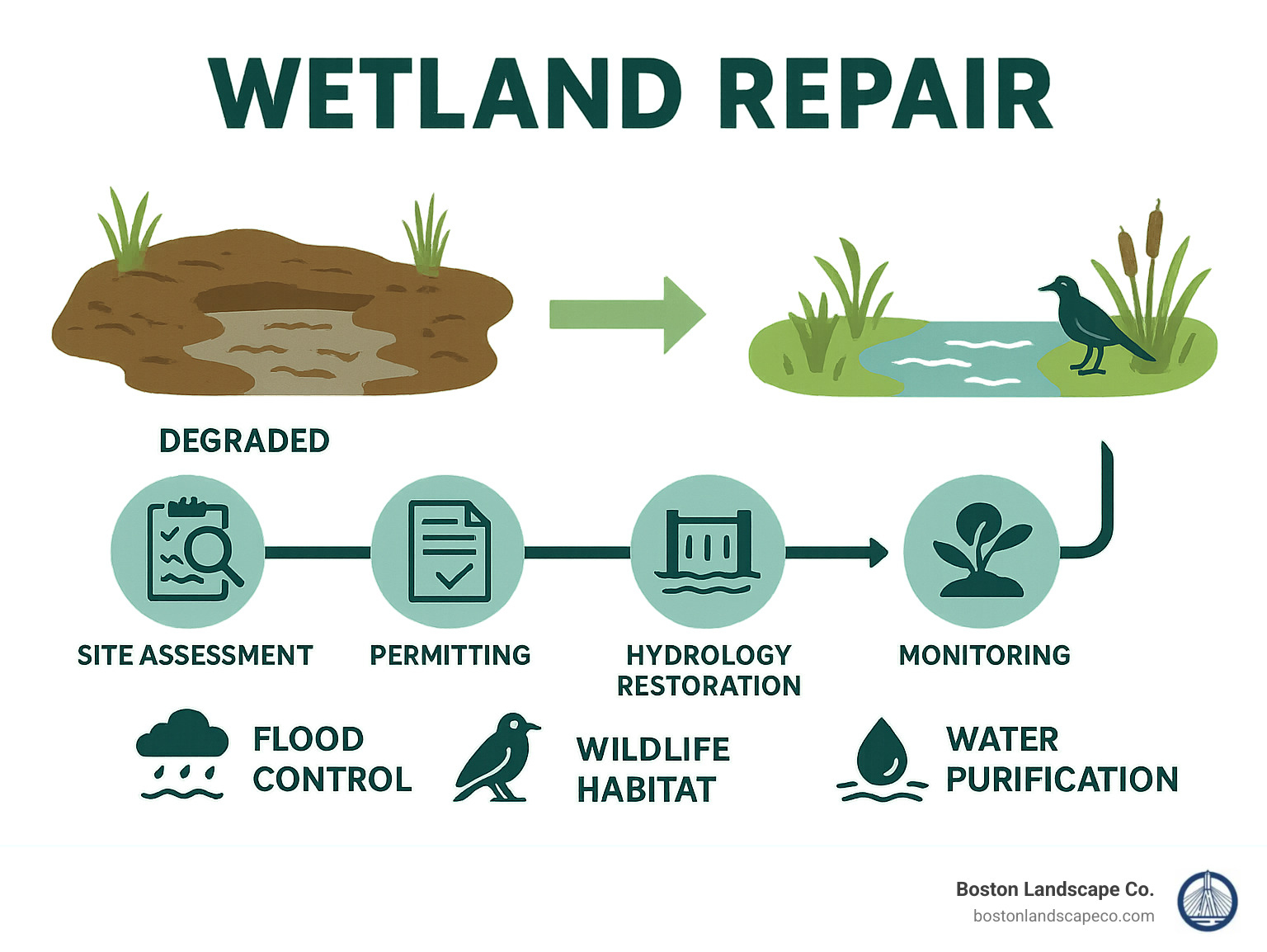
Wetland Repair is the process of restoring damaged or degraded wetland areas by reestablishing their natural hydrology, native vegetation, and ecological functions.
Essential Wetland Repair Steps:
1. Site Assessment – Test soil, map water flow, check for hydric soils
2. Permitting – Obtain required local and federal permits
3. Hydrology Restoration – Remove drainage tiles, plug ditches, restore water levels
4. Native Planting – Reestablish wetland vegetation from local seed banks
5. Bank Stabilization – Control erosion with natural materials
6. Monitoring – Track progress and adjust as needed
Quick Facts:
– Up to 70% of wetlands have been lost in southern Canada and 95% in populated areas
– Restoration costs range from $15,000-$25,000 for small projects (average costs based on internet data)
– Wetlands store about 1 million gallons of water per acre
– They act as natural phosphorus sinks, preventing algal blooms downstream
Many homeowners don’t realize that soggy spots in their backyard might be degraded wetlands waiting for restoration. These “problem areas” can become your property’s greatest asset, providing flood control, water filtration, wildlife habitat, and increased property value.
Wetland repair is often easier and more affordable than you think. Unlike creating new wetlands, repairing existing degraded wetlands works with nature’s foundation – the hydric soils and dormant seed banks are already there.
I’m Steve Schumacher, and with over three decades of landscaping experience through Boston Landscape Co, I’ve helped countless homeowners transform problematic wet areas into thriving wetland habitats through strategic Wetland Repair projects.
Handy Wetland Repair terms:
– Ecological Restoration
– Wetland Improvement
– Wetland Maintenance
Why Wetlands Matter
Wetlands are nature’s unsung heroes, worth more than $47 trillion globally and supporting over one billion jobs worldwide. Think of wetlands as nature’s Swiss Army knife – they handle multiple critical jobs at once.
A single acre can store up to three acre-feet of water (roughly one million gallons!), acting like a giant sponge during storms and slowly releasing water during dry spells. This natural flood control beats expensive storm drains hands down.
Wetlands are also water purification champions, filtering out pollutants, excess nutrients, and sediments before they reach groundwater or streams. They support 40% of all the world’s species despite covering just a tiny fraction of Earth’s surface.
For homeowners, healthy wetlands mean direct benefits: increased property value, reduced flood risk, and front-row seats to amazing wildlife shows. Plus, wetlands help recharge groundwater and are carbon storage superstars, capturing greenhouse gases.
Wetland Types & Key Functions
Marshes are cattail-dominated wetlands fantastic at water filtration and waterfowl habitat. Swamps are woody wetlands that excel at preventing erosion. Bogs are acidic, moss-covered carbon storage systems. Fens are less acidic and support diverse plant communities. Vernal pools are seasonal wetlands providing critical amphibian breeding habitat.
All wetlands share three essential ingredients: hydrology (water at surface during growing season), hydric soils (formed under waterlogged conditions), and hydrophytic vegetation (water-loving plants).
Causes of Degradation & The Need for Wetland Repair
35% of the world’s wetlands have vanished since the 1970s. In populated areas, we’ve lost up to 95% of these vital ecosystems.
Agricultural drainage has been one of the biggest destroyers, with farmers installing drainage tiles and ditches to convert wetlands into farmland. Urban development filled wetlands or redirected water through storm drains. Invasive species like purple loosestrife crowd out native plants. Sedimentation from construction and farming literally buries wetlands. Climate change brings more intense storms and longer droughts.
Impacts on Homeowners & Communities
When wetlands disappear, homeowners face basement flooding because there’s nowhere for stormwater to go. Shoreline erosion worsens without wetland buffers. Property values decline when natural amenities disappear. Mosquito outbreaks become common when ecosystems get out of balance. Drought sensitivity increases when wetlands aren’t recharging aquifers. Algal blooms create toxic conditions in nearby water bodies.
Wetland Repair Basics and Benefits
Wetland Repair is like giving nature’s hardest-working employees a promotion. You’re working with existing hydric soils, dormant seed banks, and natural drainage patterns rather than starting from scratch.
Restoration brings back what was lost, creation builds something new, and mitigation is nature’s “pay you back later.” Wetland Repair restoration is often most successful because you’re working with nature’s foundation.
The Functions and Values of Wetlands include acting as phosphorus sinks, storm-surge buffers, and habitat providers. Your restored wetland becomes a natural water treatment system protecting your property from flooding.
Wetland Repair vs. Mitigation — Key Differences
| Aspect | Wetland Repair | Wetland Mitigation |
|---|---|---|
| Scope | Restoring existing degraded wetlands | Creating new wetlands to offset losses |
| Primary Goal | Improve function of existing systems | Compensate for unavoidable impacts |
| Success Rate | Higher due to existing foundation | Variable, creation is more challenging |
| Cost Range | $15,000-$90,000 (internet averages) | $50,000-$300,000+ (internet averages) |
| Timeline | 2-5 years to full function | 5-10+ years to establish |
Core Goals of Backyard Wetland Repair
Hydrology reset is your foundation – without proper water flow, nothing else works. Native plant re-establishment often happens naturally once water returns. Bank stabilization protects your investment. Invasive removal requires ongoing strategy. Long-term monitoring keeps projects on track. Climate adaptation builds resilience for decades to come.
Wetland Repair Made Easy: Step-By-Step Backyard Guide
Successful Wetland Repair breaks down into manageable steps. You’re working with nature, not against it – your wetland wants to come back to life.
Site selection often selects itself – look for areas that stay soggy, where water pools after rain, or where different vegetation grows. Soil tests confirm hydric soils with simple probes. Permitting varies by location but residential projects are usually viewed favorably.
Construction techniques involve undoing drainage modifications – plugging ditches, breaking tiles, installing water control structures. Native planting often happens naturally from seed banks once water returns. Maintenance plans should be realistic and sustainable.
The timeline from assessment to established wetland typically runs 2-3 years, but you’ll see results much sooner. Wildlife returns within the first growing season, and flood control benefits are immediate.
For comprehensive wetland services in the Boston area, visit our More info about Wetland Services page.
1. Site Assessment & Permitting
Site assessment is detective work – uncovering what your wetland used to be and could become again. Use a soil probe to check for hydric soils – dark, mottled soils that form when ground stays saturated. These are like buried treasure for restoration.
Groundwater mapping involves looking for clues: where does water flow during rains? Are there wet spots that never dry? Old aerial photographs from the 1940s-50s often reveal historical wetland boundaries.
For permitting in Massachusetts, most projects need a Notice of Intent (NOI) with your local Conservation Commission. Larger projects may require Army Corps of Engineers permits. Sometimes you’ll need professional wetland delineation surveys.
Start conversations with regulators early – they’re generally supportive of restoration work. The whole assessment and permitting phase typically takes 2-4 months.
2. Design & Budget Planning
Successful design starts with hydrology modeling – creating a roadmap for water movement during different weather conditions. Buffer width planning typically requires 100-300 feet of vegetated buffer. Micro-topography creates different habitat zones for varied wildlife.
Budget planning requires honest conversations about goals. Based on internet research, small projects start around $15,000, while complex restoration can reach $90,000+ (these are average costs based on internet data and not actual costs for Boston Landscape Co).
Grant opportunities can reduce costs significantly – federal programs, state agencies, and conservation groups often fund 50-75% of project costs. Volunteer labor from community groups can also stretch budgets while building connections.
3. Construction & Hydrology Restoration
Construction is where Wetland Repair dreams become reality. The heart lies in restoring natural water flow – like reconnecting old house plumbing.
Ditch plugs are earthen barriers across old drainage ditches. We build them 75-150 feet long, to 20% of ditch depth for mineral soils, 33% for organic soils. Tile breaks involve finding buried drainage pipes and plugging sections with concrete or clay.
Berms and dikes manage water levels with 8-10 foot wide tops and 3:1 slopes. Every berm needs emergency spillways. Beaver dam analogs use logs and branches to create natural-looking structures.
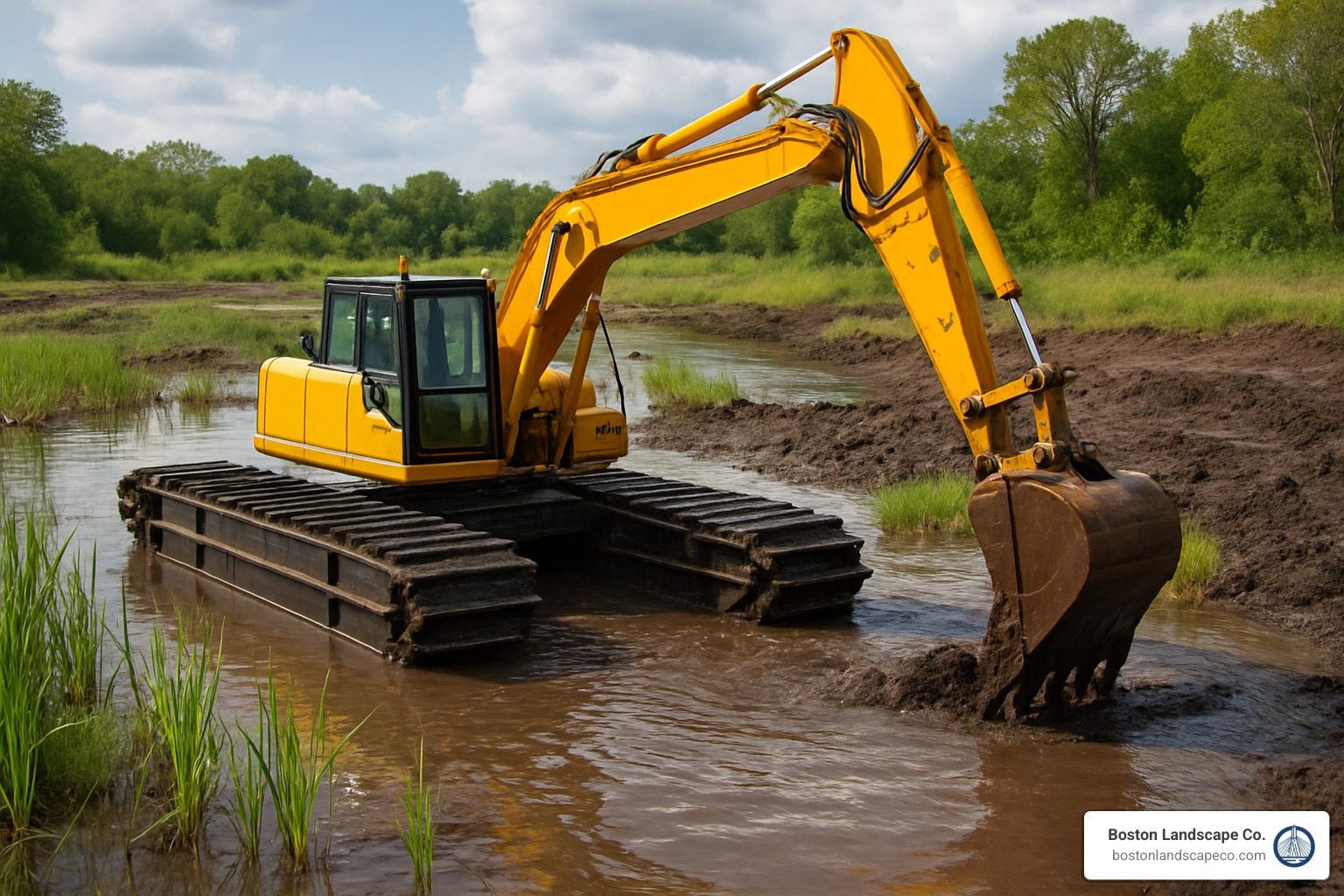
We use low-ground-pressure equipment like amphibious excavators that work in wet conditions without getting stuck. Construction typically takes 2-4 weeks for backyard projects.
4. Re-establish Native Vegetation
Native vegetation establishment is exciting – nature often does the heavy lifting once water returns. Hydric soils hold dormant seed banks that can remain viable for decades.
Live stakes from native willows and dogwood root easily when planted in wet soil. Understanding wetland zones is key – emergent zones (under 18 inches) for cattails and sedges, submergent zones (18-48 inches) for underwater plants, transitional areas for shrubs.
Timing matters – spring and fall are ideal planting windows. Deer fencing may be needed for 2-3 years. Pollinator strips around edges create beautiful transitions.
The Landowner’s Guide: Wetland Restoration Techniques provides excellent technical details. Vegetation establishment takes 2-3 growing seasons for full development.
5. Bank Stabilization & Erosion Control
Bank stabilization gives your Wetland Repair a strong foundation. Natural techniques get stronger over time, unlike concrete that can fail catastrophically.
Coir logs are coconut fiber logs that absorb wave energy while plants establish, breaking down over 3-5 years as roots take over. Native shrubs like silky dogwood and elderberry provide long-term solutions with underground root webs.
Root mats from established vegetation provide instant protection. Toe-wood placement uses local logs to break water energy. Live fascines are bundles of living branches that root and grow into natural terraces.
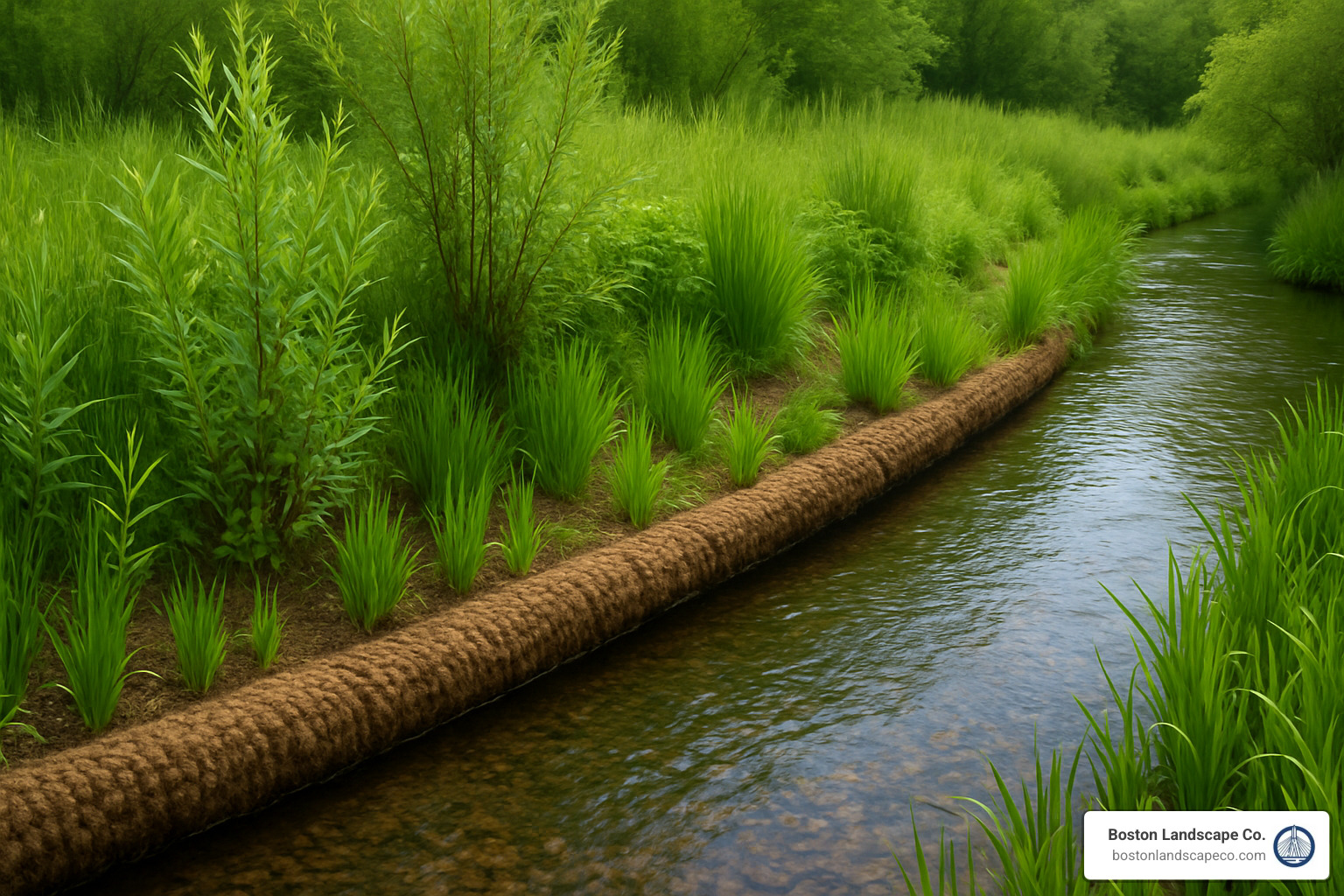
Natural bank stabilization creates living systems that improve with age, providing habitat while protecting your investment.
6. Maintenance & Monitoring
Real Wetland Repair work begins after construction. Most restored wetlands are surprisingly resilient once established.
Photopoints track progress with pictures from permanent stations. Staff gauges monitor water level changes. Water-quality testing confirms your wetland is filtering pollutants effectively.
Invasive spot-treatment requires ongoing vigilance – catch invaders early when they’re manageable. Adaptive management means being willing to make adjustments as nature doesn’t always follow plans.
Typical monitoring timeline spans five years, with intensive attention in years 1-2. Most homeowners see dramatic improvements within two growing seasons. Maintenance requirements decrease over time as systems become self-sustaining.
Best Practices, Costs & Funding Options
Successful Wetland Repair follows proven practices. Reference wetlands guide design decisions. Self-sustaining design reduces long-term maintenance. Community science engages local residents in monitoring.
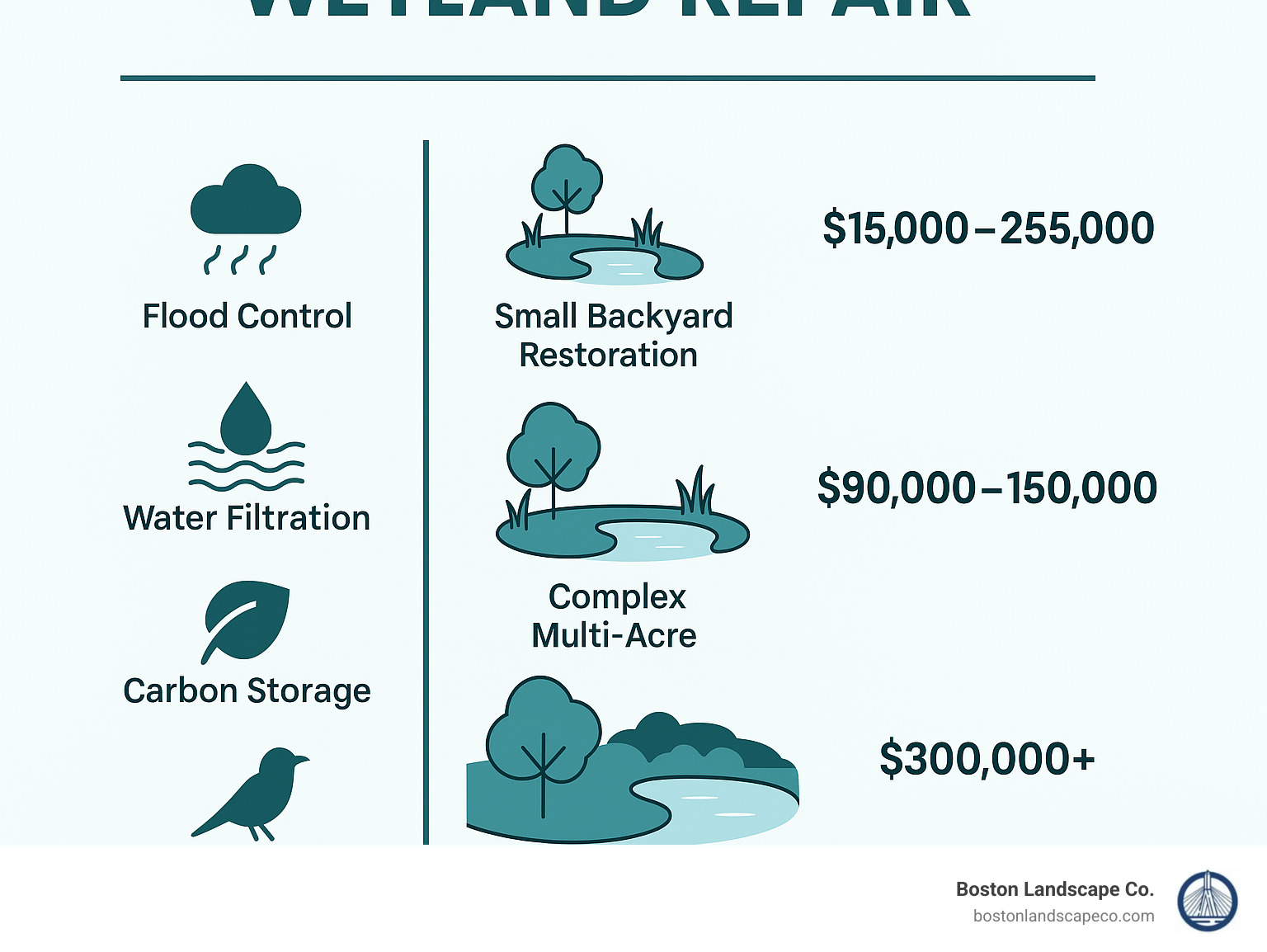
Costs vary dramatically based on scope. Internet research shows ranges from under $300 per acre for simple ditch plugs to over $300,000 per acre for complex urban restorations (these are average costs based on internet data and not actual costs for Boston Landscape Co). Most backyard projects fall in the $15,000-$90,000 range.
Federal grants through the EPA’s Water Finance Clearinghouse provide funding opportunities. State programs often offer matching funds for public benefit projects.
Frequently Asked Questions about Wetland Repair
What permits do I need for backyard Wetland Repair in Massachusetts?
Most restoration projects need a Notice of Intent (NOI) with your local Conservation Commission under the Wetlands Protection Act. Larger projects may need Army Corps of Engineers permits. Many communities have additional local bylaw permits. Start conversations with regulators early – they generally support restoration work. The process typically takes 2-4 months.
How long before wildlife returns after Wetland Repair?
Within the first growing season, amphibians like spring peepers find new habitat. After 1-2 years, waterfowl start regular visits. By years 3-5, complex habitat supports diverse populations. After 5+ years, wetlands reach functional maturity. Speed depends on connectivity to existing natural areas.
What’s the average maintenance effort and cost post-repair?
Years 1-2 require monthly monitoring and intensive care, with annual costs typically $2,000-$5,000 based on internet research (these are average costs based on internet data and not actual costs for Boston Landscape Co). Years 3-5 need quarterly visits, costs dropping to $1,000-$3,000 annually. After year 5, semi-annual monitoring suffices, with costs often $500-$1,500 annually based on internet averages (these are average costs based on internet data and not actual costs for Boston Landscape Co).
Conclusion & Next Steps
Wetland Repair creates living systems that work for you and the environment for decades. When you restore a degraded wetland, you’re investing in flood protection, cleaner water, wildlife habitat, and increased property values.
Thousands of homeowners have successfully completed these projects using proven steps. Each phase brings rewards – from initial soil testing to watching first ducks return to your restored wetland.
These projects transform not just landscapes, but families. Kids develop lifelong nature connections, and parents become amateur naturalists. The ripple effects extend beyond property lines, contributing to watershed health and community climate resilience.
Your property might be perfect for Wetland Repair if you have areas that stay wet longer, dark or mottled soils, or drainage ditches carrying water from low spots. Even subtle plant clues can indicate restoration potential.
At Boston Landscape Co, we’ve guided countless property owners through successful Wetland Repair projects across the greater Boston area. Our team tailors approaches to your property’s specific conditions and family goals.
The best time to start planning is now. Site assessments happen year-round, and winter permitting means spring construction readiness. Restored wetlands need establishment time, so starting sooner means enjoying benefits sooner.
Ready to explore how Wetland Repair could benefit your property? We serve Bedford, Billerica, Burlington, Carlisle, Concord, Lexington, Malden, Medford, Reading, Somerville, Stoneham, Waltham, Wellesley, Winchester, and Woburn. Contact us today to schedule your consultation.
For detailed information about our comprehensive approach, visit our More info about Wetland Services page. Together, we can create something beautiful that benefits your family, community, and environment for generations.
