
Safe Trampoline: Top 5 Proven Safety Tips 2025
Safe trampoline usage is a crucial aspect for any family considering this fun backyard addition. The key elements to ensuring a safe trampoline for your family include:
- Always provide adult supervision during use.
- Limit to one person jumping at a time to prevent collisions.
- Ensure the trampoline is placed on soft, energy-absorbing ground such as sand or wood chips.
- Use safety nets around the trampoline’s perimeter.
- Avoid stunts such as somersaults or flips.
Trampolines are fantastic for outdoor fun and exercise, but they do come with risks. Statistics show that most injuries occur from improper use, such as multiple jumpers or stunts, underscoring the need for precautions.
I’m Steve Schumacher, owner of Boston Landscape Co., with over three decades of experience in creating safe and beautiful outdoor spaces. We specialize in enhancing outdoor safety, including the installation of safe trampolines. By taking the right steps, you can ensure your backyard remains a haven of fun and safety.
Basic safe trampoline glossary:
– are in ground trampolines safer
– best quality trampoline
– trampoline certified installer
Understanding Trampoline Safety
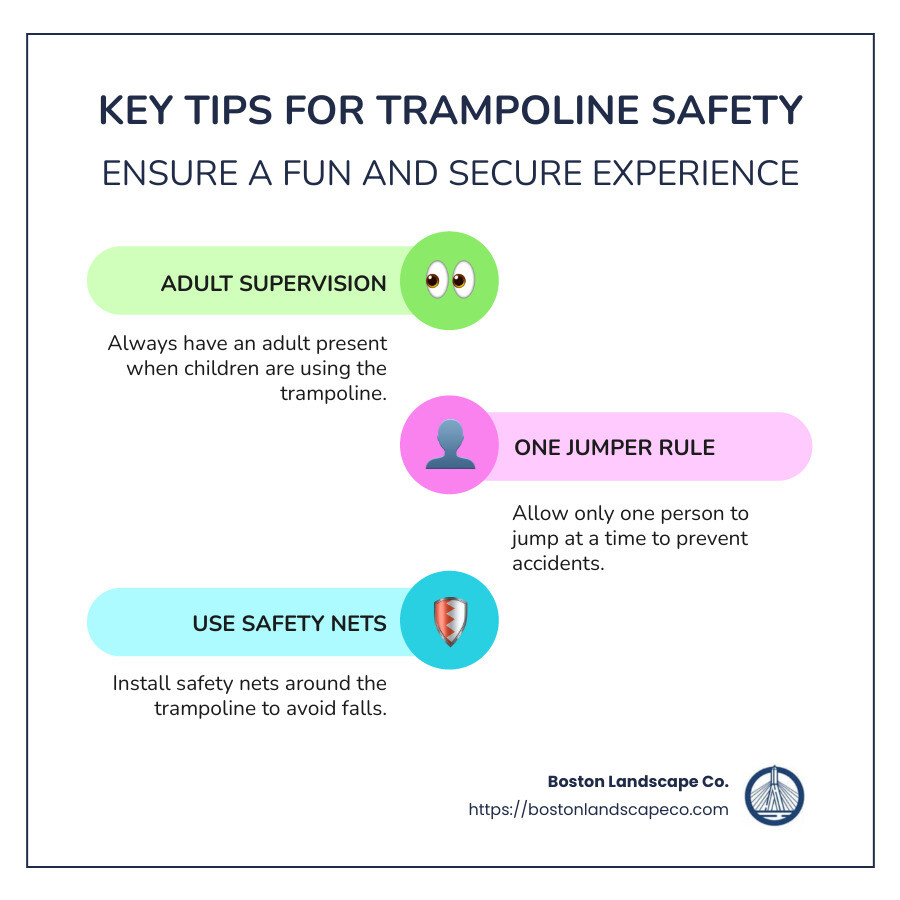
Ensuring a safe trampoline experience starts with understanding the safety guidelines. Following these rules can significantly reduce the risk of injuries. Here are some essential tips:
- Adult Supervision: Always have an adult present when children are using the trampoline. This supervision helps prevent risky behavior and ensures that safety rules are followed.
- One Jumper Rule: Limit the trampoline to one person at a time. This reduces the chance of collisions, which are a common cause of injury.
- No Stunts: Avoid stunts like somersaults or flips. These moves can lead to serious injuries, especially if performed incorrectly.
Injury Statistics
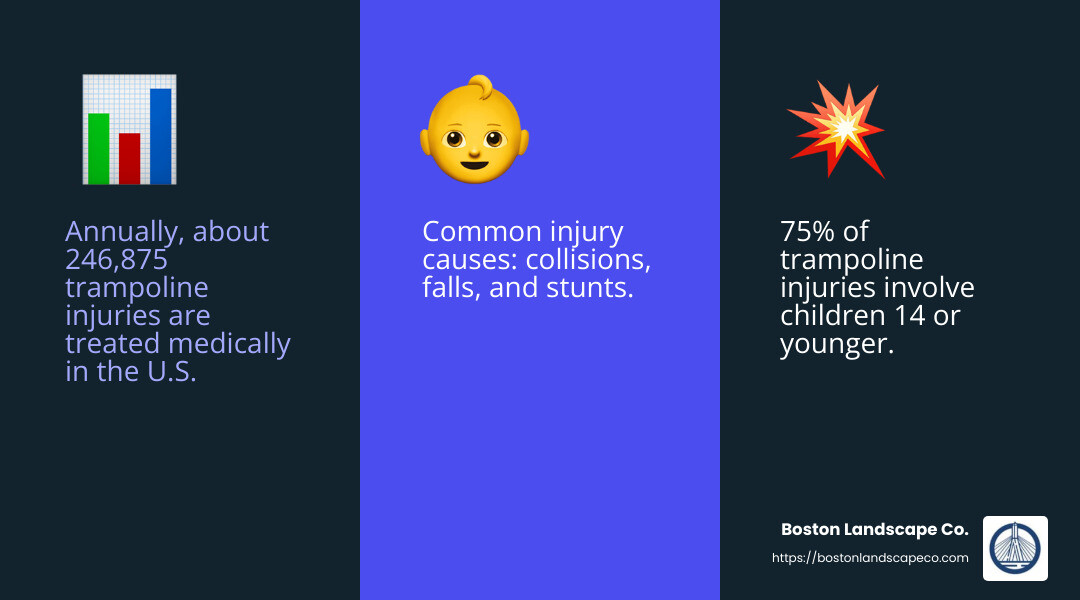
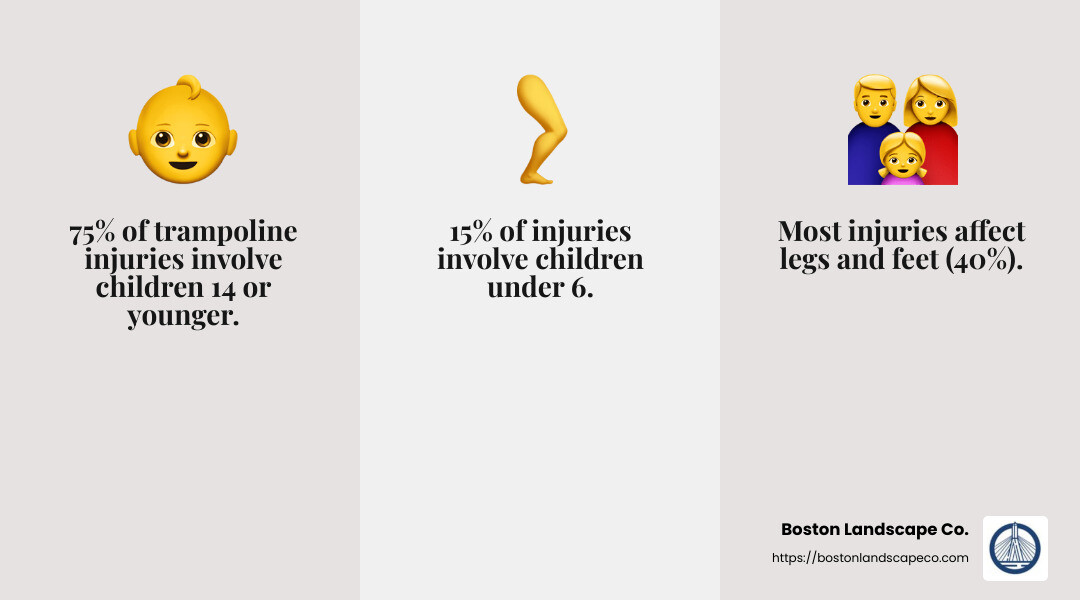
The statistics around trampoline injuries highlight the importance of these guidelines. In the U.S., about 246,875 medically-treated trampoline injuries occur annually, with 75% involving children 14 or younger. Most injuries result from collisions, falls, or stunts. The most commonly injured areas are legs and feet (40%), arms or hands (29%), and head, face, or neck (20%).
Adult Supervision
Adult supervision is crucial. It not only helps in enforcing safety rules but also in providing immediate assistance if an injury occurs. For children under 6, supervision is even more critical, as they account for 15% of trampoline injuries.
By understanding these safety guidelines and statistics, you can create a safer environment for your family. A safe trampoline experience is all about being informed and vigilant.
Next, we’ll explore how to choose the right trampoline to maximize safety and enjoyment.
Choosing a Safe Trampoline
Selecting a safe trampoline is key to ensuring fun without unnecessary risks. Let’s explore some important factors to consider.
Springfree Trampolines
Springfree Trampolines offer a unique design that significantly improves safety. Unlike traditional trampolines, they eliminate metal springs, which are a common source of injuries. Instead, they use flexible composite rods beneath the jumping surface. This design reduces the risk of pinching and eliminates hard impact points. The hidden frame also minimizes injury risks, making Springfree a popular choice for families prioritizing safety.
Bungee Rebounder
For those looking for a smaller, indoor option, a bungee rebounder might be ideal. These trampolines use bungee cords instead of metal springs, providing a softer and quieter bounce. They are perfect for low-impact exercises and safer for young children who want to jump indoors under supervision. While not a replacement for larger outdoor trampolines, they offer a safe alternative for indoor play.
ASTM Safety Standards
When choosing any trampoline, it’s crucial to ensure it meets ASTM safety standards. These standards require features like padding over springs, UV-resistant mats, and secure enclosures. Trampolines that comply with these standards offer improved safety features that help prevent common injuries. Always check for ASTM certification to ensure you’re purchasing a product that meets rigorous safety requirements.
By focusing on these elements—opting for a Springfree design, considering a bungee rebounder for indoor use, and ensuring ASTM compliance—you can select a trampoline that maximizes safety and enjoyment for your family.
Up next, we’ll discuss how to set up your trampoline safely to further reduce risks.
Safe Trampoline Setup
Setting up your safe trampoline correctly is just as important as choosing the right one. Let’s explore the essentials for a secure setup.
Clear Area
First, pick a clear, flat area free of obstacles. Avoid placing your trampoline near fences, trees, or other structures. This reduces the risk of collisions and ensures a safe fall zone around the trampoline. Experts recommend an 8-foot buffer zone around the trampoline to keep jumpers safe.
Soft Ground
Placing your trampoline on soft, energy-absorbing ground is key. Ideal options include sand, bark, or wood chips. These materials cushion falls and reduce injury risks. Avoid hard surfaces like concrete or asphalt unless you have a safety net and crash mats in place.
Safety Nets
Safety nets are a must-have for any trampoline setup. They prevent jumpers from falling off and hitting the ground. Make sure the net is high and securely attached around the perimeter. The Springfree Trampoline, for example, uses a FlexiNet® that guides wayward jumpers back to safety, significantly reducing fall-related injuries.
By ensuring a clear area, using soft ground, and installing safety nets, you can create a secure environment for your family to enjoy their trampoline. Up next, we’ll explore safe usage practices to keep the fun going without unnecessary risks.
Safe Trampoline Usage
Once your safe trampoline is set up correctly, it’s crucial to follow best practices for usage to keep everyone safe and sound.
One Jumper Rule
Only one person should jump at a time. This is one of the most effective ways to prevent injuries. Collisions are common when multiple people jump together, leading to falls and other accidents. According to injury statistics, most trampoline injuries occur when jumpers collide or fall off the trampoline. Keeping it a solo activity helps minimize these risks.
No Stunts
Avoid allowing gymnastic exercises or stunts, such as somersaults or flips, on the trampoline. These moves can lead to serious injuries, especially if not executed correctly. Improper landings, particularly on the neck, are a leading cause of severe injuries and even fatalities among teenagers. Encourage simple, controlled bouncing to maintain a fun and safe environment.
Adult Supervision
Always have an adult supervising trampoline activities. This is especially important for younger children, who may not fully understand the risks involved. Adult spotters around the edge of the trampoline can help prevent accidents and ensure that the safety rules are followed. Having someone responsible nearby also means quick action can be taken if an injury does occur.
By implementing these usage guidelines—one jumper at a time, no stunts, and adult supervision—you significantly improve the safety of your trampoline. Keeping these practices in mind ensures that your family can enjoy their trampoline safely and responsibly.
Next, we’ll tackle some frequently asked questions about safe trampolines to address common concerns and myths.
Frequently Asked Questions about Safe Trampolines
What type of trampoline is the safest?
When it comes to choosing a safe trampoline, the Springfree trampoline often stands out. Its unique design eliminates many traditional risks. Unlike conventional trampolines, Springfree models use a springless design with a hidden frame. This means there are no metal springs or exposed frames, which are common sources of injuries. Instead, flexible rods are used beneath the jumping surface, reducing the chance of pinches or cuts.
The hidden frame design further improves safety by removing the hard edges that can cause serious injuries. This type of trampoline also complies with ASTM safety standards, ensuring it meets rigorous safety criteria.
Is it okay for my 2-year-old to jump on a trampoline?
According to the American Academy of Pediatrics (AAP), children under the age of 6 should not use trampolines. The AAP guidelines stress that young children are at a higher risk of injury due to their lighter weight and developing motor skills. In fact, children age 5 and under are particularly vulnerable to injuries like fractures and sprains.
For parents considering trampoline use for toddlers, it’s best to wait until they are older and more physically capable of handling the activity safely. Always prioritize age-appropriate activities to ensure the safety and well-being of your little ones.
Are springless trampolines really safer?
Yes, springless trampolines are generally considered safer than traditional models. The absence of metal springs eliminates the risk of pinching and cuts often associated with these components. Springless designs, like those found in Springfree trampolines, use flexible composite rods beneath the jumping surface, which significantly reduces injury risks.
In addition to the springless design, many of these trampolines also feature high-quality safety nets and durable materials that further improve safety. These features work together to provide a safer jumping environment, making springless trampolines a popular choice for families prioritizing safety.
By understanding these FAQs, you can make informed decisions about trampoline safety and choose the best options for your family.
Conclusion
At Boston Landscape Co., we understand that creating a safe outdoor environment is essential for peace of mind and family fun. Our expertise in landscaping and property maintenance extends to helping you choose and install the safest trampoline options for your backyard.
Enhancing Outdoor Safety
Safety is our top priority when it comes to trampoline installations. We offer professional services that ensure your trampoline is set up securely and in compliance with safety standards. Our team works closely with top manufacturers to bring you the best in trampoline technology, like springless designs that reduce injury risks.
Our comprehensive services are custom to improve not only the functionality but also the safety of your outdoor spaces. We know that a safe trampoline is more than just a play structure—it’s a place where memories are made. That’s why we focus on quality installations that you can trust.
If you’re considering a trampoline for your yard, let us help you make the best choice. Our team can provide guidance on selecting the safest models and ensure a proper setup that blends seamlessly with your landscape.
Ready to transform your backyard into a safe and enjoyable haven? Contact Boston Landscape Co. today to learn more about our services and how we can assist you in creating a secure outdoor environment for your family.
