
Residential Landscape Grading: 3 Crucial Tips
What is Landscape Grading and Why is it Crucial?
Residential landscape grading is the process of reshaping and sloping your yard’s surface to direct water away from your home’s foundation and create proper drainage throughout your property. Here’s what you need to know:
Key Components of Residential Landscape Grading:
- Positive Grade: Ground slopes away from your home (ideal)
- Negative Grade: Ground slopes toward your home (dangerous)
- Ideal Slope: 6 inches drop over first 10 feet from foundation
- Foundation Clearance: 4-8 inches of foundation should remain visible above soil
Primary Benefits:
- Prevents basement flooding and foundation damage
- Eliminates standing water and soggy lawn areas
- Reduces soil erosion and landscape destruction
- Controls pest problems caused by stagnant water
- Improves overall lawn health and appearance
Think of grading as your home’s first line of defense against water damage. Without proper grading, water can pool around your foundation, creating hydrostatic pressure that leads to cracks, leaks, and costly structural repairs.
The consequences of poor grading are serious – from basement flooding to foundation damage to dead grass and increased mosquito populations. Many homeowners don’t realize their yard has grading issues until they notice water stains on foundation walls or experience that telltale musty smell in their basement.
I’m Steve Schumacher, and I’ve been helping Greater Boston homeowners solve residential landscape grading challenges for over three decades through Boston Landscape Co. Our experience has shown that proper grading is the foundation of every healthy, functional yard we create.

Residential landscape grading terms to learn:
- residential landscape drainage
- residential landscape design and build services
- full-service residential landscape contractor
How to Identify Poor Grading Around Your Home
You might be walking across your yard after a rainstorm and notice that certain spots feel unusually soft underfoot, or perhaps you’ve spotted puddles that seem to take forever to disappear. These aren’t just minor inconveniences – they’re telling you something important about your property’s drainage.
Residential landscape grading problems often announce themselves in ways that homeowners initially dismiss as “just how my yard is.” But your yard is trying to tell you something, and learning to read these signs can save you thousands of dollars in future repairs.
Spongy, waterlogged soil is often the first clue that something’s amiss. When you step on your lawn and it feels like walking on a wet sponge days after the last rainfall, that’s water that should have moved on but didn’t.
The most obvious red flag is standing water and persistent puddles, especially those that form near your home’s foundation. Water always follows the path of least resistance, so if it’s pooling instead of flowing away, your grading isn’t doing its job. These stagnant pools become breeding grounds for mosquitoes and other pests.
Take a close look at your foundation walls – water stains, discoloration, or mineral deposits are clear indicators that water is consistently reaching and sitting against your home’s structure.
Your landscape itself will show distress signals too. Dying grass and struggling plants in consistently wet areas are suffering from too much moisture around their roots. You might also notice soil erosion – channels, ruts, or areas where your valuable topsoil is washing away during heavy rains.
Don’t ignore what’s happening inside your home either. That musty smell in your basement or crawl space isn’t just unpleasant – it’s a warning sign of moisture problems caused by water pressure against your foundation from poor exterior grading.
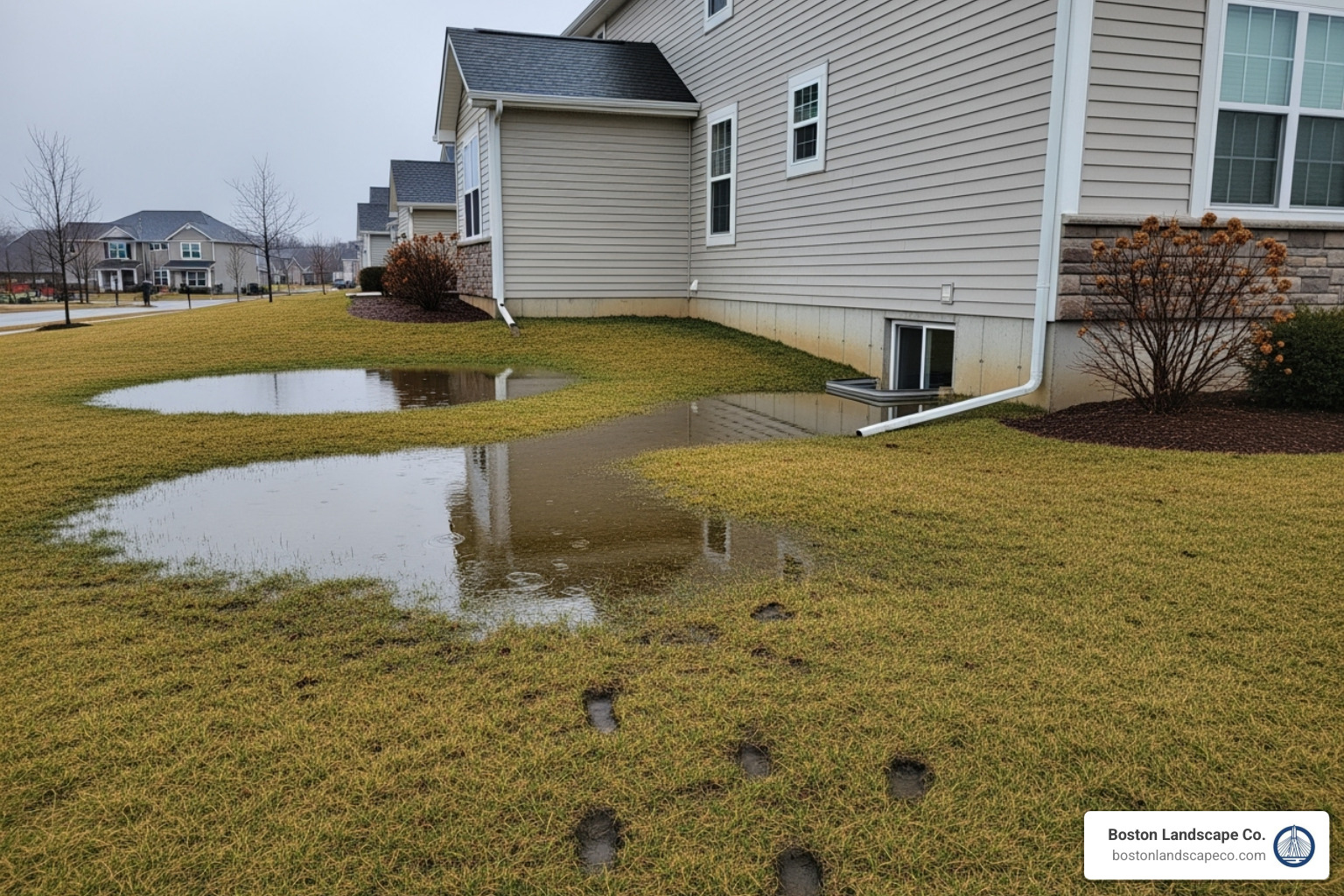
If you’re noticing any of these warning signs around your property, it’s worth taking action sooner rather than later. We’ve helped countless homeowners address these exact issues, and the earlier you catch grading problems, the easier and less expensive they are to fix. More info about our residential landscape drainage services.
The Consequences of Neglecting Your Yard’s Slope
Ignoring grading problems never makes them go away. Instead, what starts as a “small drainage issue” tends to snowball into something much more serious and expensive.
Foundation damage is the nightmare scenario. When water pools around your foundation, it creates hydrostatic pressure – water pushing against your foundation walls with tremendous force. Over time, this pressure causes cracks, and those cracks allow water to seep into your basement or crawl space.
Basement flooding often follows, especially during heavy rains or spring snowmelt. The cleanup and repair costs can be staggering, not to mention the emotional toll of losing irreplaceable belongings.
Crawl space moisture creates its own problems. Damp conditions promote wood rot, attract termites and other pests, and can compromise your home’s indoor air quality. That musty smell doesn’t stay contained – it works its way up through your floorboards.
Mold and mildew growth thrives in persistently damp conditions. Beyond health concerns, mold can damage walls, carpets, and personal belongings while creating odors that are difficult to eliminate.
Your landscape suffers too. Landscape destruction from poor grading goes beyond just dead patches of grass. Standing water suffocates plant roots, soil erosion washes away valuable topsoil, and the constant wet-dry cycle creates unsightly ruts.
The pest problems extend beyond mosquitoes. Ants, termites, and rodents are all attracted to damp environments, and once they find a moisture source near your home, they tend to explore what else your property might offer.
All of these issues combined can significantly reduce your property value. When it comes time to sell, potential buyers will spot foundation issues, moisture problems, and unhealthy landscaping from a mile away.
The reality is that proper residential landscape grading isn’t just about having a pretty yard – it’s about protecting your home, your health, and your investment. The cost of fixing grading issues early is always less than dealing with the consequences of neglect.
The Step-by-Step Process for Residential Landscape Grading
When you’re dealing with poor drainage around your home, the thought of fixing it yourself can feel overwhelming. But residential landscape grading follows a logical, step-by-step process that’s entirely manageable when you break it down.
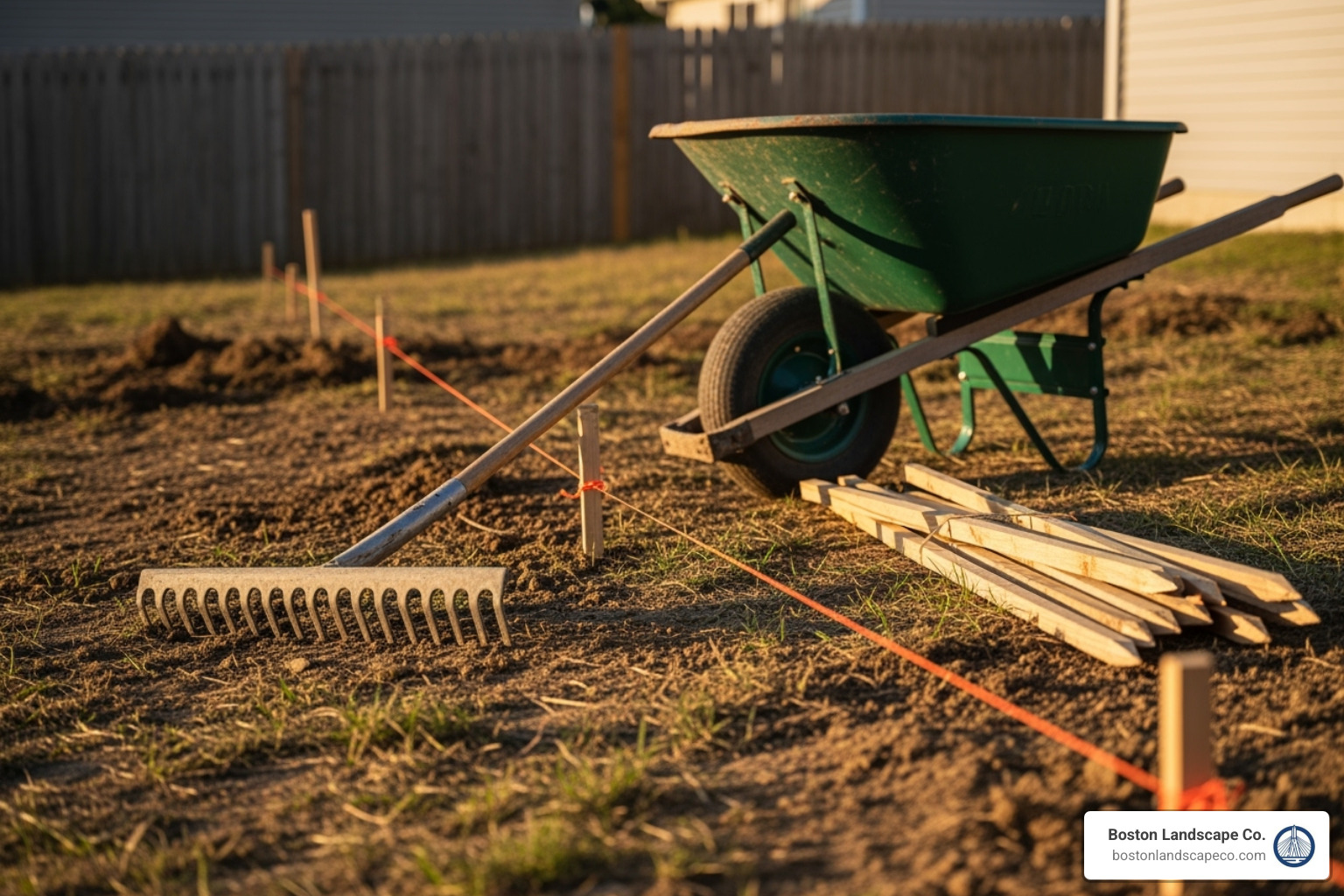
After three decades of helping homeowners solve drainage problems, I’ve learned that successful grading projects always start with careful planning and end with proper finishing touches.
Step 1: Measure the Slope and Plan Your Grade
Before moving a single shovelful of dirt, you need to understand exactly what you’re working with. This detective work might seem tedious, but it’s what separates a successful project from a muddy mess.
The stakes and string method is your best friend here. Drive a stake into the ground right next to your foundation, then measure out 10 feet and place another stake. Tie a string between them and use a string level to make sure it’s perfectly horizontal. Now measure the distance from the string down to the ground at the outer stake.
Calculating the ideal slope is straightforward math, but getting it right is crucial. You’re aiming for a 2-5% grade away from your home, which translates to a drop of 6 inches over the first 10 feet. This slope is gentle enough to prevent erosion but steep enough to move water away from your foundation effectively.
Before you start digging, make that call to 811 to have underground utilities marked. Trust me, hitting a gas line turns a simple grading project into a very expensive emergency.
Planning water flow means thinking like water – it always takes the path of least resistance. Your new grade should direct water toward the street, a storm drain, or a designated collection area. Never send water toward your neighbor’s property.
Step 2: Prepare the Area and Select the Right Soil
Now comes the physical work, and choosing the right soil is where many DIY projects go wrong. Not all dirt is created equal, and using the wrong type can undermine your entire effort.
Removing existing topsoil might seem counterintuitive, but it’s often necessary for significant regrading. You’ll typically need to strip away the top 4-8 inches to reach the subgrade level. A landscape rake works fine for small areas, but larger projects might require using a tiller.
Choosing fill dirt requires understanding the difference between structural fill and growing medium. For building up your grade, especially near the foundation, you want dense, clay-based soil for subgrade work. This material compacts well and won’t wash away during heavy rains.
For the final surface layer, you’ll want loamy topsoil – that perfect blend of sand, silt, and clay that provides excellent drainage while supporting healthy grass growth. This goes on as your top 4 inches after the structural work is complete.
Here’s a quick breakdown of soil types: Clay soil excels as a sub-base because it compacts beautifully. Loam is your go-to for the top layer – it’s fertile, drains well, and supports plant growth. Sandy soil drains quickly but lacks stability for foundational work.
If you’re wondering how much soil you’ll need, use this soil calculator to estimate your needs before heading to the supply yard.
Step 3: Build the Grade and Finish the Surface
This is where your planning pays off. The actual grading work requires patience and attention to detail, but the process itself is straightforward.
Adding fill dirt in layers is the key to long-term success. Never dump all your fill dirt at once and expect it to stay put. Instead, add it in 4-6 inch lifts, tamping down soil after each layer. This prevents settling and ensures your new grade won’t develop low spots after the first heavy rain.
Maintaining foundation exposure is non-negotiable. Keep 4-8 inches of your foundation visible above the new soil line. This prevents moisture from wicking into your foundation walls and protects your siding from rot and insect damage.
Spreading topsoil comes next – that fertile 4-inch layer that will support your new lawn. Smooth it out with a rake, creating an even surface that follows your established grade.
Seeding or sodding immediately protects your investment. Bare soil is vulnerable to erosion, especially on slopes. Getting grass growing as quickly as possible helps bind the soil and prevents all your hard work from washing away. If you’re looking for professional help with this final step, we offer professional lawn installations in Hopkington MA.
Key Considerations for Residential Landscape Grading
Real-world properties have features that can complicate even the best-planned grading project.
Window wells are notorious water collectors if not properly addressed. Your new grade should leave 2-3 inches of clearance from the top of the window well.
Pipes and vents must remain accessible and functional. External faucets, dryer vents, and foundation vents should never be buried or obstructed by your new grade.
Driveways and patios need proper grading too. Water should slope away from these surfaces just like it does from your foundation. Our hardscaping services near me can help integrate these features with your grading project.
Existing trees and plants deserve special consideration. Dramatically changing the grade around established trees can stress or kill them by disrupting their root systems.
Local building codes may require permits for significant grading projects. Check with your local building department before starting work.
Ensuring proper clearance means keeping soil away from all parts of your home, including decks, siding, and any wooden elements. This prevents rot, moisture damage, and creates barriers against pest infestations.
When you consider all these factors together, residential landscape grading becomes less about moving dirt and more about creating a comprehensive drainage solution that protects your home while enhancing your property’s function and appearance.
Advanced Drainage Solutions and When to Call a Professional
Sometimes, simple sloping just isn’t enough to tackle complex water management issues around your home. When we encounter challenging properties with persistent drainage problems, we often turn to advanced drainage solutions that work hand-in-hand with proper residential landscape grading.
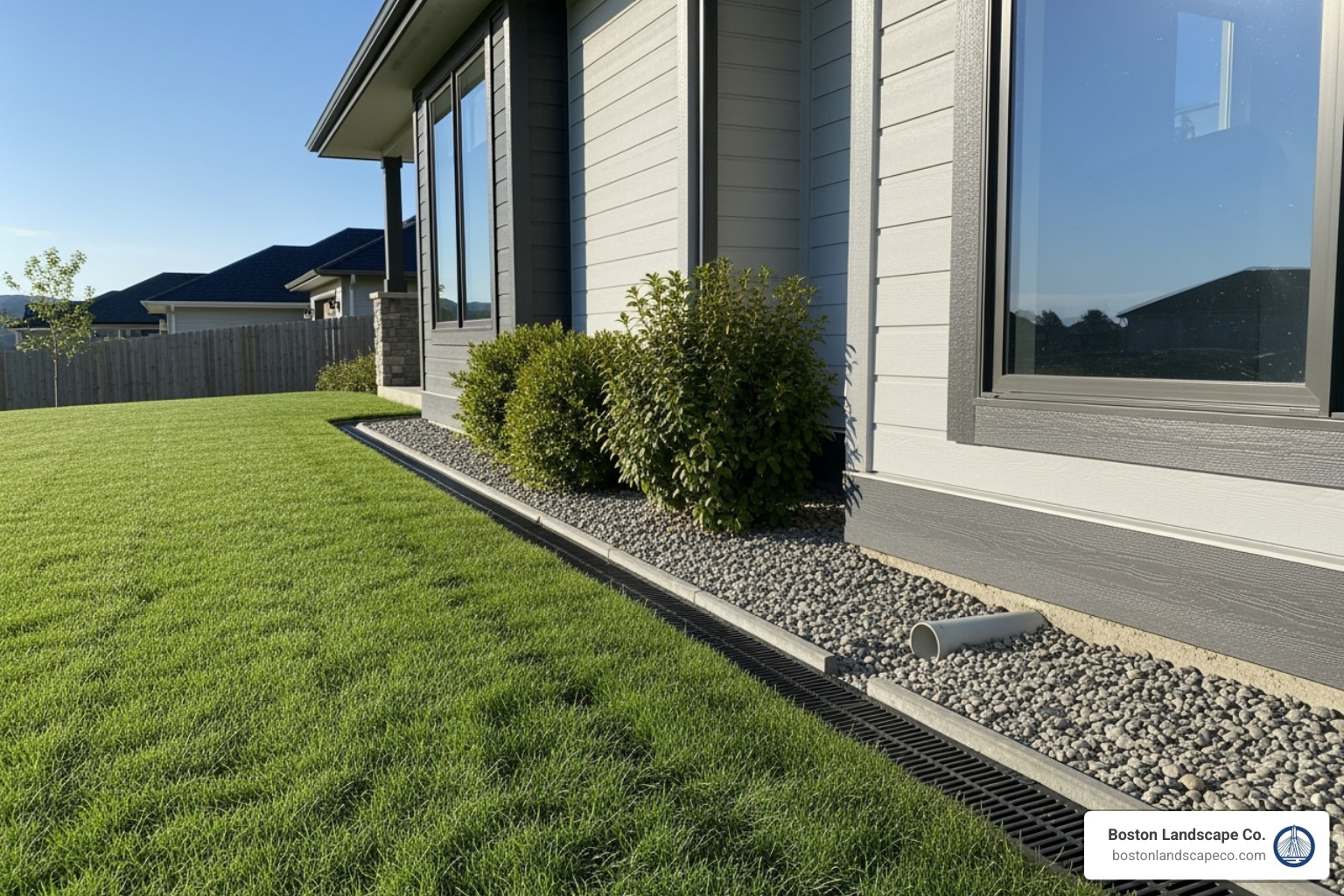
French drains are one of our most effective tools for managing groundwater. These subsurface systems consist of a gravel-filled trench with a perforated pipe that quietly channels water away from problem areas underground. They’re particularly useful when surface grading alone can’t handle the water volume.
Swales and bioswales offer another solution. A swale is essentially a shallow, gently sloping channel that guides stormwater runoff naturally across your landscape. Bioswales incorporate plants and soil to filter pollutants while promoting water absorption.
For areas where water consistently pools on paved surfaces, catch basins provide an excellent solution. These grate-covered collection points capture surface water and direct it through underground pipes to proper drainage outlets.
When dealing with significant elevation changes, retaining walls become essential. These structures don’t just prevent erosion – they create stable, level terraces that can be integrated with drainage systems. Our hardscape retaining wall solutions combine functionality with aesthetic appeal.
Permeable pavers and rain gardens represent the cutting edge of sustainable drainage design. While not strictly grading techniques, these features complement well-designed slopes by allowing water to soak into the ground rather than rush off your property.
When should you call a professional instead of attempting DIY grading? The answer often becomes clear when you’re dealing with steep slopes that require specialized knowledge of soil mechanics and erosion control. Large properties present logistical challenges that typically require heavy machinery and coordinated planning beyond most homeowners’ capabilities.
Complex drainage issues – like persistent basement flooding, water that affects neighboring properties, or sites with multiple problem areas – demand professional expertise. We’ve seen too many well-intentioned DIY projects that actually made drainage problems worse.
New construction or major renovations always benefit from professional grading. When you’re preparing a site for a new patio, deck, or landscape feature, precise grading is critical for the longevity and safety of your investment.
Permit requirements are another crucial consideration. Many larger grading projects require municipal permits and inspections, especially if they involve significant earth moving or changes to drainage patterns that could affect neighboring properties.
The reality is that while minor grading adjustments can be manageable DIY projects, anything involving significant slope changes, multiple drainage solutions, or complex site conditions typically requires professional expertise.
DIY vs. Hiring a Professional for Residential Landscape Grading
Deciding whether to tackle your residential landscape grading project yourself or bring in professionals depends on several key factors that can make or break your project’s success.
Project scale is often the deciding factor. Small adjustments around flower beds or minor slope corrections near walkways can be perfect weekend projects for handy homeowners. However, regrading large areas or making significant elevation changes typically requires equipment, expertise, and time that most homeowners simply don’t have access to.
Required tools and equipment tell their own story. Basic DIY grading might need just a shovel, rake, and wheelbarrow, but larger projects often require rented equipment like tillers, compactors, or even small excavators.
Expertise level matters more than many homeowners realize. Understanding soil types, drainage patterns, and proper compaction techniques can mean the difference between a successful project and one that fails within a few seasons.
The potential for costly errors is perhaps the most important consideration. A DIY project gone wrong can lead to foundation damage, flooded basements, or even legal issues with neighbors if water runoff patterns are changed inappropriately.
| Factor | DIY Grading | Professional Grading |
|---|---|---|
| Cost | Lower upfront cost, but potential for expensive mistakes | Higher initial investment, but includes expertise and warranties |
| Time | Weekends and evenings, often taking much longer than expected | Typically completed in 1-3 days depending on scope |
| Equipment | Rental costs and learning curve for unfamiliar tools | Professional-grade equipment included in service |
| Project Complexity | Best for simple, small-scale adjustments | Handles complex drainage issues and large-scale projects |
Time investment is another crucial factor. What might take a professional crew one day could easily consume several weekends for a homeowner, especially when you factor in the learning curve and inevitable unexpected challenges.
Quality and longevity often favor professional installation. We use proven techniques, proper soil preparation, and time-tested materials that ensure your grading project will perform well for years to come.
The sweet spot for DIY grading typically involves small areas, minor slope adjustments, and situations where you have plenty of time to work at your own pace. Professional grading makes sense for larger projects, complex drainage issues, or when you need guaranteed results within a specific timeframe.
Understanding the Cost of Professional Grading
When considering professional residential landscape grading, understanding the cost factors helps you make informed decisions about your project. Based on national averages, professional grading projects typically range from $1,000 to over $15,000, though complex projects can extend well beyond this range.
Yard size is the most obvious cost factor. A small area around your foundation will cost significantly less than regrading an entire property. However, it’s not just about square footage – the complexity of the work matters just as much as the size.
Slope severity dramatically affects pricing. Minor adjustments to improve drainage are relatively straightforward, but correcting severe grading problems or creating new slopes on flat terrain requires more soil, equipment time, and expertise.
Soil removal and import can represent a significant portion of your project cost. If existing soil needs to be hauled away and replaced with proper fill material, transportation and disposal fees add up quickly.
Accessibility plays a crucial role in pricing. Properties where equipment can easily access work areas cost less than those requiring hand work or specialized equipment to steer tight spaces, slopes, or obstacles.
Please note: Professional grading projects can range from $1,000 to over $15,000 or more depending on the project’s complexity and size. These figures are based on national averages and do not represent a quote from Boston Landscape Co.
The investment in professional grading pays dividends through prevented damage to your foundation, basement, and landscaping. When you consider the potential costs of foundation repairs, basement waterproofing, or repeated landscape replacement, professional grading often represents excellent value.
For homeowners in the Stoneham and Billerica areas dealing with complex drainage and grading challenges, we provide comprehensive solutions that address both immediate problems and long-term property protection. The investment in proper grading is truly an investment in your home’s future stability and your family’s peace of mind.
The Step-by-Step Process — Condensed Cheat-Sheet
Already read the detailed walk-through above? Here’s the slimmed-down version you can print, email to yourself, or tape to the garage wall before you pick up a shovel.
1. Measure & Plan
- Stake-and-string test: level string from the foundation out 10 ft. Aim for ≈ 6 in. drop (≈ 2–5 % grade).
- Dial 811 to mark utilities.
- Decide where runoff will ultimately discharge (street, dry well, or storm drain).
2. Prepare the Ground
- Strip 4-8 in. of existing topsoil if major re-sloping is needed.
- Bring in dense, clay-based fill dirt for the subgrade; keep the fluffy stuff for gardens.
- Use lifts no thicker than 4-6 in. and tamp each one tight.
3. Finish & Protect
- Maintain 4–8 in. of exposed foundation.
- Cap with 4 in. of loamy topsoil, then seed or sod right away so rain doesn’t undo your work. Need help? See our professional lawn installations in Hopkington MA.
4. Double-Check the Details
- Window wells sit 2–3 in. above grade.
- Keep vents, faucets and siding clear of soil.
- Tie hardscape slopes into the new lawn grade (our hardscaping services near me can help).
For volume estimates, our go-to is still the free soil calculator. Follow these four bullets and you’ll hit every critical point without rereading a 1,500-word manual.
Advanced Drainage — Quick Overview & When It’s Time to Call Us
Sometimes gravity needs a little engineering backup. Below are the fixes we reach for most often when simple grading won’t cut it:
- French drains – Gravel-filled trenches with perforated pipe that whisk groundwater away invisibly.
- Swales / bioswales – Shallow, turf-lined (or plant-lined) channels that steer and filter runoff.
- Catch basins – Grated boxes set in low spots to collect surface water before it can pond.
- Retaining walls – Hold back soil on steep lots and can be fitted with drain tile; explore our hardscape retaining wall solutions.
- Permeable pavers & rain gardens – Let water soak in where it falls instead of rushing toward the house.
DIY or Hire a Pro?
| Project Size | Good DIY Candidate | Better Left to Pros |
|---|---|---|
| Small, < 200 sq ft | Minor slope tweaks with hand tools | — |
| Medium, 200–1,000 sq ft | If you’re handy & can rent a compactor | Complex shapes, tree roots, utility obstacles |
| Large or steep lot | — | Requires machinery, permits, engineering |
Red-flag moments for professional help
- Persistent basement or crawl-space water.
- Grade changes that could divert runoff onto a neighbor’s lot (liability!).
- Slopes too steep to walk comfortably.
- Jobs that trigger municipal permits or conservation rules.
What Does Professional Grading Cost?
Nationwide internet averages place most residential grading projects between $1,000 and $5,000+, with complex drainage systems or extensive earth moving sometimes topping $10,000–$15,000. (These figures are broad estimates only and not a quote from Boston Landscape Co.) The peace of mind from a dry basement and a healthy yard usually outweighs the initial investment.
If your Stoneham- or Billerica-area property checks any of the red-flag boxes above, give Boston Landscape Co. a call. We’ll design, permit, and install a drainage plan that protects your home for decades.
