
Residential building landscape design: 7 Powerful Benefits 2025
Creating Beautiful and Functional Outdoor Spaces
Have you ever walked into a backyard that just feels right? Where every corner invites you to linger and enjoy? That’s the magic of thoughtful residential building landscape design at work.
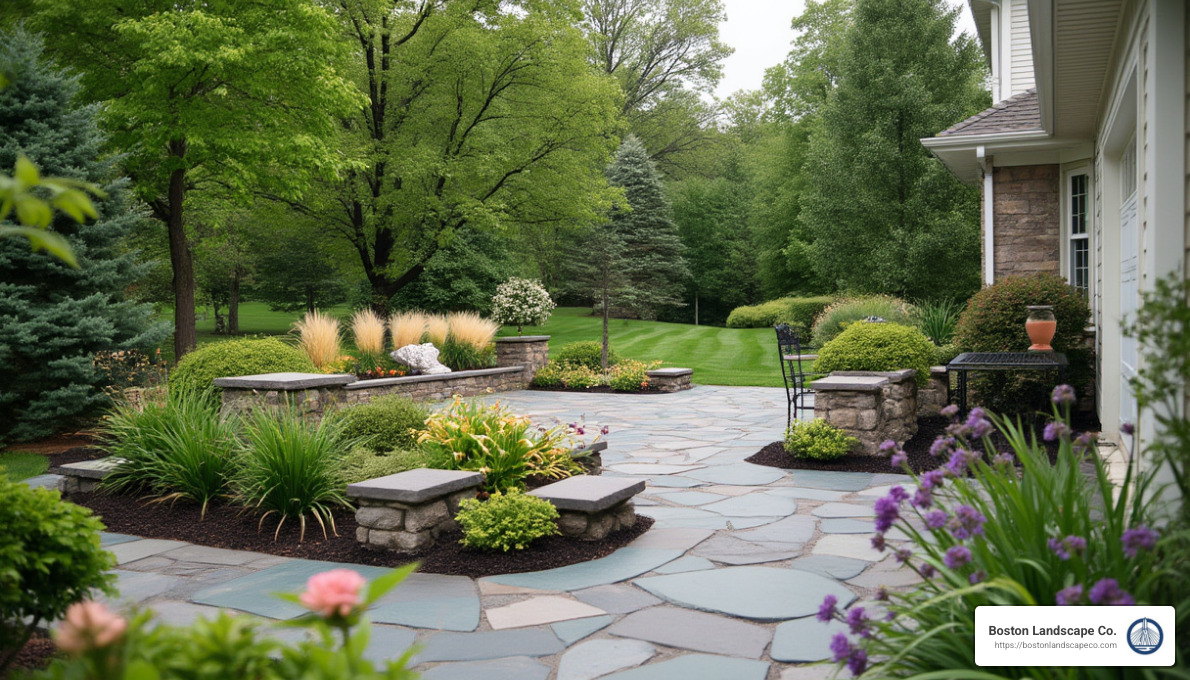
At its heart, residential building landscape design blends art and science to transform the outdoor spaces around your home into areas that aren’t just beautiful, but truly improve how you live. It’s about creating an outdoor extension of your home that reflects your lifestyle and connects you with nature.
When we approach a new landscape project at Boston Landscape Co., we start with site analysis – getting to know your property’s unique personality, from soil conditions to sun patterns. This foundation allows us to create functional zones that serve your family’s needs, whether that’s a peaceful meditation garden, a vibrant entertaining patio, or a playful area for children.
Plant selection is where science meets beauty – choosing vegetation that will thrive in your specific Massachusetts climate while providing the colors, textures, and seasonal interest you desire. These living elements work in harmony with hardscape elements like patios, walkways, and retaining walls to create a cohesive outdoor experience.
“Landscape design is the art of developing a property for its greatest use and enjoyment. Effective landscape design is also a science…” – Extension publication
The value of professional landscape design extends far beyond aesthetics. A well-executed landscape can boost your home’s value by 6-15% while delivering environmental benefits like improved air quality, reduced energy costs, and improved biodiversity. More importantly, it creates spaces that encourage outdoor living and reduce stress – something we all need more of these days.
I’m Steve Schumacher, and since founding Boston Landscape Co. in 1991, I’ve witnessed how thoughtful residential building landscape design transforms not just properties, but lives. There’s something profoundly satisfying about creating outdoor spaces where families make memories for generations.
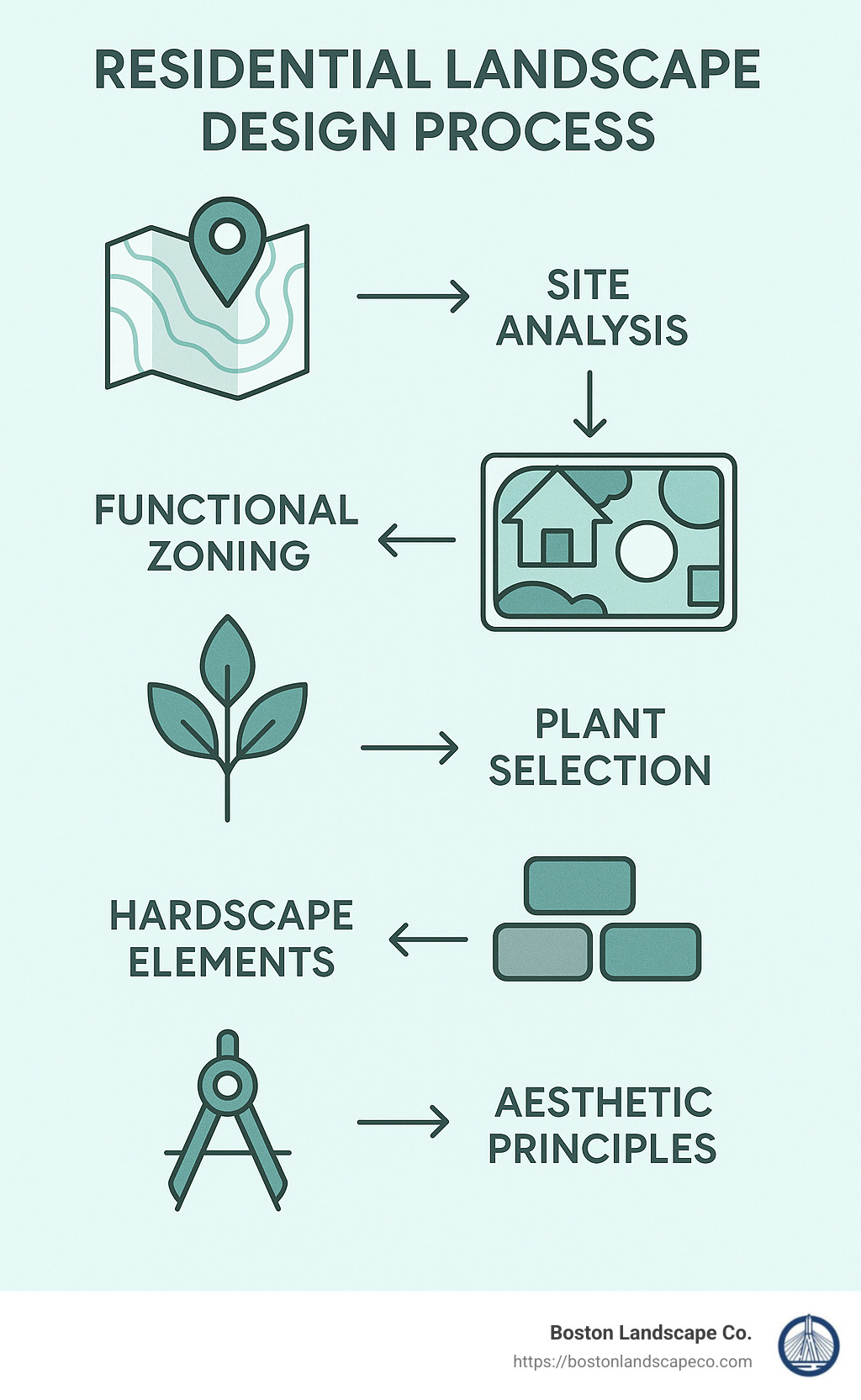
What You’ll Learn
Thinking about enhancing your outdoor space but not sure where to start? You’re in the right place. In this guide, we’ll walk you through everything you need to know about creating your ideal landscape:
You’ll find the tangible ways a well-designed landscape adds to your property value and improves your daily well-being. We’ll break down our step-by-step design process so you can understand how a landscape evolves from initial concept to finished installation.
We’ll explore the timeless design principles that make certain landscapes feel so inviting, and guide you through selecting the perfect plants and materials for your unique property. For the environmentally conscious, we’ll cover the latest sustainable and wellness-focused trends that are shaping today’s most innovative yards.
And because budgets matter, we’ll help you understand when DIY approaches make sense versus when to call in professionals, along with realistic cost expectations for both design and installation phases. While these are average industry figures (with installation typically ranging from $10,000 for simple projects to $90,000+ for comprehensive estate landscapes), they’ll give you a helpful starting point for planning.
Whether you’re dreaming of a complete property change or simply looking to improve a specific area of your yard, this guide will equip you with the knowledge to make informed decisions about your outdoor space. Let’s create something beautiful together.
Why Residential Landscape Design Boosts Home Value & Well-Being
A thoughtfully executed residential building landscape design delivers benefits that go far beyond making your yard look pretty. The impact on both your property’s value and your personal well-being is substantial and measurable.
Property Value Improvement
Did you know that professional landscaping can increase your home’s value by 6-15%? Unlike most home improvements that depreciate over time, quality landscaping actually appreciates as plants mature and outdoor spaces become more established. It’s one of the few investments that looks better with age!
When it comes to return on investment, landscaping often outperforms interior renovations. While kitchen and bathroom remodels typically return 75-85% of renovation costs at resale, quality landscaping can return 100-200% of its initial investment when you sell your property. That’s serious financial upside for something that brings daily joy.
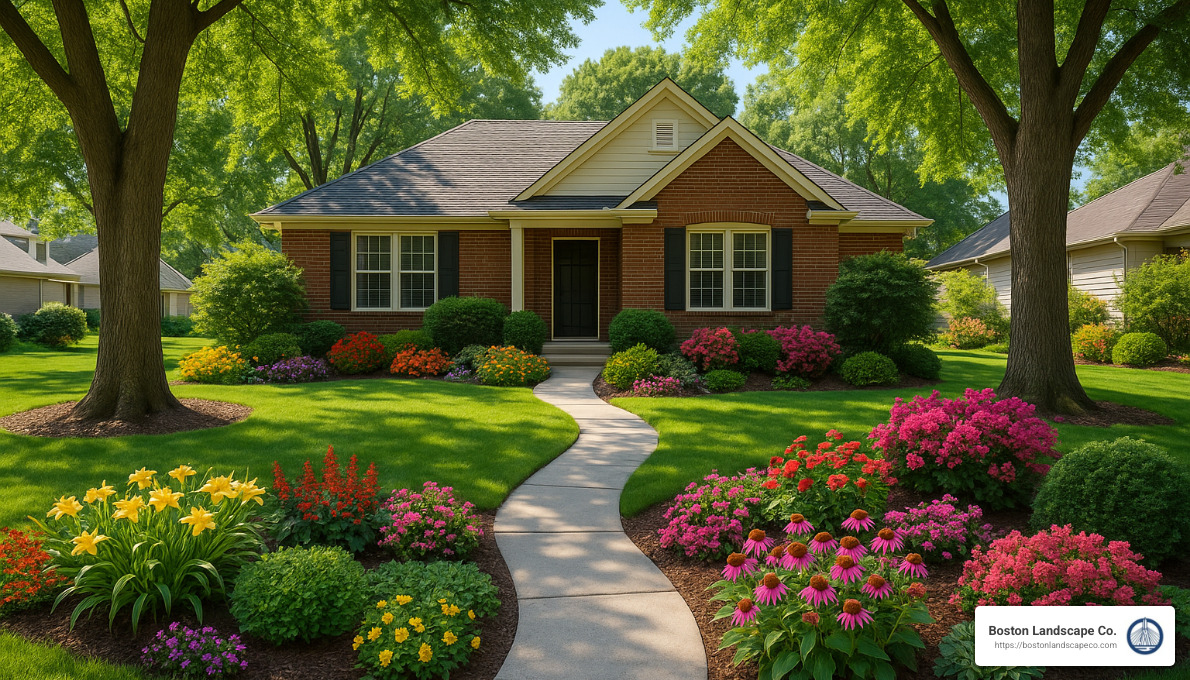
Four Dimensions of Value
1. Aesthetic Value
First impressions matter, and your landscape creates that crucial first impression for visitors and potential buyers. A well-designed landscape creates visual appeal through the thoughtful composition of plants, hardscapes, and architectural elements. This curb appeal isn’t just pleasing to the eye—it sets the tone for how people perceive your entire property.
2. Economic Value
Beyond directly increasing your property value, smart landscaping can significantly reduce your energy bills. Properly positioned shade trees can cut summer air conditioning costs by 15-50% by blocking direct sunlight. In our New England winters, evergreen windbreaks can reduce heating costs by 10-25% by buffering those cold north winds. Your landscape isn’t just beautiful—it’s working for your wallet.
3. Functional Value
Effective residential building landscape design transforms previously unusable areas into purposeful outdoor rooms. That awkward sloped yard becomes a beautiful terraced garden. The barren backyard transforms into an entertainment zone where memories are made. Even that narrow side yard can become a peaceful meditation path. Good design finds potential where others see limitations.
4. Environmental Value
Today’s landscape design accepts ecological benefits that extend beyond your property line. These include reduced stormwater runoff through permeable surfaces, improved air quality through plant photosynthesis, improved biodiversity by supporting pollinators and wildlife, carbon sequestration in trees and soil, and even noise reduction from traffic and neighbors. Your yard becomes part of the environmental solution.
Wellness Benefits
Perhaps most meaningful of all, well-designed landscapes significantly impact your physical and mental health. Research consistently shows that connecting with nature reduces stress levels, increases physical activity, improves mood and cognitive function, strengthens social connections through gathering spaces, and even promotes better sleep quality.
As one of our Lexington clients shared: “After we completed our landscape renovation with Boston Landscape Co., I found myself spending at least an hour outside every day, even just sitting with my morning coffee. My blood pressure has actually improved, and my doctor attributes it partly to this lifestyle change.”
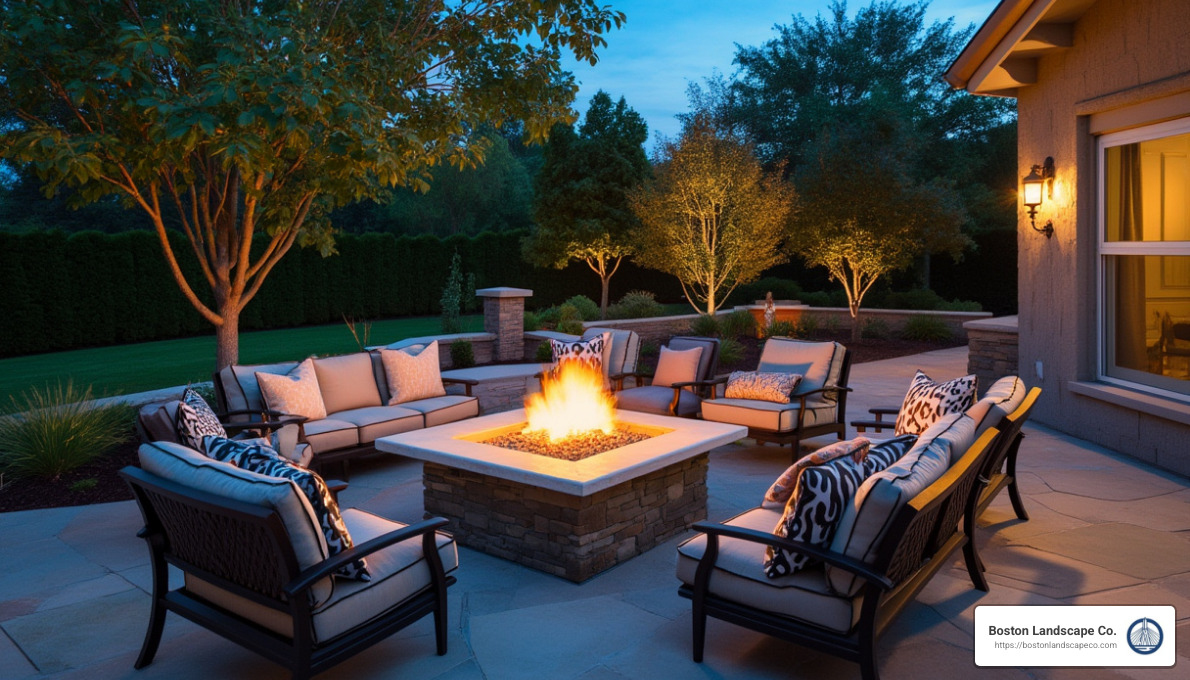
“Landscape design is the art of developing a property for its greatest use and enjoyment.”
When we design outdoor spaces at Boston Landscape Co., we’re not just arranging plants and patios—we’re creating environments where life happens more richly. The shade tree where your children will play, the patio where you’ll celebrate anniversaries, the garden that brings you peace after stressful days—these spaces become the backdrop for your life’s most meaningful moments while simultaneously protecting your investment.
Residential Building Landscape Design Process Step-by-Step
Creating a beautiful landscape isn’t just about planting pretty flowers – it’s a thoughtful journey that transforms your property into something truly special. At Boston Landscape Co., we’ve refined our approach over decades to ensure your dream outdoor space becomes reality.
1. Develop a Master Plan
Think of a master plan as the blueprint for your outdoor dreams. This comprehensive document becomes your roadmap, allowing you to bring your vision to life all at once or in manageable phases while maintaining a cohesive look throughout.
“When designing a residential landscape, the most important step is to put a plan on paper.”
I can’t stress enough how much time and money a good master plan saves. Without one, you might end up with disconnected elements that never quite work together. With a plan, everything has its purpose and place – from that shade tree that will cool your patio to the perfect spot for evening gatherings.
Understand & Inventory Your Site
Before we sketch a single garden bed, we need to truly understand what we’re working with. Your property has a unique personality all its own:
Your soil tells a story about what will thrive in your garden. We conduct soil tests to learn about pH and nutrient levels, identify drainage issues, and find those pockets of healthy soil worth preserving.
Your yard has its own microclimates – those sunny corners that bake in August, shady spots where snow lingers into April, and everything in between. We carefully map sun patterns, note frost pockets, and identify areas where wind whips through in winter.
Then we document all your property’s existing features – that magnificent oak you love, underground utilities we need to work around, the neighbor’s shed you’d rather not see, and any slopes that need special attention. This careful inventory ensures we work with nature, not against it – especially important in New England where our Burlington and Stoneham clients experience dramatic seasonal changes.
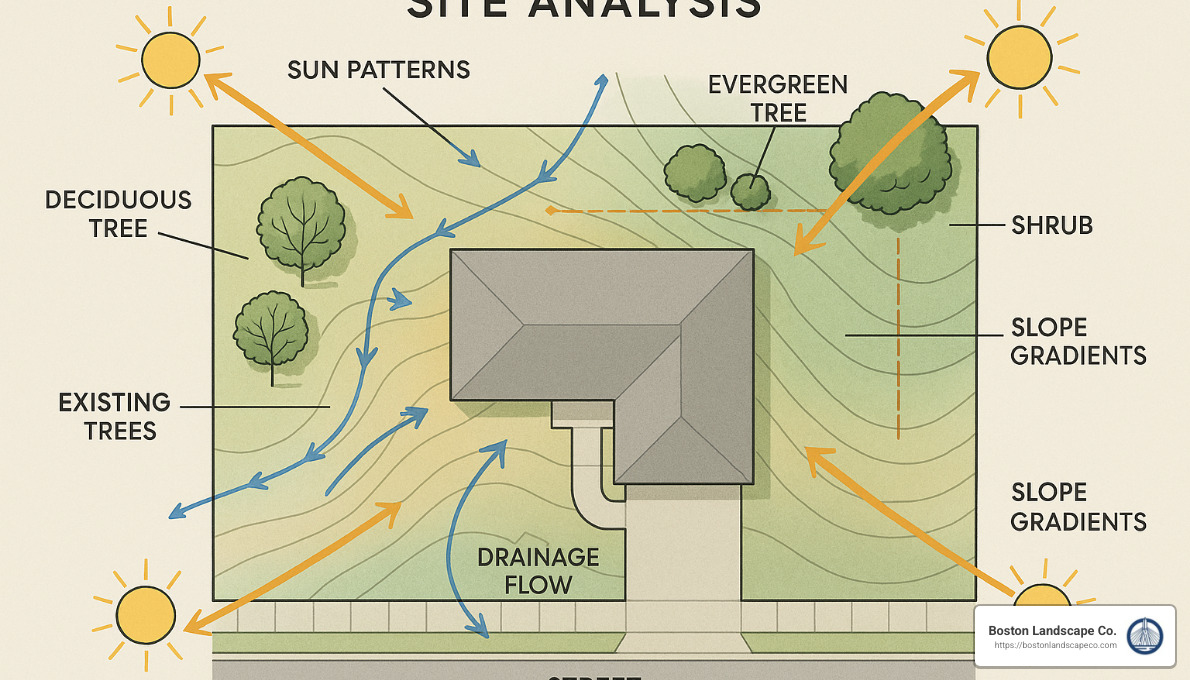
Residential Building Landscape Design Checklist
With your site’s story understood, we clarify your vision and practical considerations:
Define Your Goals: Will you host summer dinner parties or need a play space for grandchildren? Do you dream of a formal garden with symmetrical beds or a naturalistic landscape that feels like a woodland retreat? How much time can you realistically devote to maintenance? Are there specific problems like standing water or nosy neighbors we need to address?
Establish Your Budget: A helpful starting point is allocating roughly 10% of your home’s value to landscaping. We’ll help you determine if implementing the design all at once makes sense or if a phased approach better fits your financial comfort zone. And we always recommend setting aside 15-20% for those unexpected surprises that inevitably pop up.
Create a Timeline: New England’s seasons dictate certain aspects of our work. Spring planting differs from fall installation, and some plants need establishment time before facing our winters. We’ll help schedule around your family events and coordinate with any home renovations you’re planning.
Check Regulations: Before breaking ground, we steer the maze of local requirements. Zoning ordinances, setback rules, and HOA restrictions can impact your design. Properties near wetlands in Massachusetts require special consideration, and historical districts in places like Concord have additional guidelines we’ll help you understand.
Create Functional Outdoor Rooms
One of the most powerful concepts in residential building landscape design is organizing your yard into distinct “outdoor rooms” that serve different purposes:
Your public areas make that crucial first impression – the front yard, entry gardens, visitor parking, and walkways visible from the street. These spaces welcome guests and set the tone for your property.
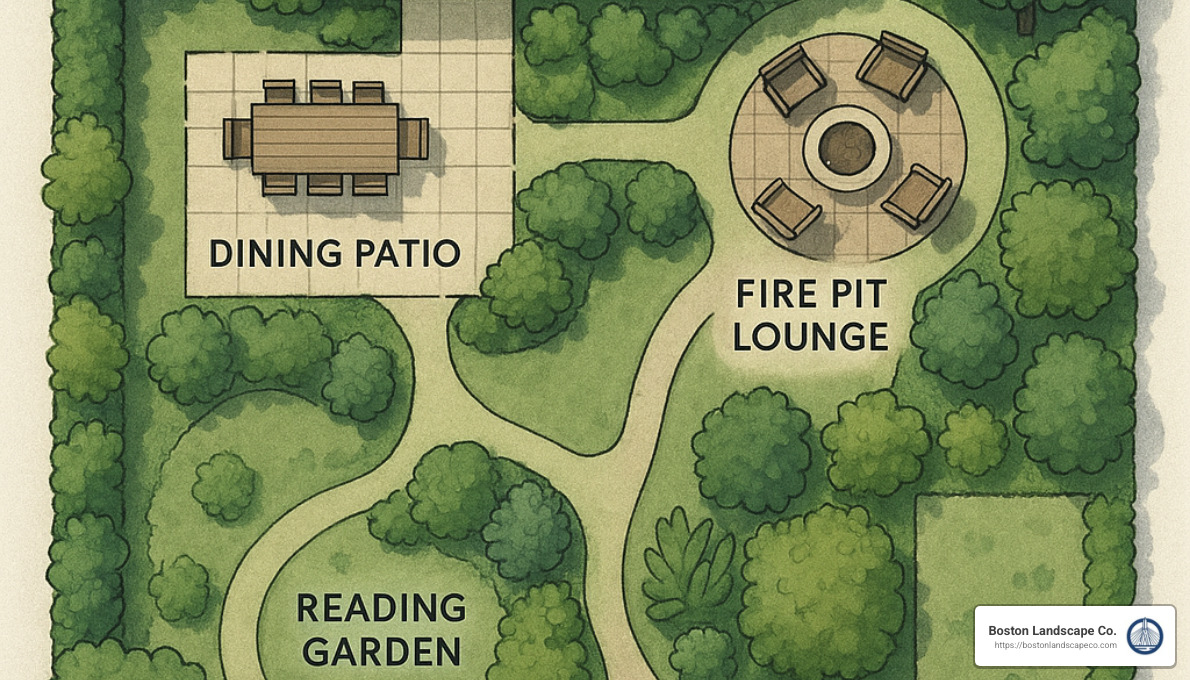
Your private areas are where you truly live outdoors – comfortable dining patios for family meals, peaceful meditation gardens for morning coffee, perhaps a pool or spa for relaxation, and intimate spaces for quiet conversations.
Every property needs practical service areas too – vegetable gardens, composting stations, utility areas, storage sheds, and dedicated spaces for pets. These functional zones should be convenient but not focal points.
Tying everything together are your circulation paths – primary walkways that connect major spaces, secondary garden paths for leisurely strolls, and service access routes for maintenance.
For each of these outdoor rooms, we consider the appropriate size for its purpose, how enclosed or open it should feel, its connection to indoor spaces, views from key windows, and how you’ll use it throughout our changing seasons.
I remember a client in Winchester who transformed their property with this approach. We created a series of connected garden rooms – a formal dining patio near the kitchen for entertaining, a casual fire pit lounge area a bit farther out for teenage gatherings, and a secluded reading garden tucked into a quiet corner where grandma could enjoy her books. The design incorporated beautiful sight lines that naturally drew visitors through the space while maintaining each area’s unique character.
To see how we can help transform your outdoor spaces through thoughtful Landscape Design Services, or explore ideas for creating functional outdoor living areas with our Backyard Hardscape Design expertise.
Core Principles, Plants & Materials That Make Designs Sing
When it comes to residential building landscape design, there’s a certain magic that happens when design principles, plant selection, and material choices all work in harmony. It’s like composing a beautiful song – each element plays its part in creating something greater than the sum of its parts.
Design Principles
Have you ever walked through a garden that just felt “right”? That feeling comes from thoughtful application of design principles. Unity ties everything together through repeating elements, colors, or materials. It doesn’t mean your yard should look monotonous – rather, it should have connecting threads that make it feel intentional rather than random.
Balance is about distributing visual weight evenly throughout your space. You might choose formal symmetry for a traditional home entrance, where everything mirrors across a central axis. Or you might prefer asymmetrical balance for a more relaxed, natural feel – different elements with equal visual weight creating harmony without perfect matching.
I love seeing rhythm in landscapes – it creates a sense of movement that draws you through the space. We might repeat ornamental grasses every few feet along a pathway, or create a progression from small shrubs to medium shrubs to small trees. This rhythm makes a landscape feel dynamic rather than static.
Getting scale and proportion right makes all the difference. That beautiful Japanese maple that looks perfect in the nursery pot? It might grow to overwhelm your front entrance in a few years. We always consider how elements relate to your home’s architecture, to human dimensions, and to other landscape features.
Good sequencing is like telling a story in your landscape. Rather than revealing everything at once, thoughtful designs unfold gradually as you move through them. Think of a winding path that reveals a hidden garden bench, or a sequence of spaces that transition from public to increasingly private areas.
Finding the sweet spot between simplicity and variety is key. Too simple becomes boring; too varied becomes chaotic. We aim for that perfect middle ground – enough consistency to feel cohesive, enough contrast to keep things interesting.
Selecting the Right Plants & Materials
“Right plant, right place” isn’t just a catchy phrase – it’s the foundation of sustainable residential building landscape design. When plants are matched to their ideal growing conditions, they thrive with minimal intervention.
Starting with your site conditions is crucial. Most of our Massachusetts clients are in USDA Zone 6a or 6b, which immediately narrows down plant options. Then we consider sun exposure, soil conditions, and moisture levels across your property – these can vary dramatically even in a small yard.
Plants should also serve functional needs. Need privacy from that nosy neighbor? A mixed evergreen and deciduous screen might be perfect. Dealing with a steep slope? Deep-rooted natives can prevent erosion while looking beautiful. Want to attract butterflies and birds? We can select plants that provide food and habitat throughout the seasons.
Being honest about maintenance is important too. I always ask clients how much time they realistically want to spend caring for their landscape. There’s no shame in wanting a low-maintenance yard! We can select plants that require minimal pruning, deadheading, and water once established.
| Plant Type | Benefits | Challenges |
|---|---|---|
| Native Plants | • Adapted to local conditions • Support local wildlife • Lower maintenance once established • Deep root systems aid water filtration |
• May be less available in nurseries • Some have shorter blooming periods • May look “wild” for formal settings |
| Non-Native Plants | • Extended bloom times • Unique ornamental features • More options for formal designs |
• Often require more water and care • Limited wildlife value • Potential invasive risk • May be less climate resilient |
At Boston Landscape Co., we typically recommend incorporating at least 70% native plants in our designs. They’re simply better adapted to our local conditions and provide superior habitat value. That said, we’re not purists – sometimes that non-native hydrangea or Japanese maple is exactly what’s needed to complete a design.
For hardscape materials, durability is non-negotiable in New England. Our freeze-thaw cycles are brutal on materials, so we select those that can handle the temperature fluctuations. Natural stone, quality concrete pavers, and cedar or composite decking typically perform beautifully in our climate.
We’re increasingly focused on sustainability in our material choices. Permeable surfaces allow rainwater to filter through rather than run off. Locally sourced materials reduce transportation emissions. Recycled content reduces demand for virgin resources.
The materials should also complement both your home’s architecture and the surrounding landscape. A colonial home in Lexington calls for different materials than a contemporary home in Somerville. The right materials feel like they belong – like they’ve always been there.
Detailing for Longevity
The difference between a good landscape and a great one often comes down to the details. Irrigation systems have come a long way from the old-fashioned sprinklers that waste water on sidewalks. Today’s drip irrigation delivers water directly to plant roots, reducing waste by up to 50%. Smart controllers adjust watering based on actual weather conditions, and properly zoned systems account for different plant water needs.
Mulching does more than make beds look tidy – it retains soil moisture, suppresses weeds, and moderates soil temperature. We maintain a 2-3″ depth for optimal benefits, keeping mulch pulled back from tree trunks and building foundations to prevent rot. Sometimes, living groundcovers can be an attractive alternative to traditional mulch.
Thoughtful lighting design extends the enjoyment of your landscape into the evening hours. Path lights ensure safe navigation, uplighting highlights specimen trees and architectural features, and task lighting makes outdoor cooking and dining possible after sunset. For security areas, motion sensors provide light when needed without wasting energy.
Proper edging and containment might seem like minor details, but they’re crucial for a polished, low-maintenance landscape. Steel or aluminum edging creates clean lines between materials, stone borders prevent mulch migration, and root barriers protect hardscapes from aggressive tree roots.
I remember a client in Medford who was particularly concerned about water conservation. We installed a comprehensive drip irrigation system with smart controllers that reduced their summer water usage by 40% while maintaining a lush landscape. The system was designed with expansion capability, allowing them to add zones as they developed new garden areas in subsequent years.
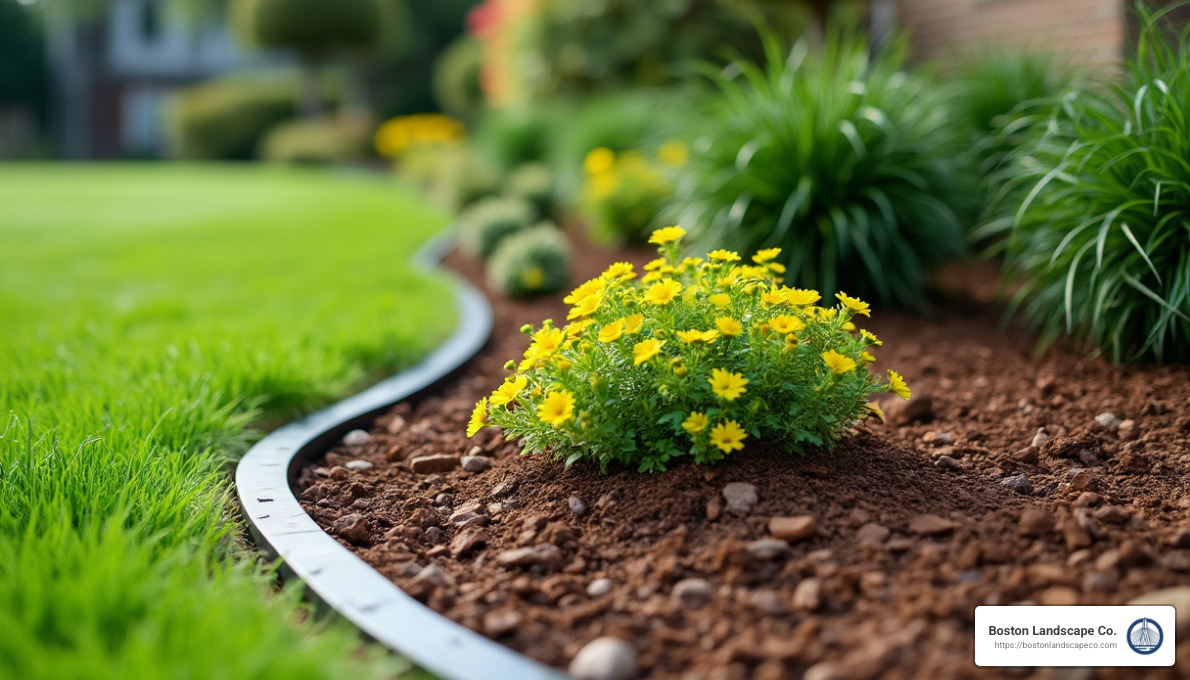
These thoughtful details not only make for a more beautiful landscape today, but they also ensure it will continue to thrive for years to come. After all, a truly sustainable landscape is one that stands the test of time. For more information about our approach to plant selection and garden care, visit our Gardening Services page.
Sustainable & Wellness-Focused Trends Shaping Yards Today
Today’s residential building landscape design is evolving beyond mere aesthetics to accept sustainability and wellness. At Boston Landscape Co., we’ve seen a dramatic shift in what our Massachusetts clients are requesting – landscapes that not only look beautiful but also support environmental health and personal wellbeing.
Sustainable Landscape Practices
Water conservation has become a top priority, even in our relatively water-rich Northeast region. Xeriscaping principles, once considered only for desert climates, are now being thoughtfully adapted for New England properties. We’re creating gorgeous drought-resistant landscapes that thrive with minimal supplemental watering by improving soil quality, selecting appropriate plants, and using efficient irrigation methods.
Rain gardens have become one of our most requested features, especially in towns like Billerica and Reading where properties often have natural low spots. These beautiful planted depressions capture stormwater runoff, preventing erosion while creating vibrant habitat areas. One client’s rain garden now handles runoff from their entire roof, eliminating basement moisture issues they’d struggled with for years.
The plight of pollinators has touched many homeowners’ hearts. We’re designing dedicated pollinator habitats with succession-blooming native plants that provide food and shelter throughout the growing season. These gardens buzz with life from early spring through late fall, bringing joy while supporting crucial ecosystem services.
Traditional lawns are giving way to more sustainable alternatives. Low-mow and no-mow lawns using fine fescue blends require far less maintenance while staying green during summer dry spells. Native meadow plantings and clover lawns are replacing portions of traditional turf, reducing mowing time while increasing biodiversity.
Stormwater management concerns have driven innovation in hardscape design. Permeable pavers, gravel patios, and stepping stone paths with planted joints allow rainwater to filter naturally into the ground rather than running off into storm drains. This approach helps replenish groundwater while reducing flooding and pollution.
Designing for Mind-Body Health
The pandemic fundamentally changed how we view our outdoor spaces. Yards have transformed from occasional recreational areas to essential extensions of our living space – places that actively support mental and physical wellbeing.
Sensory gardens engage all five senses, creating immersive experiences that ground us in the present moment. We’re incorporating fragrant lavender and herbs, touchable lamb’s ear and ornamental grasses, sound elements like water features, edible berries, and visually striking plant combinations that change with the seasons.
A Wellesley client recently worked with us to create a dedicated “wellness garden” in their backyard. This tranquil space features aromatic herbs, a small bubbling water feature, comfortable seating positioned to capture morning sun, and a simple stone path for mindful walking meditation. They tell us they use this space daily for stress reduction – a small investment with enormous returns for their quality of life.
Outdoor fitness spaces have become increasingly popular as more people work from home. We’re designing yoga decks, meditation platforms, and walking paths with distance markers that make daily movement convenient and enjoyable. Natural play areas for children encourage imaginative, active play while connecting kids with nature.
Biophilic design principles strengthen our innate connection to nature through intentional incorporation of natural patterns, materials, and experiences. We’re creating spaces with fractal patterns, refuges with prospect views, dynamic light and shadow play, natural materials, and even living walls that bring nature up close.
Climate-Smart Practices
As climate patterns shift, we’re helping our clients adapt with forward-thinking landscapes that remain resilient through weather extremes.
Water harvesting systems like rain barrels, cisterns, and strategically placed swales capture precious rainfall for later use. One Stoneham client’s integrated rainwater collection system now provides nearly all the water needed for their extensive vegetable garden.
Heat mitigation strategies have become essential as summer temperatures climb. Strategic tree planting provides cooling shade for homes and patios, reducing air conditioning costs while creating comfortable outdoor living spaces. Light-colored hardscape materials reflect rather than absorb heat, making patios usable even on the hottest days.
Resilient plant communities with diverse, layered species provide insurance against the inevitable pests and diseases that accompany climate change. Deep-rooted native plants stabilize soil during increasingly common heavy rain events while requiring minimal supplemental care once established.
Energy-efficient features like solar-powered landscape lighting reduce ongoing costs while minimizing environmental impact. Thoughtfully placed windbreaks reduce winter heating costs, while green infrastructure reduces the need for mechanical cooling in summer.
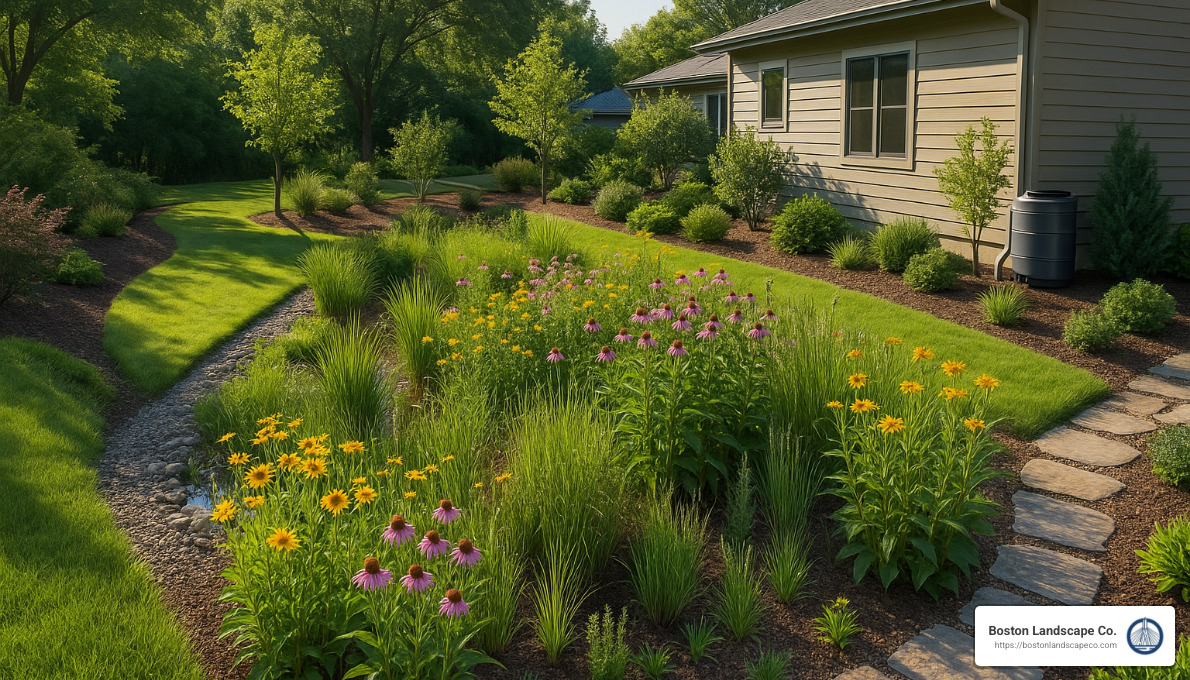
Scientific research increasingly supports these sustainable approaches. Studies published in ecological journals like the Journal of Ecology demonstrate that ecologically designed landscapes not only benefit wildlife but also create more resilient systems that better withstand environmental stresses.
At Boston Landscape Co., we’re passionate about creating sustainable landscapes that nurture both people and the planet. Whether you’re looking to incorporate a few sustainable elements or completely transform your property with climate-smart practices, we can help design a landscape that works with nature rather than against it.
DIY vs Hiring a Professional: Which Path Fits Your Project?
Deciding whether to tackle your residential building landscape design yourself or bring in experts is one of the first crossroads you’ll face. Both paths can lead to beautiful results, but they involve different journeys.
DIY Landscape Design
There’s something deeply satisfying about creating your own outdoor space. Many homeowners in our Middlesex County service area enjoy the hands-on approach, especially for smaller projects.
DIY landscape design offers significant cost savings on design fees while giving you complete creative control. It’s also a wonderful learning opportunity – I’ve seen clients develop a genuine passion for gardening after completing their first landscape project.
This approach works best for simpler projects without major technical challenges. If you’re working with a budget under $10,000, have some gardening experience, and enjoy the process of learning through trial and error, DIY might be perfect for you.
Today’s technology makes DIY design more accessible than ever. Apps like Home Outside and iScape let you visualize changes before lifting a shovel. Traditional graph paper works well too, especially when paired with reference books specific to New England gardening. Local nurseries can be invaluable allies, offering plant selection advice custom to our unique climate.
As one DIY client in Billerica told us: “I started with just redesigning my front foundation plantings. The satisfaction of seeing it come together gave me the confidence to tackle bigger projects, though I did eventually call Boston Landscape Co. when I needed help with drainage issues in the backyard.”
Professional Landscape Design
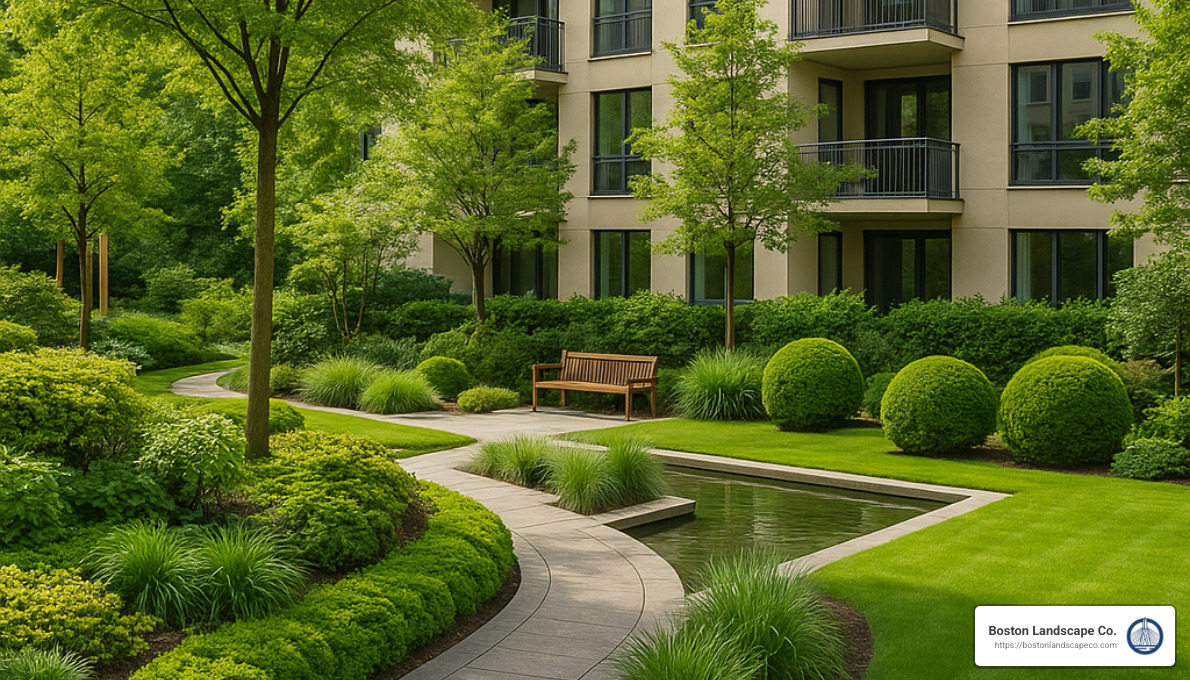
When your vision exceeds your experience, professional design services offer tremendous value. Landscape professionals bring years of specialized knowledge about plants, materials, and technical solutions that simply can’t be matched through weekend research.
Professional residential building landscape design shines brightest for larger or complex properties, projects with significant hardscaping elements, challenging site conditions, or when maximizing return on investment matters. For busy professionals in towns like Winchester and Lexington, the time savings alone often justifies the design investment.
What can you expect when working with a professional designer? The process typically begins with an initial consultation and thorough site analysis. Your designer will develop conceptual designs based on your needs and preferences, eventually creating detailed plan drawings, plant specifications, and construction documents. Many firms, including Boston Landscape Co., offer project oversight to ensure proper implementation.
Traditional landscape design services typically range from $2,000 to $8,000 for design only, with comprehensive design-build services for full property installations ranging from $15,000 to $150,000 or more, depending on property size and feature complexity.
Cost Factors for Residential Building Landscape Design
Understanding what drives landscape costs helps set realistic expectations for your project:
Design Complexity makes a significant difference in professional fees. Simple planting plans might cost $1,500-$4,500, while comprehensive master plans for larger properties typically range from $3,000-$15,000. Adding 3D visualizations can add another $1,000-$3,000 but often helps clients better understand the proposed changes.
Installation Scope naturally affects the bottom line. A front yard refresh might run $8,000-$30,000, while a complete backyard entertainment area with multiple features could range from $15,000-$75,000. Complete property changes start around $30,000 and can exceed $200,000 for larger estates with premium materials and features.
The hardscape percentage of your project significantly impacts costs, typically accounting for 65-75% of the total budget. Patios range from $20-$60 per square foot installed, walkways from $15-$45 per square foot, and retaining walls from $40-$120 per linear foot. Specialty features like outdoor kitchens ($10,000-$50,000+) and water features ($3,000-$25,000+) add both beauty and cost.
Plant material varies widely in price based on size and species. Expect to invest $200-$1,500+ for installed trees, $50-$300+ for shrubs, and $15-$45+ for perennials. Sod installation typically runs $1.50-$4.50 per square foot.
Site conditions can dramatically affect your bottom line. Poor access, existing structures that need removal, or drainage issues can increase costs by 20-40%.
Many of our clients in towns like Carlisle and Concord opt for phased implementation, spreading costs over time while working toward a cohesive final result. A typical phasing approach might address grading and key hardscape elements first, then add major trees and structural plants, followed by additional planting beds and specialty features, with lighting and irrigation systems completing the project.
These figures represent industry averages based on internet data and are not actual costs for Boston Landscape Co. Actual pricing will depend on your specific project requirements, site conditions, and material selections.
When to Call in the Pros
While DIY landscaping can be rewarding, certain situations strongly warrant professional involvement:
Some landscape challenges require specialized engineering knowledge. Retaining walls over 3 feet tall, significant grade changes, and structural elements like pergolas or outdoor kitchens benefit from professional design to ensure safety and longevity. Properties with wetland boundaries require particular expertise to steer conservation requirements.
Technical complexities often justify professional help. Irrigation system design, drainage solutions for problematic sites, landscape lighting systems, and specialty water features all require specific knowledge and equipment for successful installation.
Safety concerns should never be overlooked. Tree removal near structures, work on steep slopes, projects requiring heavy equipment, and anything involving electrical or gas lines carries significant risk when attempted without proper training and equipment.
Permitting requirements can be daunting for the uninitiated. Conservation commission approvals, historical district reviews, building permits for structures, and utility clearances all involve specific processes that professionals steer regularly.

One of our Winchester clients initially planned to DIY their backyard redesign but called us after finding a significant drainage issue during their first weekend of digging. Our team developed a comprehensive solution involving a french drain system and rain garden that not only solved the immediate problem but improved the overall landscape design.
“What seemed like a setback actually resulted in a much better yard than we had originally envisioned,” the client later told us. “Sometimes knowing when to bring in experts is the smartest DIY decision you can make.”
Conclusion
There’s something truly special about a well-designed landscape—it’s where art meets science, creativity blends with ecology, and your personal vision takes root in the real world. Residential building landscape design isn’t just about placing plants and patios; it’s about creating living spaces that improve your daily experience while adding substantial value to your most important investment.
I’ve seen countless homeowners transform their relationship with their property through thoughtful landscape design. What was once an unused backyard becomes the family’s favorite gathering spot. A problematic slope turns into a terraced garden that draws compliments from every visitor. A bare, exposed patio evolves into a private retreat shaded by carefully selected trees.
Whether you decide to roll up your sleeves for a DIY approach or partner with professionals like us at Boston Landscape Co., success begins with planning. Take the time to truly understand what makes your property unique—its soil, its sunlight patterns, its challenges and opportunities. Clarify what matters most to you, whether that’s entertaining space, habitat creation, or simply a peaceful retreat from the world.
Great landscapes are never truly “finished.” They evolve and mature as plants grow, as seasons change, and as your needs shift over time. This living, breathing quality is what makes landscape design so rewarding—your outdoor spaces continue to surprise and delight you year after year.
For over three decades, our team at Boston Landscape Co. has helped homeowners throughout greater Boston create outdoor spaces that reflect their unique personalities while respecting the natural environment. Our integrated approach combines thoughtful design with quality installation and ongoing care, ensuring your landscape thrives for generations.
If you’re ready to reimagine your outdoor space, we’d love to help. Whether you need a comprehensive master plan for your entire property or want to focus on improving a specific area, our experienced team can guide you from initial concept to completed installation.
For more information about our comprehensive residential landscaping services, visit our website or contact us directly to schedule a consultation. We’d be honored to help you create an outdoor space that brings joy to your daily life for years to come.
