
Property Management Snow Removal: Smart & Safe 2025 Guide
Why Property Management Snow Removal is Critical for Safety and Liability
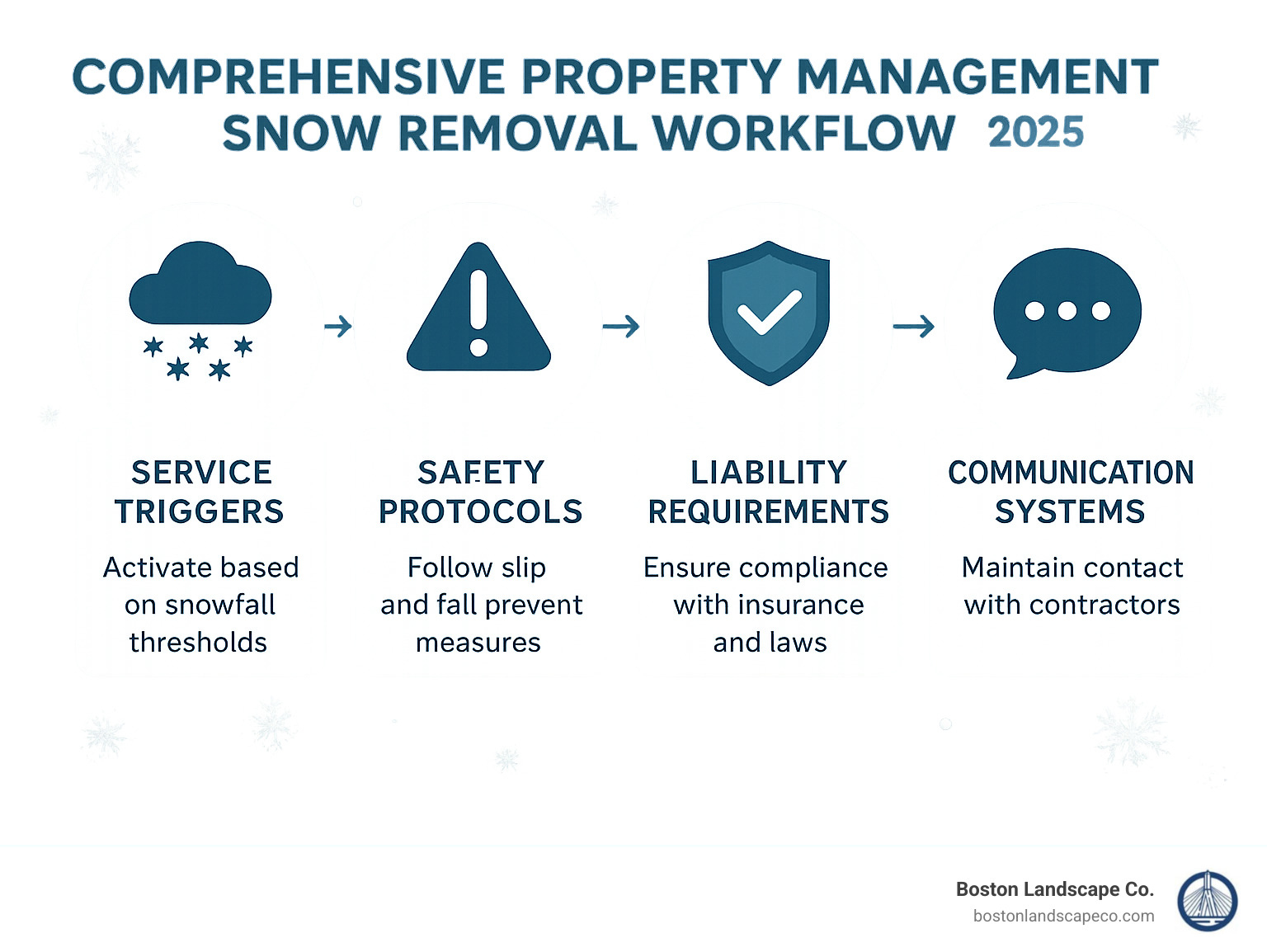
Property management snow removal is essential for maintaining safe, accessible properties during winter months while protecting property managers from potential liability issues. Effective snow removal goes beyond basic plowing – it requires strategic planning, reliable service providers, and clear understanding of legal obligations.
Key Components of Effective Property Management Snow Removal:
- Service Planning: Establish clear triggers for snow removal activation (typically 1-2 inches)
- Liability Protection: Ensure proper insurance coverage and compliance with local ordinances
- Service Types: Combine plowing, de-icing, and walkway clearing for comprehensive coverage
- Communication: Maintain direct contact with service providers for real-time updates
- Documentation: Keep detailed records of all snow removal activities for liability protection
Winter weather creates significant challenges for property managers. Slip and fall accidents increase dramatically during snowy conditions, making prompt snow removal a critical safety measure. Properties that fail to maintain clear walkways and parking areas face potential lawsuits and regulatory violations.
The complexity of snow removal extends beyond simply hiring a plow truck. Property managers must consider factors like snow pile placement, de-icing schedules, and emergency response protocols. Different property types – from apartment complexes to commercial buildings – require customized approaches to snow management.
I’m Steve Schumacher, owner-operator of Boston Landscape Co since 1991, specializing in comprehensive winter maintenance solutions. My three decades of experience in property management snow removal across the Greater Boston region has shown me that proactive planning and reliable partnerships are essential for successful winter property management.
Find more about property management snow removal:
Understanding Property Management Snow Removal
When winter arrives in Massachusetts, it doesn’t knock politely on your door. One day you’re raking leaves, and the next morning you’re staring at six inches of snow blocking your property’s entrance. As property managers, you know this feeling all too well.
Property management snow removal isn’t just about pushing snow around with a plow truck. It’s about creating a comprehensive winter strategy that keeps your tenants safe, your business running, and your liability insurance agent happy. After three decades in this business, I’ve learned that every property tells its own snow story.
Think about it this way: a busy medical office building has completely different needs than a quiet residential complex. The medical building can’t afford to have patients slipping on icy walkways or struggling through unplowed parking lots. Meanwhile, the residential property needs reliable access for residents coming home from work, but the timing might be more flexible.
The key is understanding that effective snow removal combines three essential elements: proper planning, reliable execution, and clear communication. When these pieces work together, winter becomes manageable instead of stressful.
Evaluating Snow Removal Needs
Every property has its own personality when it comes to snow removal. I’ve seen identical apartment complexes right across the street from each other require completely different approaches based on their layout and tenant needs.
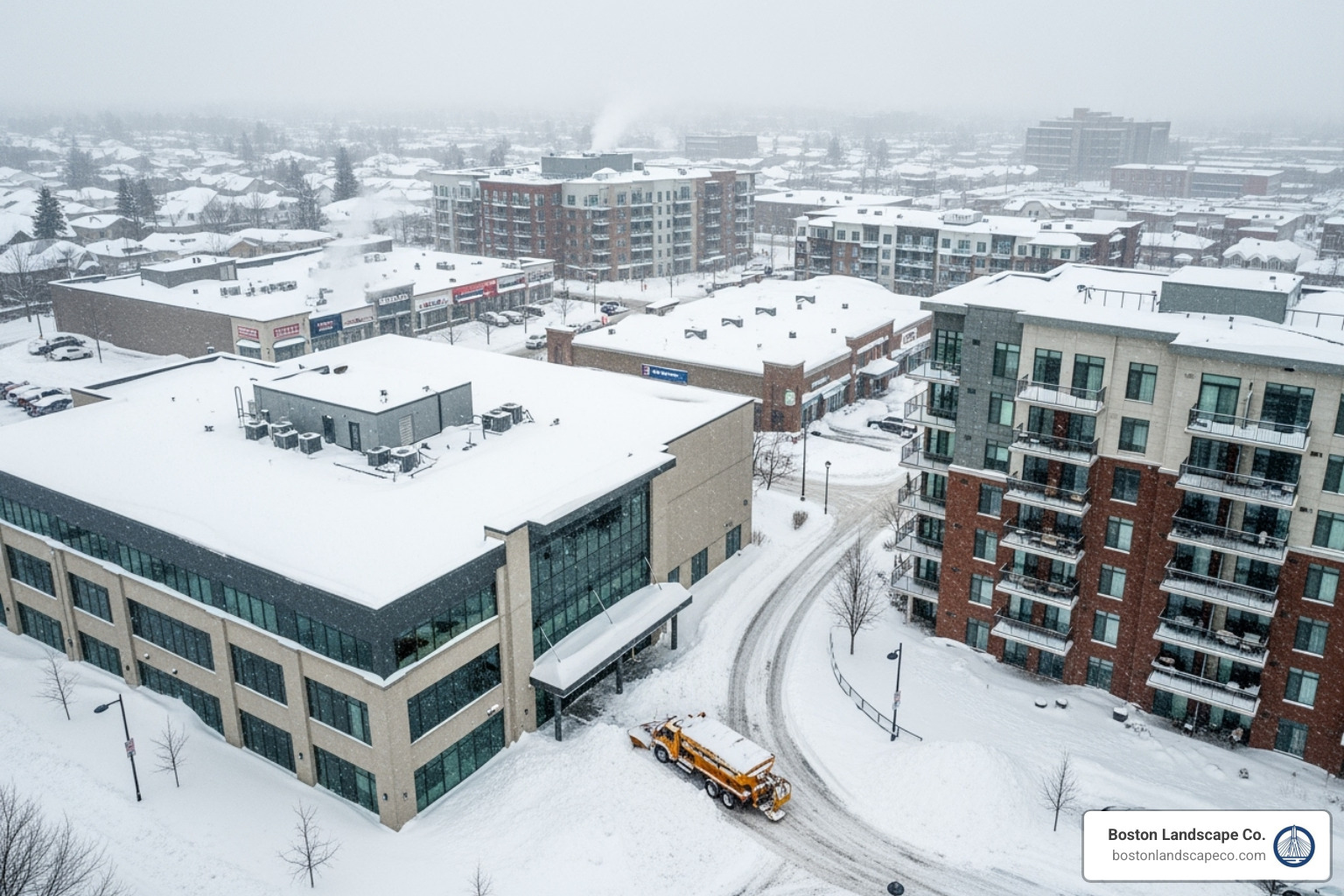
Property size and layout form the foundation of any good snow removal plan. That sprawling retail plaza with multiple entrances, loading docks, and fire lanes needs a different strategy than a compact office building with one main parking area. We walk every property before winter hits, mapping out the most efficient plowing routes and identifying potential trouble spots.
Traffic volume makes a huge difference in how we approach your property. High-traffic areas like shopping centers or medical facilities need immediate attention when snow starts falling. These properties can’t wait until morning – they need clearing throughout the storm to keep business flowing safely.
Critical access points deserve special attention in any property management snow removal plan. Emergency exits, fire lanes, and handicap-accessible routes must stay clear at all times. We prioritize these areas because they’re not just convenient – they’re often legally required to remain accessible.
Snow plowing forms the backbone of winter maintenance, but it’s more complex than it might seem. Different surface types require different techniques. Asphalt handles aggressive plowing well, while decorative pavers need a gentler touch. Our experienced operators know how to clear each surface effectively without causing damage.
De-icing completes the snow removal process by tackling what plowing leaves behind. Even after thorough plowing, thin layers of ice can form, creating slip hazards. We apply rock salt, calcium chloride, or liquid brines based on temperature conditions and environmental considerations. The goal is melting ice effectively while protecting your landscaping and concrete.
Choosing the Right Services
Finding the right snow removal partner means finding someone who understands your specific needs and budget constraints. We’ve structured our services to provide flexibility because no two properties are exactly alike.
Service plans should match your property’s snow patterns and your budget preferences. Per-event service works well for properties in areas with unpredictable snowfall – you only pay when we actually plow and treat your property. Seasonal contracts provide budget certainty by charging a fixed fee for the entire winter, regardless of how much snow Mother Nature dumps on us. For long-term planning, multi-season agreements offer rate stability and guaranteed service priority over multiple years.
Snow pile management might not sound glamorous, but it’s absolutely critical for property safety and functionality. Snow has to go somewhere, and where it goes matters enormously. Poorly placed snow piles block sight lines, create drainage problems when they melt, and can even violate local ordinances. We strategically position snow piles to maintain visibility and access while planning for spring melt-off.
Dispatching triggers eliminate the guesswork from snow removal timing. Most properties benefit from activation when snowfall reaches 1-2 inches, but we customize these triggers based on your specific needs. A medical facility might need clearing at just one inch, while a warehouse complex might wait for two inches. We also consider factors like temperature, wind, and the type of precipitation to make smart dispatching decisions.
The Role of Technology in Snow Removal
Gone are the days when property management snow removal relied solely on muscle and basic equipment. Today’s winter operations run on smart technology that transforms how we manage snow events from start to finish.
Think about it – when a storm hits at 2 AM, you want to know exactly when your property will be cleared, who’s handling it, and when the job is done. That’s where modern technology becomes your best friend during those stressful winter months.
Benefits of Advanced Technology
We’ve acceptd cutting-edge technology to revolutionize our snow removal services. Our comprehensive technology platform acts like mission control for winter operations, bringing clarity to what used to be a chaotic process.
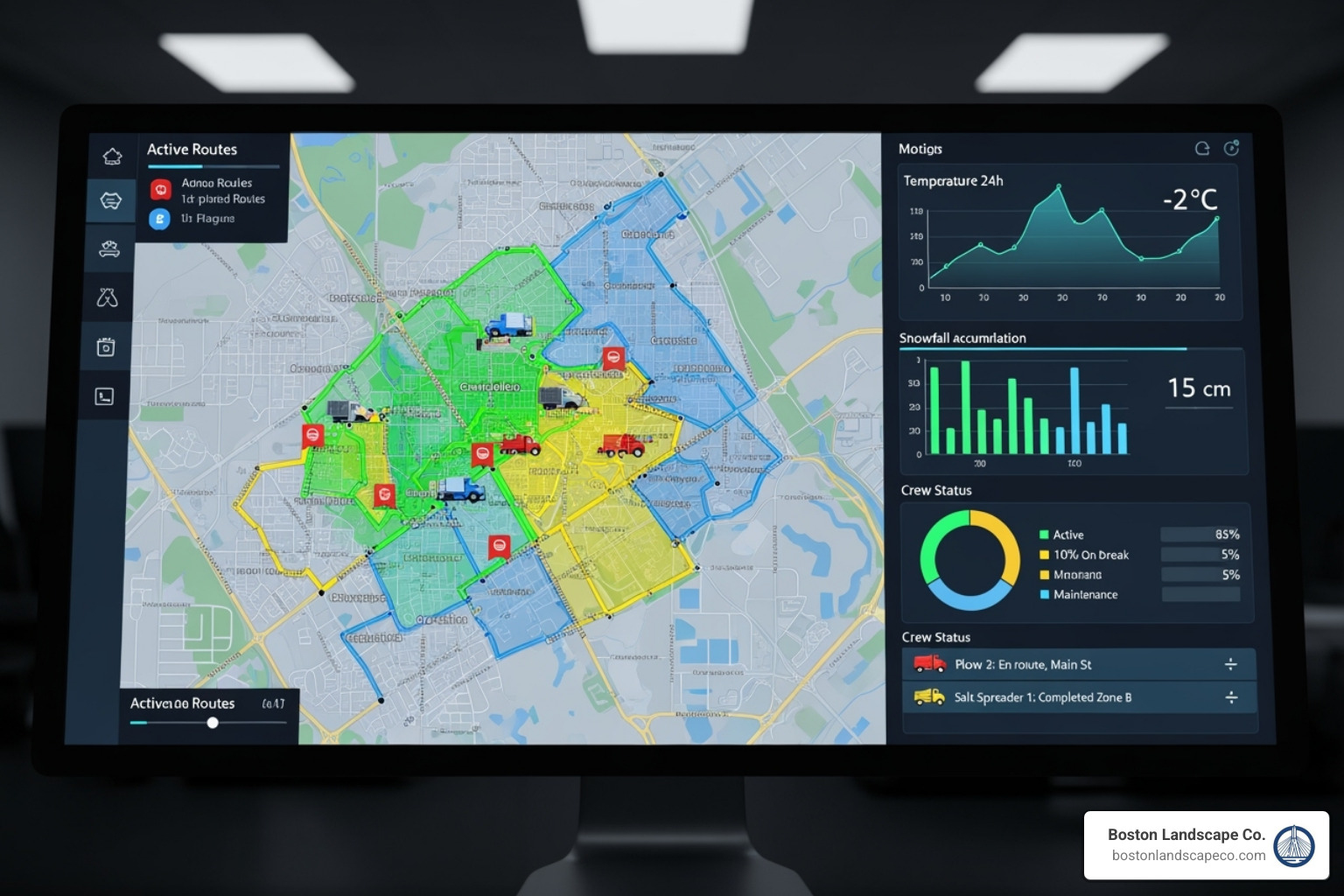
Real-time tracking means you’ll never wonder where our crews are again. Every plow truck carries GPS equipment that shows us (and you) exactly where they’re working and how the job is progressing. No more waiting by the phone or staring out the window hoping someone shows up.
The work verification system takes all the guesswork out of service delivery. Every completed area gets documented with time-stamped photos and GPS coordinates. This isn’t just helpful for peace of mind – it’s crucial protection if liability questions arise later. You’ll have rock-solid proof that your walkways were cleared and your parking lots were properly treated.
Smart dispatching gets our crews to your property faster than ever before. When snow starts falling, our system automatically identifies which team is closest to your location and sends them your way. No more manual phone calls or confusion about who’s covering which property.
The historical data we collect tells an amazing story over time. We track every snowfall, every service call, and every application of ice melt. This information helps us predict your property’s needs better each season and provides detailed reports for your records and budgeting.
Communication improvements might be the biggest game-changer of all. Our system sends automatic updates when crews arrive, when they finish, and if any unexpected issues pop up. Many property managers tell us this constant communication loop reduces their winter stress dramatically.
This technology doesn’t replace the human touch – it improves it. Our experienced crews still make the critical decisions about where to pile snow and how much de-icer to apply. But now they have powerful tools that make them more efficient and accountable than ever before.
Legal Obligations and Liability
Winter weather brings more than just snow and ice – it brings a complex web of legal responsibilities that every property manager needs to understand. When someone slips and falls on your property, the question isn’t whether it was an accident, but whether you took reasonable steps to prevent it. This is where property management snow removal becomes not just a service, but a legal necessity.
The reality is straightforward: property owners have what’s called a “duty of care” to keep their premises reasonably safe for anyone who visits. This means tenants, customers, delivery drivers, and even solicitors. When winter arrives, this duty extends to maintaining safe walkways, parking areas, and access points. Fail to meet this standard, and you could find yourself facing expensive lawsuits and insurance claims.
Documentation becomes your best friend in these situations. If someone does slip and fall, detailed records of your snow removal activities can be the difference between a dismissed claim and a costly settlement. This includes when services were performed, what materials were used, and how the work was verified. Our technology-driven approach provides this level of documentation automatically, giving you peace of mind and legal protection.
State-Specific Snow Removal Laws
Here’s where things get interesting – and complicated. Snow removal laws aren’t uniform across the country, or even within a single state. What’s required in one town might be completely different from the requirements just a few miles away. Since we serve communities throughout the Greater Boston area, including Boston, Bedford, Burlington, Concord, Lexington, Malden, Medford, Reading, Somerville, Stoneham, Waltham, Wellesley, Winchester, and Woburn, we’ve learned these local nuances inside and out.
Massachusetts doesn’t have a blanket statewide law requiring private property owners to clear sidewalks, but many individual municipalities do. Boston, for example, requires property owners to clear sidewalks within three hours after snowfall ends during daytime hours, or by 1 PM if snow stops overnight, as detailed on the City of Boston’s official website. Miss this deadline, and you could face fines on top of potential liability issues.
The tenant responsibility question comes up frequently in our conversations with property managers. Sometimes rental agreements shift snow removal duties to tenants, especially in commercial leases. But here’s the catch – even with these agreements, property owners often retain some liability, particularly for common areas like parking lots and main walkways. We always recommend reviewing lease agreements carefully and consulting with legal counsel when there’s any uncertainty.
What makes this even trickier is that laws can vary dramatically between neighboring communities. A requirement that applies in one town might not exist in the next. That’s why working with a local snow removal company that understands these regional differences isn’t just convenient – it’s essential for staying compliant and protected.
Cost Considerations for Snow Removal
Let’s talk about the elephant in the room – or rather, the snow plow in the parking lot: cost. I get it – budgeting for winter can feel like trying to predict the weather itself. One year you might get lucky with a mild winter, and the next year Mother Nature dumps three feet of snow on you in February. Understanding the financial aspects of property management snow removal is essential for smart budget planning and finding the right service partner.
The truth is, snow removal costs can swing dramatically based on your specific situation. A small office building with a straightforward parking lot will have very different needs than a sprawling shopping center with multiple entrances and endless sidewalks. That’s why I always tell property managers to think beyond just the sticker price – you’re investing in safety, liability protection, and peace of mind.
Pricing Models and Contracts
When it comes to snow removal pricing, you’ve got options. Think of it like choosing a cell phone plan – you can go pay-as-you-go or commit to a contract for better rates and guaranteed service.
Pay-as-you-go models charge you only when it snows and we’re out there working. Based on average internet data, a single plowing event for a small commercial lot might run anywhere from $75 to $400, with larger or more complex properties easily reaching $800 or more per event. These are average costs based on internet data and not actual costs for Boston Landscape Co. This approach gives you flexibility, but it can make your winter budget feel like a roller coaster ride.
Seasonal contracts offer the stability that many property managers crave. You pay a fixed price for the entire winter season, regardless of whether we get hit with five storms or fifteen. Internet data suggests seasonal contracts can range from $2,000 for smaller properties up to $25,000 or more for large commercial complexes. Again, these are average costs based on internet data and not actual costs for Boston Landscape Co. It’s like buying winter insurance – you know exactly what you’ll spend, and you get priority service when the snow starts flying.
Multi-season agreements take that stability even further, locking in rates for multiple years. These partnerships often come with the best value and help us build a deeper understanding of your property’s unique needs.
Several factors influence what you’ll ultimately pay for snow removal. Property size and complexity are the biggest drivers – a simple rectangular parking lot is much easier (and cheaper) to clear than a property with tight corners, multiple levels, and intricate walkway systems. Service scope matters too. Basic plowing is one thing, but comprehensive service including de-icing, sidewalk clearing, and snow hauling naturally costs more.
Your trigger depth also affects pricing. If you want us mobilizing at the first inch of snowfall, you’ll see more service calls than if you wait until three inches accumulate. Response time requirements can impact costs as well – emergency service during a blizzard carries a premium compared to standard next-day clearing.
At Boston Landscape Co., we believe in transparent pricing custom to your specific property. Our proposals are always custom to your needs, and we’ll work with you to find the most cost-effective solution that keeps your property safe and accessible all winter long.
Frequently Asked Questions about Property Management Snow Removal
After three decades in the snow removal business, I’ve heard just about every question you can imagine from property managers. Some are worried about costs, others about liability, and many just want to know they’re making the right choices for their properties. Let me share the answers to the questions that come up most often.
What are the average costs for snow removal services?
This is hands down the most common question I get, and honestly, it’s a bit like asking “how much does a car cost?” The answer depends on what you need and what you’re buying.
Based on general internet data, you might see a single commercial plowing event ranging anywhere from $75 to $500 for smaller lots, while comprehensive seasonal contracts could run from $3,000 all the way up to $25,000 or more for larger properties. These wide ranges reflect the huge variety in property sizes, service needs, and regional differences. These figures are averages from internet data and don’t represent Boston Landscape Co.’s specific pricing.
What really drives the cost? Property size is the big one – a small office building parking lot versus a massive shopping center will have vastly different needs. The scope of services matters too. Are we just pushing snow around, or are you looking for the full package with de-icing, walkway clearing, and snow hauling?
The pricing model you choose makes a difference as well. Pay-per-event gives you flexibility but less predictability, while seasonal contracts offer budget certainty regardless of what Mother Nature throws at us.
For accurate pricing custom to your specific property, the best approach is always to get a custom quote. Every property is unique, and we believe in transparent pricing that reflects your actual needs. You can find more detailed cost breakdowns in our article on average cost for commercial snow removal.
How do snow removal laws vary by state?
Here’s where things get interesting – and sometimes frustrating for property managers with multiple locations. There’s no single federal law governing snow removal, which means you’re dealing with a patchwork of state and local regulations.
In Massachusetts, where we operate, the state doesn’t actually require private property owners to clear public sidewalks. But don’t let that fool you – many individual cities and towns absolutely do. Boston has clear ordinances about sidewalk clearing, while neighboring communities might have completely different rules.
These local ordinances typically spell out who’s responsible for clearing snow (property owner, tenant, or both), how quickly it needs to be done after a storm (usually within 6 to 24 hours), and what areas must be cleared and to what width.
The penalties for non-compliance vary too. Some towns just issue fines, while others hold property owners liable for accidents that occur due to negligent snow removal. That’s why our property management snow removal services always include thorough documentation – it’s your best protection.
Since we service everywhere from Stoneham to Wellesley, we stay current on all the local regulations. It’s part of our job to make sure your property stays compliant, so you don’t have to become an expert in municipal snow ordinances across multiple communities.
What should be included in a snow removal contract?
A solid contract is like a good winter coat – it protects you from the elements and keeps you comfortable all season long. I’ve seen too many property managers get caught in poorly written agreements that leave them out in the cold when problems arise.
Your property management snow removal contract should clearly define the scope of work – exactly what services we’re providing and which areas we’re covering. Are we handling just the parking lot, or does that include sidewalks, entrances, and emergency exits? The more specific, the better.
Trigger depths and timing need to be crystal clear. When do our trucks roll out? Most of our contracts trigger at 1-2 inches of snow, but this can be customized based on your property’s needs and foot traffic patterns.
The pricing and payment terms section should leave no room for confusion. Whether you’re choosing per-event pricing or a seasonal contract, every rate and fee should be spelled out clearly.
Don’t overlook the insurance and documentation requirements. We carry comprehensive liability and workers’ compensation insurance, and we provide detailed service records including GPS tracking and time-stamped photos. This documentation isn’t just good business practice – it’s essential protection if liability issues arise.
Communication protocols matter more than you might think. When a storm hits at 2 AM, you want to know exactly how and when you’ll receive updates about service completion.
Finally, address snow pile management upfront. Where does all that snow go? For properties with limited space, this can become a real headache if not planned properly.
For more detailed insights into creating bulletproof agreements, take a look at our guide on commercial snow plowing contracts. And if you’re managing properties with large parking areas, our article on Parking Lot Snow Plowing covers the specific considerations for those spaces.
Conclusion
Winter doesn’t have to be the season that keeps property managers up at night. With the right planning, a reliable partner, and a clear understanding of your property’s unique needs, property management snow removal becomes less of a winter nightmare and more of a well-orchestrated dance with Mother Nature.
After three decades in this business, I’ve learned that the difference between a property manager who dreads winter and one who confidently faces it comes down to preparation and partnership. The managers who sleep well during blizzards are the ones who’ve done their homework – they know their legal obligations, understand their costs, and have a trusted team ready to spring into action when the first flakes fall.
At Boston Landscape Co., we’ve built our reputation on being that trusted partner. We’re not just the folks who show up with plows when it snows – we’re your comprehensive winter maintenance solution. From our home bases in Stoneham and Billerica, we’ve been keeping properties safe and accessible across the Greater Boston area for over 30 years. Whether you’re managing properties in the heart of Boston or out in Bedford, Burlington, Carlisle, Concord, Lexington, Malden, Medford, Reading, Somerville, Waltham, Wellesley, Winchester, or Woburn, we understand the unique challenges each location brings.
What sets us apart isn’t just our experience – it’s our commitment to custom solutions. We know that a busy medical plaza in Somerville has vastly different needs than a quiet residential complex in Concord. That’s why we don’t offer cookie-cutter packages. Instead, we work with you to create a winter maintenance plan that fits your property, your budget, and your peace of mind.
The technology we use, the legal protections we provide, and the transparent communication we maintain all serve one ultimate goal: making sure your property remains safe, accessible, and compliant throughout whatever winter throws our way. Because at the end of the day, your success is our success.
Ready to turn winter from your biggest headache into your smallest worry? Let’s talk about how we can create a custom solution that keeps your property – and your stress levels – exactly where they should be. After all, we mean business when it comes to snow, so you don’t have to worry about yours.
