
Lawn Water Sprinkler System: Smart 2025 Guide
Why Choosing the Right Lawn Water Sprinkler System Matters
A lawn water sprinkler system can transform how you care for your property—saving time, reducing water waste, and keeping your grass healthy through Boston’s unpredictable weather. With options ranging from simple hose-end sprinklers to sophisticated smart systems, finding the right fit for your lawn and budget is key.
As fall settles into Greater Boston, it’s the ideal time to evaluate how your lawn handled summer heat, fine-tune watering, and plan winterization. Addressing dry spots now and optimizing your setup helps fall overseeding take hold and sets you up for a smooth spring start-up.
Quick Comparison: Main Sprinkler System Types
| System Type | Best For | Cost Range* | Key Advantage |
|---|---|---|---|
| Above-Ground | Small lawns, renters, seasonal use | $50-$500 | Portable and affordable |
| In-Ground Spray | Medium lawns, detailed areas | $2,500-$8,000 | Automated and consistent |
| In-Ground Rotor | Large, open lawns | $3,000-$9,500 | Water-efficient coverage |
| Drip/Soaker | Gardens, shrubs, foundation beds | $450-$2,000 | Precise root watering |
| Smart Systems | Tech-savvy homeowners, water conservation | $5,500-$17,000+ | Weather-based automation |
*National average costs from internet data, not Boston Landscape Co. quotes
The right system matches the technology to your lawn’s size and complexity. Choosing correctly can prevent significant water waste—and in the Greater Boston area, where water prices are among the highest nationally, efficiency matters for your wallet and the environment.
Each fall, many homeowners realize their current watering methods are falling short. Brown patches after summer, high water bills, and the chore of dragging hoses lead them to seek better solutions before winter.
I’m Steve Schumacher, owner-operator of Boston Landscape Co. since 1991. I’ve helped hundreds of Greater Boston property owners design and install lawn water sprinkler systems that fit their specific needs. My three decades of experience with New England’s rocky soil and weather have taught me that the “best” system is the one that fits your property, goals, and maintenance preferences.
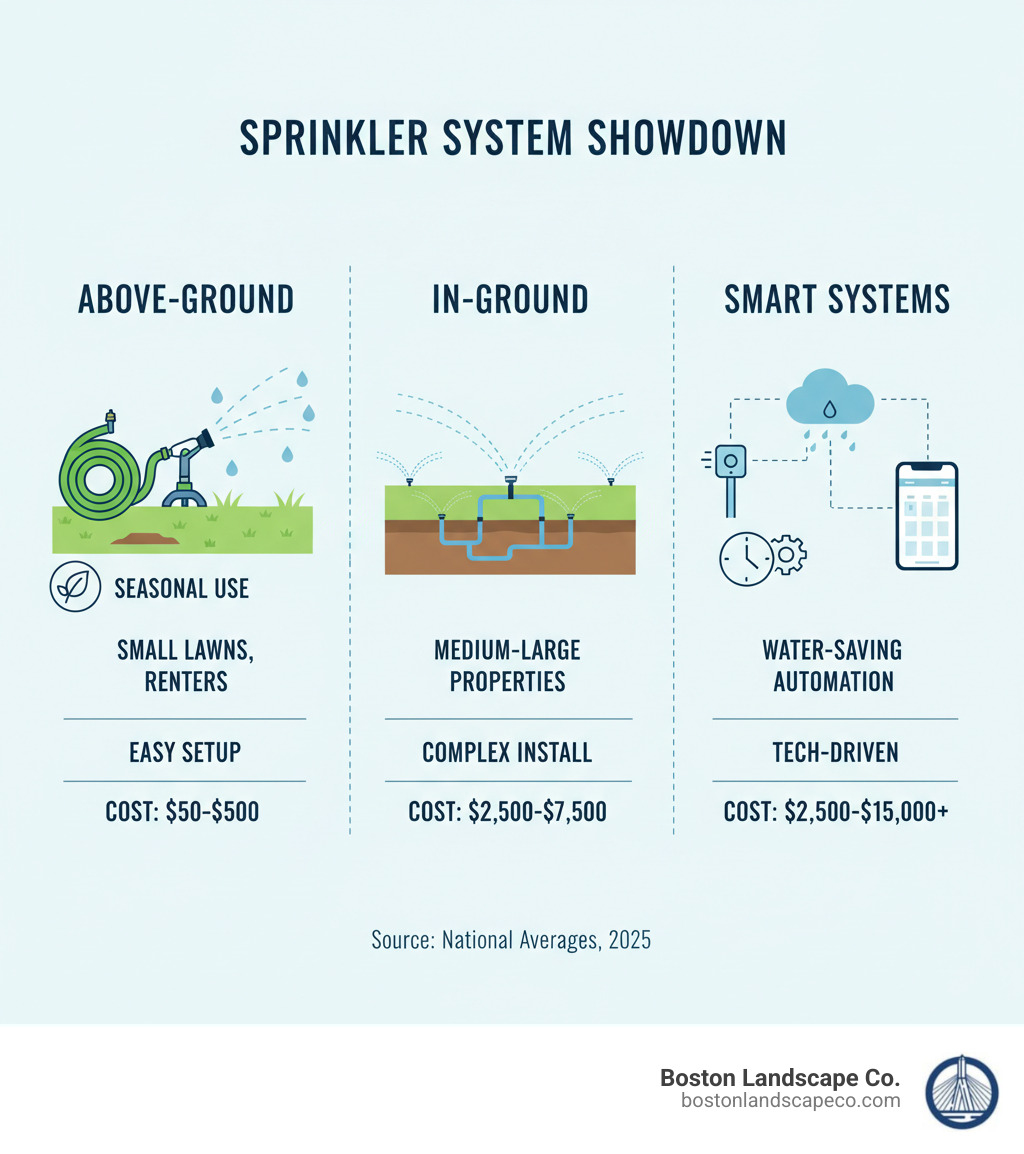
Simple lawn water sprinkler system word guide:
The First Choice: Above-Ground vs. In-Ground Systems
Your first big decision when choosing a lawn water sprinkler system is whether to go above-ground or in-ground. One offers flexibility and low upfront cost, while the other is a long-term investment that becomes part of your property. The right choice depends on your lawn’s size, your budget, and your desire for convenience.
| Feature | Above-Ground Systems | In-Ground Systems |
|---|---|---|
| Cost Range* | $50 – $500 | $1,600 – $10,000+ |
| Installation | DIY, quick setup, no digging | Professional required, trenching, complex |
| Maintenance | Easy to move, store, repair | Professional winterization, annual checks, repairs |
| Aesthetics | Visible hoses and sprinklers, clutter | Hidden components, clean lawn appearance |
| Best Use Cases | Small patches of grass, temporary use, renters | Large lawns, complex landscapes, long-term solution |
*National average costs from internet data, not Boston Landscape Co. quotes
Heading into fall and winterization season, this choice will shape your watering routine for years to come.
Above-Ground Sprinklers: Pros and Cons
Above-ground sprinklers are the grab-and-go option. Portability is their main advantage—move them wherever you need water. The low initial cost ($50 to $500) and easy setup make them attractive for homeowners with small lawns or renters who can’t make permanent changes.
However, the downsides are significant. Uneven coverage is a common complaint, leading to dry spots and soggy patches. Manual operation means you are responsible for turning the water on and off and moving the sprinkler. Finally, hose management—dragging, untangling, and storing hoses—is a constant chore.
In-Ground Sprinklers: Pros and Cons
In-ground systems are the set-it-and-forget-it solution. Automated watering is the game-changer; program the controller once, and the system handles the rest, whether you’re home or on vacation.
Professionally designed systems provide even coverage, ensuring every part of your lawn gets the right amount of water. This precision is especially valuable for properties with irregular shapes. A properly installed lawn water sprinkler system can also increase your property value, as buyers see it as a valuable, well-maintained feature.
With hidden components, your lawn looks clean and uncluttered. The main drawbacks are the higher initial cost and the need for professional installation, which involves trenching to bury pipes. You’ll also need annual maintenance and winterization to prevent freeze damage, but for many, the convenience and long-term benefits are well worth the investment.
If you’re considering upgrading your entire outdoor space while installing an irrigation system, our residential landscaping services can help you create a comprehensive plan that improves both functionality and curb appeal.
Exploring Your In-Ground Lawn Water sprinkler System Options
Once you’ve committed to an in-ground lawn water sprinkler system, the design work begins. The key is understanding head-to-head coverage (where spray from one head reaches the next), proper zoning (grouping areas with similar watering needs), and matching the right sprinkler type to each part of your landscape. Your home’s water pressure and flow rate are critical factors that a professional designer will use to plan an efficient system.
Spray Head Systems for Detailed Areas
Spray heads pop up, spray water in a fixed pattern, and disappear. They are precision tools, perfect for small to medium lawns, flower beds, and areas with intricate shapes. These pop-up sprinklers are reliable and cover their area quickly and uniformly, making them ideal for corners and narrow strips of grass.
The trade-off is higher water usage compared to other options. Their rapid application can lead to runoff on heavy clay soils if not timed correctly. Because they don’t throw water as far as rotors, you’ll need more heads to cover the same area, but for detailed work, that precision is essential.
Rotor Head Systems for Large, Open Spaces
Rotor heads are the workhorses of irrigation. They send out rotating streams of water that sweep across large areas. For homeowners with expansive lawns, rotors are the most practical and economical choice. Their slower application rate allows water to soak deep into the soil, promoting healthier roots and reducing runoff. They are also more wind resistant.
The main benefit is efficiency: fewer heads are needed to cover a large area, which means less trenching and fewer potential points of failure. The downside is they are not ideal for small, oddly shaped areas where pinpoint accuracy is required.
Drip Irrigation and Soaker Systems for Targeted Watering
Drip irrigation and soaker hoses are designed for everything but your lawn: shrubs, perennials, vegetable gardens, and foundation plantings. These systems deliver water directly to the root zone, drop by drop, with almost no waste from evaporation or wind. This remarkable efficiency also leads to reduced weed growth since you aren’t watering bare soil.
We often recommend incorporating drip zones into an overall irrigation plan for clients with raised beds or new landscape plantings. The systems are versatile and can be snaked through perennial beds or around shrubs. The only limitation is that they are not suitable for turf, which needs even, overhead watering. For everything else in your landscape, targeted watering at the root is the most efficient approach. If you’re planning landscape improvements, our lawn installation services can integrate both turf and drip irrigation for a complete solution.
The Rise of Smart Irrigation: Saving Water, Time, and Money
The world of lawn water sprinkler systems has been transformed by smart irrigation. These Wi-Fi-connected controllers use weather data and soil sensors to optimize watering automatically. This is a game-changer for water conservation, especially in the Greater Boston region where water rates are high.
According to EPA research on smart controllers, these systems can save the average home over 7,000 gallons of water annually. Beyond the financial savings, you gain peace of mind knowing your lawn gets exactly what it needs. Modern systems also offer app-based control, putting your entire system in your pocket, and some even include leak detection to prevent costly water damage.
How Smart Sprinkler Systems Work
Smart irrigation systems connect to real-time weather data from local stations. If rain is forecast, the system will automatically skip the next watering cycle. They use predictive watering algorithms that analyze weather patterns and your landscape’s needs to create optimal schedules. They calculate evapotranspiration (water lost from soil and plants) and adjust accordingly.
Features like wind skip prevent waste by postponing watering during windy conditions. The system makes automatic schedule adjustments throughout the season, increasing water in the summer heat and decreasing it in the cool of fall. Many also provide detailed water usage reports so you can track your savings.
Key Benefits of a Smart Lawn Water Sprinkler System
Upgrading to a smart system delivers multiple advantages. The most immediate is reduced water bills, with typical savings of 15-30%. Your lawn also becomes healthier, as precision watering promotes deeper, more resilient roots that can better withstand drought.
The convenience and remote access are invaluable. You can adjust your system from anywhere using your phone, giving you complete control and peace of mind. From an environmental perspective, smart irrigation is a responsible way to manage our water resources.
Crucially, these systems excel at adapting to Boston’s changing weather. A traditional timer runs on a fixed schedule, wasting water after rain or leaving your lawn thirsty during dry spells. A smart system responds to these changes automatically, ensuring your lawn thrives no matter what New England weather comes our way.
Budgeting for a Greener Lawn: Installation & Ownership Costs
Understanding the costs of a lawn water sprinkler system upfront prevents surprises. A well-maintained system is an investment that adds value to your home. According to the National Association of Realtors, professional installations can recover 83-86% of their cost at resale.
The typical investment for a new system ranges from $1,600 to $10,000, with most homeowners in our area spending between $2,500 and $6,500. For a standard quarter-acre property, you might expect a cost of $2,000 to $6,500. Pricing is often broken down per-zone ($500 to $1,500) or per square foot ($0.20 to $1.00).
Factors Influencing Your Final Bill
Your final bill depends on several property-specific factors:
- Lawn Size and Shape: Larger, more complex lawns require more materials, zones, and labor.
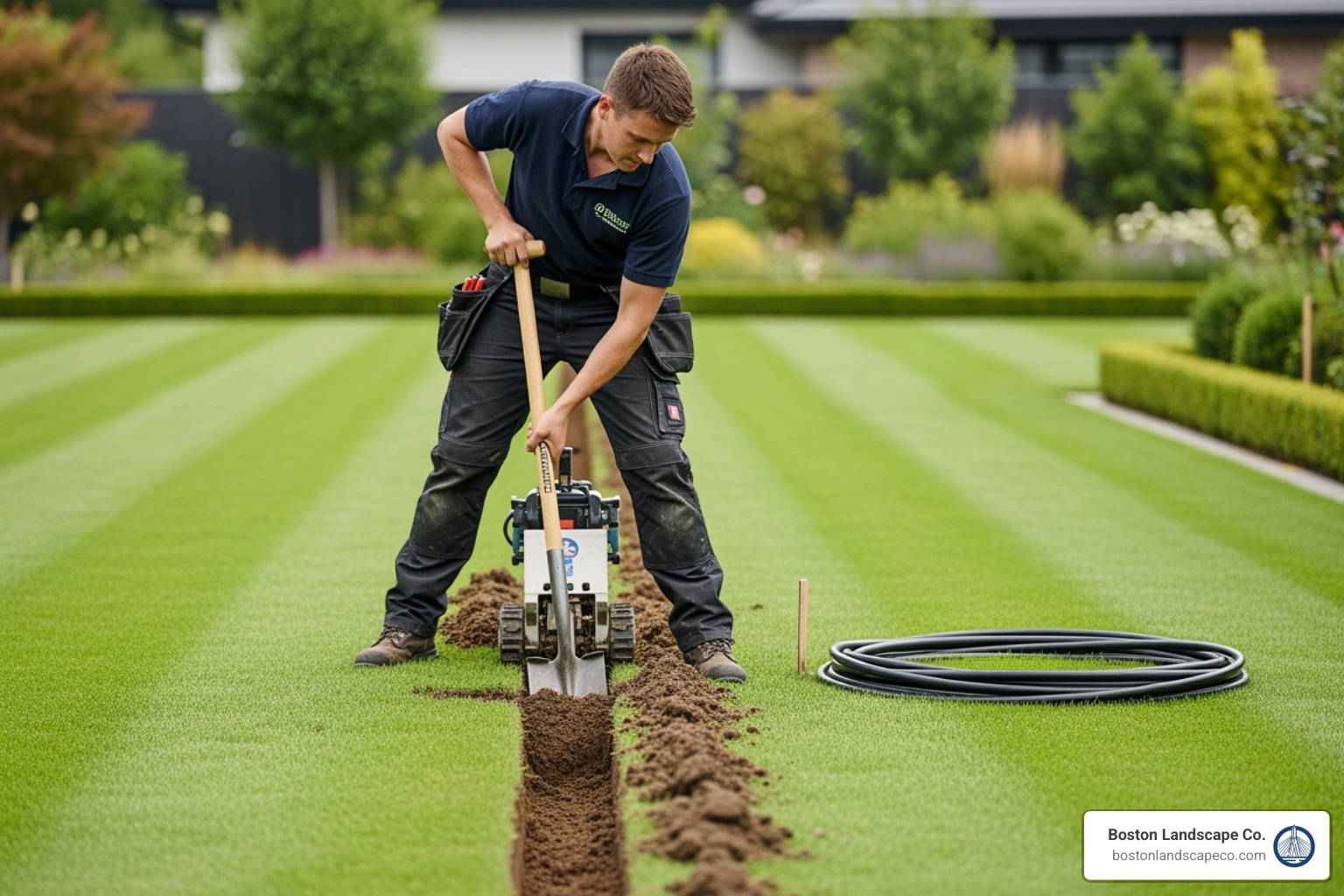
- Soil Type: Our rocky New England soil can increase digging costs by 20-50% compared to sandy soils, sometimes requiring specialized equipment.
- System Complexity: A basic timer is cheaper than a smart system with weather sensors and Wi-Fi control, which can add $170 to $530 to the cost.
- Permits and Backflow Prevention: Most towns require a backflow prevention device ($250-$550) and permits ($35-$200) to protect the public water supply.
Disclaimer: All prices are national averages from internet data and not a quote for services from Boston Landscape Co. Contact us for a personalized estimate based on your specific property.
The True Cost of a DIY Lawn Water Sprinkler System
While a DIY installation sounds like a way to save money, it comes with hidden costs and risks. Expect to spend $200-$500 on tool rentals and invest 20-40 hours of your time.
The potential for costly mistakes is the biggest concern. Hitting utility lines is dangerous, and improper pipe sizing leads to poor performance. In our climate, pipes must be buried 8-12 inches deep to prevent freeze damage. Professionals also know how to work around existing hardscaping without causing damage.
Most importantly, DIY systems have no warranty. A professional installation for a quarter-acre lot may range from $3,500 to $11,000, but that price buys you expertise, efficiency, and the peace of mind that comes with a warranty on parts and labor.
Keeping the Water Flowing: Maintenance, Troubleshooting, and Winterization
A lawn water sprinkler system needs regular attention to perform at its best, especially in our Massachusetts climate. Fortunately, most maintenance is straightforward, and catching small issues early prevents expensive repairs. Common problems like clogged heads, leaks, and zone failures are often simple to diagnose.
A clogged head may just need its filter cleaned. Leaks often reveal themselves with puddles or soggy spots. If a whole zone fails, the issue could be the controller, a faulty valve, or damaged wiring. While some fixes are DIY-friendly, others benefit from professional service.
Essential Seasonal Maintenance Checklist
Your system has two critical checkpoints each year: spring start-up and fall winterization.
In spring, slowly turn on the main water supply to avoid pressure surges. Reprogram your controller for the season and run each zone, checking for proper pop-up, spray patterns, and leaks. This is the time to clean nozzles and adjust heads to ensure you’re watering your lawn, not the sidewalk. Most towns also require annual backflow preventer testing by a certified professional.
In fall, the focus is on protection. Before the first hard freeze, shut off the main water supply and prepare for winterization.
How to Winterize Your System for a Massachusetts Winter
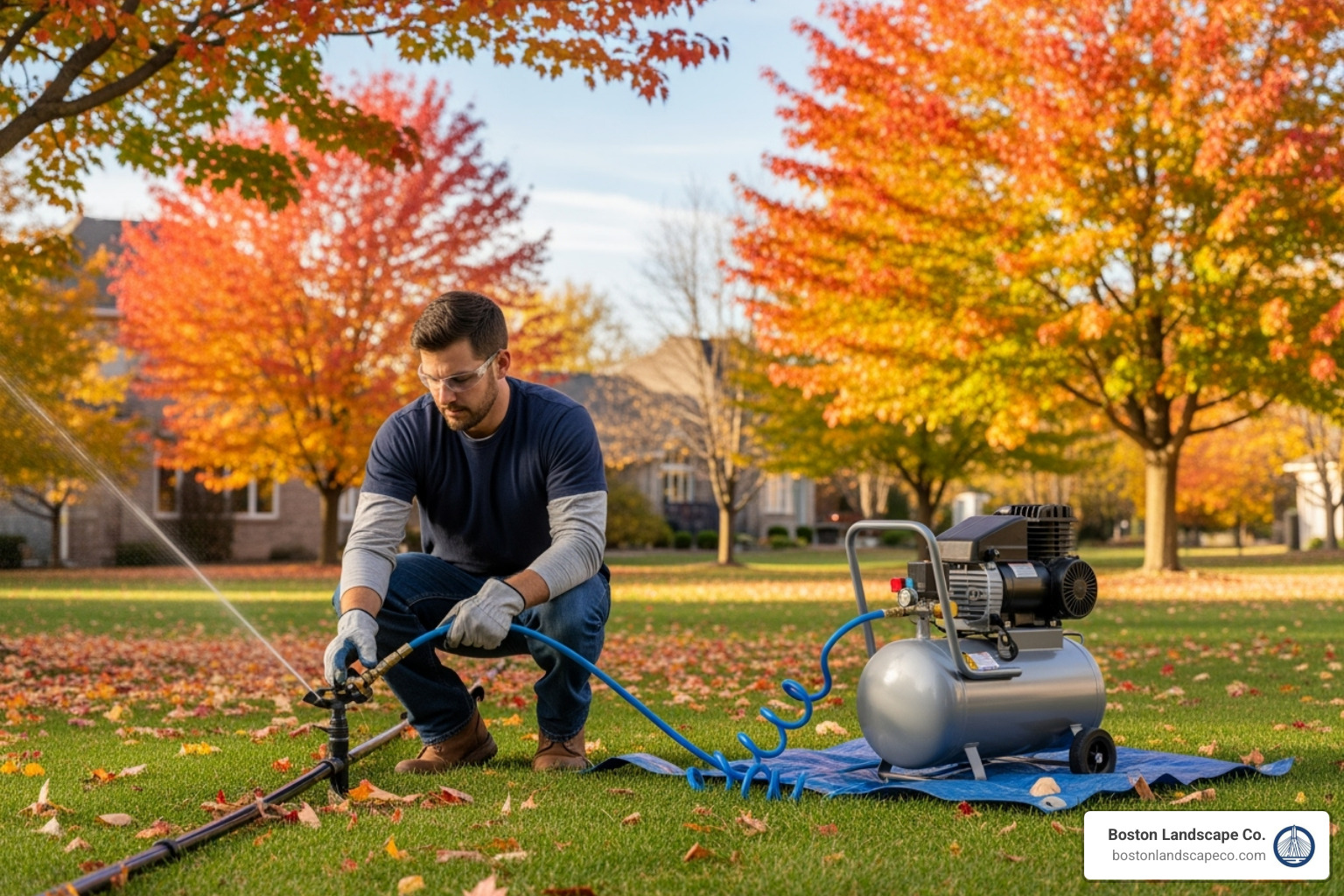
In New England, winterization is not optional. Water freezing inside pipes and heads can cause thousands of dollars in damage. The compressed air method is the only guaranteed way to protect your investment. A high-volume air compressor is used to force every drop of water out of the pipes, valves, and sprinkler heads.
This is not a job for a standard garage compressor; it requires specialized equipment to avoid damaging the system. Professional winterization typically costs $60 to $200 (national average pricing from internet data, not Boston Landscape Co. quotes). This small investment protects a system worth thousands and ensures it will be ready to go next spring. After the blowout, the controller is shut off, and your system is safe for the winter.
Frequently Asked Questions about Lawn Sprinkler Systems
Over the years, we’ve answered hundreds of questions from homeowners across Greater Boston. These are the three that come up most often when people are considering a lawn water sprinkler system.
How many irrigation zones does my yard need?
The number of zones depends on several factors, not just size. A professional design considers:
- Water Pressure (PSI) and Flow Rate (GPM): This determines how many sprinkler heads can run at once.
- Lawn Size and Layout: Small yards (under 5,000 sq. ft.) may need 2-3 zones, while larger ones (over 10,000 sq. ft.) often need 5-8+ zones.
- Plant Types: Turf, shrubs, and gardens have different water needs and should be on separate zones.
- Sun Exposure and Slopes: Sunny or sloped areas require different watering schedules than shady, flat areas to prevent runoff and ensure proper absorption.
How do I adjust sprinkler heads for optimal coverage?
Properly adjusted heads save water and eliminate dry spots. Most heads can be adjusted for two things:
- Spray Pattern (Arc): On spray heads, a small screw or dial sets the spray from a narrow corner to a full circle. On rotors, you adjust the left and right stops to define the sweep.
- Radius (Distance): A diffuser screw can reduce how far the water throws, which is useful for preventing overspray on sidewalks and driveways.
The goal is head-to-head coverage, where the spray from one sprinkler reaches the next. This ensures uniform watering across your entire lawn.
How long and how often should I water my lawn?
The best practice is to water deeply and infrequently. This encourages deep root growth, making your lawn more drought-resistant.
- Amount: Aim for 1 to 1.5 inches of water per week, delivered in one or two sessions.
- Soil Type: Sandy soil needs shorter, more frequent watering, while heavy clay soil benefits from longer, less frequent cycles to allow for slow absorption.
- Timing: The best time to water is early morning (4 AM to 8 AM). It’s cool, winds are calm, and water has time to soak in before the sun can cause evaporation. Watering in the morning also allows grass blades to dry, reducing the risk of fungal diseases.
Conclusion: The Right System for a Thriving Boston Lawn
Choosing the right lawn water sprinkler system for your Greater Boston property is about matching the technology to your lawn’s needs, your lifestyle, and your goals. Whether it’s a simple above-ground unit, a zoned in-ground system, or a smart controller that adapts to New England’s weather, the right choice will make a significant difference.
The long-term value of a well-designed system extends beyond convenience. You’ll see real savings on your water bills, which is critical in a region with high water rates. Your lawn will be healthier and more resilient, and a professionally installed system can recover 83-86% of its cost at resale, according to the National Association of Realtors.
Water conservation is a responsibility we all share. A modern lawn water sprinkler system helps you maintain a beautiful outdoor space while using this resource wisely.
As we head through fall into winter, it’s the perfect time to winterize your system and plan any upgrades so you’re ready for spring.
After more than three decades working with New England’s rocky soil and unpredictable weather, we know that every property is unique. Your lawn’s size, soil type, and sun exposure all shape what system will work best for you. We don’t believe in one-size-fits-all solutions; we believe in designing a system that fits your property perfectly.
For a professional assessment and installation custom to your property’s unique needs, explore our irrigation system installation services. We’re here to help you create the lush, green landscape you’ve been dreaming about.
