
Irrigation System Installers: Smart Guide 2025
Why Finding the Right Irrigation System Installers Matters for Your Property
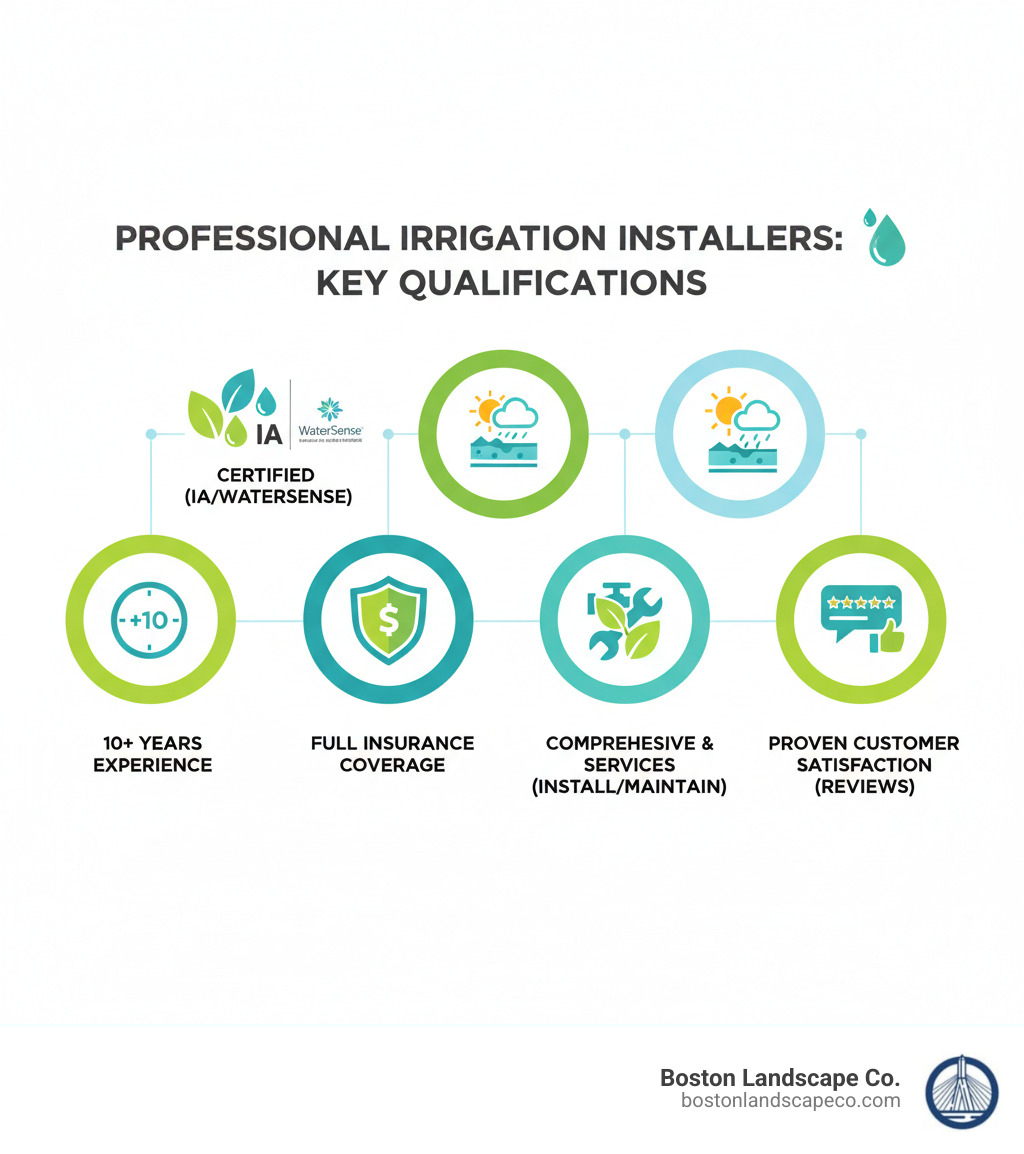
Irrigation system installers are professionals who design, install, and maintain automatic watering systems. Here’s how to find the right one:
What to Look For:
- Experience: 10+ years in the industry.
- Certifications: Irrigation Association (IA) Certified or EPA WaterSense Partner.
- Insurance: Fully bonded and insured for liability and worker’s compensation.
- Local Knowledge: Understanding of your region’s soil, climate, and frost depth.
- Services Offered: Installation, maintenance, winterization, and repairs.
- Proven Track Record: Positive reviews and a portfolio of completed projects.
Where to Find Them:
- Irrigation Association’s Certified Professional Directory
- EPA’s WaterSense Partner Search
- Local landscaping companies with irrigation specialties.
- Word-of-mouth referrals.
Spring is the prime season for irrigation installation in the Greater Boston area, as property owners plan projects before summer. The installation window runs from April through October, so scheduling early is key.
Choosing the wrong installer can lead to costly mistakes like damaged utility lines, poor drainage, or frozen pipes. In contrast, a professional installation can reduce water usage by 15-30%, add up to 12% to your property’s value, and provide decades of reliable service.
I’m Steve Schumacher, owner-operator of Boston Landscape Co. since 1991. I’ve helped countless clients select qualified irrigation system installers. Knowing what separates an excellent contractor from an average one can save you thousands and ensure you get a system that works for your landscape.
Key irrigation system installers vocabulary:
- cost to install irrigation system
- Drip irrigation for lawns
- how long does it take to install irrigation system
Understanding Your Options: System Types and Modern Tech
Before hiring an irrigation system installer, it helps to know your options. The right system depends on your property’s needs, from lawn size to plant types. Understanding the choices allows for informed conversations with contractors, ensuring you get a system that works for your landscape.
Common Irrigation System Types
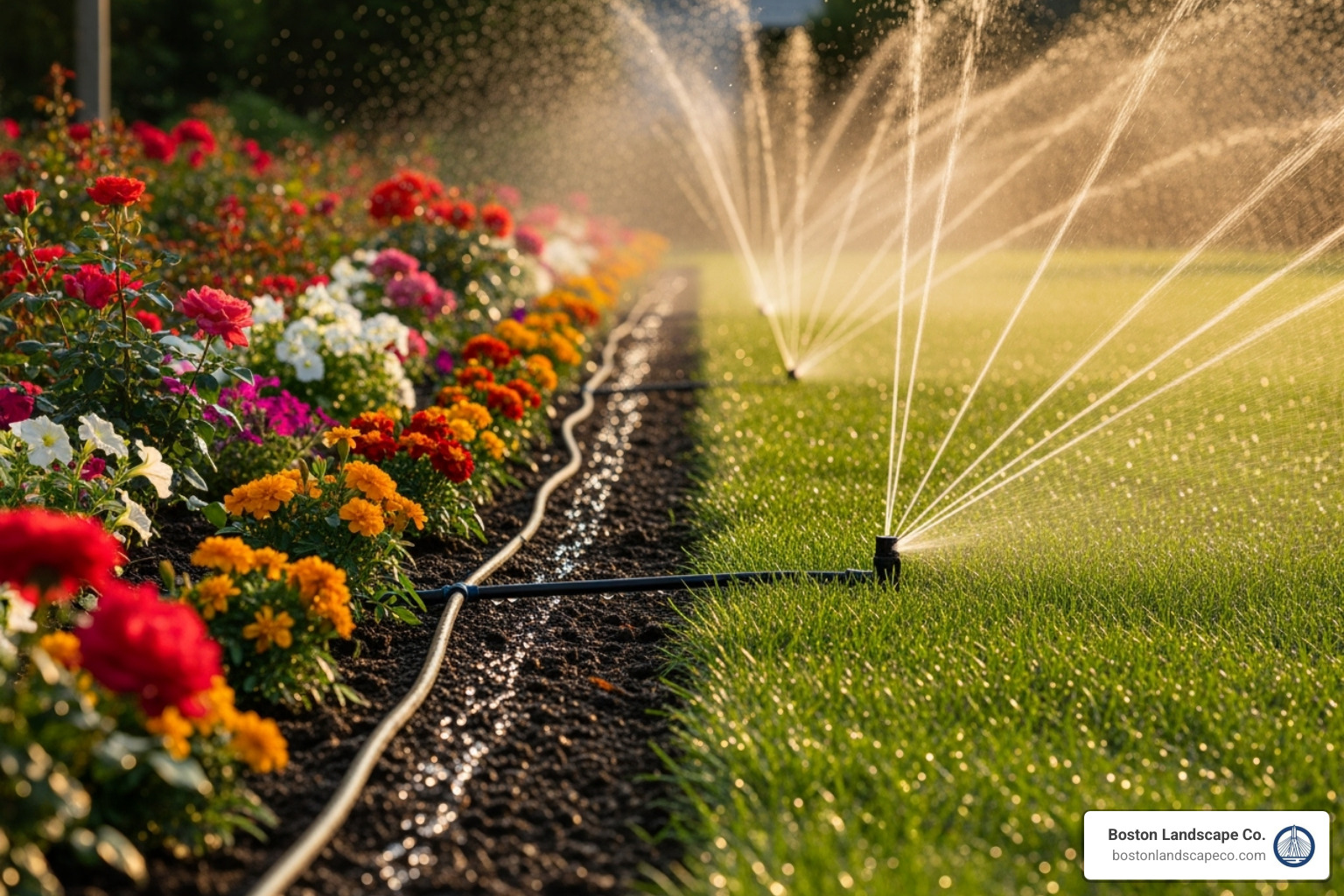
Irrigation systems fall into two main categories: sprinkler systems and drip irrigation.
Sprinkler systems use underground pipes and pop-up heads to distribute water. For residential systems, they’re excellent for providing uniform coverage to turf areas. For larger properties, commercial landscaping applications require more robust systems. Sprinkler heads vary: rotary heads cover large areas with a slow, rotating stream, while spray heads use a fan-shaped spray for smaller, irregular areas and flower beds.
Drip irrigation delivers water slowly and directly to plant roots through tubes and emitters. It’s highly efficient, minimizing waste from evaporation or runoff. Drip systems are ideal for gardens and flower beds, as they keep foliage dry and reduce disease. While less common for large lawns, subsurface drip irrigation for lawns is gaining popularity, delivering water directly to the root zone from below ground.
The Rise of Smart Irrigation Technology
Modern irrigation technology makes systems more efficient and easier to manage.
Smart controllers are the brains of these systems. They use local weather data, soil moisture sensors, and plant information to adjust watering schedules automatically, ensuring your landscape gets the right amount of water.
Weather sensors monitor rain, temperature, and humidity, allowing the system to skip cycles when it rains or water more when it’s hot. Soil moisture sensors take this further by measuring moisture in the soil, watering only when necessary. According to EPA’s research on smart controllers, these add-ons can save over 7,000 gallons of water annually.
Many systems also offer mobile app control, letting you manage your system from anywhere. The primary benefits are significant water conservation and reduced water bills. A well-designed system with smart controls can cut outdoor water use by 15-30%. When qualified irrigation system installers design your system, they’ll help you choose the right technology for your property and budget.
DIY vs. Professional Installation: A Cost and Value Comparison
The temptation to save money with a DIY project is strong, but irrigation installation is more complex than it appears. While DIY may save on upfront labor, a professional job saves time, prevents headaches, and adds long-term value to your property. You’re not just laying pipes; you’re creating a sophisticated network that must account for water pressure, drainage, frost depth, and utility lines.
| Feature | DIY Installation | Professional Installation |
|---|---|---|
| Upfront Cost | Lower (materials, tool rental, permits) | Higher (materials, labor, specialized equipment, permits) |
| Long-Term Cost | Potentially Higher (frequent repairs, water waste, system replacement due to errors) | Lower (fewer repairs, efficient water use, longevity) |
| Installation Time | Days to Weeks (steep learning curve, manual labor) | 1-3 Days (experienced crew, specialized equipment) |
| System Efficiency | Often Suboptimal (poor design, uneven coverage) | Optimized (head-to-head coverage, proper zoning, smart tech integration) |
| Warranty | None (on labor), limited on parts | Comprehensive (parts, labor, satisfaction guarantee) |
| Property Value Impact | Minimal or Negative (if poorly done) | Significant Positive Impact (often 83-86% ROI) |
The Benefits of Hiring a Pro
Choosing professional irrigation system installers is an investment in your property’s health and value.
- Water Conservation: A professional design delivers water precisely, reducing runoff and evaporation. Smart controllers and efficient heads can cut outdoor water usage by 15-30%.
- Landscape Health: Proper irrigation ensures uniform coverage, preventing dry spots and overwatered areas that harm plants.
- Increased Property Value: According to strong ROI data from the National Association of Realtors, professional systems typically recover 83-86% of their cost at resale. A lush lawn boosts curb appeal.
- Correct Zone Design: Pros design zones based on sun exposure, soil type, and plant needs for optimal hydration.
- Proper Trenching Depth: In Massachusetts, pipes must be buried 8-12 inches deep to prevent freeze damage. Professionals know and follow local requirements.
- Avoiding Utility Lines: Installers use proper utility locating procedures to prevent dangerous and expensive encounters with underground gas, electric, or water lines.
For a detailed estimate, check out our Lawn Irrigation Cost Estimate page.
Signs Your Existing System Needs a Professional
Watch for these warning signs that your current system needs repair or replacement, especially in spring before summer heat arrives.
- Uneven Watering: A “checkerboard” effect of green and brown patches indicates issues with coverage, pressure, or clogged nozzles.
- Puddles or Dry Spots: Puddles suggest a leak or overwatering, while dry spots mean inadequate coverage.
- High Water Bills: A sudden spike could point to a hidden underground leak.
- Sputtering Sprinkler Heads: Heads that don’t pop up fully or spray erratically often signal low pressure or blockages.
- Low Water Pressure: A system-wide pressure drop could be a main line issue or a significant leak.
- Visible Leaks: Water bubbling up from the ground needs immediate attention.
- Controller Malfunctions: If your controller is failing, it’s time for professional help.
How to Find and Vet Reputable Irrigation System Installers
Choosing the right team is the most critical step. The best irrigation system installers combine technical expertise with local knowledge to build a system that lasts. As you plan your project this spring, look for contractors who meet these criteria.

What to Look for in an Irrigation Contractor
When vetting irrigation system installers, focus on these qualifications:
- Experience and Longevity: A company with 10+ years in business has a proven track record.
- Certifications: Look for credentials from the Irrigation Association (IA) or EPA WaterSense, which show a commitment to best practices in water efficiency.
- Proof of Insurance: The installer must have liability and worker’s compensation insurance. Ask for current certificates.
- Positive Customer Reviews: Check Google, Yelp, and local forums to see what past clients say about their responsiveness and quality of work.
- Local Knowledge: In New England, an installer must understand our rocky soil and deep frost lines (requiring 8-12 inch pipe depth) to prevent winter damage.
- Detailed Estimates: A transparent quote should break down all costs, including materials, labor, and permits.
- Warranty on Parts and Labor: A good contractor stands behind their work with a comprehensive warranty.
Where to Find Qualified Irrigation System Installers
- Irrigation Association Directory: Use the Find a Certified Professional tool to search for IA-certified pros by ZIP code.
- EPA WaterSense Partner Search: The WaterSense – Find a Pro | US EPA tool connects you with installers specializing in water-efficient practices.
- Local Landscaping Companies: An integrated company like Boston Landscape Co. can ensure your irrigation system works seamlessly with your overall landscape design.
- Word-of-Mouth Referrals: Ask neighbors, local garden centers, or nurseries for recommendations.
Key Questions to Ask Potential Irrigation System Installers
Once you have a shortlist, ask these questions to make your final decision:
- What is your project timeline? Know how long installation will take and when they can start, as spring schedules fill up fast.
- How do you handle drainage solutions? A good installer manages water to prevent swampy areas.
- What system components do you use and why? Quality parts contribute to system longevity and efficiency.
- Do you handle the permitting process? A knowledgeable installer will manage permits to ensure compliance with local regulations.
- Can you walk me through the installation process? Understand how irrigation systems are installed and what to expect.
- What are your maintenance plans? Your system will need ongoing service like spring start-ups and winterization. A company offering comprehensive landscape maintenance can be a long-term partner.
The Installation and Maintenance Lifecycle
A professional installation is a well-orchestrated process. Understanding these steps helps you know what to expect and how to care for your investment.
The Typical Installation Process
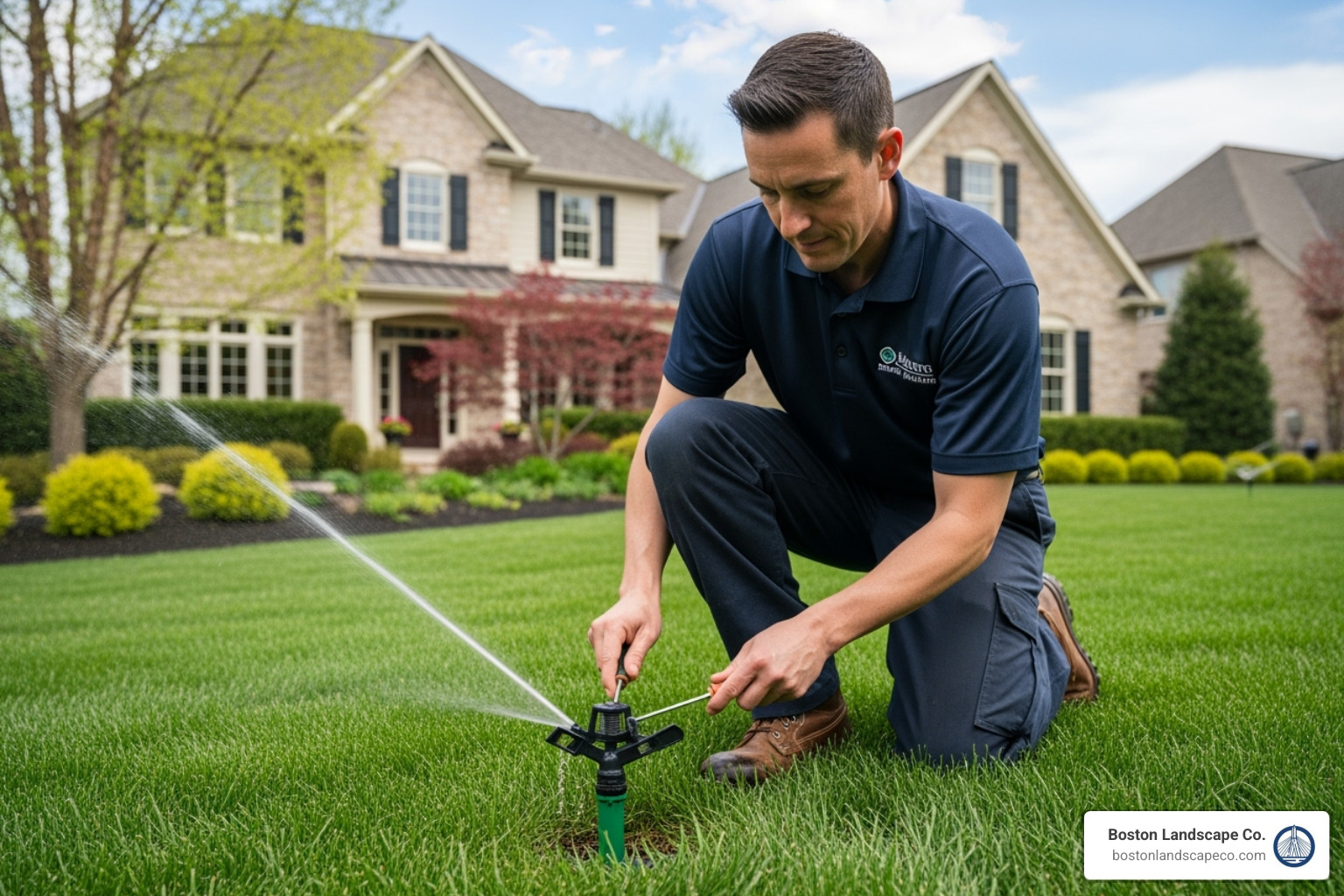
Hiring professional irrigation system installers involves a carefully planned process:
- Initial Consultation & Site Assessment: We discuss your vision and budget, then assess your property’s soil, sun exposure, water pressure, and utility line locations.
- Custom Design: We create a custom Landscape Design and system layout, with zones planned for different plant needs and head-to-head coverage to eliminate dry spots.
- Layout, Trenching, and Pipe Laying: We mark the layout on your property and use specialized equipment to dig narrow trenches, minimizing lawn disruption.
- Head and Valve Installation: Sprinkler heads and control valves are installed according to the design. We also install the backflow preventer, a critical safety device to protect your drinking water.
- Controller Programming: We set up your controller with customized schedules and show you how to use it, including any smart features.
- Final Walkthrough: We run the system, make adjustments, and answer all your questions to ensure you’re comfortable with its operation.
The entire process typically takes one to three days. Spring is the perfect time to schedule your installation before the summer heat arrives.
Essential Ongoing Maintenance
An irrigation system requires regular maintenance to perform at its best. Professional irrigation system installers offer plans to make this easy.
- Spring Start-Up: In April or May, we safely reactivate your system, check for winter damage, inspect all components, and adjust schedules for the new season.
- Mid-Season Adjustments: We make tweaks during the summer to ensure your system remains efficient as conditions change.
- Winterization: This is non-negotiable in Massachusetts. Before the first freeze (late October/November), we use compressed air to blow all water out of the pipes, preventing cracks from frozen water.
- Annual Inspections: Regular checks for leaks, clogs, and other issues prevent small problems from becoming big ones. This includes head cleaning and repair.
Many clients bundle irrigation care with our broader Landscape Maintenance services. Proper maintenance ensures your system can last 20 years or more, protecting your investment.
Frequently Asked Questions about Irrigation System Installation
How much does a new irrigation system cost?
The cost of a new irrigation system depends on factors like lawn size, number of zones, system type, and soil conditions. Based on national internet data, homeowners might invest anywhere from $1,600 to over $15,000, with a typical range between $2,500 and $6,500 for a professional installation.
Please note, these are average costs based on internet data and not actual costs for Boston Landscape Co. For an accurate quote custom to your property, please request a personalized lawn irrigation cost estimate.
Does an irrigation system increase my home’s value?
Yes. A professional irrigation system is a smart investment. According to the National Association of Realtors, these systems typically recover 83-86% of their cost at resale. A lush, green landscape significantly boosts curb appeal, signaling to buyers that a home is well-maintained and making it more attractive in a competitive market.
How does my local climate and soil type affect installation?
In Massachusetts, local climate and soil are critical. Irrigation system installers must account for two main challenges:
- Rocky Soil: A New England trademark, rocky soil can make trenching more labor-intensive. Professionals use specialized equipment to steer these conditions correctly.
- Deep Frost Line: Our cold winters require pipes to be buried 8-12 inches deep to prevent freezing and bursting. A local installer understands these requirements and builds a system to withstand our harsh winters, protecting your investment.
Choosing an installer with local expertise is vital for a system that will last for decades.
Conclusion
You now have the information to make a smart investment in a professionally installed irrigation system. Understanding your options and the value of experienced irrigation system installers prepares you to make a decision that will benefit your landscape for years.
The long-term benefits—water conservation, lower utility bills, increased property value, and a healthier landscape—far outweigh the initial cost compared to a DIY approach. You’re investing in your property’s future.
Spring in the Greater Boston area is the perfect time to plan your project. Installing a system now ensures you’re ready for the summer heat, eliminating the hassle of manual watering.
If you’re in the Greater Boston area, including Stoneham, Billerica, or surrounding communities, Boston Landscape Co. has provided expert landscape services since 1991. We understand local soil, frost lines, and climate challenges. Whether you need an irrigation system for your home or a solution for a commercial landscaping property, we have the expertise to design the perfect system for you.
Ready to enjoy a lush, green lawn without the hassle? Explore our residential landscaping services or request an estimate today. Let’s give your landscape the care it deserves.
