
Invasive Plant Removal Companies Near Me: Top 3 Experts
When you’re searching for invasive plant removal companies near me, you’re likely faced with a pressing need to manage intrusive and harmful plants overtaking your outdoor spaces. At Boston Landscape Co., we specialize in delivering personalized services with a focus on replacing invasive plants with native vegetation to maintain the ecology.
Invasive species are non-native intruders that disrupt local ecosystems, leading to severe environmental, economic, and even health issues. They grow rapidly, outcompeting native flora and altering the intricate balance between plants, soil, and water. This disruption is not just a local concern but a widespread challenge across landscapes in cities like Boston.
As the owner of Boston Landscape Co. since 1991, I am Steve Schumacher, committed to helping our community tackle invasive plant problems. With over three decades of experience, our team offers reliable solutions for those in search of invasive plant removal companies near me.
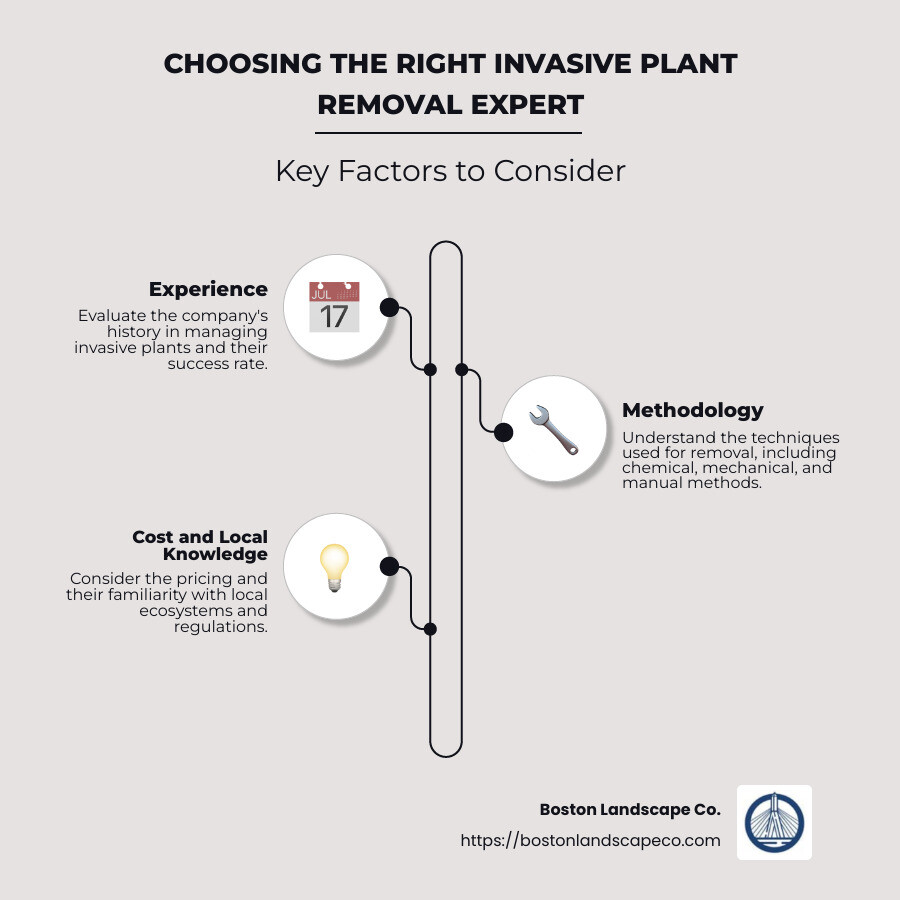
Invasive plant removal companies near me terms at a glance:
– 5 ways to prevent invasive species
– biological control invasive species
– how can an invasive species impact a local ecosystem
Understanding Invasive Plants
Invasive plants are non-native species that find their way into local ecosystems, often causing significant harm. Unlike native plants that have evolved over centuries to coexist with local wildlife and climate, these intruders can wreak havoc on the environment.
Non-Native Species
These species are introduced—intentionally or accidentally—into regions where they don’t naturally occur. With urbanization and global trade, the movement of plants across borders has increased dramatically. For example, the introduction of the Japanese Knotweed to the U.S. was initially for ornamental purposes, but it has since become a notorious invader in places like Massachusetts.
Ecological Harm
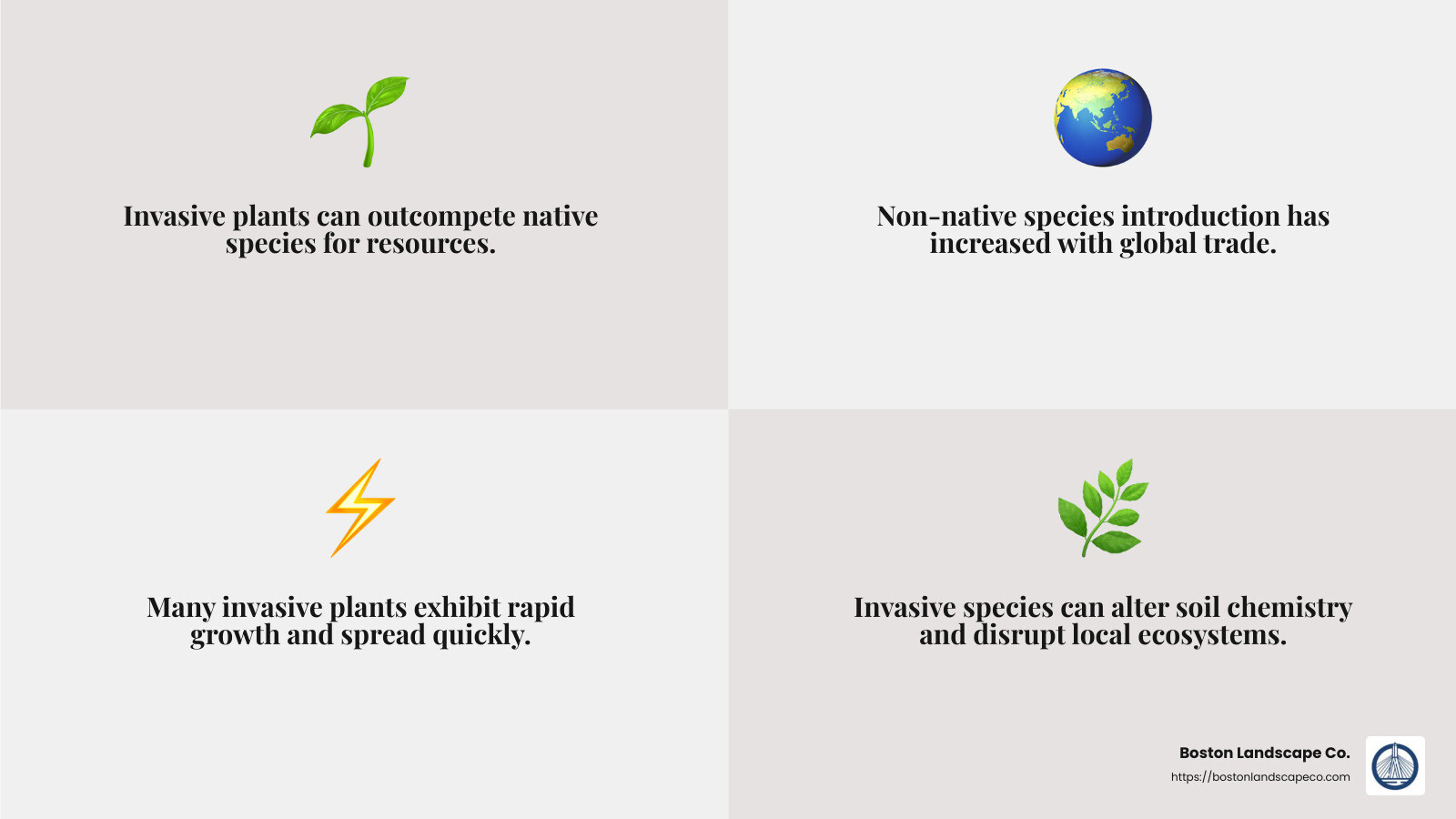
Invasive plants can cause severe ecological harm. They often outcompete native species for resources like sunlight, water, and soil nutrients. This competition can lead to a decline in native plant populations, which in turn affects local wildlife that depends on these plants for food and habitat. In Eastern Massachusetts, species like the Oriental Bittersweet and Common Buckthorn are particularly problematic.
Rapid Growth
One of the defining characteristics of many invasive plants is their rapid growth. They can spread quickly, forming dense thickets that are difficult to remove. This aggressive expansion not only displaces native plants but also alters soil chemistry and hydrology, making it hard for native species to reestablish themselves.
To manage these challenges, effective strategies are needed. The experts at Boston Landscape Co. emphasize a comprehensive approach that includes identifying invasive species early, using targeted removal methods, and replacing them with native plants to restore ecological balance.
In the next section, we’ll explore the various methods available for removing invasive plants and how these techniques can help protect your landscape and support local ecosystems.
Methods for Invasive Plant Removal
When dealing with invasive plants, it’s crucial to use the right methods to ensure effective removal and prevent regrowth. Here are some of the most effective techniques used by invasive plant removal companies near me:
Uprooting
Uprooting is one of the most straightforward methods for removing invasive plants. This involves manually pulling the plant out of the ground, roots and all. It’s especially effective for smaller infestations or young plants. However, it requires persistence and care to ensure that all root fragments are removed to prevent regrowth.
- Pros: No chemicals involved, immediate results.
- Cons: Labor-intensive, not suitable for large infestations.
Chemical Control
For larger infestations or particularly stubborn plants, chemical control might be necessary. This involves the use of herbicides to kill invasive plants. The key is to use them judiciously to avoid harming native species.
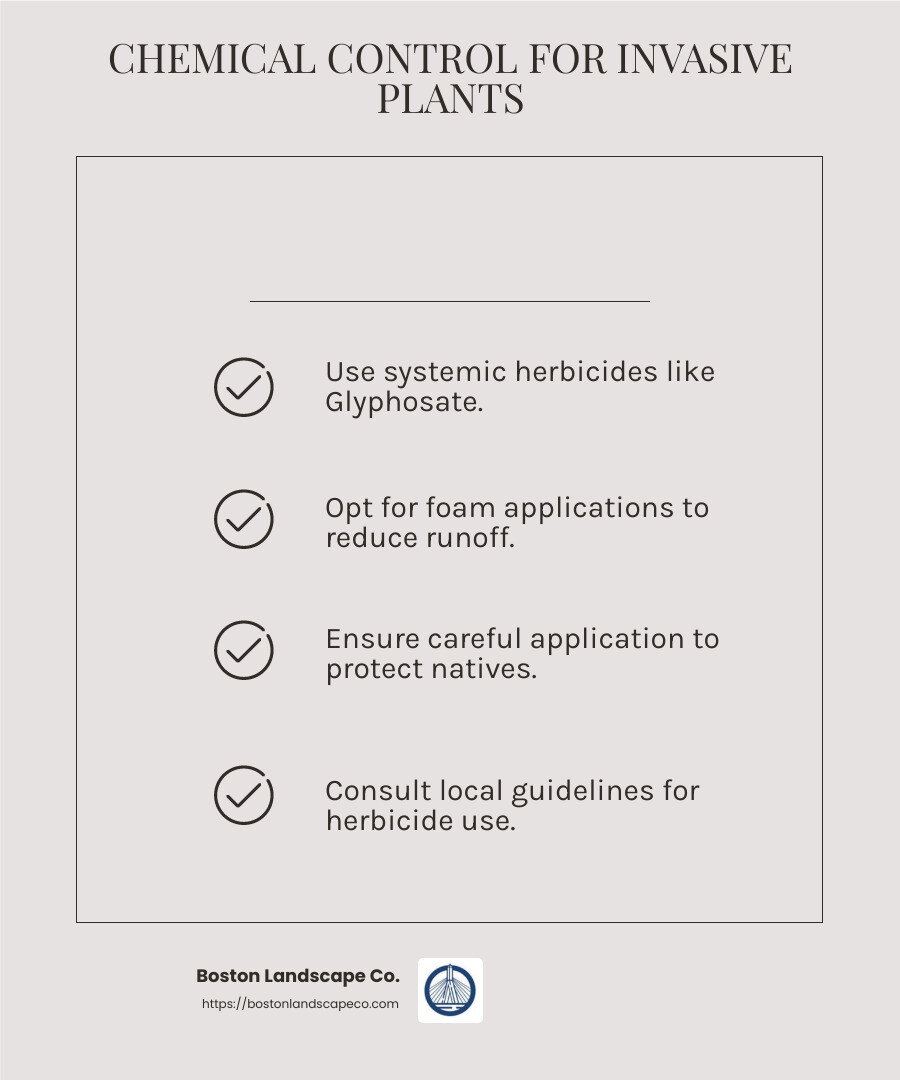
- Systemic Herbicides: These are absorbed by the plant and travel to the roots, ensuring complete removal. Products like Glyphosate and Triclopyr are commonly used.
- Foam Applications: As noted by Green Abundance, using foam carriers reduces runoff and minimizes impact on nearby native plants.
- Pros: Effective for large areas, long-lasting results.
- Cons: Potential environmental impact, requires careful application.
Mechanical Harvesting
Mechanical harvesting uses machines to cut and remove invasive plants. This method is often used for large infestations where manual removal is impractical.
- Mowing: Regular mowing can help keep invasive plants like the Common Buckthorn in check by preventing them from flowering and spreading seeds.
- Specialized Equipment: Low volume electronic pressure regulated backpack systems, as used by some experts, help maintain consistent herbicide application with minimal drift.
- Pros: Efficient for large areas, can be combined with other methods.
- Cons: May require specialized equipment, not suitable for all plant types.
Each of these methods has its place in a comprehensive invasive plant management plan. The experts at Boston Landscape Co. recommend a custom approach, combining different techniques based on the specific needs of your landscape. This ensures the most effective removal while minimizing harm to native species and the environment.
In the next section, we’ll discuss some of the top invasive species in Massachusetts and how to identify them on your property.
Invasive Plant Removal Companies Near Me
If you’re searching for invasive plant removal companies near me, you’re likely looking for a reliable local service that can tackle these persistent problems effectively. In Eastern Massachusetts, several companies specialize in managing invasive species through custom management plans and cost-effective solutions.
Local Services
Finding a local expert who understands the unique challenges of your area’s climate and soil is crucial. Local companies like Boston Landscape Co. have the experience and regional knowledge necessary to handle common invasive plants such as Japanese Knotweed and Oriental Bittersweet. Their familiarity with the local ecosystem allows them to develop strategies that are both effective and environmentally friendly.
Management Plans
A successful approach to invasive plant removal often involves a comprehensive management plan. These plans typically include:
- Assessment and Identification: Experts first identify the invasive species present and assess the extent of the infestation.
- Custom Solutions: Based on the assessment, a custom removal plan is developed. This might involve a combination of uprooting, chemical control, and mechanical harvesting to ensure thorough eradication.
- Monitoring and Maintenance: After initial removal, ongoing monitoring ensures that invasive plants do not return. Regular maintenance visits can help catch any new growth early, minimizing the need for more intensive interventions later.
Cost-Effective Solutions
Managing invasive species doesn’t have to break the bank. Many companies offer cost-effective solutions that balance budget constraints with effective results. For example, using mechanical harvesting can be a more economical option for large areas, while targeted chemical applications can efficiently handle stubborn patches without extensive labor costs.
Additionally, some companies provide flexible payment plans or service packages to accommodate different financial situations. By investing in a professional service, you can save time and effort while protecting your landscape’s long-term health.
In the next section, we’ll explore some of the top invasive species in Massachusetts and how to spot them in your yard.
Top Invasive Species in Massachusetts
In Massachusetts, certain invasive plants pose significant challenges to local ecosystems. These plants grow quickly and can overtake native vegetation, leading to reduced biodiversity. Let’s take a closer look at some of the most common culprits: Asiatic Bittersweet, Japanese Knotweed, and Garlic Mustard.
Asiatic Bittersweet
Asiatic Bittersweet (Celastrus orbiculatus) is a climbing vine notorious for its ability to strangle trees and shrubs. It features yellow-orange fruit capsules that reveal a bright red interior. This plant can rapidly cover large areas, choking out native plants and disrupting natural habitats.
- Identification Tip: Look for vines with round, glossy leaves and clusters of small, vibrant fruits in the fall.
Japanese Knotweed
Japanese Knotweed (Fallopia japonica) is a fast-growing perennial that can reach heights of up to 10 feet. It has heart-shaped leaves and clusters of small, white flowers. Known for forming dense thickets, it often invades roadsides and riverbanks, making it difficult for native species to thrive.
- Identification Tip: This plant has bamboo-like stems and large, broad leaves. It often grows in dense clumps.
Garlic Mustard
Garlic Mustard (Alliaria petiolata) is a biennial herb that spreads quickly in forested areas. It can grow up to 4 feet tall and is known for its ability to displace native wildflowers. When crushed, its leaves emit a distinct garlic odor.
- Identification Tip: Look for clusters of small, white flowers and triangular, toothed leaves. The strong garlic smell is a giveaway.
Understanding these invasive species is the first step in managing them effectively. By identifying and removing them early, you can help protect Massachusetts’ native plants and maintain the health of local ecosystems. In the next section, we’ll answer some frequently asked questions about invasive plant removal.
Frequently Asked Questions about Invasive Plant Removal
How do you get rid of an invasive plant?
Getting rid of invasive plants can be challenging, but it’s crucial for protecting local ecosystems. Here are some common methods:
- Uprooting: Physically removing the plant, roots and all, is often the most effective method. This can be labor-intensive, especially for plants like Japanese Knotweed, which have extensive root systems. Repeated removal may be necessary to ensure the plant doesn’t grow back.
- Chemical Control: Sometimes, using herbicides is the most effective way to control invasive plants. For example, systemic herbicides like Glyphosate can be applied carefully to target the roots. However, this should be done with caution to avoid harming native species.
- Mechanical Harvesting: This involves cutting down the plants and removing them from the site. It’s often used for large infestations but may need to be repeated multiple times for full effectiveness.
How much does it cost to manage invasive species?
The cost of managing invasive species can vary widely based on the size of the infestation and the methods used. Here’s a rough estimate:
- Small Infestations: For a small yard, costs might range from $200 to $500, especially if manual removal is feasible.
- Large Infestations: Larger areas, like commercial properties or public lands, can cost thousands of dollars due to the need for specialized equipment and repeated treatments.
- Economic Impact: While management costs can be high, the economic impact of not controlling invasive species can be even greater. Invasive plants can reduce property values, harm agriculture, and disrupt local ecosystems, leading to significant long-term costs.
Where can I dispose of invasive plants?
Proper disposal of invasive plants is important to prevent them from spreading. Consider these options:
- Composting: Some invasive plants can be composted, but it’s crucial to ensure they are fully dead before doing so. Otherwise, they might regrow.
- Burning: In some areas, burning is allowed as a disposal method. Check local regulations to ensure compliance, as burning may be restricted due to fire hazards or air quality concerns.
- Landfill: As a last resort, invasive plants can be bagged and sent to a landfill. This is often the safest way to ensure they don’t spread.
Understanding how to effectively remove and dispose of invasive plants can help protect your landscape and the broader environment. Up next, let’s explore how Boston Landscape Co. can assist with native species restoration and offer custom solutions for your property.
Conclusion
At Boston Landscape Co., we believe in the power of restoring native species to refresh local ecosystems. Removing invasive plants is just the first step. Once these invaders are out of the way, it’s crucial to bring back the native plants that belong in our landscapes. This helps restore the natural balance and promotes biodiversity.
Native Species Restoration is a key part of our services. After clearing out invasive species, we work to reintroduce native plants that are well-suited to the local environment. These plants require less maintenance and water, making them a sustainable choice for any landscape.
We offer custom solutions custom to each property. Our team assesses the unique conditions of your land, including soil quality and habitat properties. We then create a planting plan that meets your specific needs and improves the beauty and functionality of your outdoor space.
If you’re dealing with invasive plants and looking for invasive plant removal companies near me, consider Boston Landscape Co. We provide effective management plans and cost-effective solutions to ensure your property thrives.
For more information about our services, including wetland restoration and native species planting, visit our Wetland Landscaping Services page.
Together, we can protect and improve our local ecosystems, one landscape at a time.
