Understanding the Hydroseeding Cost Calculator Online
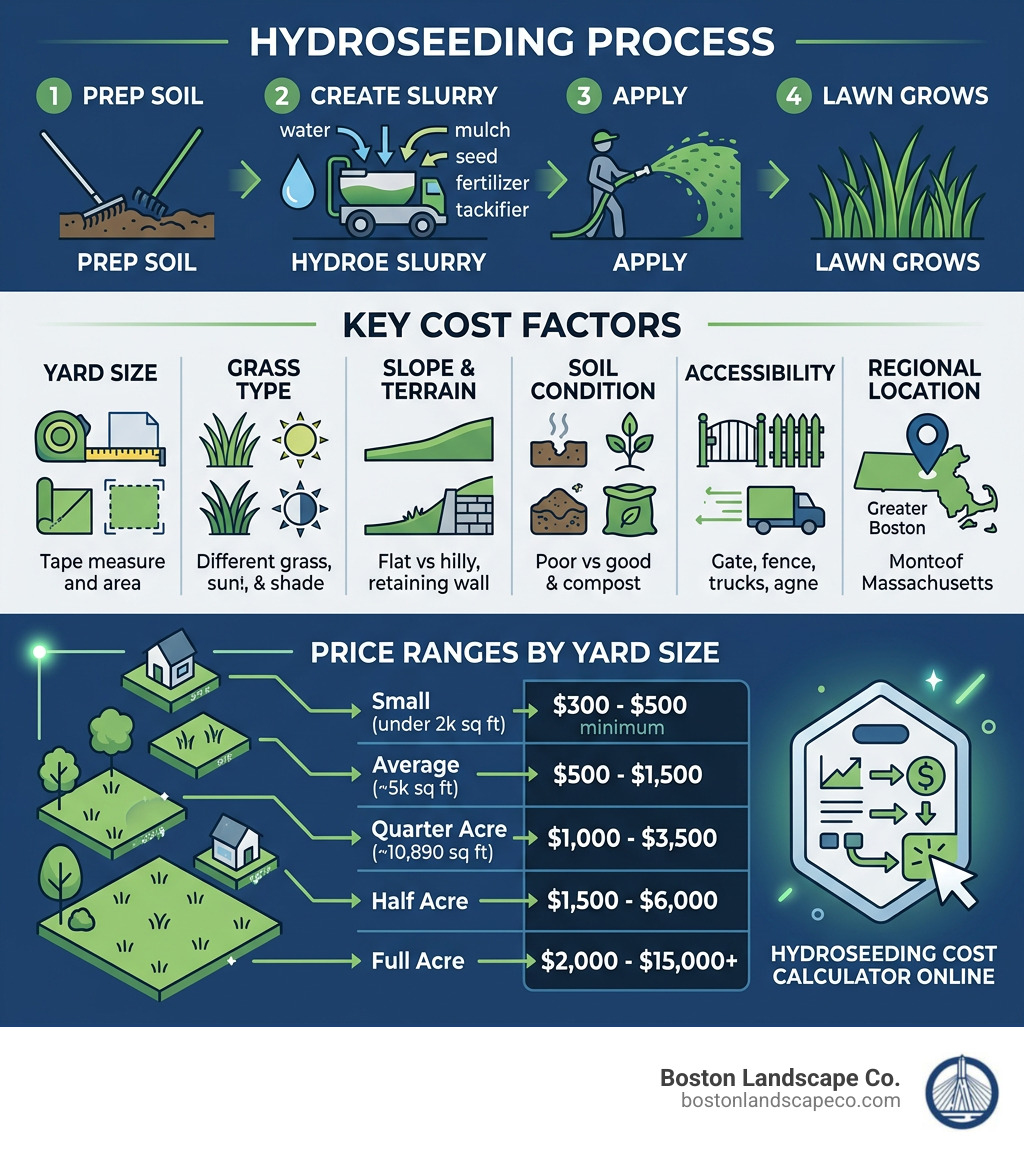
A hydroseeding cost calculator online is a tool that estimates your total project cost based on area size, seed mix, slope, soil condition, and location. Here’s a quick snapshot of what to expect:
| Project Size | Estimated Cost Range* |
|---|---|
| Small yard (under 2,000 sq ft) | $300 – $500 minimum |
| Average lawn (~5,000 sq ft) | $500 – $1,500 |
| Quarter acre (~10,890 sq ft) | $1,000 – $3,500 |
| Half acre | $1,500 – $6,000 |
| Full acre | $2,000 – $15,000+ |
*These are average costs based on internet data and do not reflect Boston Landscape Co. rates. Actual prices vary widely by location, materials, and site conditions.
Trying to budget a new lawn without knowing the numbers is frustrating. You want a lush, green yard – but you don’t want to get blindsided by a quote that’s way higher than expected.
That’s exactly why so many homeowners in Greater Boston are turning to online tools to get a ballpark figure before calling a contractor.
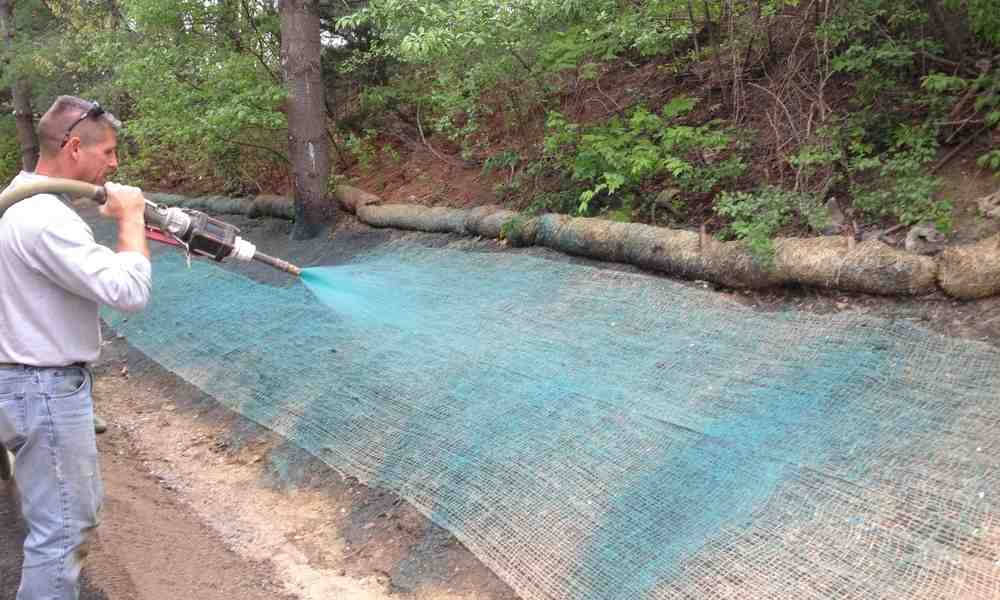
Hydroseeding is one of the most cost-effective ways to establish a new lawn. It involves spraying a slurry of seeds, mulch, fertilizer, and a binding agent called tackifier directly onto prepared soil. It’s faster than traditional seeding and far less expensive than sod – making it a popular choice for properties of all sizes across Massachusetts.
But the cost isn’t one-size-fits-all. Slope, soil quality, grass type, and yard size all push the number up or down – sometimes dramatically.
I’m Steve Schumacher, owner-operator of Boston Landscape Co. since 1991, and over my three decades in the landscaping industry I’ve seen how confusing hydroseeding pricing can be for homeowners. In this guide, I’ll walk you through exactly how to use a hydroseeding cost calculator online so you can plan your project with confidence.
When you first open a hydroseeding cost calculator online, you might see several fields asking for “tank size,” “loading rates,” or “square footage.” If you aren’t a professional landscaper, these terms can feel like learning a second language. At its core, these calculators use a formula to determine how much material is needed to cover your specific patch of Earth.
The “magic” behind hydroseeding is the slurry. This isn’t just green water; it’s a scientifically balanced cocktail designed to give grass the best possible start. A comprehensive calculator will factor in the following ingredients:
- Seed: The type of grass you choose (like Kentucky Bluegrass or Fescue).
- Mulch: Usually made of wood fiber or paper, this protects the seed and holds moisture.
- Fertilizer: High-phosphorus “starter” blends to kickstart root growth.
- Tackifier: A glue-like substance that keeps the slurry from washing away during a New England rainstorm.
- Water: The carrier that allows the mix to be sprayed evenly.
Most hydroseeding cost calculators work by taking your total square footage and dividing it by the coverage capacity of a standard hydroseeding tank. For example, a 600-gallon tank might cover about 6,000 to 10,000 square feet depending on the mulch thickness. If you want to dive deeper into the machinery we use to get these results, you can check out more info about hydro-seeder services.
The calculator helps you understand “tank loads.” If your yard is 15,000 square feet and the machine holds enough for 5,000 square feet, the pro will need three “trips” or loads. Each load adds to the labor and material cost.
Factors That Drive Hydroseeding Prices in Massachusetts
Living in the Greater Boston area means dealing with unique terrain. From the rocky soils of Winchester to the hilly landscapes of Waltham, your specific site conditions are the biggest “wildcards” in any hydroseeding cost calculator online.
Based on internet averages, hydroseeding typically ranges from $0.07 to $0.60 per square foot. For larger properties, you might see estimates between $2,000 and $15,000 per acre. Please keep in mind that these are average costs based on internet data and do not reflect the actual rates of Boston Landscape Co. We always recommend a site visit to provide a firm quote tailored to your property’s needs.
There are several “multipliers” that a calculator might apply to your base price:
- Slope Multipliers: If your yard has a slope steeper than 20 degrees, expect the cost to potentially double. Steep hills require more tackifier and specialized “high-viscosity” mulch to ensure the seed doesn’t end up at the bottom of the hill after the first drizzle.
- Soil Quality: Hydroseeding works best on loose, nutrient-rich topsoil. If your ground is compacted clay or full of rocks (common in the North Shore), you’ll need site preparation. Adding 4 to 6 inches of fresh topsoil can cost an average of $35 per cubic yard, which significantly changes the total.
- Accessibility: Can a large truck get within 100-200 feet of the area? If we have to pull hundreds of feet of hose through narrow gates or around obstacles, labor costs will rise.
- Minimum Service Fees: Most professionals have a “mobilization” fee. Even if you only have 500 square feet to seed, you might still pay a minimum of $300 to $500 just to cover the cost of bringing the equipment to your home in Stoneham or Medford.
To help you decide if this method is right for you, we’ve put together a guide on the pros and cons of hydroseeding lawns.
Using a Hydroseeding Cost Calculator Online for Different Grass Types
Not all grass is created equal. The seed you choose for a sunny backyard in Billerica will be different from the one used for a shaded side-yard in Lexington.
- Kentucky Bluegrass: The “gold standard” for lush, dark green lawns. It’s beautiful but can be pricier, often ranging from $8 to $13 per pound.
- Tall Fescue: A hardy, drought-resistant option perfect for high-traffic areas. This usually costs between $4 and $8 per pound.
- Custom Mixtures: Many homeowners opt for a “Sun & Shade” mix.
When using a hydroseeding cost calculator online, ensure you select the seed type appropriate for our Massachusetts climate. Using the wrong seed is a recipe for a brown lawn by August. You can read more about the cost of hydro-seed materials to see how these choices impact your bottom line.
Measuring Your Yard for a Hydroseeding Cost Calculator Online
The most common mistake homeowners make is “guesstimating” their yard size. If you tell a calculator your yard is 5,000 square feet but it’s actually 8,000, your estimate will be off by 60%!
To get an accurate number, break your yard down into simple geometric shapes:
- Rectangles: Length x Width.
- Triangles: (Base x Height) / 2.
- Circles: 3.14 x (Radius x Radius).
Pro Tip: Use Google Earth! You can zoom in on your address in Somerville or Concord and use the “measure” tool to trace your lawn’s perimeter. It’s surprisingly accurate. Always add a 5% waste buffer to your total. This accounts for overlap during spraying and those odd corners that don’t fit into a perfect square.
Comparing Costs: Hydroseeding vs. Sod and Traditional Seeding
Is hydroseeding really the “sweet spot” for your budget? Let’s look at the numbers.
| Method | Avg. Cost Per Sq. Ft.* | Speed of Result | Best For |
|---|---|---|---|
| Traditional Seeding | $0.09 – $0.30 | Slow (Weeks/Months) | Budget-conscious, flat areas |
| Hydroseeding | $0.07 – $0.60 | Moderate (7-14 days) | Large areas, slopes, erosion control |
| Sod Installation | $0.86 – $5.25 | Instant (1 day) | Immediate curb appeal, small yards |
*Internet average data; not Boston Landscape Co. rates.
While traditional “dry” seeding is the cheapest upfront, it has the highest failure rate because birds eat the seeds and wind blows them away. Sod gives you an “instant lawn,” but for a quarter-acre property in Reading, the cost can easily exceed $10,000 to $20,000.
Hydroseeding offers a 90% success rate when done professionally, compared to about 60% for DIY seeding. Success depends heavily on what happens before the spray hits the dirt. Scientific research on proper site preparation shows that skipping the grading and soil testing phases can lead to a patchy lawn, regardless of which method you choose. If you’re looking for the best hydroseeding companies in the area, look for those who emphasize this preparation work.
Professional vs. DIY Hydroseeding: A Cost-Benefit Analysis
We get asked all the time: “Can’t I just rent a machine and do this myself?”
Technically, yes. You can rent a small, tow-behind hydroseeder for about $220 to $500 per day. However, the “hidden costs” of DIY often eat up the savings:
- Material Procurement: Pros buy mulch and seed in bulk. As a homeowner, you’ll pay retail prices at the big-box store.
- Equipment Mobilization: You’ll need a truck capable of towing a heavy, water-filled tank.
- The Learning Curve: If you spray too thin, the grass won’t grow. If you spray too thick, you’ll run out of material halfway through the yard and have to pay for another day of rental.
- Success Rates: Professional equipment uses “mechanical agitation” to keep the slurry perfectly mixed. Smaller rental units often use “jet agitation,” which can clog easily or result in an uneven mix of seed and fertilizer.
When you hire a professional team in towns like Bedford or Burlington, you aren’t just paying for the spray; you’re paying for the expertise to ensure the lawn actually grows.
Frequently Asked Questions about Hydroseeding Costs
How long does it take for hydroseed to grow?
In our local climate, you’ll usually see green “fuzz” within 7 to 14 days. However, it takes about 3 to 4 weeks before the lawn is ready for its first mow. We’ve written a detailed guide on how long it takes for hydroseeding to grow that covers the specific watering schedules you’ll need to follow during those critical first 30 days.
Is hydroseeding cheaper than installing sod?
Yes, significantly. For a typical 10,000 square foot yard, hydroseeding might cost between $1,000 and $3,500 (based on internet averages), while sod for the same area could easily run $8,000 to $15,000 or more. Hydroseeding is the budget-friendly way to get professional results without the “instant” price tag of sod.
Can I use a hydroseeding cost calculator online for small yards?
Absolutely. Just be aware of the “Minimum Charge.” If the calculator says your 1,000 square foot yard should cost $150, most companies will still charge their minimum fee (often $300-$500) because the cost of gas, labor, and equipment setup remains the same regardless of yard size.
Conclusion
Using a hydroseeding cost calculator online is a fantastic first step in transforming your property. It gives you a baseline for budgeting and helps you understand the variables—like slope and seed type—that influence the final price.
At Boston Landscape Co., we’ve spent over 30 years helping neighbors in Stoneham, Billerica, and throughout the Greater Boston area achieve the lush, green lawns they’ve always wanted. Whether you are looking for residential lawn restoration or commercial erosion control, we pride ourselves on providing comprehensive services tailored to the unique Massachusetts landscape.
Ready to move beyond the online calculator and get a professional eyes-on estimate? We invite you to explore our expert hydroseeding services and see how we can enhance your outdoor space. From the first soil test to the final spray, we’re here to help you “save your green” while growing a lawn that’s the envy of the block. Contact us today to start your project!