
How to install a drip irrigation system for potted plants6Easy
Why Your Potted Plants Will Thrive with Drip Irrigation
How to install a drip irrigation system for potted plants involves connecting a head assembly to your spigot, running tubing to your containers, and adding drip emitters to each pot. Most homeowners can complete this DIY project in a weekend for $50-$250.
Quick Installation Overview:
- Connect the head assembly – Attach a backflow preventer, timer (optional), filter, 25 PSI pressure regulator, and tubing adapter to your faucet.
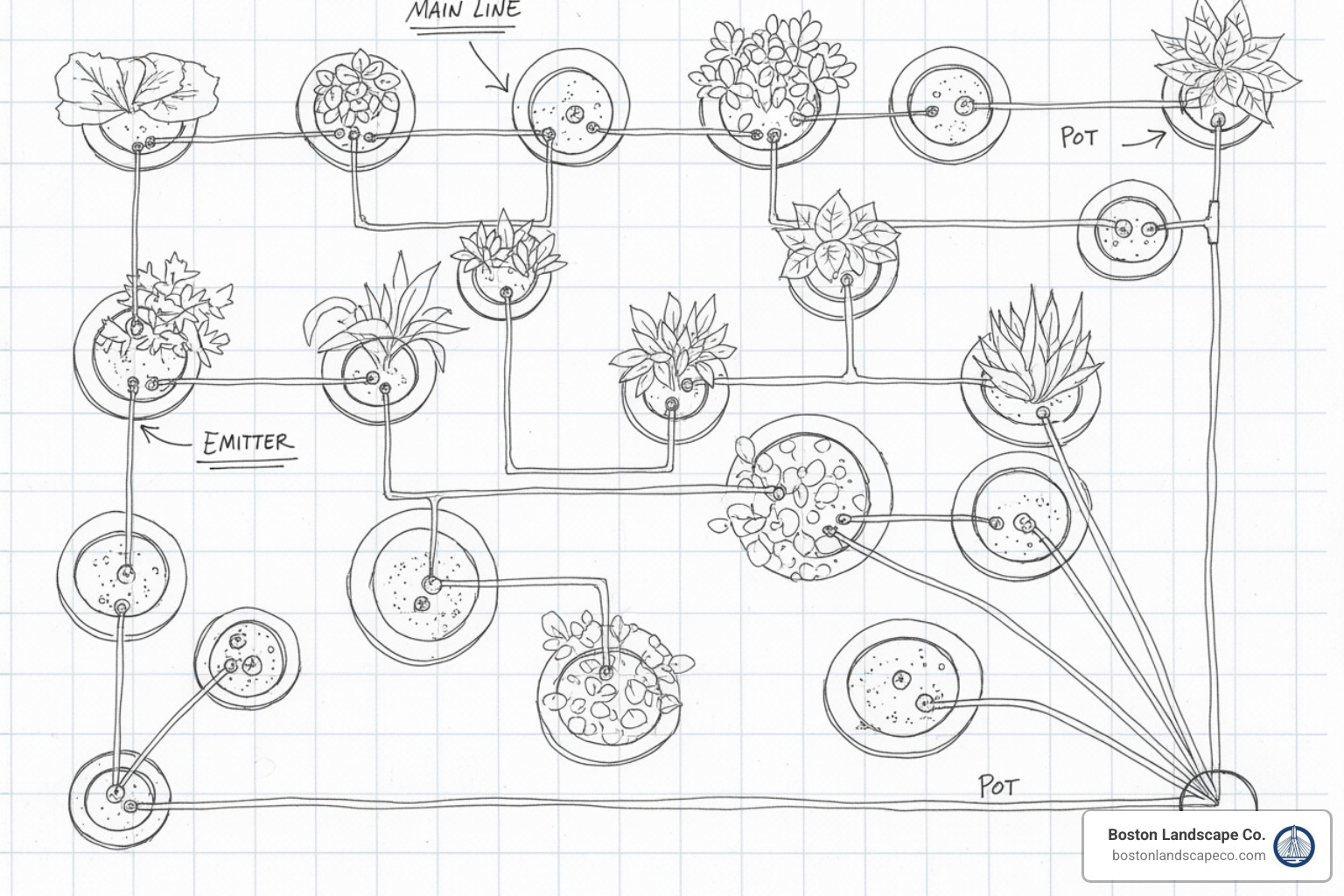
- Run mainline tubing – Lay out 1/2″ poly tubing near your pots.
- Add feeder lines – Punch holes in the mainline and connect 1/4″ micro tubing to reach each pot.
- Install emitters – Attach drip emitters (e.g., 1 GPH for small pots, 2 GPH for large) to the end of each feeder line.
- Test and adjust – Turn on the water, check for leaks, and set your watering schedule.
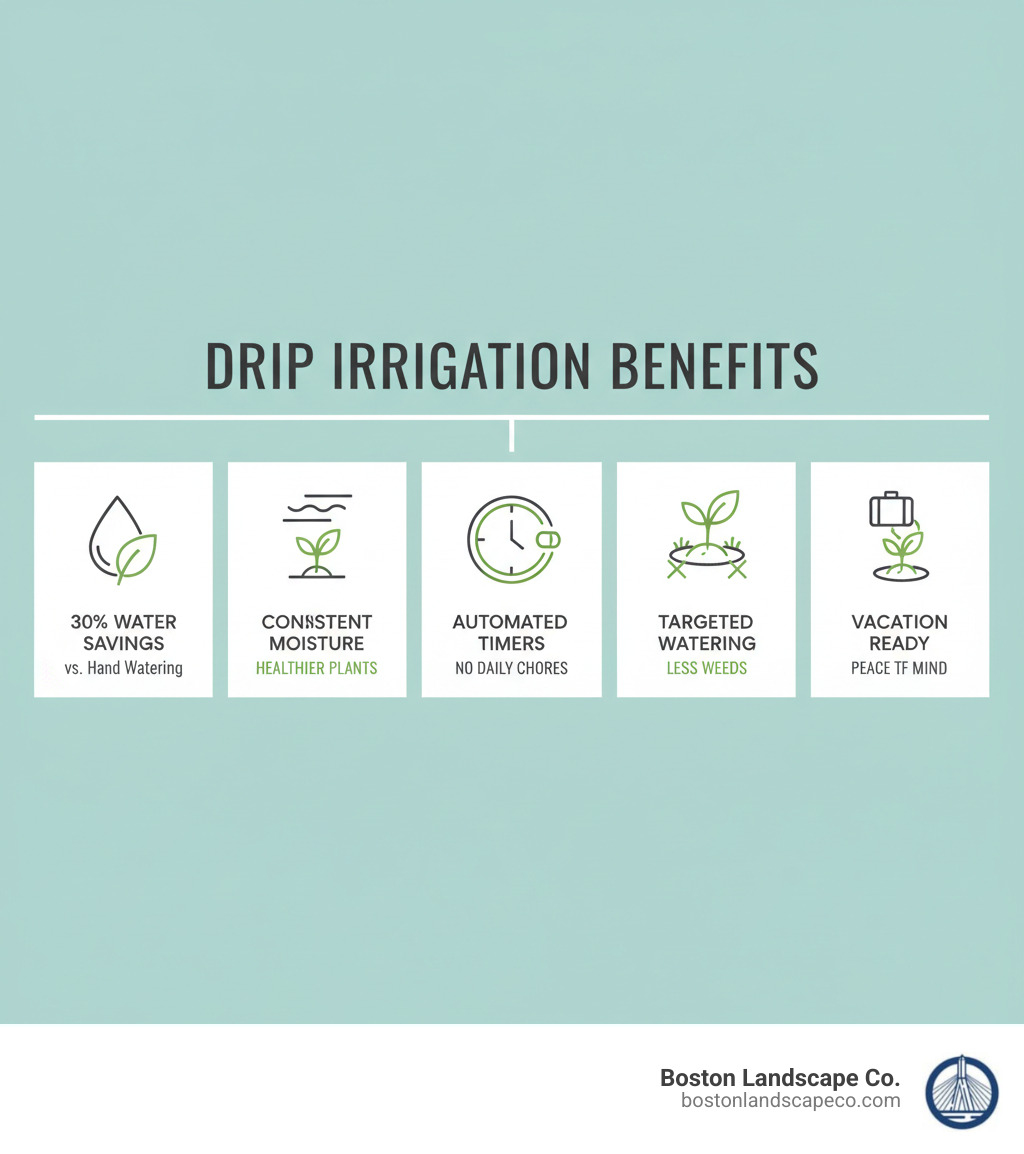
Hand-watering can take up to 40 minutes daily during hot summer months. A drip irrigation system saves time and water by delivering consistent moisture directly to plant roots, preventing overwatering, reducing evaporation, and keeping plants healthy even when you’re on vacation. You’ll spend more time enjoying your patio and less time dragging a hose around.
I’m Steve Schumacher, owner of Boston Landscape Co. since 1991. For over three decades, I’ve helped homeowners across Massachusetts, from Lexington to Wellesley, learn how to install a drip irrigation system for potted plants. During our hot summers, keeping containers hydrated is a challenge. An automated system ensures your plants get the precise amount of water they need, directly at the root zone, minimizing waste and maximizing health.
How to install a drip irrigation system for potted plants vocab explained:
An automated system saves time and makes your plants happier. This targeted approach means less water evaporates, less runs off, and fewer weeds sprout. Imagine going on vacation, knowing your cherished hydrangeas or vibrant petunias are being perfectly cared for!
Gathering Your Drip Irrigation Supplies
Before starting, gather your supplies. A basic drip irrigation setup for potted plants is a great weekend project, typically costing between $50 and $250. The final cost depends on the number of pots and features like automatic timers.
Essential System Components
Your system will consist of several key parts working together to deliver water efficiently.
- Faucet Connection Assembly: This is the system’s starting point. It includes a backflow preventer to protect your drinking water (learn more about irrigation system backflow preventer installation), a filter to stop debris, a pressure regulator to lower pressure to a safe 25 PSI, and a tubing adapter to connect your mainline. An optional automatic timer is highly recommended for a hands-free system.
- Tubing: 1/2″ poly tubing serves as the mainline to carry water near your pots. From there, 1/4″ micro tubing acts as feeder lines, branching off to each individual container.
- Emitters (Drippers): These attach to the end of the micro tubing and release water at a controlled rate, measured in Gallons Per Hour (GPH). Use 1 GPH for small pots and 2 GPH for larger ones.
- Fittings and Tools: You’ll need barbed connectors to attach micro tubing to the mainline, end caps to seal the mainline, and tubing stakes to secure everything. A hole punch tool is essential for making clean connections, and a utility knife is needed for cutting tubing. Keep goof plugs on hand to seal any misplaced holes.
According to research on proper sprinkler pressure, maintaining the correct pressure is key to preventing leaks and ensuring even watering.
Drip Irrigation Kits: Pros and Cons
When figuring out how to install a drip irrigation system for potted plants, you can buy a complete kit or source individual components.
Kits are convenient, bundling the essentials in one box. They are great for beginners with a straightforward layout. However, they offer less customization and may not perfectly match your garden’s needs or include critical parts like a pressure regulator. Always check the contents list.
Buying individual components provides complete control over quality and design, which is ideal for complex layouts or future expansion. This requires more planning but results in a custom system. A hybrid approach often works best: start with a quality kit and supplement it with specific parts as needed.
Here’s how the approaches compare for watering ten pots:
| Feature | DIY Approach | Pre-Made Kit |
|---|---|---|
| Initial Cost | $75-$200+ depending on component quality | $50-$150 for basic setup |
| Components | Hand-picked for your specific needs | Pre-selected mix that may not perfectly match your garden |
| Customization | Complete freedom to design exact layout | Limited to kit specifications |
| Installation Time | Requires more planning but quick assembly | Faster start with simpler instructions |
| Future Flexibility | Easy to expand or modify | Often requires buying additional kit-specific parts |
| Best For | Gardeners with specific needs or expansion plans | Beginners wanting quick setup for uniform containers |
How to Install a Drip Irrigation System for Potted Plants: A Step-by-Step Guide
Installing your system is a rewarding weekend project. Before you begin, sketch a simple layout of your patio or deck. Mark the faucet location and each pot, then measure the distances to calculate how much tubing you’ll need. For better aesthetics and water pressure, consider staggering pots if they are in rows.
For information on larger projects, see our guide on watering and irrigation systems.
Step 1: Connect the Head Assembly to Your Water Source
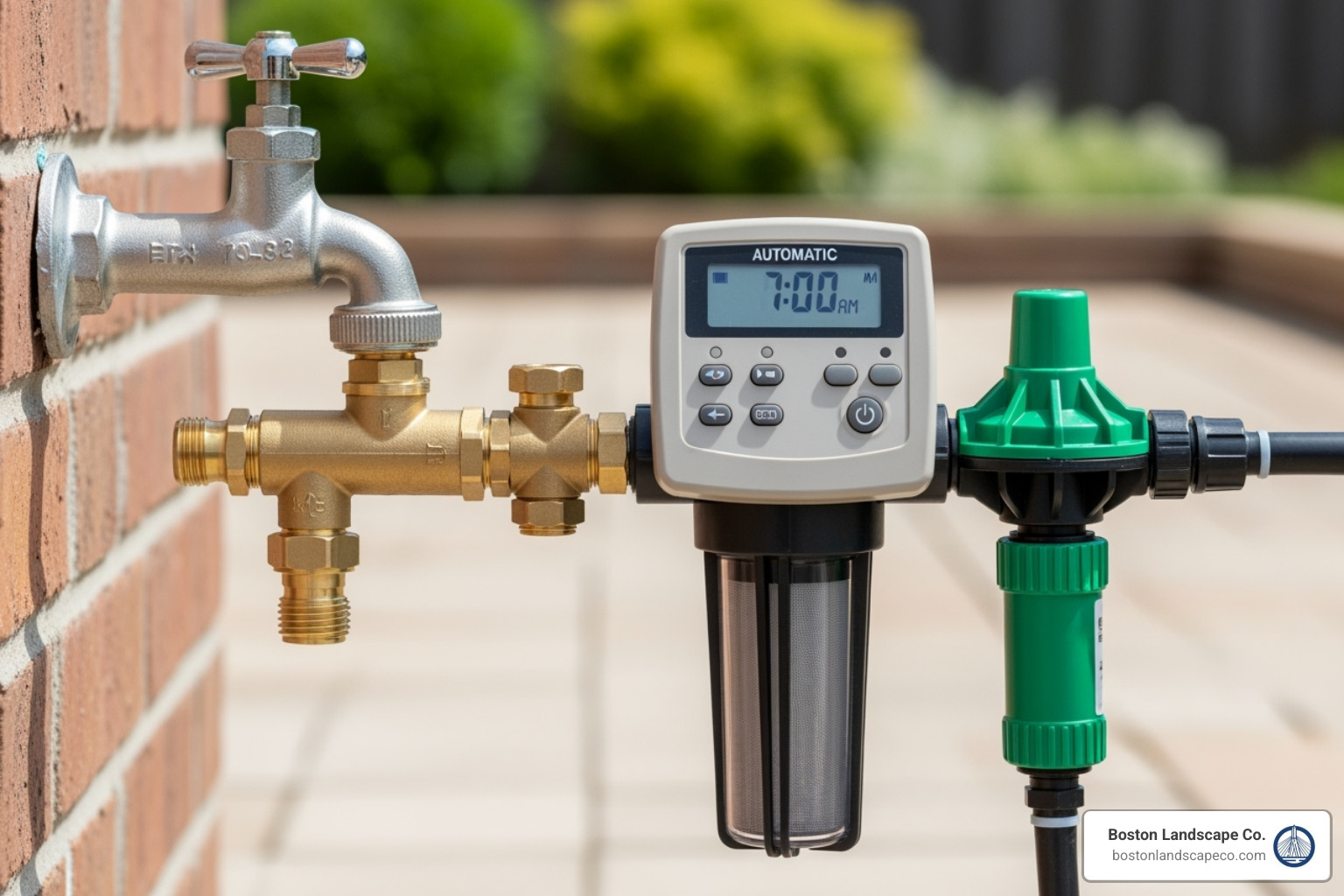
The head assembly is the control center for your system. Assemble it in this order:
- Hose Splitter (Optional): Attach to your outdoor spigot to keep it free for other uses.
- Backflow Preventer: Screw this essential safety device onto the spigot or splitter to protect your home’s water supply. Learn more about irrigation system backflow preventer installation.
- Timer (Recommended): Connect the timer to automate your watering schedule. Remember to change the batteries monthly during the growing season.
- Filter: Attach the filter to catch debris that could clog emitters.
- Pressure Regulator: Add the 25 PSI regulator. Home water pressure is too high for drip systems; this part prevents blown fittings. Proper pressure is crucial for performance, as noted in research on proper irrigation pressure.
- Tubing Adapter: Finally, connect the adapter that your 1/2″ mainline tubing will attach to. Hand-tighten all connections.
Step 2: Run and Secure the Mainline Tubing
Lay out the 1/2″ mainline tubing, which acts as the system’s backbone.
- Relax the tubing: Unroll the 1/2″ poly tubing and let it sit in the sun for an hour to make it more flexible and easier to work with.
- Route the line: Following your sketch, run the tubing along the edge of your patio or deck, keeping it close to the pots. Leave a little slack to allow for temperature expansion.
- Secure the line: Use 1/2″ tubing stakes every few feet to hold the tubing in place and prevent tripping hazards.
- Cap the end: Once past the last pot, cut the tubing with a utility knife and attach an end cap to seal the line.
Step 3: Your guide on how to install a drip irrigation system for potted plants by adding feeder lines
Now, connect each pot to the mainline with 1/4″ micro tubing.
- Cut feeder lines: For each pot, measure the distance from the mainline and cut a piece of 1/4″ micro tubing, adding a few extra inches of slack.
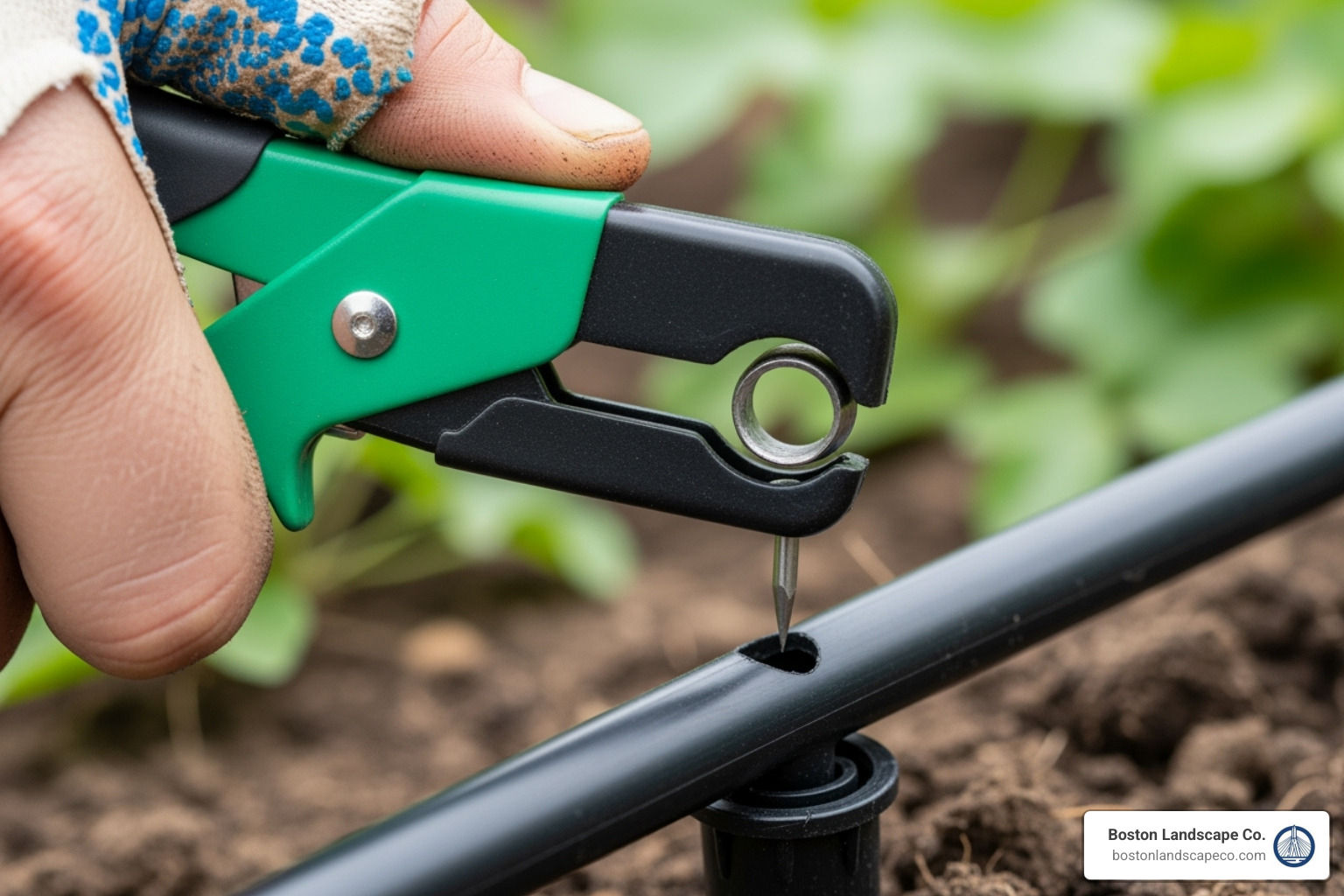
- Punch holes: Use a hole punch tool to make a clean hole in the mainline where each feeder line will connect. If you make a mistake, seal the hole with a goof plug.
- Insert connectors: Push a 1/4″ barbed connector firmly into each hole. Soaking the tubing end in hot water can make this easier.
- Attach feeder lines: Connect the micro tubing to the barbed connector and run it to the pot, securing it discreetly.
Step 4: Choose and Install the Right Emitters
Emitters deliver water directly to your plants.
- Select your emitter: Standard drip emitters are best for most pots. Choose a flow rate (GPH, or Gallons Per Hour) based on pot size: 1 GPH for small-to-medium pots (under 10″) and 2 GPH for larger ones. For very large pots (12″+), use two emitters on opposite sides for even watering.
- Install the emitter: Push the barbed end of the emitter into the open end of the 1/4″ micro tubing.
- Position the emitter: Use the attached stake to place the emitter in the soil near the plant’s base, but a few inches from the stem. The goal is to deliver water precisely to the root zone, which is critical during hot Massachusetts summers.
Fine-Tuning and Maintaining Your System
Once assembled, test and adjust your system to ensure it runs perfectly. This final step turns your collection of parts into a calibrated watering solution.
Step 5: Testing, Adjusting, and Setting a Schedule
- Test for Leaks: Slowly turn on the water and walk the line, checking each connection for drips. If you find a leak, push the tubing more firmly onto the connector. Use a goof plug to seal any accidental holes.
- Adjust Flow: If using adjustable drippers, fine-tune the flow for each pot to ensure slow, steady soaking without runoff.
- Set a Schedule: Shorter, more frequent watering is often best. Try two 15-minute cycles per day instead of one 30-minute session. Check the soil moisture after a few hours—it should feel like a wrung-out sponge. Adjust the duration as needed.
- Program Your Timer: Your schedule will change with the seasons. You may only need to water every other day in spring, but daily during hot Massachusetts summers. During heat waves, thirsty plants may need watering every few hours. Smart controllers, which adjust based on weather, can be a great investment. The EPA’s research on smart controllers highlights their water-saving potential.
Step 6: A guide on how to install a drip irrigation system for potted plants and maintain it
Regular maintenance keeps your system running smoothly.
- Inspect Regularly: During the growing season, visually inspect the system weekly to check for clogs or loose stakes.
- Flush the System: Every few months, remove the end cap and flush the mainline until the water runs clear.
- Clean the Filter: Rinse your filter screen regularly to prevent clogs.
- Unclog Emitters: If an emitter stops working, it’s likely clogged with mineral deposits. Soak it in white vinegar overnight or replace it.
- Winterize: In cold climates like Boston, winterization is crucial. Before the first freeze, disconnect the head assembly, drain all water from the tubing, and store the timer indoors. This 15-minute task prevents damage from freezing.
- Change Batteries: If your timer is battery-powered, replace the batteries monthly during the season and always before a vacation.
For professional help with seasonal maintenance and winterization, we offer comprehensive watering and irrigation system services.
Common Questions About Potted Plant Drip Systems
Here are answers to some of the most common questions about drip irrigation for potted plants.
What are some common troubleshooting tips for drip irrigation systems in pots?
Most issues have simple fixes:
- Weak or Uneven Flow: Ensure your faucet is fully open and the pressure regulator is working. Very long lines (over 200 ft) or too many emitters (30+) may require splitting the system into two zones.
- Clogged Emitters: This is the most common problem, especially with hard water. Soak the emitter in white vinegar overnight to dissolve mineral buildup, or simply replace it.
- Leaks at Connections: A leak usually means a fitting isn’t fully seated. Push the tubing firmly onto the barbed connector.
- Emitters Popping Off: This indicates your water pressure is too high. Check that your pressure regulator is a 25 PSI model. Ensure the barbed fitting is fully inserted into the micro tubing.
- Uneven Watering: Check for clogged emitters. If your mainline runs up or down a slope, gravity can affect water distribution. Use adjustable flow emitters to balance the system.
How often should I run the drip irrigation system, and for how long?
There’s no single answer, as the ideal schedule depends on plant type, pot size, soil, and weather.
- Key Factors: Thirsty plants like tomatoes need more water than succulents. Small pots dry out faster than large ones. You’ll need to water more during a hot Massachusetts summer than in the cooler spring.
- Starting Point: A good starting point for summer is two 10-15 minute sessions daily, once in the morning and once in the late afternoon.
- Adjust as Needed: Check your soil every few days. If it’s dry two inches down, increase the watering time. If it’s soggy, reduce it. Most plants prefer to dry out slightly between waterings.
How much does a DIY drip irrigation system cost?
Drip irrigation for potted plants is a very affordable DIY project. Most homeowners spend between $50 and $250 for a complete system.
- A small setup (6-10 pots) might cost $50-$100, often using a kit.
- A medium system (10-20 pots) typically runs $100-$175, usually by purchasing individual components.
- Larger or complex setups (25+ pots) could cost $175-$250 or more, especially with a smart controller.
Compared to larger projects, this is very budget-friendly. You can learn more about general pricing for various irrigation projects on our irrigation system installation cost page.
Please note: These are average costs based on general internet data and should not be considered actual quotes or pricing from Boston Landscape Co. Your actual costs will depend on the specific materials you choose, the number of plants in your system, and the complexity of your layout.
Let Your Garden Water Itself
Learning how to install a drip irrigation system for potted plants gives you the gift of time and peace of mind. No more dragging hoses on summer evenings or worrying about your plants while on vacation. For a small investment of $50-$250 and a weekend of work, you get healthier plants and more time to enjoy your patio.
The satisfaction of this DIY project is immense, but for larger projects like extensive garden beds or multi-zone smart systems, professional expertise is invaluable. At Boston Landscape Co., we’ve designed and installed reliable irrigation systems across the Boston area—from Lexington to Wellesley—since 1991. We create custom solutions that handle the challenges of the Massachusetts climate, keeping your entire landscape thriving.
Whether you’ve mastered watering your patio pots or are considering a solution for your entire property, smart watering means healthier plants and more freedom.
Ready to explore professional options for your larger landscape needs? Contact us for a professional irrigation system installation consultation. Let’s make your garden care effortless.
