
How much does it cost to install an inground trampoline: Top Guide 2024
Why Inground Trampolines Are Worth Considering
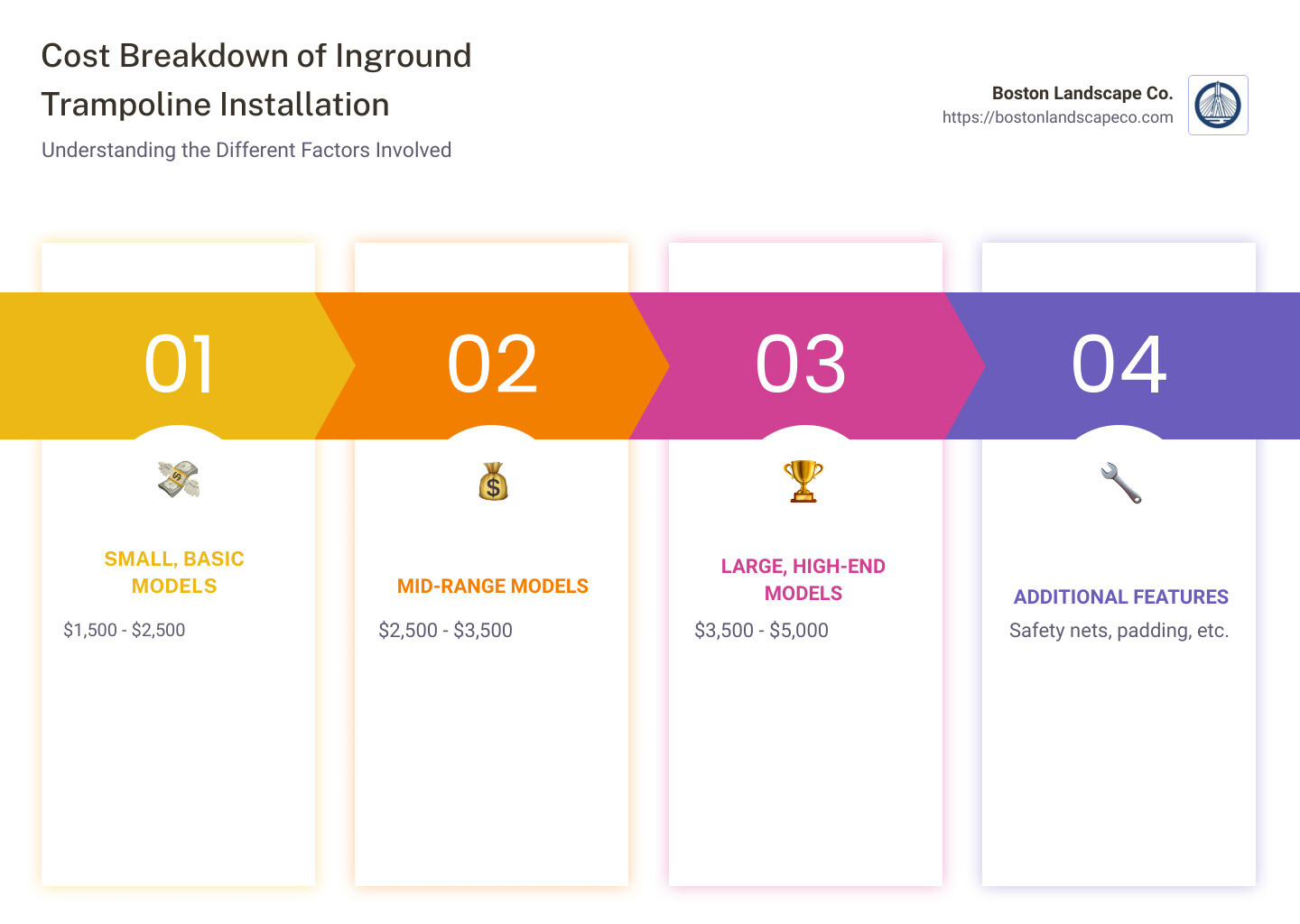
How much does it cost to install an inground trampoline? This is a common question for homeowners and commercial property managers seeking to improve their outdoor spaces. The cost can vary greatly depending on several factors such as size, quality, and additional features, but typically ranges between $1,500 and $5,000. Here’s a quick breakdown:
- Small, basic models: $1,500 – $2,500
- Mid-range models with added features: $2,500 – $3,500
- Large, high-end models with safety nets and padding: $3,500 – $5,000
Inground trampolines offer several advantages over their above-ground counterparts. They blend seamlessly into your landscape, drastically reducing the risk of falls and minimizing wind exposure. This makes them safer, more durable, and visually appealing. Additionally, their low profile makes them more accessible for children and individuals with mobility issues.
I’m Steve Schumacher, the proud owner of Boston Landscape Co. With over 30 years of experience in the landscaping industry, I can confidently guide you on how much does it cost to install an inground trampoline and why this investment could be beneficial for you.
Now, let’s dig deeper into the specifics and factors influencing the cost of inground trampolines.
How much does it cost to install an inground trampoline word list:
– Trampoline certified installer
– cost for inground trampoline
– in ground trampoline near me
What Is an Inground Trampoline?
Definition
An inground trampoline is a trampoline installed by sinking it into the ground, so its surface is level with your lawn or garden. This design makes it blend seamlessly into your landscape, enhancing the aesthetic appeal of your outdoor space.
Benefits
Safety: One of the biggest advantages of inground trampolines is safety. Since they are flush with the ground, the risk of falling from a height is significantly reduced. This makes them a safer choice, especially for young children.
Aesthetics: Inground trampolines are less visually intrusive compared to above-ground models. They blend naturally with the surroundings, making your yard look more cohesive and less cluttered.
Accessibility: Without the need to climb up, inground trampolines are easier to access. This is especially beneficial for younger children and individuals with mobility issues.
Weather Resistance: Inground trampolines are less exposed to high winds, reducing the risk of them being tipped over during rough weather. The surrounding earth provides natural insulation and protection, enhancing the trampoline’s durability against weather elements.
Drawbacks
Installation Complexity: Installing an inground trampoline is more complex and labor-intensive than setting up an above-ground model. It involves digging a large hole, setting up proper drainage, and possibly installing retaining walls.
Cost: The initial investment for an inground trampoline is typically higher. Costs can range from $1,500 to $5,000 depending on size, quality, and additional features.
Maintenance: While inground trampolines are durable, they require regular maintenance to ensure proper drainage and prevent soil erosion around the trampoline.
By understanding these benefits and drawbacks, you can better decide if an inground trampoline is the right choice for your home.

How Much Does It Cost to Install an Inground Trampoline?
When considering how much does it cost to install an inground trampoline, several factors come into play. Let’s break down the primary costs and considerations.
Size and Quality of the Trampoline
Size: Larger trampolines cost more due to the increased materials and labor required. A 14-foot trampoline, for example, will cost more than a 10-foot one.
Quality: Higher quality trampolines, such as those with galvanized steel frames to prevent rust, are more expensive but offer greater durability and safety. Brands like Avyna Pro Line and Capital Play offer high-quality options that can withstand weather elements and provide a better bounce.
Trampoline Kits: Complete kits, like those from Capital Play, come with the trampoline, pads, and retaining walls. These kits simplify the installation process and ensure all necessary components are included.
Professional Installation Costs
Excavation: Digging the hole for your trampoline is a significant part of the installation cost. Excavation for a 14-foot trampoline can range from $400 to $1,500, depending on soil conditions and depth.
Retaining Wall: To prevent soil erosion and maintain the shape of the hole, a retaining wall is essential. Constructing one can cost around $2,000, varying based on materials used (wood vs. concrete).
Water Drainage: Proper drainage is crucial to avoid water accumulation, which can damage the trampoline. Installing a drainage system can start at a few hundred dollars and go up to several thousand, depending on the system’s complexity.
Optional Accessories
Adding optional accessories can improve your trampoline experience but will increase costs:
- Trampoline Cover: Protects the trampoline from weather elements.
- Frame Pads: Adds an extra layer of safety by covering the springs and frame.
- Enclosure Net: Provides additional safety, especially for younger children.
- Basketball Hoop: Adds a fun element to the trampoline.
- Lighting System: LED lights can make evening jumps possible and enjoyable.
Comparison with Above-Ground Trampolines: Above-ground trampolines are generally less expensive to purchase and install. However, inground trampolines offer better safety, aesthetics, and durability, making them a worthwhile long-term investment.
By understanding these costs and considerations, you can better determine if an inground trampoline fits your budget and needs. Next, we’ll explore the factors affecting the cost of inground trampoline installation.
Factors Affecting the Cost of Inground Trampoline Installation
When thinking about how much does it cost to install an inground trampoline, several key factors can influence the overall expense. These include the depth of the hole, the materials used for the retaining wall, the method for filling in the hole, and the drainage system.
Depth of the Hole
The depth of the hole is a significant factor in the cost. Typically, the hole needs to be about 3 feet deep for a standard trampoline. However, if the soil is rocky or hard, excavation costs can increase.
- Standard Depth: Around 3 feet.
- Cost Range: $400 to $1,500 depending on soil conditions.
Filling in the Hole
Once the hole is dug, it needs to be properly filled to ensure stability and safety. This involves backfilling around the trampoline frame with soil and gravel.
- Gravel: Used for drainage and to stabilize the bottom of the hole.
- Soil: Used to backfill around the trampoline frame.
- Cost: Varies based on the amount of materials required.
Retaining Wall Materials
A retaining wall is essential to prevent soil erosion and maintain the shape of the hole. The cost can vary significantly depending on the materials used:
- Wood: More affordable but less durable.
- Concrete: More expensive but offers greater durability and stability.
Cost Estimate: Constructing a retaining wall can cost around $2,000, with variations depending on the materials chosen.
Drainage System
Proper drainage is crucial to avoid water accumulation, which can damage the trampoline over time. Installing a drainage system can range from simple gravel layers to more complex systems with pipes and pumps.
- Basic Drainage: Using gravel and simple channels.
- Advanced Drainage: Involves pipes and potentially a sump pump for areas with poor natural drainage.
Cost Range: From a few hundred dollars to several thousand, depending on the complexity of the system.
By understanding these factors, you can get a clearer picture of the costs involved in installing an inground trampoline. Next, we’ll explore whether an inground trampoline is worth the investment in terms of benefits, safety, and maintenance.
When considering an inground trampoline, you might wonder if it’s worth the investment. Let’s look at the benefits, drawbacks, safety features, and maintenance requirements to help you decide.
Benefits
Safety
One of the most compelling reasons to choose an inground trampoline is safety. Since the trampoline is flush with the ground, the risk of falling injuries is greatly reduced compared to above-ground models. This makes it a safer option, especially for young children.
Aesthetics
Inground trampolines blend seamlessly into your landscape. They are less visually intrusive and can improve the overall look of your backyard.
Accessibility
These trampolines are easier to access. There’s no need to climb up, making it simpler for kids and adults of all ages to enjoy.
Weather Resistance
Inground trampolines are less likely to be tipped over by high winds. The surrounding earth provides natural insulation and protection, making them more durable against weather elements.
Drawbacks
Higher Initial Cost
The installation process is more complex and labor-intensive, leading to higher costs. Excavation, retaining walls, and drainage systems contribute to the expense.
Maintenance
Regular maintenance is crucial. You’ll need to check for rust, loose springs, and tears in the mat or net. Proper drainage must be maintained to prevent water accumulation.
Safety
Reduced Fall Risk
Since the trampoline is at ground level, the risk of falling from a height is minimized, making it safer for children and adults alike.
Sturdy Construction
High-quality materials like galvanized steel frames and durable jumping mats are often used, enhancing safety and longevity.
Maintenance
Regular Checks
Conduct monthly safety inspections to ensure that all parts, including springs and frame connections, are secure. Look for any signs of rust or wear and tear.
Preventative Maintenance
Clean the mat and net with mild soap and water. Inspect the frame and springs regularly and apply rust protection if necessary.
Weather Impact
Ensure proper drainage around the trampoline to prevent water accumulation. Use weather-resistant covers to protect the trampoline when not in use, especially during extreme weather conditions.
By weighing these benefits, drawbacks, safety features, and maintenance requirements, you can determine if an inground trampoline is a worthwhile investment for your family. Next, let’s address some frequently asked questions about inground trampoline installation.
Frequently Asked Questions about Inground Trampoline Installation
How much does it cost to dig an inground trampoline?
Excavation is a significant part of the installation cost. The price can vary, but you can expect to spend between $400 and $1,500 for digging the hole. Factors influencing this cost include:
- Hole Size: Larger trampolines require more extensive digging, increasing labor and machinery costs.
- Depth: Typically, holes are about 3 feet deep, but this can vary based on the trampoline model and ground conditions.
- Bowl Shape: Ensuring the hole has a bowl shape helps with drainage and stability, which can add to the time and cost of excavation.
How deep do you have to dig for an inground trampoline?
The depth of the hole is crucial for proper installation. Most inground trampolines need a hole that is around 3 feet deep. Here are some key points:
- Trampoline Size: Larger trampolines might require deeper or wider holes.
- Digging Depth: Ensuring the correct depth is essential for safety and performance.
- Bowl Shape: A bowl-shaped hole aids in drainage and prevents water from pooling under the trampoline, which helps in maintaining its durability.
Is an inground trampoline worth it?
Many homeowners find that the benefits of an inground trampoline justify the costs. Here’s why:
- Durability: Inground trampolines are built with high-quality materials like galvanized steel frames and durable jumping mats, making them last longer.
- Weather Resistance: The surrounding earth provides natural protection against wind and weather, reducing the risk of damage.
- Aesthetics: Inground trampolines blend seamlessly into your landscape, enhancing the look of your backyard.
- Safety: The reduced height from the ground minimizes fall risks, making it a safer option for families.
By considering these factors, you can better understand the costs and benefits of installing an inground trampoline, helping you make an informed decision.
Conclusion: How Much Does an Inground Trampoline Cost
In summary, installing an inground trampoline involves several cost factors, including the size and quality of the trampoline, professional installation fees, and optional accessories. The overall investment can range from $1,500 to $5,000, but the long-term benefits often outweigh the initial costs.
Boston Landscape Co. is dedicated to helping you make an informed decision. We understand that the choice to install an inground trampoline is about more than just the cost—it’s about enhancing your family’s quality of life. Our team of certified installers ensures a seamless and secure installation process, taking care of everything from detailed planning to execution.
By choosing Boston Landscape Co., you are opting for:
- Expertise: Our certified team ensures a safe and secure installation.
- Quality Assurance: We partner with top manufacturers to deliver superior quality.
- Customization: We design trampoline installations that meet your specific needs.
- Professionalism: We prioritize communication and customer satisfaction from start to finish.
Ready to transform your backyard into a dynamic, family-friendly space? Contact Boston Landscape Co. today to learn more about our inground trampoline installation services and schedule a consultation. Let’s create a safe and engaging environment where your family can thrive.
Boston Landscape Co.: Your premier destination for changing ordinary backyards into extraordinary outdoor havens.
