How long does it take for hydroseed to grow? 6 Tips
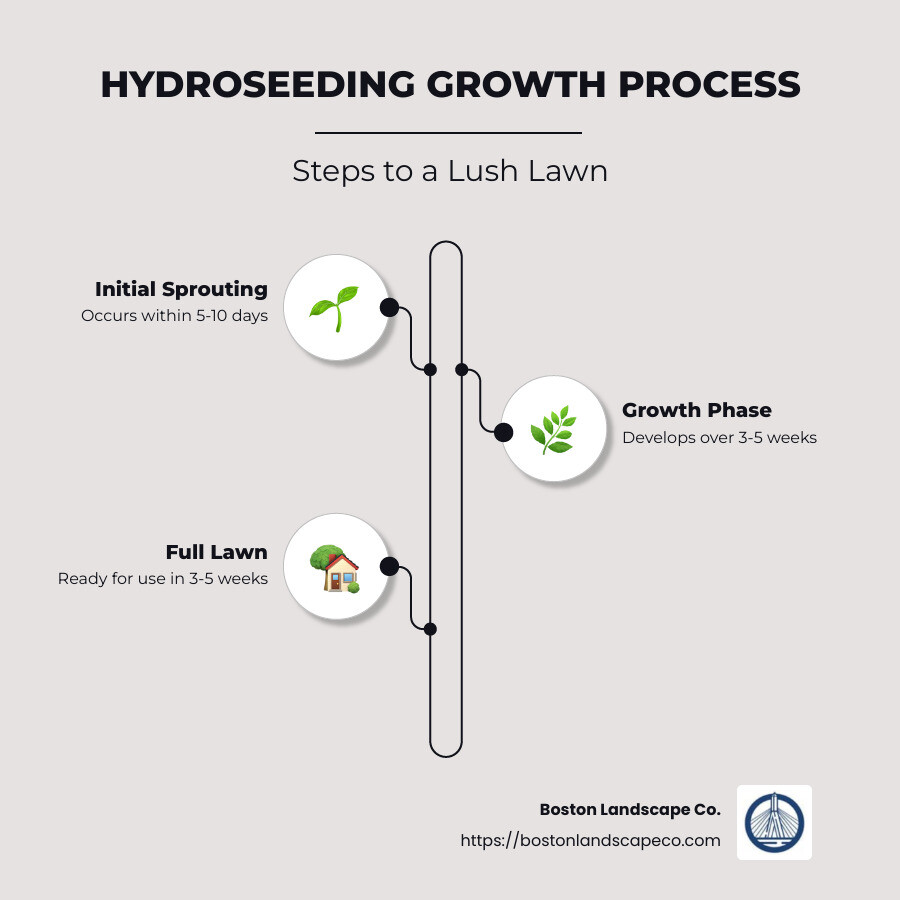
How long does it take for hydroseed to grow? Many people asking this are eager to see their lawns transform into lush, vibrant greens. Hydroseed is an affordable and effective solution, especially when done in the right conditions. Here’s a quick glimpse: Hydroseed typically starts sprouting in 5-10 days and can result in a full, usable lawn within 3-5 weeks. Temperature, soil conditions, and consistent care play crucial roles in how quickly your lawn becomes the neighborhood’s envy.
Hydroseeding offers a host of benefits, making it a popular choice for homeowners and property managers across the Greater Boston area. This method involves applying a slurry of seeds, fertilizer, and water to large or hard-to-reach areas, allowing for even distribution and faster growth compared to traditional seeding methods. The result? A beautiful, lush lawn that improves the aesthetic appeal and functionality of any outdoor space.
I’m Steve Schumacher, the owner of Boston Landscape Co., and I’ve been changing landscapes for over three decades. My experience has shown time and again the successful impact of understanding how long does it take for hydroseed to grow under various conditions. Let’s dig deeper into what makes hydroseeding a go-to solution for your lawn.
Common how long does it take for hydroseed to grow vocab:
– best hydroseeding companies
– how does hydroseeding work
– residential hydroseeding
How Long Does It Take for Hydroseed to Grow?
Factors Affecting Growth Time
Hydroseeding is a fantastic way to achieve a lush lawn, but how long does it take for hydroseed to grow? The timeline can vary, typically starting to sprout in 5-10 days and reaching full growth in 3-5 weeks. Several factors influence this growth time, including seed selection, climate, soil conditions, and watering schedule.
Germination Time
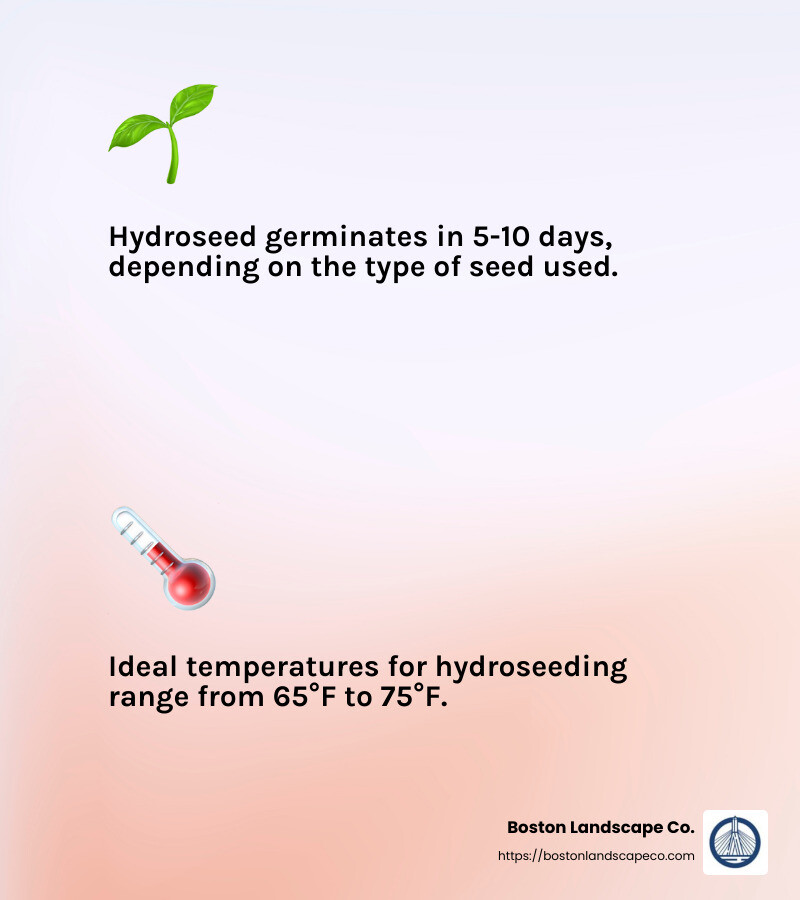
The germination time for hydroseed depends largely on the type of grass seed used. For instance, ryegrass often germinates quickly, within 5 to 10 days, while other types like fescues may take longer. The right seed selection custom to your climate and soil type can speed up this process.
Seed Selection
Choosing the right seed is crucial. Different grass types have varied growth rates and are suited to different climates. In Boston, for example, a mix of seeds might be ideal to ensure resilience and year-round greenery.
Climate Impact
Climate plays a significant role in hydroseeding success. Mild temperatures between 65°F and 75°F are ideal. Spring and fall are often the best seasons for hydroseeding in Massachusetts due to moderate temperatures and adequate rainfall.
Soil Conditions
Soil quality can make or break your hydroseeding efforts. Compacted soil, often found in construction areas, can hinder growth. Proper soil preparation, including tilling and adding organic matter, is essential for successful germination.
Weather Conditions
Weather fluctuations can affect seed growth. Consistent temperatures and moisture levels are key. Extreme heat or cold can delay germination, while heavy rains might wash away seeds. Monitoring weather patterns and adjusting your care routine accordingly is vital.
Watering Schedule
Watering is crucial in the early stages. Newly hydroseeded lawns require frequent watering to stay consistently moist. Typically, watering 2-4 times a day for 10-20 minutes each session helps ensure healthy growth. Adjust based on weather conditions to avoid over or under-watering.
By understanding these factors, you can create an environment where your hydroseed thrives. Up next, we’ll explore the ideal conditions for hydroseeding to maximize your lawn’s potential.
Ideal Conditions for Hydroseeding
To achieve the best results with hydroseeding, timing and environmental conditions are crucial. Let’s explore the ideal conditions that set the stage for a lush, green lawn.
Spring and Fall: The Perfect Seasons
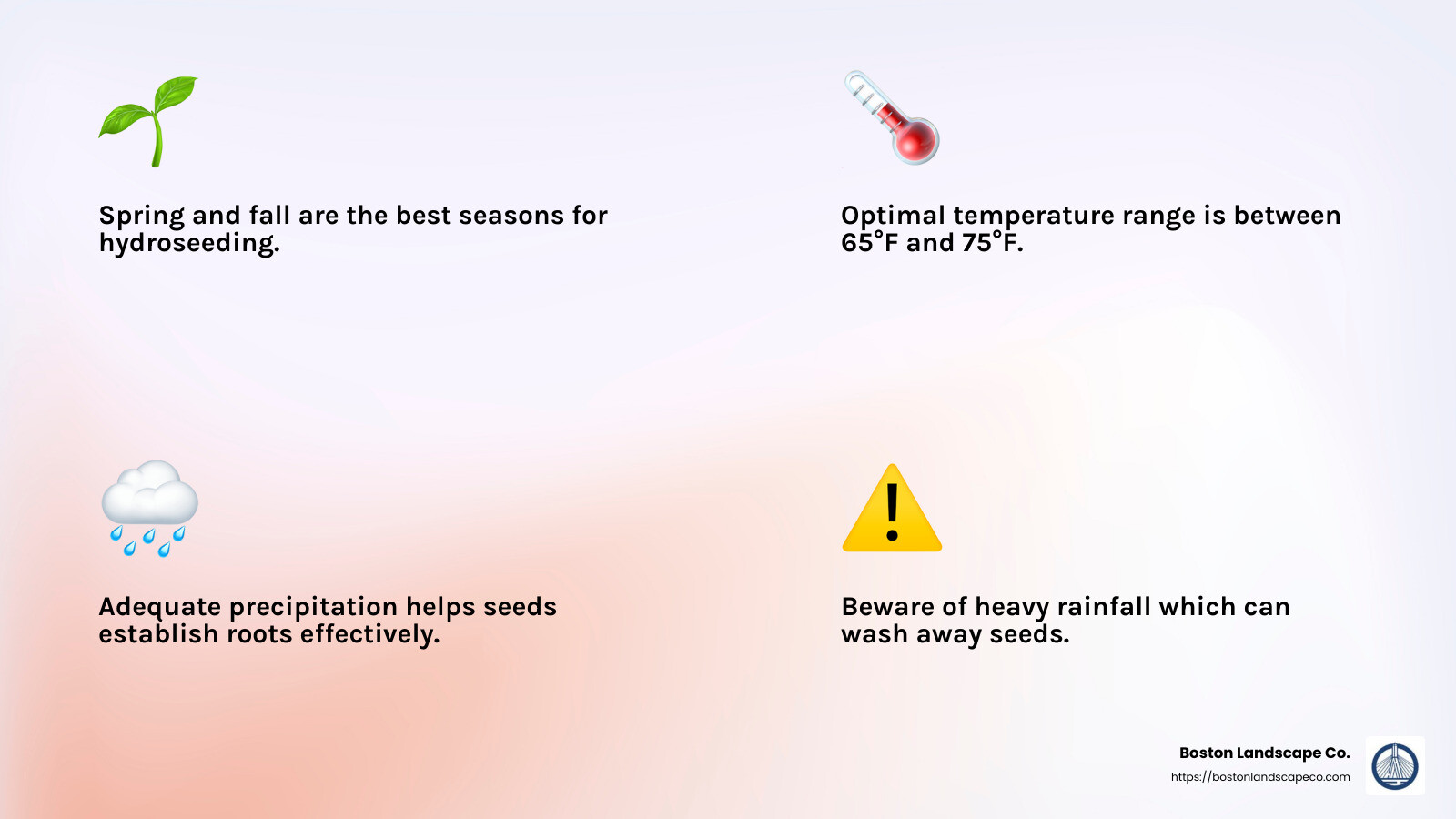
Spring and fall are the best times for hydroseeding, especially in Massachusetts. These seasons offer moderate temperatures and more consistent rainfall, which are beneficial for seed germination.
Why spring and fall? During these times, the weather is neither too hot nor too cold. This balance helps seeds germinate quickly and reduces the risk of seeds drying out or freezing.
Temperature Range: The Sweet Spot
For optimal hydroseeding results, aim for a temperature range between 65°F and 75°F. This range is ideal because it supports rapid seed germination and healthy growth. Temperatures outside this range can slow down the process or even harm the seeds.
- Too Cold: Seeds might freeze or take longer to sprout.
- Too Hot: Seeds may dry out, requiring more frequent watering.
Precipitation Levels: Nature’s Irrigation
Adequate precipitation is a major plus during hydroseeding. Spring and fall usually provide the right amount of rain, reducing the need for excessive manual watering. Consistent moisture helps seeds establish roots more effectively.
However, be cautious of heavy rainfall, which can wash away seeds. Monitoring weather forecasts and adjusting your watering schedule can help mitigate this risk.
In summary, timing your hydroseeding project for the right season and maintaining optimal temperature and precipitation levels can significantly improve your lawn’s growth. Next, we’ll discuss how to prepare your lawn for hydroseeding to ensure a successful start.
Preparing Your Lawn for Hydroseeding
Proper preparation is key to a successful hydroseeding project. Let’s explore the essential steps to get your lawn ready for this process.
Site Preparation
The first step in preparing your lawn for hydroseeding is to clear the site. Remove any existing vegetation by applying a herbicide. This ensures that the hydroseed has a clean slate to grow on. Next, clear away any debris, such as stumps, rocks, and twigs. These can obstruct seed contact with the soil and impede growth.
Once the site is clear, grade the area to prevent drainage problems. Grading helps ensure water flows away from your home and allows for even seed distribution. A well-graded site is crucial for avoiding puddles that can drown seeds.
Soil Testing
Soil testing is a critical step that many overlook. Conduct a soil test to determine the pH level and nutrient content of your soil. This information will guide you in making necessary adjustments to create the ideal environment for your seeds.
A balanced pH level is crucial for seed germination and growth. If your soil is too acidic or alkaline, you may need to add lime or sulfur to adjust it. Soil tests can also reveal nutrient deficiencies, allowing you to add the right fertilizers or amendments.
Topsoil Importance
Topsoil plays a vital role in the success of your hydroseeding project. Quality topsoil provides the nutrients needed for healthy grass growth. If your site lacks good topsoil, consider adding up to 4 inches of a loamy topsoil mix.
Topsoil not only supplies nutrients but also improves soil structure. It helps retain moisture, which is essential for seed germination. Without adequate topsoil, your lawn may struggle to establish deep roots.
In conclusion, effective site preparation, thorough soil testing, and the addition of quality topsoil are crucial steps in setting the stage for a lush, green lawn. Up next, we’ll explore essential hydroseed maintenance tips to ensure continued growth and health.
Hydroseed Maintenance Tips
Once your lawn is hydroseeded, it’s time to focus on maintenance to ensure healthy growth. Here’s how to keep your new lawn thriving:
Watering Frequency
Watering is crucial for hydroseed growth. Initially, you need to keep the soil consistently moist.
- First 2 weeks: Water 3 to 4 times a day for about 10 to 15 minutes each session. This helps the seeds germinate and establish roots.
- After 2 weeks: Gradually reduce watering to once a day.
In dry or windy conditions, you may need to water more frequently. Always aim for even soil moisture, but avoid over-saturating the area.
Mulch Role
The mulch in hydroseed plays a vital role in retaining moisture. It acts like a protective blanket, reducing evaporation and providing a stable environment for seeds to germinate.
- Tip: Make sure the mulch layer remains intact and evenly distributed. This will help maintain soil moisture and protect seeds from harsh weather.
Mowing Guidelines
Once your grass reaches about 3 to 4 inches tall (usually around 4 to 5 weeks), it’s ready for its first mow.
- Mow regularly: Start mowing weekly after the first cut.
- Height rule: Never cut more than one-third of the grass height at a time. This helps maintain healthy growth and prevents stress on the grass.
Following these maintenance tips will help your hydroseeded lawn grow lush and green. Next, we’ll dive into some frequently asked questions about hydroseeding to address common concerns.
Frequently Asked Questions about Hydroseeding
Why is my hydroseed not sprouting?
If your hydroseed isn’t sprouting, there are a few common reasons to consider:
- Dry Seeds: Seeds need moisture to germinate. If the soil isn’t consistently moist, seeds can dry out and fail to sprout. Keep the soil damp by watering multiple times a day, especially during the first few weeks.
- Watering Schedule: An incorrect watering schedule can hinder growth. It’s crucial to water 3 to 4 times a day for the first 2 weeks, ensuring the soil remains moist.
- Climate Considerations: Weather plays a big role. Extreme temperatures or unexpected weather conditions can delay germination. Aim for mild temperatures and adjust watering based on weather changes.
How often should hydroseed be watered?
Watering frequency is key to successful hydroseeding:
- Initial Phase: Water 3 to 4 times daily for 10 to 15 minutes each session during the first 2 weeks. This helps seeds germinate and roots to establish.
- After 2 Weeks: Gradually reduce to once a day. Monitor the soil’s moisture and adjust based on climate conditions.
- Climate Considerations: In hotter or drier climates, you might need to water more frequently. Keep an eye on the soil to ensure it’s moist but not waterlogged.
Can you hydroseed over an existing lawn?
Hydroseeding over an existing lawn is generally not recommended. Here’s why:
- Overseeding Alternative: If you need to refresh your lawn, consider overseeding instead. This involves using a power rake to loosen the soil, then spreading new seed. It’s a more effective method for filling in bare spots without starting from scratch.
- Site Preparation: Proper site preparation is crucial. Remove existing grass and weeds, and ensure the soil is ready for new seeds to take root. This ensures better germination and a healthier lawn.
By understanding these common questions, you can better manage your hydroseeding project and achieve a lush, green lawn.
Conclusion
At Boston Landscape Co., we believe that a lush, green lawn is within reach for every homeowner. Our comprehensive services are designed to support you every step of the way in your hydroseeding journey. Whether you’re starting from scratch or enhancing an existing landscape, our team has the expertise and tools to ensure successful hydroseeding.
Why Choose Us?
- Expertise: With over 24 years of experience in the industry, we have mastered the art of hydroseeding. Our team knows what works best in the Massachusetts climate, ensuring your lawn thrives.
- Comprehensive Services: From site preparation to maintenance, we offer a full range of services custom to meet your unique needs. Our approach ensures that every detail is taken care of, from soil testing to selecting the right seed mix.
- Customer Satisfaction: We pride ourselves on delivering exceptional results. Our clients trust us to transform their outdoor spaces into beautiful, functional areas they can enjoy year-round.
If you’re ready to experience the benefits of hydroseeding, contact us today to discuss your options. Let Boston Landscape Co. help you achieve a vibrant and healthy lawn that improves your outdoor space.
With our expertise and dedication, your lawn will not only grow but flourish, providing a lush backdrop for all your outdoor activities.