
Residential Hydroseeding: Top 8 Benefits in 2024
Residential hydroseeding is a fast and effective way to establish a lush, green lawn over a large area. This cost-efficient method quickly sprays a slurry mix of seed, water, and mulch, resulting in faster germination compared to traditional seeding. The striking advantage is the uniform growth which improves not only the beauty but also the resilience of your lawn.
Key Benefits:
– Quick and even coverage: Ideal for large lawns needing uniform growth
– Cost-effective: More affordable than laying sod
– Soil erosion control: Stabilizes disrupted soil areas
– High germination rates: Results usually seen within a week
At Boston Landscape Co., with over 24 years of expertise in the landscaping field, we provide premier residential hydroseeding services to transform your outdoor space into a vibrant oasis. As owner Steve Schumacher, I’m committed to delivering high-quality results, ensuring your new lawn is both visually appealing and functionally robust. Let’s dig further into how this process can benefit your property.
Must-know residential hydroseeding terms:
– how does hydroseeding work
– how long does it take for hydroseeding to grow
What is Residential Hydroseeding?
Residential hydroseeding is a modern lawn seeding technique that combines seed, water, mulch, and other additives into a slurry. This slurry is then sprayed over prepared soil using specialized equipment. The method is popular for its efficiency and effectiveness in establishing lush, green lawns quickly and uniformly.
The Hydroseeding Process
The process of hydroseeding begins with preparing the soil. This involves clearing the area of weeds, rocks, and debris, and grading the soil to ensure proper drainage. Once the soil is ready, the hydroseeding slurry is mixed. This slurry is a combination of grass seed, water, mulch, fertilizer, and sometimes a tackifier, which helps the mixture adhere to the soil.
The slurry is then sprayed evenly across the lawn area using a hydroseeder. This ensures comprehensive coverage and promotes uniform growth. Hydroseeding is particularly effective on slopes or large areas that are difficult to seed by hand.
Components of the Slurry
- Grass Seed: Chosen based on the local climate and soil conditions, ensuring optimal growth.
- Water: Facilitates even distribution of the slurry and aids in the germination process.
- Mulch: Protects seeds, retains moisture, and provides insulation against temperature fluctuations.
- Fertilizer: Provides essential nutrients to support initial growth.
- Tackifier (optional): A binding agent that helps the slurry stick to the soil, reducing erosion.
Why Choose Hydroseeding?
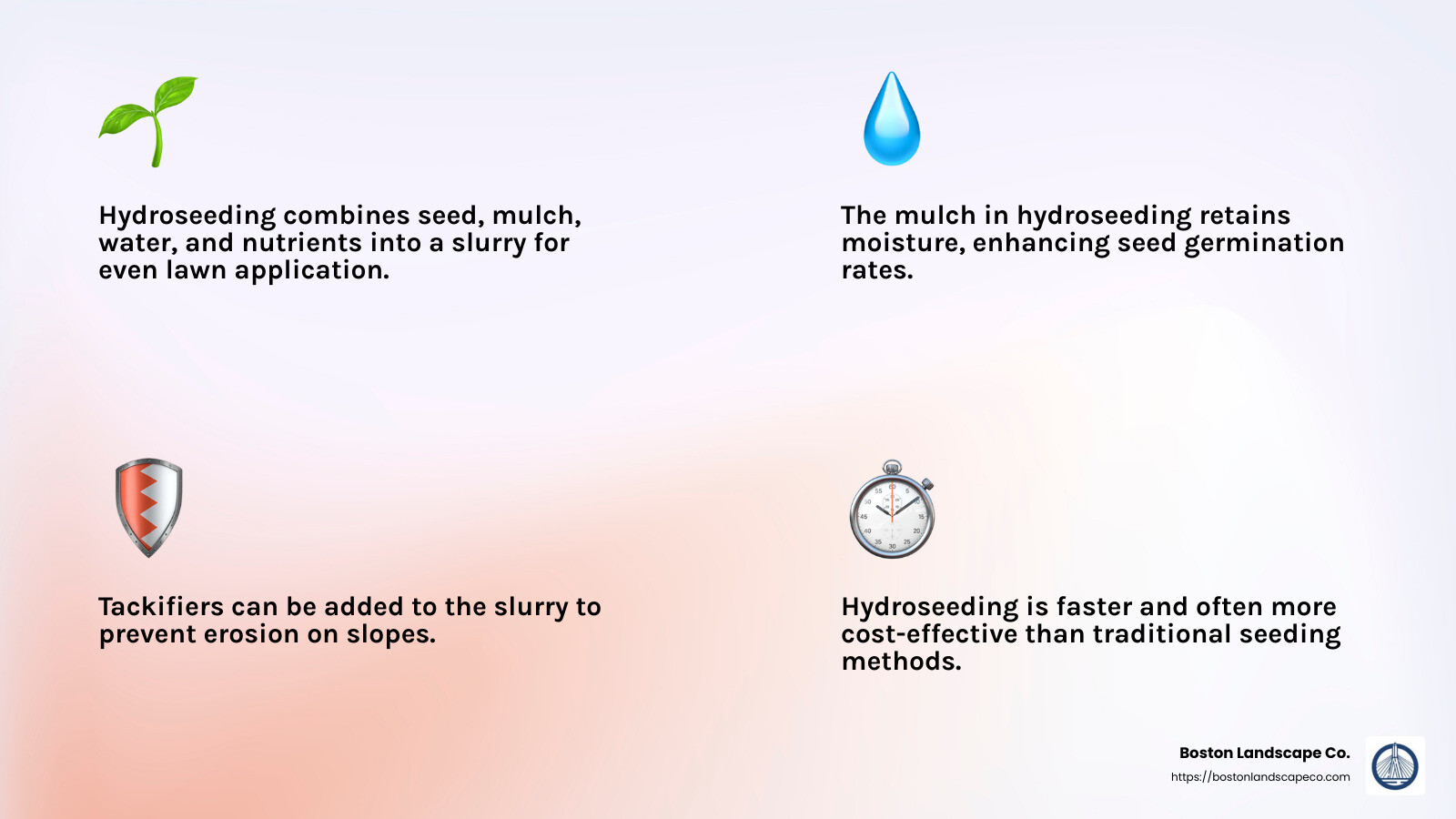
Hydroseeding offers several advantages over traditional seeding methods. It allows for quick and even coverage, which is crucial for a uniform lawn. The mulch in the slurry protects the seeds and helps retain moisture, leading to higher germination rates. Additionally, hydroseeding is cost-effective, typically more affordable than sod, and provides excellent erosion control.
With residential hydroseeding, you can achieve a vibrant, healthy lawn in a fraction of the time it takes with traditional methods. Whether you’re looking to cover a small backyard or a sprawling estate, hydroseeding is a versatile solution that meets various landscaping needs.
At Boston Landscape Co., we specialize in changing outdoor spaces with our expert hydroseeding services. Our team ensures that every lawn we seed grows lush and strong, enhancing the beauty and value of your home.
Advantages of Residential Hydroseeding
Residential hydroseeding offers several compelling benefits that make it a popular choice for homeowners looking to establish a lush, green lawn efficiently and cost-effectively.
Cost-Effective Solution
One of the biggest advantages of hydroseeding is its cost-effectiveness. Compared to sodding, hydroseeding is significantly cheaper, often costing less than half the price. For instance, while sodding a lawn can cost between $1,000 and $2,500, hydroseeding the same area averages around $850. This makes it an attractive option for those looking to save money without compromising on quality.
Fast Application and Results
Hydroseeding is not only affordable but also quick to apply. The process involves spraying a slurry mixture over the soil, which allows for rapid and even coverage. This method can cover large areas in a short period, making it ideal for both small residential yards and expansive properties. Homeowners can typically start seeing grass growth within a week, with a fully established lawn in a matter of weeks.
Erosion Control
Hydroseeding is particularly effective in controlling erosion. The mulch in the slurry acts as a protective layer, preventing soil from being washed away by rain or blown away by wind. This makes it an excellent choice for sloped areas or regions prone to erosion. By stabilizing the soil, hydroseeding not only promotes healthy grass growth but also protects the landscape.
High Germination Rates
The slurry used in hydroseeding contains fertilizers and mulch, which create an optimal environment for seed germination. The mulch retains moisture and provides insulation, leading to improved germination rates compared to traditional seeding methods. This means that more seeds successfully sprout and grow, resulting in a denser and more vibrant lawn.
Uniform Growth
Hydroseeding ensures uniform seed distribution, which leads to even and consistent grass growth. Unlike traditional seeding, where seeds can be scattered unevenly, the hydroseeding slurry is sprayed in a controlled manner, covering the entire area evenly. This results in a uniform lawn with minimized chances of patchy or uneven areas.
With these advantages, residential hydroseeding is an excellent choice for homeowners seeking a beautiful, healthy lawn without the high costs and labor-intensive process of sodding. At Boston Landscape Co., we leverage the benefits of hydroseeding to deliver exceptional results, ensuring your lawn looks its best all year round.
Disadvantages of Residential Hydroseeding
While residential hydroseeding offers numerous benefits, there are a few drawbacks to consider before deciding if it’s the right choice for your lawn.
Maintenance
Hydroseeding requires diligent maintenance, especially in the initial stages. Once the slurry is applied, the area needs to be watered frequently—typically two to three times a day—to keep the soil moist and encourage seed germination. This can be a demanding task for homeowners who may not have the time or resources to maintain such a rigorous watering schedule. Additionally, the lawn should not be mowed until the grass reaches about 3 inches in height, which usually takes four to six weeks.
Limited Grass Varieties
Another limitation of hydroseeding is the range of grass varieties available. While it offers flexibility in choosing grass types, the selection is still more limited compared to traditional seeding. Some specific grass species that might thrive in unique climates or conditions may not be available in a hydroseeding mix. This means homeowners must carefully select the seed blend to ensure it suits their local climate and soil conditions.
Weather Dependency
The success of hydroseeding is heavily dependent on weather conditions. Ideal weather for hydroseeding is mild with regular rainfall, which helps maintain the necessary moisture levels for seed germination. Extreme weather conditions, such as heavy rain or prolonged drought, can negatively impact the process. Heavy rain can wash away the slurry, while drought conditions can dry out the seeds before they have a chance to germinate. Homeowners need to monitor weather forecasts closely and adjust their watering schedules accordingly to ensure optimal results.
Despite these disadvantages, many homeowners find that the benefits of residential hydroseeding outweigh the drawbacks, especially when looking for a cost-effective and efficient way to establish a new lawn.
How to Hydroseed Your Lawn
Ready to transform your yard with residential hydroseeding? Let’s explore the step-by-step process.
Step 1: Select the Seed You Want
Choosing the right grass seed is crucial. Consider your local climate and soil conditions. For example, Kentucky Bluegrass is popular in the Midwest for its lush appearance. Consult with a local garden center or lawn care expert to find the best seed blend for your area.
Step 2: Test Your Soil
Before hydroseeding, test your soil’s pH and nutrient levels. Soil test kits are available at major hardware stores. Knowing your soil’s condition helps you choose the right fertilizer and amendments to promote healthy grass growth.
Step 3: Remove Weeds, Rocks, and Debris
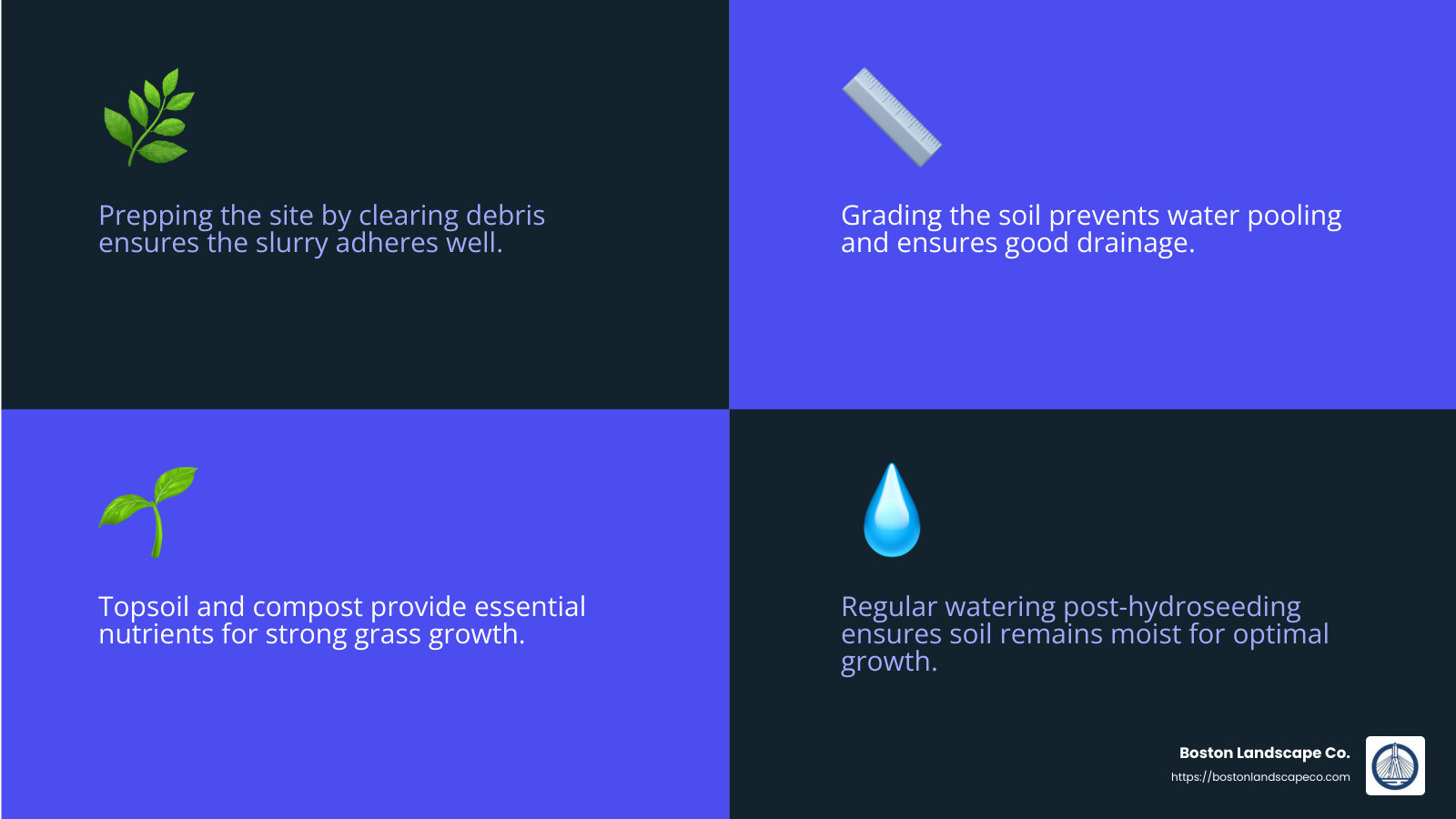
Prepare the site by clearing away weeds, rocks, and other debris. This ensures the slurry adheres well and provides a smooth surface for even growth. A clear area reduces competition for nutrients and space.
Step 4: Grade the Soil
Proper grading ensures good drainage and prevents water from pooling. Create a gentle slope away from buildings to protect foundations and promote healthy grass growth. This step is critical for avoiding future water-related issues.
Step 5: Lay Topsoil & Compost
Improve your soil with a layer of topsoil and compost. These materials improve soil structure and provide essential nutrients. This step sets the foundation for a strong, healthy lawn.
Step 6: Prep the Hydroseeder
Set up your hydroseeder according to the manufacturer’s instructions. Load it with your seed mixture, water, fertilizer, and any necessary additives like tackifiers. Proper mixing ensures the slurry is effective and adheres well to the soil.
Step 7: Spray the Hydroseed
Apply the slurry evenly across the prepared area. Use a hose to reach all corners. Ensure complete coverage to prevent bare spots and promote uniform growth. Precision is key to achieving a lush, even lawn.
Step 8: Maintain Your Lawn
After hydroseeding, focus on maintenance:
- Watering: Keep the soil moist by watering lightly but frequently. Adjust your schedule based on weather conditions.
- Fertilization: Apply a starter fertilizer four to six weeks after seeding to boost growth.
- Mowing: Wait until the grass reaches about 3 inches before mowing. This usually takes four to six weeks.
With proper care, your hydroseeded lawn will flourish, offering a lush, green space for relaxation and enjoyment.
Now, let’s explore the costs associated with residential hydroseeding and how they compare to other lawn establishment methods.
Cost of Residential Hydroseeding
When considering residential hydroseeding, understanding the costs involved is crucial. Let’s break down the expenses and compare them to other lawn establishment methods like sod and traditional seeding.
Price per Square Foot
The cost of hydroseeding varies depending on the size of your lawn. On average, expect to pay about $0.12 per square foot. For a typical quarter-acre yard (approximately 10,900 square feet), the cost hovers around $1,300. Prices can range from $480 to $3,100, influenced by factors like terrain and the type of seed mixture used.
Factors Affecting Cost
Several factors can influence the overall cost of hydroseeding:
- Lawn Size: Larger areas often cost more, but bulk discounts may be available.
- Terrain: Sloped or uneven terrain can increase costs due to additional preparation and erosion control measures.
- Seed Type: Different grass types come with varying price tags. For instance, Kentucky Bluegrass can be more expensive than Fescue.
- Local Climate: The need for specific seed blends or additional watering in dry climates can affect costs.
Comparison with Sod
Hydroseeding is generally more cost-effective than laying sod. While sod provides an instant lawn, it comes at a premium. Sod installation costs range from $1,000 to $2,500 for a similar-sized area, with an average total cost of around $1,800. In contrast, hydroseeding offers a more budget-friendly option with longer-term growth benefits.
Comparison with Traditional Seeding
Traditional seeding is cheaper than both hydroseeding and sodding but requires more time and effort. Results can take 6 to 10 weeks to appear, and success depends heavily on weather and maintenance. While traditional seeding might save money initially, hydroseeding offers faster results and less maintenance in the long run.
In summary, residential hydroseeding strikes a balance between cost and efficiency, providing a lush lawn without the hefty price tag of sod. With careful planning and maintenance, it offers a practical solution for homeowners seeking a beautiful and healthy lawn.
Next, we’ll address some frequently asked questions about residential hydroseeding to help you make an informed decision.
Frequently Asked Questions about Residential Hydroseeding
How much does it cost to hydroseed 2000 square feet?
Hydroseeding a 2000 square foot area typically costs between $240 and $620. This price range depends on factors like the type of seed used and the complexity of your lawn’s terrain. For example, if your lawn is sloped or requires special seed blends, the cost may be on the higher end.
Can you buy hydroseed to do it yourself?
Yes, you can buy hydroseed to do it yourself, but it’s important to weigh the pros and cons. DIY hydroseeding kits are available at garden stores and online, often costing between $250 and $500 for equipment rental. However, professional services might be worth considering because they ensure better results with their expertise in mixing and application. A professional can also save you time and effort, especially if you’re new to hydroseeding.
Is it cheaper to hydroseed or sod?
Hydroseeding is generally cheaper than sodding. The average cost of hydroseeding is around $850 for typical lawn sizes, while sodding can average about $1,800. Although sod provides an instant lawn, hydroseeding is more economical and offers a more robust root system over time. The choice between hydroseeding and sodding depends on your budget and how quickly you want to see results. If you’re willing to wait a few weeks for your lawn to establish, hydroseeding is a cost-effective and efficient option.
Conclusion
In summary, residential hydroseeding offers a cost-effective and efficient solution for establishing a lush, green lawn. It combines speed with high germination rates, making it an attractive choice for homeowners who want a vibrant yard without breaking the bank. While it requires some maintenance and is weather-dependent, the benefits often outweigh these challenges.
At Boston Landscape Co., we specialize in delivering exceptional hydroseeding services custom to your specific needs. With over 24 years of experience, our team ensures optimal results through expert soil preparation, precise seed selection, and meticulous application. We understand the unique climate and terrain of Massachusetts, allowing us to provide solutions that improve your outdoor spaces effectively.
In the end, choosing hydroseeding over traditional methods can save you money and time, offering a robust root system and uniform growth. Whether you’re rejuvenating an existing lawn or starting from scratch, hydroseeding is a smart investment for a beautiful yard. Trust Boston Landscape Co. to bring your vision to life with our comprehensive landscaping services.
For more information or to discuss your project, visit our hydroseeding service page. Let us help you create the lawn of your dreams!
