
Hardscaping your Yard: Ultimate 2025 Guide!
Why Hardscaping Your Yard Creates Lasting Value and Beauty
Hardscaping your yard means adding permanent, non-living structures like patios, walkways, and retaining walls to create functional outdoor spaces. Here’s a quick overview:
- What it includes: Stone patios, concrete walkways, brick walls, gravel paths, pergolas, outdoor kitchens, and water features.
- Key benefits: Reduces lawn maintenance, controls erosion, defines outdoor rooms, and can increase home value by 10-20%.
- Popular materials: Concrete pavers, natural stone, brick, gravel, and wood, each with different costs and maintenance needs.
- When to do it: Fall is ideal for installation and drainage tuning so you can enjoy fire pits and crisp-evening gatherings now—and be ready to hit the ground running in spring.
- DIY vs. Pro: Simple gravel paths are great for DIY, but patios and retaining walls often require professional expertise.
Think of hardscaping as the “bones” of your landscape. While softscaping is the living elements (plants, grass, soil), hardscaping provides the architectural framework. It solves common problems like endless mowing, muddy spots, or the lack of a proper place for a grill and patio furniture. A well-designed patio extends your living space, a stone path creates a clear route, and a retaining wall can turn a difficult slope into beautiful, usable terraces.
As fall settles into the Boston area, it’s the perfect time to plan—and often install—projects. Cooler weather is ideal for construction, and autumn rains reveal drainage issues to address before winter. I’m Steve Schumacher of Boston Landscape Co., and since 1991, I’ve helped homeowners design and install professional hardscaping projects. My experience has shown that the best outdoor spaces are a perfect balance of structure and nature.
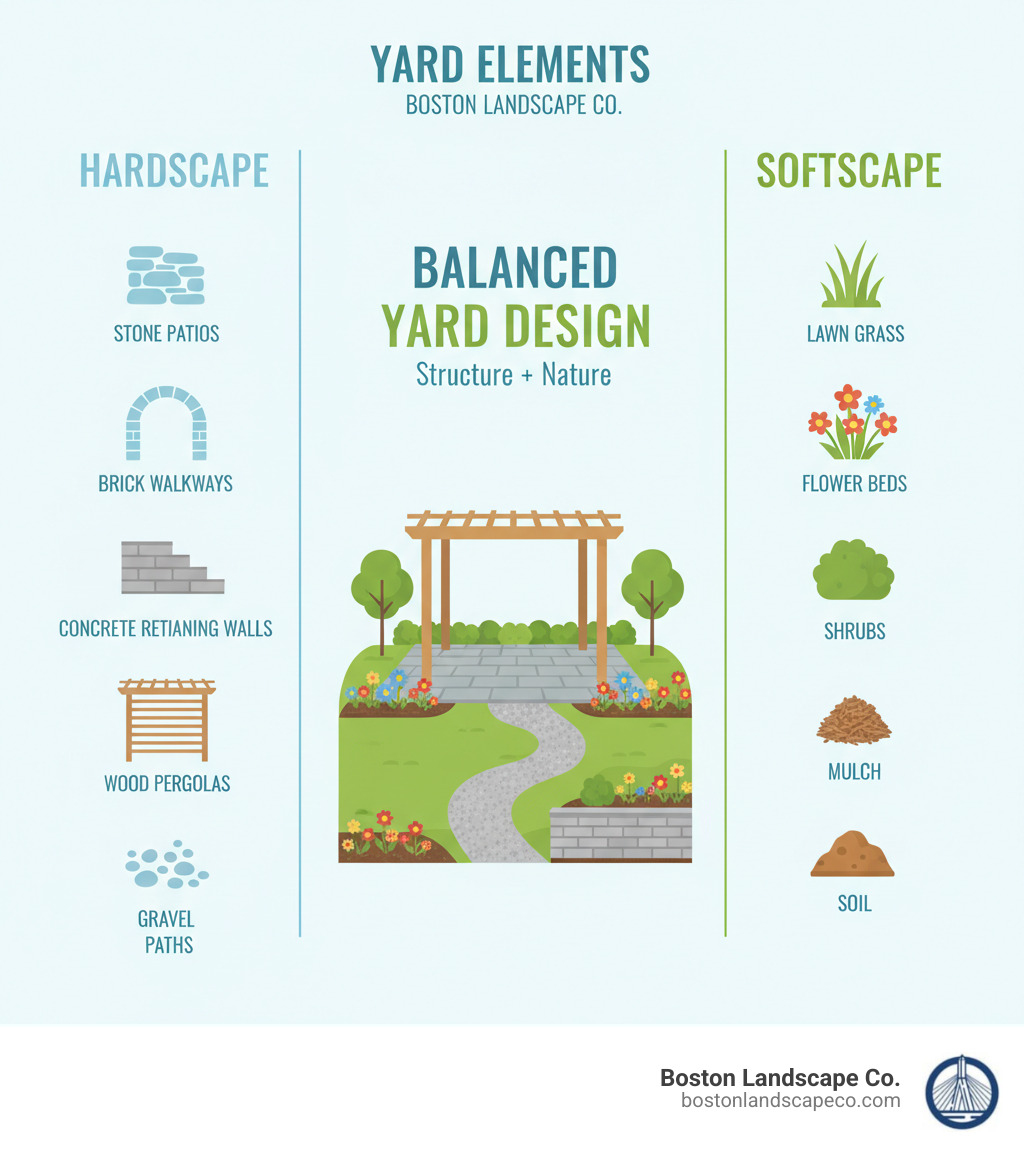
Hardscaping your yard terminology:
The Foundation of a Great Yard: Key Benefits of Hardscaping
A beautiful outdoor space shouldn’t demand hours of work every weekend. That’s where hardscaping your yard becomes a game-changer. By adding permanent structures like patios and walkways, you create functional outdoor rooms that solve everyday frustrations, like balancing chairs on wet grass or setting up on uneven ground. In fall, hardscape really shines: a stable patio keeps chairs off damp, leaf-strewn lawns, and clean stone walkways make post-storm leaf cleanup faster and safer.
First impressions are made in seconds, and a well-designed hardscape boosts curb appeal and property value. Quality hardscaping can increase your home’s value by 10-20%—a substantial return on investment. More importantly, it provides year-round structure. While flowers fade, stone walkways and retaining walls keep your property looking sharp even in a New England winter. A clean stone walkway guiding visitors to your door is not only welcoming but also easier to maintain than a high-traffic patch of grass.

Hardscaping transforms your yard into a true extension of your home. A patio becomes an outdoor dining room, while a fire pit creates a cozy conversation area for cool spring and fall evenings. You can define zones for different activities: a quiet spot for coffee, a play area for kids, and an entertaining space for cookouts. These are the places where life happens. See how structure can transform a space in projects like this modern hardscaped deck in Maine or get ideas from this cozy gravel patio living room.
Beyond aesthetics, hardscaping dramatically cuts down on maintenance. Less lawn means less mowing, fertilizing, and weeding. It also leads to significant water savings. Hardscaping also solves critical problems. A retaining wall can stabilize an eroding slope, protecting your home’s foundation, while proper grading and drainage can redirect water from pooling after snow melts. These are practical solutions that prevent costly damage. Explore what’s possible for your property with our hardscaping services and see how it fits into your overall vision with our residential landscaping services. For remaining green spaces, consider our irrigation system installation to keep them healthy with minimal effort.
Planning Your Perfect Outdoor Space
The best hardscaping projects begin with thoughtful planning. Before breaking ground on hardscaping your yard, it’s crucial to ask how you’ll use the space. Is it for quiet mornings or lively gatherings? This initial vision shapes every decision and ensures the final result fits your lifestyle.
Great design follows principles like harmony, scale, and proportion, ensuring your new patio complements your home’s architecture. Here in New England, fall is one of the best seasons to plan and build. With soil still warm and autumn rains highlighting where water naturally flows, you can tune drainage and finish installations before the ground freezes—so your space is ready for cozy fire-pit evenings now and an early start next spring. Drainage planning is especially critical; it prevents erosion and protects your investment. For technical guidance, resources like this expert advice on retaining wall drainage are invaluable.
How to Budget for Hardscaping Your Yard
Hardscaping your yard is an investment. According to internet data, a typical patio installation can range from $3,000 to $20,000+, with complex projects costing more. You can control costs through smart material choices.
- Where to save: Materials like gravel and decomposed granite are budget-friendly and great for DIY paths or casual patios. Phasing your project—patio this season, walkway next—can also spread out the cost.
- Where to splurge: Never cut corners on base preparation. A solid, well-drained foundation is essential for longevity and prevents cracking or settling. Invest in quality materials and professional installation for high-visibility areas like your front walkway or main patio.
Here’s a general comparison of popular materials:
| Material | Average Cost (per sq ft, installed) | Durability | Maintenance Level |
|---|---|---|---|
| Gravel | $1 – $10 | Good, but can shift | Low (raking, occasional replenishment) |
| Concrete Pavers | $8 – $45+ | Very good (interlocking, strong) | Low (sweeping, occasional cleaning/re-sanding) |
| Natural Stone | $20 – $90+ | Excellent (long-lasting, natural aesthetic) | Moderate (sealing, occasional cleaning) |
| Brick | $12 – $60 | Very good (classic look, durable) | Moderate (sweeping, occasional re-sanding/repairs) |
| Poured Concrete | $7 – $36 | Good (versatile, can be stamped/colored) | Low (sealing, occasional cleaning, crack repair) |
| Wood Decking | $12 – $60 | Moderate (requires regular sealing/staining) | High (cleaning, sealing/staining, splinter repair) |
| Composite Decking | $25 – $90+ | Very good (low maintenance, long lifespan) | Low (cleaning) |
Please note: These are average costs based on internet data and not actual costs for Boston Landscape Co. Project costs vary significantly based on material quality, site complexity, labor rates, and regional differences. We recommend obtaining a detailed estimate for your specific project.
Designing for Your Yard’s Unique Challenges
Every property has unique features that can be turned into assets with the right design.
- Small yards: Think vertically. Use built-in planters, or benches that double as retaining walls to maximize functionality without feeling cramped.
- Sloped yards: Use retaining walls to create stunning, level terraces for dining or lounging. This prevents erosion and turns an unusable incline into a favorite spot.
- Large yards: Use strategic hardscaping to create distinct zones and pathways. A winding gravel path can lead to a secluded fire pit, giving the large space structure and purpose.
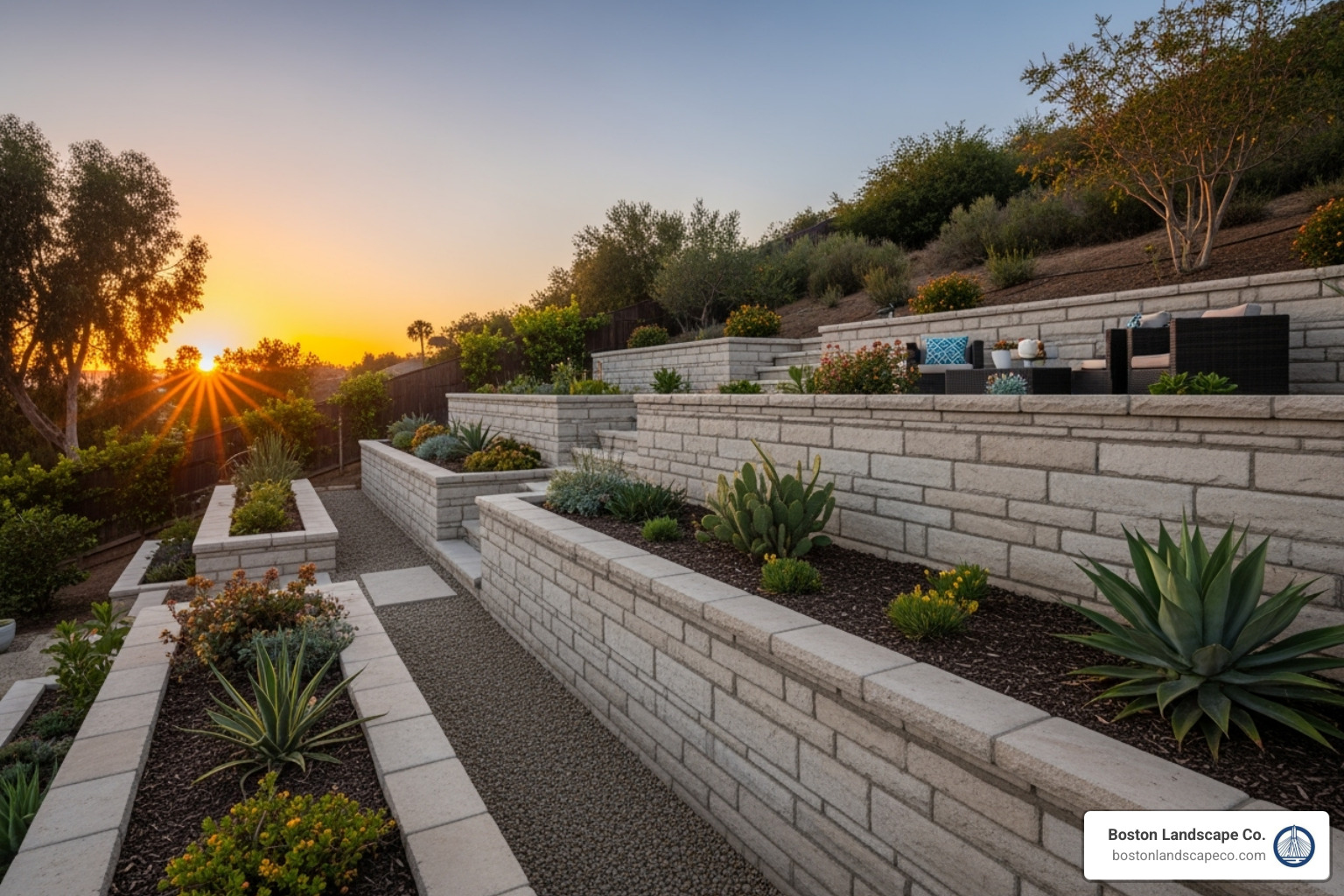
Integrating Greenery with Hardscape Elements
Hardscaping without softscaping can feel harsh. The magic is in the balance. The goal is enough structure for function and enough plant life for beauty.
- Planting pockets built into patios break up large stone expanses and make the space feel alive.
- Climbing plants like clematis or ivy can soften retaining walls and pergola posts, blurring the line between structure and nature.
- Containers and planters offer flexible, seasonal color. Group them at patio corners or along walkways to add visual interest.
The most beautiful yards seamlessly integrate the built environment with the garden. For more inspiration, explore our full range of landscaping services.
Building Blocks: Popular Materials and Features for Hardscaping Your Yard
When hardscaping your yard, you’re choosing the building blocks of your outdoor life. The materials you select will define the look, feel, and function of your space for years to come.
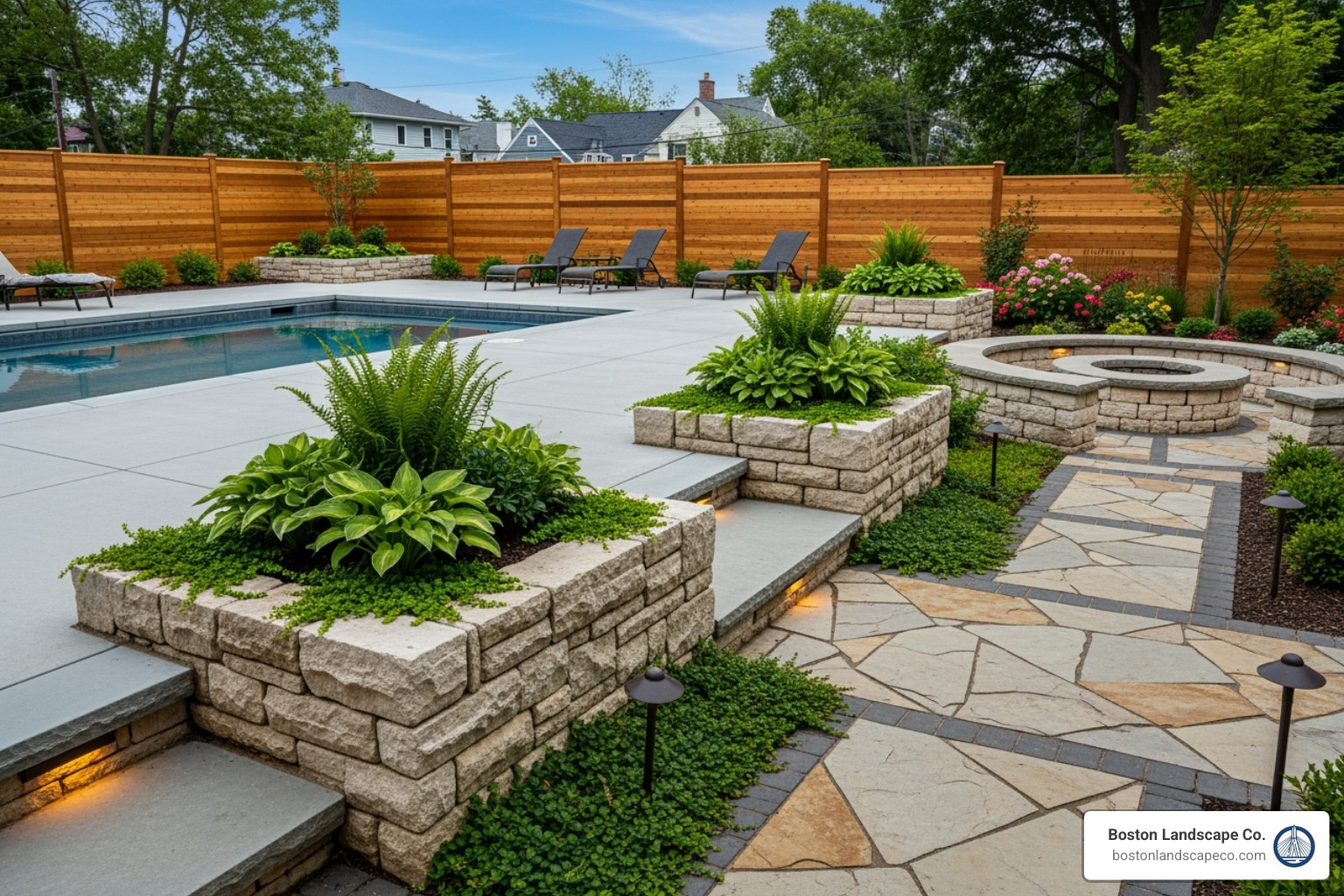
Popular Hardscaping Materials and Their Pros & Cons
- Concrete Pavers: Highly versatile and durable, available in many styles. They resist cracking better than poured concrete and are easy to repair. Permeable options are great for managing rainwater.
- Natural Stone: Flagstone, bluestone, and granite offer timeless, natural beauty that improves with age. It’s a premium material that requires skilled installation but provides exceptional durability, like in rustic stone patios with outdoor fireplaces.
- Brick Pavers: Offer classic charm and excellent durability for patios and walkways. They are low-maintenance and can be laid in beautiful patterns like herringbone.
- Gravel & Decomposed Granite: The most affordable options, perfect for informal paths and patios. They provide excellent drainage and a relaxed aesthetic but require occasional raking and replenishment.
- Wood & Composite Decking: Wood offers natural warmth but requires regular sealing and staining. Composite decking costs more upfront but is extremely low-maintenance, resisting rot and fading.
Inspiring Hardscape Features to Transform Your Yard
These features turn a simple yard into a true outdoor living space:
- Patios & Decks: The foundation for outdoor dining and lounging.
- Walkways & Paths: Guide visitors through your landscape and protect your lawn.
- Retaining Walls: Solve slope and erosion problems while creating usable, terraced levels for planting or seating.
- Fire Pits & Fireplaces: Extend the outdoor season into cool evenings and create a natural gathering spot.
- Outdoor Kitchens & Grills: Lift your entertaining by creating a functional cooking space outdoors.
- Water Features: Add soothing sound and movement, masking noise and attracting wildlife.
Ready to start planning? Our hardscaping services cover everything from design to installation.
Frequently Asked Questions about Hardscaping
Over our decades of hardscaping your yard projects throughout Greater Boston, we’ve heard just about every question. Here are answers to the most common ones:
What is the least expensive hardscape material?
For budget-conscious projects, gravel and decomposed granite are the most affordable options for paths and casual patios. They are easy to install and cover large areas cost-effectively. Poured concrete is another economical choice for a durable, solid surface. The trade-off for these materials is some long-term maintenance, such as occasional raking for gravel or sealing for concrete to protect it from New England’s freeze-thaw cycles.
When do I need a permit for a hardscaping project in Massachusetts?
Permit requirements vary by town. Generally, small, simple projects like a ground-level patio or walkway may not need a permit. However, larger structures almost always do. This includes:
- Retaining walls (typically over 3-4 feet high)
- Decks
- Outdoor kitchens
- Any project that significantly alters drainage or grade
Our advice: Always check with your local municipal building department before starting work. A quick call can save you from fines, delays, or having to remove completed work.
Can hardscaping help with a wet or soggy yard?
Yes, this is one of the most common problems we solve by hardscaping your yard. A soggy yard can be made functional and beautiful with smart drainage solutions:
- Permeable pavers allow rainwater to seep into the ground, reducing runoff.
- French drains are subsurface trenches that collect and channel excess water away from problem areas.
- Dry riverbeds use stone to create attractive, natural-looking channels that guide water during heavy rain.
Proper grading and sloping are the foundation of any professional hardscape design, ensuring water is directed away from your home and patio surfaces.
Transform Your Yard with Professional Hardscaping
Fall in New England is the perfect time to plan—and often install—the outdoor space you’ve always wanted. Hardscaping your yard is a powerful investment, blending functionality, beauty, and lasting value. It creates the framework for a lifetime of outdoor memories, from crisp evenings around a fire pit to leaf-season gatherings on a clean, dry patio.
A well-planned hardscape provides year-round structure, reduces maintenance, and solves common issues like poor drainage. At Boston Landscape Co., we’ve been helping homeowners transform their properties since 1991. We serve communities throughout Greater Boston, including Stoneham, Billerica, Lexington, and Winchester, and we specialize in designs that withstand our unique New England climate.
Our process begins with listening to your vision. Whether you have a sloped yard needing a retaining wall, a small space requiring a creative solution, or a large property needing defined zones, we design a custom plan that fits your lifestyle. Contractor schedules fill up quickly as we head into winter; getting started now lets you enjoy seasonal fire features immediately and also secures priority for early spring work.
Request an estimate for your hardscaping project today! Let’s work together to build an outdoor space you’ll love for decades to come.
