
hardscape retaining wall: 10 Powerful Tips for Success 2025
Understanding Hardscape Retaining Walls: Form Meets Function
A hardscape retaining wall is a structural element built to hold back soil and prevent erosion on sloped landscapes. These walls combine practical function with aesthetic appeal, making them essential features in many landscape designs.
Quick Guide to Hardscape Retaining Walls:
| Feature | Description |
|---|---|
| Purpose | Holds back soil, prevents erosion, creates usable flat areas |
| Height Range | 2-4 ft (decorative), 4+ ft (structural, requires engineering) |
| Common Materials | Concrete blocks, natural stone, timber, brick, gabion |
| Average Cost | $25-90 per square foot (varies by material and complexity) |
| DIY-Friendly? | Yes for walls under 3 ft; professional recommended for taller structures |
| Permits Required? | Generally not for walls under 4 ft, but check local codes |
Hardscape retaining walls serve multiple functions beyond just holding back soil. They can transform sloped yards into usable outdoor living spaces, add visual interest to flat landscapes, and solve drainage problems that might otherwise damage your property.
When built correctly, these walls become both structural workhorses and beautiful design elements that can significantly improve your property’s value and curb appeal.
I’m Steve Schumacher, and with over thirty years in the landscaping industry, I’ve designed and installed countless hardscape retaining wall systems throughout Boston and surrounding areas, from simple garden walls to complex structural solutions for challenging slopes.
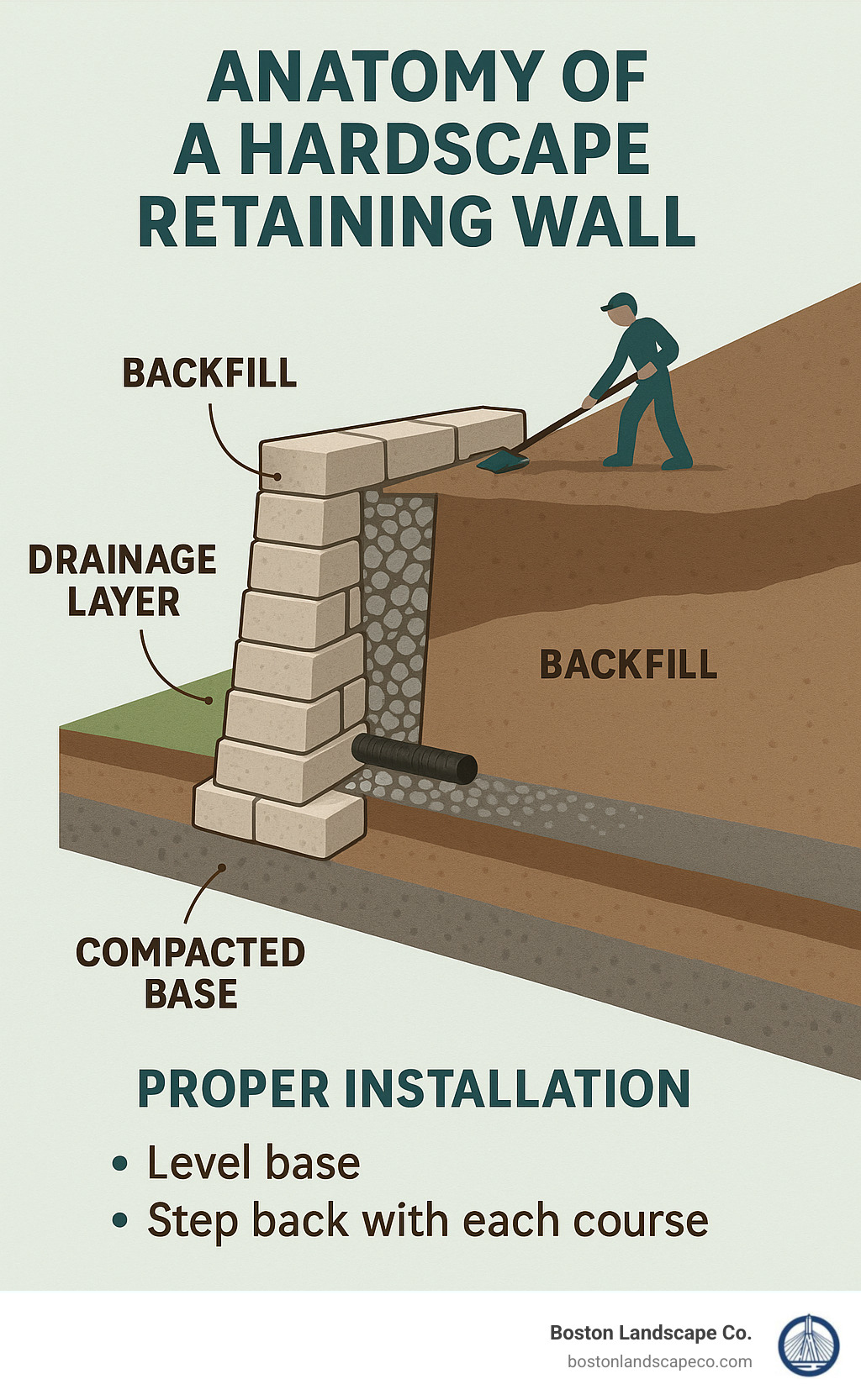
Hardscape retaining wall terms made easy:
– backyard hardscape contractors
– backyard hardscape design
– hardscape for small backyard
Hardscape Retaining Wall Basics
A hardscape retaining wall isn’t just a pretty addition to your landscape—it’s a practical solution to a common problem. When rain soaks the soil on your sloped yard, gravity becomes your enemy, pulling that soil downward and potentially causing erosion, property damage, and a muddy mess. A well-built retaining wall stands firm against these forces, creating stability and turning problematic slopes into beautiful, usable spaces.
What Is a Hardscape Retaining Wall?
Simply put, a hardscape retaining wall is a structure that holds back soil when there’s a change in ground elevation that’s steeper than the soil can naturally maintain. Think of it as a guardian that prevents your hillside from gradually migrating downward, especially after heavy rains.
“Most homeowners don’t realize that soil is constantly on the move,” says Steve from Boston Landscape Co. “A properly designed retaining wall works silently day and night, resisting the tremendous lateral pressure that wet soil exerts. It’s fighting gravity so you don’t have to.”
While the primary purpose is certainly functional—keeping soil in place and controlling erosion—today’s hardscape retaining walls do double-duty as striking architectural features. They can frame your garden, highlight your home’s best features, and even increase your property value while solving those pesky slope issues.
Types of Hardscape Retaining Walls
Your property’s unique needs will determine which wall type makes the most sense:
Structural Retaining Walls handle serious business, standing over 3 feet tall and requiring proper engineering, substantial footings, and often permits. These walls can hold back significant earth pressure and are built to last decades.
Garden Walls are the friendly, approachable cousins—usually under 2 feet tall and more decorative in nature. They’ll define garden beds and create gentle transitions between landscape areas without the engineering complexity of their taller relatives.
Freestanding Walls don’t retain soil but stand independently as dividers or decorative elements. They’re perfect for creating outdoor rooms or adding visual interest to flat landscapes.
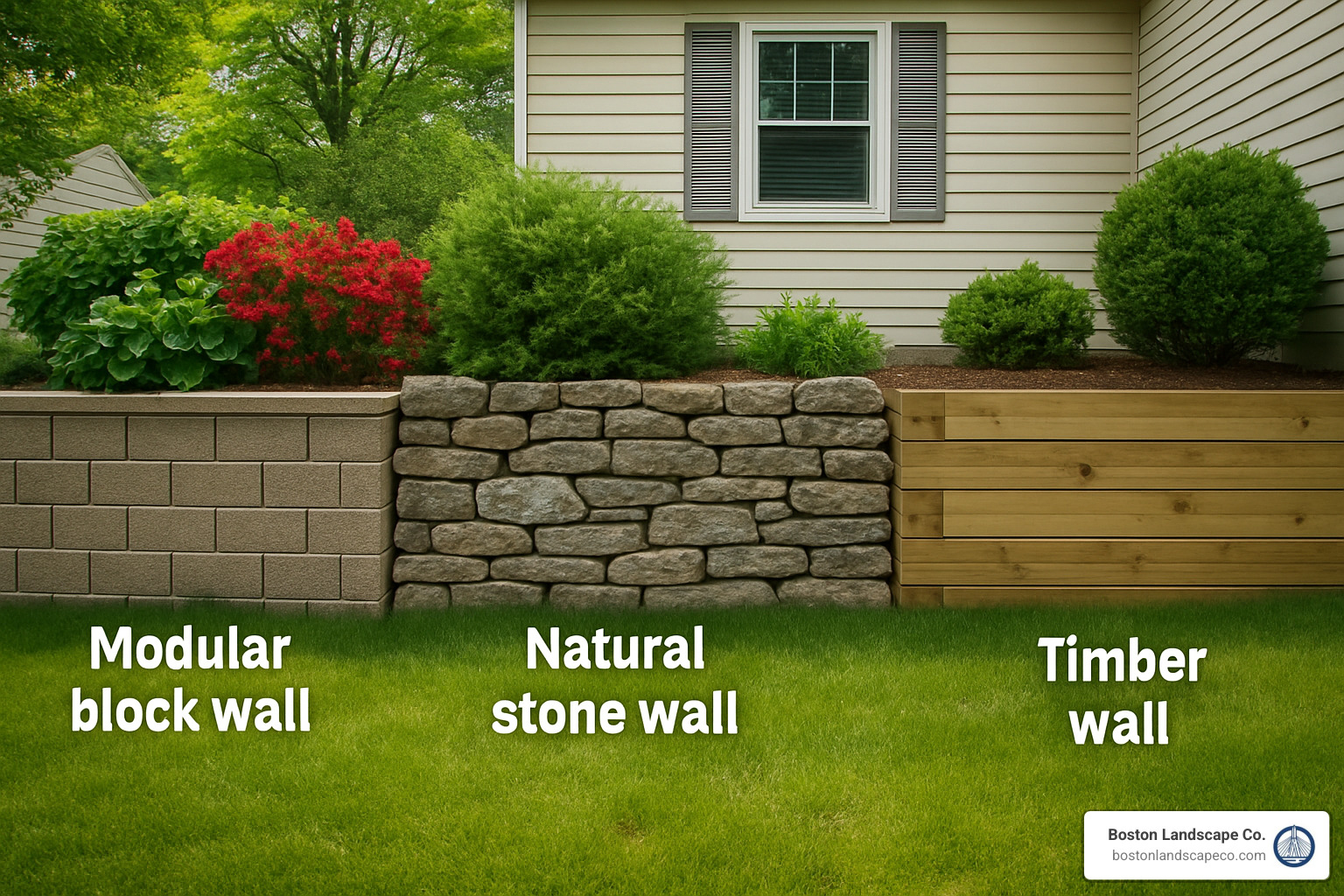
Modular Block Walls have become the homeowner’s favorite, featuring pre-cast concrete blocks that interlock or stack together. Their versatility, relatively straightforward installation, and wide range of colors and textures make them an excellent choice for DIY enthusiasts and professionals alike.
Timber Walls bring a natural, rustic charm using pressure-treated lumber or repurposed railroad ties. While they won’t last as long as stone or concrete options, their warmth and character make them perfect for certain landscape styles.
Gabion Walls—from the Italian word for “big cage”—consist of wire baskets filled with rocks or concrete pieces. These unique structures have been used for centuries thanks to their remarkable strength and natural drainage capabilities.
When Do You Need One?
You might benefit from a hardscape retaining wall if your property faces any of these challenges:
Your yard has a significant slope that makes portions difficult to use, mow, or enjoy. A well-designed wall system can transform that unusable hillside into terraced garden beds or flat play areas.
You’re dealing with drainage issues where water runoff causes erosion or creates boggy areas in your lawn. A properly built retaining wall system includes drainage features that direct water away from your home’s foundation.
You dream of landscape terracing to create flat, functional outdoor living spaces on your hillside property. Tiered walls can turn a challenging slope into a series of beautiful, usable outdoor rooms.
“Before our retaining wall project, our backyard was just a steep hill collecting water and mud,” shares Maria from Natick. “Now we have three lovely terraced garden areas and a flat patio space we use almost every day. It’s like we gained an extra room for our home.”
Whether you need to replace an existing wall that’s failing or you’re looking to add definition and visual interest to your landscape, a thoughtfully designed hardscape retaining wall solves problems while enhancing your outdoor living experience.
At Boston Landscape Co., we’ve transformed hundreds of challenging properties throughout Massachusetts with custom retaining wall solutions that combine practical engineering with beautiful design. We understand both the science and the art of creating walls that work hard and look great for decades to come.
Planning, Design, and Material Selection
Proper planning is crucial for any hardscape retaining wall project. A well-designed wall will last for decades, while a poorly planned one might fail within a few years—potentially causing property damage and requiring expensive repairs.
Key Design Considerations
When planning your hardscape retaining wall, keep these critical factors in mind:
The wall height plays a huge role in determining how complex your project will be. As walls get taller, they need more engineering support. One industry expert explained it to me this way: “Ornamental retaining walls under 4′ generally don’t need permits, while structural retaining walls over 4′ require soil reinforcement, engineering stamps, and city permits.” It’s a good rule of thumb to remember.
Did you know most retaining walls aren’t perfectly vertical? They typically have what we call a setback angle—a slight backward lean of about 1-2 inches per foot of height. This “batter” significantly improves stability by counteracting the soil pressure behind the wall.
Here in New England, we can’t ignore the frost line. Our freezing winters mean footings need to extend below the frost line (typically 4 feet deep around Boston) to prevent frost heave from pushing your beautiful new wall out of place.
Water is both a friend and enemy to landscapes. When it comes to retaining walls, hydrostatic pressure from water buildup behind a wall can exert enormous force. I’ve seen many walls fail not because they were poorly built, but because drainage was an afterthought. Proper drainage isn’t optional—it’s absolutely essential.
Before grabbing your shovel, check your local safety codes and HOA restrictions. As we often tell our clients at Boston Landscape Co., “Different towns have different rules. In communities like Lexington and Winchester, the permitting requirements can be quite different from towns like Billerica or Woburn.”
Choosing the Right Hardscape Retaining Wall Material
The material you select affects not just how your wall looks, but how long it lasts, how much maintenance it needs, and of course, what it costs. Here’s a comparison of popular options:
| Material | Pros | Cons | Lifespan | Cost Range |
|---|---|---|---|---|
| Concrete Blocks | Versatile, DIY-friendly, many styles | Can look manufactured | 50+ years | $15-45 per sq ft |
| Natural Stone | Beautiful, timeless, durable | Expensive, labor-intensive | 100+ years | $25-80 per sq ft |
| Brick | Classic look, uniform size | More limited in height | 50+ years | $20-45 per sq ft |
| Timber | Warm, natural look, easier to work with | Shorter lifespan, susceptible to rot | 15-20 years | $15-30 per sq ft |
| Steel/Metal | Modern look, thin profile | Can rust, limited styles | 25+ years | $30-60 per sq ft |
| Gabion | Eco-friendly, good drainage, unique look | Industrial appearance, not for all settings | 50+ years | $20-40 per sq ft |
Note: These are average costs based on internet data, not actual costs for Boston Landscape Co. Actual prices can vary significantly based on site conditions, wall height, and other factors, with the high end potentially being at least 3x average pricing.
I’ve found that Massachusetts properties need materials that can withstand our notorious freeze-thaw cycles. Natural stone and high-quality concrete blocks have proven themselves time and again in our challenging New England climate. As one landscape designer told me, “Natural stone offers a timeless and luxurious look, while concrete blocks are a great DIY option due to their ease of installation.”

Selecting Blocks & Systems
If you decide on concrete blocks (and many of our clients do), you’ll need to choose a specific system. Today’s hardscape retaining wall blocks come with clever features that make installation easier and performance better.
Many blocks include interlocking lips—a flange on the bottom back edge that automatically creates the proper setback when stacked. Others use pin systems or clips that connect the rows for added stability.
For the DIY enthusiasts, several manufacturers offer DIY-friendly kits with clear instructions and all necessary components. For taller walls, we often recommend adding geogrid reinforcement—a synthetic mesh material layered between courses to reinforce the soil behind the wall.
One hardscape professional I work with shared this insight: “We prefer to install a solid core pinned block system as they provide the most weight at the face of the wall and the most structural integrity.” It’s advice worth considering.
Popular brands include Belgard, Keystone, Pavestone, and Oldcastle, each offering styles ranging from rustic to contemporary. At Boston Landscape Co., we enjoy helping homeowners steer these options to find the perfect match for their property’s unique character.
Learn more about our Hardscaping Services
Building Your Hardscape Retaining Wall (Step-by-Step)
Constructing a hardscape retaining wall can be incredibly rewarding, whether you’re rolling up your sleeves for a DIY project or partnering with our team at Boston Landscape Co. Understanding each step in the process helps ensure your wall will stand strong for decades to come.
Pre-construction Checklist
Before you grab that shovel, take time to complete these critical preparations:
Call 811: This isn’t just good advice—it’s Massachusetts law. Contact Dig Safe (by dialing 811) at least 72 hours before breaking ground to have all underground utilities marked. Trust me, accidentally cutting a gas line is a mistake you only make once!
Tools and PPE: Gather everything you’ll need before starting—shovels, levels (both short and long), a heavy tamper, rubber mallet, and proper safety gear. “I can’t stress enough how important good gloves, safety glasses, and sturdy boots are when handling heavy blocks,” shares one of our veteran installers. “Your back and fingers will thank you.”
Material Overage: Always order about 10% more material than your calculations suggest. This accounts for cuts, broken pieces, and the inevitable “measuring oops” that happens on every project. As one client put it, “The extra blocks I ordered saved me from a mid-project trip to the supply yard—worth every penny.”
Weather Window: New England weather can be unpredictable, but try to schedule your project during a relatively dry period. Wet soil is heavier, harder to work with, and can compromise your wall’s foundation. As we often tell our clients, “Patience for better weather now means a better wall later.”
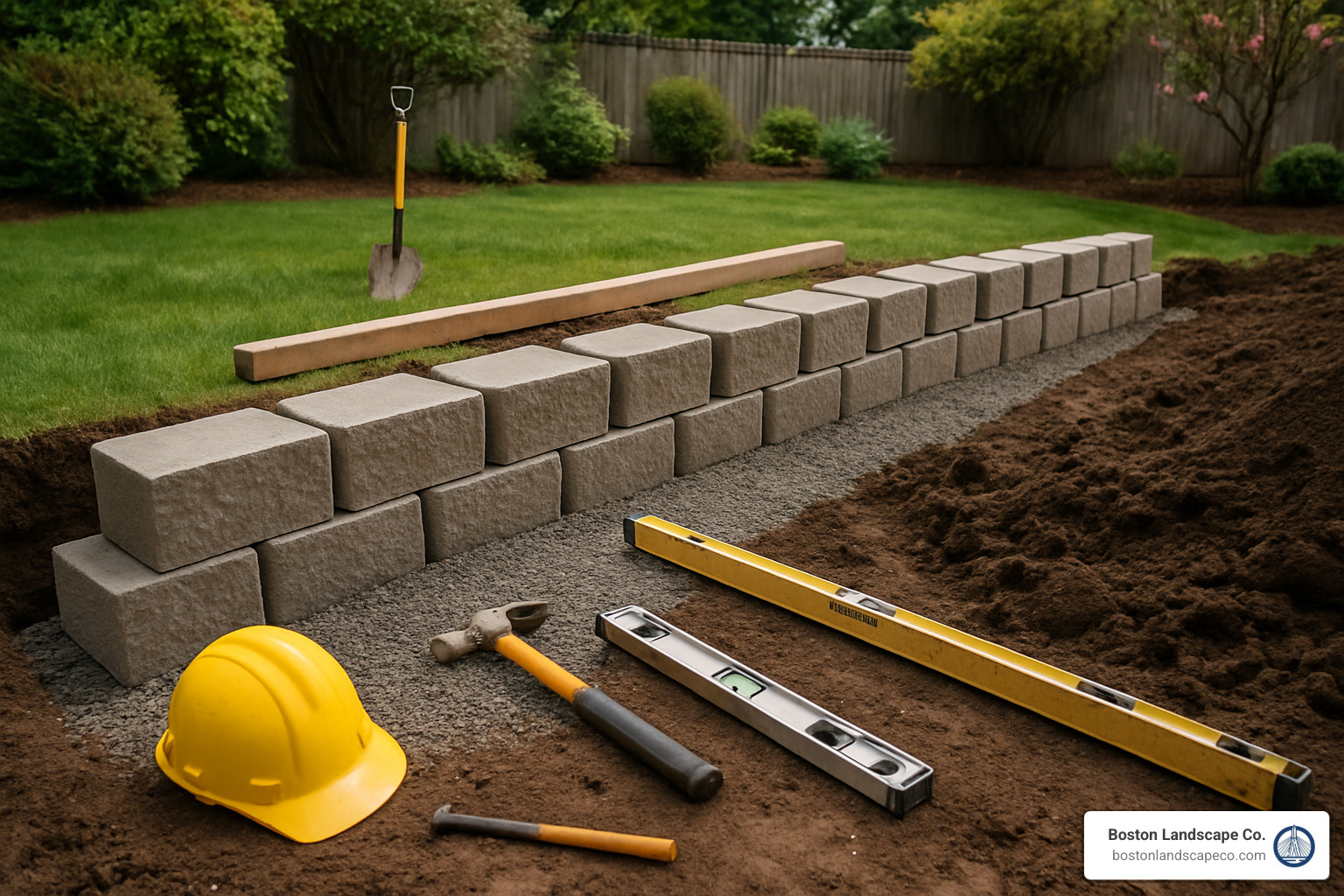
DIY-Friendly Build Steps
For walls under 3 feet tall, here’s how to build a solid hardscape retaining wall that will make your neighbors envious:
Start by marking and excavating your wall area using spray paint or stakes with string. Dig a trench about 24 inches wide and deep enough to bury at least half of your first block plus 6 inches for base material. The deeper your foundation, the more stable your wall.
Next comes the most crucial step—preparing a solid base. Add 4-6 inches of crushed stone or gravel to the trench and compact it thoroughly using a plate compactor or hand tamper. “This is where many DIYers cut corners,” notes our lead installer. “But a properly compacted base is the difference between a wall that lasts 5 years versus 50 years.”
When laying your first course, take your time and get it perfectly level in all directions. Use a long level, string line, and rubber mallet to make small adjustments. If you’re building on a slope, always start at the lowest point. This foundation row determines the success of everything above it.
Don’t forget proper drainage—the silent killer of many retaining walls. Install a perforated drain pipe behind the first course, sloping toward an outlet point. Cover with landscape fabric and drainage gravel to prevent clogging. A longtime client in Winchester told us, “The drainage system Boston Landscape installed has kept my wall bone-dry for over a decade, even during the heaviest downpours.”
When stacking additional courses, stagger the joints like you would when laying bricks. Always brush debris off each course before adding the next. Some block systems require adhesive or pins between rows—follow manufacturer guidelines carefully.
Backfill properly after every 1-2 courses. Add drainage material (usually ¾” clean gravel) behind the wall, extending at least 12 inches from the back of the blocks. Compact this material in layers no thicker than 8 inches. This prevents water pressure from building up behind your wall.
Finally, cap the wall with special cap blocks, typically secured with landscape adhesive. Allow a 1-1.5 inch overhang for visual appeal and improved water runoff. This finishing touch transforms a functional structure into a landscape feature.
“Your job satisfaction is our aim – not price,” is a philosophy we accept at Boston Landscape Co. We believe in doing the job right the first time, especially with structural elements like retaining walls that need to withstand New England’s harsh freeze-thaw cycles.
More inspiration on block systems
When to Hire a Pro
While DIY is certainly possible for smaller walls, some situations clearly call for professional expertise:
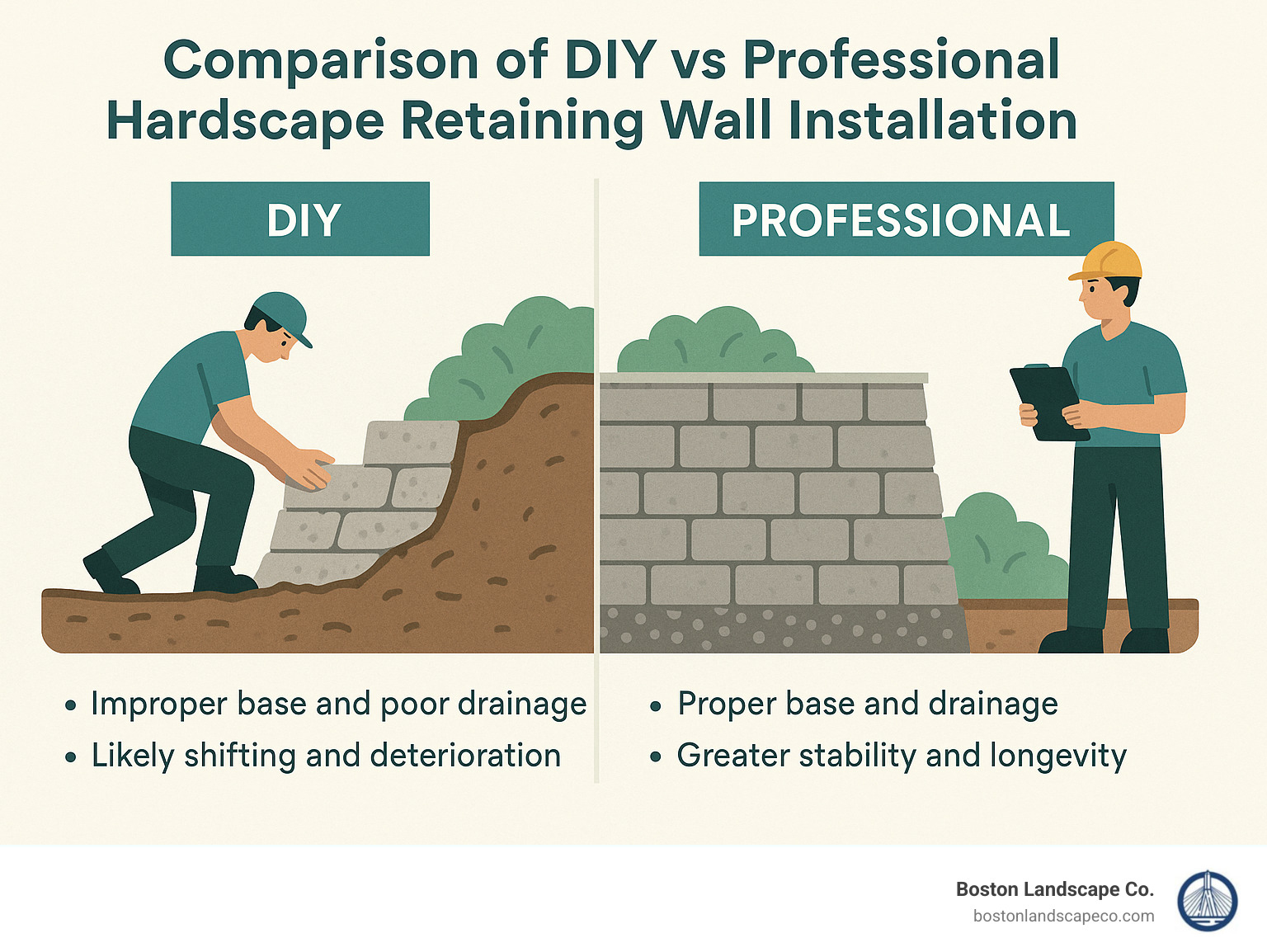
Walls over 3 feet tall require proper engineering, reinforcement, and often permits. The physics change dramatically with height, and the consequences of failure become more serious. “I’ve seen too many DIY tall walls fail within a year,” shares our founder. “The repair costs far outweigh what they would have spent hiring professionals from the start.”
Complex soil conditions like heavy clay, sandy soils, or areas with high water tables present special challenges that experienced contractors know how to address. Each soil type requires different drainage and reinforcement strategies.
If your wall will be load-bearing—supporting a structure, driveway, or other significant weight—professional design is essential. The engineering requirements change completely when additional forces come into play.
If you’re replacing a failing retaining wall, a professional can diagnose what went wrong and ensure the new wall doesn’t suffer the same fate. We often find that what appears to be one problem (like leaning) is actually caused by something entirely different (like improper drainage).
A client in Burlington shared this experience: “I tried building a retaining wall myself after watching some YouTube videos. It started leaning within months. Boston Landscape Co. came in, explained what went wrong, and rebuilt it properly. The difference in quality and durability is night and day. Sometimes you really do get what you pay for.”
Whether you choose the DIY route or partner with our team, building a hardscape retaining wall that stands the test of time comes down to careful planning, proper materials, and meticulous attention to the fundamentals of good construction.
Maintenance, Integration & FAQs
A well-built hardscape retaining wall isn’t just a “set it and forget it” feature of your landscape. With some regular care, your wall can remain beautiful and functional for generations to come.
Routine Care & Longevity Boosters
I’ve seen plenty of retaining walls fail prematurely simply because homeowners didn’t know how to properly maintain them. The good news? Basic maintenance is quite simple.
Make a habit of inspecting your hardscape retaining wall twice yearly—ideally in spring after the freeze-thaw cycles have ended, and in fall before winter sets in. Look closely for any bulges, leaning sections, cracks, or blocks that seem to be shifting out of place. After particularly heavy rainstorms, it’s worth taking a quick look to catch any developing issues.
Drainage is absolutely critical to wall longevity. Those drain pipes we carefully installed during construction need to stay clear and functional. Occasionally flushing them with a garden hose can prevent clogs from forming. I remember one client in Winchester whose wall started bulging after just five years—the culprit was a completely clogged drainage system that had turned the backfill into a soggy mess.
“If your wall is bulging or leaning, it’s bulging like the Tower of Pisa,” as one of my colleagues likes to say. Don’t ignore these warning signs—addressing small issues early can save you thousands in repairs later.
While plants can beautifully soften the appearance of your hardscape retaining wall, be mindful of what you plant and where. Keep larger plants and trees at least 3 feet back from the wall base, as their roots can eventually displace blocks or create pressure points. Those cascading vines might look lovely now, but some can work their way between blocks and cause damage over time.
In our harsh New England climate, freeze-thaw cycles can gradually shift blocks. Address any moved blocks promptly—what starts as a minor displacement can quickly cascade into a larger structural issue.
For certain wall materials, particularly more porous options like some natural stones or concrete products, applying a quality sealer every 2-3 years can prevent staining and water damage. This is especially important for walls near driveways or under heavy tree coverage where leaf debris accumulates.
Design Ideas & Add-Ons
Your hardscape retaining wall can be so much more than just functional—it can become the centerpiece of your outdoor living space with some thoughtful design touches.
Built-in planters are one of my favorite additions to retaining walls. Whether incorporated directly into the wall structure or added as caps along the top, they soften the hardscape with vibrant flowers and cascading greenery. As one designer I work with often says, “Don’t be boring—use built-in planters on retaining walls to make outdoor spaces pop.”
Fire features transform ordinary walls into magical gathering spaces. I’ll never forget the reaction of a family in Lexington when we completed their curved retaining wall with an integrated fire pit. What was once an unusable slope became their favorite spot to entertain friends and make s’mores with the kids on summer evenings.
Water elements can take advantage of your wall’s natural height differences. Small waterfalls or fountains create soothing sounds while adding visual interest. One client combined a cascading water feature with subtle lighting to create a stunning focal point visible from their dining room windows.
Speaking of seating—why not design wider sections of your wall at comfortable sitting height (typically 18-20 inches)? “It’s more fun to garden if you build low, bench-height walls that double as seating,” as one of our gardening-enthusiast clients puts it. These natural gathering spaces eliminate the need for extra furniture while creating conversation areas throughout your landscape.
Landscape lighting might be my absolute favorite wall improvement. Well-placed low-voltage lighting can highlight your wall’s texture and create remarkable ambiance in the evening. LED options are energy-efficient and long-lasting, making them practical as well as beautiful.
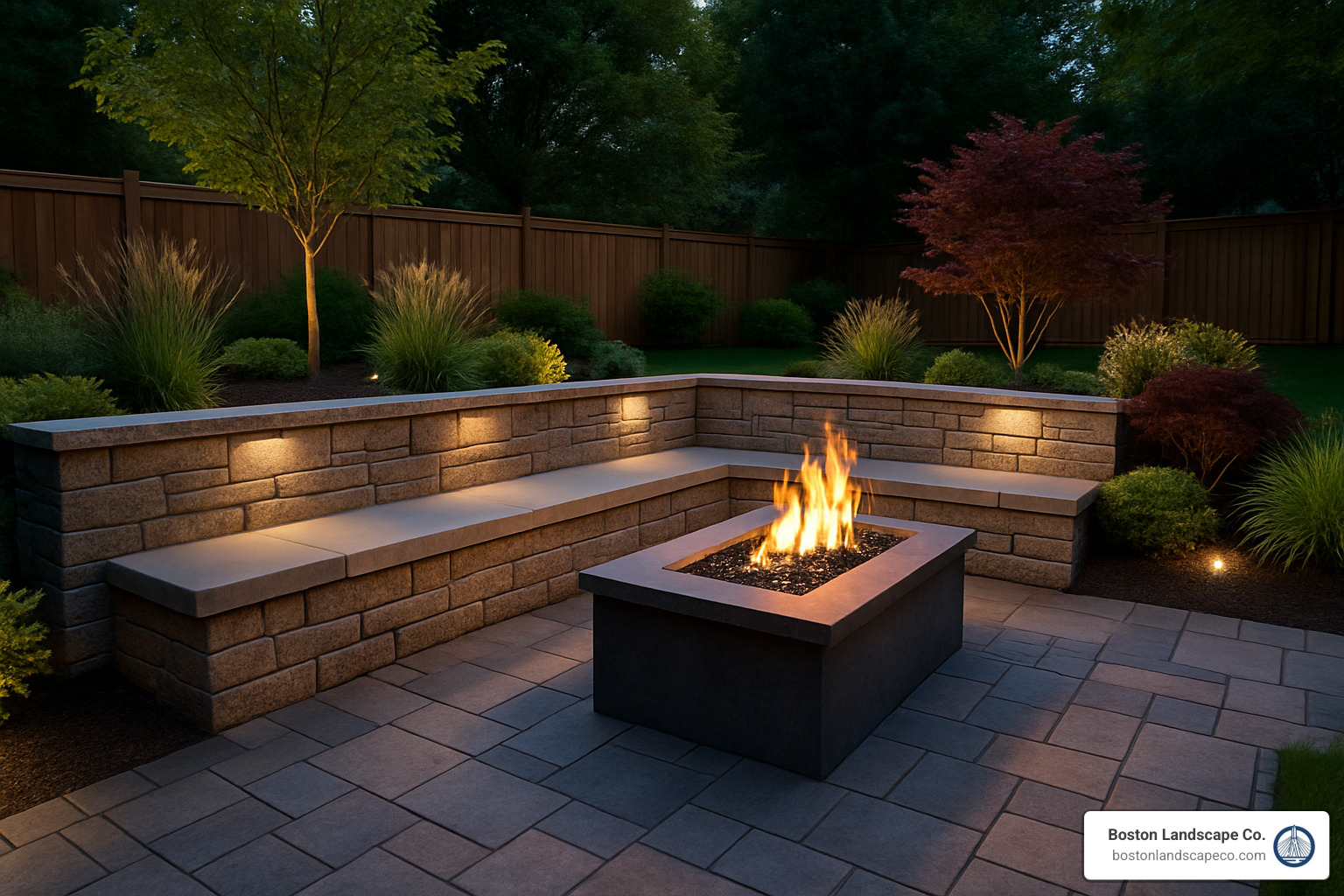
At Boston Landscape Co., we’ve created some truly spectacular custom features over the years. One of my favorites was a curved retaining wall with built-in LED lighting for a client in Lexington that transformed their sloped backyard into a neat entertaining space with a dramatic nighttime presence. The wall solved their erosion issues while creating an outdoor room they use nearly year-round.
Frequently Asked Questions about Hardscape Retaining Walls
How much does a hardscape retaining wall cost?
This is probably the question I hear most often, and it’s also one of the hardest to answer without seeing your specific site. The cost of a hardscape retaining wall varies tremendously based on materials, height, length, site accessibility, and design complexity.
Based on internet data (not actual Boston Landscape Co. pricing), average costs range from $25 to $90 per square foot. To put that in perspective, a simple 3-foot-high by 20-foot-long wall might cost between $1,500 and $5,400, while complex projects with premium materials, challenging access, or engineered solutions could run $15,000 to $45,000 or more.
Several factors can significantly impact your bottom line. Natural stone typically costs more than concrete blocks. Taller walls require more engineering and materials. If your backyard has limited access requiring wheelbarrows instead of machinery, labor costs increase. Extensive drainage work adds to the total, as do integrated features like lighting or built-in seating.
While the initial investment may seem substantial, I’ve seen countless properties where a quality retaining wall added tremendous value while solving erosion issues and creating usable outdoor space that simply didn’t exist before.
Do I need a permit for walls under 3 feet?
Permit requirements vary considerably across Massachusetts communities. Generally speaking, walls under 3-4 feet in height often don’t require permits in many towns. However, some communities like Lexington and Winchester have stricter requirements than others.
Location matters too. Walls near property lines or those affecting drainage patterns may require permits regardless of height. If your property is in a conservation area, wetland buffer zone, or historic district, you’ll likely need additional approvals.
“Any retaining wall over 3 feet high typically requires a building permit; over 5 feet often needs a soils report,” as one building inspector I work with regularly reminds me.
At Boston Landscape Co., we always recommend checking with your local building department before starting any retaining wall project. We’re happy to help steer the permitting process for clients in all the communities we serve—it’s one of those headaches we’re glad to take off your plate.
Can I build a hardscape retaining wall myself?
For smaller walls under 3 feet on relatively flat ground, a DIY approach is absolutely feasible with proper planning. Modern interlocking block systems have made retaining walls more accessible to homeowners with basic tools and some physical stamina.
That said, there are important considerations before you grab a shovel and start digging. Even small walls require proper base preparation and drainage—these aren’t areas to cut corners. Mistakes in these foundational elements can lead to premature failure and potentially dangerous situations.
The physical work is genuinely demanding. Those blocks might look manageable in the store, but when you’re placing hundreds of them weighing 25-75 pounds each, it becomes a serious workout. You’ll also likely need to rent specialized tools like plate compactors for proper base preparation.
“Being a total do-it-myselfer doesn’t guarantee success on steep or tall walls,” as one landscape designer with 15 years of experience wisely cautions. I’ve seen this firsthand, having helped many homeowners who started DIY projects but called us when they realized they needed expert assistance.
For walls over 3 feet, complex sites, or if you’re unsure about any aspect of the project, professional installation is strongly recommended. At Boston Landscape Co., we’ve helped many homeowners who started DIY projects but realized they needed expert assistance to ensure a safe, long-lasting result.
Conclusion
A thoughtfully designed and expertly built hardscape retaining wall accomplishes so much more than just holding back soil. It can completely transform your property’s usability, solve persistent erosion problems, create inviting new outdoor living spaces, and dramatically boost your home’s curb appeal and value.
The beauty of retaining walls is their versatility. Whether you’re envisioning a charming garden wall to frame your favorite perennials or a sophisticated multi-tiered system that tames a challenging slope, the foundations of success remain consistent: careful planning, premium materials, proper construction techniques, and effective drainage solutions.
Here at Boston Landscape Co., we’ve spent decades perfecting the art and science of building hardscape retaining walls throughout Boston and surrounding communities like Lexington, Winchester, Woburn, and Burlington. The New England landscape presents unique challenges – our distinctive soils, freeze-thaw cycles, and local building requirements demand specialized knowledge that we’ve honed through years of hands-on experience.
“We originally just wanted to stop the erosion on our hillside,” shares one of our Woburn clients, “but Boston Landscape Co. showed us how a beautiful stone wall could also create a flat area for our patio and frame the whole backyard. It’s completely changed how we use our outdoor space.”
While a retaining wall does represent an investment in your property, we’ve seen time and again how cutting corners leads to frustrating and expensive failures down the road. Whether you decide to tackle a small DIY project or partner with our team for a more complex installation, committing to doing it right the first time will reward you with decades of trouble-free performance and enjoyment.
Are you ready to explore how a hardscape retaining wall could improve your property? We’d love to walk your landscape with you, understand your challenges and vision, and discuss how we can create a beautiful, functional solution custom specifically to your needs. From simple garden walls to complex engineered systems, we have the expertise to bring your vision to life.
More info about Hardscaping Services Near You
