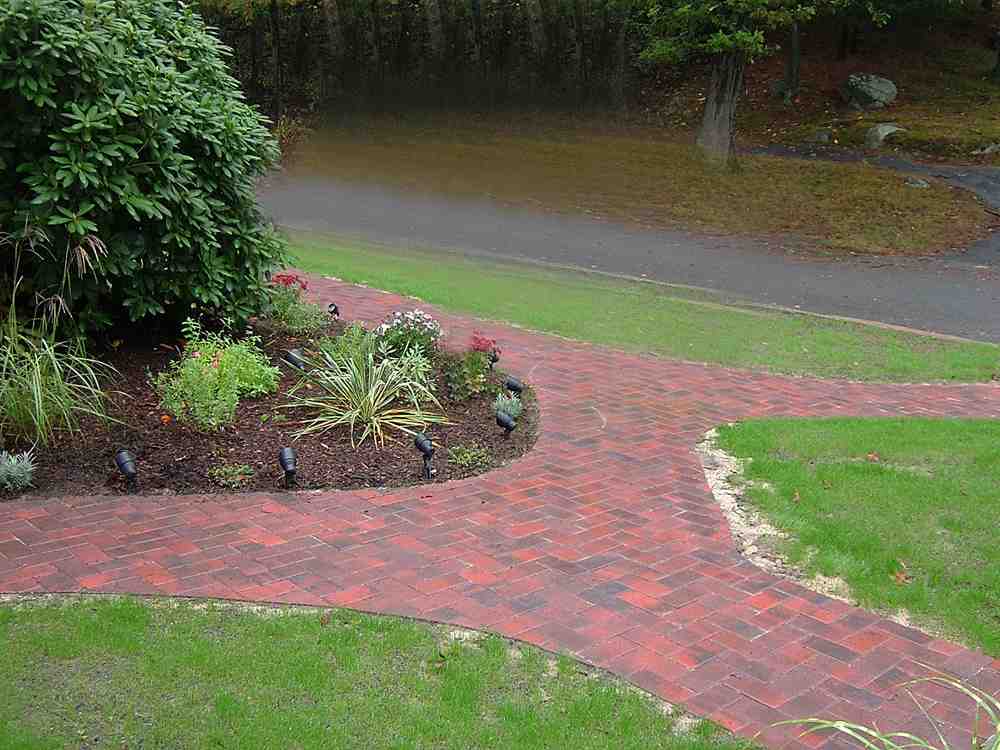
Front yard walkway: Boost Curb Appeal in 2025
Why Your Front Yard Walkway Matters More Than You Think
A front yard walkway is one of the best ways to boost your home’s curb appeal and create a welcoming first impression. It does more than connect the street to your door; it sets the tone for your property, guides visitors, and can even increase your home’s value.
Quick Answer: Best Front Yard Walkway Ideas
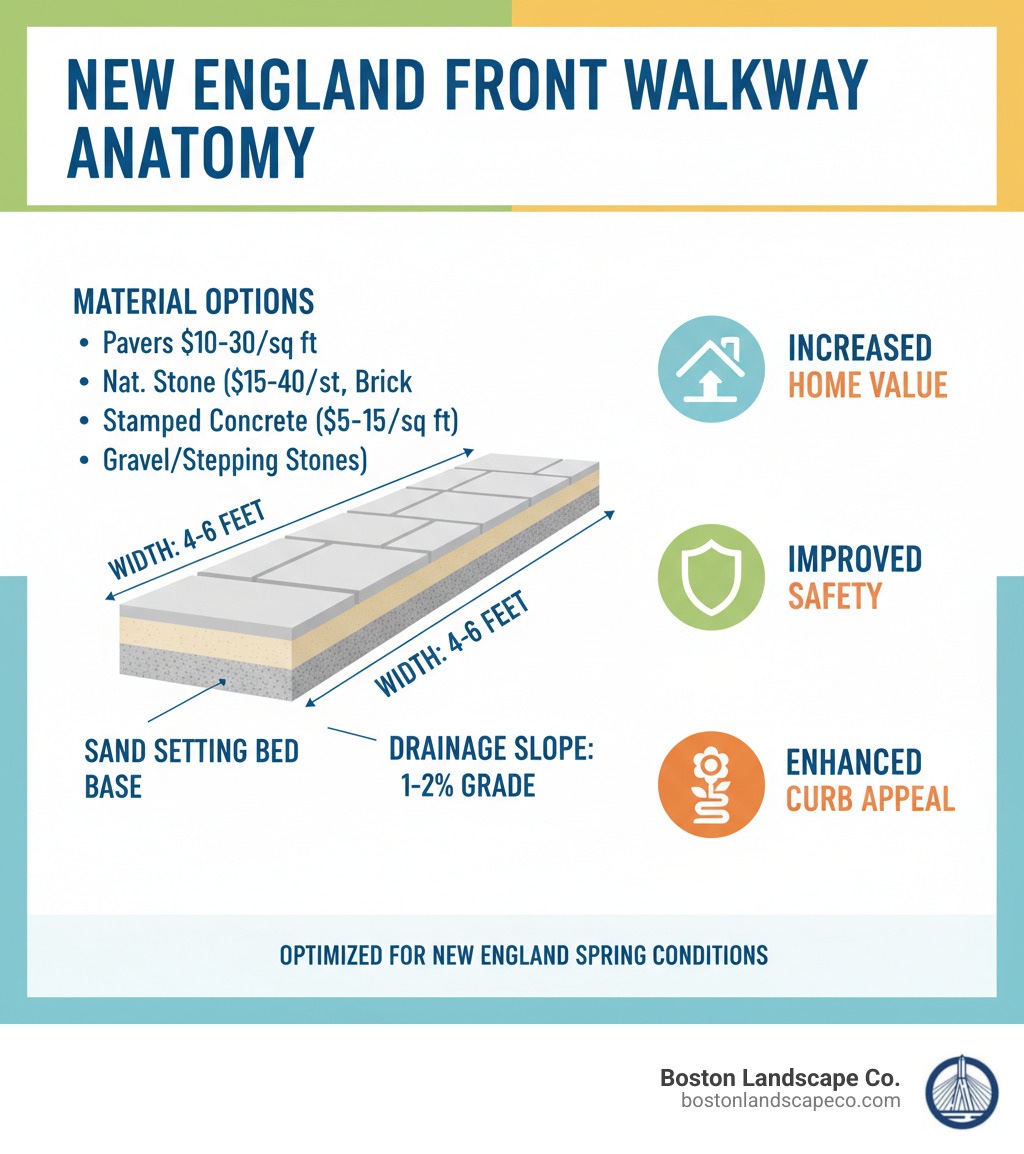
- Paver Walkways – Durable, versatile, and available in numerous colors and patterns ($10-30/sq ft)
- Natural Stone – Timeless elegance with flagstone, bluestone, or granite ($15-40/sq ft)
- Brick Paths – Classic charm perfect for traditional homes ($10-30/sq ft)
- Stamped Concrete – Budget-friendly with customizable patterns ($5-15/sq ft)
- Gravel & Stepping Stones – Informal, rustic appeal for cottage-style homes ($2-10/sq ft)
As spring brings new life to New England gardens, it’s the perfect time to upgrade your entrance. A beautiful walkway bordered by fresh blooms is a wonderful greeting. However, choosing the right materials and design can be challenging. The key is understanding how material, width, shape, and landscaping work together. Poor choices can lead to a cramped feel, clashes with your home’s style, or safety hazards from issues like frost heave—a major concern in our Massachusetts climate.
I’m Steve Schumacher, owner-operator of Boston Landscape Co. since 1991. I’ve installed hundreds of front yard walkways in the Greater Boston area. In this guide, I’ll share what you need to know to create a stunning entrance that lasts.
Popular Materials for a Stunning Front Yard Walkway
Choosing the right material for your front yard walkway is a key decision for your home’s entrance. As New England gardens bloom this spring, the right path can frame the emerging beauty. Your material choice sets the tone, whether you want classic colonial charm or sleek modern elegance. At Boston Landscape Co., we work with all popular materials to find the perfect fit for your home.
Paver Walkways
Pavers are my top recommendation for homeowners seeking durability and style. Made from concrete or clay, they offer a vast range of colors, shapes, and sizes. This allows for creative patterns, from traditional herringbone to modern linear designs. High-quality concrete pavers are engineered to be slip-resistant and can withstand de-icing salts, which is crucial for Massachusetts winters. Unlike solid concrete, their permeable joints help with drainage. For more technical information on paver systems, you can visit the Interlocking Concrete Pavement Institute. Clay brick pavers offer a timeless look that develops a beautiful patina over time, perfectly matching traditional homes.
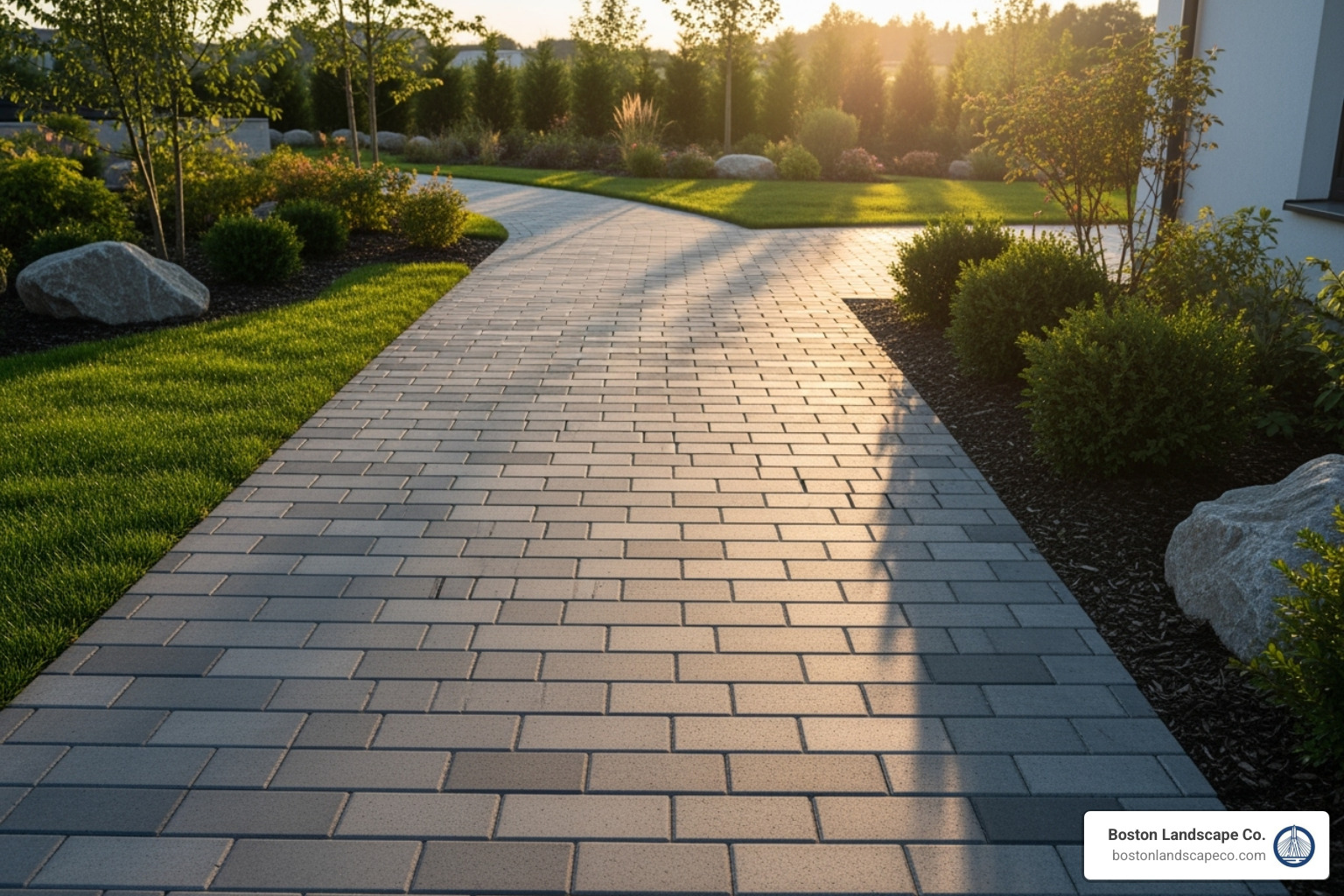
Please note: The following figures are national averages based on available online data and do not represent a quote from Boston Landscape Co. Costs can range significantly based on material quality, supplier, and regional factors. Concrete pavers typically run between $8 and $40 per square foot installed, while clay brick pavers range from $10 to $60 per square foot.
For more insights on working with pavers, check out our driveway paver installation page.
Natural Stone Walkways
For a front yard walkway that feels timeless and unique, natural stone is best. Each piece has distinct colors and textures. Flagstone creates organic, meandering paths, while bluestone offers a more refined look suitable for formal or irregular layouts. Granite is the champion of durability, easily handling our freeze-thaw cycles. The uniqueness of natural stone comes at a higher investment, but its elegance and longevity are worth it for many homeowners.
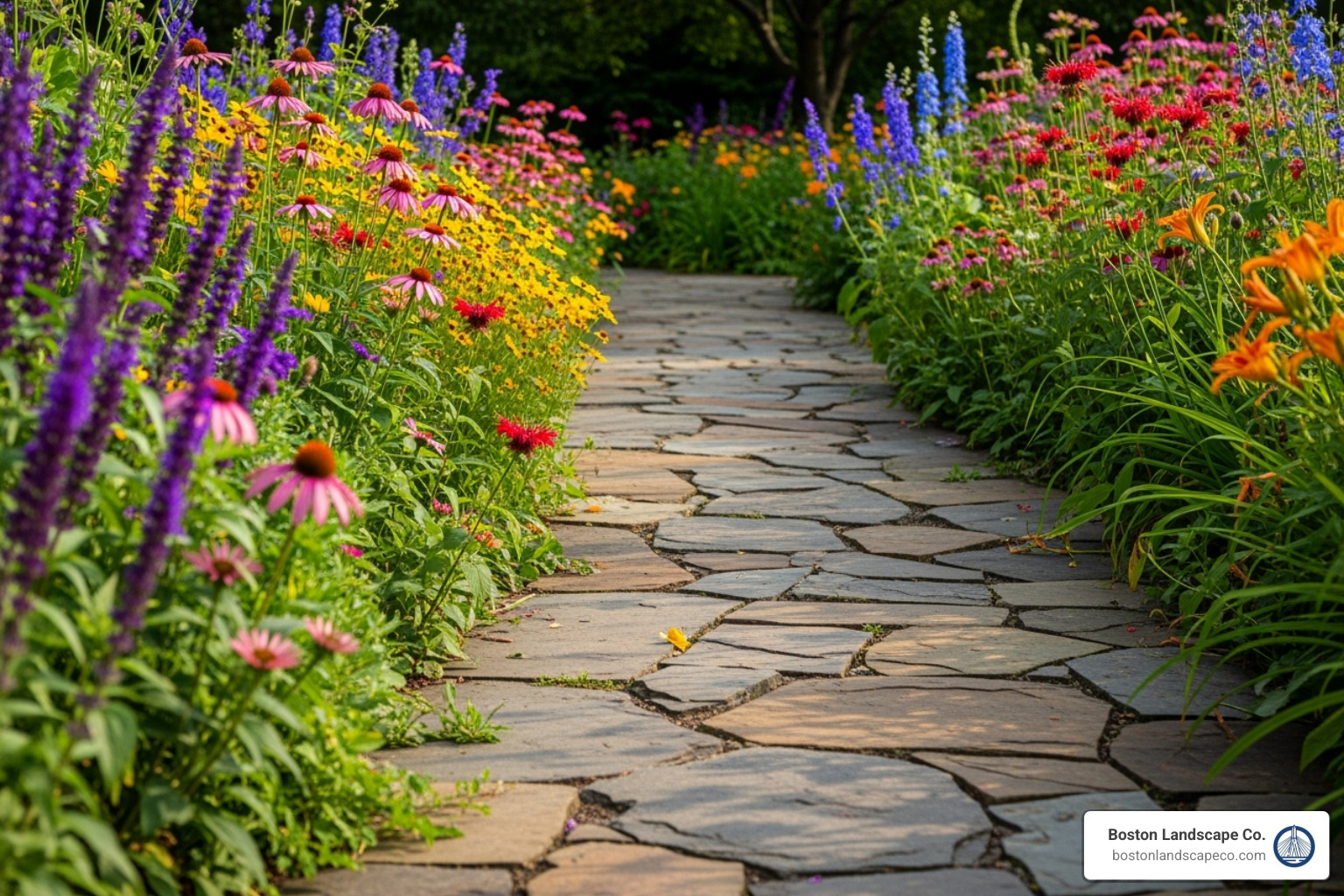
Please note: The following figures are national averages based on available online data and do not represent a quote from Boston Landscape Co. Costs can range significantly based on material quality, supplier, and regional factors. Flagstone typically ranges from $15 to $120 per square foot installed, while other natural stone options can cost between $12 and $150 per square foot.
We specialize in stone walkway design that complements your home’s unique character.
Brick Walkways
Nothing says classic New England like a brick walkway. It brings instant traditional charm and warmth. The rich tones create an inviting path, and patterns like herringbone or basket weave add structural integrity and visual interest. We recommend sealing brick to protect its color and extend its life. That brick can become slippery when wet or mossy, so proper maintenance and sealing are important, especially for the beautiful Victorians and colonials in the Boston area.
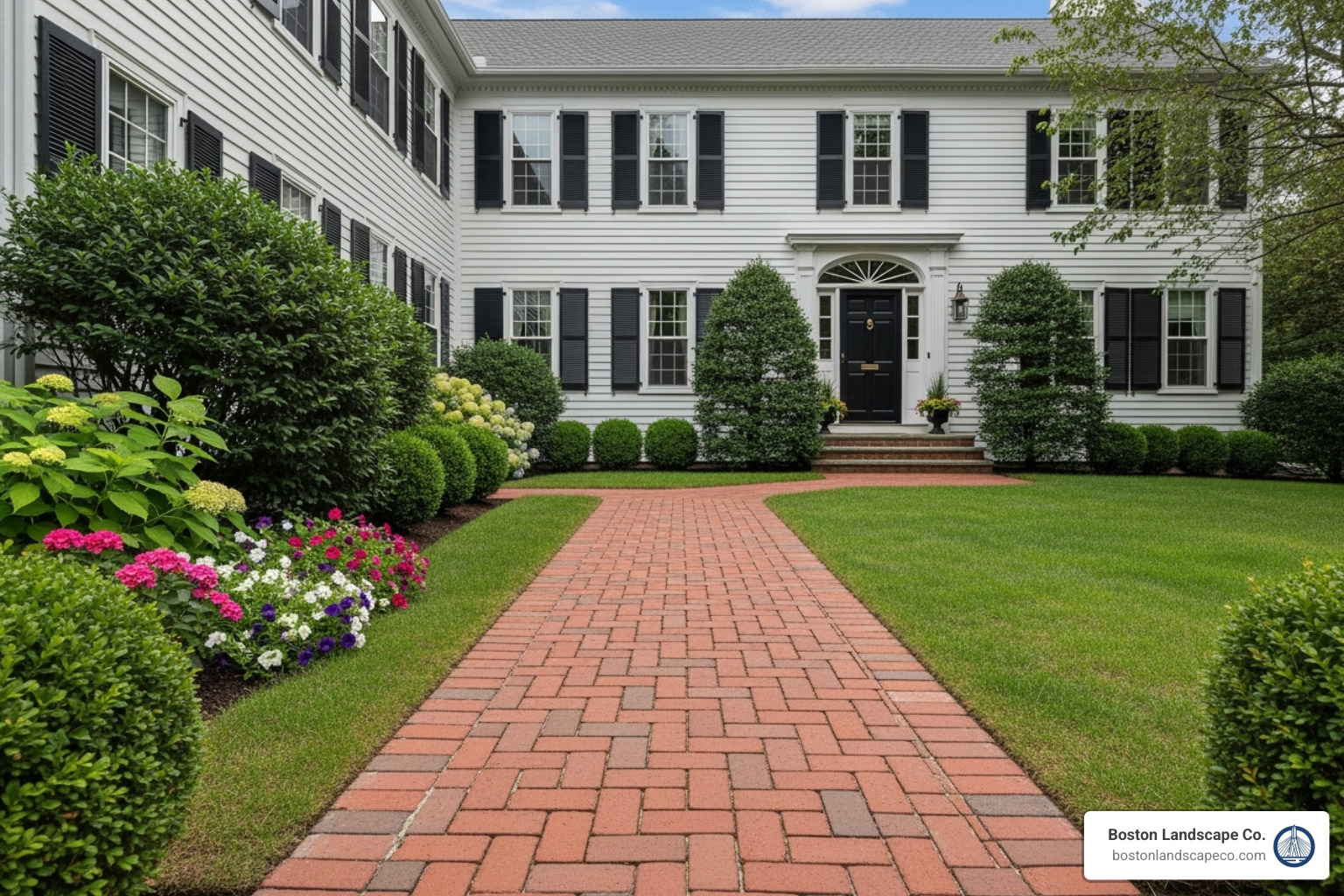
Please note: The following figures are national averages based on available online data and do not represent a quote from Boston Landscape Co. Costs can range significantly based on material quality, supplier, and regional factors. Brick walkways typically cost between $10 and $90 per square foot installed.
We also offer brick patio installation to create a cohesive look.
Poured & Stamped Concrete Walkways
For a polished look on a tighter budget, modern concrete is a versatile option. Stamped concrete can mimic the look of slate, flagstone, or brick by pressing patterns into the wet surface. Color can also be added to complement your home. The main challenge in our climate is cracking due to freeze-thaw cycles. Proper installation with expansion joints, a solid base, and reinforcement is critical to minimize this risk and ensure longevity.
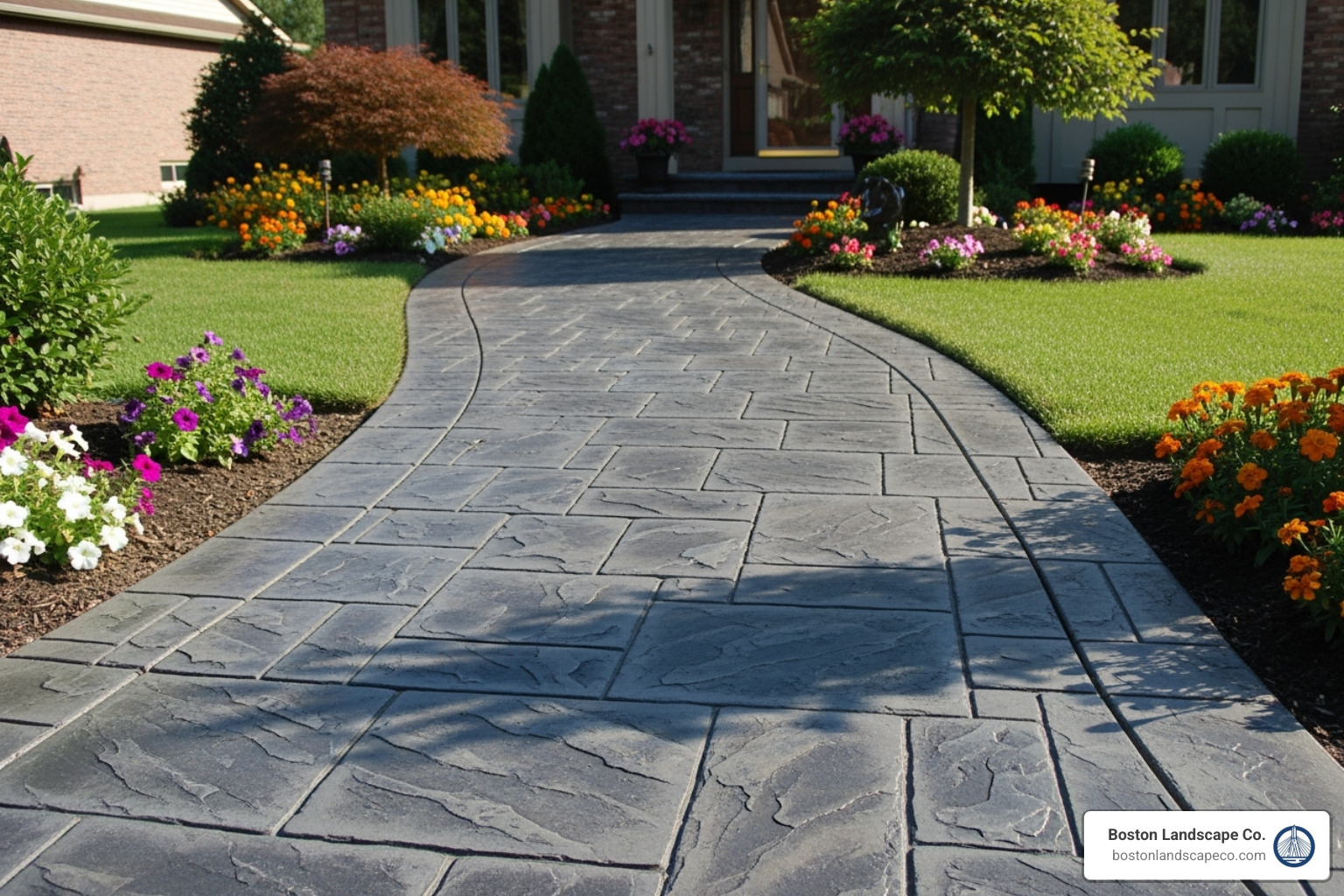
Please note: The following figures are national averages based on available online data and do not represent a quote from Boston Landscape Co. Costs can range significantly based on material quality, supplier, and regional factors. Standard poured concrete generally ranges from $5 to $45 per square foot, while stamped concrete runs between $8 and $84 per square foot installed.
Gravel & Stepping Stone Paths
For a casual, cottage-garden aesthetic, gravel and stepping stones are a charming and budget-friendly choice. Gravel paths offer excellent drainage but require regular raking and replenishment. Stepping stones, set in grass, mulch, or gravel, create a whimsical path and can make a small yard feel more spacious. Planting low-growing ground covers like creeping thyme between the stones adds a soft, fragrant touch as you walk.
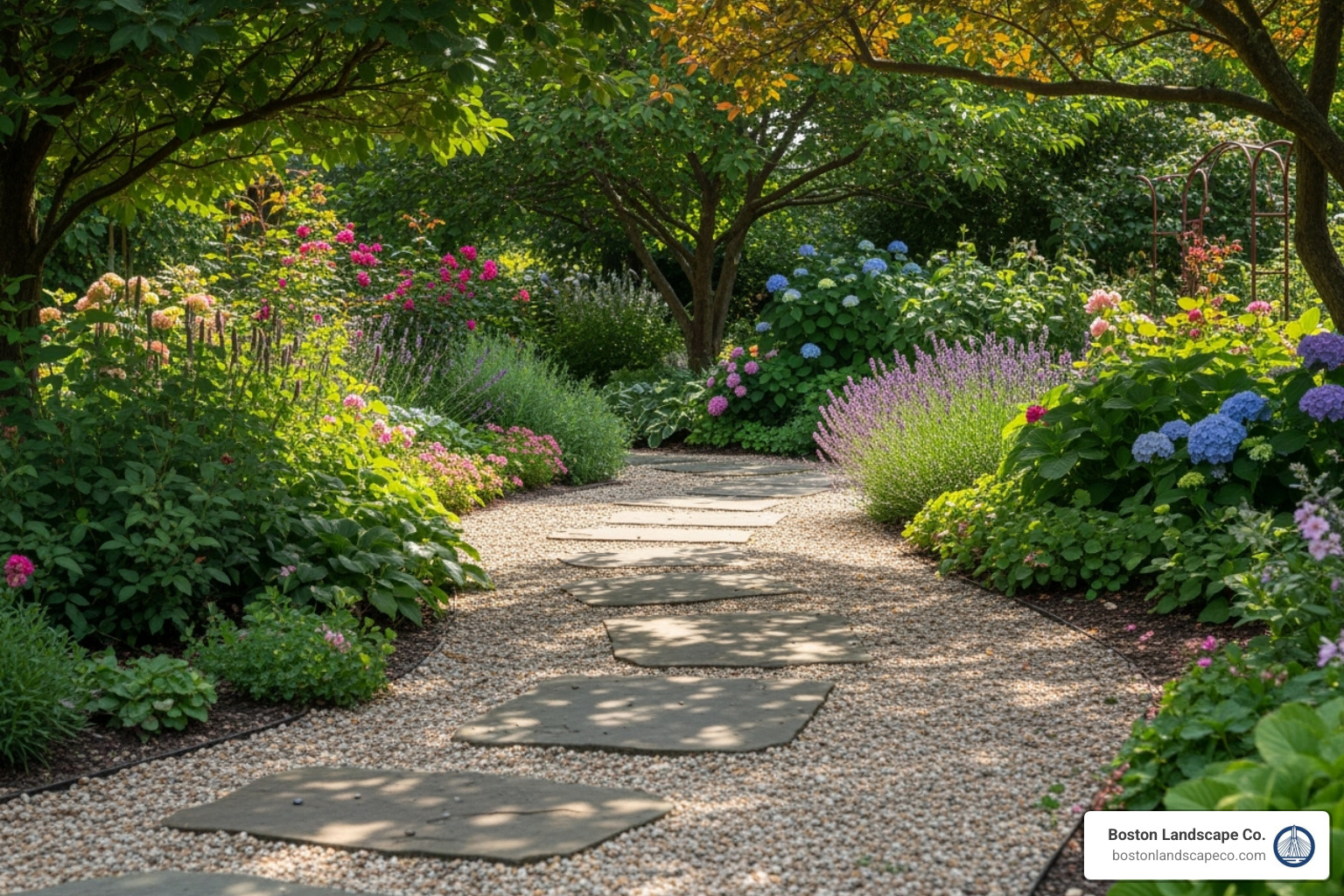
Please note: The following figures are national averages based on available online data and do not represent a quote from Boston Landscape Co. Costs can range significantly based on material quality, supplier, and regional factors. Gravel paths are the most budget-friendly option, typically ranging from $2 to $30 per square foot installed.
For more inspiration, explore our hardscape design and build services.
Key Design Considerations for Your Walkway
A beautiful front yard walkway is more than just its material. The shape, width, and surrounding landscape work together to create a cohesive design that complements your home, especially as spring brings new growth to your garden.
Choosing the Right Shape and Style
The shape of your walkway sets the tone. A straight path offers a formal, direct approach, ideal for modern homes. A curved or meandering path creates a relaxed, informal journey, perfect for traditional, Cape Cod, or cottage-style homes. The key is to match the walkway’s style to your home’s architecture. A path should create interest and guide visitors clearly to your front door, not cause confusion. Our hardscape design and build process focuses on creating this visual harmony.
Determining the Ideal Front Yard Walkway Width
A common mistake is making a walkway too narrow. A front yard walkway should be at least 4 feet wide, allowing two people to walk comfortably side-by-side. For larger homes or a grander entrance, we often recommend 5 to 6 feet. This width feels more substantial and better accommodates strollers or wheelchairs. The goal is to create a walkway that is well-proportioned to your home and the length of the path, feeling balanced and welcoming.
Enhancing with Landscaping and Edging
A walkway should be integrated into your landscape, not just sit on top of it. Surrounding your path with thoughtful plantings transforms it into an experience. Low-growing shrubs, colorful perennials, and ground covers soften hard edges and add layers of interest. Edging provides a finishing touch, creating a clean, maintained look. A brick soldier course, metal edging, or stone borders can define the path, contain materials like gravel, and prevent grass from creeping in.
Incorporating Walkway Lighting
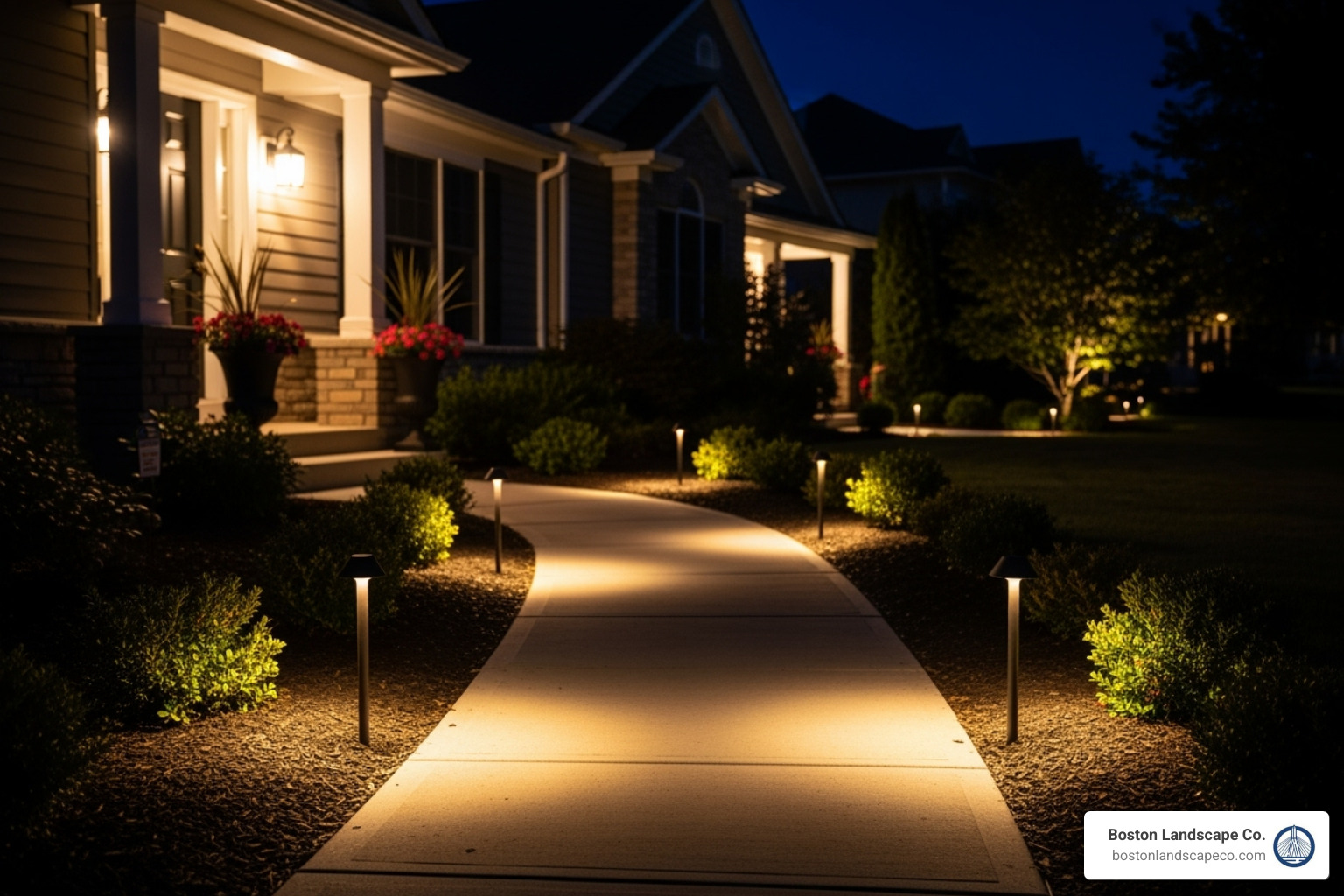
Walkway lighting is where safety meets beauty. Proper lighting guides visitors safely after dark and creates a warm, welcoming ambiance. We recommend investing in permanent, low-voltage LED fixtures over cheap solar lights, which often provide inadequate light and are easily damaged. To avoid a sterile “runway” effect, we stagger fixtures to create a more natural, inviting glow. Thoughtful lighting transforms your entrance from purely functional to truly magical, especially on pleasant spring evenings. For more ideas, see our backyard hardscape design projects.
Common Walkway Mistakes to Avoid
Avoiding common pitfalls is key to ensuring your walkway investment improves your curb appeal and lasts for years in the challenging Massachusetts climate. Here are some mistakes we’ve seen over three decades in the business.
Poor Proportions and Scale
A walkway that is out of scale with your home can feel awkward and uninviting. A path that’s too narrow forces guests into single file, while one that’s too wide can overwhelm a modest home. The best walkways feel proportionate, guiding visitors comfortably without dominating the landscape. The size of your house and the length of the path are key factors in getting the scale just right.
Forgetting About Drainage and Base Preparation
This is the most critical mistake, especially in Massachusetts. Poor drainage leads to pooling water and slippery surfaces. Worse, trapped water beneath the surface erodes the base and causes frost heave in winter, lifting pavers and creating dangerous tripping hazards. A properly prepared foundation—with correct grading, a deep compacted gravel base, and a sand bedding layer—is essential. This meticulous site preparation is what separates a walkway that lasts for decades from one that fails in a few years. It’s where professional hardscaping services in Boston make all the difference.
Mismatched Materials and Busy Designs
Your front yard walkway should complement your home, not clash with it. An ultra-modern paver path might look out of place with a classic colonial home. Similarly, using too many colors or competing patterns creates visual chaos that detracts from your home’s architecture. The most successful designs are cohesive and relatively simple, using materials and patterns that harmonize with the home’s exterior. A thoughtfully designed path provides a beautiful frame for your home and garden, not a distraction.
Cost and Maintenance of a New Front Yard Walkway
Understanding the budget and long-term care is essential before starting your front yard walkway project. Homeowners with realistic cost expectations and a maintenance plan are always the happiest with their investment. Costs vary widely, and proper care is key to protecting your walkway through New England’s seasons.
Here’s a general comparison of popular walkway materials:
| Material Type | Average Cost (per sq ft, installed)* | Lifespan | Maintenance Level |
|---|---|---|---|
| Pavers | $8 – $60 | 50-100 years | Low-Medium (sealing, joint sand, cleaning) |
| Natural Stone | $12 – $150 | Decades to Centuries | Low (occasional cleaning) |
| Brick | $10 – $90 | Decades to Centuries | Low-Medium (sealing, joint sand, cleaning) |
| Poured/Stamped Concrete | $5 – $84 | 20-40 years (can crack) | Low (sealing, crack repair) |
| Gravel | $2 – $30 | 5-10 years | High (raking, replenishment, edging) |
*Please note: The figures in this table are national averages based on available online data and do not represent a quote from Boston Landscape Co. Costs can range significantly based on material quality, supplier, design complexity, and regional factors.
Breaking Down Walkway Costs
Please note: The following figures are national averages based on available online data and do not represent a quote from Boston Landscape Co. Costs can range from $1,000 to over $15,000 depending on materials, size, and complexity.
Several factors drive the cost of a front yard walkway. Material choice is the biggest variable, with options ranging from budget-friendly gravel to premium natural stone. Project size and design complexity also significantly impact the budget; larger, curved, or intricately patterned walkways require more material and labor. Site preparation is a crucial investment in your walkway’s longevity, covering excavation, grading, and base installation. Finally, labor costs for professional installation and additional features like lighting or permits will factor into the total price.
Long-Term Maintenance and Upkeep
A little regular care will keep your front yard walkway beautiful and safe for years. Here are some quick tips:
- Paver and Brick Walkways: Seal every few years to protect the color and prevent stains. Keep joints free of weeds, and never use rock salt in winter—opt for paver-safe ice melt instead.
- Natural Stone: This material is very low-maintenance. Occasional cleaning to remove dirt or moss is usually all that’s needed.
- Concrete Walkways: Seal the surface to protect against moisture and staining. Fill any small cracks promptly to prevent them from expanding, especially due to our freeze-thaw cycles.
- Gravel Paths: This option requires the most upkeep. Regular raking is needed to keep the surface level, and the gravel will need to be replenished every 5-10 years. Proper edging is essential to keep the gravel contained.
Addressing issues like overgrown plants or settled pavers promptly will ensure your walkway remains a safe and attractive feature. For professional maintenance and repairs, our team at Hardscaping Services Boston is always here to help.
Frequently Asked Questions about Front Yard Walkways
As homeowners plan their entryway upgrades, especially in the spring, a few questions come up repeatedly. Here are answers to the most common concerns we hear at Boston Landscape Co.
How wide should a front walkway be?
Your front yard walkway should be at least 4 feet wide. This allows two people to walk side-by-side comfortably and creates a welcoming, functional path. For larger homes or a grander entrance, we often recommend a width of 5 to 6 feet to improve the scale and accessibility for strollers or wheelchairs.
What is the most durable material for a walkway in a cold climate?
For our Massachusetts climate with its harsh freeze-thaw cycles, the most durable materials are natural stone like granite and high-quality, dense concrete pavers. Granite is incredibly hard and resistant to weathering. Quality pavers are engineered to withstand temperature changes without cracking. Proper installation on a well-drained base is critical for the longevity of any material in our region.
Can I put a walkway over an existing concrete path?
Sometimes, but it’s often not the best long-term solution. You can install pavers or thin stone over an existing concrete path only if the original path is in excellent condition—with no major cracks, heaving, or drainage problems. Adding a new layer also raises the walkway’s height, which can create tripping hazards at doorways or steps. In most cases, removing the old path and preparing a new, stable base is the most reliable approach.
Transform Your Entryway with a Professional Walkway
A well-designed front yard walkway is your home’s first welcome. It guides visitors, boosts curb appeal, and can significantly increase your property’s value. As spring brings your garden to life, a new walkway can frame your home’s beauty perfectly.
Whether you envision classic brick for a traditional Hardscaping Brookline MA home or sleek pavers for a modern build in Hardscaping Cambridge MA, the right design is key. It must match your aesthetic and perform well in our challenging New England climate.
Since 1991, Boston Landscape Co. has designed and installed hundreds of beautiful, durable walkways across the Greater Boston area. We create functional entryways that stand the test of time through decades of New England seasons.
Ready to upgrade your curb appeal and create an entrance that reflects your home’s character? Explore our hardscaping services! We’re here to bring your vision to life with expert advice and quality craftsmanship.