
Fall Yard Cleaning: 5 Essential Tips for Success
Why Fall Yard Cleanup Is Essential for Your Property’s Health
Fall yard cleaning is the most important seasonal task for maintaining a healthy, beautiful landscape that will thrive come spring. As temperatures cool and leaves begin to drop, your yard needs specific care to prevent disease, discourage pests, and ensure strong growth when warmer weather returns.
Essential Fall Yard Cleaning Tasks:
- Remove fallen leaves – Prevents lawn suffocation and mold growth
- Aerate and fertilize – Strengthens roots before winter dormancy
- Clean gutters and drains – Prevents water damage and ice dams
- Prune dead branches – Eliminates winter storm hazards
- Winterize irrigation systems – Prevents costly freeze damage
Research shows that proper fall preparation can increase your property value by up to 15% while dramatically reducing spring maintenance needs. A well-executed fall yard cleaning prevents the growth of mold, fungi, and pests that can devastate your landscape during winter months.
The benefits extend far beyond aesthetics. Fall yard cleaning protects your investment by eliminating disease-causing debris, reducing rodent attractions, and creating safer walkways free from slippery leaves and hazardous branches.
I’m Steve Schumacher, owner-operator of Boston Landscape Co since 1991. I’ve helped thousands of Greater Boston homeowners achieve healthier lawns through proper fall yard cleaning. My three decades of experience have taught me that the work you do this fall determines whether you’ll have a lush, vibrant yard next spring or spend months repairing winter damage.

Foundational Lawn Care: Building a Resilient Turf
As autumn arrives, the focus shifts from summer growth to preparing your lawn for the dormancy of winter. This period is crucial for setting the stage for a vibrant, healthy lawn next spring. Our approach to foundational lawn care in the fall focuses on key tasks that build resilience from the ground up.
Manage Fallen Leaves
Managing fallen leaves is one of the most visible tasks in fall yard cleaning. A thick layer of leaves is detrimental because it can smother your lawn, blocking sunlight and nutrients. This creates a damp, dark environment that’s a breeding ground for mold, fungi, and pests.
Our team knows that removing leaves is a critical step. For homeowners, there are a few effective ways to tackle this. Raking leaves is the traditional method, but for larger yards, leaf blowers can save a lot of time and effort. For efficient collection, you can rake or blow leaves onto tarps, which can then be easily dragged to a compost pile or yard waste collection area.
However, the best approach for both your lawn and your back is often mulching leaves. Mulching leaves is an easier lawn maintenance task than raking and is incredibly beneficial for your lawn. Instead of removing them, use a mulching mower to shred the leaves into dime-sized pieces. These small pieces will decompose quickly, returning valuable nutrients and organic matter to your soil, enriching it naturally. This process helps your lawn begin rebuilding grassroots damaged during the summer.
We believe in making fall yard cleaning as efficient and beneficial as possible. If you’re looking for professional assistance with leaf removal and mulching, our team is ready to help. Explore our services for Yard Clean Ups in Lexington, MA and see how we can transform your fall cleanup routine.
Aerate and Overseed for Healthier Roots
Aeration is another vital component of a healthy fall lawn. Water pooling on your grass after rainfall is a clear sign of compacted soil, which prevents water, air, and nutrients from reaching the roots, leading to a weaker lawn.
Aerating the lawn involves creating small holes, typically about 3 inches deep, to relieve compaction. This process allows water, air, and nutrients to penetrate the soil more effectively, promoting deeper and stronger root growth. The benefits of aerating the lawn in the fall include improved drainage, better nutrient absorption, and a more resilient turf that can withstand winter stresses. A well-aerated lawn is better equipped to resist pests and diseases. According to Brian Sparks from West Virginia University Extension, expert advice on lawn aeration highlights its importance for overall lawn health.
Fall is also an excellent time to overseed your lawn, especially after aeration. Overseeding involves spreading new grass seed over existing turf to fill in bare spots and increase density. This helps create a thicker, lusher lawn that can better compete with weeds next spring. Removing thatch buildup before the first snow is also important, as excessive thatch can cut off oxygen and sunlight for your grass, further hindering its health. By aerating and overseeding, we’re giving your lawn the best possible chance to emerge strong and vibrant in the spring.
Fertilize for Future Growth
The best time to fertilize your lawn is in early fall, with a second application 6-8 weeks later. This timing is crucial because grass roots keep growing until the ground temperature drops to around 40°F. Fertilizing in the fall helps your lawn rebuild roots damaged during the summer’s heat and drought.
We recommend using a high-phosphorus fertilizer mix, such as a 12-25-12 blend, as phosphorus is vital for strong root development. This fall feeding provides essential nutrients that strengthen the grass, allowing it to store energy for winter dormancy. This stored energy will be used for early spring growth, leading to a vibrant green-up. Think of it as giving your lawn a hearty meal before its long winter nap – it makes all the difference for its overall health and resilience. For more detailed information on the importance of phosphorus to plants, we encourage you to consult expert resources.
By properly fertilizing, you’re not just feeding the existing grass; you’re investing in its future health and ensuring it has the reserves to withstand the cold and bounce back beautifully in the spring. If you need assistance with fall fertilization or other lawn care tasks, our team provides comprehensive Yard Clean Ups in Winchester, MA and surrounding areas.
The Final Mow
Knowing when and how to perform the final mow of the season is key to a healthy lawn. The ideal mowing height in late fall is crucial for preventing disease and ensuring a good start next spring.
For your last few mows in late fall, we advise lowering your mower deck to cut the grass 1 to 2 inches shorter than your usual summer height. For the absolute final mow of the season, cutting the grass to about 1¼ inches helps prevent disease and makes it harder for fallen leaves to latch onto the grass. A shorter lawn also allows sunlight to reach the crown of the grass, which can help prevent snow mold and other fungal issues.
Mowing the lawn one last time before winter sets in also helps the soil dry out more quickly in the spring, leading to a lusher lawn. While it might feel counterintuitive to cut it shorter before winter, this practice prevents matting under snow and reduces the chances of pests and diseases finding shelter in longer blades. Continue mowing shorter until the grass stops growing, typically when consistent freezing temperatures arrive. Our comprehensive Yard Clean Ups in Reading, MA include expert mowing services custom to your lawn’s specific needs as winter approaches.
Garden and Bed Preparation: Protecting Your Plants and Soil
Your fall yard cleaning efforts shouldn’t stop at the lawn. Your garden beds, trees, and individual plants need just as much attention to survive winter and thrive next spring. Think of this phase as tucking your garden in for a long winter’s nap – with the right preparation, everything will wake up healthier and stronger.
Prune Trees and Shrubs Safely
Fall pruning requires a specific approach. Focus on removing dead, diseased, and damaged branches rather than major structural work. These problematic branches are weak links that can be broken by winter snow and ice, potentially causing expensive property damage.
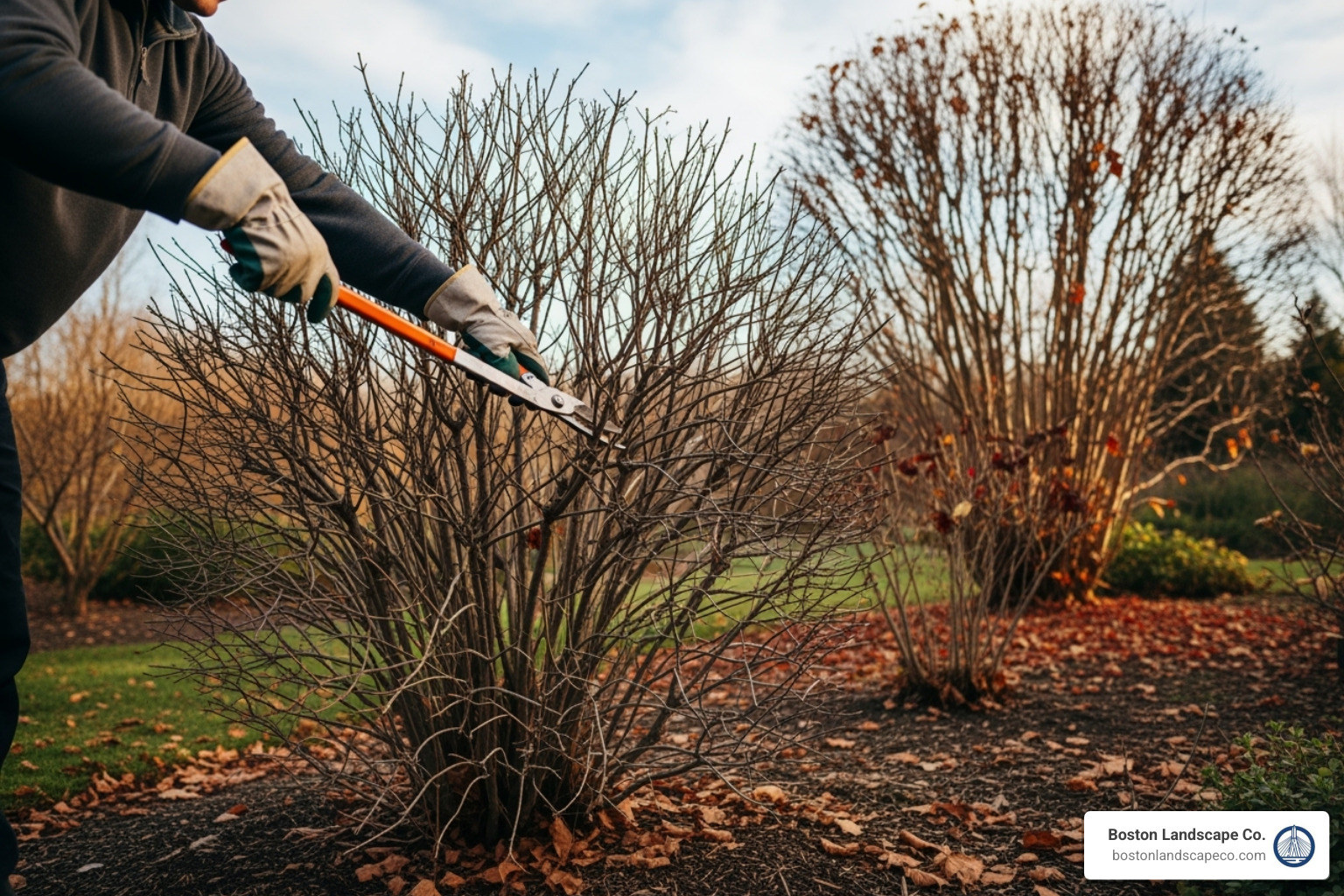
When you’re pruning, always make clean cuts close to the branch collar – that’s the slightly swollen area where the branch meets the trunk or main stem. Avoid cutting flush against the trunk, as this can damage the tree’s natural healing process. Here’s something many homeowners don’t realize: major pruning of healthy branches should wait until late winter. Cutting healthy growth in fall can actually stimulate new shoots that won’t have time to toughen up before freezing weather hits.
Improving plant structure and preventing winter damage are your main goals right now. If you’re dealing with large trees or feel uncertain about what to cut, don’t hesitate to call in professionals. Our Fall Cleanup Services include expert pruning that keeps your trees and shrubs both safe and beautiful.
Care for Perennials and Flower Beds
Your perennial beds deserve strategic attention during fall yard cleaning. Cutting back spent perennials helps redirect the plant’s energy to the roots for winter survival. However, you don’t need to give your garden a crew cut.
Removing diseased foliage is absolutely essential – those brown, spotted, or moldy leaves are basically disease hotels that will cause problems next spring. But healthy stems and seed heads? Consider leaving some of them. Those seed heads from coneflowers and black-eyed Susans become winter bird feeders, and hollow stems provide cozy winter homes for beneficial insects.
Dividing overgrown plants is one of fall’s hidden gems. Plants like irises, daylilies, and hostas that have been in the same spot for several years often benefit from being split up. You’ll get more plants for free, and the original plant will bloom better next year. It’s like giving your perennials a fresh start.
Don’t forget about weeding fall annuals and those sneaky winter weeds that germinate now but cause headaches next spring. A little weeding effort now saves hours of work later. Our team provides comprehensive Yard Clean Ups in Woburn, MA that balance garden tidiness with wildlife-friendly practices.
Preparing Your Vegetable Garden: A Key Fall Yard Cleaning Task
If you’ve enjoyed fresh tomatoes and crisp lettuce all summer, your vegetable garden deserves proper fall yard cleaning attention. The most important task is removing old plants, especially anything that showed signs of disease. Those wilted tomato plants and blackened pepper stems are preventing overwintering pests from setting up camp in your garden.
Here’s the rule: if it looked sick, don’t compost it. Diseased plant material should go in the trash to avoid contaminating your compost pile. But healthy plant debris can absolutely be composted or tilled directly into the soil.
Amending soil with compost is like giving your garden bed a nutritious meal before its winter rest. Spread a generous layer of compost or well-aged manure over your beds. Tilling the garden helps incorporate this organic matter, and it will slowly break down over winter, creating richer, more fertile soil for next year’s crops.
Planting cover crops like winter rye or crimson clover is an advanced technique that prevents soil erosion, suppresses weeds, and adds nitrogen back to the soil when you till them under in spring. It’s like growing your own fertilizer. Our Yard Clean Ups in Acton, MA include vegetable garden preparation that sets you up for a successful growing season.
Protect Vulnerable Plants and Plant for Spring
Protecting vulnerable plants is where your fall yard cleaning efforts really pay off next spring. Young trees, tender perennials, and newly planted shrubs are like garden newcomers who haven’t quite figured out how to handle a New England winter yet.
Applying mulch is your best defense strategy. A 2-4 inch layer of shredded bark, straw, or pine needles works as natural insulation, insulating roots and providing moisture retention during winter’s freeze-thaw cycles. Think of mulch as a cozy blanket for your plants’ root systems.
Wrapping sensitive shrubs with burlap helps protect them from harsh winds and heavy snow loads. This is especially important for evergreens and plants that are borderline hardy in our climate. The wrapping doesn’t need to be fancy – just secure enough to stay put during winter storms.
Here’s something that might surprise you: fall is actually the perfect time for planting spring-flowering bulbs. Tulips, daffodils, and crocuses need a cold winter to bloom properly, and they provide early nectar for pollinators when bees and butterflies are desperately searching for food sources in early spring.
The work you put into protecting your plants now will reward you with a stronger, more beautiful garden next year. If you need help ensuring everything is properly protected, our Yard Clean Ups in Wayland, MA services include comprehensive plant protection and bulb planting.
Essential Fall Yard Cleaning and Property Maintenance
Your home’s exterior needs just as much attention as your plants during fall yard cleaning. These maintenance tasks might not be as glamorous as creating a perfect lawn, but they’re absolutely crucial for protecting your biggest investment – your home.
Clean Gutters and Drains
Let’s be honest – gutter cleaning isn’t anyone’s favorite weekend activity. But those clogged gutters can turn into your worst nightmare when winter arrives. When leaves and debris pile up in your gutters, they create a dam that forces water to find other places to go – usually places you don’t want it, like into your basement or under your roof shingles.
Water damage from overflowing gutters can affect your foundation, causing expensive structural problems. Even worse, those wet leaves freeze solid in winter, creating ice dams that can force melted snow back under your shingles and into your home. Foundation issues from poor drainage can cost thousands to repair.
The best time to tackle this job is after most leaves have fallen but before that first hard freeze locks everything in place. You’ll need a sturdy ladder, work gloves, and either a small shovel or your hands to scoop out the debris. Clogged downspouts are just as problematic, so make sure water flows freely through them too.
If heights aren’t your thing, there are gutter cleaning tools that attach to garden hoses or pressure washers, letting you clear debris from the safety of the ground. Professional help is always available – our Yard Clean Ups in Stoneham, MA team handles gutter cleaning as part of comprehensive property maintenance.
Winterize Your Irrigation System
Nothing ruins a spring morning like finding your sprinkler system has turned into an expensive ice sculpture. Water expands when it freezes, and that expansion can crack pipes, destroy sprinkler heads, and leave you with a hefty repair bill.
Draining hoses is your first step – coil them up and store them somewhere dry. Those cheap hoses might seem replaceable, but frozen water can damage the connections and faucets they’re attached to. Storing sprinklers and any decorative fountains indoors protects them from freeze damage too.
For in-ground systems, blowing out sprinkler systems with compressed air is the gold standard. This process forces every drop of water out of the pipes, eliminating any chance of freeze damage. It’s not just about preventing pipe damage – a single cracked pipe can waste thousands of gallons and create muddy craters in your beautiful lawn.
Don’t forget about shutting off outdoor faucets at their interior shut-off valves, then opening the exterior faucets to drain any remaining water. This simple step prevents burst pipes that can flood your basement or crawl space.
Clean and Store Outdoor Furniture and Tools
Your patio furniture has worked hard all summer, hosting barbecues and providing the perfect spot for morning coffee. Now it’s time to return the favor by protecting it through winter’s harsh conditions.
Cleaning patio furniture before storage prevents stains from setting in and extends its life significantly. Each material needs different care – wash plastic furniture with mild soap, wipe down metal pieces and check for rust spots, and clean wooden furniture with appropriate wood cleaners. Storing cushions indoors prevents them from becoming moldy, frozen blocks that fall apart come spring.
Your garden tools deserve the same attention. Cleaning garden tools removes soil and plant debris that can harbor diseases and pests. Dirt left on tools can also cause metal parts to corrode over winter. Sharpening blades on pruners, shovels, and hoes makes them much more effective next season – dull tools make gardening harder and can actually damage plants.
Oiling metal parts to prevent rust is like giving your tools a protective coat for winter. A light coating of machine oil or even cooking oil can prevent expensive tools from turning into rusty paperweights. Gas-powered equipment needs fuel drained or stabilizer added, while battery tools should be fully charged before winter storage.
Proper tool storage in a dry location protects your investment and saves you from having to replace everything in spring. A well-maintained tool can last decades, while a neglected one might not survive a single harsh winter.
A Note on Pollinator-Friendly Fall Yard Cleaning
Here’s where fall yard cleaning gets interesting – sometimes the best thing you can do is leave things a little messy. While a pristine yard looks great, leaving some leaves in quiet corners creates winter hotels for beneficial insects that will help your garden thrive next year.
Providing shelter for insects doesn’t mean letting your whole yard go wild. Instead, rake leaves under shrubs or into naturalized areas where they won’t smother your grass but can still shelter overwintering butterflies and native bees. Keeping perennial seed heads for birds turns your garden into a natural bird feeder – goldfinches and chickadees will thank you all winter long.
Creating brush piles from your pruning work gives small wildlife places to hide from predators and harsh weather. Tuck these piles in out-of-the-way spots where they won’t interfere with your home’s appearance but can still provide crucial habitat.
Balancing tidiness with wildlife support is about being strategic. Clean up anything that could damage your lawn, home, or create safety hazards, but leave some natural elements that support the creatures who make your garden ecosystem work. Your spring garden will be buzzing with grateful pollinators.
Frequently Asked Questions about Fall Yard Cleanup
We understand that fall yard cleaning can bring up a lot of questions. Here are some of the most common inquiries we receive, along with our expert answers.
Why is fall yard cleanup so important for my lawn’s health?
Fall yard cleaning is important for your lawn’s health for several critical reasons. First, it helps prevent the growth of mold, fungi, and pests. Accumulated leaves and debris create a moist, dark environment perfect for these unwelcome guests to thrive and overwinter, leading to problems in the spring. Clearing out the clutter and preparing the yard for winter allows for better air circulation, reducing the risk of diseases and promoting new grass growth in spring.
Second, removing leaves allows sunlight and air to reach the grass, which is vital even as growth slows. Fallen leaves can smother your lawn if left unattended, leading to dead spots and a weakened turf. A healthy lawn in the fall develops stronger roots, making it more resilient to winter stresses. This proactive approach ensures your lawn is better prepared to withstand winter and contributes to a much healthier, lusher lawn in the spring, significantly reducing your workload when warmer weather returns. Getting rid of piles of leaves and twigs also makes for less rodents on your property, and regular yard cleanups help prevent accidents by removing hazards such as debris, slippery leaves, and twigs.
How much does a professional fall yard cleanup cost?
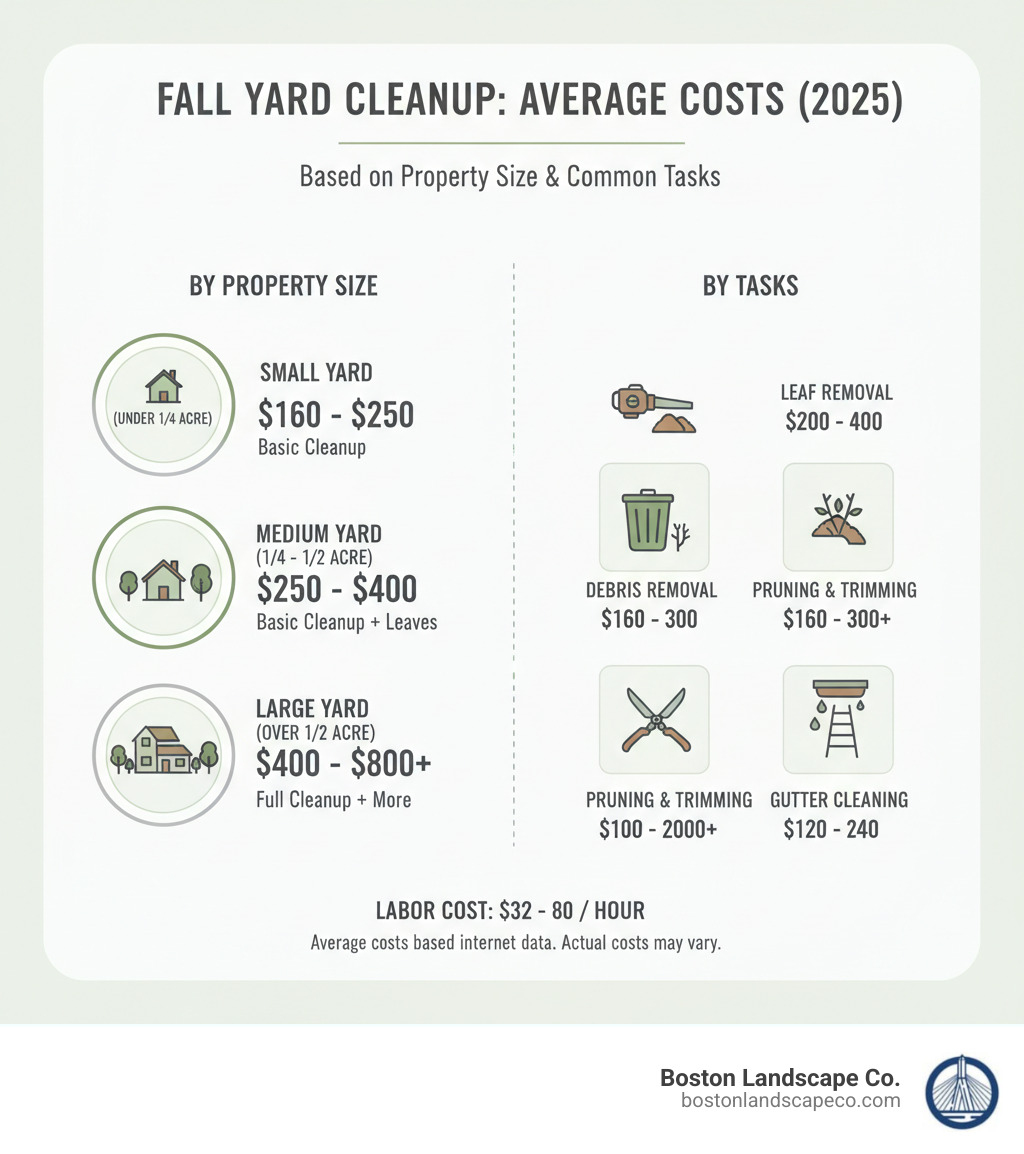
The cost of a professional fall yard cleaning can vary widely based on several factors, including the size of your yard, the amount of debris (especially leaves), the specific services requested, and your geographic location.
Based on internet data, the average cost for a yard cleanup can range anywhere from $160 to $400 for basic services. However, for larger properties, extensive leaf removal, or additional services like aeration, pruning, and gutter cleaning, the cost can go up significantly, potentially reaching $1,000 or even more. For example, leaf removal alone might cost between $200 and $400, while debris removal generally ranges from $160 to $400. Labor costs are also a factor, typically ranging from $32 to $80 per hour.
It’s important to note that these are average costs based on internet data and not actual costs for Boston Landscape Co. We always recommend getting a personalized quote for your specific property. Factors like the number of trees, the slope of your yard, and whether you opt for additional services will all influence the final price.
When is the best time to do a fall yard cleanup?
The best time to do a fall yard cleaning largely depends on your specific region and the local climate. In general, the ideal period is after most of the leaves have fallen from the trees but before the first heavy snowfall or consistent freezing temperatures set in.
For many areas, this means late October through November. However, it’s not always a one-time event. Fall cleanup tasks can often be spread over several weeks from early to late fall. For instance, you might start with pruning dead branches in early fall, tackle leaf removal as they drop, and then perform the final mow and gutter cleaning closer to winter. The key is to complete all major tasks before the ground freezes solid and heavy snow makes access difficult, ensuring your yard is fully prepared for winter dormancy.
Conclusion: Your Yard is Ready for Winter
As the last leaves settle and winter approaches, you can take pride in knowing that your thoughtful fall yard cleaning efforts have set the stage for a truly spectacular spring. What might have seemed like a daunting list of tasks has transformed into a comprehensive protection plan for your entire outdoor space.
The work you’ve completed goes far beyond simple aesthetics. By managing fallen leaves, you’ve prevented your lawn from suffocating under a blanket of debris while enriching your soil naturally. Your aeration and fertilization efforts have given your grass roots the strength they need to weather the cold months ahead. The careful pruning you’ve done has eliminated winter storm hazards while promoting healthier plant structure.
Your property is now safer and more beautiful. Clean gutters protect your home’s foundation from water damage and costly ice dams. Winterized irrigation systems won’t surprise you with burst pipes come spring. Garden beds are tidy yet wildlife-friendly, offering shelter for beneficial insects while preventing disease from taking hold.
Perhaps most importantly, you’ve dramatically reduced your spring workload. Instead of spending precious warm-weather weekends repairing winter damage, you’ll be able to focus on enjoying your outdoor space as it comes alive with vibrant growth and color.
The benefits of proper fall yard cleaning extend to your property value as well. A well-maintained landscape can increase your home’s worth by up to 15%, making this seasonal investment one that truly pays dividends year after year.
For Greater Boston homeowners who find themselves short on time or energy for these essential tasks, professional help is available. At Boston Landscape Co., we’ve been helping families achieve healthier, more beautiful yards since 1991. Our experienced team understands the unique challenges of New England winters and knows exactly what your property needs to thrive.
Whether you tackle these tasks yourself or partner with professionals, the key is ensuring they get done. Your yard—and your future self—will thank you when spring arrives with its promise of new growth and endless outdoor possibilities. For professional assistance with your fall cleanup needs, explore our Clean Up Yard Services.
